Wardrobe Psychology: What's Your Overflowing Closet Really Saying?
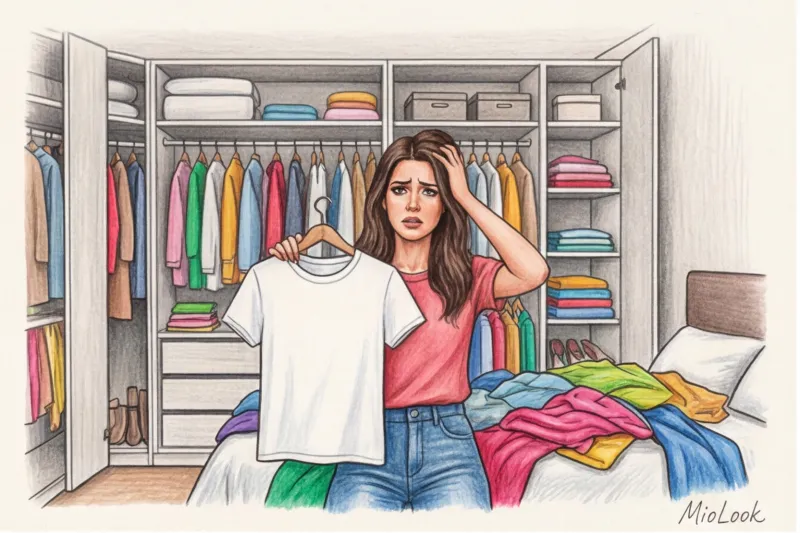
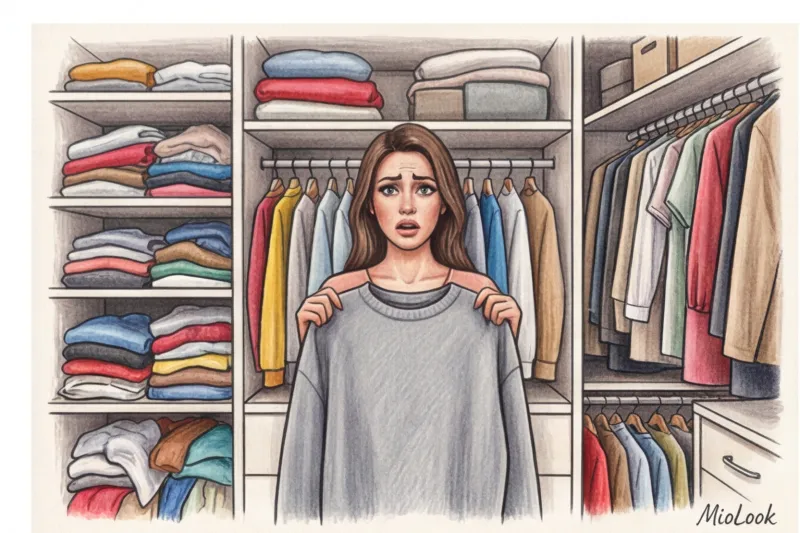
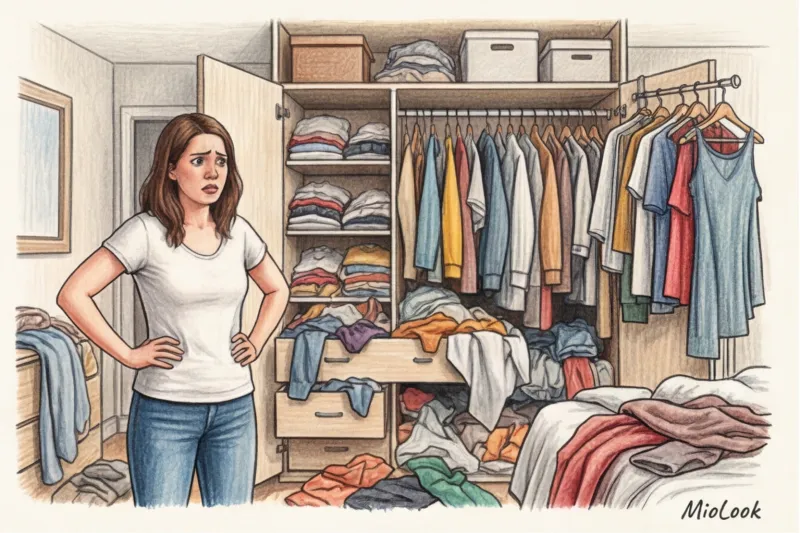
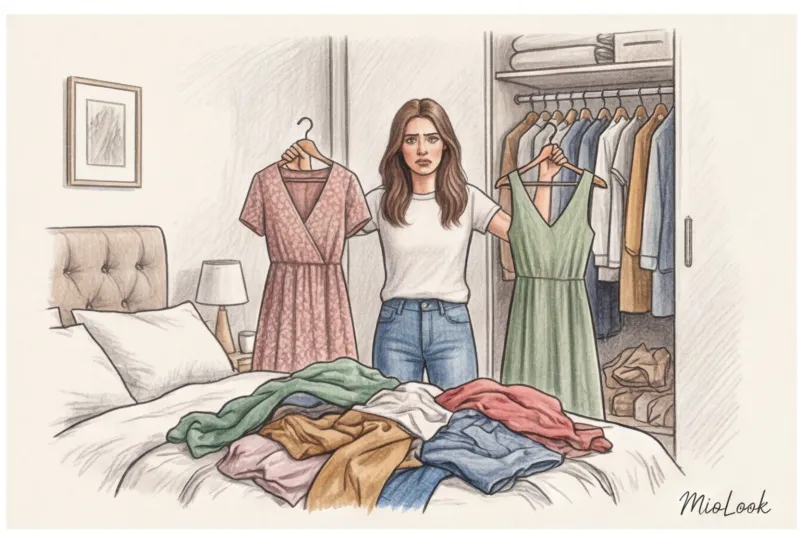
In my 14 years as a personal stylist, I've seen hundreds of women's closets. And do you know what 90% of my new clients have in common during their first in-person consultation? We're standing in front of a monumental structure whose doors barely close. The clothes rail sways treacherously under the weight of dozens of hangers, and the shelves are piled high with colorful knitwear, from which a sweater keeps falling out. The woman sighs in resignation, lowers her arms, and utters that same phrase: "Olena, I have absolutely nothing to wear."
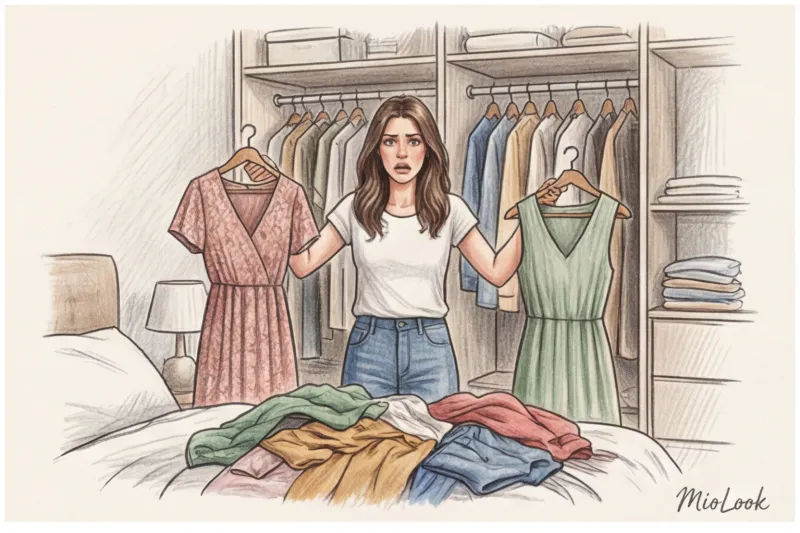
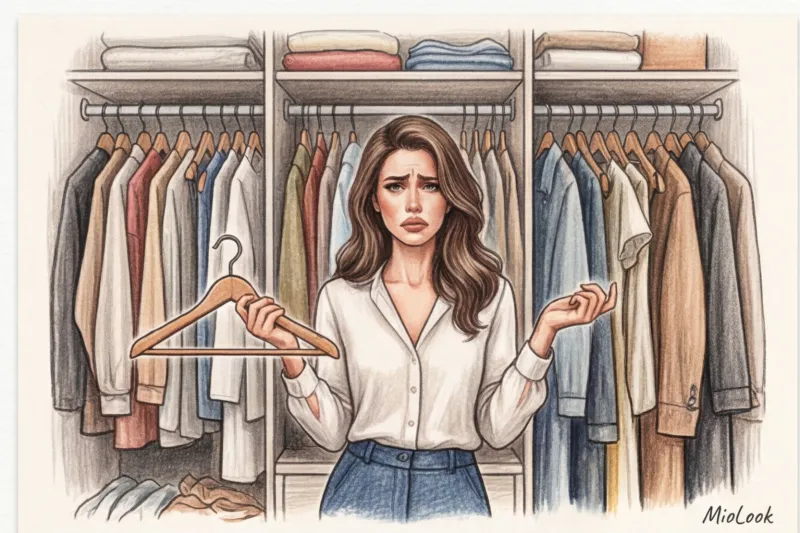
From the outside, this sounds absurd or coquettish. How can you have nothing to wear when you have at least two hundred items of clothing in front of you? But this is the harsh reality. Deep down wardrobe psychology is such that this painful stupor arises not from a deficiency, but from an excess.
The answer to why we freeze in front of a full closet lies in the concept of the "Paradox of Choice." Back in 2004, American psychologist Barry Schwartz brilliantly demonstrated in his theory of the same name: the more options available to us, the higher the level of internal anxiety and the lower our satisfaction with the final decision.
Let's do the math. If you have five perfect bottoms and five flattering tops, your brain processes 25 possible combinations. This is a comfortable cognitive load. But if your closet contains 30 pairs of pants (half of which fit poorly) and 50 blouses, the number of combinations increases to 1,500. Getting ready for work in the morning turns into a complex mathematical and analytical task. Your brain literally "burns out" from the overload. The result is morning panic: you waste precious 20 minutes trying on five different outfits, feel uncomfortable in each one, get angry, and end up pulling on your trusty jeans and gray turtleneck for the hundredth time.
It's important to understand: your wardrobe isn't just a collection of textiles. It's a physical reflection of your mental state, stress level, and current self-image. Clothes act as a litmus test. If you're experiencing a period of loss of direction or burnout, your closet is likely filled with bland, oversized, dark-toned clothes—a subconscious attempt to "hide." If you're chronically insecure, your closet will be overflowing with extravagant, never-worn pieces, bought in the hopes that a new skirt will magically transform your personality.
"Clothing is our second skin, the boundary between our inner world and society. When a wardrobe is filled with random purchases and things from a past life, it becomes a source of daily stress, conveying the chaos of unresolved internal conflicts."
Before we begin the physical cleaning, I always ask my clients to digitize their belongings. After uploading basic clothing items to MioLook Women are often horrified to discover the following statistics: they only wear 15–20% of their entire contents regularly. The remaining 80% is visual noise, which drains their energy and time.
Fantasy Self Syndrome: Things for Another Life
If we wear so little, where do all these high-quality, often expensive, clothes come from? The main culprit behind overcrowded shelves is the so-called "fantasy self" syndrome. This is a psychological trap in which we buy clothes not for the woman we are today, but for the idealized version of ourselves we desperately want to be.
In my experience, there are hundreds of such examples. We buy stunning sequined or velvet evening dresses while being inveterate introverts whose ideal Friday night is a couch, tea, and Netflix. We stock up on rigid handbags and tailored suits while working remotely. Recently, I was sorting through the wardrobe of a talented freelance web designer. Her closet contained four perfectly tailored three-piece office suits (each costing an average of €250) and not a single comfortable yet neat lounge outfit. Subconsciously, she was using these suits to compensate for the lack of professional structure and "seriousness" of a home office. If this story sounds familiar, I recommend checking out our guide to capsule wardrobe for a freelancer , where we learn to dress our true selves.
And herein lies the most painful part of the problem. These dream-like things don't just take up precious space. Every time you open the doors, they provoke a burning sense of guilt. The tag on the silk slip dress seems to reproach: "You didn't go anywhere again this weekend, you're living a boring life." Running shoes that have never seen asphalt broadcast: "You're lazy and can't pull yourself together.".
Buying clothes for another life is a very unsustainable approach in relation to the planet (we wrote about this in detail in the article about eco-friendly wardrobe ), and in relation to your own psyche. Ultimately, the closet mutates into an expensive museum of your unfulfilled hopes and unfulfilled ambitions.
Recognizing that you regularly dress your "fantasy" hologram at the expense of your actual body and schedule is a micro-step that begins true therapeutic decluttering. Only by acknowledging your current reality will you be able to assemble a wardrobe that serves you, rather than inciting morning panic.
Emotional shopping and the endorphin rush trap
Have you ever noticed when your hand naturally reaches for the "Place Order" button in your favorite online store? According to consumer behavior researchers, more than 60% of impulse purchases are made when people are tired, stressed, sad, or even just plain bored. In modern culture, shopping has long since become a legitimate and socially accepted antidepressant.
The mechanism is simple: we fall into what's known as a dopamine loop. The brain anticipates the reward at the moment of selection and payment, and levels of feel-good hormones instantly soar. We think a new skirt will solve a tough day at work, offset burnout, or simply add color to a gray November. But as soon as the courier delivers the coveted package or we walk out the doors of the mall, the magic wears off. A sharp drop in dopamine sets in, followed by disappointment and, worse yet, a crushing sense of guilt over a mismanaged budget.
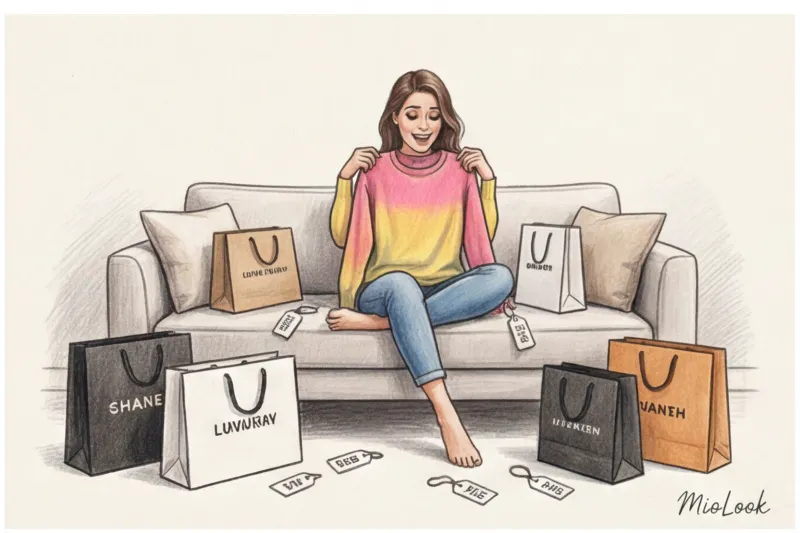
The most powerful catalyst for emotional shopping is red price tags. This is where the cruel illusion of sales comes into play: at this point, we're not buying the item itself, we're buying a discount. It's a classic misrepresentation. Imagine a silk blouse that cost €200 at the start of the season and is now sold for just €45 during the final sale. You buy it not because it fits perfectly, matches your palette, or fills a gap in your basic capsule collection. You buy it because your brain celebrates a "victory" over the system. We feel like incredibly clever strategists who've secured a great deal, when in reality, we've simply added another unique item to the shelf.
And this is where we encounter the most difficult psychological block: the sunk cost fallacy. In behavioral economics, this phenomenon is known as sunk cost fallacy This is a cognitive distortion that makes it physically painful and incredibly difficult for us to part with an expensive purchase, even if it objectively doesn't fit, is uncomfortable, or is long out of style. We continue to hold on to tight pants or an itchy sweater simply because they "cost too much to get rid of."
In my practical wardrobe reviews with clients, we constantly run into this barrier. One of the most common images is of premium dresses, formal jackets, or shoes that have had the store tags hanging on them for years. Women carefully hide them in the far corner of the closet. Why does this happen? Because cutting off the tag, declaring the item unnecessary, and giving it away means out loud admitting a mistake. It means saying to yourself, "I wasted €150." In such moments, my main task as a stylist is to help a woman "forgive" herself for that money.
I always tell my clients: you already paid for this item in the past. Don't force yourself to pay for it a second time in the present—with your daily psychological discomfort, feeling a pang of guilt every time your gaze falls on that pristine tag.
To break this vicious cycle of emotional spending and a false sense of self-worth, I recommend implementing a strict "24-hour rule." Feeling the urge to buy something out of pure emotion? Add it to your cart and close the app for exactly 24 hours. In 90% of cases, the item will lose its dopamine-fueled appeal the next day. And to clearly understand what's truly missing from your style, start digitizing your actual, not imaginary, wardrobe, testing each new item for compatibility with your existing items.
Access to MioLook for €0.99 — one-time payment
A smart AI stylist will select the perfect look from your items and save you from emotional purchases.
Get access — €0.99 onceHow Decluttering Heals the Soul: The Therapeutic Effect of Decluttering
According to research from the Center for Everyday Life and Families (CELF) at the University of California, excess clutter in the home is directly correlated with elevated levels of cortisol, the stress hormone. Physically decluttering your closet isn't just a household chore or a nod to trendy minimalism. It's a deeply therapeutic process that directly links to mental cleansing.
When you clear your shelves of visual clutter, you literally reduce your background anxiety. Your closet is a deeply intimate space, a reflection of your identity. By tidying it up, we don't just sort knitwear and denim; we structure the chaos around us and within our own minds. Freeing up physical space paradoxically makes you feel like you can breathe easier.
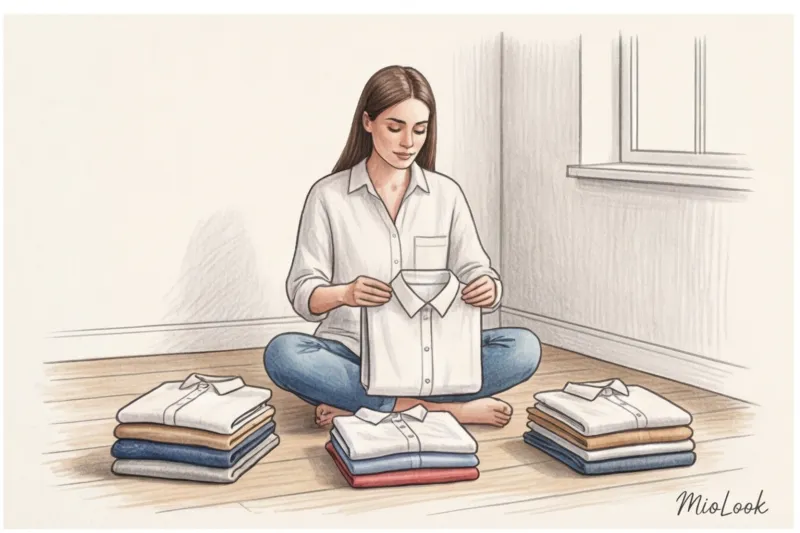
Eliminating morning "cognitive fatigue"
The human brain can only make a limited number of quality decisions throughout the day. Every little thing—drinking coffee or tea, taking the subway, or taking a taxi—uses up this precious resource. Psychologists call this phenomenon "cognitive fatigue." decision fatigue ). If your morning starts with a fifteen-minute battle with hangers and a painful sorting of blouses, by the time you leave the house, you've already expended a significant portion of your energy.
Think of Steve Jobs's iconic black turtleneck or Mark Zuckerberg's matching gray T-shirts. Their wardrobe choices weren't a sign of poor taste, but rather rigorous pragmatism and an understanding of neuroscience. By foregoing the daily dilemma of "what to wear," they preserved the mental capacity to manage multi-billion-dollar corporations and make truly strategic decisions.
Of course, we don't have to go to such an ascetic extreme and deprive ourselves of the joy of fashion. The secret isn't wearing a boring uniform, but rather making sure every item in your closet fits perfectly and pairs easily. To reduce morning stress to zero, I recommend my clients digitize their clothes. MioLook , you can plan your looks the night before in just a couple of swipes, saving your energy for important work tasks and pleasant meetings.
Taking back control of your life
In moments of life crisis, high workload, or global uncertainty, we often feel like we're losing our footing. We can't control the economy, traffic jams, or our boss's mood. But we Can Take control of your things. Reclaiming control over your life starts small—with control over your personal space. Knowing that everything in your space is in its place and works for you provides a powerful psychological foundation. This is your safe place, where you alone set the rules.
Letting Go of the Past: Things That Hold You Back
One of the most common reasons for clutter is an emotional attachment to clothes from a "past life." The wardrobe often turns into a museum of memories, where each item carries enormous psychological weight.
In my practice, I regularly see women carefully hoarding formal office suits costing €300–€400, left over from working in a toxic corporate environment. My client may be a successful freelancer now, but every glance at these jackets sends her back to a state of professional burnout. Equally damaging are clothes given to her by ex-partners who suffered a difficult breakup. These items act as emotional triggers, reminding her of the pain daily.
It's not just negative anchors that pose a danger. Objects associated with overly happy but irrevocably gone times (for example, the perfect dress from our carefree student days or the outfit from our first date with our ex-husband) make us yearn for the past, devaluing our present.
Things are energetic anchors. And if they're holding you back, preventing you from building a new life, you need to get rid of them, no matter how high-quality the fabric. If you find it difficult to donate them right away, use the box method: put all the "things from the past" in an opaque box and put it on the balcony. I guarantee that in six months you won't even remember what's there, and you'll be able to let go of this burden without the slightest regret.
Stress-Free Wardrobe Decluttering: A Psychologist-Stylist's Gentle Method
If you've ever piled up a mountain of clothes on your bed, enthusiastically tossed half of them into bags, and then two weeks later rushed to the mall in a panic to buy new basics, you're not alone. Popular radical decluttering methods like "keep 30 items" or "throw out everything that doesn't spark joy in the first three seconds" are perhaps some of the most destructive practices in modern styling.
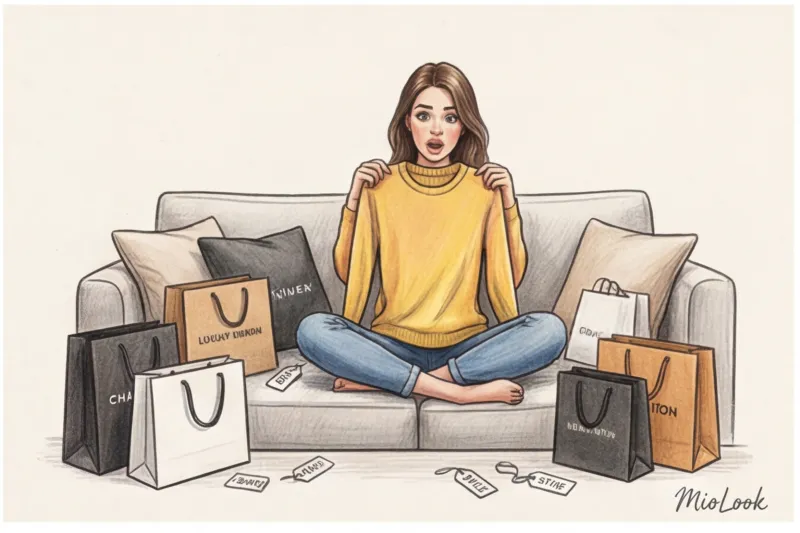
Why don't harsh methods work for 80% of women? In my experience, such purges often result in serious psychological breakdowns. The fact is that wardrobe psychology doesn't forgive drastic changes. Our brains are evolutionarily programmed to fear resource shortages. A sudden, even voluntary, reduction in the usual amount of clothing is instantly perceived by the subconscious as a threat and a severe shortage. Panic and anxiety arise, which are quickly compensated for by reactive shopping: you start buying everything in sight, just to fill the resulting physical and mental void. As a result, your closet is once again filled with questionable knitwear costing €30-50, which will also quickly lose its shape.
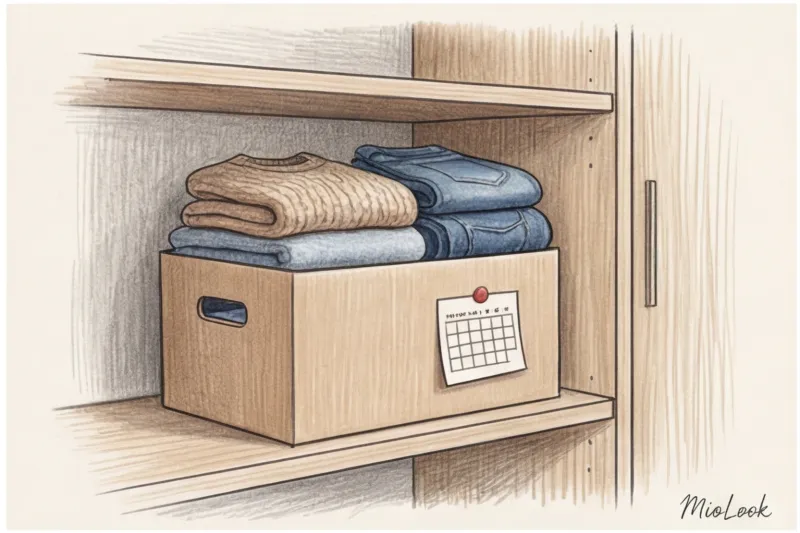
To break this cycle forever, I implement my own method with my clients. Quarantine box Her key, completely counterintuitive insight is this: radically throwing away everything during a decluttering session is evil. During a proper decluttering session, we don't throw anything in the trash at all. You don't make any irreversible decisions, which means separation anxiety and stress levels drop to zero.
The "quarantine" rule Creates a safe buffer zone for your psyche. Anything you're unsure about—an odd color, an outdated cut, an uncomfortable fabric, or a missing pair—we carefully pack into a sturdy, opaque trunk or suitcase. Important: this box must be hidden out of sight, perhaps on the top shelf. We agree: if you don't remember the existence of these specific pants or blouses for the next four months (that's a whole season!), we'll dispose of the entire box without even reopening it. My personal statistics are impressive: 95% of women don't remember a single item from quarantine.
How do I deal with what's left hanging around in quick access? Here I use "trying on reality" technique The biggest mistake we make in front of the mirror is evaluating clothes abstractly, in a vacuum. We look at the quality of the seams, the naturalness of the silk, the perfect cut, but we forget to try the item on in our current lives.
Make it simple activity matrix Take a piece of paper and divide 100% of your time for a typical month into areas: office, remote work from home, walks with children, dates, sports, theater. If, after counting the hours, you find that 60% of your time is spent working on a laptop in a casual café and on weekends out of town, while 70% of your closet is filled with formal sheath dresses and stiletto heels, we've found the root of the phrase "I have nothing to wear." You simply don't have clothes for your real life, but you have plenty for your "fantasy" one.
During the "reality try-on," you put on an item and ask yourself just one stark question: "Where exactly can I wear this in the next two weeks, within the confines of my activity matrix?" And if the answer is "Well, maybe someday I'll be invited to a contemporary art exhibition," the item immediately goes into the quarantine box. You must dress your true self.
Try MioLook
for free:
Start creating perfect looks with the help of artificial intelligence and build a smart wardrobe without stress.
Get access — €0.99 onceToxic "motivational" jeans
I single out "executioner" items as a separate, and most painful, category during any debriefing. Most often, these are the notorious "motivational" jeans, a tight pencil skirt from a previous job, or an expensive dress bought a size or two too small in the hopes of losing weight for summer or a birthday.
Let's be honest: the psychological damage of storing clothes "just in case I drop a few sizes" is colossal. As a stylist who works with body image every day, I categorically forbid leaving such artifacts in plain sight. Imagine opening your closet door every morning to choose an outfit for a busy workday, only to be confronted with a silent reproach. These clothes are physically smaller than you. By their very presence, by the fact that the zipper won't close, they broadcast a toxic message to you daily: "You're not good enough right now." , "There's something wrong with your body." , "You have to change to deserve these beautiful clothes.".
This approach is an attempt to build personal motivation through constant punishment and shame. But modern cognitive behavioral psychology has long proven that lasting, positive changes (whether in personal style, career, or body image) never come from a state of self-hatred.
There is an urgent need to replace motivation through punishment with motivation through self-love in the present moment Your body deserves to be dressed beautifully, modernly, and comfortably today. Regardless of the size on the tag—S or XXL.
If those skinny jeans are incredibly precious to you (for example, they're a rare vintage piece), put them in the back of your closet. But your active, everyday wardrobe should only contain items that hug your figure without the painful tugging and inhaling on the count of three. One of my clients, a top manager at a large IT company, admitted that buying a perfectly fitting pair of basic trousers in her actual size (a premium brand costing around €250) completely changed her morning routine. The underlying stress of self-disappointment disappeared, she became more confident in her meetings, and the notorious pounds began to fall off—simply because she no longer needed to "eat away" the morning frustration of wearing too-tight clothes.
Building a Mindful Wardrobe: From Psychology to Practice
Did you know that the famous Pareto economic principle (the 80/20 rule) also works ruthlessly on our closets? Consumer research shows that the average woman wears only 20% of her clothes 80% of the time. The rest are dead weight, bought under the influence of momentary emotions or imposed micro-trends. My main goal as a practicing stylist is to invert this pyramid, ensuring that 100% of your clothes work for you every day.
How can this be achieved? By moving from spontaneous shopping to a systematic capsule collection, built not on an abstract "base," but on your personal style archetypes.
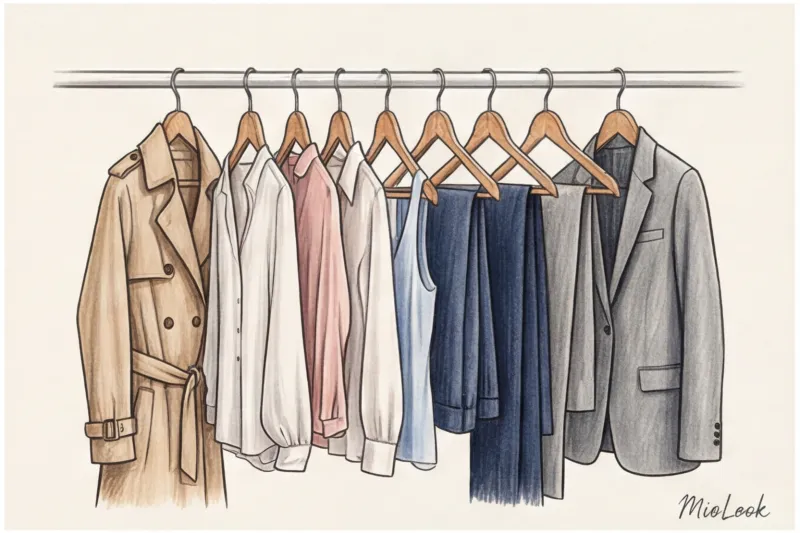
Many people still think that a capsule wardrobe is a dull set of a white shirt, a beige trench coat, and black pumps. This is fundamentally wrong! If your leading personality archetype is "Rebel," a basic capsule of strict, classic pieces will be physically repulsive. You need perfect leather jackets, textured denim, and heavy boots. If you're an "Aesthete," your capsule wardrobe will be built around silk, complex wine shades, and flowing silhouettes. Your wardrobe matrix should be a mirror of your identity.
To clearly see how your current pieces interact with each other in meaning and color, I always recommend that clients digitize them through MioLook The app's visualization instantly highlights where the capsule is "sagging" and where there's an excess of clones.
But how can you protect your freshly cleaned wardrobe from new, spontaneous waste? This is where a strict shopping filter comes in handy. Over the years, I've developed a "checkout checklist" for my clients—three key questions to ask yourself before handing over your money. One of my clients admitted that this simple mental break saved her at least 1,500 euros in one season!
These are the questions:
- What from my current wardrobe will I wear this with tomorrow? If you can't come up with at least three complete looks (including shoes and outerwear!), the item stays in the store. We no longer buy skirts that require "those shoes" you don't have yet.
- Does this duplicate the function of what I already have? Buying a fifth white T-shirt or another pair of black pants won't update your style. It will only create the dangerous illusion of shopping. Variety in your wardrobe comes from new textures and cuts, not from a plethora of identical pieces.
- Would I buy this if there was no discount? This question is the perfect antidote to the sales trap. If a €50 wool sweater attracts you only because of the €150 price tag crossed out, and not because it fits you perfectly, it's a bad investment. You're buying a fleeting sense of convenience, but you'll end up wearing the sweater.
Only honest answers to these questions will help you build real protection against impulsive spending and keep your wardrobe space clean.
Checklist: 5 steps to a wardrobe that gives you, not takes away, resources
Enough theory. To transform your wardrobe from a "black hole for time and nerves" to a "place of power," you need a clear, immediately applicable system. Recently, while putting together seasonal capsule wardrobes for top managers at an IT company, I was once again convinced: busy women don't need lengthy style discussions. They need an algorithm. Here's a strict step-by-step guide—screenshot it and put it into practice this weekend.
- Step 1: An honest audit of your current lifestyle (occupancy chart). Take a piece of paper and draw a circle. Divide it into sectors proportional to how your time is spent: for example, 60% is the office without a strict dress code, 20% is walks and routine, 15% is home, and 5% is going out. Now look at the hangers. Most of my clients get confused at this point, realizing that 40% of their shelves are taken up by evening wear, given their freelance schedule. Align the percentage of clothes strictly with the sectors of your diagram.
- Step 2: Identify your favorite things (the “core of comfort and strength”). Find those 15-20 items you wear constantly, wash, and wear again with pleasure. This is your true foundation. These are the pieces you feel confident in, they don't pinch, don't require constant tugging, and fit perfectly. This is your "core of comfort and strength"—the foundation around which all future work will be built.
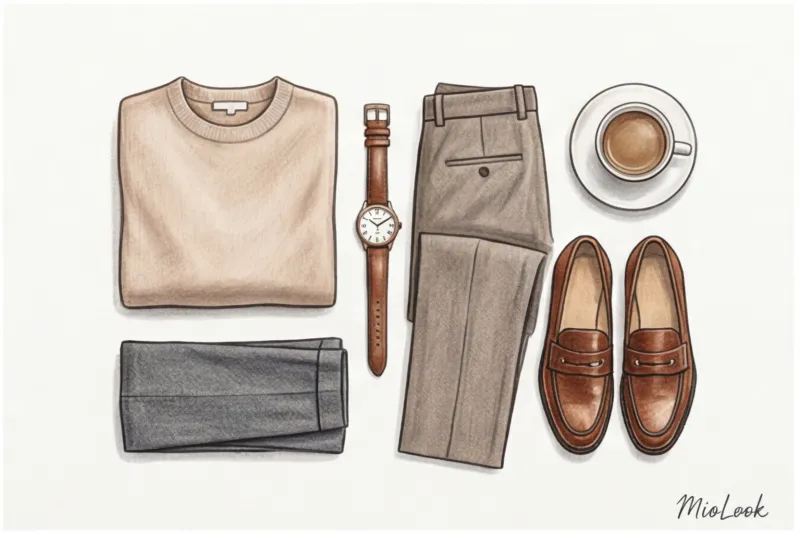
- Step 3: Quarantine for the questionable. At this stage, we physically clear out space. All the "looks nice, but I haven't worn it this season" items, uncomfortable fabrics, and unsuccessful styles are mercilessly consigned to a box or suitcase for several months. Keep only what works for you right now.
- Step 4: Gap analysis (creating a smart shopping list). When you're left with just a working core, the gaps will become obvious. You'll notice that the perfect wool trousers are missing a thick, basic long sleeve top. To automate the search for gaps, I recommend digitizing the database using MioLook — the app will clearly show you what elements are missing to maximize your outfits. As a result, you go to the store with a clear plan and buy the essential basic loafers for €130, rather than another spontaneous statement blouse for €80, which will end up as dead weight in your closet.
- Step 5: Implement the "one thing in, one thing out" rule. This is the ultimate preventative measure against new clutter. Bought a new cashmere sweater? Recycle the old, shapeless one. Bought a new pair of jeans? Say goodbye to the worn-out ones. This checklist system ensures your clutter never gets out of control again.
Your ideal image
it begins Here:
Join thousands of users who look flawless every day with MioLook.
Get access — €0.99 onceConclusion: Your wardrobe is a mirror of your attitude towards yourself.
Do you know what my favorite moment in my job is? It's the moment of absolute silence at the very end of a closet session. When we close the doors of a refreshed, "breathing" closet, and the client suddenly exhales. The physical tension that has accumulated for months in the form of ill-fitting styles and impulsive brand purchases melts away. The realization that tidying up your closet is the first step to tidying up your thoughts ceases to be just a pretty metaphor from glossy magazines. It becomes a tangible reality. By clearing the space around us, we literally free up our brain's working memory for new career moves, relationships, and hobbies.
Clinical psychologist Jennifer Baumgartner brilliantly articulated this idea in her book, "You Are What You Wear": our closets aren't just places to store fabrics; they're precise indicators of our inner state. If the hangers are in disarray, the clothes evoke guilt over wasted hundreds of euros, and half the shelves are filled with clothes from the past—it's with this emotionally charged state that we begin each morning.
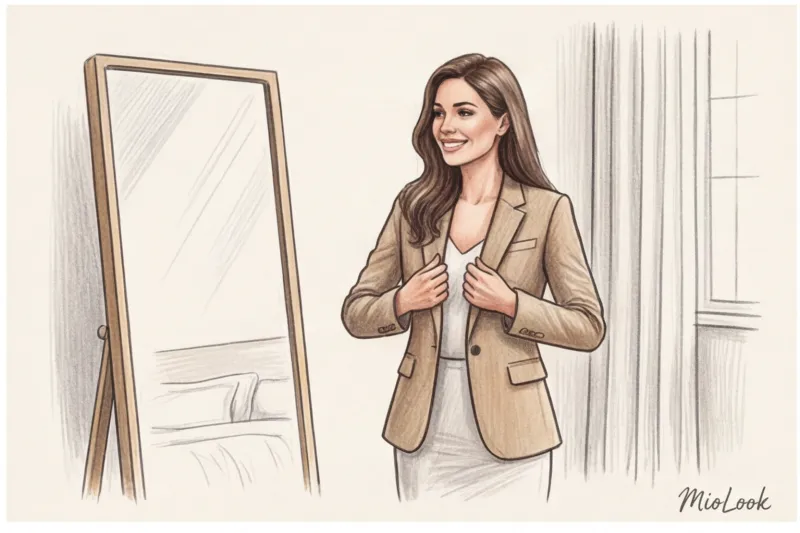
So my main piece of advice, which I've come to over years of styling practice, is this: it's time for radical honesty. I wholeheartedly support the call to stop dressing a "fantasy" version of yourself and start celebrating the real you. I recently worked with a stunningly talented graphic designer whose closet consisted of 70% tailored sheath dresses and stiff jackets, bought to fulfill a mythical "successful businesswoman" image. In reality, she worked remotely and hated restrictive clothing. Once we removed these self-deprecating pieces and assembled a stylish, textured capsule wardrobe of soft, thick knits, loose shirts, and high-quality denim (by the way, the basics cost only €250), her daily morning stress level dropped dramatically. Remember: clothes should serve your current needs, not you, trying to live up to the expectations of a piece of fabric.
At the same time, I understand perfectly well that global transformations are terrifying. The psyche always resists large-scale changes, conjuring up images of grueling, long-term labor. Therefore, I suggest you embrace the Japanese philosophy of "kaizen"—the practice of microsteps. There's no need to empty your entire closet onto the floor, creating chaos in your bedroom. Your goal is to find the motivation to start with just one small shelf this weekend.
Here's your simple, yet incredibly effective plan for this coming Saturday:
- Choose the safest zone. Let it be a drawer with loungewear, a shelf with basic T-shirts, or a section with sportswear. Avoid evening dresses or expensive coats for now—they carry too much emotion.
- Set the timer for exactly 15 minutes. A strict time limit relieves anxiety. The brain understands that it won't take up half a weekend.
- Keep only what makes you happy today. Throw away anything that's stretched out, faded, or only worn when "everything's okay in the wash."
Believe me, this small, fifteen-minute island of perfect order will be a powerful catalyst. You'll get a hit of pure dopamine not from buying a new random thing out of pure emotion, but from creating a functional, working space. And to consolidate the result and prevent chaos from returning, take photos of your remaining favorite items and transfer them to digital format using MioLook Seeing your best wardrobe items on your smartphone screen will help you create outfits mindfully and with pleasure.
Your life is happening right now. Not yesterday, when you wore a different size, and not tomorrow, when you hypothetically move to a different climate. You deserve to open the closet doors that greet you every morning with unconditional support: "You are beautiful, and we are ready for this day." Take the first, smallest step toward that feeling this weekend. You will definitely succeed!
Guide Chapters
Changing Your Clothing Style: The Psychology of a Closet Crisis
Is your closet full, but nothing brings you joy anymore? We'll explore why we've fallen out of love with our old clothes and how our wardrobe reflects our inner crisis.
The Psychology of Oversized Clothing: Why We Wear Bulky Clothes
Oversized clothing has long ceased to be just a fashionable silhouette. We explore the underlying psychological reasons that compel us to hide behind oversized hoodies and jackets.
Conscious Consumption in Clothing: The Path to Minimalism
Tired of an overflowing closet where you constantly feel like you have nothing to wear? Find out how embracing minimalism will forever change your mindset and lifestyle.
Plyushkin Syndrome in Clothing: How to Recognize and Overcome It
A closet full of clothes, but absolutely nothing to wear? A stylist with 14 years of experience explains how to overcome hoarding without aggressive purging.
Clothes Fatigue: Why Your Closet Is Taking Your Energy
A closet full of perfect clothes no longer brings you joy, and getting ready in the morning has become a chore? We explore the phenomenon of wardrobe cognitive overload.
Feeling bad about throwing away an expensive item? Let's get rid of the guilt.
Find out why it's so hard to part with unworn purchases and how to eco-friendly clean out your closet of expensive clutter. Practical tips will help you forgive yourself for spending money.
The Impact of Clothing on Self-Esteem: Dopamine-Driven Style Myths
"Wear something bright and the blues will disappear," fashion magazines proclaim, but is that really true? We explore the real biochemistry of style and the myths about "dopamine-fueled dressing."
Emotional Clothing Shopping: How to Stop
Emotional shopping is a band-aid for a tired psyche. A practicing stylist explains how to stop buying unnecessary things out of stress and boredom.
It's a shame to throw away old things: the psychology of the wardrobe
Half the clothes in our closets aren't just clothes, but frozen emotions. A stylist explains how to learn to let go of sentimental wardrobes without guilt.
Decluttering Your Wardrobe: Psychotherapy for Anxiety
A full closet often causes stress and morning paralysis. Learn how decluttering can help reduce anxiety and achieve inner peace.
A Full Closet, But Nothing to Wear: Causes and Solutions
The problem of morning sluggishness isn't a lack of clothes, but rather a cognitive psychology issue. Learn how to overcome visual clutter in your wardrobe and find your style.
Why storing weight-loss clothes is bad for your figure
Clothes that are a size too small seem like a great motivator, but in reality, they only hinder weight loss. Let's examine the psychological reasons why it's best to get rid of such items.