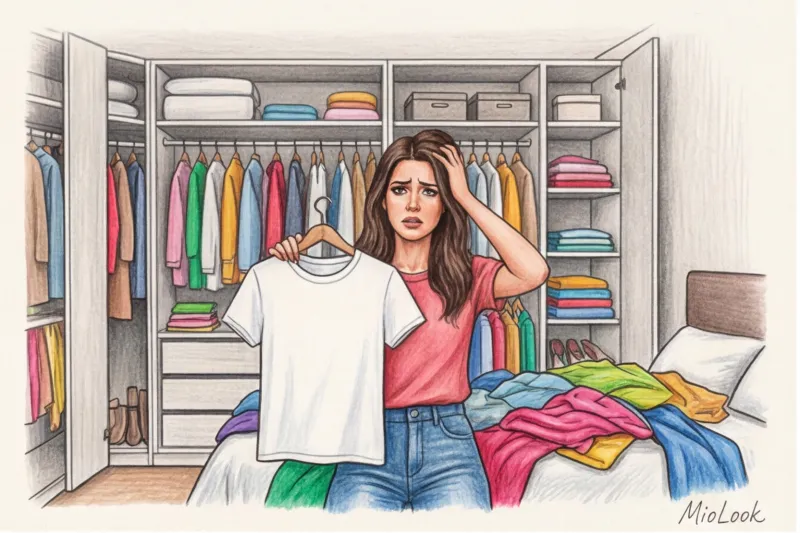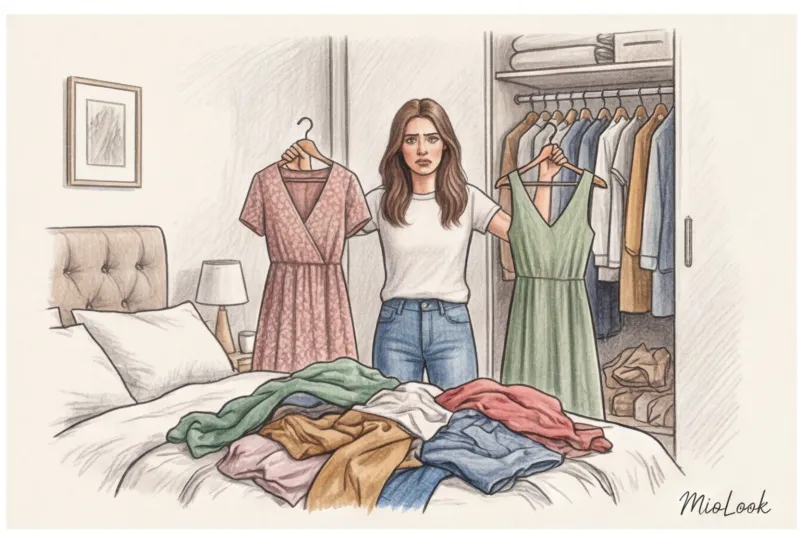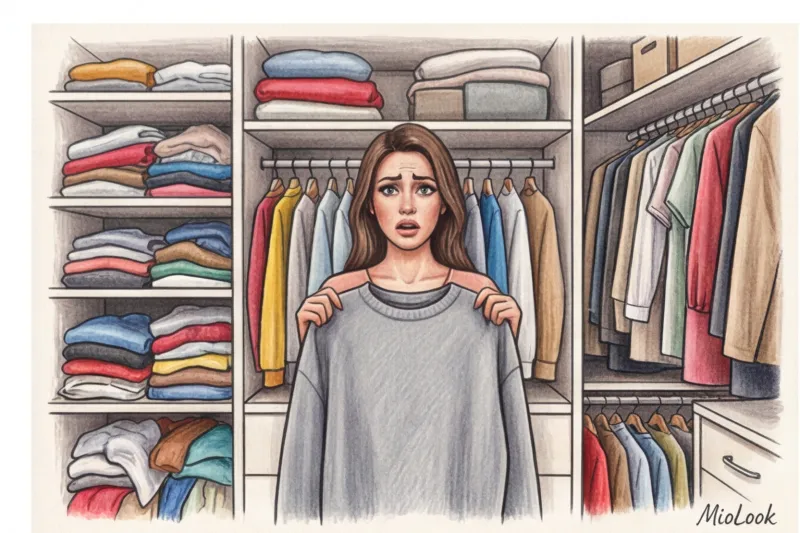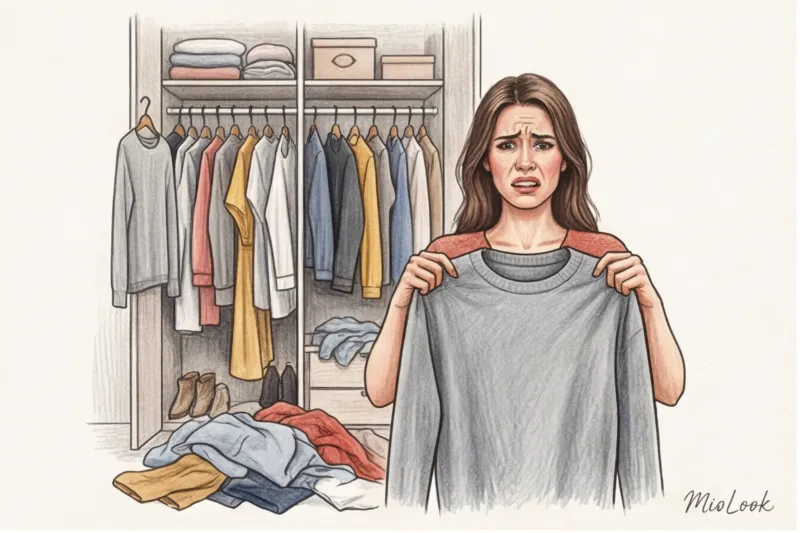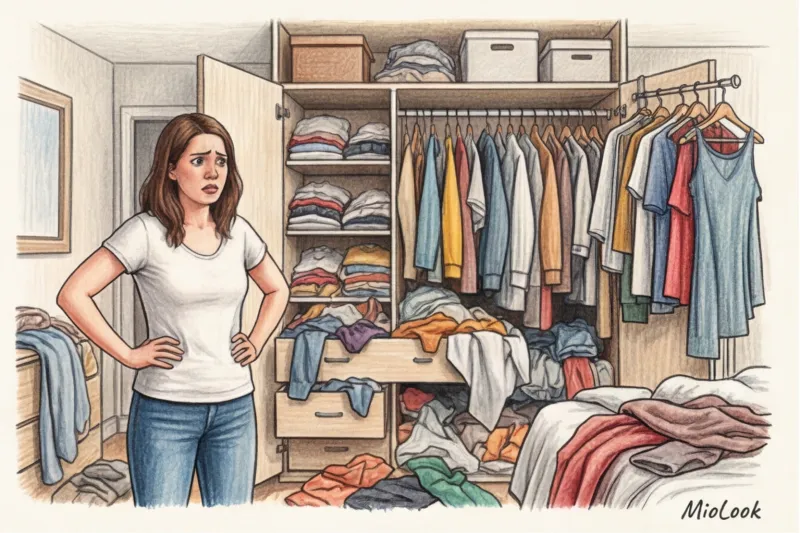
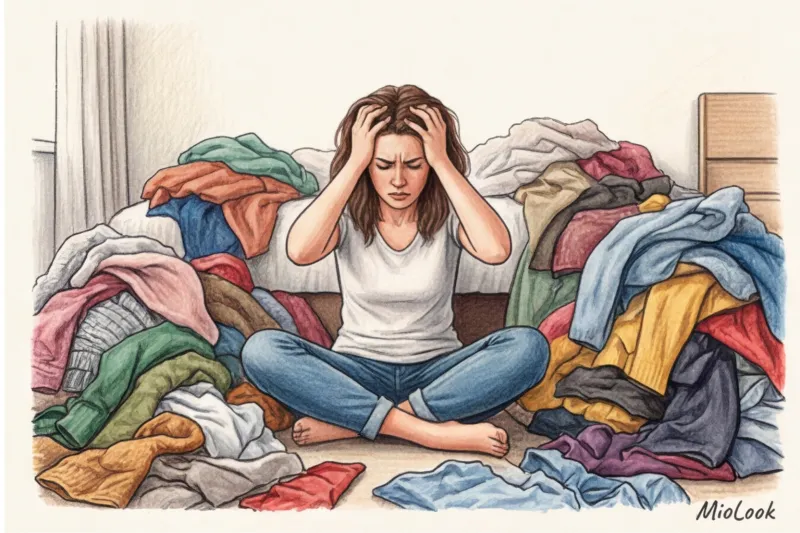
Imagine a familiar scene: you open your closet doors and are met with a veritable avalanche of hangers with tangled sleeves, but the panicked thought thrums in your head: "I have absolutely nothing to wear." You rummage through your clothes, get irritated, put on your usual jeans, and leave with a sour mood. Sound familiar? Over 14 years of working as a personal stylist, I've realized that in 90% of cases, the problem isn't a lack of taste or budget, but rather simple information overload. The hoarding syndrome forces us to accumulate clothes we'll never wear.
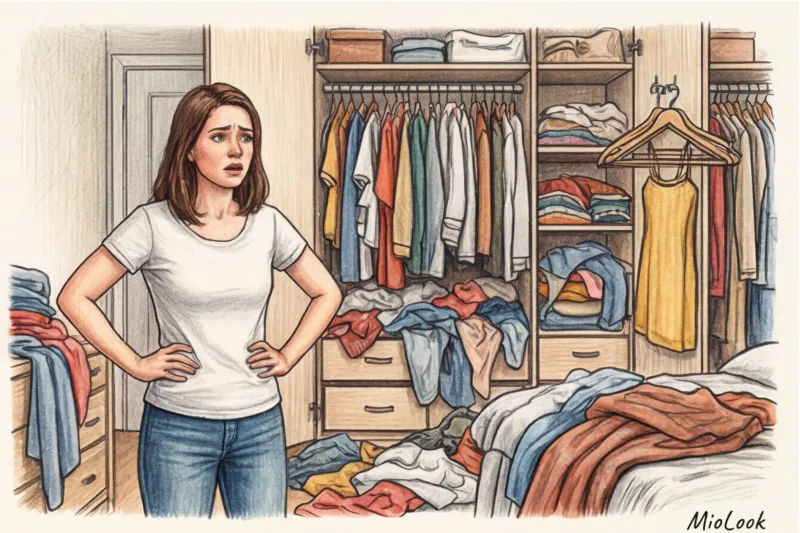
We've covered in more detail why a full closet can be stressful in our the complete guide to wardrobe psychology Spoiler alert: more often than not, it's not the things themselves, but our fear of losing control. But unlike typical minimalist gurus, I won't urge you to grab black trash bags today and ruthlessly throw out half your wardrobe. Such emotional purges almost always lead to breakdowns and a new round of shopping addiction. We'll take a different path—the path of data, numbers, and technology.
Hoarding Syndrome in Clothing: Where is the Line Between Hoarding and a Diagnosis?
The clinical name for this problem is disposophobia (fear of throwing things away). In the context of your wardrobe, hoarding disorder isn't just mild disorganization. It's a condition in which things cease to fulfill their primary function—serving you—and begin to consume your living space, energy, and morning time.
Why is it so hard to part with something we don't wear? The main culprit is a cognitive bias known in behavioral economics as the "sunk cost fallacy." Our brain literally sabotages the process. When you look at that silk Massimo Dutti blouse you bought three years ago for €120 that's too small, you don't see a piece of fabric. You see wasted money and missed opportunities.
It physically hurts you to give this item away because your brain perceives parting with it as a final admission of a financial mistake. While the blouse hangs in the closet, the illusion of "I can still wear it" protects you from guilt.
How is hoarding different from shopaholism?
Many people confuse these two concepts, although they have completely different biochemistry. A shopaholic is dependent on the dopamine rush at the checkout. They often don't care what happens to the item at home. A hoarder, on the other hand, is dependent on the process of holding on to it and the panicky fear of loss.
But the worst thing happens when these two problems collide in the same apartment. A "black hole" effect occurs: new items from Zara and H&M are constantly bought for the thrill of it, but old ones never leave the apartment due to anxiety. Ultimately, the wardrobe becomes a tightly packed warehouse.
5 subtle symptoms of hoarding
You can tell a situation has gotten out of control long before the closet doors stop closing. Check yourself against these five markers.
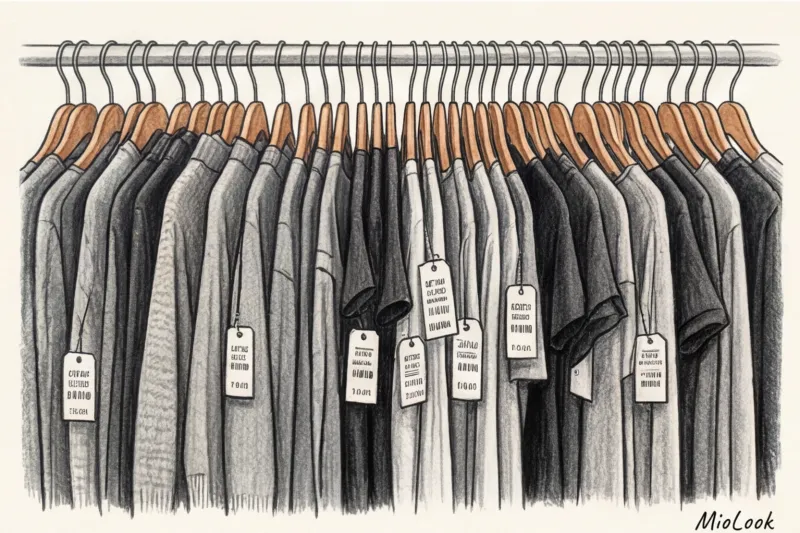
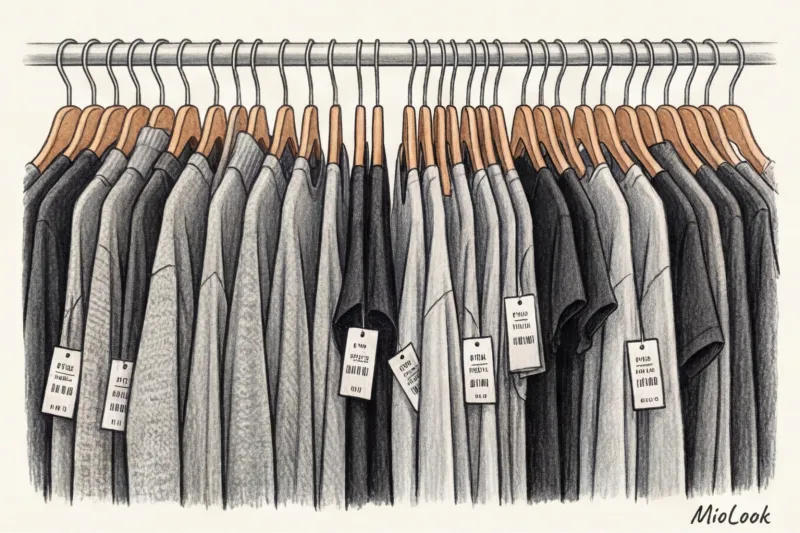
Symptom 1: Items with tags still on that you forgot about. If you find clothes with store tags on the shelves and are genuinely surprised, “Wow, when did I buy that?”, your brain can no longer cope with inventory.
Symptom 2: Buying “doubles”. My favorite (and at the same time sad) story from my experience: we were once sorting through a top manager's client's wardrobe. We found 18 (!) practically identical gray cardigans. She bought a new one every time she needed a cozy layer, simply because she couldn't physically find the previous ones in the chaos of her closet.
Symptom 3: Physical discomfort when trying to give the item away. You've packed a bag for a charity, but before you leave the house, you open it again and pull out a couple of sweaters "just in case."
Symptom 4: The Harsh 80/20 Statistics. Your closet is bursting with clothes, taking up three meters of wall space, but 80% of the time you're wearing the same three or four safe, tried-and-true outfits. The rest is wasted capital.
Symptom 5: Irrational excuses. Excuses like "I'll save this holey hoodie for the dacha" or "I'll paint the walls in these jeans." Let's be honest: to wear out all those clothes we're saving for renovations, we'd have to professionally decorate our apartments every day for ten years.
Access to MioLook for €0.99 — one-time payment
A smart AI stylist will analyze your clothes and create the perfect look for every day. Stop wasting hours in front of your closet!
Get access — €0.99 onceWhy a Full Closet Causes Stupor (and How It Connects to Psychology)
In 2004, American psychologist Barry Schwartz formulated the brilliant theory of the "Paradox of Choice." Its essence is simple: when we have too many options, our stress levels rise, while our satisfaction with the final choice falls. What holds true for supermarket shelves perfectly describes the situation in our closets.
Let's do the math. If your closet contains 25 versatile items that go together perfectly, your brain can easily process these combinations. But if you have 300 items, the number of possible (and often absurd) combinations exceeds the thousands. Every morning before work, your brain is forced to solve a complex math problem with many unknowns.
A WGSN study found that about 30% of the items in the average overstuffed closet haven't been worn in the past year. This visual clutter kills any creativity. Overwhelmed by the sheer number of options, the brain simply gives up and chooses the "uniform"—those jeans and black sweater closest to the edge of the shelf.
The "What if I lose weight" trap: Why things from the past steal your present
One of the most insidious forms of hoarding is storing clothes for a "past" or "future" life. Formal office suits, even though you've been working remotely as a freelancer for three years. Dresses for social events, even though your ideal evening now involves pizza and a Netflix series.
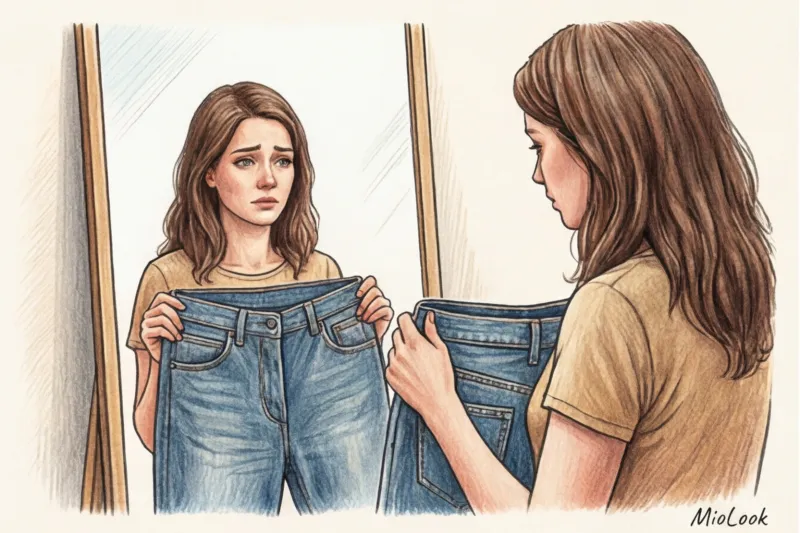
But the absolute champion is the shelf labeled "When I Lose Weight." A common myth holds that hanging size 42 jeans in a prominent place will motivate you. As a stylist, I'll tell you the bitter, but scientifically proven, truth: it doesn't work.
A counterintuitive insight: storing "motivational" clothes actually acts as a daily visual reproach. Every time you open your closet, you receive a microdose of cortisol (the stress hormone). You remind yourself that your body is "wrong." And what does our body do when chronically stressed? That's right, it stores energy and triggers emotional eating. Those jeans aren't helping you lose weight; they're literally hindering it.
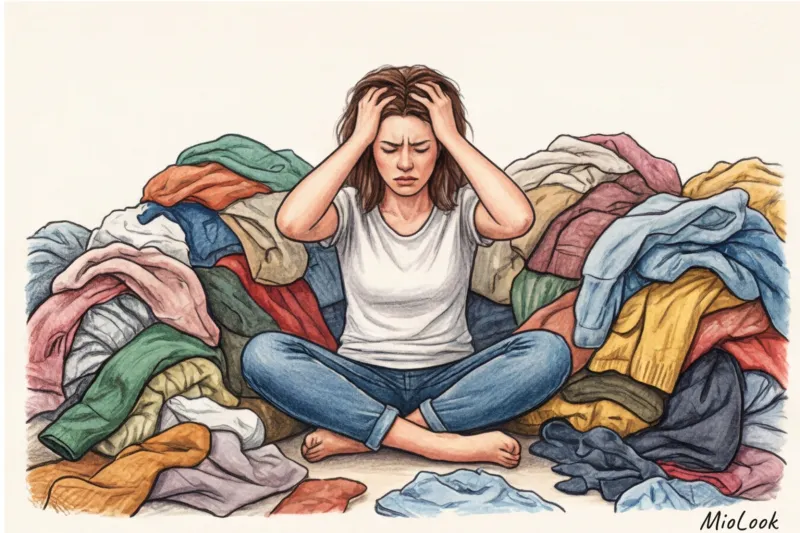
Your clothes should support your body and your lifestyle TODAY. Not five years ago. Not two years after a grueling diet. Right now.
Your perfect look starts here
Join thousands of users who look flawless every day and create looks in 2 minutes with MioLook.
Get access — €0.99 onceHow technology is treating the Plyushkin syndrome in clothing
As a digital stylist, I believe the best cure for emotional attachments to things is hard, ruthless data. We need to shift the paradigm from "I love this blouse so much" to managing our wardrobe data.
The most powerful metric used by stylists is CPW (Cost Per Wear). The formula is simple: divide the price of an item by the number of times it's worn.
Let's compare: you bought a basic cashmere coat from COS for €250 and wore it 120 times over two seasons. Its CPW is €2.08. It's a brilliant investment. Next to it hangs a neon sequin dress, bought on a shopping spree for €80 and worn exactly once to a party. Its CPW is €80. It's a loss.
A few years ago, I conducted an experiment: for six months, I faithfully tracked every item I wore using an app. The results shocked me—it turned out that 40% of my closet was complete "dead weight," even though before the experiment, I was sure I wore everything. This is where modern virtual wardrobes, like MioLook Once you've digitized your belongings, you can see real statistics: which items of clothing are constantly included in looks, and which simply take up space on the server (and in your closet).
A step-by-step "treatment" plan: decluttering without stress and frustration
If you've Googled how to declutter your closet, you've probably seen the advice to "dump everything on your bed and don't go to bed until you've sorted it out." Forget it. It's a recipe for a panic attack. Harsh purges trigger rebound shopping—you're terrified of empty shelves and rush to buy new things.
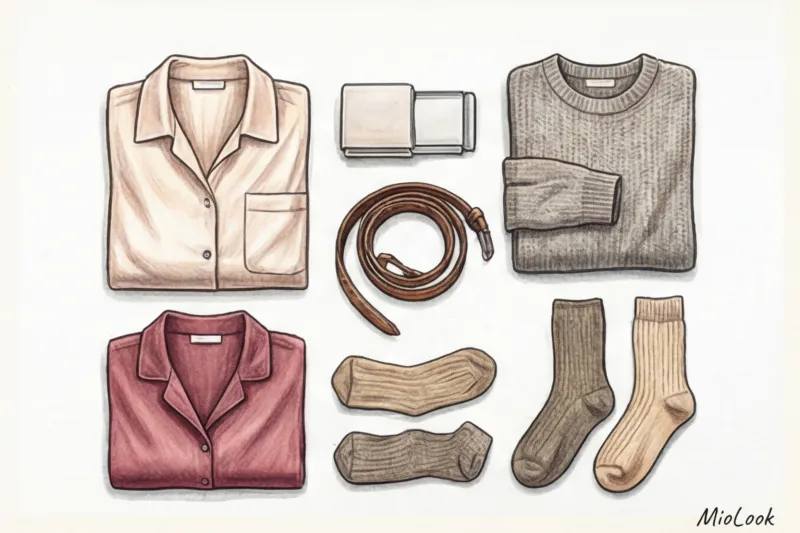
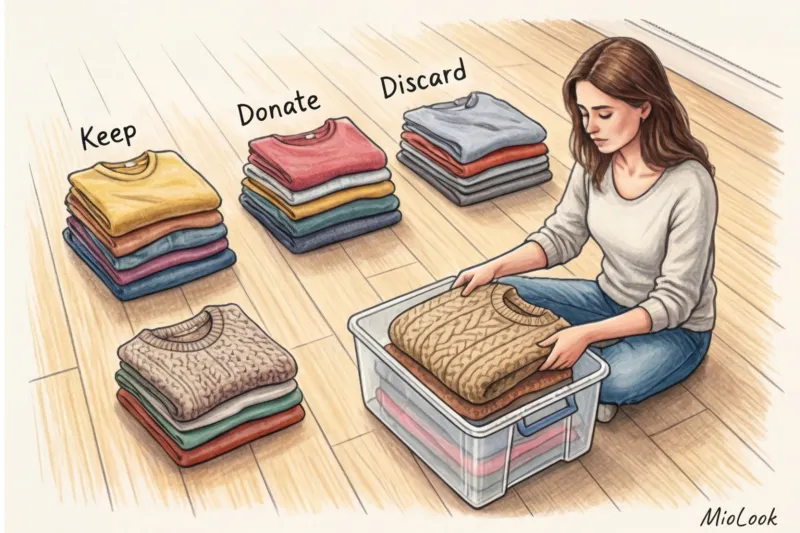
Take it slow, dividing your closet into zones (for example, today only T-shirts, tomorrow only pants). Sort items into three clear categories:
- Absolute Yes: things that fit you perfectly today, without stains or pilling, and that you have worn in the last month (not counting out-of-season items).
- Exact No: Worn-out items, clothes that are more than one size too big, and anything with irreparable defects. We donate them for recycling or charity. Eco-friendly recycling, by the way, greatly reduces the guilt over wasted money.
- Quarantine: the most important category for those who suffer from hoarding.
The Quarantine Method: A Secret Weapon for Professional Stylists
What to do with that €100 silk skirt you never wear but can't bring yourself to throw away? Quarantine it.
Take vacuum-sealed bags or opaque boxes. Place all questionable items in them. Be sure to label the box with a large marker: put the date exactly six months from today. Then put it on the attic or under the bed.
This method brilliantly tricks our amygdala (the brain's fear center). You don't feel anxious about loss because you haven't thrown anything out—they're still at home. But visually, your closet has been cleared out. You're testing out life with a minimalist wardrobe. Spoiler alert: 95% of the time, when the timer rings six months later, customers can't even remember what was in those boxes, and they calmly resell or recycle them. This method has only one limitation: it doesn't work at all for worn-out basic underwear or washed-out loungewear (those should be thrown out immediately).
Your wardrobe isn't a museum of your past mistakes or a repository of hopes for the future. It's a utilitarian tool designed to make you more confident every day. Start digitizing it, count your cost per wear, and let technology make rational decisions where emotions make you cling to the past.