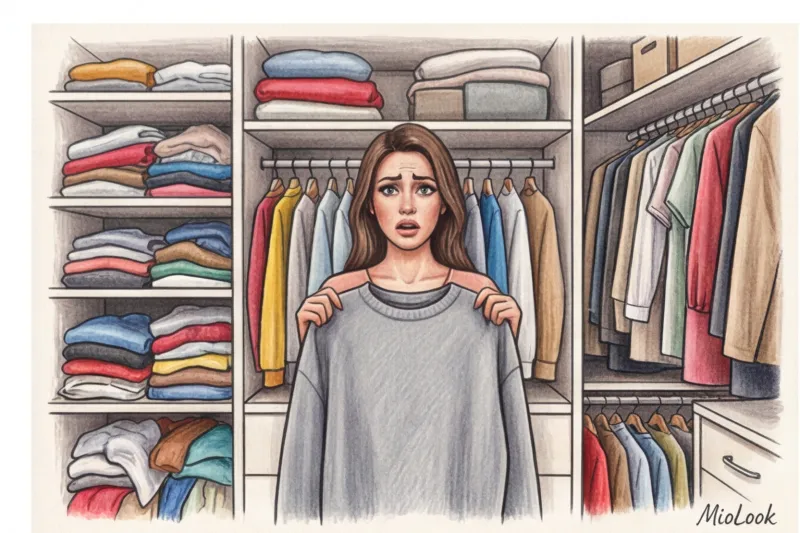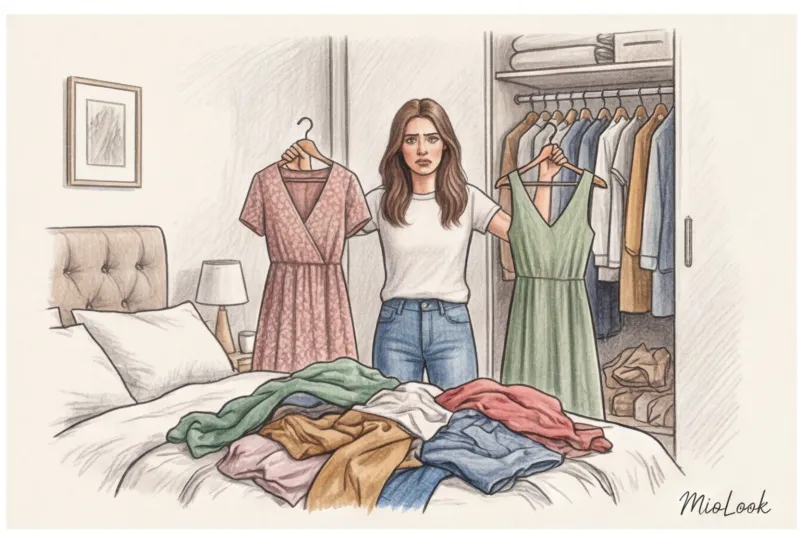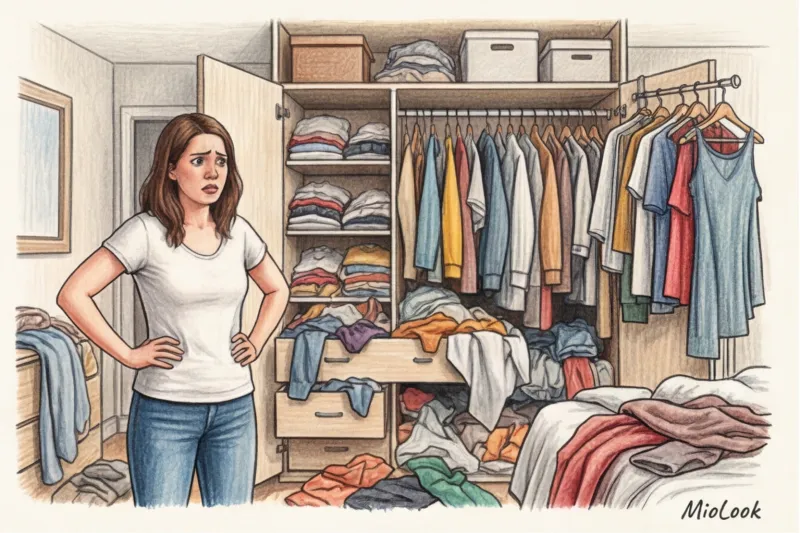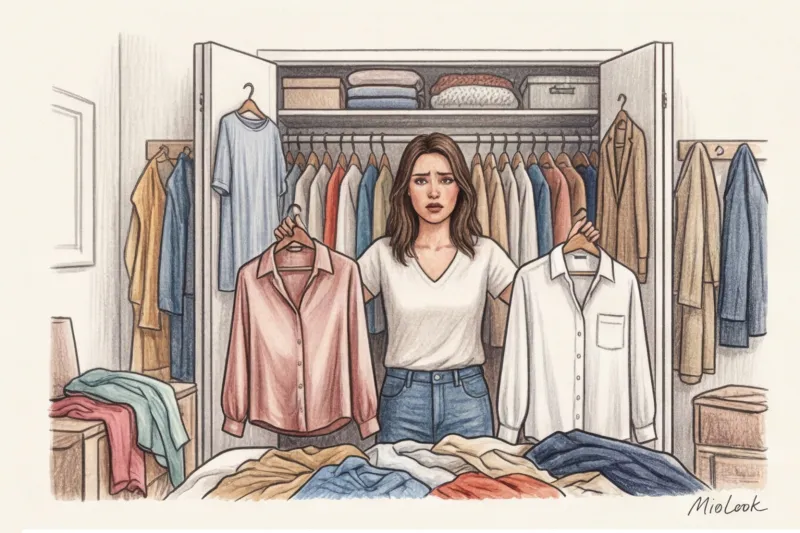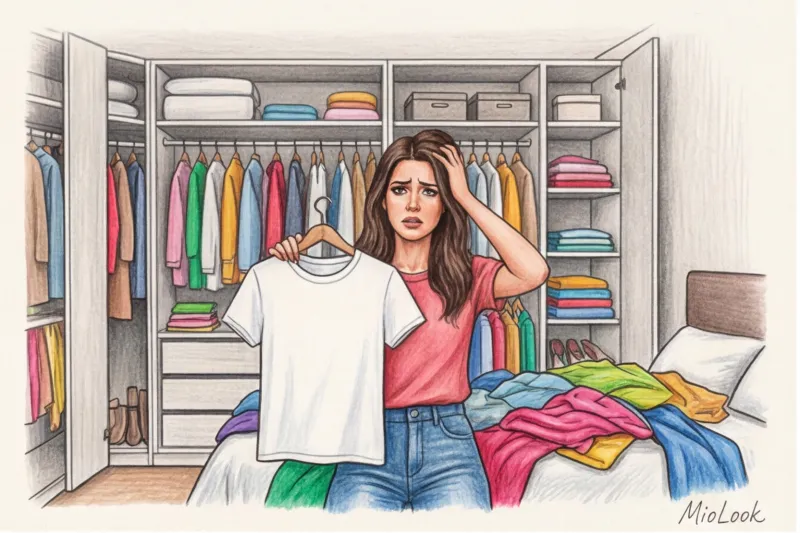
"I have forty silk blouses, Camilla, but every morning I wear one of three turtlenecks," a senior executive at a major IT company told me last week, looking around her dressing room, which is the size of a small studio. It's a classic scenario. We tend to think that the problem of morning stupor lies in a shortage of basic T-shirts, poor eye contact, or a shortage of hangers. But in 12 years as a stylist, I've learned one fundamental lesson: women rarely suffer from a physical shortage of clothes. We suffer from a shortage of ready-made stylistic formulas.
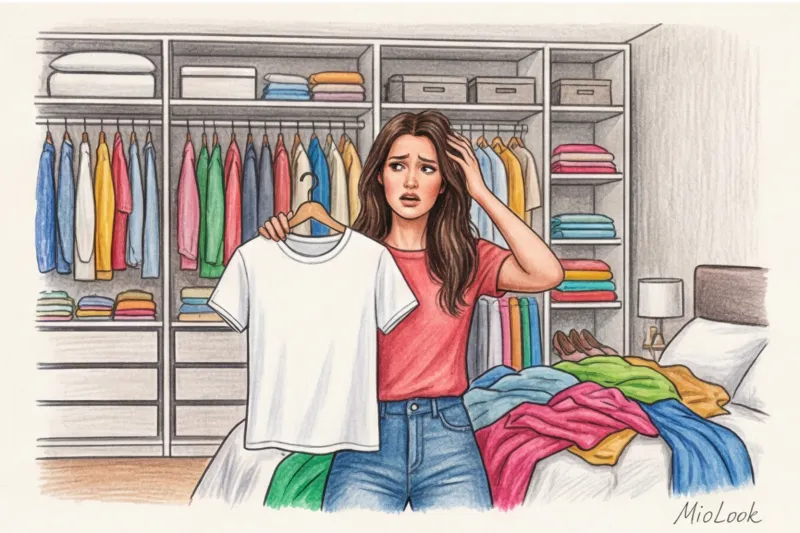
If you look at the dense rows of rails every morning and feel the panic creeping in, know this: a full closet, but nothing to wear - reasons This condition lies not in the realm of fashion, but in cognitive psychology. We discussed this in more detail in our the complete guide to wardrobe psychology , but today I want to break down the anatomy of this visual noise into molecules and explain why popular advice like “just throw out half the stuff” actually makes things worse.
The "closet full, nothing to wear" phenomenon: psychological causes of stupor
To understand why abundance paralyzes us, let's turn to science. In 2004, American psychologist Barry Schwartz published his landmark book, "The Paradox of Choice." His theory perfectly describes what happens in our closets every morning.
Imagine you have a capsule wardrobe of just 25 items (including shoes and accessories). Mathematically, there are over 1,500 possible combinations. When you open your closet, where there are not 25, but 150 or 300 items of clothing, your brain is confronted with an astronomical number of possible solutions. Cognitive overload sets in. The mental defense mechanism at this point is to abandon all choice and reach for the tried and true, safe option: those jeans and black turtleneck.
"Every new item in a disorganized closet doesn't give you more freedom. It saps your energy for decision-making."
The Fantasy Self Trap: Who Are You Buying Clothes For?
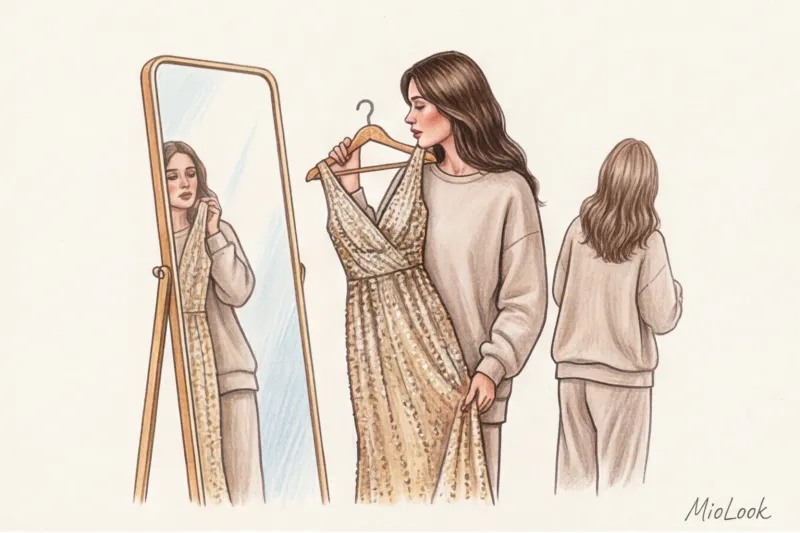
One of the main reasons for clutter is the concept of the "Fantasy Self." We regularly buy clothes not for the life we're currently living, but for an idealized version of ourselves. Do you work from home and spend your days on Zoom? But for some reason you buy formal three-piece suits. Do you take the subway to work with two transfers? But your closet is lined with an army of 12-centimeter stilettos.
The dissonance between your actual lifestyle and the contents of your closet creates a feeling of guilt. Things hang there like silent reproaches. If you recognize yourself in this situation, I recommend checking out our A freelancer's guide to creating a capsule wardrobe — it helps reconcile the reality of remote work with the desire to look put together.
Emotional Baggage on Hangers: Why We Keep What We Don't Wear
The wardrobe follows the Pareto principle: 80% of the time, we wear only 20% of the clothes. The remaining 80% is our emotional baggage, materialized in fabrics.
In behavioral economics, there's a term called "sunk cost fallacy." I worked with a client who kept a €2,000 Prada evening dress in a bag for three years, with the tag still intact. She'd bought it at the peak of her career to celebrate a promotion, but never had the chance to wear it. Selling it on a resale platform for €500 felt like a betrayal of her ambitions. Every time she opened her closet, she'd stumble across the dress, and instead of feeling happy, she'd get a microdose of stress.
Waiting Section: "When I Lose Weight" Stuff
A separate form of psychological masochism is the rack of clothes two sizes too small. Many women sincerely believe that skinny jeans from 2018 will motivate them to hit the gym. The reality is: these clothes sabotage your self-esteem on a daily basis.
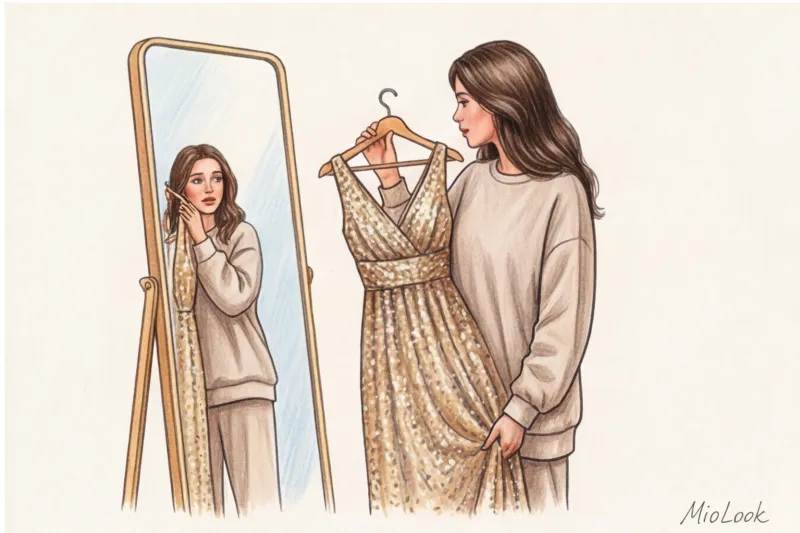
Clothes should support your body as it is, not your body, which should adapt to a piece of cotton and elastane. If you're ready to let go of this burden, read about Where to donate old clothes for eco-friendly decluttering.
Singles and Clones: The Anatomy of Impulse Shopping
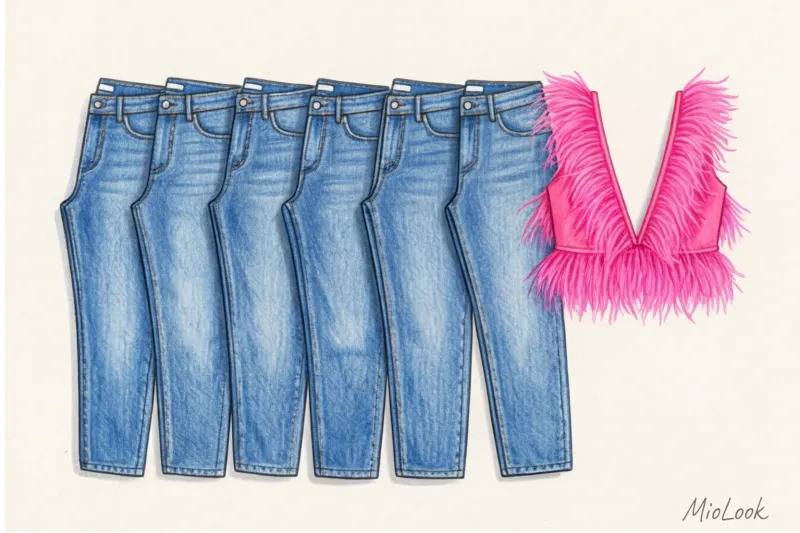
McKinsey's 2024 consumer research shows that over 60% of fast fashion purchases are made impulsively. Brands like Zara and H&M brilliantly exploit our dopamine loop. We buy a neon marabou feather top not for its style, but for the instant endorphin rush after a hard week at work.
As a result, two categories of pests appear in the closet:
- Single items: Striking, but completely out of keeping with your style. To wear such a complexly cut skirt, you'll have to buy a "modest" top, neutral shoes, and the right tights. The result: the item hangs there like dead weight.
- Clones: When you don't know what you already have, you buy your seventh white shirt or tenth pair of blue jeans with a budget of €30–€80, hoping that this purchase will change everything. Spoiler: it won't.
A Counterintuitive Approach: Why Radical Decluttering Is Harmful
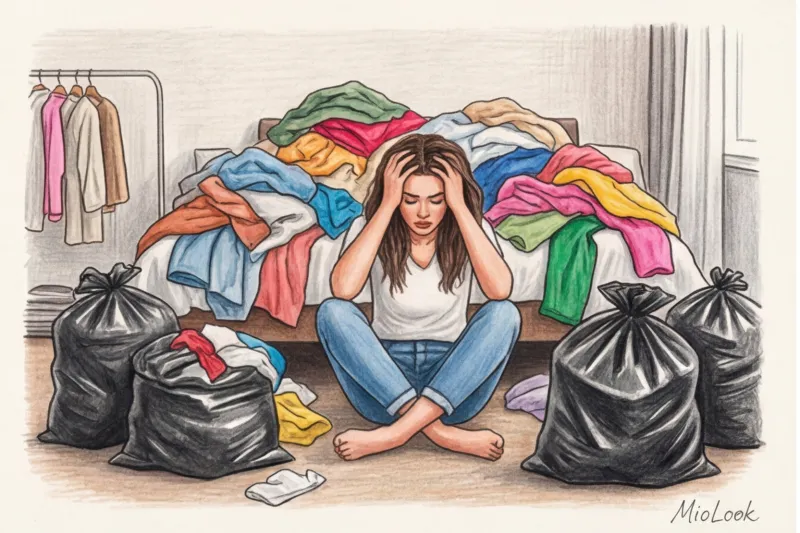
Now I'm going to say something that fans of Marie Kondo and popular shows about organizing space will categorically disagree with. Radical decluttering in one day is a psychologically traumatic experience that often backfires.
When, in a fit of determination, you shovel half your closet into black trash bags, your brain experiences the stress of loss. The phenomenon of revenge shopping occurs. The resulting void on the hangers triggers panic: "I literally have nothing to wear to the office!" Over the next 3-6 months, you'll give in to anxiety and buy even more random items of dubious quality to fill the gap. The law of conservation of energy operates in the wardrobe: without changing your shopping patterns, your closet will always return to its previous size.
Ready to start a mindful approach?
Try the free MioLook plan—our smart assistant will analyze your wardrobe without stress or drastic cleansing.
Get access — €0.99 onceStep-by-step therapy: healing the closet using psychology
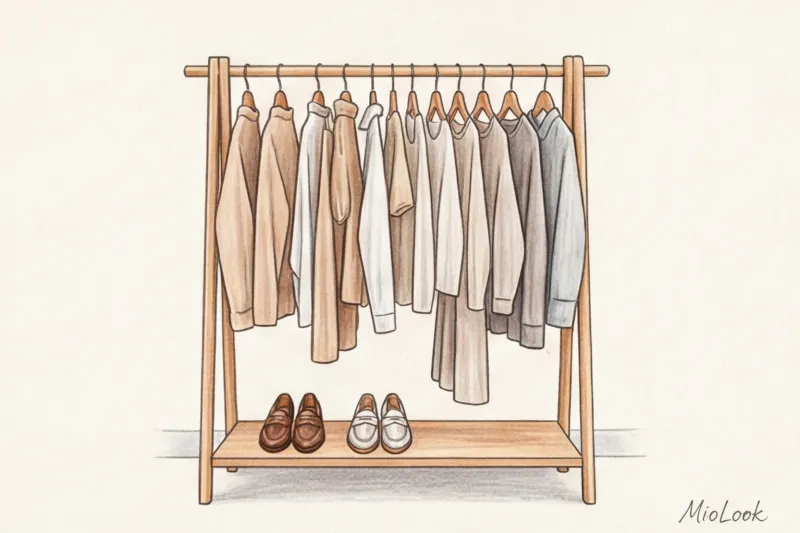
If radical cleaning doesn't work, how to find the true reasons why you have a full closet but nothing to wear , and fix the situation? I use a gradual audit method with my clients.
- Make a "Life Diagram". Be honest about the percentage of your time you spend at the office, at home, outdoors, and at parties. If 70% of your time is spent at work with a casual dress code, and 60% of your closet is filled with silk slip dresses and tailored jackets, we've found the root of the problem.
- The "Blind Quarantine" technique. Don't throw away controversial items right away. Place them in an opaque container and put them out of sight for 30 days. This will remove any emotional attachment. If you haven't thought about the item for a month, it's time to say goodbye. A fair caveat: this method doesn't work for distinctly seasonal outerwear—hiding a down jacket in the summer is pointless.
- Think in terms of ready-made formulas, not units. Stop buying "just a nice sweater." When you bring a sweater home, you should immediately be able to create at least three or four outfits with it from what's already in your closet.
Stress-Free Wardrobe Management: How Technology Reduces Anxiety
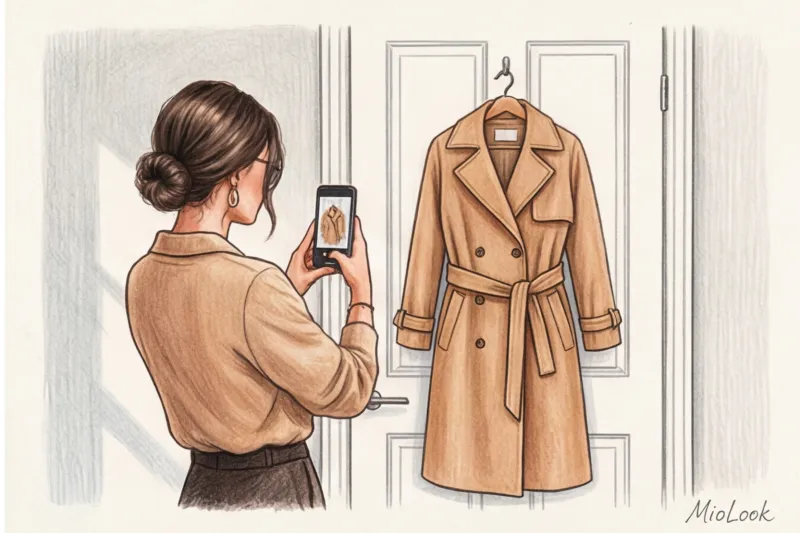
Memorizing a closet full of 150 items is physically impossible. That's why technology is becoming the best antidepressant for shopaholics. Digitizing your wardrobe turns off your emotions and turns on cold logic.
When the client moves her things in MioLook app , magic happens. Seeing your things in a neat grid on your smartphone screen, abstracted from brands and prices, your brain stops panicking. Artificial intelligence takes over the mathematical overload Schwartz described and generates ready-made combinations based on the weather and occasion.
Your perfect look starts here
Join thousands of users who look flawless every day and save time in the morning with MioLook.
Get access — €0.99 onceSummary: From Wardrobe Anxiety to Stylistic Confidence

Let's be honest: an overflowing, bursting closet isn't a sign of wealth or refined taste. More often than not, it's an indicator of unresolved psychological needs, fear of the future, or nostalgia for the past. The "nothing to wear" syndrome isn't cured by shopping sprees or trash bags, but by having an honest conversation with yourself about who you are today.
Your wardrobe is simply a tool. It should serve your life, save you time in the morning, and give you confidence. If it's currently a source of stress, it's time to take control. And it shouldn't start with a new purchase, but with an overhaul of your habits.