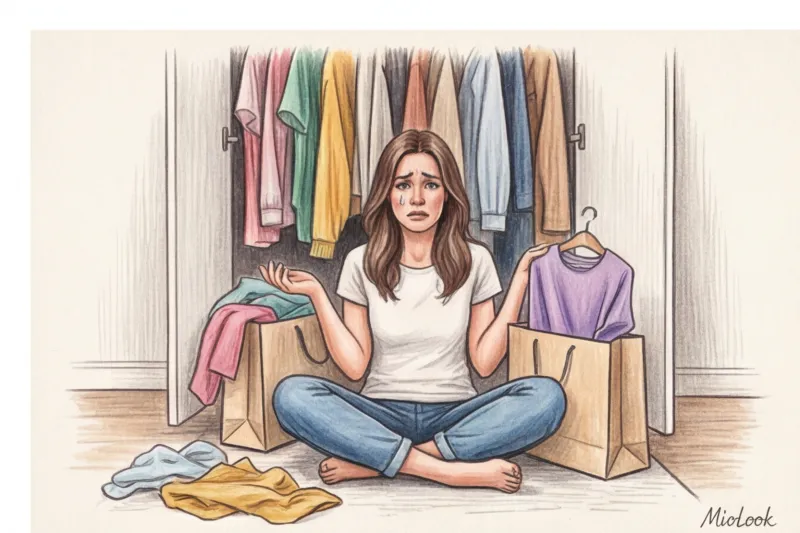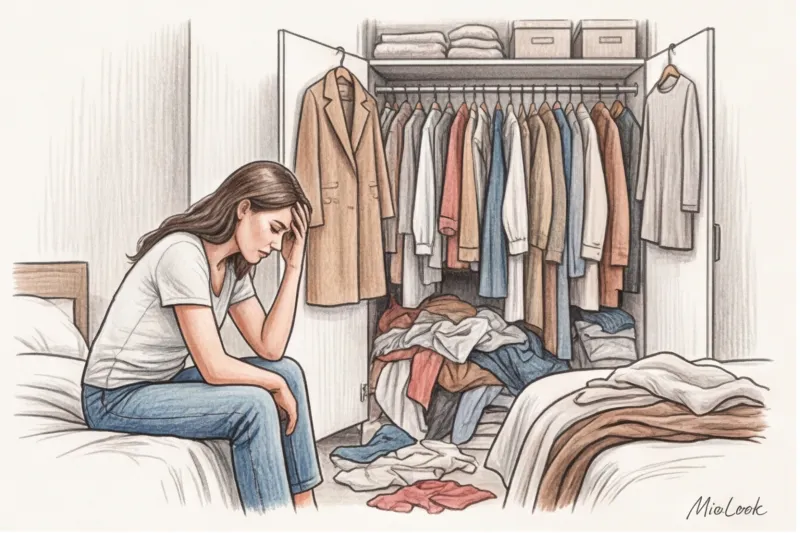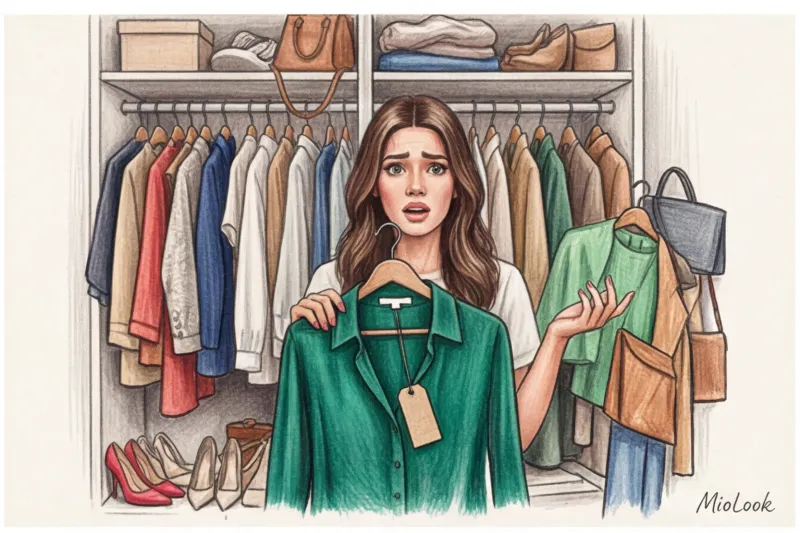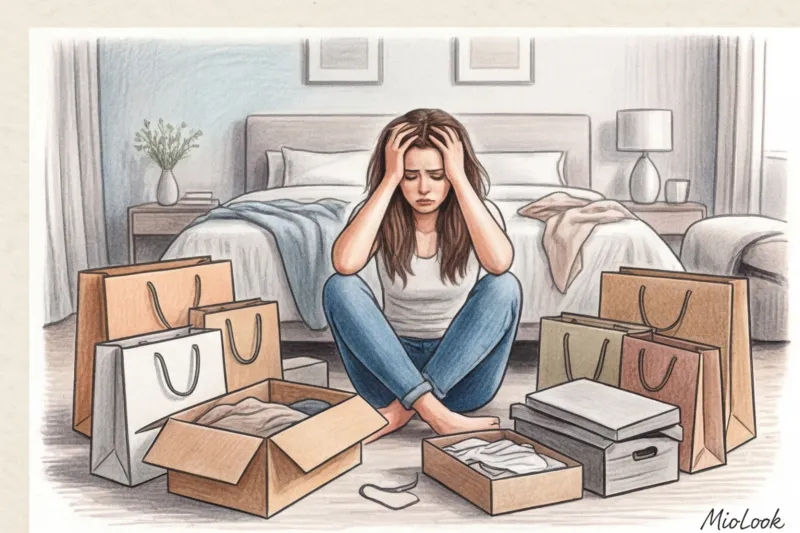
Several years ago, Anna, a top manager at a large IT company, approached me. While sorting through her enormous closet, we discovered fourteen white shirts. They were almost identical: cotton, classic collars, cuffs with cufflinks. Five of them still had the tags. When I asked her why she needed so many identical items, Anna reflected: "Every time after difficult negotiations with investors, I go to Massimo Dutti and buy a shirt. At that moment, I feel like I'm back in control of my life."
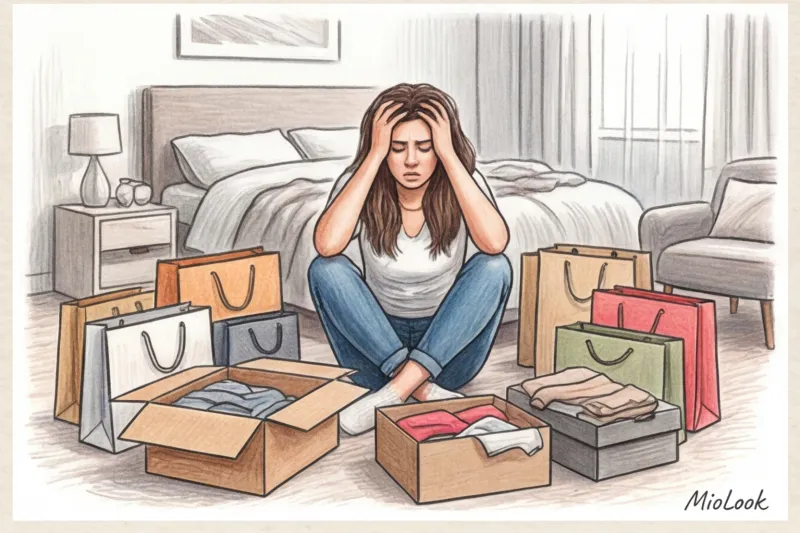
Anna wasn't looking for clothes. She was buying stress relief. Emotional clothing shopping — it's a band-aid we apply to a tired psyche. We try to drown out anxiety with silk and boredom with sequins. We discussed this mechanism in more detail, and what an overflowing closet screams about, in our complete guide to wardrobe psychology.
In this article, as a practicing stylist, I won't give you clichéd advice like "just delete the shopping apps." That won't work. We'll explore how to legitimize your need for emotion and redirect shopping to a safer path, preserving both your nerves and your wardrobe.
What is emotional clothing shopping and why do we fall into it?
Buying clothes emotionally is an act in which the item is not a goal, but a tool. You're not buying trousers for the office; you're buying a feeling of ease, confidence, and security.
The study, published in the authoritative Journal of Consumer Psychology (2014) revealed a staggering figure: the act of purchasing is 40 times more effective in restoring a person's sense of control over their lives than simply window shopping. In moments of chaos or life crisis, the act of choosing and paying ("I wanted it—I took it") becomes a therapeutic ritual.
But there is a trap here - the famous dopamine loop Neuroscientists have long proven that the maximum release of dopamine (the hormone of anticipation of a reward) occurs at the moment expectations The feeling of purchasing and clicking the "Pay" button, not the moment you actually own the item. As soon as you cut the tag off a €150 dress, the magic wears off. The high lasts 24 to 48 hours, followed by a feeling of emptiness and often guilt.
Stress, boredom, and burnout: three main triggers
Over 12 years of working with women's wardrobes, I've identified three main failure scenarios:
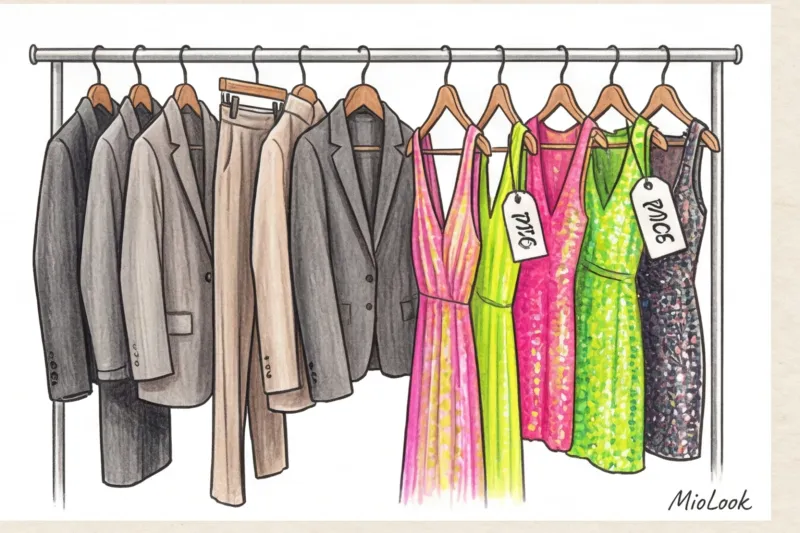
- Shopping for tiredness: The classic "I worked so hard, I deserve it" attitude often results in the purchase of unjustifiably expensive status items that are dreadful to wear every day.
- Shopping out of boredom: When life gets routine, a trip to Zara for a bright, ultra-trendy top (that you'll only wear once) is the quickest way to get a shot of novelty.
- Shopping due to anxiety: An attempt to "buy" security. It's in this state that we buy duplicate items—that tenth gray turtleneck—because it feels like armor.
Your perfect look starts here
Join thousands of users who look flawless every day with MioLook.
Get access — €0.99 once5 Types of Things We Buy on Emotions (and Never Wear)
Analyzing hundreds of closets, I see the same patterns. Emotional purchases always leave specific clues.
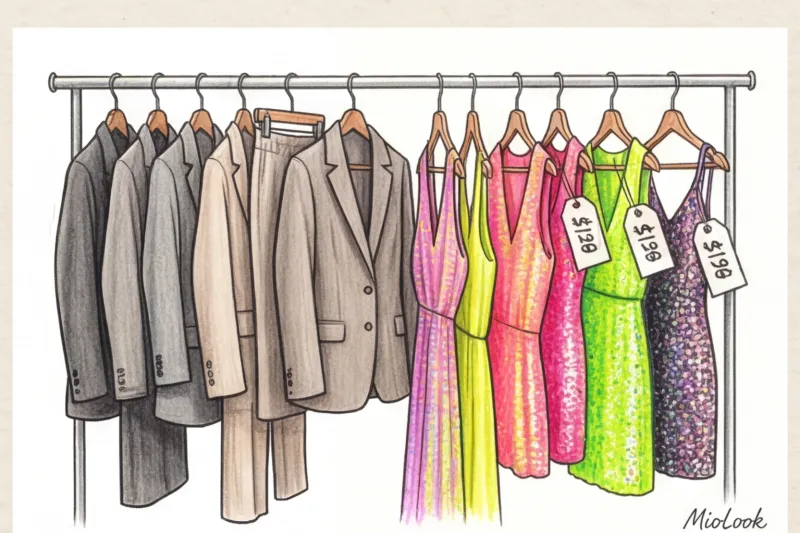
- Clothes for the "Fantasy Me". A copywriter client of mine who works from home kept a collection of six silk evening slip dresses. These are clothes for the life you don't live but really want.
- Motivating things. Those jeans that are a size too small, bought "to motivate me to lose weight for summer." Spoiler: they only serve as a daily reminder of your imperfections, generating further stress.
- Duplicates. You walk into COS, see the perfect wool jumper for €90, and buy it in three colors. Peace of mind is assured, but your wardrobe loses its variety.
- Ultra-trends. TikTok-inspired items bought at the height of their emotions. An attempt to quickly feel young and relevant, which ends with the thought, "This isn't me at all."
- Items at a huge discount. You're not buying a cashmere coat; you're buying a bargain. If something cost €400 and now costs €90, your brain switches off critical thinking.
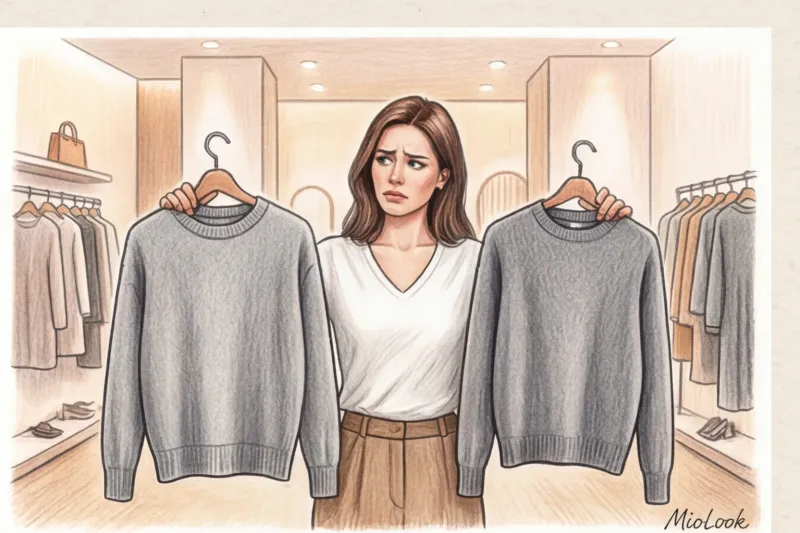
How to distinguish impulse shopping from a genuine need
How can you tell what's driving you right now—a real wardrobe task or a surge of cortisol? Ask yourself about the source of the desire. Are you physically cold in the mornings and need a coat, or did you see an aesthetically pleasing reel on Instagram and want that "very" beige aesthetic?
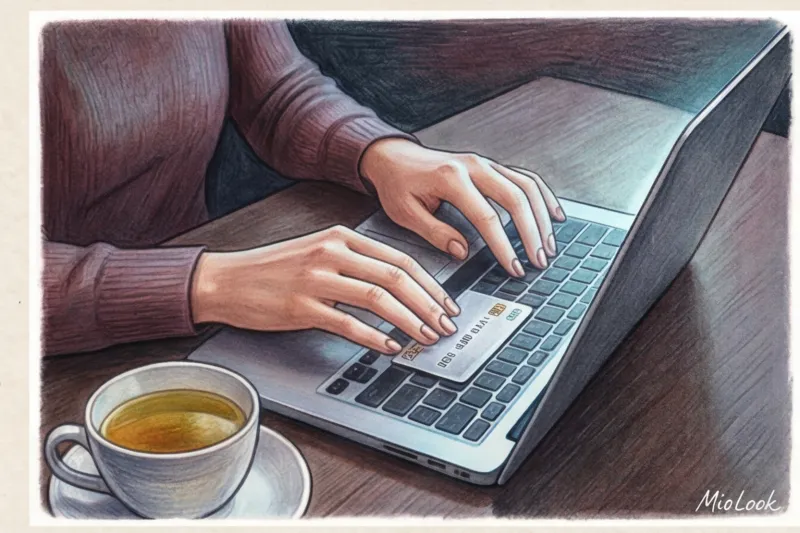
The symptoms of an emotional purchase are always the same: a sense of urgency (“I need to get it now while it’s still my size”), ignoring the fit (it’s a little tight in the shoulders, but what a brand!) and an unwillingness to consider cost per wear.
My personal rule for clients: Never ring up a check until you can mentally create at least 3 different looks with that item from what's ALREADY hanging in your closet.
Why strict bans (like "No Shopping Year") don't work
The "no-buy year" trend is popular online right now—a year without buying clothes. As a stylist, I'm categorically against such radical experiments. It's counterintuitive, but a strict ban is the worst thing you can do to your wardrobe.
The mechanics here are exactly the same as with eating disorders. The cycle of restriction, relapse, and guilt is inevitable. You ban yourself from shopping for eight months, holding on through sheer willpower, and then Black Friday arrives, you fight with your boss, and spend €500 on completely incompatible items on sale.
Let me clarify: this advice doesn't work for everyone. People with clinical oniomania (shopaholism), who drive themselves into credit card debt, truly need rigorous detoxification and the help of a therapist. But for 90% of women, prohibition only fuels neurosis. You can't block an emotion, but you can change the way you experience it.
Access to MioLook for €0.99 — one-time payment
A smart AI stylist will select the perfect look.
Get access — €0.99 onceA Mindful Wardrobe: 4 Steps to Breaking the Vicious Cycle
To stop buying unnecessary things, you need to face reality. American psychologist Barry Schwartz, in his book "The Paradox of Choice" (2004), brilliantly demonstrated that the more options we have (things in our closets), the higher our anxiety levels and the more difficult it is to decide what to wear.
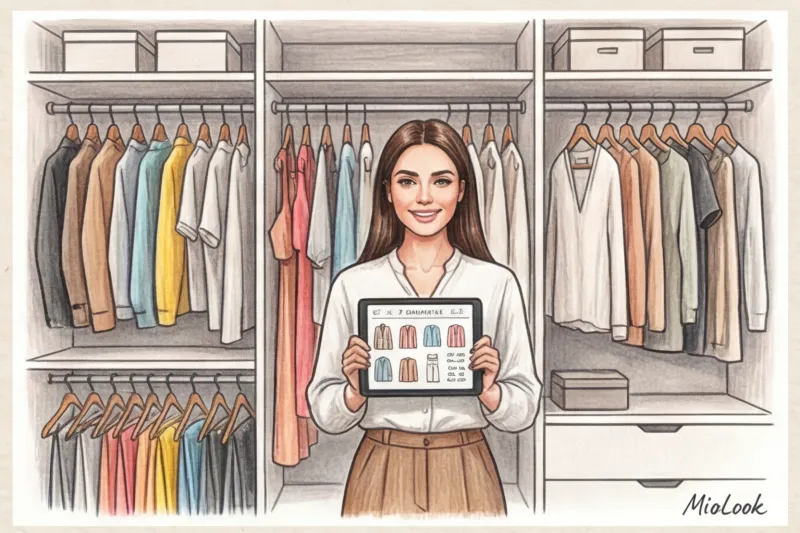
Here are 4 steps that I implement in my consultations:
- Inventory and digitization. Take everything out. Absolutely everything. Seeing a mountain of clothes on your bed will give your brain a shock. To avoid having to think about it, digitize your things. Add them to an app. MioLook - this will remove the illusion of “I have nothing to wear.”
- 24/48 hour rule. Seen a cool bag online? Add it to your cart and close the website for two days. The dopamine rush will subside, and 8 out of 10 times, you won't even remember what you wanted to buy.
- Maintaining a Wish List. Transfer your wishes from your shopping cart to notes. The mere act of writing them down reduces the tension.
- Alternative tactility. Shopping is often a search for physical sensations (smooth silk, soft cashmere). Get a massage, take an oil-infused bath—this will satisfy your physiological need for body care more cheaply and effectively than buying another jumper.
"Dopamine Budget": How to Treat Stress Without Ruining Your Closet
If we accept that shopping is a legitimate stress reliever, let's budget for it. Concept dopamine budget — This is my favorite tool. Set aside a fixed amount per month (say, €50–€100) that you can spend on any silly thing without feeling guilty.
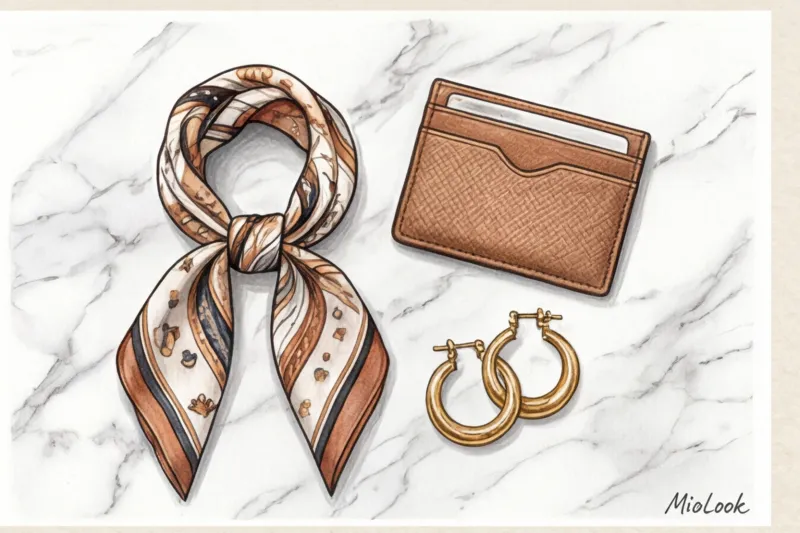
But this money needs to be invested strategically. Where is it safe to invest emotions without damaging the foundation?
- Complex textures and accessories. A silk scarf for €60, fancy tights, a high-quality leather cardholder. These are items that take up minimal space but radically change the style of a basic outfit.
- Status jewelry. Buying a statement pair of earrings or a vintage brooch brings a tremendous surge of joy. We've covered how to invest in metal jewelry in detail in this article. about choosing quality jewelry.
- Heavy luxury in miniature. Cosmetics and perfume are the perfect clothing substitute. A €45 Chanel lipstick or a luxury brand hand cream will give you the same unboxing aesthetic, beautiful packaging, and sense of luxury as a €500 dress, but won't leave you hanging like dead weight in your closet (read our guide to beauty minimalism ).
Stylist Checklist: 5 Questions to Ask Before Checking Out
Save this list to your phone. Before you swipe your card or tap Apple Pay, pause for 30 seconds and ask yourself this honestly:
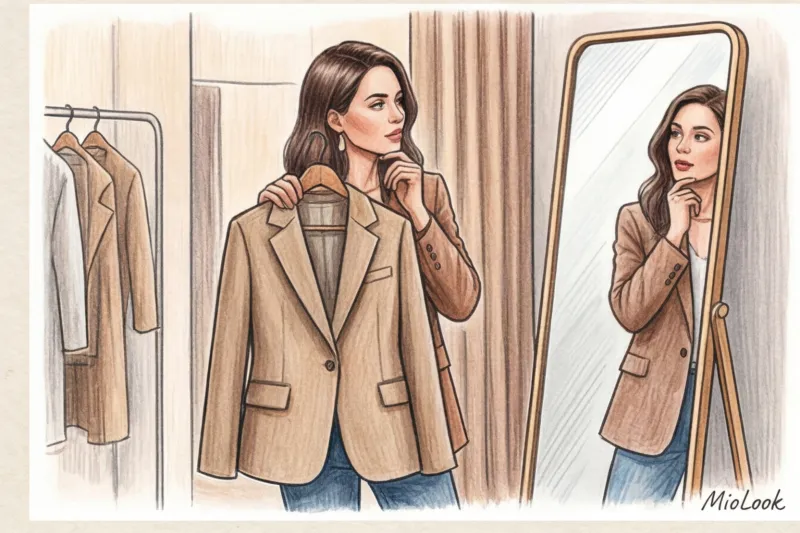
- Who am I buying this for? For my real life (where I walk the dog and take the subway to the office) or for my fictional one (where I drink champagne on a yacht every night)?
- What do I feel now? Am I dead tired, bored, or am I genuinely excited about how this piece will fit into my style?
- What will I wear this with? Name three specific items from your closet (not those that need to be bought, but those that you already have).
- The price of the issue. If this item was currently 50% off, would I buy it at full price? If the answer is "no," you're buying the discount, not the item.
- When is the premiere? Where exactly will I wear this in the next 7 days? If the answer is "New Year's" (and it's April), leave it in the store.
Your wardrobe isn't a repository for unprocessed emotions or a therapist on call. Clothes should serve you, enhance you, and make life easier. Allow yourself to feel stressed, tired, or sad without immediately trying to wrap these feelings in new Zara wrapping paper. Mindfulness begins the moment you realize: you don't need another sweater. You need rest.