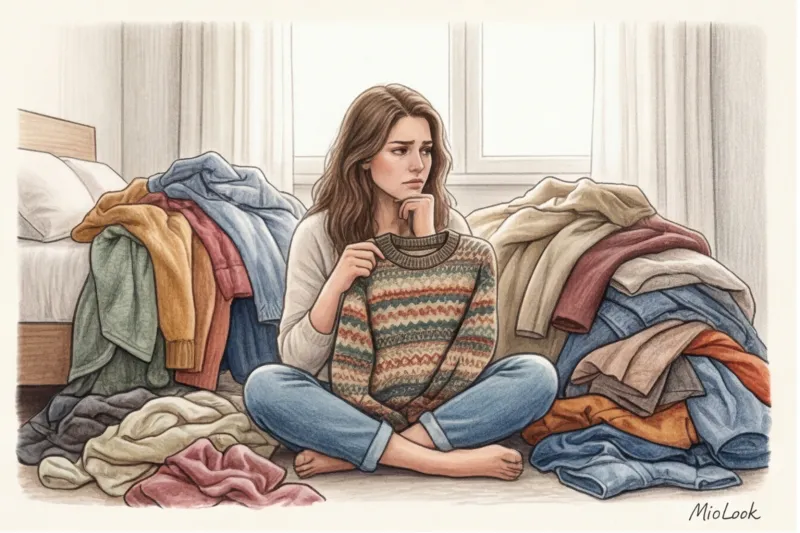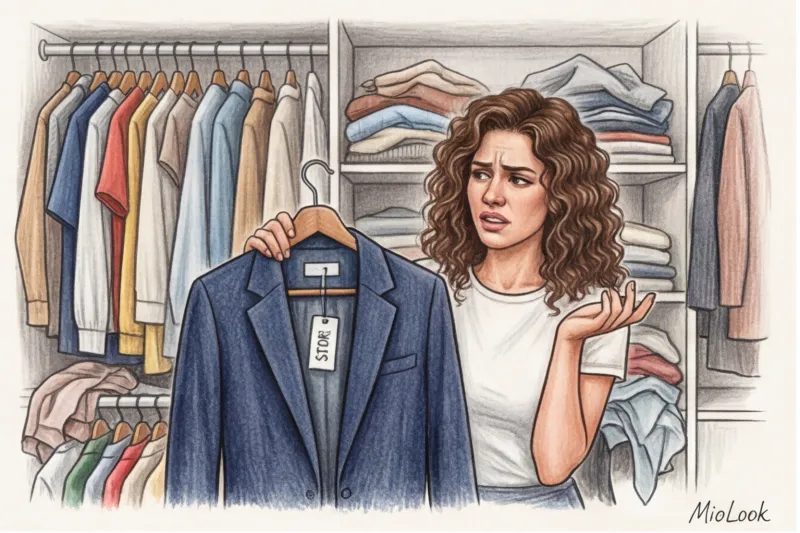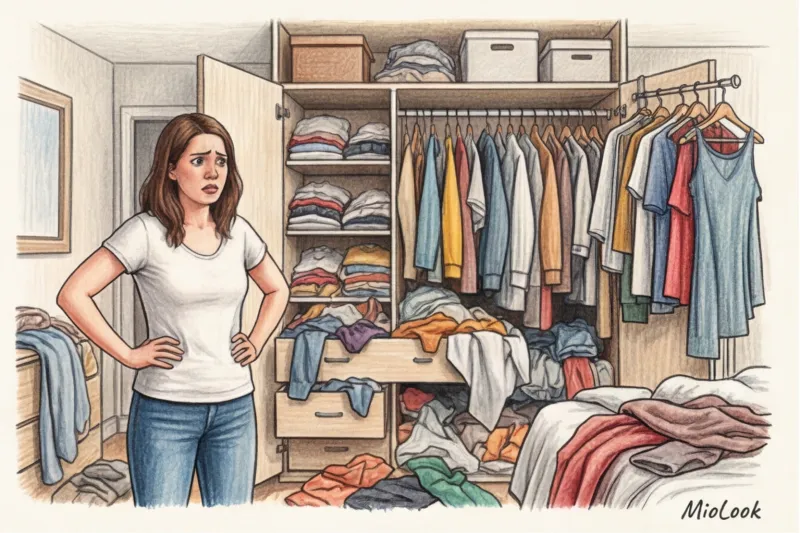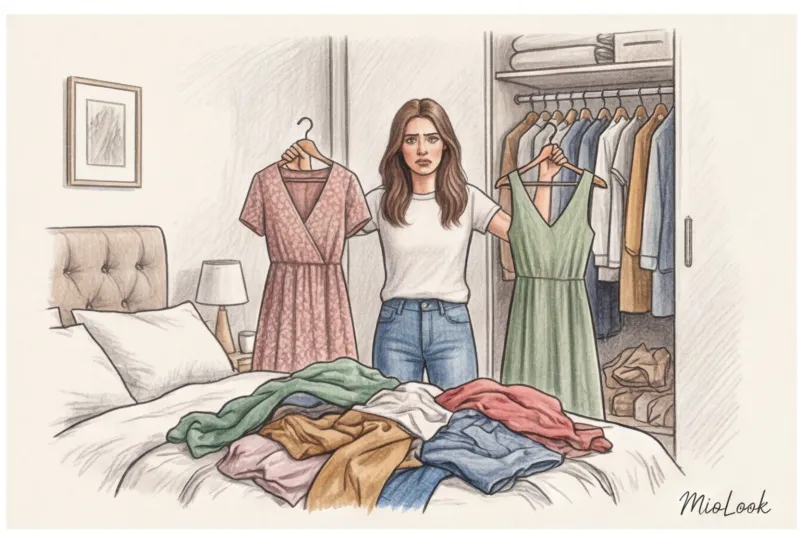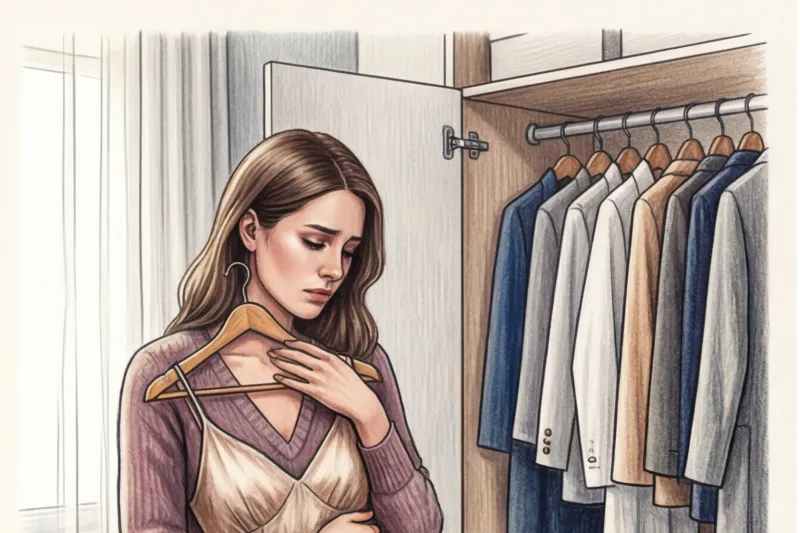
One of my clients kept a vintage Armani jacket she inherited from her mother for 10 years. It hung in the very center of her closet, sandwiched between casual T-shirts and office blouses. Due to constant friction, the delicate wool began to pill, the hangers deformed under the weight of the surrounding hangers, and the closet itself physically refused to close in the morning. The client never wore the jacket—it didn't fit or suit her style. But every attempt to even rehang it brought tears to her eyes.
After 12 years as a stylist and over 500 hours spent sorting through other people's closets, I've become convinced: half of what hangs on our hangers isn't clothing. It's frozen emotions. If you've ever wondered why your closet is overflowing with fabrics but you have nothing to wear, know that it's not a lack of taste. We've explored the systemic causes of this phenomenon in more detail in our The Complete Guide to Wardrobe Psychology: Why Your Closet Is Full, But You Have Nothing to Wear But today I want to talk about the most painful aspect - sentimental ballast.
Popular advice is to "just throw out anything you haven't worn in over a year." As an investment wardrobe expert, I strongly disagree. I offer you a museum curator's approach: we don't destroy memory. We save true relics by transferring them to the "archive," and we purge your active wardrobe for the life that's happening right now.
Why We're So Sorry to Throw Out Old Things: The Psychology of Attachment
For many women the phrase "It's a shame to throw away old things (psychology)" becomes the most common search query after yet another unsuccessful attempt at decluttering a closet. Why is it so difficult? The answer lies not in your indecisiveness, but in the fundamental features of our brain.
In behavioral economics, there's a concept called the "endowment effect," described by Nobel laureate Richard Thaler back in 1980. The idea is simple: we unconsciously overestimate the value of an item simply because it belongs to us. In my practice, clients regularly value their worn, pilling cashmere sweater as highly as a brand-new silk top from a boutique. The brain activates an "emotional premium," completely ignoring the item's actual value and its degree of wear.
It's important to learn to distinguish between three things: the purchase price, the cost of craftsmanship, and that emotional premium. If a dress is made of polyester in a mass-market factory, but you kissed in it on your first date, its emotional value is enormous, but its objective value is zero. You're not preserving the fabric. You're preserving a memory.
Clothes for the "Fantasy Self" versus the "Real Self"
Another reason for overcrowded shelves is a conflict of identities. We often store things for another life: evening dresses for red carpets (which we don't attend), expensive hiking gear (since 2018), or formal suits after switching to remote work. When choosing the perfect wardrobe for a freelancer , my clients often resist: “But I can go to the office again!”
These old clothes prevent us from accepting ourselves in the present. They create the illusion that our current life is a rough draft. But your wardrobe should serve your real life today, not your fantasies about tomorrow or nostalgia for yesterday.
Access to MioLook for €0.99 — one-time payment
A smart AI stylist will select the perfect look for your real life from your clothes.
Get access — €0.99 onceThree types of sentimental traps in our closet
To cure the problem, you need to get a proper diagnosis. Take a look in your closet right now. We bet you'll find representatives of all three categories.
- Type 1: "Memory clothing". Your wedding dress, your university sweatshirt, the worn leather jacket you wore while traveling through Italy. These things have served their purpose. They're beautiful, but they don't belong on the same rack as your basic work blazer.
- Type 2: "Clothing-hope". Jeans three sizes too small. A pencil skirt from before pregnancy. This is the most toxic motivator of all. According to body psychology research, having clothes in your closet that are too small doesn't motivate you to lose weight; on the contrary, it increases cortisol levels (the stress hormone) and lowers self-esteem in 73% of women. You literally start every morning feeling inadequate.
- Type 3: "Clothing-guilt". €650 shoes that irritate your feet. A designer bag your ex-husband gave you that completely clashes with your style. You're embarrassed to throw them away or give them away because of the price tag.
Here I always ask clients to count Cost Per Wear (cost per outing). If you buy loafers for €400 and wear them 100 times, your cost per outing is €4. That's a great investment. But if you buy a jacket for €800 and haven't worn it once in two years, that's not an investment. It's a tax on your guilt, which you continue to pay every day you look at it.
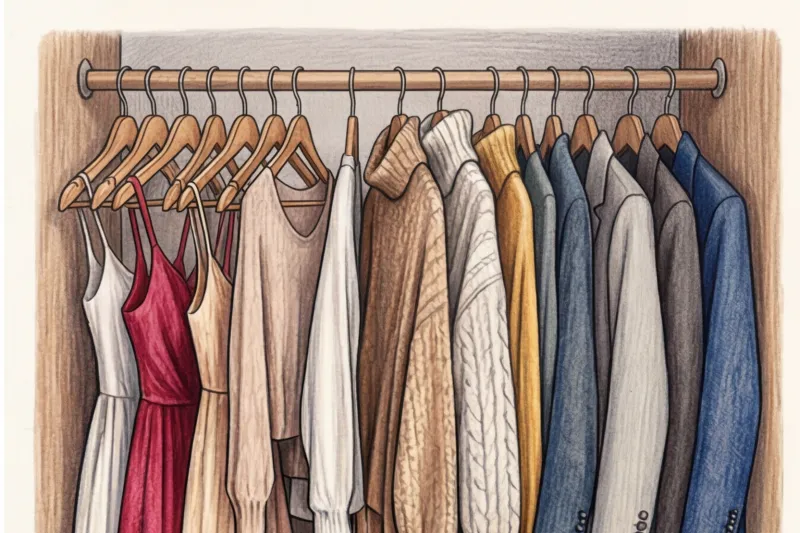
The Paradox of Choice: Why Memorabilia Has No Place in an Active Wardrobe
American psychologist Barry Schwartz brilliantly described the "Paradox of Choice" in his 2004 book. The more options we have, the greater our cognitive overload and the lower our satisfaction with the decision we make. Apply this to your morning routine.
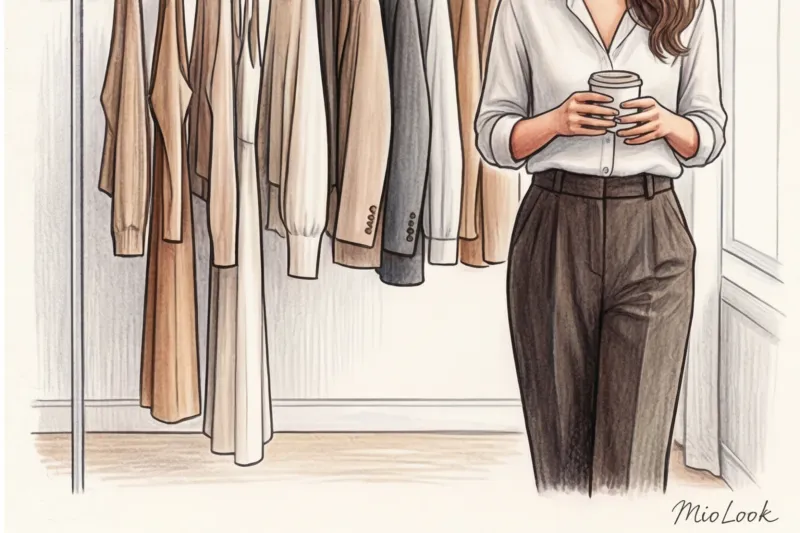
Every time you rummage through the hangers looking for a white shirt, your gaze stumbles upon a "Guilt Clothes" or a "Hope Clothes." Your brain processes these emotional triggers in a split second. "Oh, those jeans... I still don't fit into them," "And that dress is from that night we had a fight." By the time you find the right shirt, you've already expended a colossal amount of mental energy.
"An active wardrobe is a utilitarian tool for your current life. It's not a photo album, a museum of your mistakes, or a repository of unfulfilled hopes. The visual noise in your closet equals the visual noise in your head."
This is why clear separation is crucial. To simplify this process, I always recommend using the digitization function in MioLook — When you see your wardrobe sorted on your phone screen, the magic of the "endowment effect" weakens, and making rational decisions becomes much easier.
The Curator's Method: How to Learn to Let Go of the Past
For many things, the best solution is a paradigm shift: from "throw it in the trash" to "pass it on" or "transform it." We're afraid to get rid of things because we feel like we're erasing the memory along with the fabric.
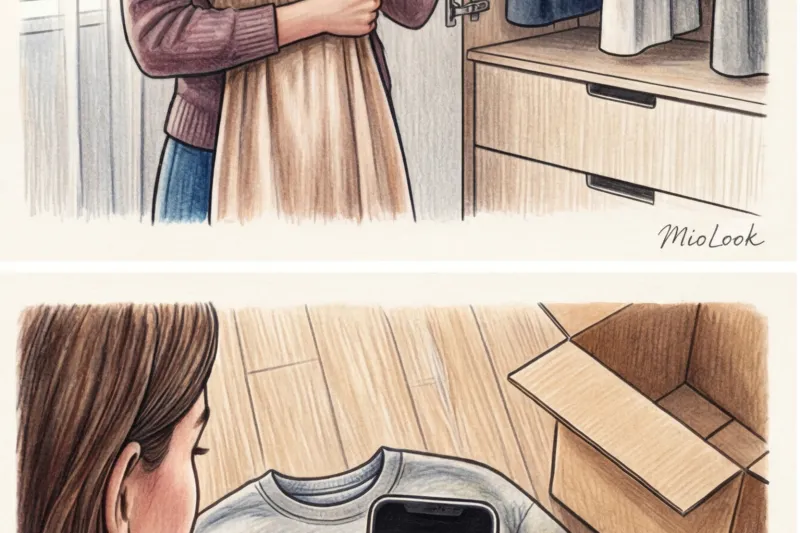
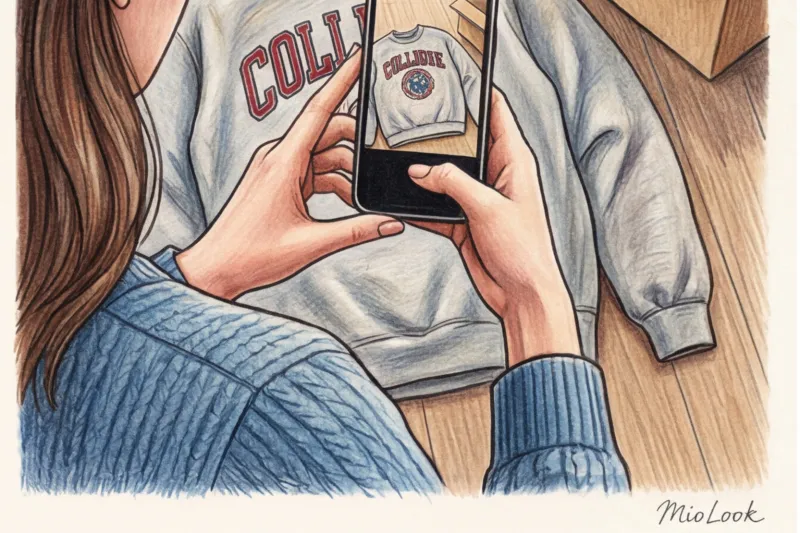
Try the practice "digitization of memories" Wear this commemorative sweatshirt, take a beautiful photo, and write a story about it in your phone's notes. You've preserved a memory. Now you can donate the item to charity (read more about how to do this sustainably in our article). Where to donate old clothes ).
Luxury and premium items deserve a special mention. Genuine Italian leather, Loro Piana cashmere, dense silk—these materials were crafted by artisans to live, move, and breathe on the human body. When you keep a Celine bag in a dark closet for years, you're not taking care of it. You're disrespecting the work of its creators. Selling a designer item on a reputable resale platform (even if you bought it for €1,200 and sell it for €350) is an act of conscious consumption and respect for quality.
Your ideal image begins Here
Join thousands of users who look flawless every day with MioLook. Organize your wardrobe smartly.
Get access — €0.99 onceA Stylist's Counterintuitive Approach: Creating a "Fashion Archive"
Here I want to say something you won't hear from minimalist fanatics: you don't have to get rid of everything If something is truly unique and dear to your heart, it deserves to stay with you. But it must be stored properly.
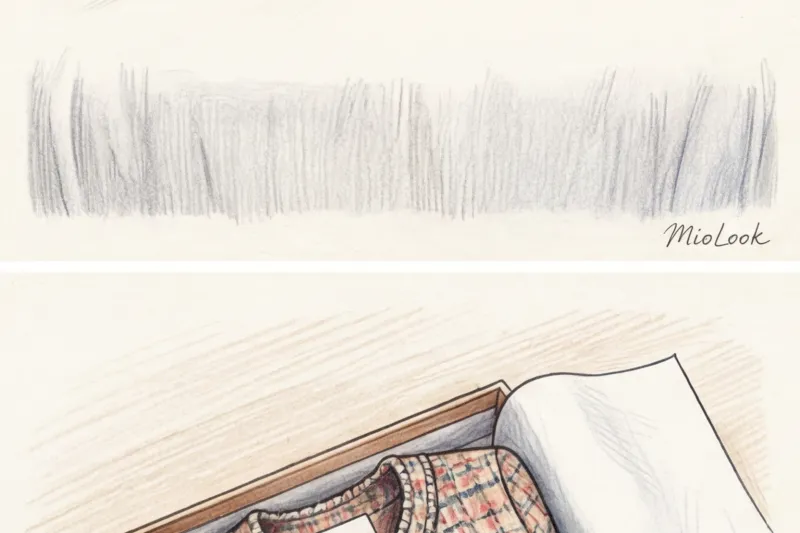
Let's learn from The Costume Institute. How do they preserve haute couture? They create an archive. Create your own at home.
- Hard limit: Choose 3 to 5 of your most iconic, historically significant items. Any more than that and you'll be storing them away.
- Conservation: The item must be perfectly cleaned (dry cleaning is a must - the slightest traces of sebum or perfume will turn yellow over time and attract moths).
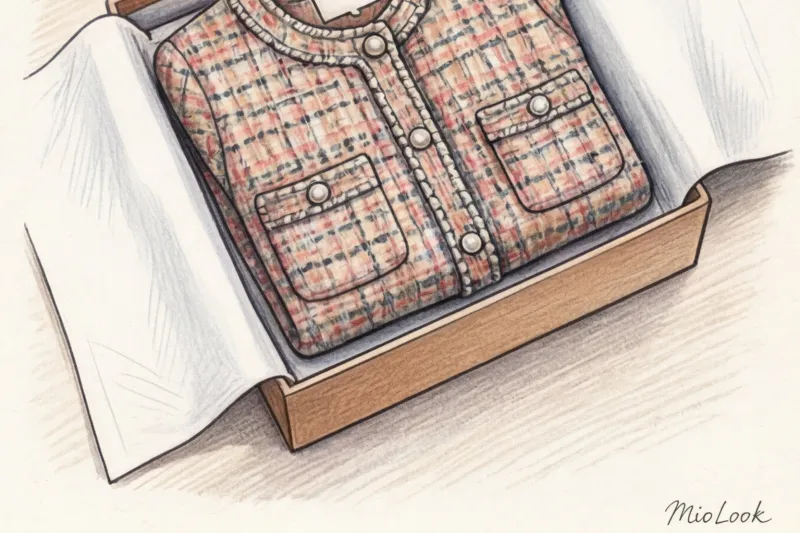
- Plastic-free packaging: No vacuum bags! Natural fabrics need to breathe. Use acid-free tissue paper for folds and undyed cotton bags. We wrote a separate guide on how to extend the life of items during storage..
- Location: Your archive should be kept far From your active wardrobe. On the top shelf of the mezzanine, in a nice suitcase under the bed—anywhere, but it shouldn't catch your eye while you're getting ready for work in the morning.
Checklist: 5 Steps to a Guilt-Free Closet
This process can be emotionally draining. Don't try to do it all in one evening after a hard day at work. Set aside a weekend morning, brew a good coffee, and follow through.
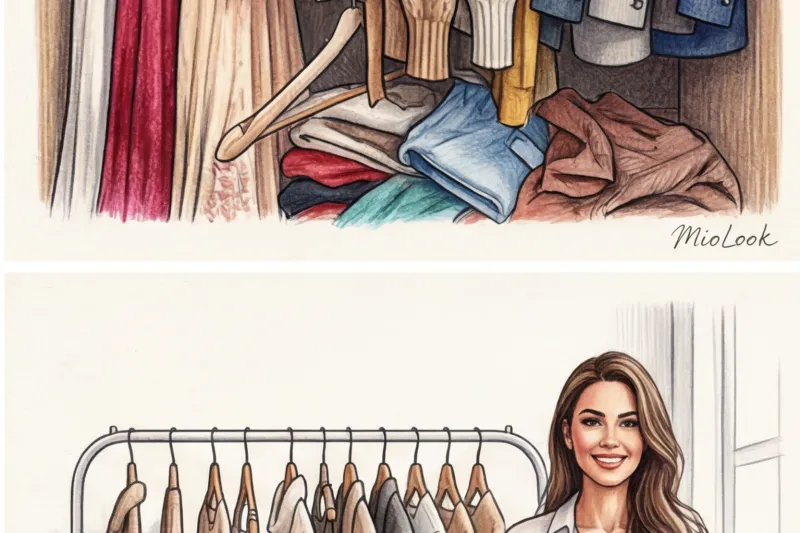
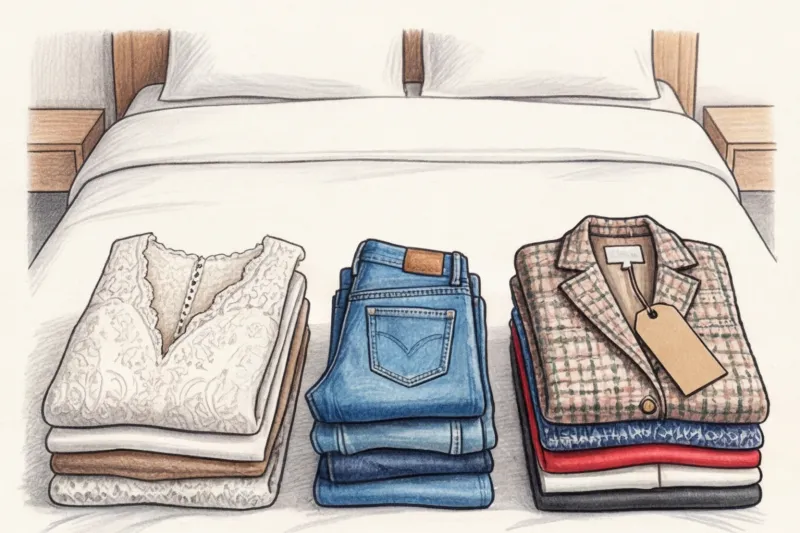
- Step 1. Physical isolation. Remove absolutely everything you haven't worn in the last six months from your daily storage area. Transfer these items to your bed or floor rail.
- Step 2. Checking motivation. Take each item in your hands and answer honestly: "Am I keeping this out of love and admiration (for its craftsmanship/memory) or out of fear and guilt?" If the latter, the item must go.
- Step 3: Eliminate “toxic hope.” Place all mismatched items in an opaque bag. Put it away for six months. If you don't remember them during that time, donate them without looking.
- Step 4. Wiring. Resell expensive mistakes (get some money back and buy something you'll enjoy now). Donate high-quality items to charity. Recycle worn-out items.
- Step 5. Packing the Archive. Carefully pack the remaining 3-5 true relics according to preservation rules and hide them.
I know it's hard to say goodbye to things. But remember one important truth: clearing your shelves of evidence of your past doesn't erase your history. You simply make room for the amazing new chapters that are happening to you right now.
Ready to get started?
Try a free plan—no commitments. Organize your closet and create your dream capsule.
Get access — €0.99 once