In the fall of 2023, standing in the pouring rain outside the Grand Palais before the Chanel show, I witnessed a remarkable sight. Almost all the glossy editors, influencers, and buyers, despite their vastly different backgrounds, were bundled up in oversized jackets, enormous men's trench coats, and oversized sweaters. At that moment, it became absolutely clear: volume was no longer fashionable. Volume had become our universal defense.
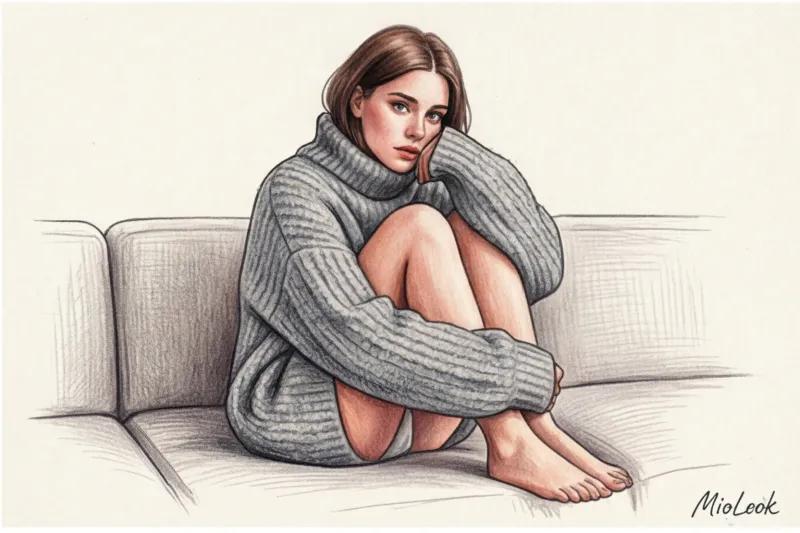
As a stylist with 12 years of experience, I often see a fine line between a trendy silhouette and psychological avoidance of one's own body. The Psychology of Oversized Clothing — this isn't just talk about comfort. It's a deep, unconscious mechanism that forces us to build a physical barrier between ourselves and the world around us. We've already discussed the underlying causes of our fashion habits in more detail in our The Complete Guide to Wardrobe Psychology: Why Your Closet Is Full, But You Have Nothing to Wear , but today I want to examine the phenomenon of “big things”.
Let's be honest: the habit of buying hoodies two sizes too big often stems not from a love of streetwear, but from fear, fatigue, or body dysmorphia. I suggest we remove this armor, examine it under a magnifying glass, and figure out how to transform this shapeless cocoon into a tool of strength.
The Psychology of Oversized Clothing: Why Volume Has Become Our Comfort Zone
To understand why we cling so desperately to oversized cardigans, we need to turn to science. In 2012, psychologists Hadjo Adam and Adam Galinsky coined the term enclothed cognition (embodied cognition). Their research proved that the clothes we wear literally alter our cognitive processes and hormonal levels. When you put on a tailored jacket, your brain receives a signal to "get ready." When you sink into soft, oversized knitwear, your body switches to energy-saving mode.
During periods of global or personal stress, we instinctively seek out the "cocoon" phenomenon. According to a 2024 Business of Fashion analytical report, during times of crisis, sales of oversized clothing consistently soar by 140%. We're not just buying a sweater—we're buying a simulated hug.
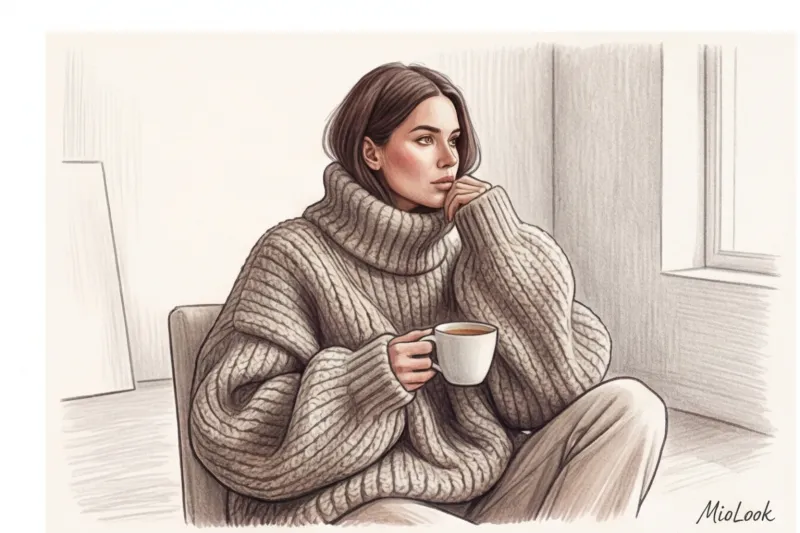
Heavy, bulky knitwear and dense fabrics act like a weighted blanket, which is used in anxiety therapy. The physical pressure of the fabric on your shoulders sends a signal to your nervous system: "I'm safe in my home." The problem begins when this "home" becomes the only place you allow yourself to exist.
From Couture to Therapy: How Fashion Gave Us Legal Armor
Interestingly, historically, oversized clothing was conceived as an act of liberation, not a form of concealment. In 1957, Cristóbal Balenciaga created his iconic cocoon coat, which shocked the public. For the first time, women were free not to show off their wasp-waisted waists, cinched by Dior's corset.
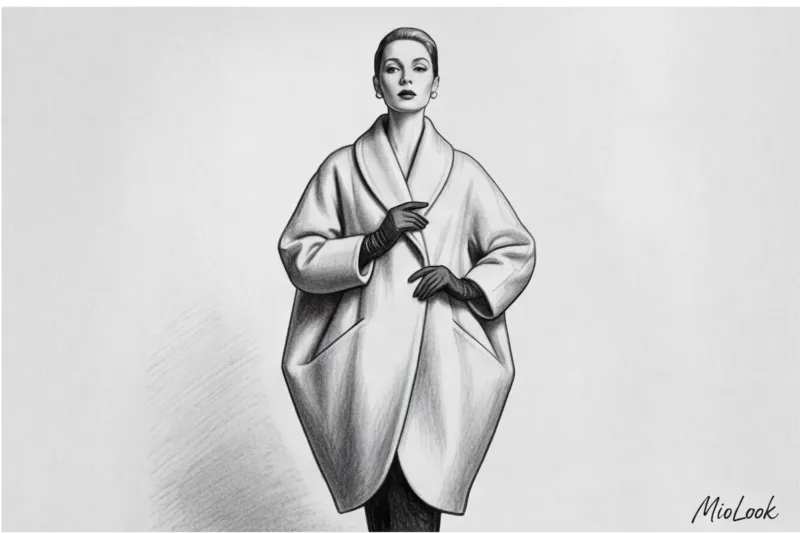
Later, in the '90s, Martin Margiela deconstructed oversized garments into a manifesto against aggressive glamour. But a real psychological shift occurred during the era of Demna Gvasalia. At Balenciaga's shows in recent years, exaggerated shoulders are no longer elegance. They're a metaphor for survival. Watching Demna's models, I always see people who have donned armor to withstand the information noise and pressure of the modern world.
Your perfect look starts here
Join thousands of users who look flawless every day with an AI stylist.
Get access — €0.99 onceThree Main Reasons Why We Hide Behind Shapeless Things
In my practice, when a client comes in with the request "I only want loose and comfortable clothes," we rarely talk about fashion. More often than not, we talk about protection. There are three key psychological patterns that drive us to empty the men's departments at Zara and COS.
Invisible Syndrome: Fear of Evaluation and Body Dysmorphia
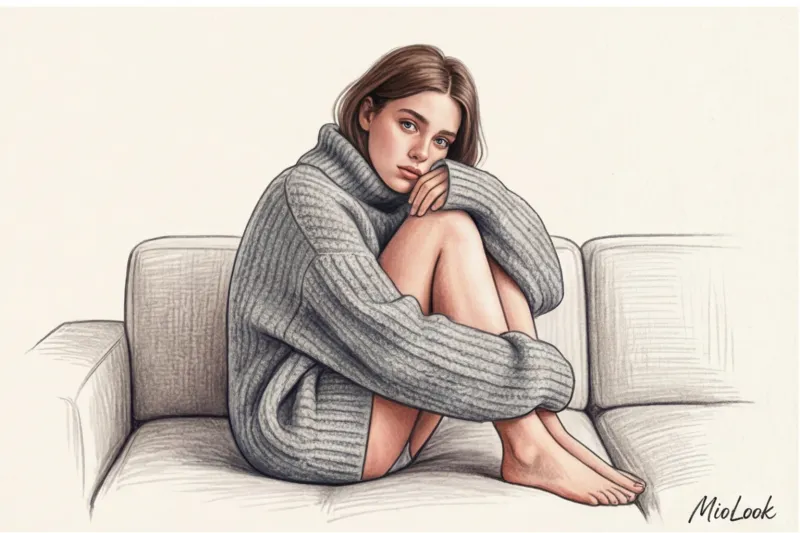
One of my clients switched to an XXL hoodie after having a baby. She convinced me it was for comfort on the playground. But in reality, she was using the extra bulk to disguise changes in her figure that she wasn't yet ready to accept.
"Shapeless clothing is a way of saying to society: don't look at me, don't judge my body, I'm not here."
This desire to become invisible is often linked to a fear of objectification. Women consciously desexualize their appearance to avoid unwanted comments or attention. But the paradox is that by hiding our bodies, we gradually lose touch with our own femininity.
Protecting personal boundaries in an aggressive metropolis
In the dense traffic of a big city, clothing takes on the function of architecture. We use it to create physical distance in the subway, on the streets, or in cafe when we work on a laptop.
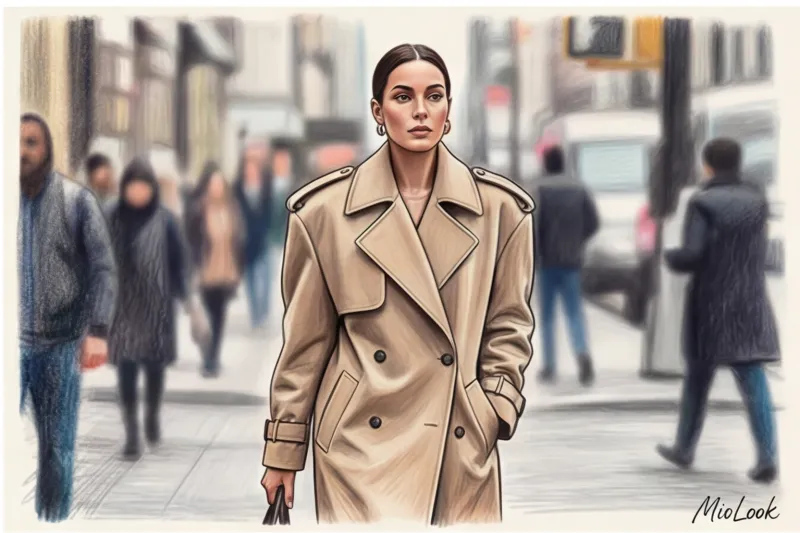
Pay attention to jackets with stiff, exaggerated shoulders. This silhouette sends a clear body language message: "I'm taking up too much space, don't get too close." It's a legitimate way to expand your personal boundaries when physical space is critically limited.
The illusion of control against the backdrop of the paradox of choice
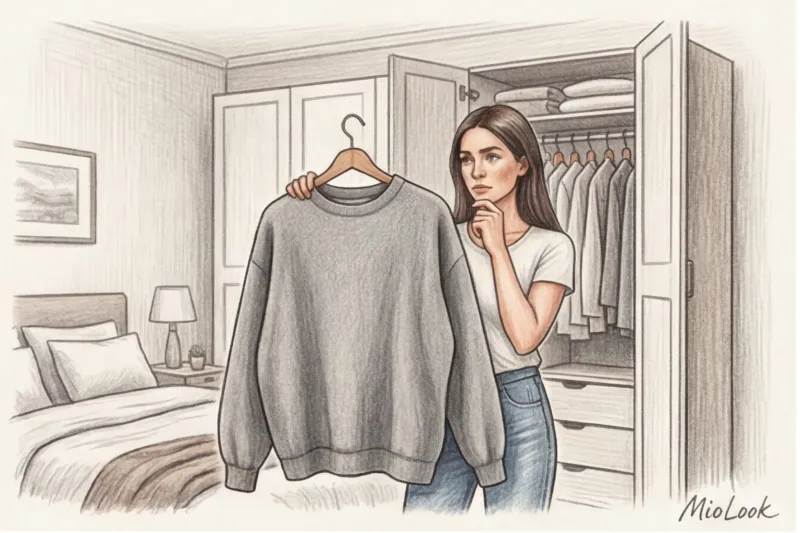
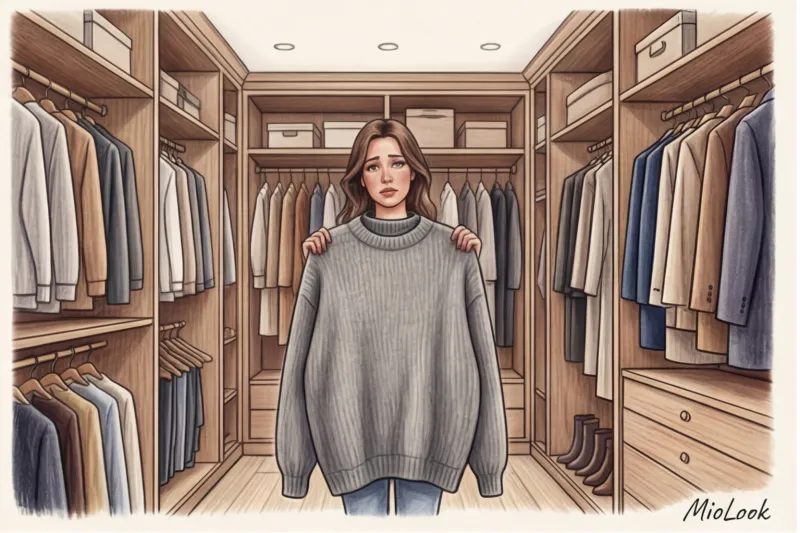
When your brain is overloaded with deadlines, news, and everyday tasks, choosing your clothes in the morning can be the last straw. An overflowing closet triggers panic (the so-called paradox of choice). At that moment, a shapeless gray hoodie seems like the safest and most energy-efficient solution.
By the way, this is exactly the anxiety that is perfectly relieved MioLook When your wardrobe is digitized and a smart AI algorithm suggests ready-made combinations in advance, you no longer have to hide behind a stretched-out sweater out of sheer decision fatigue.
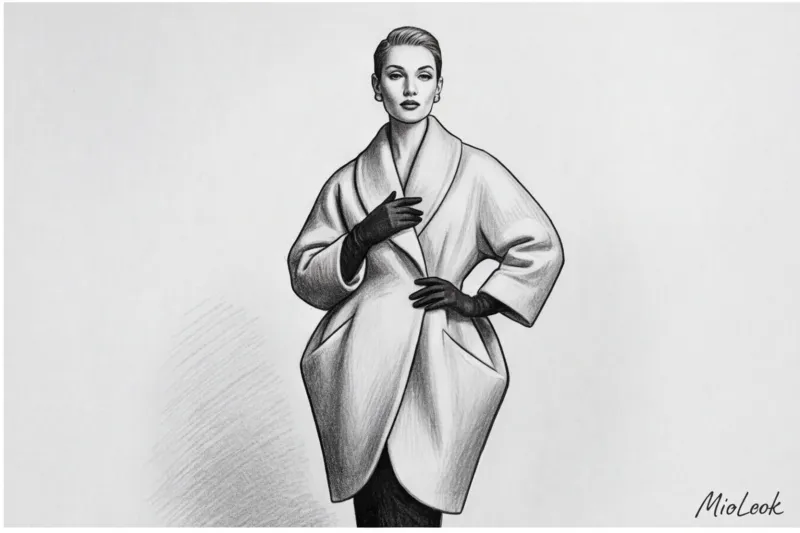
Style or Symptom? How to Distinguish a Fashion Technique from Psychological Avoidance
Now let's debunk the main counterintuitive myth of stylistics: Oversized clothes don't make you look slimmer The conventional wisdom is that wearing a loose robe can hide excess weight. In reality, when you wear a soft, shapeless garment, it clings to the widest point of your figure and falls flat. This visually adds 10 kilograms to your silhouette and makes your look bulky.
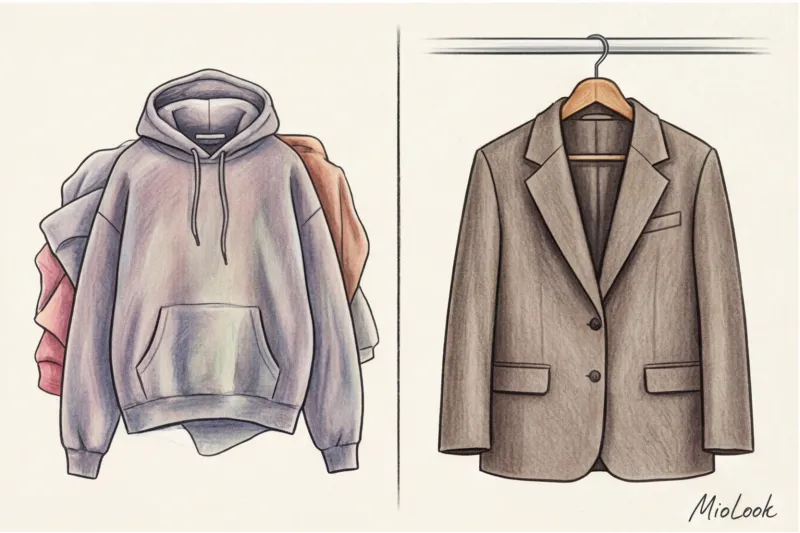
The difference between stylish oversize and psychological avoidance lies in the structure. The fashionable approach is an architecturally cut garment made of dense fabric. The symptom is stretched-out, soft knitwear that has lost its shape.
Before you put on your usual hoodie, ask yourself 3 stylist questions:
- Am I choosing this item because it makes my look more interesting, or because I don't want to think about my body?
- If I felt completely confident today, would I wear this?
- Does this item hold its shape when hung on a hanger?
If you answered in favor of avoidance three times, it’s time to change tactics.
Access to MioLook for €0.99 — one-time payment
A smart AI stylist will select the perfect look that will highlight your best features, not hide them.
Get access — €0.99 onceThe Anatomy of the Right Volume: How to Wear Oversized Clothes Without Compromising Your Figure
To make voluminous clothing work for you, not against you, you need to apply the laws of geometry. True oversized clothing requires a rigid frame and the right proportions.
1. The rule of contrasts. Never pair a voluminous top with voluminous bottoms if you're under 175 cm tall. A wide jacket requires straight trousers or a pencil skirt. Voluminous palazzo pants should be paired with a semi-fitted top. You need to leave a hint of skin to show off your true body proportions.
2. Demonstration of thin areas. This is my favorite rule, which I implement in all my clients' wardrobes. You can wear a giant men's blazer, but you must show off your most graceful features: your wrists, collarbones, or ankles.
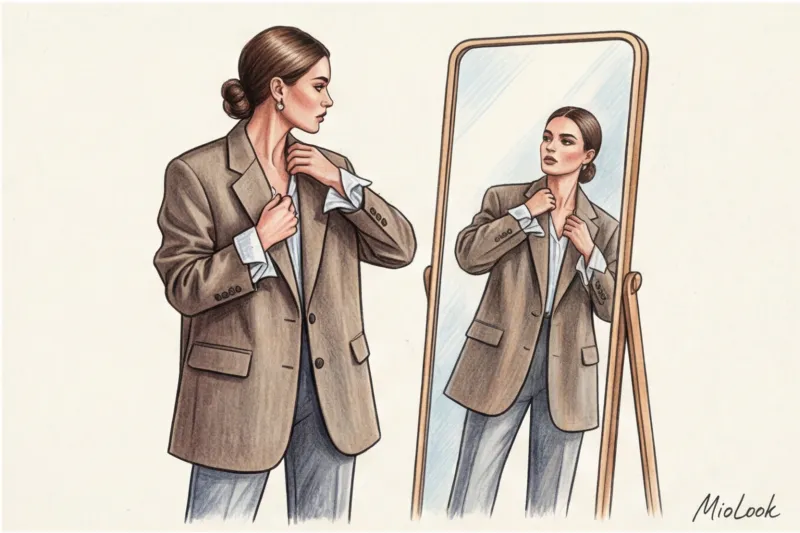
3. Rigid shoulder line. If you're buying a voluminous jacket or coat, the fabric should be thick (for example, wool or cotton with a minimum weight of 180 g/m²), and the shoulders should be padded. A soft, dropped shoulder makes you look hunched. A good, structured jacket made of thick wool can cost between €150 and €300, but it's an investment in your posture.
Fair Limit: This advice doesn't work for everyone. If you have a pronounced inverted triangle body shape with broad shoulders and narrow hips, exaggerated shoulder pads will make you look like an American football player. In your case, it's better to keep volume at the bottom of your silhouette (pinch pants, A-line skirts).
A stylist's checklist: how to emerge from your cozy cocoon in an eco-friendly way
If you've realized that shapeless clothing has become a psychological trap, don't throw out all your hoodies and buy corsets tomorrow. Emerging from your cocoon should be eco-friendly.
Start by auditing your "armor." Pull out all the baggy items and sort out those that are clearly out of style (pilling, stretched elbows, faded cotton). These are the ones that are dragging your self-esteem down.
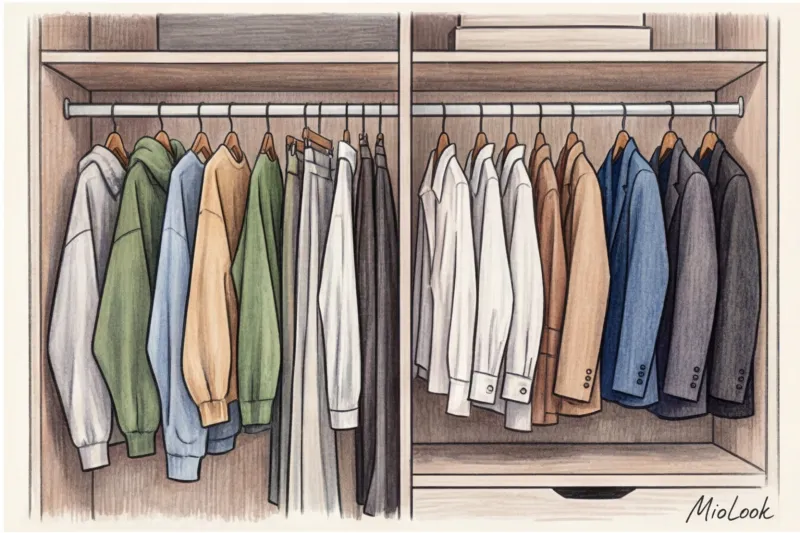
Then introduce transitional silhouettes. Swap out a soft, shapeless sweatshirt for a men's shirt made of thick cotton. It's still loose and doesn't cling to the stomach, but it has a collar, cuffs, and a clear structure. This sends a completely different, more composed message to the world.
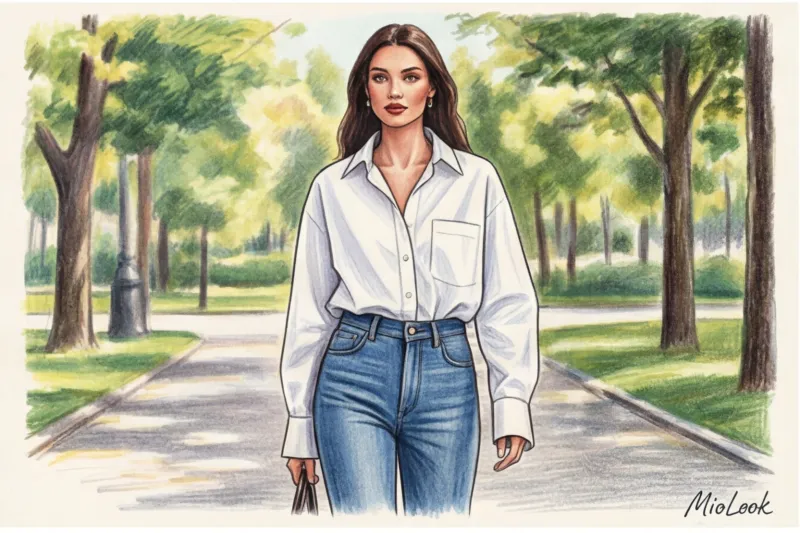
Gradually return to the body. Start tucking the front edge of the shirt into the pants, defining the waistline. Buy a high-quality viscose turtleneck and put it on. under your favorite oversized jacket. You're still protected, but you're no longer invisible.
Conclusion: clothes that support, not hide
Oversized clothing is a fantastic styling tool. It gives us freedom of movement and adds a relaxed, Parisian chic touch to our looks. But it should remain a tool you control, not a refuge you use to escape reality.
Your wardrobe should be your resource. Stop buying things to hide your "imperfections" and start choosing clothes that celebrate your life here and now. True confidence is born not when you don a suit of armor made of oversized shoulders, but when you allow yourself to occupy space—in all your glory.