The Anatomy of Fear: Why Are We Afraid to Ask Ourselves How to Change Our Style?
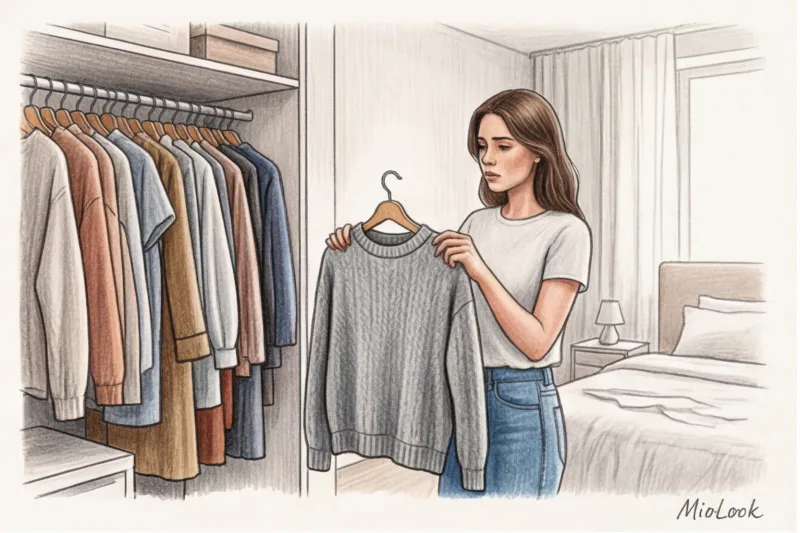
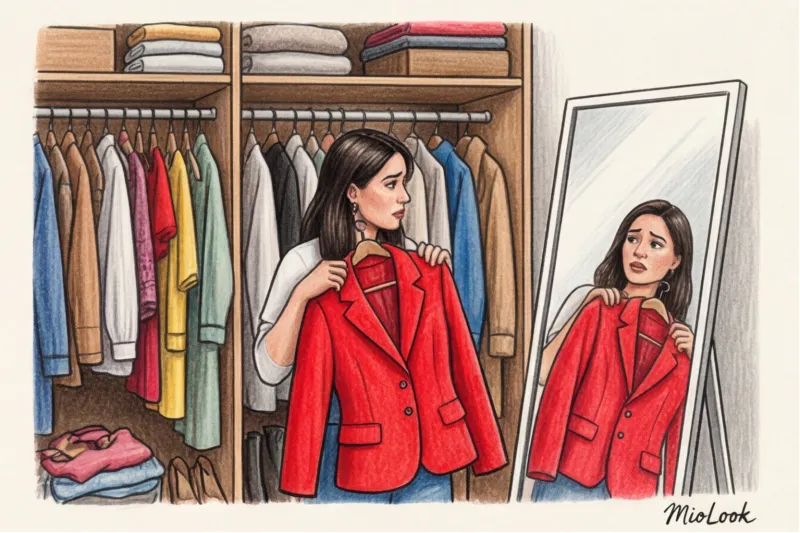
In my 12 years as a personal stylist, I've conducted hundreds of wardrobe analyses, and almost every time I see the same scene. The client opens a closet filled to the brim with clothes, sighs heavily, and says, "I'm so tired of these same looks, I have absolutely nothing to wear." But as soon as we start discussing... How to change your style In practice, genuine panic appears in the eyes.
In my experience, statistics are relentless (and we recently confirmed this by analyzing anonymous data from smart wardrobe algorithms in the app). MioLook ): About 80% of women genuinely want a visual change, but they spend years buying absolutely identical clothes. I call this the "safety sweater" phenomenon.
"One of my regular clients, the CFO of a large corporation, would frantically cling to yet another gray cardigan every time she tried to introduce a new cut into her wardrobe. 'In it, I know exactly who I am and what is expected of me,' she said. And even when we discussed the obvious anti-trends of sweaters , her brain desperately chose the outdated, but painfully familiar."
To understand this aesthetic paralysis, we need to turn to science. In psychology, there is a concept Enclothed Cognition (embodied or "embodied" cognition). This term describes how clothing directly influences our cognitive processes. Professor Karen Pine, in her research on the psychology of fashion, has brilliantly demonstrated that we don't simply wear fabrics; we adopt the symbolic characteristics of these items. In one of her experiments, people wearing a T-shirt with the Superman logo rated themselves as physically stronger and more attractive. By donning our familiar "uniform," we activate a safe, learned version of ourselves. A sudden change in image is perceived by the psyche not as a breath of fresh air, but as a threat to identity.
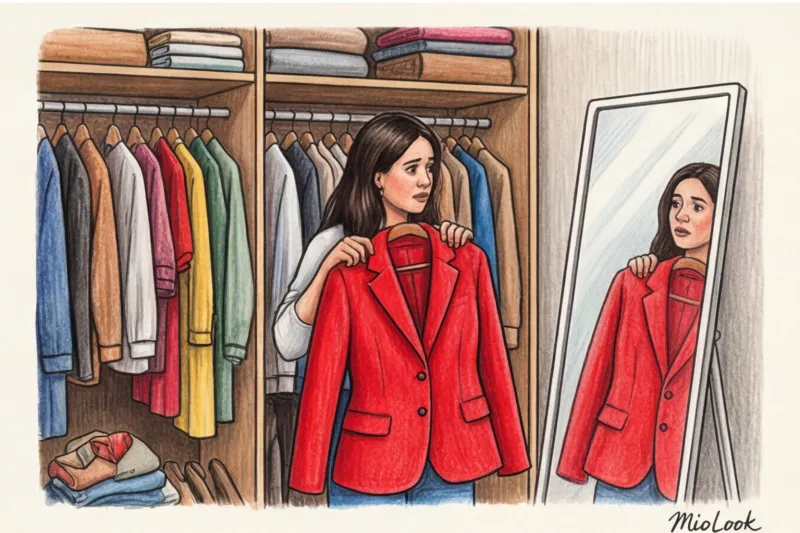
Moreover, our brains are biologically programmed to perceive radical visual changes as a social threat. Evolutionarily, standing out from the pack was mortally dangerous. When you suddenly show up to the office in an emerald pantsuit instead of your usual black sheath dress, your ancient limbic system sounds the alarm: "I'm different, I might get rejected!"
And here's where another cognitive trap comes into play—the famous "spotlight effect." When we first put on an unusual statement piece—like metallic shoes or an asymmetrical skirt—we feel like we're under the gaze of hundreds of judgmental eyes. We physically feel the spotlight shining on us. But the harsh (and incredibly liberating) truth is that people are catastrophically self-absorbed.
Coworkers can look at your new look for exactly three seconds, after which their thoughts will inevitably return to unpaid bills, looming deadlines, or whatever outdated style rules It's time to throw them out of their own closet.
Understanding this anatomy of fear is your first and most important step toward transformation. You're not conservative, tasteless, or hopeless. Your brain is simply doing its job perfectly—protecting you from an imaginary threat.
The Biggest Mistake: Why Total Wardrobe Cleanup Doesn't Work
Open any popular article about How to change your style , and the first point you'll see is the sacramental: "Throw away anything you haven't worn in over a year." As a practicing stylist, I officially declare: for a beginner, this is the most harmful and destructive advice possible.
We grew up on television makeover shows, where the heroine tearfully bids farewell to her old clothes, throwing them in the trash, and then emerges in a completely new, sparkling haute couture look. On screen, this catharsis lasts 45 minutes. In reality, a radical wardrobe overhaul in a single day is not liberation, but serious psychological trauma. Dr. Caroline Mair, creator of the fashion psychology course at the London College of Fashion and author of The Psychology of Fashion (2018) notes that our clothing is closely linked to our identity. Without our familiar "uniform," we literally lose our footing.
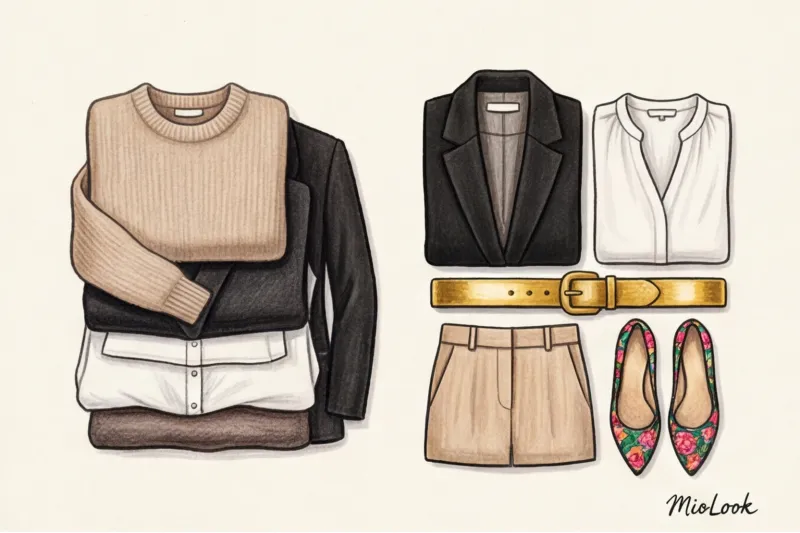
What happens the next morning after such a total purge? You open your half-empty closet, look at three conceptual pieces you bought on a wave of inspiration, and feel a chilling dread. Your brain goes into overdrive. And then the mechanism I call "stylistic rollback".
Unable to cope with the stress of a lack of safe and clear solutions, you head to Zara, H&M, or COS and panic-buy the exact same gray sweaters and straight-leg blue jeans you just solemnly got rid of. A year ago, a client came to me who, after a radical "Mari Kondo" purge of her own, spent over €500 just to urgently restore her old wardrobe before a business trip. She was physically terrified of going out in front of her colleagues in new, unfamiliar silhouettes.
Access to MioLook for €0.99 — one-time payment
A smart AI stylist will select the perfect look and help you introduce new items without stress.
Get access — €0.99 onceThis brings us to a crucial point: the direct link between clothing comfort and your personal productivity. Psychologist Roy Baumeister's research on the phenomenon of "decision fatigue" demonstrates that our daily cognitive resources are strictly limited.
If you spend 20 minutes and a ton of mental energy wrestling with the unfamiliar cut of an asymmetrical skirt in the morning, and then spend the rest of the day tugging at it and worrying about how it looks, you'll simply have less energy for work. A sudden change in style saps the cognitive resources critical for solving complex problems, negotiating, and concentrating. You'll be sitting in an important meeting thinking not about the quarterly report, but about whether your new jacket looks too pretentious.
Micro-conclusion: Don't burn bridges. For a safe start and initial experiments, you absolutely need a solid foundation—those very things that make you feel confident and relaxed even on the most stressful days.
Agile Fashion: How to Change Your Style Without Stress
Let's forget about glossy magazines for a moment and borrow a strategy from Silicon Valley. How do top tech companies release large-scale updates to their products? They never roll out a new interface to millions of users at once. It's too risky: the system could crash, and users could revolt. Instead, they use Agile methodology—implementing changes in short iterations, collecting data, and testing hypotheses.
Your wardrobe is your personal visual interface. If you're seriously considering changing your style, forget about "everything at once" revolutions. We need evolution. The transition from a familiar but boring look to a new one should occur through stylistic "sprints" and A/B testing in a safe environment.
In digital marketing, A/B testing involves running two nearly identical versions of an ad banner, each changing only one detail (for example, the color of a button), to see which performs better. In styling, this principle works flawlessly. You take a proven base (variant A) and change exactly one variable: say, swapping out the usual white sneakers for square-toe ankle boots (variant B). Your brain doesn't sound the alarm because 90% of the look remains familiar, but you're already stepping into new territory.
The 80/20 Rule: Anchors and Accents
The Pareto principle states that 20% of the effort produces 80% of the results. In the context of creating a new image, I adapted this rule as follows: the ideal transitional look should consist of 80% safe "anchor" clothing and 20% controlled risk.
Anchors (80%) — it's your uniform. The things that make you feel secure and confident. For some, it's a pair of impeccably fitted Levi's 501 straight jeans and a crisp white T-shirt from Uniqlo. For others, it's a tailored pantsuit in a neutral shade. It's the foundation that speaks to your psyche: "It's okay, we're safe, it's still us.".
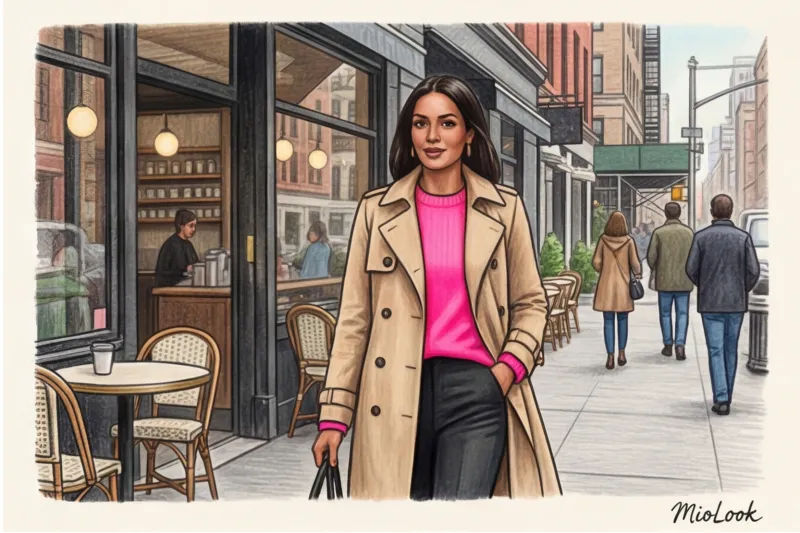
Risk Zone (20%) — this is your stylistic experiment. A new color, an unusual cut, a trendy texture, or a statement shoe. Investing in a €1,500 Maison Margiela coat right away if you're used to basic down jackets is financial and emotional suicide. You'll wear it once, feel out of place, and tuck it away in a bag. But incorporating a metallic bag or Cossack boots into your usual look instead of your usual Chelsea boots is a perfect 20% investment.
Micro-conclusion: Never wear more than one new/experimental item at a time. Let your classic beige trench coat from COS (anchor) be "calmed down" by a neon pink sweater (accent).
Test Runs: From Coffee Break to the Office
In my practice there is a mandatory stage which I call Grocery Store Test (Supermarket Test). The gist is simple: any radically new, unfamiliar item is strictly forbidden to be worn immediately to an eight-hour workday, an important date, or a long party.
If you're trying on leather pants or leopard print for the first time, your brain will perceive the outfit as a foreign object. You'll constantly tug at the fabric, check out every shop window, and feel like an impostor. To remove this barrier, the item needs to be "legitimized" in your neural network.
I went through this myself when I decided to incorporate a sophisticated cobalt blue into my all-black, minimalist wardrobe. My first test run was an oversized blue jacket. I didn't wear it to a client meeting. I wore it with my favorite jeans and went out to the corner coffee shop for a flat white. For exactly 15 minutes. My pulse quickened slightly, as if everyone passing by were assessing my choice. Spoiler alert: they were busy with their smartphones. But my brain received a crucial signal: "We came out in the bright light, the world didn't collapse, it's safe.".
Implement new things in a gradual scaling system (Agile sprints):
- Level 1: Micro-test (15-20 minutes). A trip to the grocery store for bread, coffee, or a pickup location. The goal is to simply physically wear the item outside the home without engaging in prolonged social contact.
- Level 2: Safe Environment (1-2 hours). Brunch with your best friend who won't judge you, or going to the movies (where no one can see you in the dark).
- Level 3: Full release (all day). The office, business meetings, and even a full-blown social outing. By this point, the item will no longer feel like "someone else's armor" and will become your second skin.
To avoid getting lost in your stylistic iterations and track your progress, I recommend digitizing your results. Collecting images through the "smart wardrobe" feature in MioLook , you can take photos of your test bows and leave private notes about them: "Option A with the red bag—I felt constrained." or "Option B with a textured belt—got two compliments from the barista." This turns the emotional process of image change into an engaging, controlled game with data.
4 Micro-Experiments to Safely Step Out of Your Comfort Zone
The most common request I hear during consultations is: "I want to understand how to change my style, but I'm afraid I'll look awkward." The good news is, you don't have to spend $500 on designer pieces with abstract cuts to feel the difference. The magic lies in styling—the art of combining what you (most likely) already own.
Below are four practical tips. These aren't radical image changes, but rather "hacking" your current wardrobe. Choose one and try it out tomorrow.
Experiment 1: Changing Texture
If the thought of bright colors makes your heart beat faster, don't force yourself to buy red sweaters. Stick with your favorite, psychologically safe color (like all-black or beige), but radically change the material.
Instead of the usual matte cotton or thick viscose, wear a black piece in faux leather, flowing silk, or even daytime sequins. At the Milan Institute of Design (Istituto Marangoni), styling students are taught a fundamental rule: texture works stronger than color due to the different light reflection coefficient.
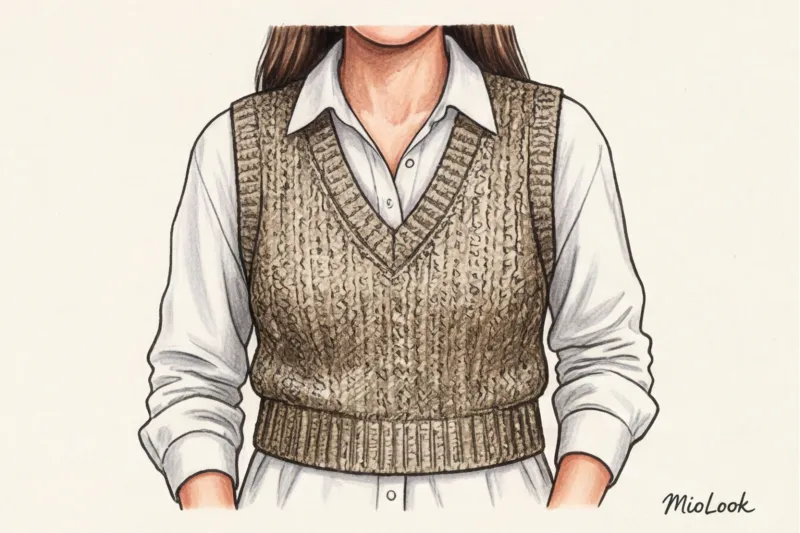
Smooth silk creates a dynamic and luxurious look, thick leather adds architectural structure and rigidity, and textured knits add coziness. You stay within your comfortable color palette, but the visual complexity of your outfit increases exponentially.
Experiment 2: Silhouette Deconstruction
A common mistake beginners make is trying to introduce new prints when the problem lies in outdated proportions. Keep the familiar basics, but change their geometry.
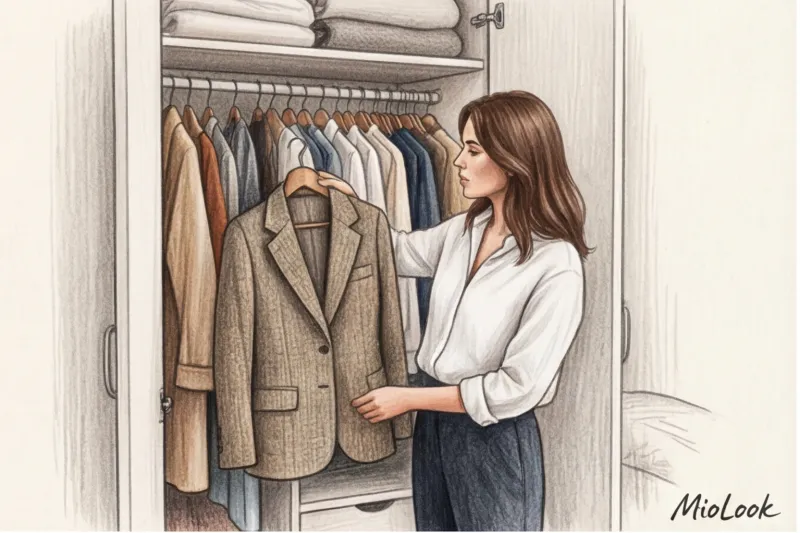
The most obvious example is swapping out a classic fitted, hip-length jacket for a structured, oversized one with accentuated masculine shoulders. You're still wearing jeans, a T-shirt, and a blazer, but you'll feel completely different. The relaxed, voluminous silhouette projects confidence. If you're not ready to shop, start by micro-deconstructing what you're already wearing: wear a French tuck, casually roll your shirt sleeves above the elbow, or drape your sweater over one shoulder.
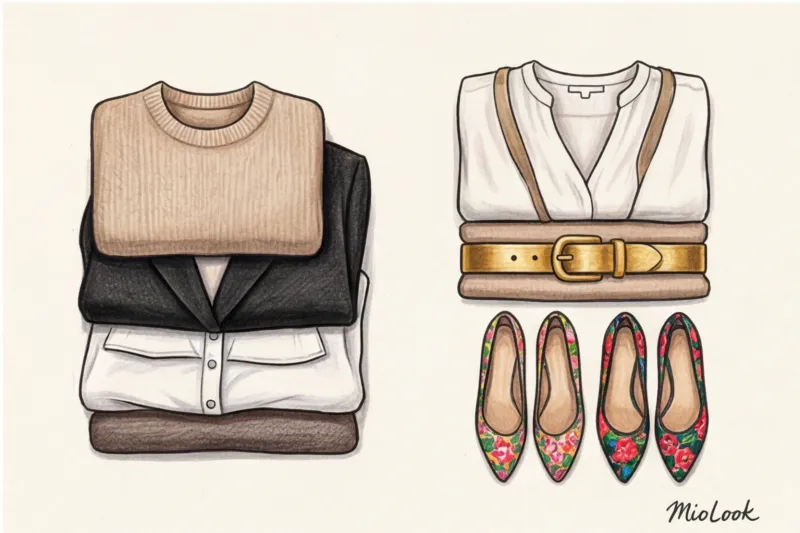
Experiment 3: The "Third Thing" Rule
Jeans and a basic top aren't a look, they're just clothes. To transform a set of items into a stylistic statement, professionals use the "Third Piece Rule." This involves adding one, often unusual, accent to a classic base.
- Suit vest: Worn over a relaxed t-shirt, it instantly brings the look together, adding a touch of formality.
- Silk scarf (square): woven into the belt loops of jeans instead of a classic leather belt or tied to the handle of a bag.
- Accent belt: a wide corset or vintage cowboy style over a basic slip dress.
If you have trouble imagining how these pieces will look together, digitizing your wardrobe will take the fear away. You can upload your database to MioLook and visually "overlay" different accessories onto familiar looks right on your smartphone screen, without taking things out of the closet.
Access to MioLook for €0.99 — one-time payment
Start creating perfect looks with the help of artificial intelligence and test new combinations without unnecessary purchases.
Get access — €0.99 onceExperiment 4: Changing the stylistic pole of shoes
In 2023, New York stylist Allison Bornstein coined the viral "Wrong Shoe Theory," which forever changed the way we approach everyday styling. The method involves intentionally choosing footwear that stylistically clashes with the rest of your outfit.
Shoes are what set the tone for the entire outfit. Try radically shifting this pole:
- Feminine + Rough: Wear a light floral midi dress not with delicate ballet flats, but with chunky, chunky boots with tractor soles (in the style of Dr. Martens). The degree of excessive "naivety" will subside, giving way to an urban grunge aesthetic.
- Strict + Sporty: Pair a smart two-piece business suit with retro running sneakers (like classic New Balance or Asics) instead of your usual pumps or loafers.
This technique works flawlessly: it shows others (and, more importantly, yourself) that you haven't tried too hard, and that your style is a living process, not a frozen museum exhibit.
Imposter syndrome in new clothes: how to avoid taking off your outfit before going out
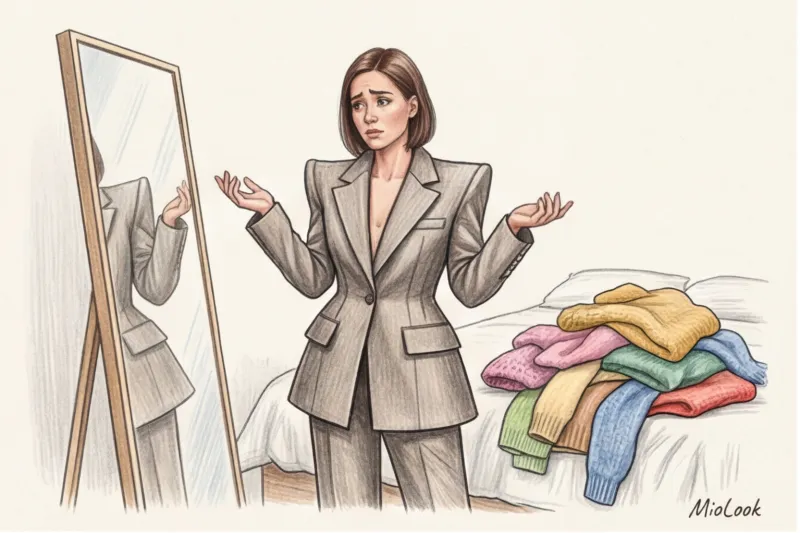
"Emily, I look like the town madwoman. I'm taking off this silk skirt and putting on my good old jeans. Sorry." I receive such panicked WhatsApp messages from clients with enviable regularity. Usually, it happens at 8:15 a.m., exactly five minutes before leaving the house.
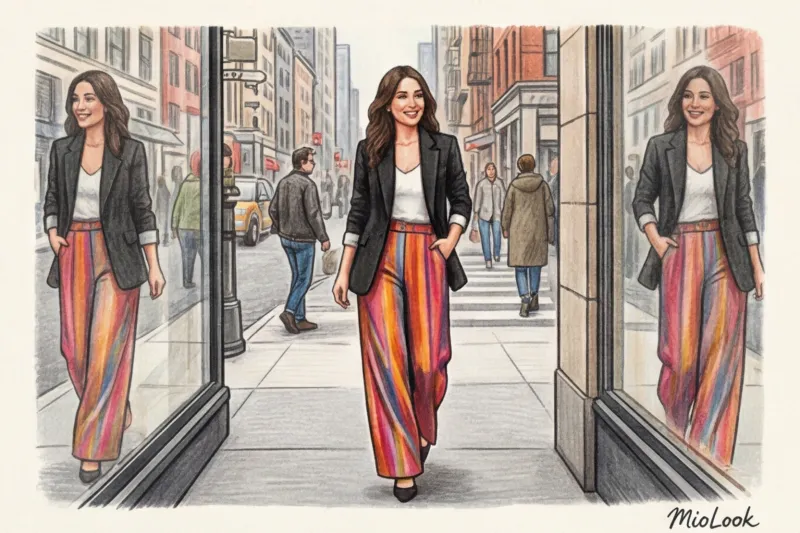
You're already dressed, you look in the mirror, and your brain goes into overdrive. The reflection you see doesn't match your usual internal image at all, your pulse quickens, and the classic "fashion impostor syndrome" sets in. We feel like a kid who secretly tried on mom's shoes. At that moment, your hand instinctively reaches for the salvation of worn-out denim.
If you are serious about finding out, How to change your style , you'll have to learn to navigate this morning valley of discomfort without giving in. When my clients write to me in a state of panic, I categorically forbid them from changing their clothes and give them a script on the "grounding" technique.
The technique is based on neuroscience: your limbic system, which is alarmed by changes in visual patterns, urgently needs physical safety markers. Introduce them through familiar accessories:
- Put on your favorite watch. The very ones you wear every day, the weight of which on your wrist feels like a second skin.
- Use your signature perfume. A familiar scent that you associate with confidence instantly reduces stress levels and signals to your brain, “It’s okay, we’re safe, this is still us.”
- Take a casual bag. Even if your new $250 architectural jacket calls for a statement micro clutch, stick with your usual work tote.
These elements will act as a psychological anchor. And if you planned and saved this look in advance the day before MioLook Just trust your decision from yesterday. Last night, when you combined things on the screen, you were thinking rationally. This morning, you're being driven by a simple fear of novelty.
But then you overcame yourself, left the house, arrived at the office, and then the final boss awaits you – comments from colleagues. The phrase "Oh, you're so dressed up today!" has a destructive power. I've seen brilliant top managers slouch after hearing these words and mutter pathetic excuses: "It's just an old shirt, the first one that fell out of the closet."
"People aren't reacting to you looking bad or out of place. They're reacting solely to a pattern break. Their visual expectations of you didn't match reality, and they're simply vocalizing that fact," notes fashion psychologist Dawnn Karen, a pioneer in the field of fashion psychology.
Never discount your appearance in response to someone's surprise. As soon as you start making excuses, your posture changes, and the garment actually starts to fit worse. I make clients memorize a couple of ready-made scripts to avoid getting flustered in the moment:
- Neutral-confident: "Thanks! I decided to spice up my work wardrobe a bit."
- Honest: “Thank you, I’m testing out the new silhouette while I get used to it.”
- With a touch of irony: "I decided our office needed a little drama on this grey morning."
Your only task is to accept the comment without apologizing for your appearance. Take this time, smile, and go pour your morning coffee. I guarantee that by lunchtime, your colleagues will have gotten used to your new look, and by evening, you'll forget you were even considering trading that stunning outfit for boring jeans.
AI and Virtual Fitting: How Technology Reduces the Cost of Error
According to statistics from the British research organization WRAP (2023), approximately 30% of the clothes in our closets haven't been worn in the past year. This amounts to hundreds, sometimes thousands, of euros literally hanging on hangers, awaiting a "special occasion." When we discuss how to change our style, the main obstacle isn't a lack of taste or insight, but rather simple financial fear.
You're standing in the fitting room with a stunning $150 asymmetrical top and thinking, "What am I going to wear with this? I'll buy it, and it'll just sit on the back shelf." Sound familiar? This paralyzing fear of wasting money forces us to choose another safe white T-shirt or black pants time after time. We're afraid to buy something unusual because the cost of a stylistic mistake seems too high. That's when metrics come to the rescue. Cost Per Wear (cost per wear) And to reduce this figure to a minimum, today it is enough to use the right technologies.
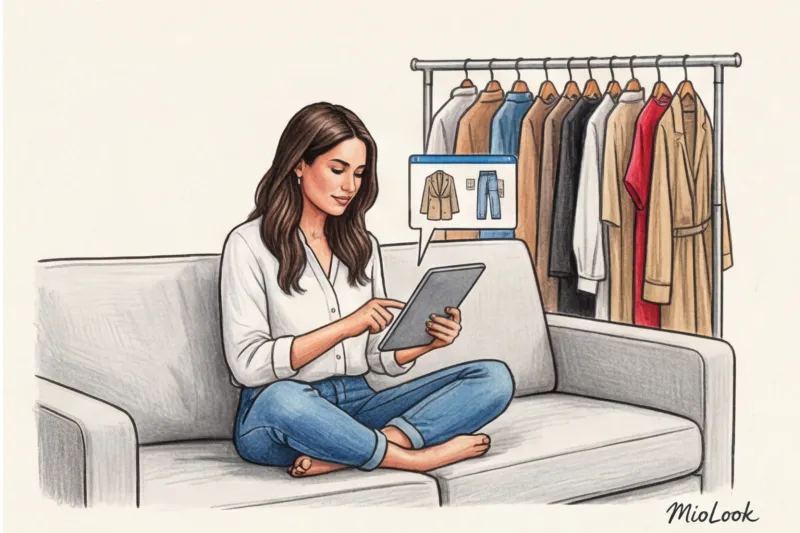
Over the course of my practice, I've developed a strict rule for my clients: no shopping for "bold" trends until we've digitized our current wardrobe. Digitizing your wardrobe is the most powerful and underrated tool for those seeking change. Instead of impulsively buying new items, we begin by analyzing the available data.
It often turns out that you can discover completely new combinations from old items without the slightest financial investment. That same formal office jacket you used to wear exclusively with a pencil skirt suddenly looks perfect on your phone screen, paired with relaxed jeans and bright sneakers. Our brains are lazy: standing in front of an open closet in the morning, it only presents us with familiar, memorized patterns. A smartphone screen breaks this habit, forcing us to look at clothes objectively, as if they were pieces of a single construction set.
This is where wardrobe management apps truly shine. I'm a huge fan of the approach where we test style hypotheses before we even put a card to the terminal. Tools like Smart wardrobe features in MioLook , help to “assemble” the image on the phone screen long before making a purchase.
How does this work in real life? Let's say you spot some unusual metallic pants online. Previously, you would have closed the tab, daunted by the complexity of styling. Now you simply save a photo of the item, upload it to the app, and virtually mix it with your sweaters, coats, and ankle boots.
- If a new item can be easily incorporated into at least 3-4 everyday looks in your closet, it's a safe and profitable investment.
- If it looks like a foreign body on the screen and requires the purchase of three more new things, we refuse it with a clear conscience.
Technology relieves us of cognitive and financial burdens. You no longer play roulette with your budget—you make decisions based on visual data, transforming chaotic spending into conscious style management.
Your ideal image
it begins Here
Join thousands of users who look flawless every day with MioLook.
Get access — €0.99 onceStep-by-step plan: how to change your style in 30 days
Renowned behavioral psychology researcher Philippa Lally of University College London (UCL, 2009) demonstrated that forming a new habit takes an average of 66 days. However, it's the first 30 days that establish the neural connections that determine whether you'll return to your usual hoodie or continue your fashion evolution. To ensure a smooth transition, I've developed a clear 30-day sprint for participants in my style intensives.
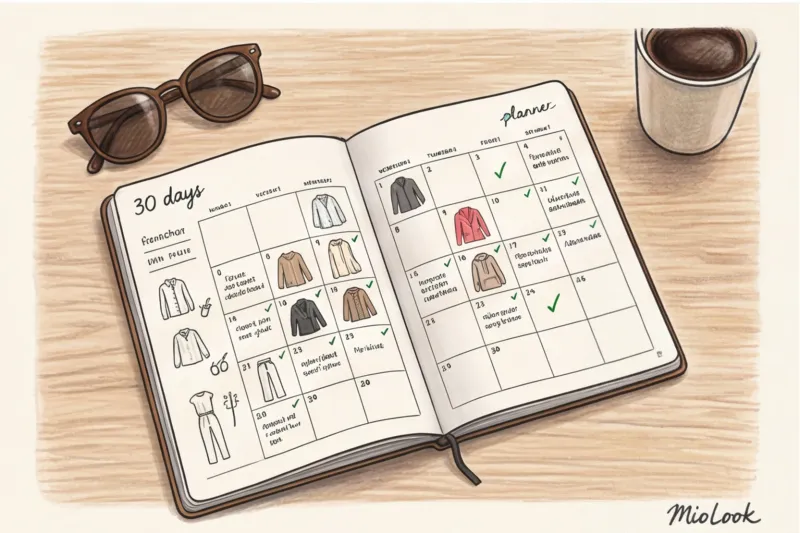
Week 1: Audit of Observation
We often admire influencers' looks, but our inner critic sternly replies: "It looks cool on her, but it would look ridiculous on me." This week's task is to conduct an honest audit of your obsession and identify suppressed desires. Create a digital mood board of 20-30 such "scary-attractive" outfits. Then start looking for hidden patterns.
Are you inexplicably drawn to layering? Or have you saved the fifth photo of metallic pants, even though you only wear dark blue denim in real life? Write down these recurring elements. These aren't just pretty pictures—they're your stylistic ambitions. Analyze the details: often, it's not the clothes themselves that intimidate us, but the unusual way they're styled (for example, a half-tucked sweater or socks with loafers).
Week 2: Inventorying the Base
Before implementing bold decisions, you need to ensure the foundation is solid. Taking inventory is a rigorous check of those 80% "anchors." Imagine you've decided to buy a complex, deconstructed jacket in the style of Maison Margiela. For it to work in real life, it needs to be "calmed down" by a perfect white T-shirt made of heavy cotton and impeccably fitted straight-leg jeans.
Digitize your base: I highly recommend uploading your current neutrals to the app MioLook A visualization on your phone will immediately show you whether your wardrobe is ready for an extravagant new item, or whether you need to update your basic top first, otherwise you'll simply have nothing to wear with your new purchase.
Week 3: Select one experimental item and micro-tests
No large-scale impulse purchases based on emotions. Choose strictly one An experimental item from the list compiled in the first week. Purchase it (or rent it from a rental service) and begin integrating it.
- Test at home: Don't remove the tags for the first couple of days, just wear the clothes in front of a mirror for 15 minutes.
- Risk-free test: Wear a new, bright jumper to your morning Zoom call (you can turn off your camera at any time).
- Outdoor test: Put on your new Cossack boots for a quick trip to the store. Your goal is to let your body get used to the new physical sensations.
Week 4: Full-blown appearance with a new look
It's time to combine the safe foundation of week two with the innovative element of week three. Plan a "premiere" of your new look, but do it in the most supportive environment possible. This should definitely not be a high-stakes interview or a first date, where cortisol levels are already through the roof.
Go to brunch with a close friend, who's guaranteed to say, "Wow, you look great!" Positive social reinforcement is a powerful psychological tool. Receiving a sincere compliment will help your psyche register the new experience as safe and successful.
"Don't try to change everything at once. The most lasting transformations happen when no one (not even you) notices the sudden shift from before to after."
Final advice: style is a muscle
My main rule, which I repeat at every consultation: style is just a muscle that needs to be exercised gradually. No one starts their gym routine lifting 100 kilograms. Treat your wardrobe with the same care. Start with light weights, forgive yourself for unsuccessful combinations (believe me, everyone has them, even professionals), and view fashion missteps as purely analytical data, not a reason for self-flagellation. Step out of your comfort zone, and one day, you'll simply not notice how what once seemed dauntingly avant-garde becomes your stylish everyday staple.
Guide Chapters
How to incorporate trends into your wardrobe with a strict foundation
We'll figure out how to add some bold trends to your everyday look without the fear of looking out of place. A step-by-step strategy from a stylist with 14 years of experience.
Affordable Style: How to Update Your Wardrobe Without Spending Extra Money
Find out why cheap fast fashion is ruining your style and how to experiment with new looks on a budget. Practical tips from a personal stylist.
How to Decide on a Short Haircut: Stylist Advice
Fear of a new hairstyle is fear of a new version of yourself. Find out how changing your hair length can trigger a domino effect and completely transform your style.
Why do I feel uncomfortable in new clothes?
Buying beautiful clothes but still wearing the same old sweaters? Let's explore the origins of fashion impostor syndrome and how to overcome it.
Small Steps Theory: Where to Start Changing Your Image
Why does buying a new wardrobe overnight often turn out to be a failure? We explore the theory of small steps to transform your style without spending too much.
How to Dress Stylishly After 40: Forget About Age
The fear of dressing "inappropriately for their age" traps many women in a boring wardrobe. We'll explore how to stop hiding behind drab clothes and find your own style.
How to stop wearing oversized clothes and not feel self-conscious about your figure
Baggy clothing changes not only your silhouette but also your posture. Learn how to seamlessly transition from shapeless clothing with the right cut and fabric texture.
How to Start Wearing Bright Colors: Stylist Tips
Got a closet full of black clothes but want a change? A personal stylist explains how to seamlessly incorporate color into your wardrobe and feel confident.
How to Stop Wearing Jeans Only: Stylist Tips
Have a closet full of clothes, but still find yourself wearing your favorite jeans? Discover the "safe swap" method to easily diversify your style.
Fear of Changing Your Image: How to Overcome the Opinions of Your Colleagues
80% of women wear only 20% of their clothes to work for fear of being judged by colleagues. We'll tell you how to stop depending on other people's opinions and start dressing stylishly.
Virtual Clothing Try-Ons: AI-Powered Image Makeover
Why fitting rooms are stressful and how AI can help you safely update your wardrobe. Learn the secrets of a professional stylist's image makeover.