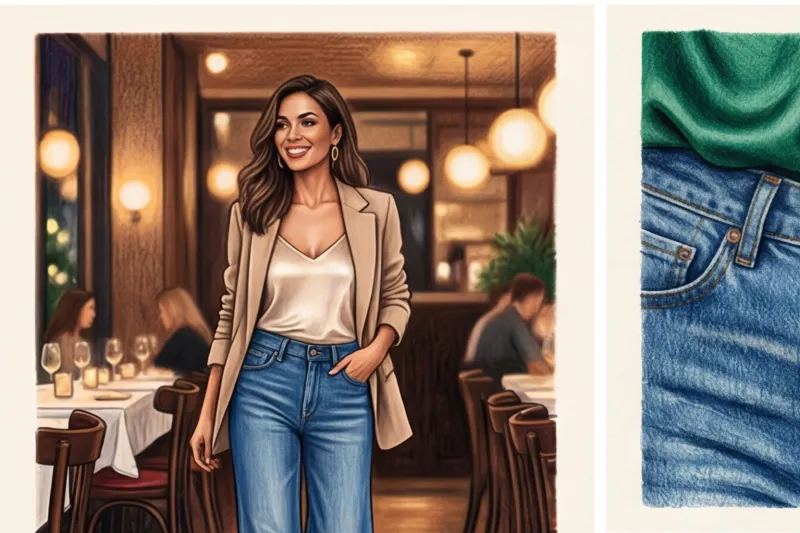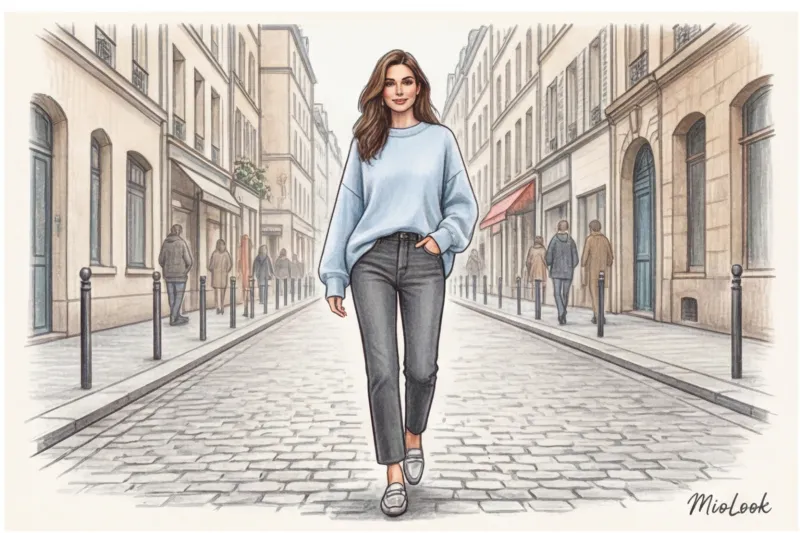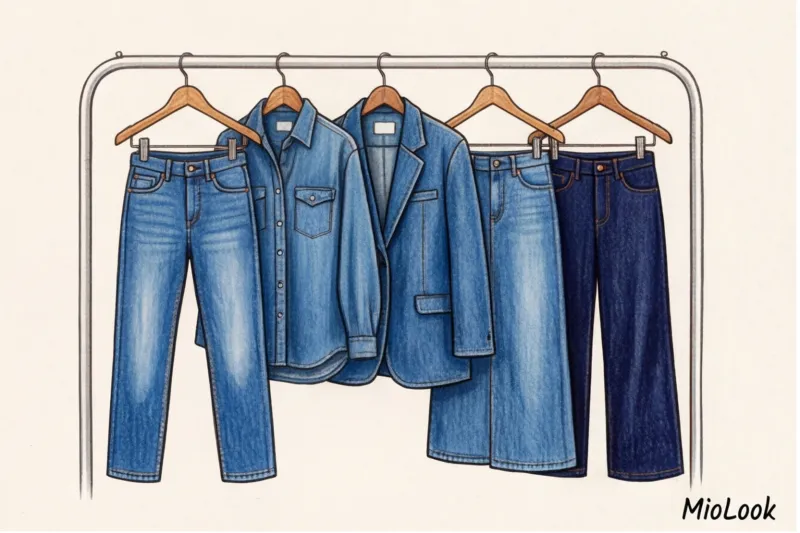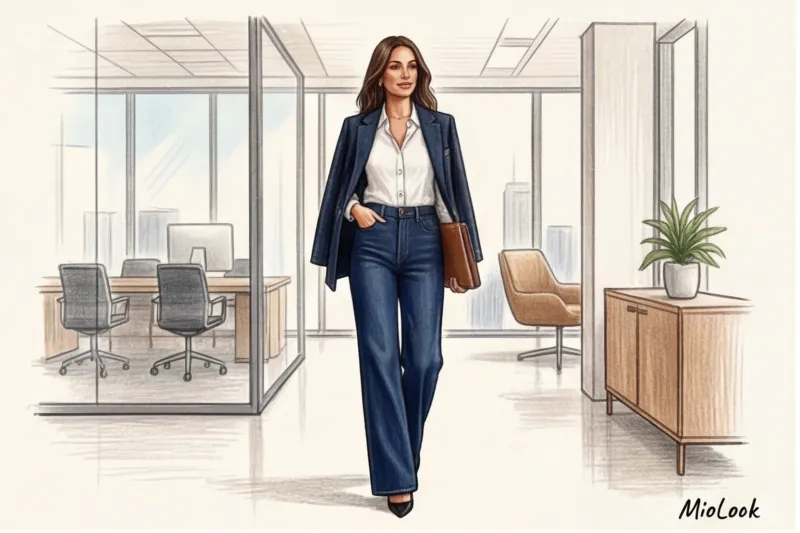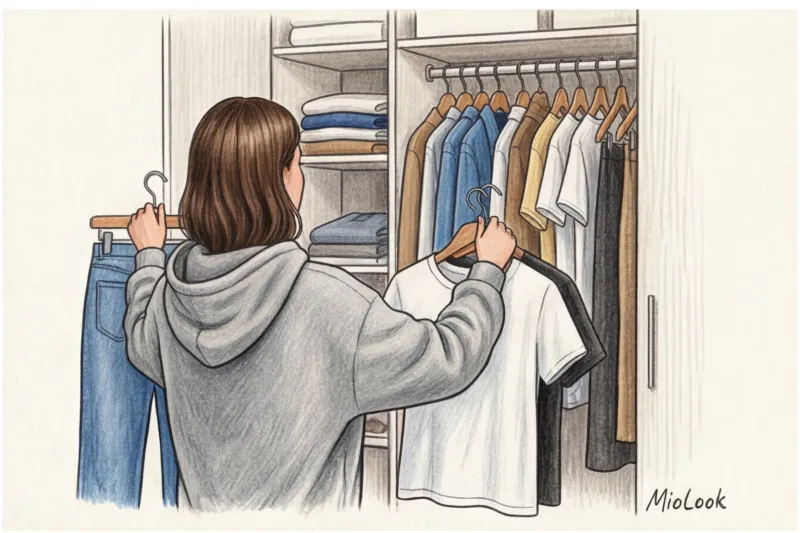
Last week, I was sorting through a client's closet. Five new silk dresses with tags still attached hung dismally on hangers, and on a chair lay the very same pair of blue Levi's jeans she wears every single day. Sound familiar? Every other woman who decides to update her look Googles... How to stop wearing only jeans And almost everyone makes the same fatal mistake: they go shopping for a dress.
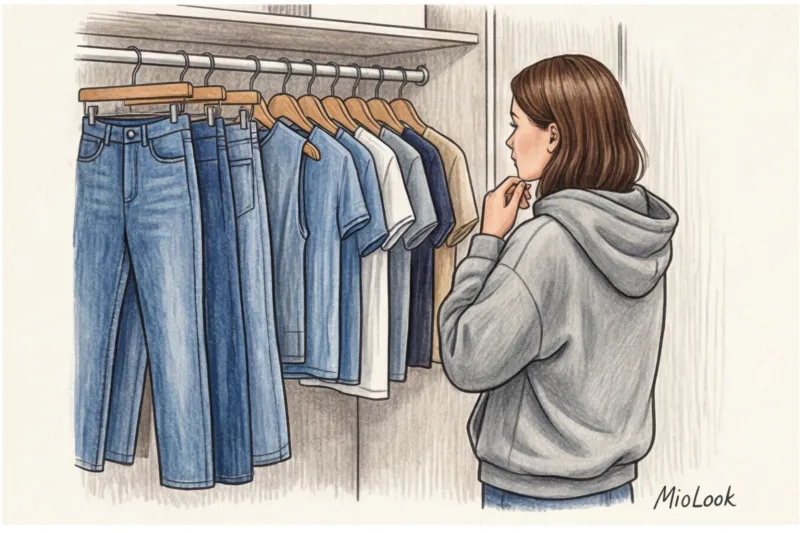
I talked in more detail about the psychological barriers that prevent us from wearing the things we buy in our a complete guide to changing your style and getting out of your comfort zone Today, we'll talk about pure practice. I'll show you my signature "safe swap" method, which will allow you to add variety to your everyday wardrobe without stress, unnecessary spending, or the feeling of wearing someone else's clothes.
Why We Fall into the "Denim Trap" (and Why It's Okay)
Over 12 years of working as a personal stylist, I've uncovered some inexorable statistics: the average European city woman has six pairs of jeans in her closet, of which she actively wears only two. The rest are either waiting for weight loss or simply don't fit perfectly.
There is a term in fashion psychology Enclothed Cognition (embodied cognition). Our brain literally associates thick denim with protection. Jeans are our armor, a kind of "safety sweater." By choosing the familiar blue color and thick fabric in the morning, the brain conserves resources, preferring predictable discomfort (a tired image) to unpredictable novelty.
From a practical standpoint, jeans are brilliant: they're resistant to coffee stains, don't require a lot of ironing, and are forgiving of styling mistakes. If you look at Which jeans are out of fashion? , you will notice that it is mainly the extravagant details that become outdated, while the basic cut remains with us for decades.
The Biggest Mistake: Why Buying a Dress Won't Solve the Problem
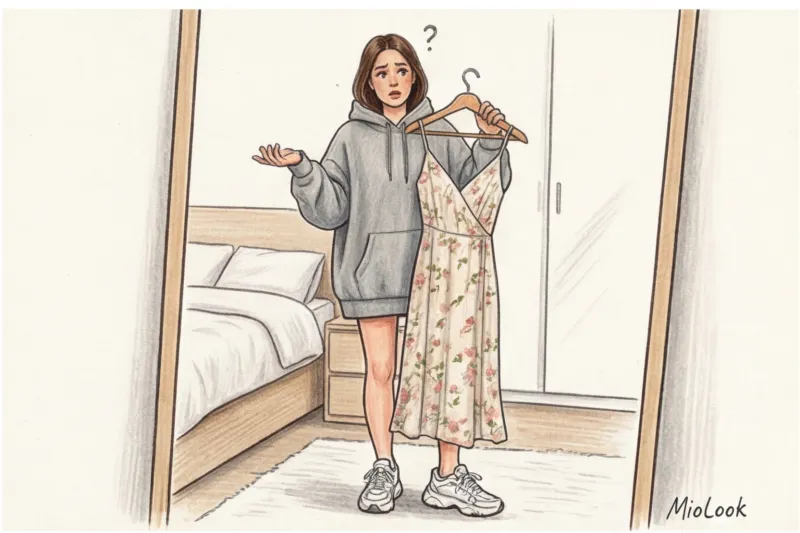
The worst advice you can give a woman tired of denim is, "If you want to be more feminine, just buy a dress." In practice, this advice leads to unnecessary spending and frustration.
"Every item in your closet doesn't exist in a vacuum. It's part of a wardrobe ecosystem. Changing your basic bottoms inevitably entails a restructuring of your entire look."
One of my clients, a project manager at an IT company, decided to make a radical change to her style. She bought a stunning silk slip dress for 120 euros. But the morning before work, she realized something terrible: she needed certain tights to go with the dress. Her favorite short down jacket looked silly with the dress (she needed a long coat). And most importantly, chunky sneakers ruined the elegance of the silk, and she didn't have any shoes. The result? The dress went in the closet, and she put on a pair of 40-euro Zara jeans. Which makes sense.
According to a 2024 report by the analytical agency WGSN, 70% of women who try to abruptly switch from casual to romantic style by buying skirts return to their old habits within the first week precisely because of "shoe mismatch."
Let's count Cost-per-wear (cost per outing). A pair of €40 jeans, worn 150 times, costs 0.26 cents per outing. A €120 dress, worn once, costs €120. This is the worst investment in your wardrobe.
The Safe Replacement Method: 4 Everyday Jeans Alternatives
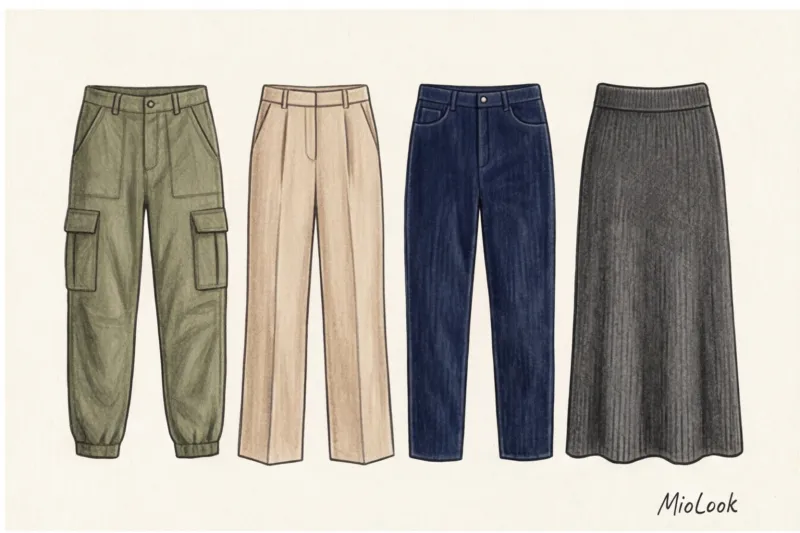
To painlessly get out of the jeans trap, I use with my clients Bridge Rule The new item should have the same performance characteristics as jeans. This means: thick fabric, pockets, freedom of movement, and 100% compatibility with your sneakers.
Tired of racking your brains over images?
Upload photos of your items, and MioLook's smart AI stylist will curate dozens of stylish combinations for every day, no shopping required.
Get access — €0.99 onceWide-leg suit trousers (but with a secret)
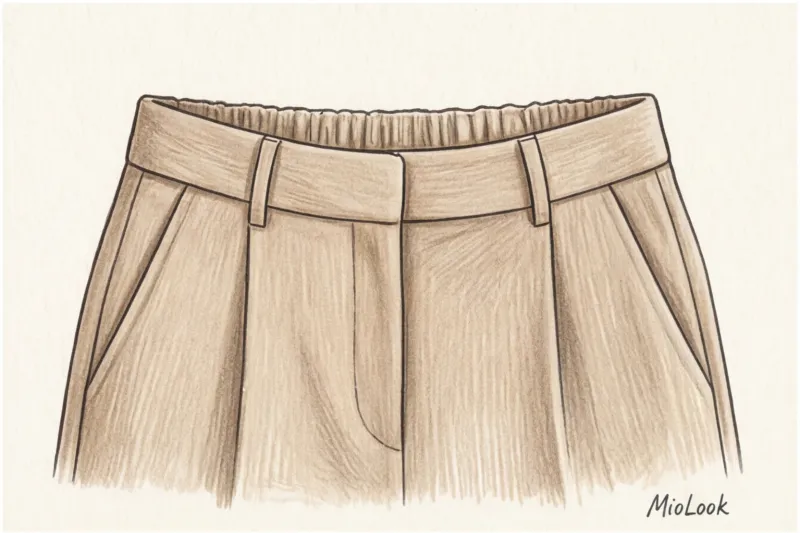
Formal trousers have long ceased to be the uniform of bank clerks. Today, they're the perfect base for smart casual. But there's a catch to the fit.
In my experience, the main reason women avoid trousers is a stiff waistband that digs into your stomach if you're sitting at a computer for 8 hours. Stylist's secret: look for styles with pleats in the front (they create a beautiful drape), but with elastic waistband at the back Compared to mass-market patterns, COS trousers often feature this saving grace and are more forgiving of weight fluctuations, while Zara waistbands are typically stiff and require a perfect fit.
Cargo pants and parachutes: comfort without sacrificing style
Many people are afraid of cargo pants, thinking they'll make them look like teenagers from the 2000s. But to wear them elegantly as an adult, you just need to choose the right material.
Avoid thin, rustling synthetics and shiny nylon. Opt for matte cotton with a minimum weight of 180 g/m² or flowy lyocell. Paired with a structured jacket, these trousers look both expensive and relaxed. Just be sure to check outdated style rules so as not to accidentally combine them with a tight rhinestone-embellished T-shirt.
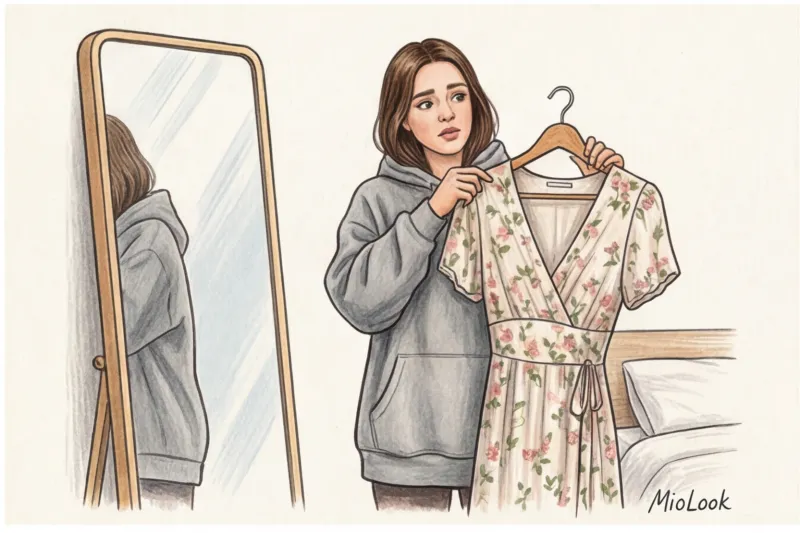
Corduroy and heavy cotton: playing with texture
These straight-cut microcorduroy trousers are the perfect winter denim substitute. They offer the same functionality: thick, warm, and durable.
But color is key here. Swapping out the usual blue for a deep chocolate brown (Pantone's 2025 color of the season), rich burgundy, or calm khaki instantly elevates the style. The play of textures adds complexity to the look, even when worn over a simple gray sweater.
Knitted maxis and midis: more comfortable than pajamas
Thick knit A-line skirts in midi or maxi lengths are a lifesaver for those who want femininity without sacrificing comfort. They pair perfectly with hoodies and sweaters, just like your favorite skinny jeans.
Fair Limit: This won't work if you buy thin, flimsy, finely ribbed knitwear. This fabric will stretch unattractively at the knees and highlight every crease and seam of your underwear. Look for a dense viscose with added nylon (and 5% elastane) or a double-knit wool blend.
The formula for implementation: how to wear familiar tops with new bottoms
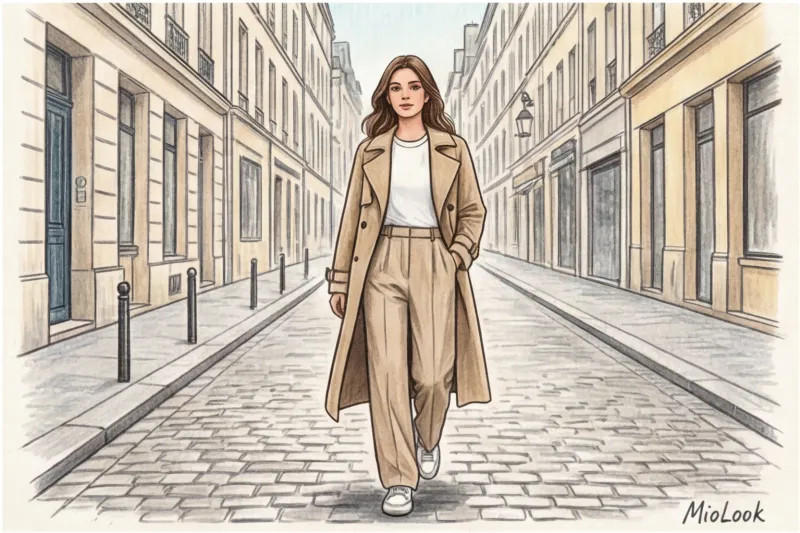
You don't need to buy new tops to wear suit pants or cargo pants. It's enough to know the rule of visual balance. If your bottoms are relaxed and voluminous (like wide parachutes), your tops should be gathered or have clean lines (like a jacket with shoulder pads or a basic, fitted long-sleeve top).
What to do with your favorite oversized hoodie? Wear it with tailored trousers. This is a classic street style look that relies on contrast: a smart office bottom paired with a sporty top. To avoid looking sloppy, try layering.
Wear a white cotton T-shirt under a hoodie or sweater, leaving the hem (literally 3-4 centimeters) visible at the bottom and the collar at the neck. This small detail visually "pulls" the look together and shows that you put on this outfit intentionally, and weren't just throwing on the first thing that came out of the closet. By the way, to avoid mistakes when choosing a top layer, I recommend studying anti-trends of sweaters.
A virtual wardrobe in your pocket
Digitize your clothes with MioLook. The app will automatically suggest what to wear with your new pants, using what's already hanging in your closet.
Try MioLookFlat shoes that will elevate any look
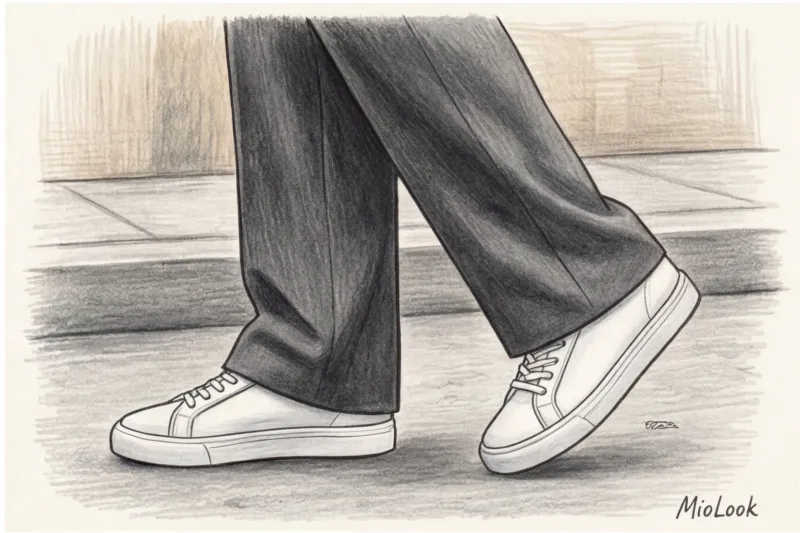
The most common question my clients ask when they're giving up jeans is, "What should I wear with my sneakers? I can't wear heels!" And you don't have to.
Modern fashion loves the combination of classic trousers and sneakers, but choosing the right shoe is crucial. Running shoes with an active mesh and curved sole (like the classic Asics Gel-Kayano) paired with suit pants will transform you into an '80s New York City clerk running to catch the commuter train. This is a common mistake among beginners.
You need urban sneakers. Retro silhouettes with suede inserts (like the New Balance 574 or 327) or minimalist leather sneakers (like the Veja Campo or basic Massimo Dutti models). If you're tired of sneakers, loafers with chunky polyurethane soles are the best investment of the season—they're puddle-resistant and look much more elegant.
Step-by-step plan: how to stop wearing only jeans in 14 days
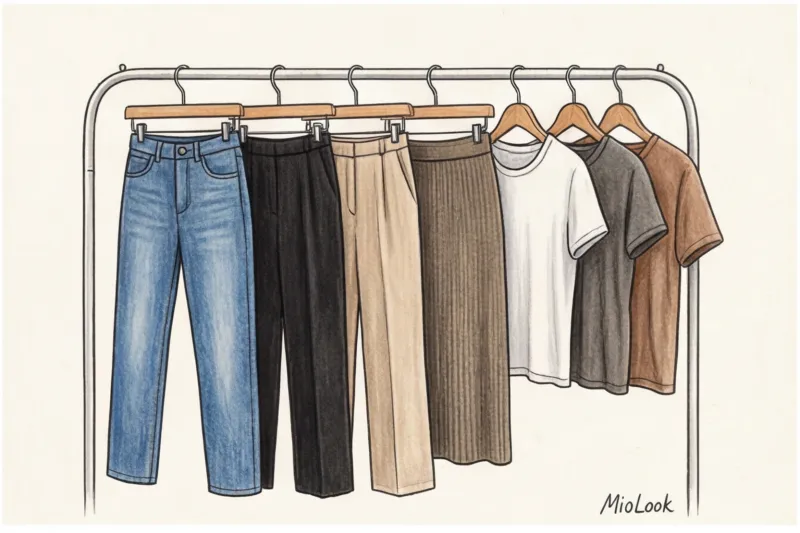
Style is a muscle, and it needs to be developed without strain. To avoid panicking in front of the mirror, follow this clear checklist.
- Days 1-3: Review of the top. Don't go pants shopping until you've done an inventory check. Make sure you have clean basic t-shirts (white and black), a sleek long-sleeve top, and at least one jacket or cardigan that holds its shape.
- Day 4: Buy one "transition" bottom. Choose one style from our list. Whether it's beige suit trousers with an elasticated back or chocolate-colored straight-leg corduroy trousers, it's just one piece.
- Days 5-10: Safe Zone Experiments. Wear your new pants with your favorite, tried-and-true tops and your usual sneakers. Your goal this week is to get used to your new silhouette in the mirror and find that it's comfortable for you to sit, walk, and bend over.
- Days 11-14: Adding Accents. Once the pants feel "yours," add accessories. A quality leather belt (even if the pants themselves are just hanging up) and a sturdy, structured bag will instantly elevate your look from "I'm just going out to buy bread" to "I know my style."
Conclusion: Your new wardrobe without stress
The safe replacement method works flawlessly because it bypasses our brain's resistance. You don't need to replace your entire wardrobe, buy new outerwear, or suffer in uncomfortable shoes. Simply replace one detail—the texture of your bottoms—while preserving their functionality.
Don't try to throw out all your jeans overnight. Start small: buy one perfect pair of the right wide-leg pants. Let them sit on the hanger next to your Levi's. And I guarantee, within a week you'll be reaching for them simply because they're more comfortable.