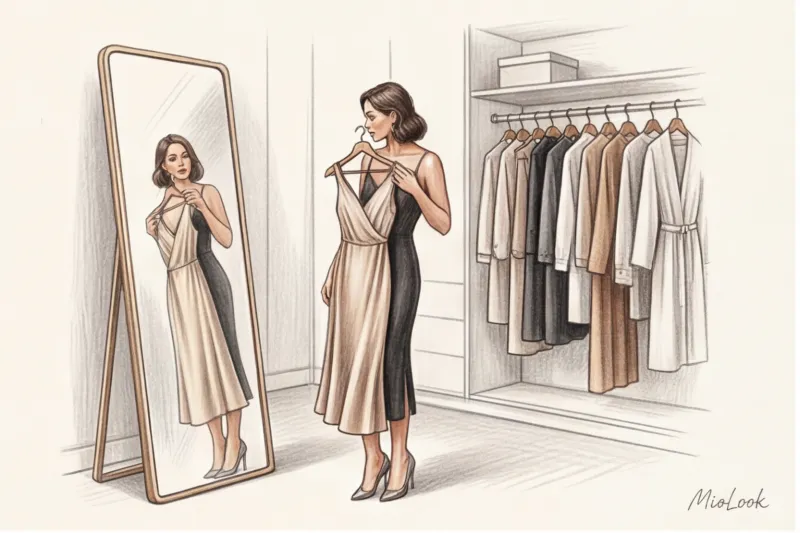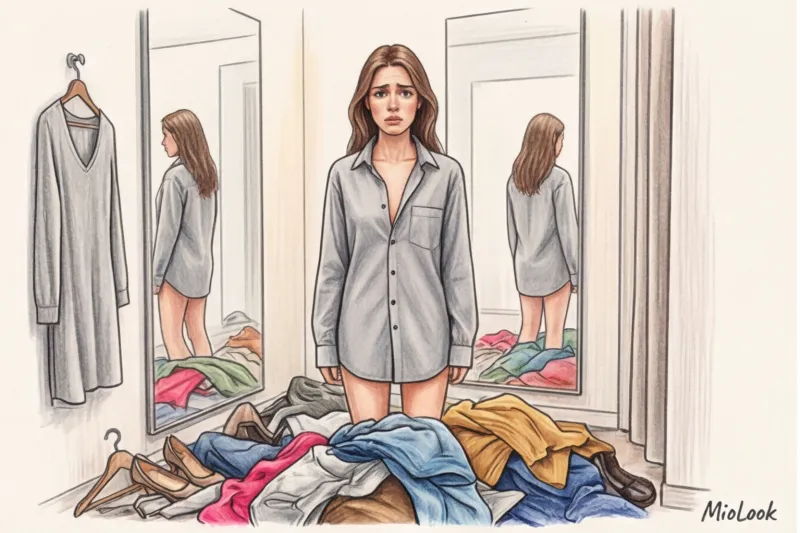
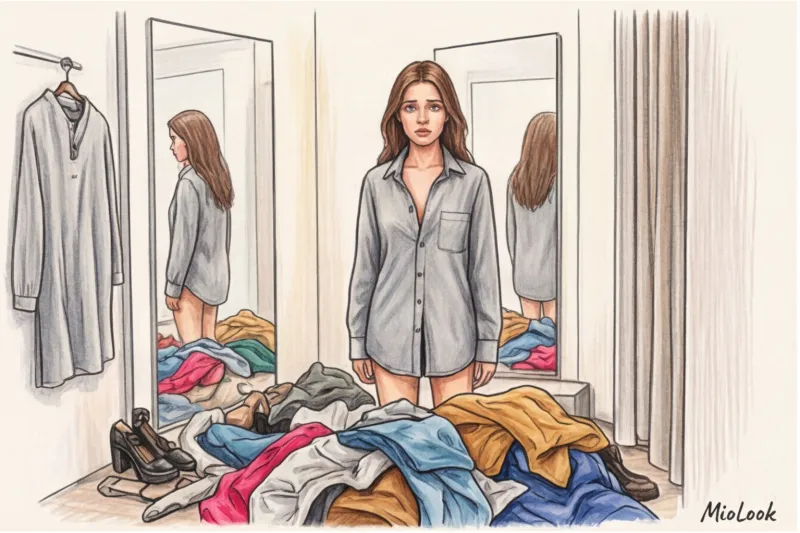
Have you ever cried in a fitting room? Not because the item was too small, but because of a strange, suffocating feeling that the woman in the mirror wasn't you. One of my clients, a brilliant corporate lawyer, literally burst into tears while trying on a bold leather biker jacket. The garment fit perfectly. But the contrast between her usual strict image and this new, freer version of herself was too stark. Her psyche couldn't cope with the sudden transition.
I talked in more detail about why our brain so fiercely resists visual changes in our A complete guide to changing your style and stepping out of your comfort zone. But today we're talking about a solution. Over 12 years of working as a stylist at the intersection of Paris and New York, I've realized a paradox: to radically change your wardrobe, you need to completely remove physical clothing from the process for a while. And that's where virtual clothing try-on online transforms from a fun technological toy into a powerful psychological tool.
Why a fitting room is the worst place to change your look
The standard advice from glossy magazines is: "Go to the store and try on everything." As a practitioner, I officially declare that this is the worst strategy for a beginner. The physical fitting room is the zone of maximum stress. In retail psychology, there's even a term for it. mirror shock (fitting room shock). The harsh fluorescent light, highlighting every shadow on a face, the cramped space, the stuffiness, and the subconscious pressure from the consultants ("Do you want to try this blouse?") completely kill the desire to experiment.
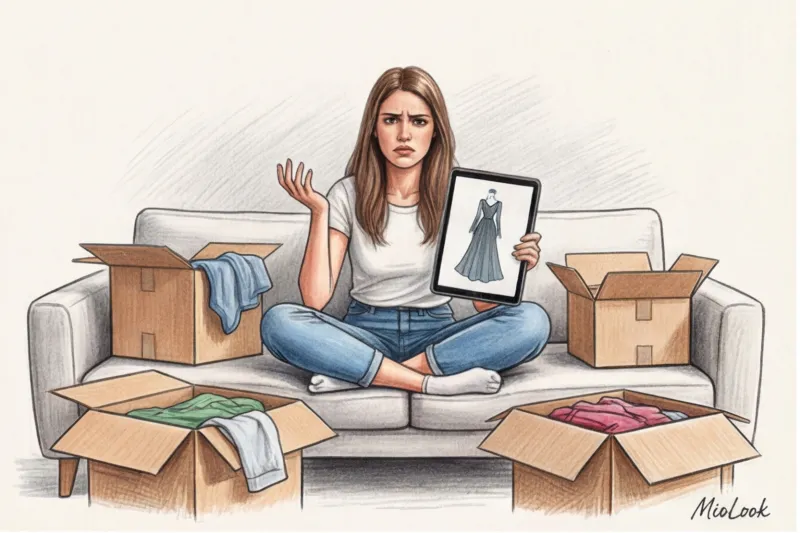
Remember the CFO I mentioned above? We often take five bold, unusual items to the checkout counter: an asymmetrical dress, palazzo pants, a bright jacket. But when we put them on, our psychological defenses kick in. We feel like impostors. So, we leave the bold pieces on the ottoman and dutifully carry our sixth basic gray cardigan to the checkout. According to a McKinsey study (2023), over 70% of "aspirational" (purchased for a new look) items ordered online without prior mental preparation are returned to the store or end up as dead weight in the closet.
When you're just exploring a new style, you don't need a credit card or a shopping mall. You need security.
Access to MioLook for €0.99 — one-time payment
A smart AI stylist will select the perfect look and help you safely experiment with style without having to go shopping.
Get access — €0.99 onceTry on clothes virtually online: your safe sandbox
From a psychological perspective, virtual image generation is the perfect "sandbox." There are no price tags, no size charts to discourage you, and no judgmental glances. You simply upload your photo and see how your appearance reacts to new textures and colors.
By analyzing anonymous user data in the app MioLook I've noticed a striking trend. Users are 3-4 times more likely to "wear" bright colors (fuchsia, emerald, cobalt) in the virtual space than to actually buy them in the first month of using the app. They use AI to gradually get used to to a new self. This is a systematic destruction of the "safety sweater" syndrome.
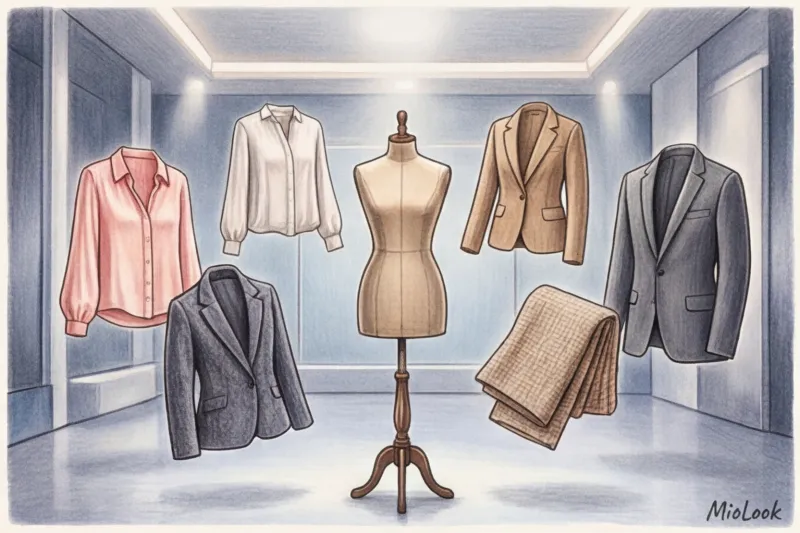
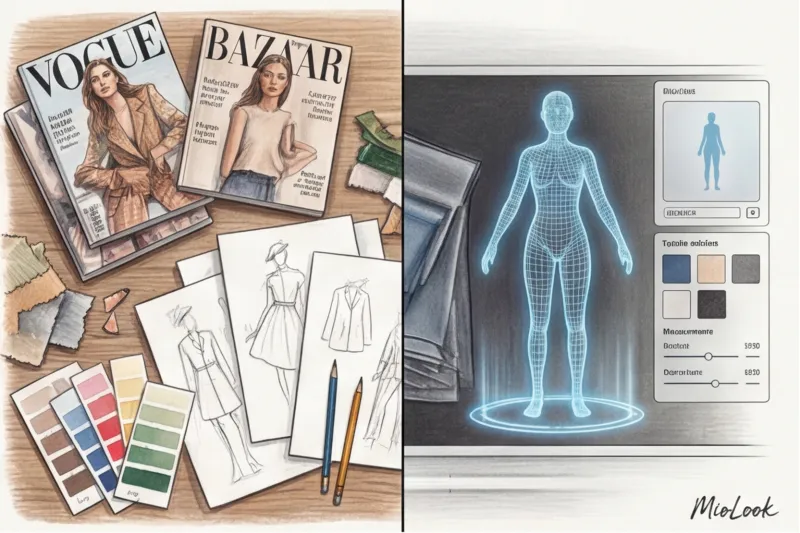
It's important to understand: a smart AI wardrobe isn't like the primitive Photoshop of the 2000s, where your head was simply glued onto someone else's body. Modern algorithms take into account the physics of fabric. They understand how heavy cashmere drapes over your shoulders compared to flowing silk, and how oversized clothing alters your natural proportions.
How Algorithms Bypass Our Inner Sabotage
Why do regular Pinterest mood boards often fail? Because you're looking at 6-foot-10 model Bella Hadid in vintage Dior. Your brain realizes, "That's beautiful, but that's not me." Cognitive dissonance sets in.
Professor Karen Pine, in her famous 2015 study, formulated the concept Enclothed Cognition (embodied cognition). Clothes change not only how others see us, but also how we think about ourselves. Virtual fitting is a form of "pre-living" a new status. When you see exactly your face In a harmonious, albeit unusual, way, the brain translates this aesthetic from the category of “foreign” to the category of “possible for me.”
Your perfect look starts here
Join thousands of users who look flawless every day with MioLook. Upload a photo and find your style.
Get access — €0.99 onceThe "view from the outside" effect
Another phenomenon I constantly observe during consultations: when looking at an AI-generated image, we evaluate it more objectively. Like a painting in a gallery. Women temporarily turn off their inner critic ("my hips are too wide for these pants") and begin to see the composition as a whole: how color brightens the face, how vertical lines elongate the silhouette.
Turn-based strategy: From a familiar closet to a new style with AI
If you start generating everything at once, you'll simply drown in a chaos of images. Changing your image requires a systematic approach. Here's my personal stylist's checklist for working with neural networks:
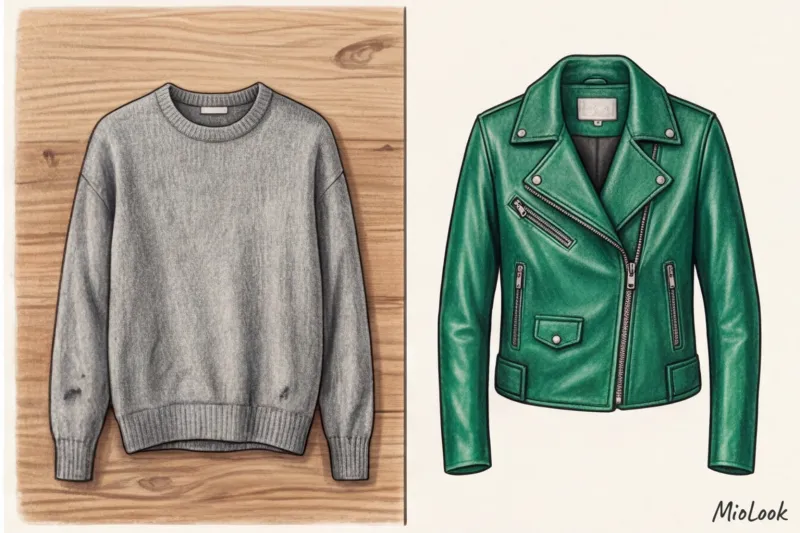
- Step 1: The 10% Rule. Don't change everything at once. If you're used to wearing jeans and jackets, ask the AI to keep the cut but change the texture or color. Consider a smooth, colored leather jacket instead of the usual gray wool. The brain will easily absorb this 10% change.
- Step 2: Play with proportions. Once color stops scaring you, move on to volume. Try out hyper-oversized, ultra-high-waisted pants, or asymmetrical cuts virtually. See how changing your waistline visually changes the length of your legs in photos.
- Step 3: Radical shifts (trying on archetypes). Now, try what seemed "too bold." Have you always been into the "Romantic" style? Create a look with a minimalist grunge aesthetic. Allow yourself to be a rebel on your smartphone screen.
Common mistakes that prevent AI fitting from working for you
Let's be honest: this technology doesn't always work for everyone. There are times when virtual fittings become a waste of time. Here are three key mistakes that negate the benefits of algorithms:
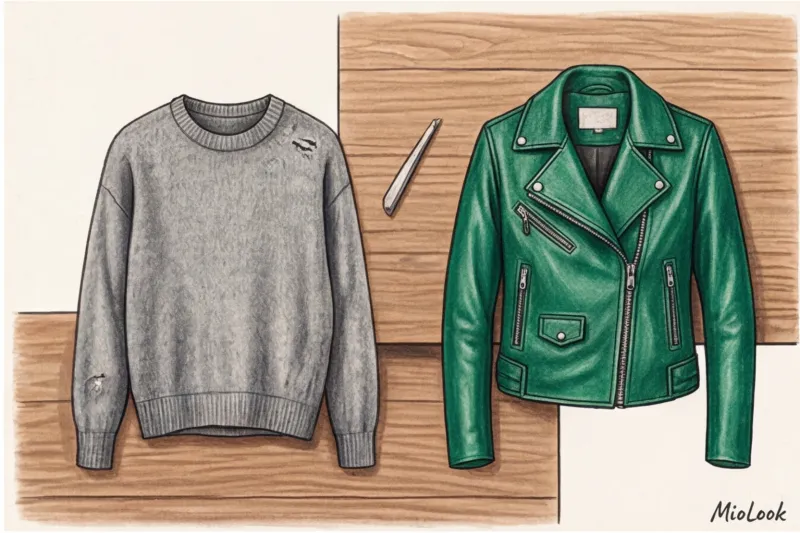
- Using heavily filtered photographs. If you upload a photo where FaceApp has made your jaw narrower and filters have smoothed your skin to the point of plastic, the magic won't happen. Your brain won't believe the image because it won't recognize the real you. Use honest photos in daylight.
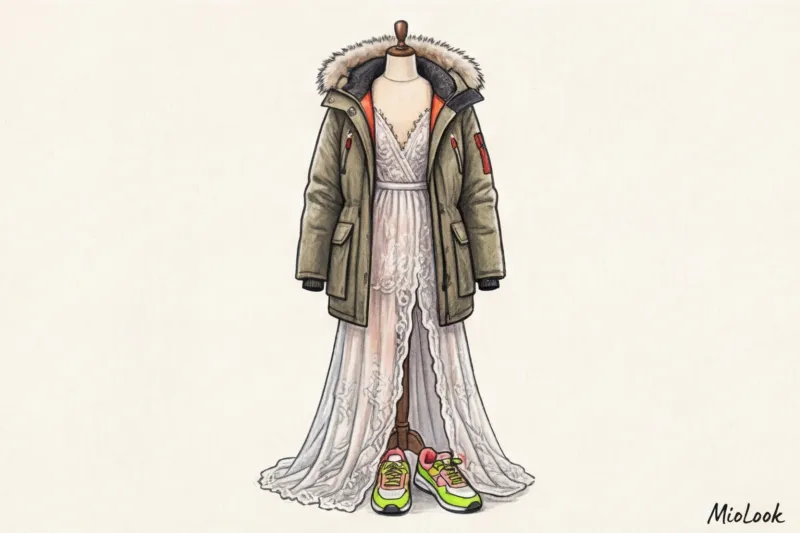
- Detachment from real life. According to the analytics agency WGSN (2024), the average cost of "wardrobe mistakes" (items bought on impulse and never worn) is between $300 and $500 per person per year. Don't generate luxurious evening dresses if you're a stay-at-home mom looking for a comfortable yet stylish urban capsule. AI should be grounded in your reality.
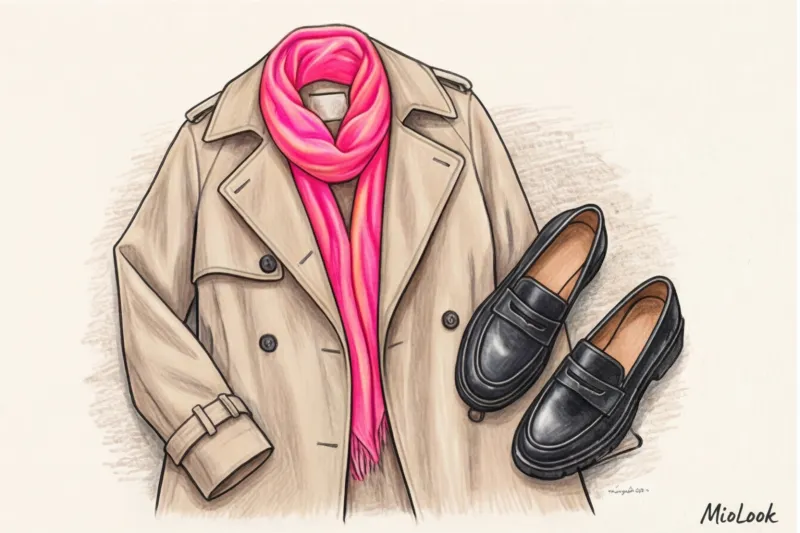
- Ignoring coloristics. A neural network can draw you a neon yellow sweater, but if you have a muted, cool complexion, this color will "eat up" your face in real life. Always match the AI's cues with your natural contrast.
From the screen to the closet: how to bring a successful image into reality
So, you've found that perfect look. It looks great on screen. How can you avoid ruining it during the actual shopping experience?
First, analyze the geometry of the generated garment. Don't look for an identical print—look for an identical cut. Pay attention to the width of the lapels, the length of the sleeves, and the point where the shoulder seam ends. These design details are what make a look "expensive."
Then, use the "test wear" rule. If the AI tells you that your new style is tailored vests worn bare, don't rush to a premium boutique like Massimo Dutti or COS. Buy a budget-friendly alternative at Zara or H&M. Wear the item for a week. Test how comfortable you are physically sitting, standing, and moving in the new silhouette.
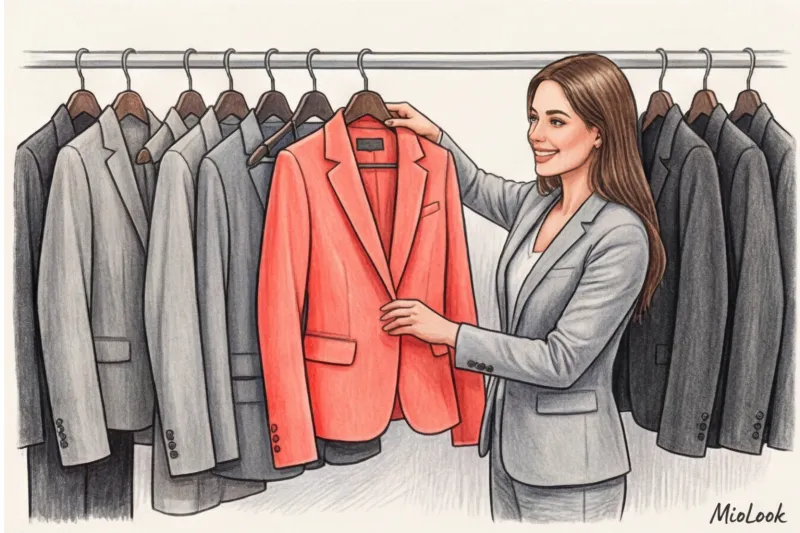
And my main practical advice: when you do go to the store to buy a new version of yourself, always take the saved AI reference image with you on your phone. When the cold light hits you again in the fitting room and your inner voice whispers, "maybe, forget it, let's buy a hoodie," take out your phone. See how stylish and confident you can be. This shot will become your visual anchor.
Virtual fitting isn't about buying clothes faster. It's about giving yourself the freedom to make changes without paying a cent for mistakes. And once your brain believes in the new image, your real wardrobe will follow suit.