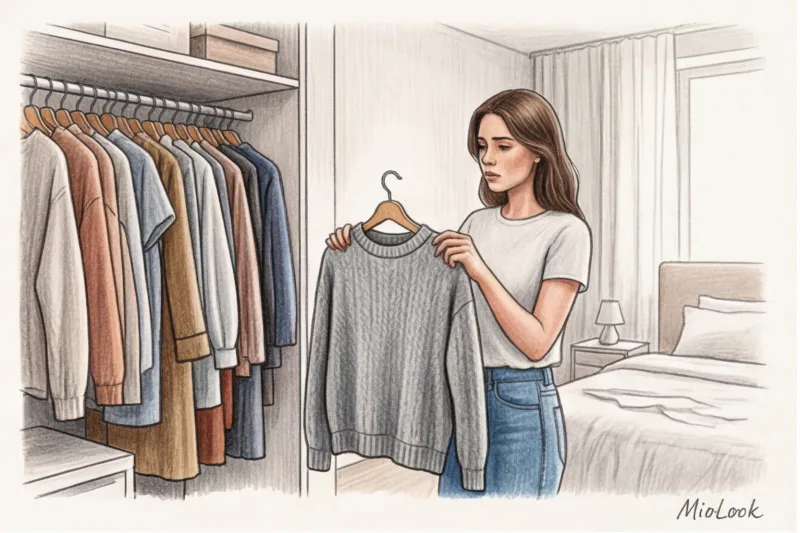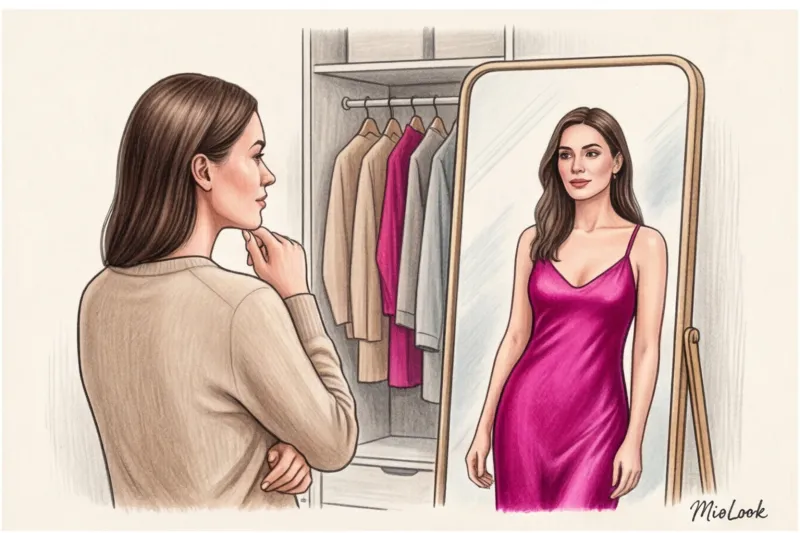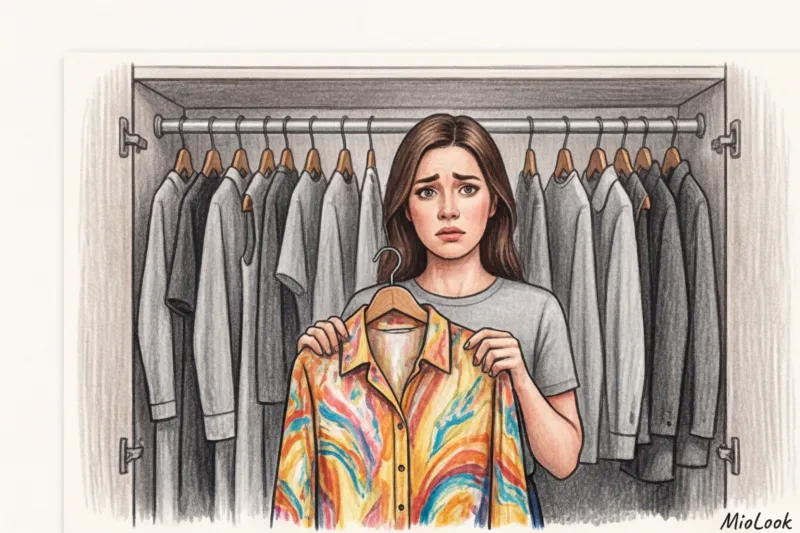
It's a familiar scene: you're standing in front of your open closet, gazing at the stunning, fashionably cut jacket you bought a week ago in a fit of inspiration. You mentally try it on with trousers, imagining how confidently you'll walk into the office... And then your hand treacherously reaches for your familiar, slightly rolled-up gray cardigan. The jacket remains hanging on the hanger. Why? Because the snide voice of your colleague from accounting is already echoing in your head: "Wow, are you going on a date or looking for a new job?"
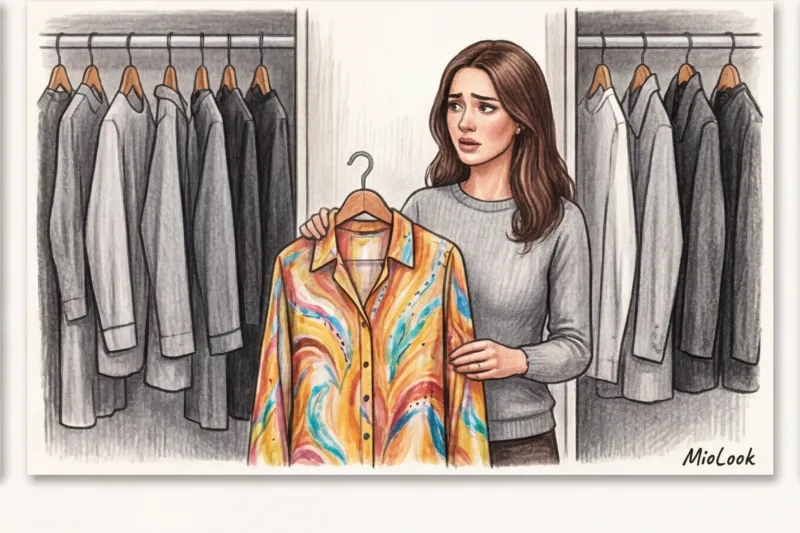
As a practicing stylist with 14 years of experience, I regularly witness this scene during wardrobe reviews. According to internal statistics from the MioLook app, over 80% of women regularly wear only 20% of their clothes to work. The remaining 80% sit idle because fear of changing one's image and facing the judgment of others turns out to be stronger than the desire to look stylish.
We talked in more detail about the psychological aspects of breaking out of the usual framework in our a complete guide to changing your style and getting out of your comfort zone Today we'll talk about how to survive this transitional period in a work environment, where the cost of making a mistake seems too high.
Why the fear of changing your image is a normal reaction, not a weakness.
If you think there's something wrong with you because you're afraid of wearing something new, take a deep breath. Your anxiety is perfectly logical and biologically justified. From an evolutionary psychology perspective, standing out from the pack has always been dangerous. Anyone who attracted too much attention risked becoming prey.
The same ancient mechanisms operate in the modern corporate environment. But they are supplemented by two scientifically proven psychological phenomena:
- Enclothed Cognition. In 2012, Dr. Karen Pine published a study proving that clothing directly influences our cognitive processes. Your old jeans and your usual sweater aren't just fabric. They're your psychological "armor." Taking them off literally makes you feel vulnerable.
- Spotlight Effect. In 2000, psychologist Thomas Gilovich proved that we tend to overestimate the amount of attention others pay us. We think everyone is looking at our new shoes, when in fact, people are only concerned with how they look.
"I always tell my clients: your fear is logical. We won't fight it or force ourselves to overcome it. We'll negotiate with it," says Olena Kovalenko, stylist.
The Three Biggest Office Wardrobe Fears (And What's Behind Them)
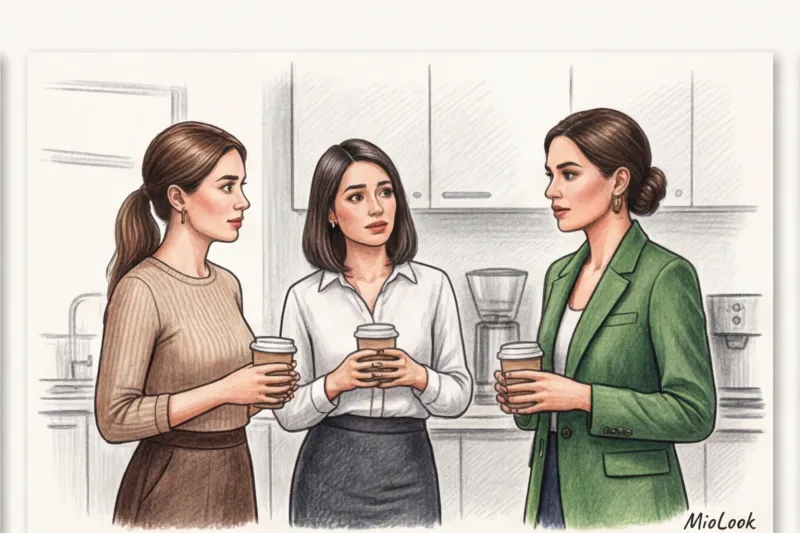
Over the years of working with hundreds of women, I've memorized the phrases my clients use to justify their refusal to make stylish decisions. Let's address the three most common myths that are holding you back. choose stylish office clothes.
"I'll look like I'm trying too hard."
No one wants to be known as overdressed, especially if your office has a relaxed atmosphere. But style doesn't mean "dressing up at 9 a.m."
Modern Smart casual solves this problem You don't wear stiletto heels and a formal sheath dress. You take your usual basics (like jeans and a T-shirt) and simply swap out the soft, shapeless cardigan for a structured, straight-cut jacket. Finding the balance between relaxed and put-together is the key to not looking "trying hard."
"My colleagues will think I'm looking for a new job or going on a date."
Any drastic deviation from your norm provokes gossip. If you've been wearing a hoodie for five years and then show up in a three-piece suit on Monday, questions are inevitable.
That's why good clothes shouldn't be reserved for "special occasions." Your goal is to make a stylish appearance your new daily norm, not a special occasion. After a couple of weeks, the gossip will die down as your colleagues get used to your new standard.
"My professionalism will be questioned"
This is the most dangerous and toxic myth: supposedly, "smart women don't think about clothes," and only those who have nothing intellectual to offer take care of themselves. In practice, it's just the opposite.
High-quality tailoring (for example, a shoulder garment that holds its shape), prestigious textures (thick viscose, matte leather), and precision convey discipline and attention to detail. As a specialist, you only gain credibility when your visual presentation matches your expertise. A perfect example is how style for PR people and project managers.
Your perfect look starts here
Join thousands of users who look flawless every day. Upload your items to MioLook and let AI create outfits for you.
Get access — €0.99 onceThe Style Microdosing Method: How to Overcome the Fear of Changing Your Image Without Shock
I categorically disagree with the popular television format of makeovers a la "Fashion Sentence." Yes, throwing out all your old clothes and dressing you in designer labels in one day is impressive for the show. But in real life, such transformations don't work.
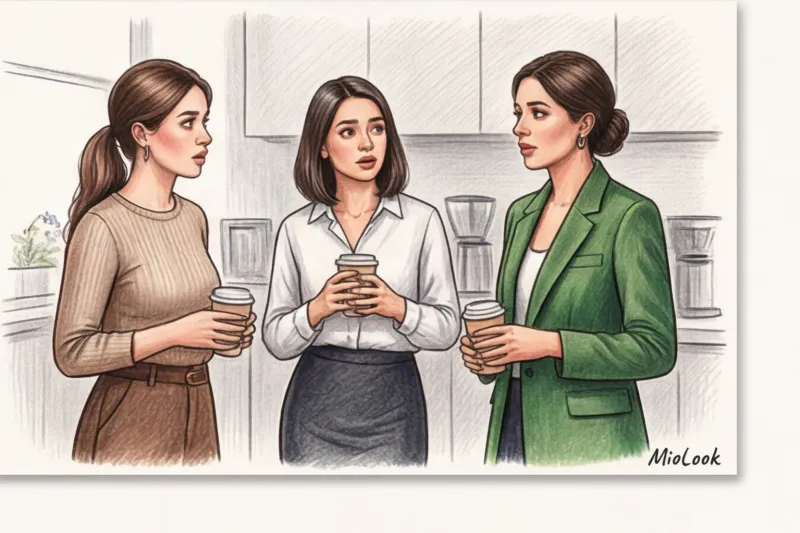
My counterintuitive advice: You SHOULD pay attention to your colleagues' opinions. A sudden change of image in a conservative office isn't an act of courage, but a communication error that will cause rejection. The right approach is evolution, not revolution.
I've developed a proprietary method of "microdosing" style. We implement changes in measured doses, approximately 10% per week. This doesn't cause panic for you or the HR department.
- Week 1: Palette Change. Keep your usual silhouettes (like trousers and a jumper), but change up the color. Instead of dull gray, try a deep emerald, rich wine, or a refined chocolate hue.
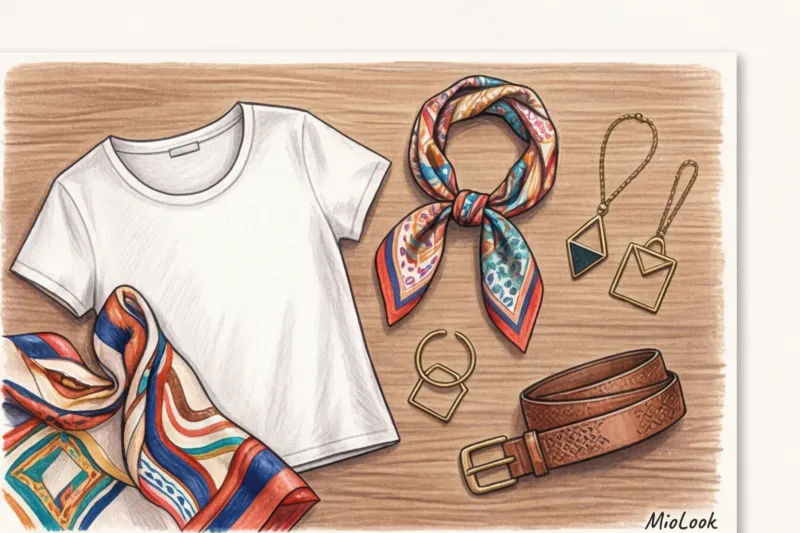
- Week 2: Hardware and Accessories. The clothes remain the same, but we're removing the worn-out ballet flats and soft tote bag. We're introducing hard-soled loafers, a smooth leather belt, and geometric, minimalist earrings. The look comes together instantly.
- Week 3: Change one cutting element. Now you can change up the silhouette. For example, keep your favorite top, but swap out the skinny pants for trendy wide-legged palazzo pants with a pleated edge.
One of my clients, CFO Anna, was terrified of appearing "upstart" in front of a conservative board of directors. We transitioned from her favorite knitted sweaters to classy suits over almost a month and a half, step by step. Ultimately, no one asked any questions, but a month later, the boss remarked, "Anna, you've been acting very confident in presentations lately."
"Wow, you're so dressed up!": How to Respond to Coworkers' Comments
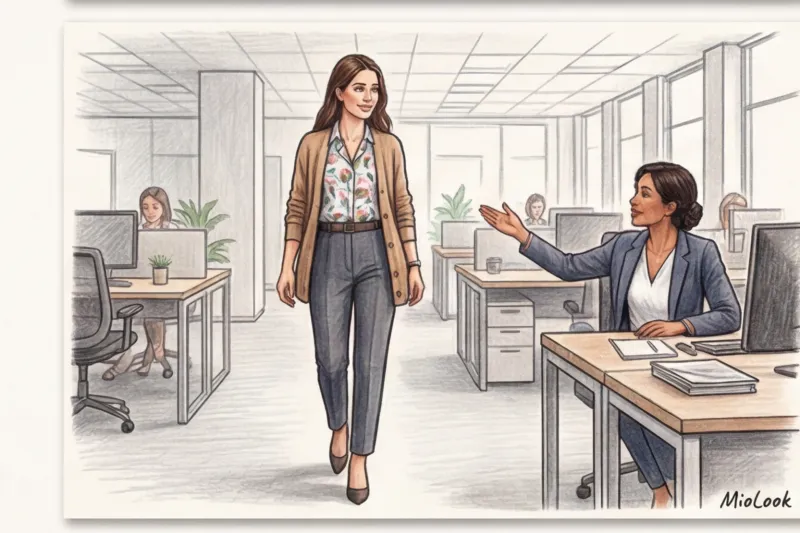
Even if the transition is smooth, someone will inevitably comment on your new look. It's important to understand: people don't do this out of malice. More often than not, the phrase "Wow, you look so chic!" is simply a clumsy, socially awkward attempt at a compliment.
What you should absolutely not do:
- To justify: "Yes, it's an old blouse, I just washed it well.".
- Devalue yourself: "Oh, I bought it on sale for next to nothing.".
- Defend aggressively: "So, should I always wear rags from now on?".
When you start making excuses, you're confirming that you did something inappropriate. Keep a straight face.
Scripts of correct answers:
- "Thank you! I decided to freshen up my wardrobe a bit for the season."
"Thank you, that's nice to hear. I'm testing out a new approach to style, seeing how it works."
- Just a sincere smile and a short: “Thank you, I really like this thing too.”
Ready to get started stress-free?
Try out the virtual try-on feature in MioLook. Create a safe capsule on your phone screen before wearing it to the office.
Get access — €0.99 onceMistakes when updating your business wardrobe
Attempts to change one's style on one's own often end in failure due to blindly copying images from the internet. What looks great on a Scandinavian fashion blogger on Pinterest might look out of place in the hallways of a typical bank or IT company.
A sharp transition from one extreme to another
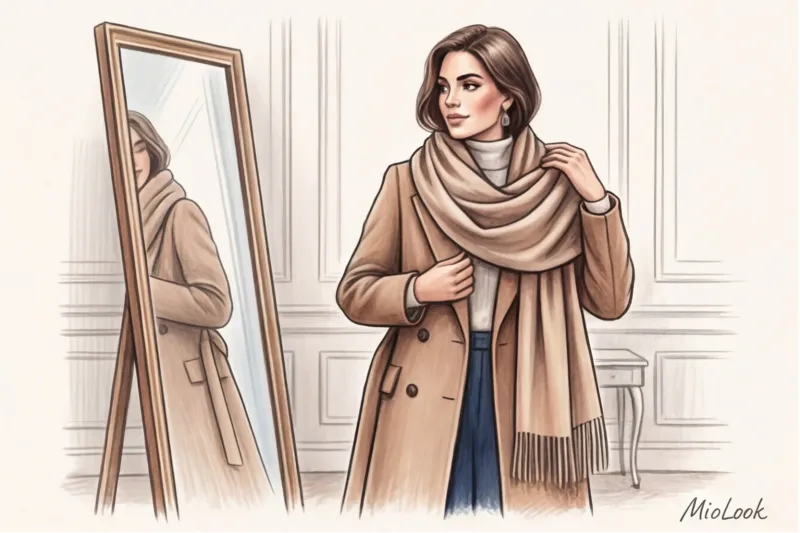
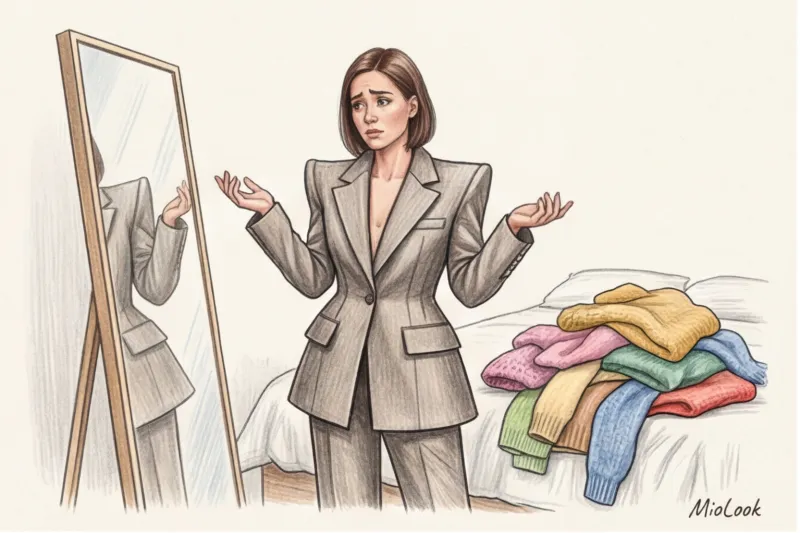
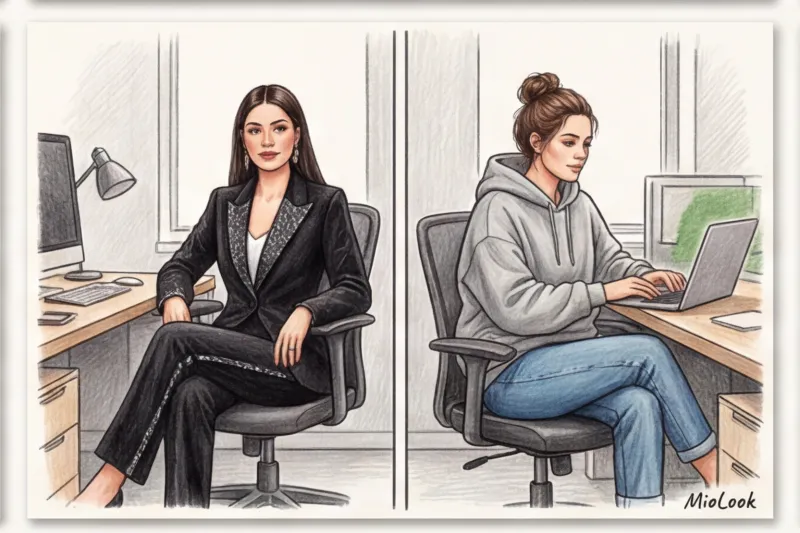
Don't try to transform yourself from a grunge lover into a classic style icon in one weekend. If yesterday you were wearing an oversized hoodie and today you show up in a fitted suit with a silk scarf, your nervous system simply won't be able to handle the strain. You'll spend the entire day tugging at your skirt, adjusting your collar, and projecting a sense of insecurity.
Ignoring the unspoken dress code
There's a fine line between showing individuality and violating corporate culture. If there's an unspoken winter dress code This means warm sweaters and jeans, you don't have to come in a silk blouse.
How to be yourself without breaking the rules? Play with textures and fits. It might be a sweater, but not a loose acrylic one, but a thick one made of merino wool or cashmere. It might be jeans, but not distressed ones, but solid-color, straight-leg, indigo jeans. This way, you'll elevate your style while staying within the bounds of what's allowed.
A Step-by-Step Plan: From Fear of Change to a Reputable Personal Brand
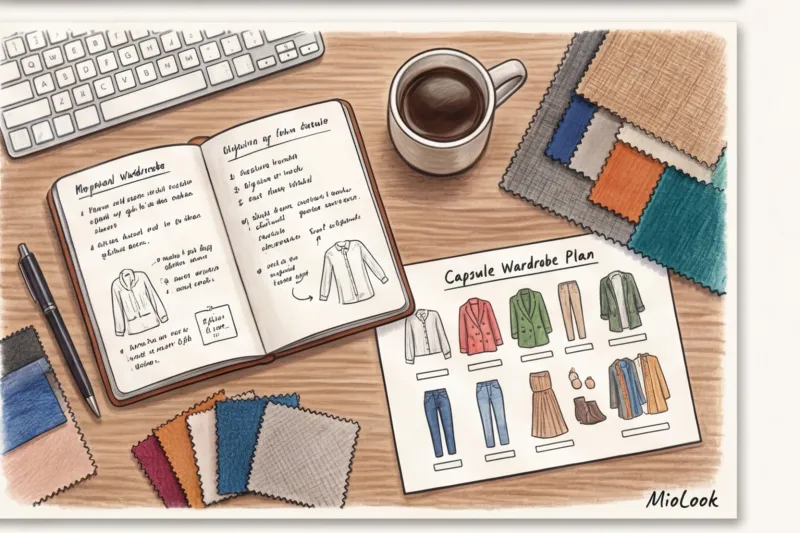
To prevent the fear of changing your image from paralyzing you in the morning, follow a clear algorithm.
- Audit of the current state. Open your closet and be honest: what items make you uncomfortable? What looks outdated? Get rid of pilling and stretched-out knees—they're draining your energy.
- Statement of the problem. Ask yourself: "What impression do I want to make on my management and subordinates?" The answer "I want to be comfortable" is unacceptable. The answer "I want to appear as a competent expert who can be trusted with a complex project" is an excellent starting point.
- Creating a safe capsule. Pack 5-7 pieces that go perfectly together. For example: basic trousers, a midi skirt, a white shirt made of heavy cotton (at least 180 g/m²), a structured jacket, a quality jumper, and two pairs of shoes. See the app. MioLook You can digitize these things and let the algorithm create combinations from them - this removes morning anxiety 100%.
- Test drive in a safe environment. Never wear a completely new item straight to an important presentation. Try out your new jacket on the weekend for brunch with friends. Give your body time to get used to the new fit and feel.
Bottom Line: Your New Style Is a Tool of Influence
Remember the famous 7-second rule? That's how long it takes the human brain to form a first impression of someone. But there's another, equally important rule: people adapt incredibly quickly to positive things.
The fear of changing your image dissipates the moment you realize that clothing isn't just a cover for your nakedness; it's your tool of influence. What might elicit a surprised glance from a colleague in the next department on your first day will become your new norm in exactly three weeks. You're not just changing the clothes in your closet; you're setting a new standard for how you're treated. Allow yourself this upgrade; you've long deserved it.