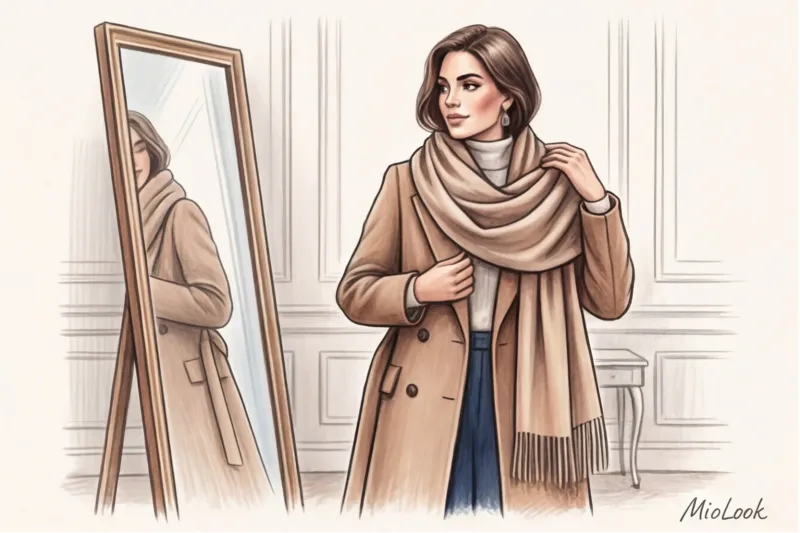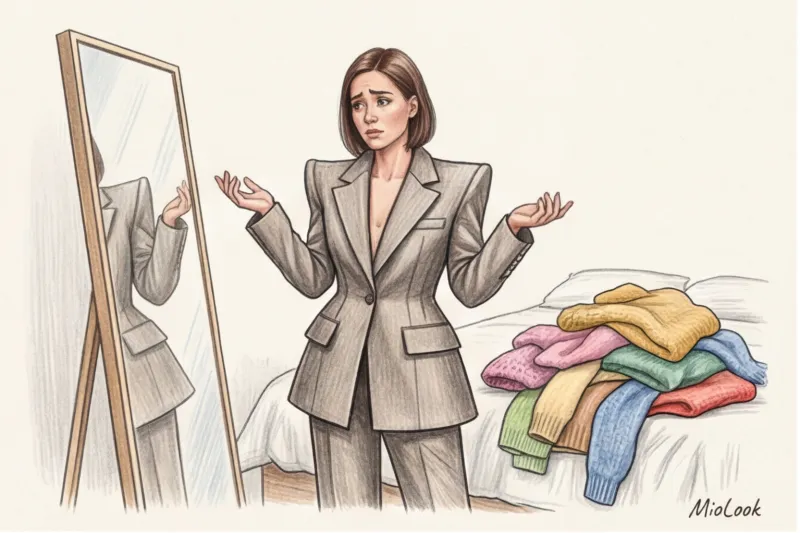
Two years ago, Anna, the head of the development department, contacted me. Tired of her "eternal hoodies" and decided to completely change her life in one weekend. We went to a shopping mall, where she bought the perfect, elegant capsule collection for 1,500 euros in one fell swoop: structured jackets, silk blouses, palazzo pants. Guess what happened next? On Monday, she put on the new suit, drove to the office, felt like an impostor in someone else's body, and on Tuesday... she fit back into her old jeans and hoodie. The new clothes hung in her closet with the tags on for over a year.
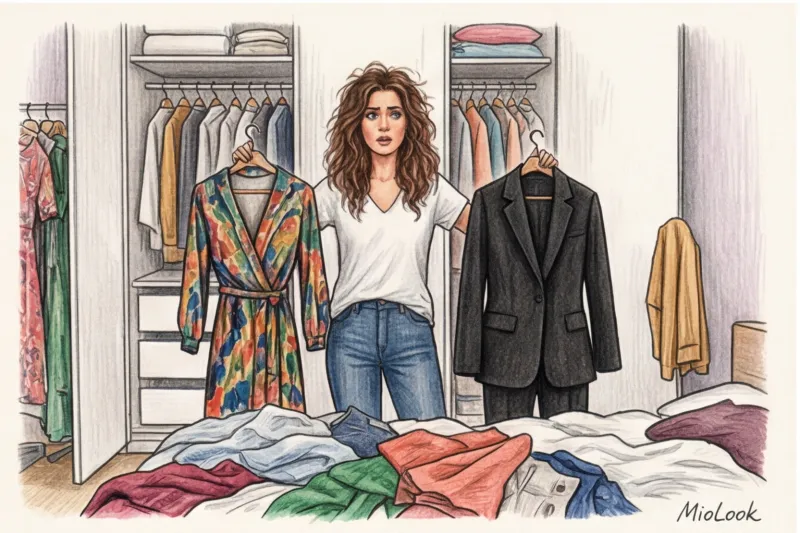
This case from my practice perfectly illustrates the main problem of those who do not know, Where to start changing your image We're used to thinking that a makeover should be like the show "Take It Off Now"—a stylist comes in, throws all your old clothes in a trash bag, and you emerge refreshed. We discussed the psychology of these fears in more detail in our the complete guide to getting out of your stylistic comfort zone But in reality, such radical measures almost always end in a rollback.
Where to start with a makeover: Why radical transformations only work in the movies
Popular culture has conditioned us to the myth of instant transformation. It seems that if you buy the right clothes, your inner state will change with the snap of a finger. In reality, things work differently.
In 2012, psychology professor Dr. Karen Pine published a large-scale study of the phenomenon Enclothed Cognition (clothed cognition). She demonstrated that our clothing directly influences cognitive processes. When you suddenly put on clothes that are completely at odds with your usual sense of self, the brain perceives this not as a "wow" effect, but as a threat to identity. You look in the mirror and see a stranger. An alarm goes off.
Large-scale closet cleanouts and the purchase of a completely new wardrobe are akin to extreme diets. You might be able to hold out for a couple of days on sheer willpower, but then you'll inevitably fall off the wagon. The only sustainable and effective way to evolve is the theory of small steps.
Access to MioLook for €0.99 — one-time payment
A smart AI stylist will select the perfect look based on your habits and gently take you out of your comfort zone.
Get access — €0.99 onceThe 10% Rule: How to Trick Your Brain When Changing Your Style
Dr. BJ Fogg, a behavioral psychology researcher at Stanford and the author of the "Tiny Habits" concept (2019), argues that for a new habit to stick, the barrier to entry must be minimal. I adapted his approach to styling and came up with the "10% Rule."
The rule is simple: in any new look, 90% of the things should remain completely familiar and safe, and only 10% should be new and unusual. This allows you to bypass our brain's "radar." You don't get scared by your reflection, but you still take a step forward.
"Don't try to become someone else. Try to become yourself, but in a new version. Start small: change one detail, leaving the basics intact."
According to anonymized statistics of the application algorithms MioLook 80% of people who shop independently buy duplicate items time and time again. A gray sweater is replaced by another gray sweater. To break this cycle without stress, a hierarchy of visual safety is needed. First, we change the way we wear it, then accessories and shoes, and only finally, the main shoulder and waist pieces.
Small Steps Theory in Practice: 4 Stages of Safe Transformation
As a practicing stylist, I've developed a clear roadmap. It allows my clients to transition from decidedly outdated pieces to trendy capsule collections so seamlessly that they become style icons in their office without even realizing it. Here's what the process looks like.
Step 1. Free Upgrade: Stylistic Micro-Techniques
Did you know that the first step to changing your look doesn't even require a trip to the store? Often, the problem isn't the clothes themselves, but how you wear them. Changing the silhouette instantly modernizes your look.
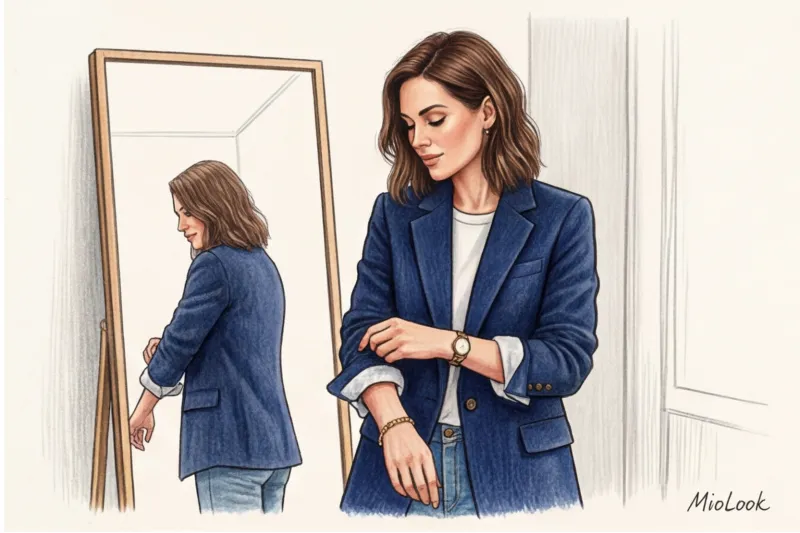
- Open your wrists and ankles. Roll up the sleeves of your jacket or shirt. The wrists are the most graceful part of the hand. By revealing them, you visually lighten even the heaviest top.
- Master the French tuck. Tuck in a sweater, T-shirt, or shirt only at the front, leaving the back loose. This highlights the waist but conceals the sides and creates a slightly casual look.
- Change your parting. Just flip your hair to the other side. You'll be amazed at how much the architecture of your face changes.
Step 2. Replace the familiar style with a modern equivalent
Here we use the "sibling" technique. You don't change the color or weight of the fabric, you only change the cut. It's the perfect compromise between comfort and fashion.
For example, let's say you're used to wearing skinny jeans (98% cotton, 2% elastane) in dark blue. Don't immediately jump into white wide-leg jeans. Buy straight-leg jeans in the same dark blue. You're still wearing blue jeans, and your mind is at ease, but the silhouette has become fashionable for 2024–2025. Love those tight, cropped cardigans with buttons? Replace them with a slightly more relaxed fit (semi-fitted) cardigan in the same basic color.
Step 3: Introduce new color and texture through accessories
Shoes and bags set 50% of the mood of your entire outfit. You can wear your oldest, stretched-out safety sweater, but if you pair it with the right shoes, the look will be saved.
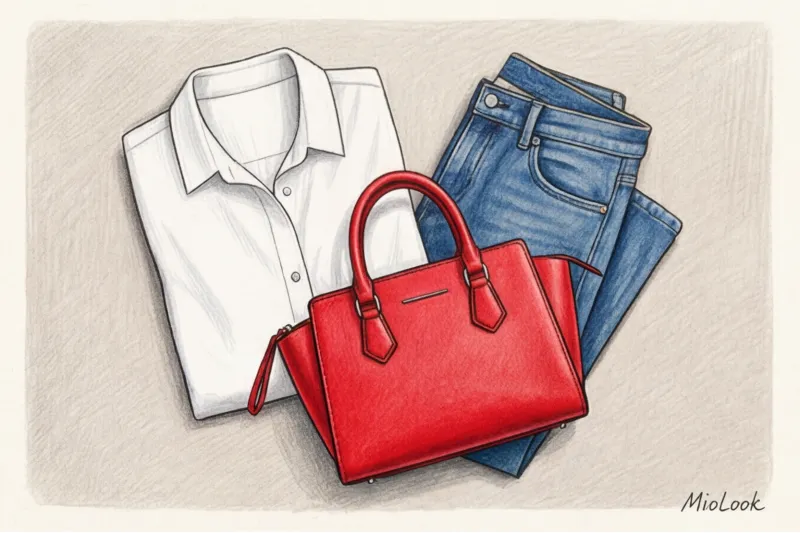
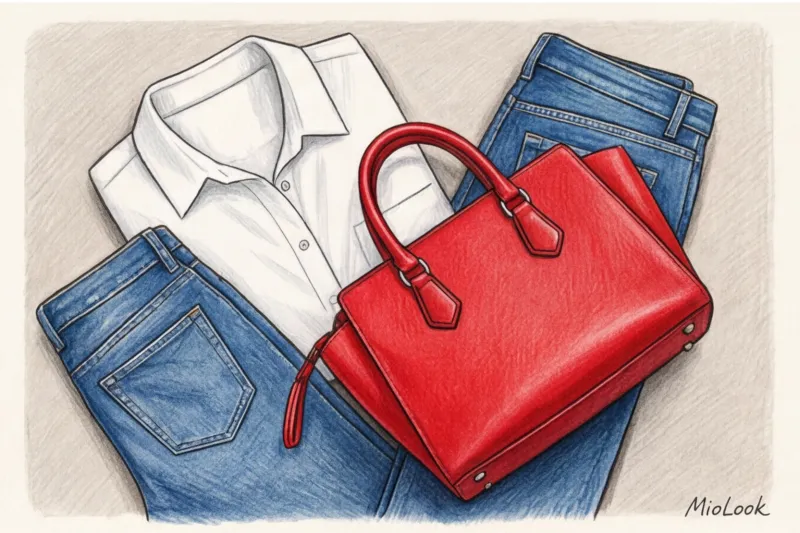
At this stage, we begin to add color and texture. Instead of your usual black round-toe ballet flats, try pointed loafers in burgundy or dark olive. Swap out your soft, shapeless bucket bag for a crisp, geometric one. The crisp shape of the bag instantly brings a relaxed look together, making it more classy.
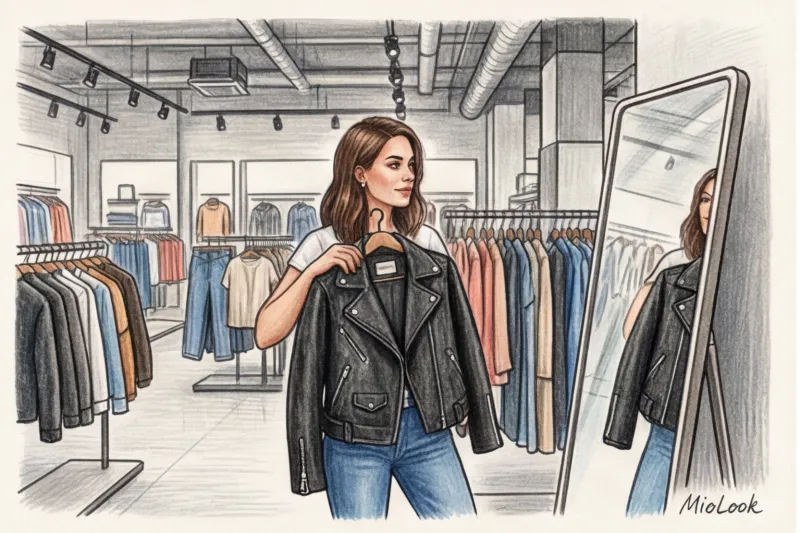
Your perfect look starts here
Join thousands of users who look flawless every day with the MioLook app. Upload your items and get ready-made look formulas.
Get access — €0.99 once"Testing Ground": Where to Buy Things for Your First Experiments
One of the main rules I instill in my clients: Never buy expensive investment items during the transition phase. You don't know your new style yet, you're just feeling it out.
European mid- and upper-mid-range mass-market fashion (Zara, Mango, COS, Massimo Dutti, & Other Stories) is your testing ground. In terms of cost-per-wear, it's more logical to buy a trendy asymmetrical top at COS for €40 and wear it three times to see if you like the cut than to invest €300+ in a designer piece and hate it.
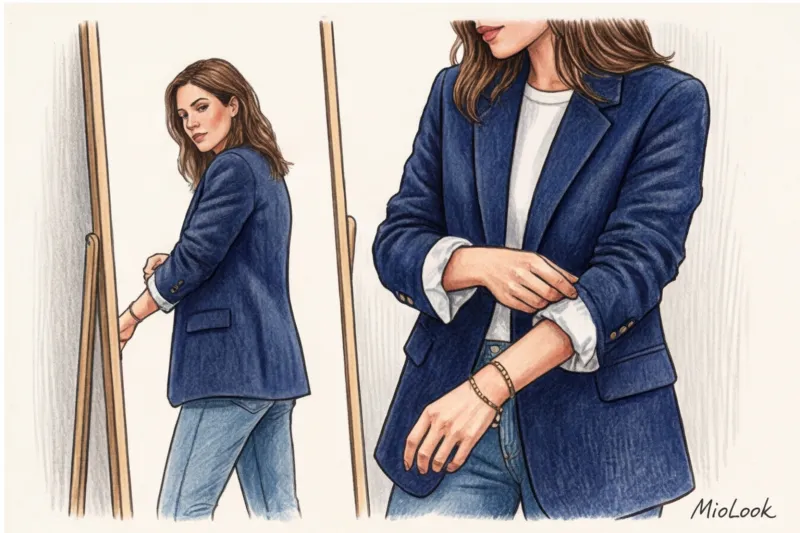
I often use the "Try-On Test" technique with my clients. Go to Zara, pick up five items you would NEVER wear. Bright colors, odd cuts, unusual prints. Go into the fitting room. Your task is not to buy anything. You just put it on, take a selfie in the mirror, and take it off. It's powerful therapy: you're training your eyes to see yourself in a new way without financial risk.
The biggest mistake a newbie makes: why you shouldn't just throw out your old wardrobe
Popular stylists on social media love dramatic videos where they carry out clients' clothes in black bags. On camera, it looks impressive. In real life, it's a disaster.
I suggest a counterintuitive approach: don't throw away your old, outdated, but beloved essentials. Put them in a "Quarantine Box" and store them on the top shelf of your closet or under your bed.
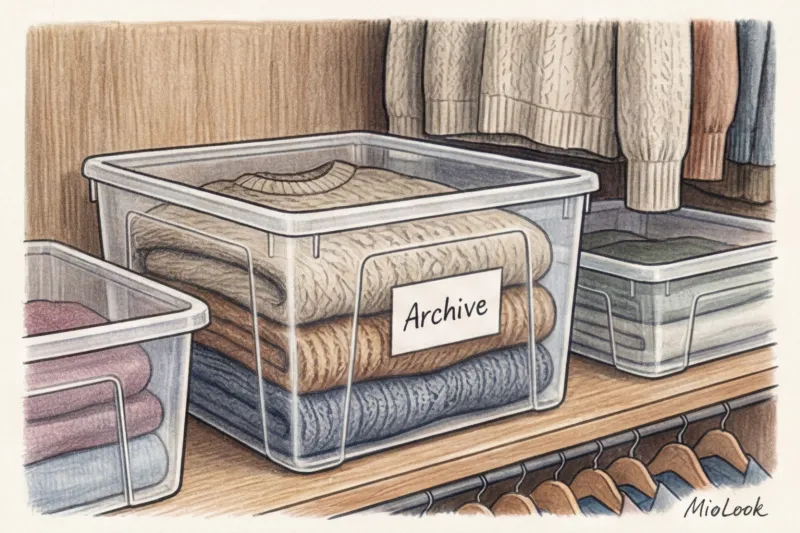
Why does this work? Knowing that your lifesaving old sweater is still in the house and you can wear it at any time dramatically reduces anxiety. You have an escape route. And do you know what happens in practice? After 3-6 months, when the new styles become familiar, clients themselves take out the box and recycle it with a light heart, because they no longer need the old items.
Fair limitation: This advice doesn't apply to washed, torn, or pilled items. We throw out outright trash right away. But items that are simply out of style or no longer appealing are quarantined.
Stylist Checklist: Your First 3 Steps to a New Look This Week
True style is a marathon, not a sprint. If you're reading this article and wondering where to start right now, here are some specific goals for you. Not for a month, but for the next seven days:
- Today's task: Wear your regular shirt or jumper, but tuck it in at the front. Wear it all day and notice how it feels.
- Weekend assignment: Go to any mass-market store. Find something in a color you're terrified of (like fuchsia or electric blue). Try it on, take a photo, smile at your reflection, and leave without buying anything.
- Assignment for next week: Put your usual soft tote bag away in your closet. Get (or buy an inexpensive) rigid, structured bag and make it your base for 5 workdays.
You don't have to break yourself over your knee to look modern. Allow yourself to change slowly, test hypotheses, and make mistakes. This is how you develop a personal style that will last for years, not just until the first wash.
Ready to get started?
Try MioLook's free plan—no commitments required. Upload photos of your items and watch the AI suggest new stylish combinations.
Get access — €0.99 once