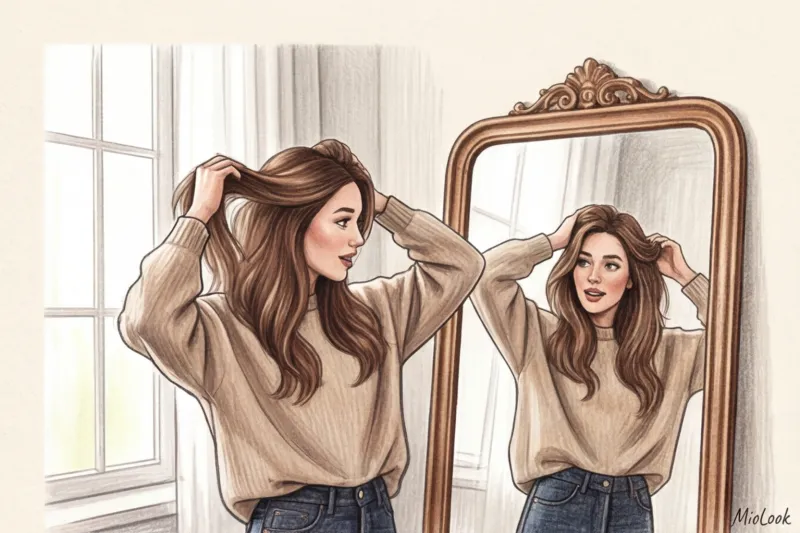
Have you ever noticed how we cling to our hair lengths like they're a safety net? Over 12 years as a personal stylist, I've seen hundreds of women's closets filled with stunning pieces that didn't work for one reason: they simply didn't work with the outdated, "safe" hairstyle. My name is Isabella Garcia, and today we're going to talk about why the question of... How to decide on a short haircut or scarlet lipstick, it's really a question of your readiness to embrace a new, bolder version of yourself.
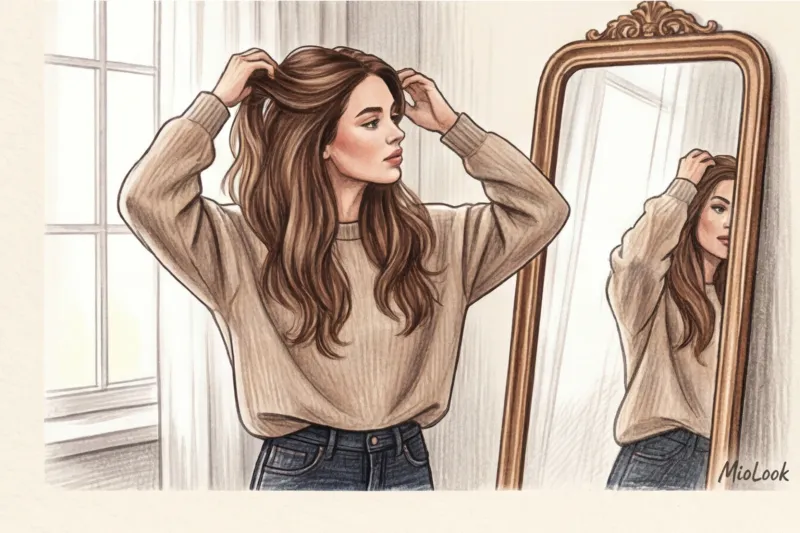
We have already talked in more detail about the psychological barriers to a new image in our The complete guide: how to change your style and get out of your comfort zone But in this article, I want to go further and show you the mechanics of the process. Unlike typical glossy magazine advice, I don't consider makeup and hair in isolation. As a stylist, I'll show you: a change in hair length will inevitably trigger a domino effect on your wardrobe, requiring new cuts, different textures, and a reassessment of your makeup application.
The Anatomy of Beauty Anxiety: Why It's So Hard to Let Go of the Past
In 2012, psychologist Karen Pine coined a startling term: Enclothed Cognition (embodied cognition). Her research has proven that clothing and our appearance directly control our cognitive processes. Hair, in this coordinate system, acts as a powerful anchor of identity. When we wear the same length for years, the brain perceives it as a physical boundary of safety.
Analyzing style change patterns through algorithms MioLook smart wardrobe Our team uncovered some astonishing statistics: nearly 80% of women admit to craving dramatic changes, but put off visiting a salon for years. The "safety sweater" phenomenon is at work—we think long locks can hide us from the world on a bad day.
The brain is a master at tricking us with the notion that "I have the wrong face shape" or "short hair requires perfect skin." In reality, this is simply a defense mechanism against stepping outside of our comfort zone. The illusion that it "won't suit you" is easily shattered by the laws of geometry and proper proportions.
How to Decide on a Short Haircut: The Mathematics and Psychology of Ideal Proportions
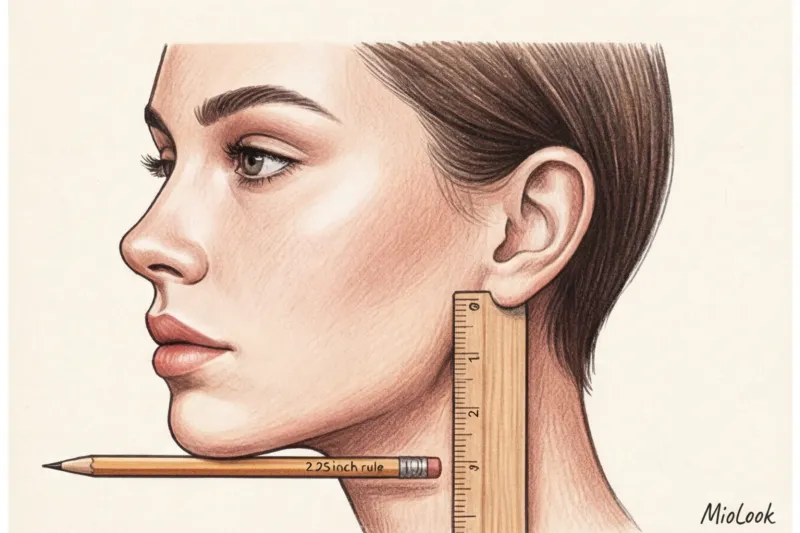
Let's translate your fear from an emotional level to a strictly technical one. Facial geometry is not an abstraction, but a set of measurable quantities. When you stop guessing and start measuring, your anxiety subsides.
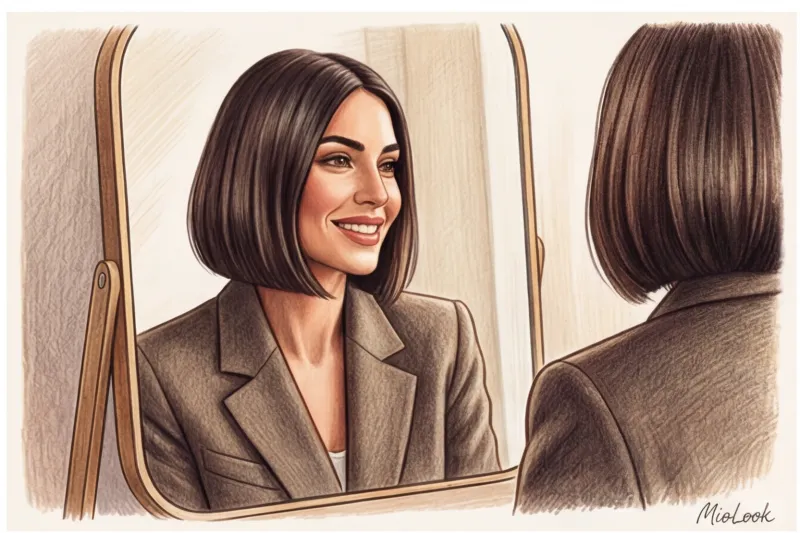
An important clarification from my practice: A radical transition from waist-length to an ultra-short pixie in one visit doesn't work for everyone. If you're sensitive to change, try a "transitional length" approach. First, try a long bob (an elongated bob to the collarbone), then a month later, a classic chin-length bob. Give your eyes time to adjust to the new lines in the mirror.
The 5.5-Centimeter Rule and a Test Drive Without Scissors
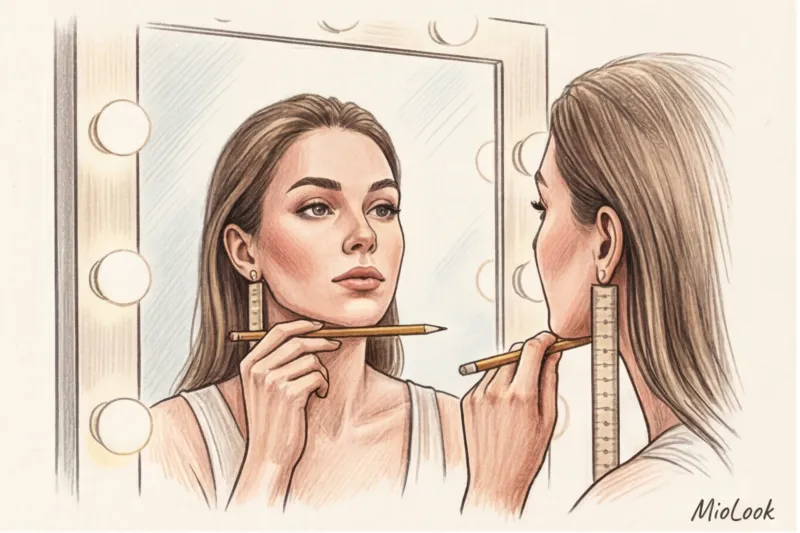
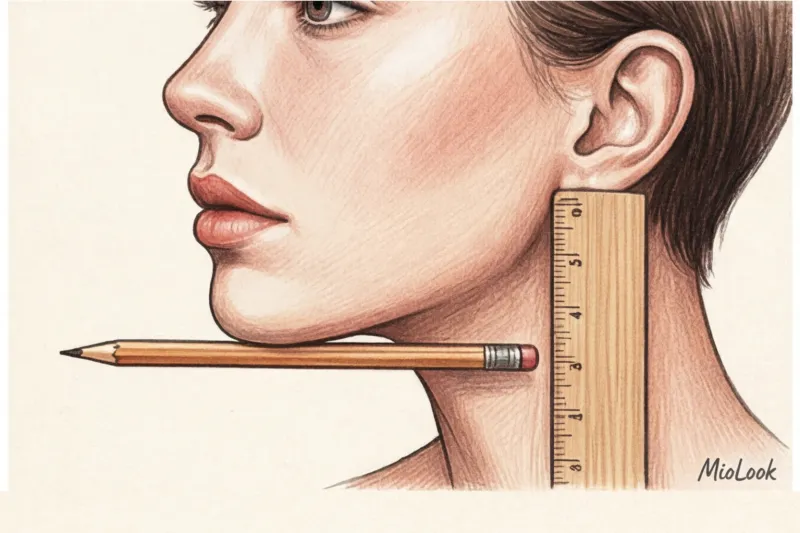
To determine if you're destined for a short haircut, use the 5.5-centimeter rule, developed by legendary British hairstylist John Frieda after years of studying the structure of the jaw and facial bones. Take a regular pencil and a ruler. Place the pencil horizontally under your chin and the ruler vertically from your earlobe. If the distance from your earlobe to the intersection with the pencil is less than 5.5 cm, a short haircut is perfect for your anatomy. If it's longer, you'll look more flattered with longer options, such as rejuvenating bob.
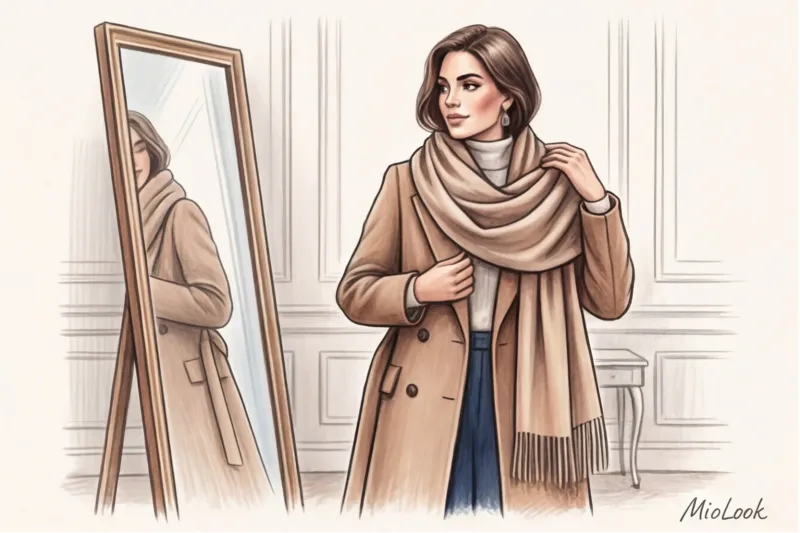
My favorite styling trick for clients who are still hesitant: give yourself a test drive without lifting a single pair of scissors. Put on a thick merino wool or cashmere turtleneck, gather your hair into a low ponytail, tuck it in, and secure it with bobby pins, creating the illusion of a bob. Wear this style for a day at home. You'll immediately feel the difference in your posture.
Access to MioLook for €0.99 — one-time payment
A smart AI stylist will select the perfect look based on your new hairstyle and makeup.
Get access — €0.99 onceThe Domino Effect: Why a New Haircut Will Change Your Wardrobe
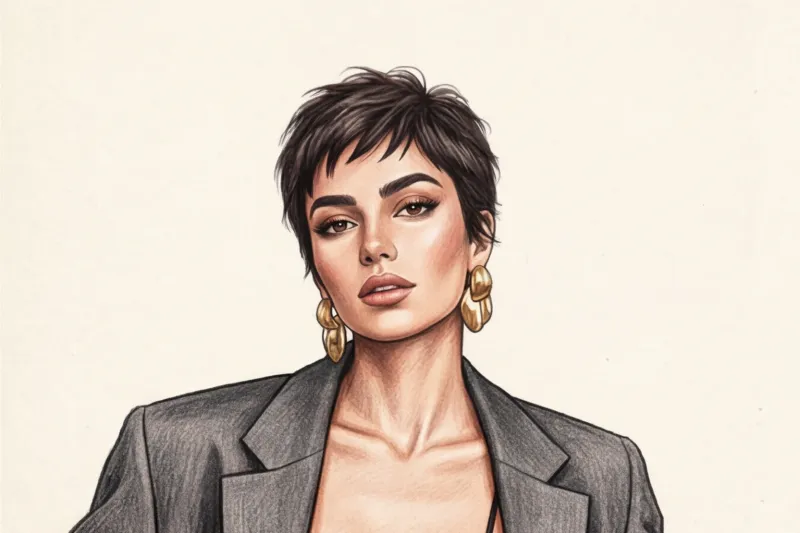
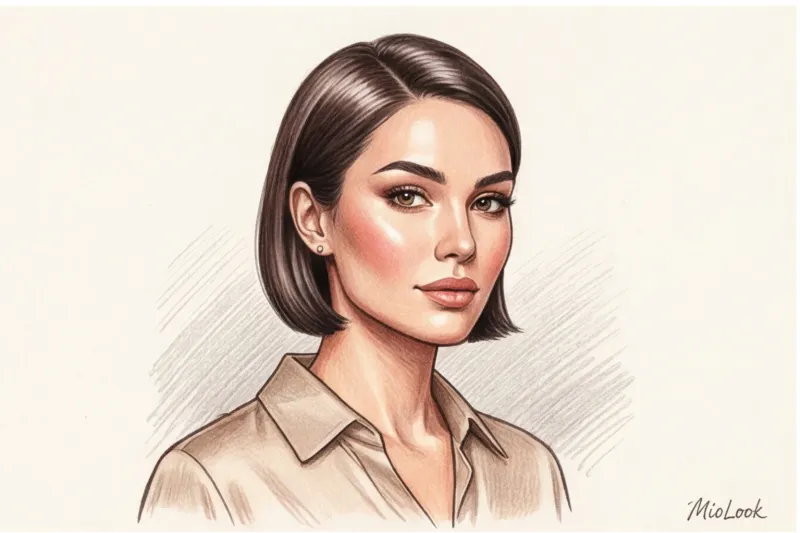
Herein lies the key, completely counterintuitive insight of my work. The main myth is: "A short haircut takes away femininity." In fact, it's exactly the opposite. By removing volume, we expose the neck, collarbone, and jawline—the most fragile and sensual areas of a woman's body. And that's precisely why your wardrobe will need to be reorganized.
Let me tell you the story of my client, Sofia, from Milan. For years, she wore her hair softly and below her shoulder blades, adoring romantic blouses with tiny ruffles and flounces. When we finally decided on a bold pixie cut, it was a complete disaster. Putting on her favorite blouse, Sofia looked in the mirror and said, "I look like a dandelion." And she was right. A short, dynamic haircut doesn't tolerate excessive fuss around the face. The open, portrait area demands clean lines.
"We stripped Sofia's wardrobe of all its petty romanticism and embraced architectural cuts: shirts made of thick cotton (180 g/m² and up), V-necks, and simple tops from COS and Massimo Dutti. The look became incredibly luxurious and alluring precisely because of the contrast between the masculine cut and the bare feminine neck."
Take my favorite stylistic formula into account: A bob or pixie cut + chunky hoop earrings + a tailored jacket = instant status and glamour. Hair pulled back from the face is a blank canvas for accent jewelry, which we wrote about in detail in the article about status accessories for experts.
Bright Makeup: A Safe Zone for Bold Experiments
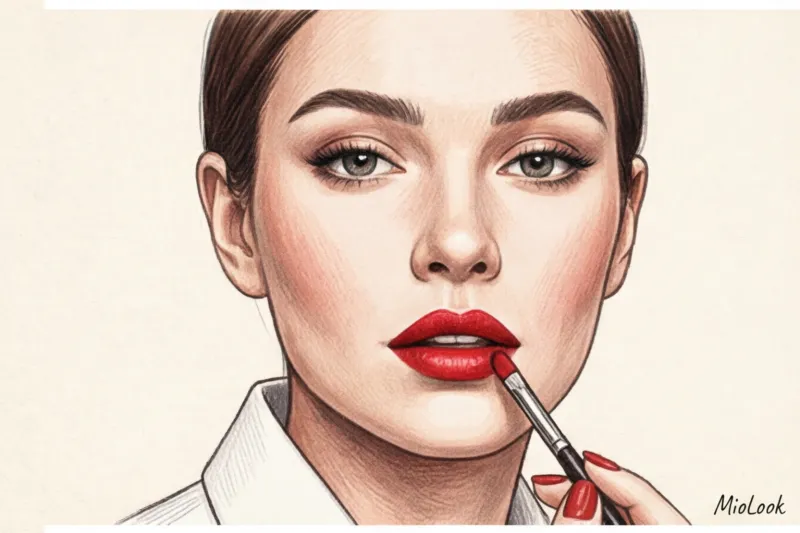
If scissor blades still make you panic, a makeup brush will become your best trainer. Bright makeup is a safe zone where any mistake can be washed away with micellar water in 30 seconds. But the impact of color on your style is hard to overestimate.
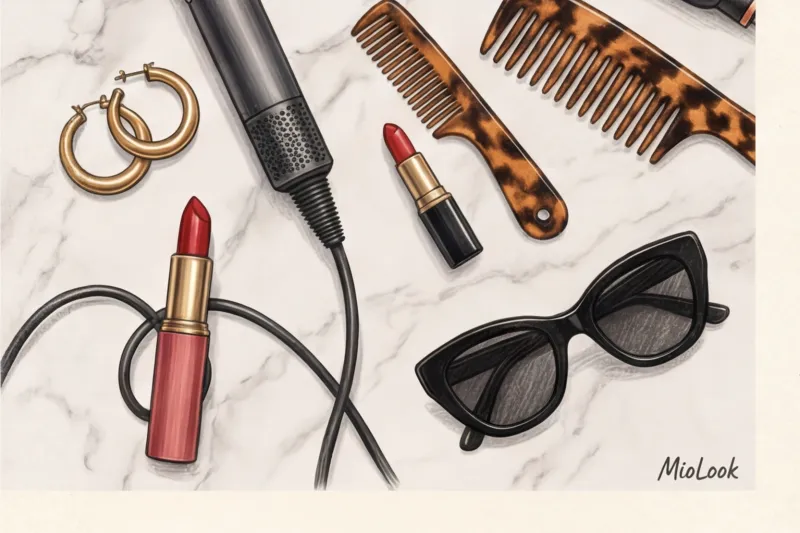
A bright, classic carmine-red lipstick, for example, has the magical ability to change the tone of an entire outfit. Imagine a basic combination: straight blue jeans, a loose-fitting white T-shirt, and loafers. Without makeup, it's relaxed casual for a quick trip to the grocery store. Add red lips and a sleek bun, and you get refined Parisian chic, appropriate even for an evening cocktail party. You can easily visualize this effect by uploading your items to MioLook app and collecting the capsule around one bright beauty accent.
The One-Accent Theory: Colored Eyeliner or Red Lips
Integrating new makeup into an office dress code without breaking etiquette requires pinpoint precision. The strict "one-accent theory" applies here. If we emphasize the lips, the eyes remain bare (at most, a coat of mascara and defined brows). If we draw graphic cobalt-blue eyeliner, we coat the lips with a clear balm.
When choosing a lipstick shade, treat it like an expensive accessory. It should match the tone of your wardrobe. If your closet is dominated by cool tones (fuchsia, emerald, silver, graphite), you need a lipstick with a blue undertone. If your wardrobe is built on warm tones (camel, khaki, gold, terracotta), look for brick-red, warm red shades.
Your perfect look starts here
Join thousands of users who look flawless every day with the help of artificial intelligence.
Get access — €0.99 onceFinding "Your" Master: How to Delegate Changes to a Professional
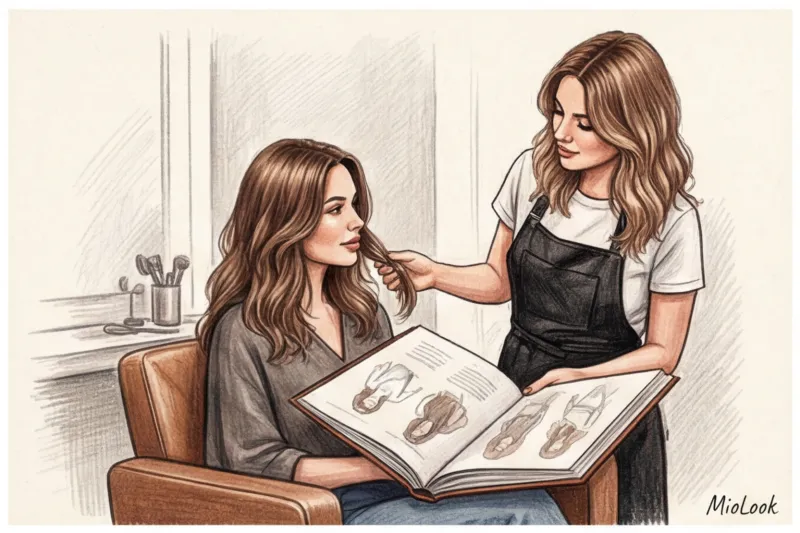
A huge percentage of disappointments stem from walking into a salon with a random Pinterest picture and demanding "they do it exactly like it." Remember: the picture isn't just a haircut. You're seeing the work of a team of lighting technicians, an hour of brushing, tons of texturizing spray, and, most importantly, someone else's hair thickness.
How do you know if you're dealing with a professional you can trust to completely transform your look? A good stylist won't immediately grab the scissors. They'll conduct an interview with you. If you weren't asked these three questions during your consultation, I recommend getting up and leaving:
- "How many minutes in the morning are you realistically willing to spend on styling your hair?" (A graphic bob requires 15-20 minutes of ironing every day, while a torn shaggy dries on its own.)
- "What is your dress code at work?"
- "How do you usually wear your hair: tucked behind your ears, or in a ponytail?"
Matching aesthetic codes is crucial. If you prefer the minimalism of Jil Sander, avoid a stylist whose Instagram is full of intricate Hollywood curls and complex braids. Look for someone who understands the aesthetic of a clean cut.
Checklist: Are you ready for a radical change in your beauty routine?
A makeover is a project. And any project requires a step-by-step plan to ensure a stress-free transition. Here's your actionable list for the next two weeks:
- Today: Do the pencil and ruler test (the 5.5 cm rule). Try the "fake bob" and turtleneck trick.
- Tomorrow: Buy one lipstick in a shade that's unusually bright for you. Apply it at home on a weekend to get used to the bright reflection.
- In a week: Review your closet's portrait section. Remove items with small, busy prints around the neck from the quick-access area. Make room for geometric necklines.
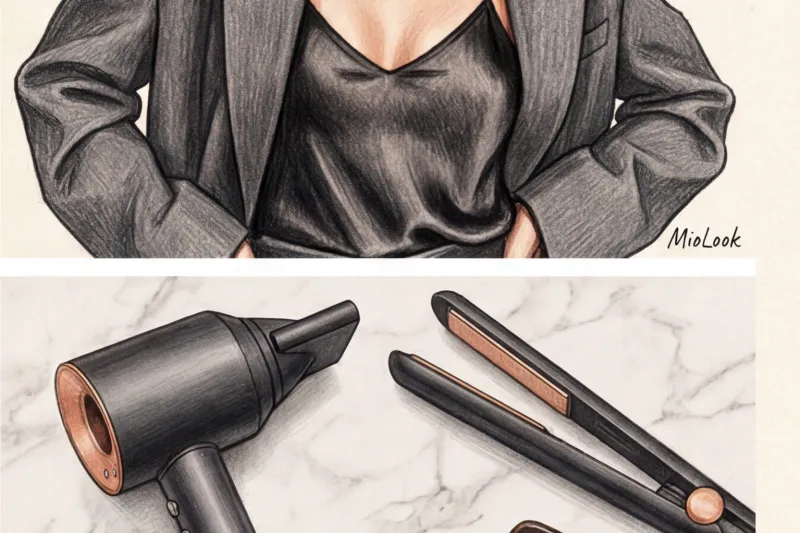
- Before cutting: Completely update your styling arsenal. This is something 90% of women forget! If you've been using nourishing oils and detangling sprays for long hair, then short rejuvenating haircuts will require dry texturizing paste, salt sprays and powder for volume at the roots.
Changing your beauty routine is scary only as long as you perceive it as a loss of your former self. Try switching up your lenses. By trimming off a few inches or adding a bold lip color, you're not losing yourself—you're finally shedding a layer of camouflage. You're giving yourself permission to take up more space, to be visible, and to be unapologetically stylish. And that, trust me, is the most intoxicating feeling in the world.