Imposter Syndrome in Your Wardrobe: Why You Don't Recognize Yourself in the Mirror
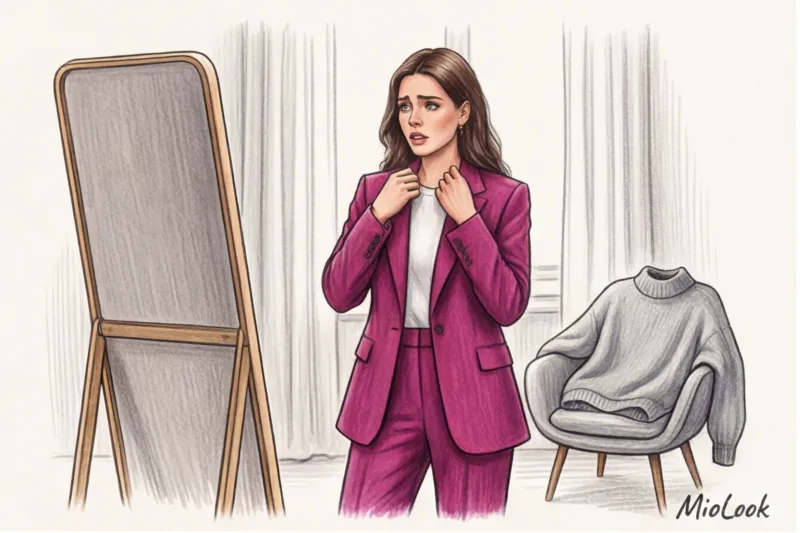
It's a familiar scene: you're standing in front of the mirror in a fitting room at, say, Massimo Dutti. You're wearing an impeccably tailored berry-colored jacket or a pair of daring palazzo pants. You feel like a street style heroine. You buy the item, bring it home, put it on ceremoniously the next morning before work, and... freeze.
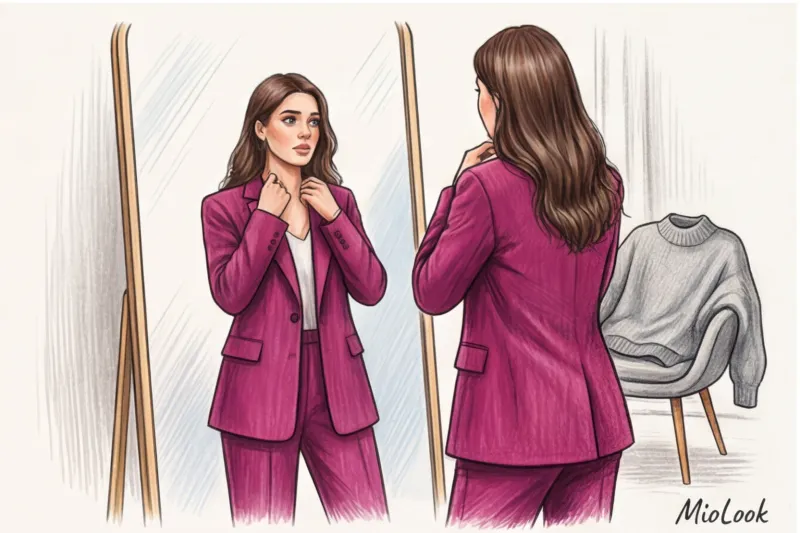
Suddenly, the reflection seems alien. The shoulders look too broad, the color is too bold, and you remind yourself of a little girl who secretly snuck into her mother's closet. You take off the new outfit, pull on your usual gray sweater, and run off to do some errands. In my personal stylist practice, 9 out of 10 women admit, "I regularly... I feel uncomfortable in new clothes , even if she chose it herself."
We have discussed this phenomenon in detail in our A complete guide to changing your style and stepping out of your comfort zone. But let's dig deeper into the physiology of this fear. In psychology, there is a term Enclothed Cognition In 2012, researchers H. Adams and A. Galinsky proved that clothing doesn't just change how others see us; it literally alters our cognitive processes. By wearing something you associate with a "successful," "bold," or "sexy" woman, you force your psyche to conform to that role. And if you haven't yet become accustomed to it internally, a powerful dissonance arises.
The "It's Not Mine" Illusion: How the Brain Sabotages Change
Your brain is an incredibly lazy organ. Its main function is to conserve energy and ensure safety. A sudden change in appearance is perceived by the reptilian brain not as an aesthetic upgrade, but as a threat to identity: "We look different, which means we're attracting attention, which means we're in danger."
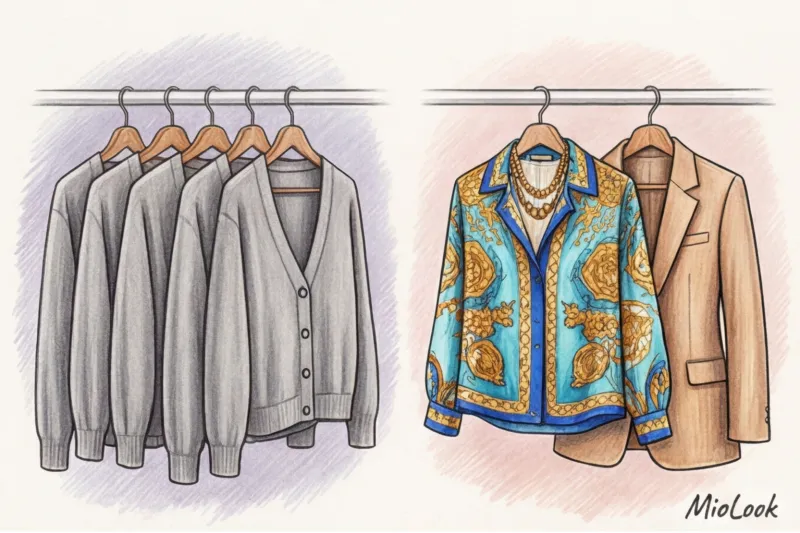
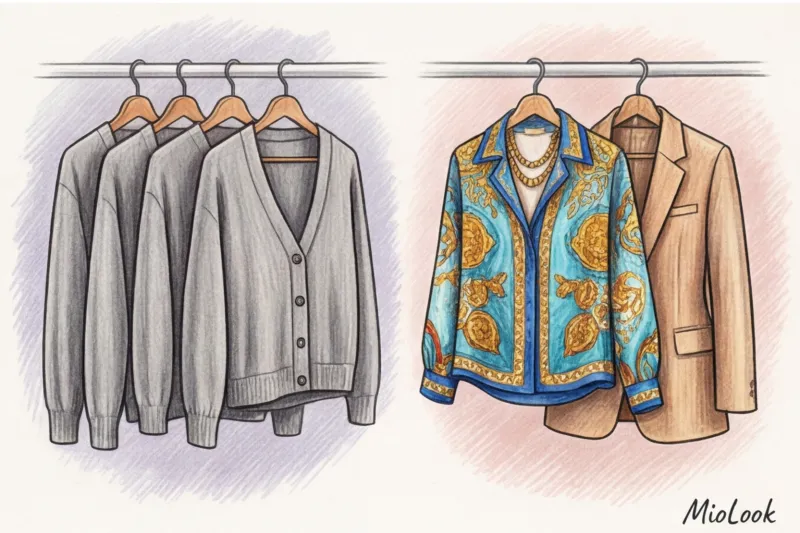
Internal analytics of our application MioLook reveals a startling figure: 80% of women who declare a desire to "completely change their style" end up adding clones of items they already own to their virtual wardrobe. It's the "safety sweater" phenomenon. You go to the store for a bold silk blouse and return with your fifth beige cardigan because it "feels safer."
The stylist's paradox: if you're too comfortable, your style hasn't changed.
Now I'm going to say something that breaks the main rule of glossy magazines. Forget the myth that "your clothes should immediately feel like a second skin." It's a trap. If you put on a completely new, stylistically different item and you instantly feel 100% comfortable in it, you haven't reached a new level. You've simply bought a duplicate of your old comfort zone.
Discomfort isn't a sign of a mistake. It's a metric of your stylistic progress. Just as your muscles burn after a good workout, your psyche aches as it stretches to accommodate your new personality.
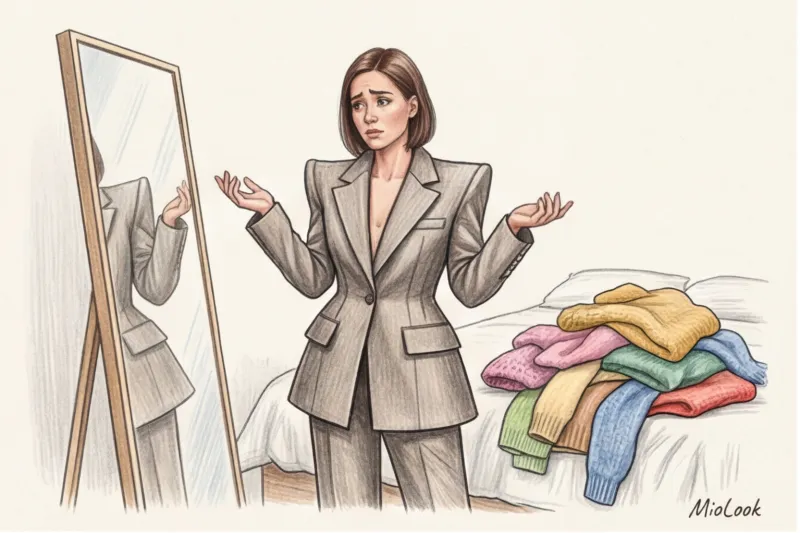
One of my clients, corporate lawyer Anna, had a hard time transitioning from the boring fitted jackets of the 2000s to modern, relaxed classics. We bought her a luxurious status pantsuit A men's cut. It hung in her closet for two weeks. Anna said she felt "too conspicuous" in it, "like she was pretending to be the boss." She felt like everyone on the street would only stare at her ample shoulders. Spoiler: no one looked at her with disapproval, but many turned to look at her with admiration. She simply needed time to "grow into" this silhouette.
Your perfect look starts here
Join thousands of users who look flawless every day by managing their wardrobe with AI.
Get access — €0.99 onceThree stages of accepting a new image (from panic to confidence)
After 12 years of observing women in fitting rooms and after shopping, I've discovered a clear pattern. Adapting to a new aesthetic is a predictable neurological process. If you know where you are, it'll be much easier to avoid the urge to throw away your new item.
Stage 1: "First fitting shock" at home
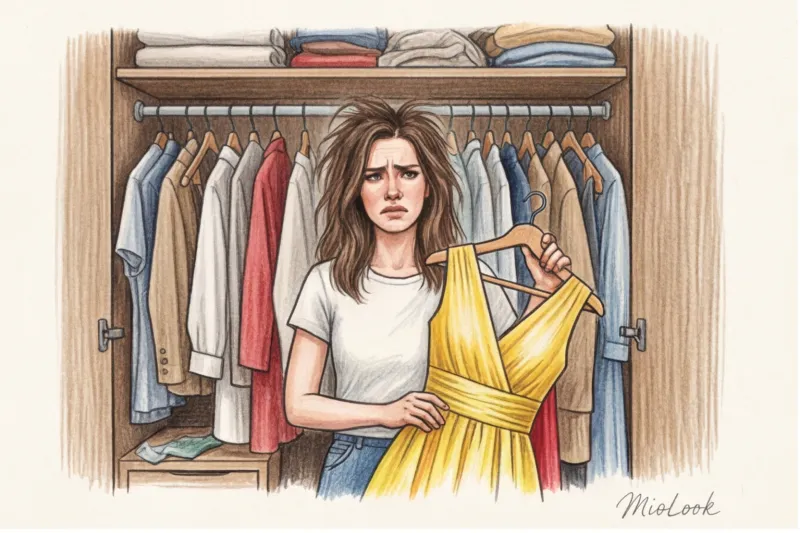
You put something on in your bedroom. There are no boutique spotlights, no compliments from the sales assistant or me, your stylist. Instead, there's an old closet in the background and ordinary daylight. At this moment, the contrast between your familiar surroundings and the new "luxurious" item reaches its peak. The garment feels pretentious. What to do: Take a deep breath and leave the item on for at least 10 minutes. Let your eyes adjust to the new proportions.
Stage 2: Micro-outputs and physical adaptation
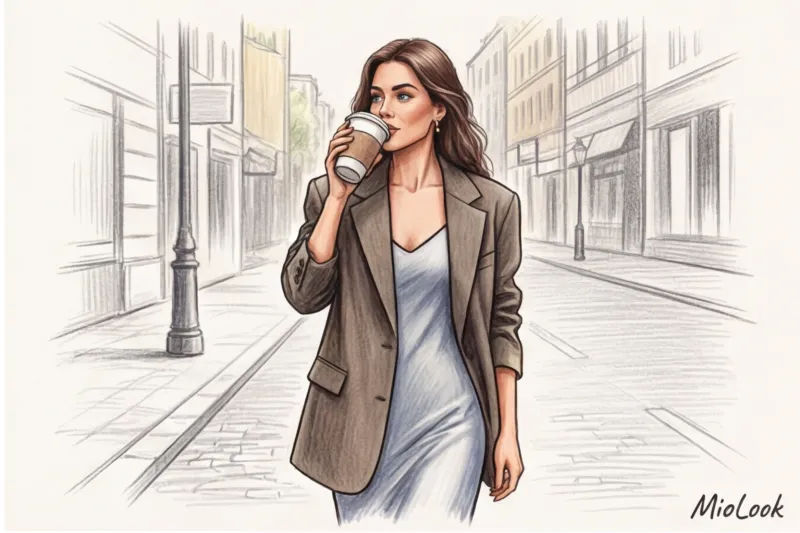
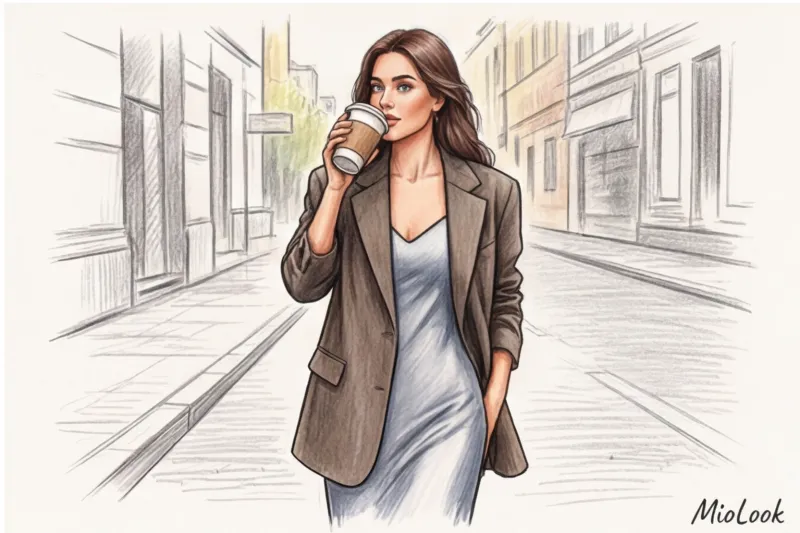
Somatic psychology teaches us that the body and mind are inseparable. The architecture of the fabric dictates posture. You can't slouch in a tight tweed jacket the same way you can in a stretched-out hoodie. Your body needs to physically adjust. At this stage, I recommend wearing your new outfit in a safe environment: a walk to a coffee shop around the corner, a meeting with a close friend you trust. No important presentations or dates.
Stage 3: Merging with a new role
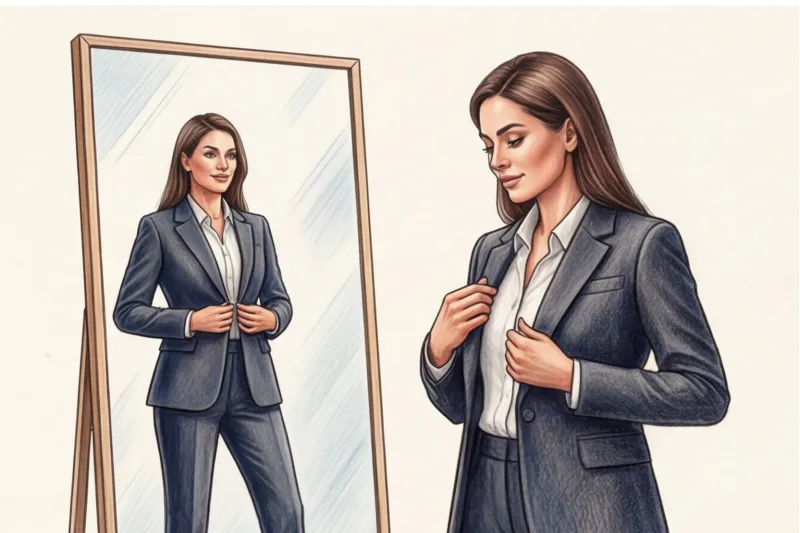
This usually happens on your fourth or fifth outing. Suddenly, you find yourself adjusting your jacket collar no longer nervously, but confidently and elegantly. You stop worrying about how you look and start simply living in these clothes. Congratulations: the boundaries of your identity have expanded. This daring piece has now become your new base.
What should I do if I feel uncomfortable in new clothes? Action plan
Understanding psychology is great, but we need practical tools. I've developed an "Acclimatization Protocol," which I give to every client after a major wardrobe declutter. It consists of two simple steps that reduce anxiety.
The "three-hour" rule at home
The brain associates fancy or complex clothing with the stress of going out. Break this pattern. Wear that intimidating jacket or asymmetrical skirt at home. Not while cleaning, of course! Pour a glass of wine or make some tea, sit down at your laptop, read a book, or watch an episode of your favorite TV show. Spend three hours in these clothes in the safest, most relaxed environment possible.
Your neural network will form a new association: "This striking outfit = safety and peace." When you wear it outside, your cortisol levels will be significantly lower.
Anchoring Technique: Mixing Old and New
The biggest mistake is trying on all your new clothes at once. If you've been wearing skinny jeans and T-shirts your whole life, and today you decide to wear wide-leg suit pants, a silk blouse, and statement loafers, your psyche will give you the blue screen of death. Use "anchors"—items from your old comfort zone that ground your look.
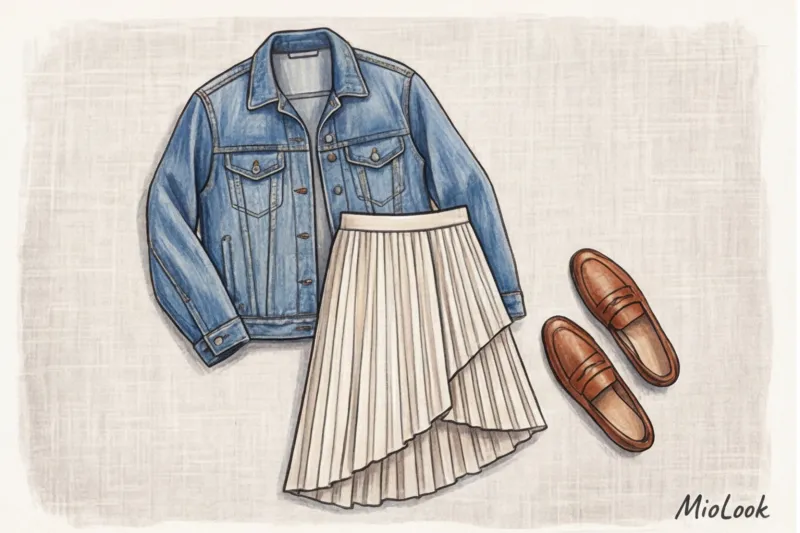
For example, if you are implementing smart casual style Wear your new, dreaded palazzo pants with your oldest, favorite, impossibly soft basic tee. Or throw a distressed denim jacket over a sophisticated silk dress. This Mediterranean trick—a combination of deliberate relaxation and luxury—not only soothes the nerves but also makes the look truly stylish, not forced.
Checklist: How to Distinguish Psychological Discomfort from Poor Posture
My protocol has one strict limitation (and this is one case where you shouldn't tolerate it). You need to clearly distinguish between impostor syndrome and simply poor fit. Clothing shouldn't cause physical pain or restrict basic movement.
If you feel "out of place," check the item for technical tailoring parameters. This is especially true for the choice the right fabrics for your figure:
- Armhole area (underarms): If the fabric cuts into your armpit when you try to raise your arm to chest level, it's not a fear of change, it's a mass-market pattern that skimped on fabric. Return the item.
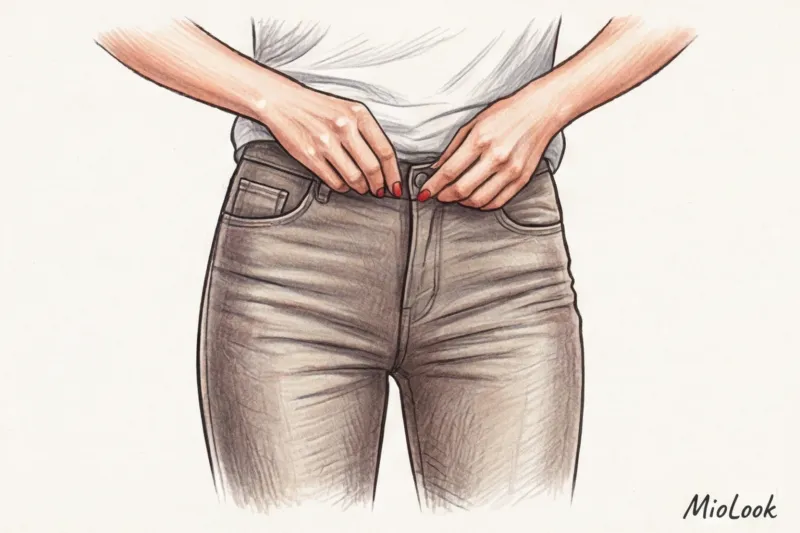
- Tension in the groin or thighs: If high-quality viscose trousers (300 g/m² and above) form horizontal creases ("whiskers") in the groin area, they're too small. Period. Psychology has nothing to do with it.
- Shoulder seam: With a classic set-in sleeve, the seam should lie exactly on the anatomical protrusion of the shoulder. If it slips up onto the neck, the jacket is too small. If it slips down (and this isn't the intended oversize), it's too big.
Psychological discomfort feels different. Physically, there's no pressure anywhere; you can breathe and move freely. But you feel like you're "too dressed up," "too bright," or "going to the Oscars, but you're actually going to Pyaterochka." We embrace and live through this discomfort.
Ready to start your transformation?
Try MioLook's free plan—upload your items and let AI create safe yet stylish combinations for you every day.
Get access — €0.99 onceYour next step: taming your wardrobe without stress
Changing your style isn't just about shopping. It's a declaration to the world that you've changed inside. It's understandable that your voice might shake at first. Remember: new clothes don't make you a different person. They simply highlight a facet of your personality you've long kept hidden, fearing others' judgment.
Don't expect an instant transformation. Give yourself time to acclimatize, use the three-hour rule, and mix new textures with proven bases. And to make the adaptation process even smoother, upload your new purchases to MioLook A smart algorithm will help you create dozens of combinations with your "anchor" pieces, clearly demonstrating how to incorporate a complex trend into your daily routine.
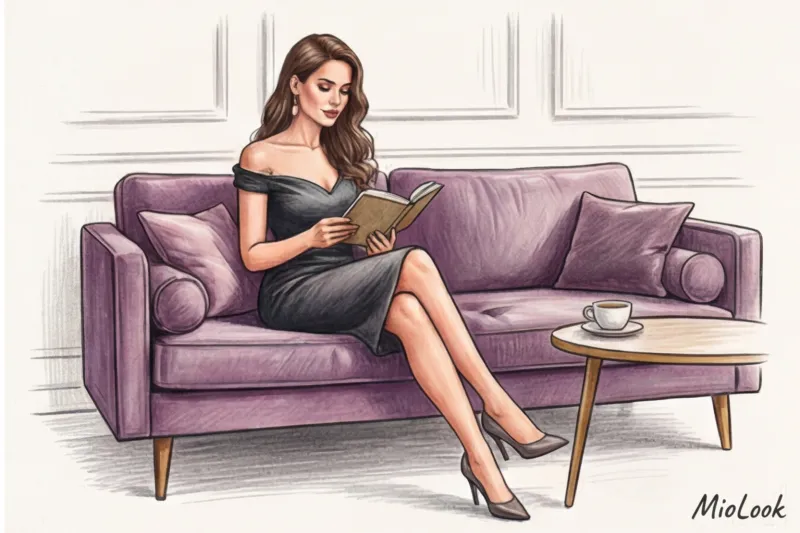
The next time you look in the mirror and feel a slight twinge of panic at how stunning yet unusual you look, smile. It means you did everything right. Step out the door and let yourself be gorgeous.