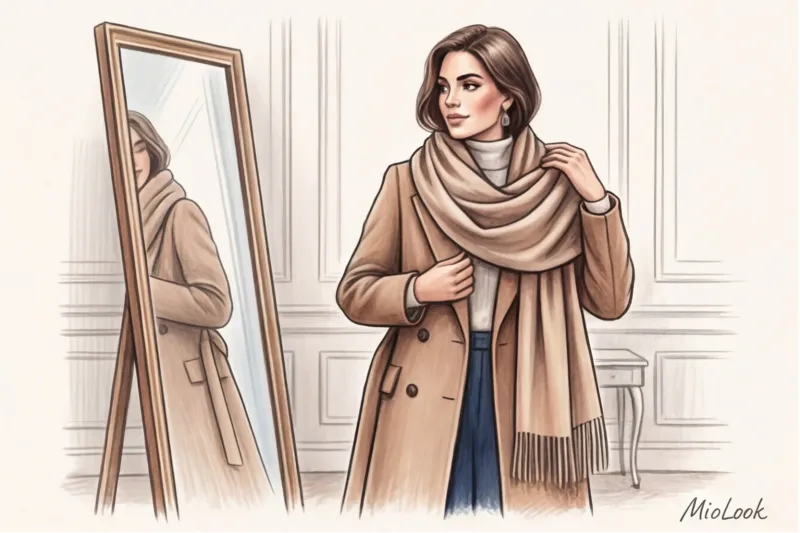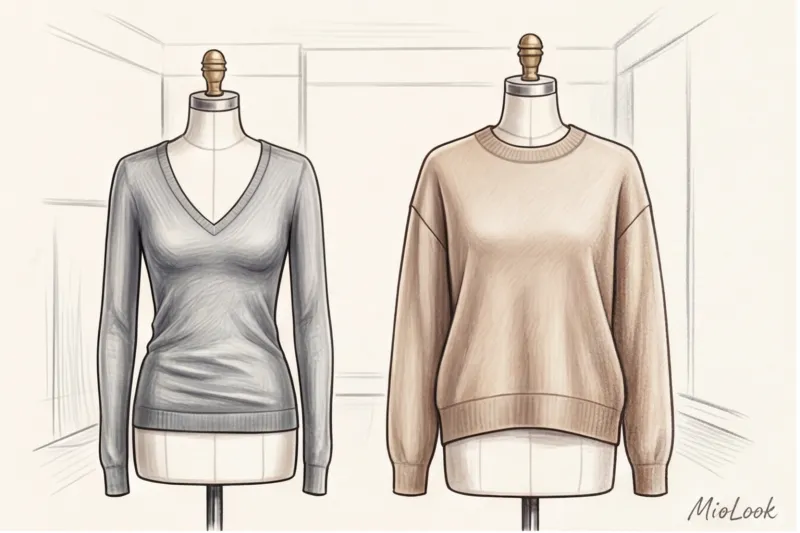
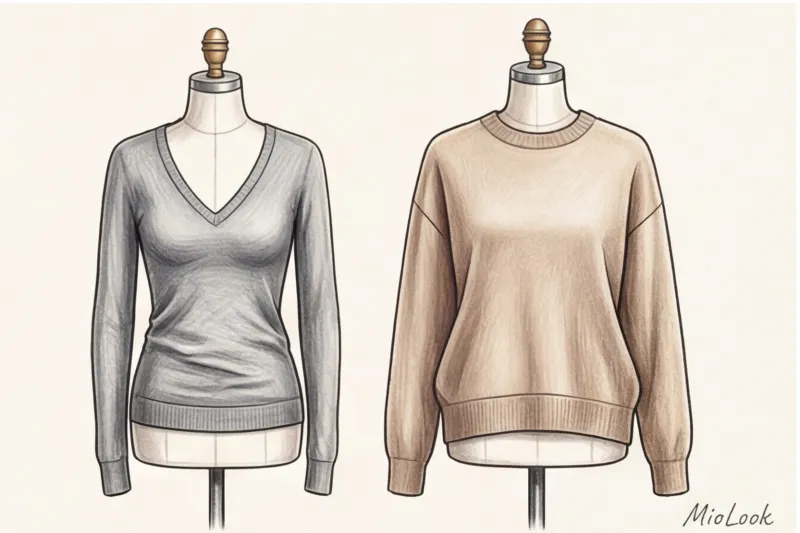
Recently, Anna, the CFO of a large IT company, came to me for a personal consultation. She complained that she felt insecure at board meetings, despite always choosing high-quality clothes. When we opened her closet, the diagnosis became clear: her collection of expensive cashmere sweaters, dating back to the 2010s, conveyed not status but conservatism and rigidity. The thin, clinging knitwear highlighted the slightest unevenness in her underwear, visually adding 5 kilograms to Anna's figure, and completely depriving her look of any modern dynamism.
Many women sincerely believe that anti-trend sweaters are simply "an outdated color" or a fun deer print. As a stylist with 12 years of experience, I want to debunk this myth once and for all. An outdated garment is, first and foremost, a ruined cut that mercilessly distorts your body's proportions. We've already discussed the global shifts in silhouettes in more detail in our a complete guide to anti-trends in clothing , and today we will examine exclusively the physics and geometry of knitwear.
Anatomy of the Silhouette: Why Even Premium Cashmere Can Become an Anti-Trend
Let's be honest: a $1,000 price tag on a Loro Piana or Brunello Cucinelli sweater doesn't guarantee it's still fashionable if you bought a ten-year-old model (or a reissue based on an old pattern). An expensive cashmere sweater with tight, digging sleeves and a short hem will look far worse on your figure than a well-cut, thick cotton sweater from H&M or COS for $50.
Why is this happening? The secret lies in macro trends. According to the analytical report by the WGSN agency (2024), the macro trend for airy and loose fitting knitwear has been established for at least the next 5-7 years. The life cycle of the shoulder silhouette dictates its own rules: today, a trendy sweater should create a so-called "air gap" between the fabric and the skin. negative ease (negative allowance for ease). That is, the item should be physically larger than your actual measurements by a few centimeters.
Access to MioLook for €0.99 — one-time payment
A smart AI stylist will select the perfect look based on your measurements and current fashion trends.
Get access — €0.99 onceThis season's top sweater anti-trends (and their current replacements)
When I conduct a wardrobe audit, I don't ask clients to mindlessly throw away items because some influencer called them "unfashionable." We analyze the geometry. Here are three key design flaws in knitwear that are time to get rid of.
A short silhouette and lack of "air"
The most common anti-trend is jumpers that end right at the midsection, have long, narrow sleeves, and fit tightly around the waist. Ever notice how you constantly want to tug the hem down when wearing one of these?
This style is catastrophically out of proportion. It visually cuts your figure with a horizontal line across the widest part of the torso, making the top look square. If you're gathering business capsule wardrobe , such things will instantly cheapen the image.
What to replace with: Choose sweaters with a relaxed fit or cropped styles, but with one condition: the hem should be wide and loose, without a tight, constricting elastic band.
Decor for the sake of decor: rhinestones, pearls and guipure inserts
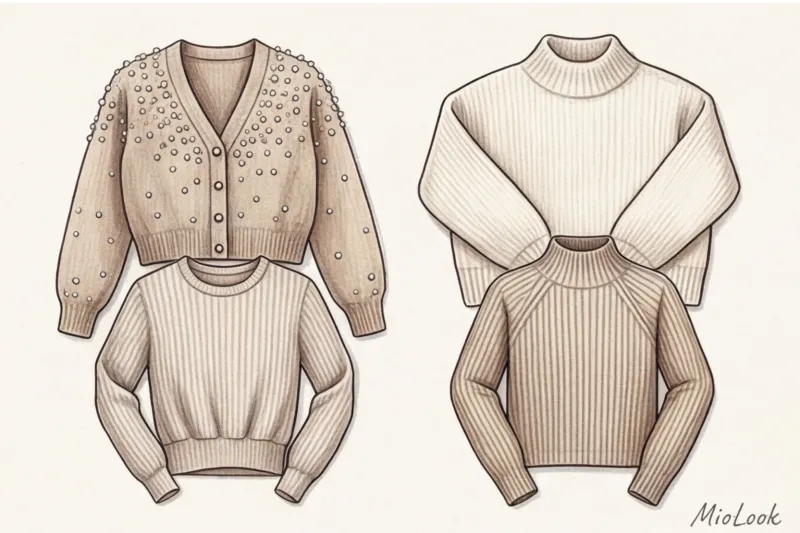
Knitwear liberally embellished with a scattering of plastic beads on the chest, embroidery, lace shoulder inserts, or rhinestones—a throwback to the glamorous 2000s. Today, such designs look childish and don't fit with the status quo of minimalism.
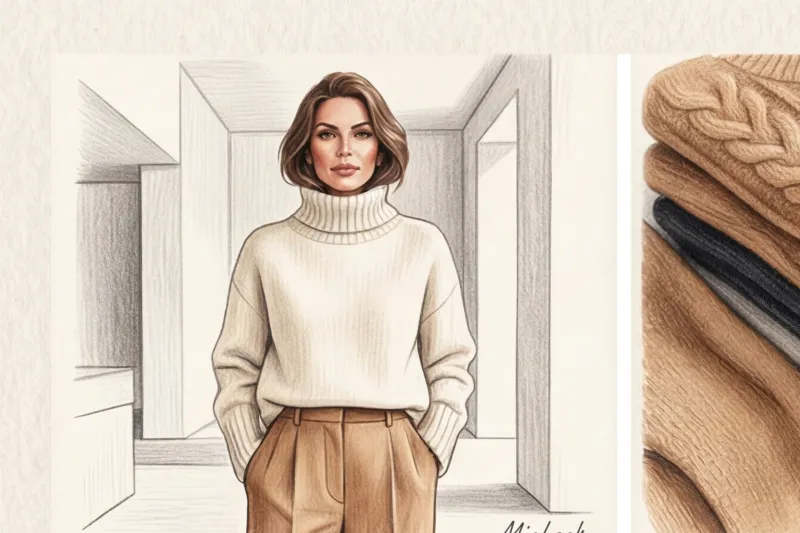
Modern fashion dictates a simple rule: texture is the key to decoration. If you're looking for complexity, choose chunky knit sweaters, classic Aran cable knits, or mélange pieces, where color is created by interweaving several shades of yarn.
Caterpillar sweater: dangerous elastic band at the hips
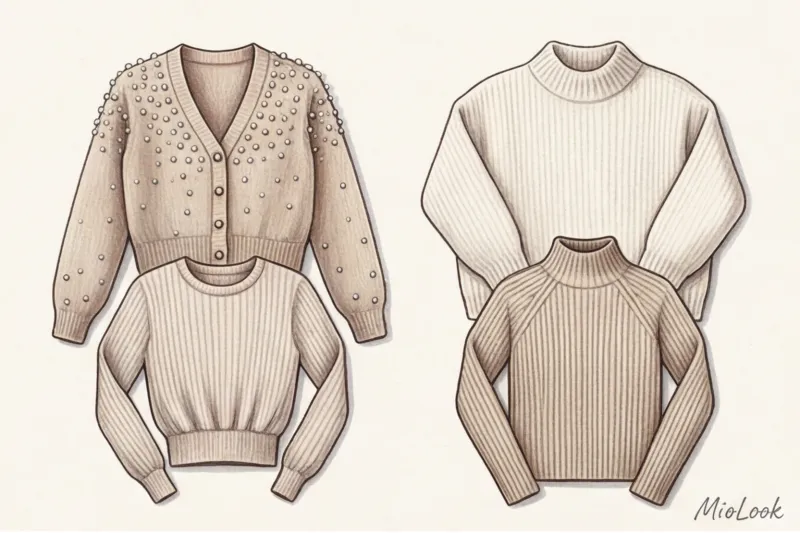
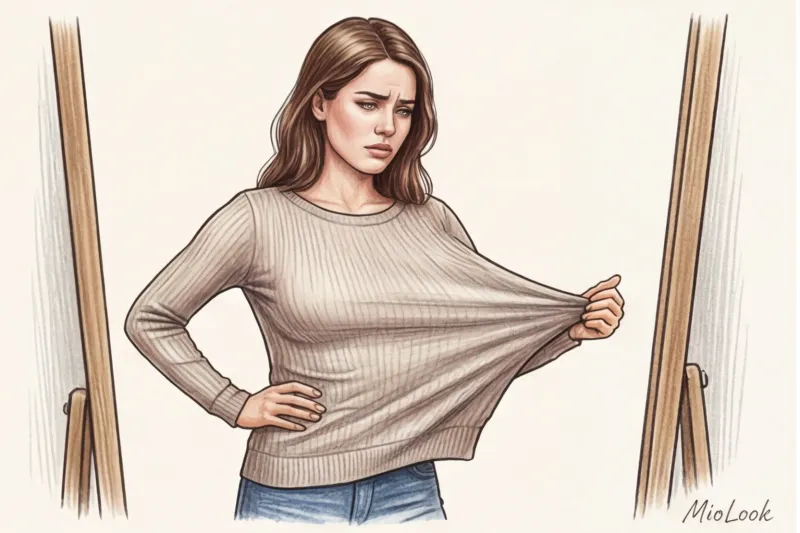
A long jumper that ends in a tight, dense ribbing at the bottom is a woman's worst enemy. The tension at the hips causes the fabric to ride up, gathering in an untidy, bulging shape at the stomach.
This geometric trap will visually add 1-2 sizes to your waist and hips. Instead, look for straight, longer sweaters with side slits. They fall loosely, creating vertical lines that elongate your silhouette.
Collar and shoulder line: geometry that gives away the old-fashioned jumper
About 80% of the visual weight of the upper body is determined by the shoulder seam and armhole depth. This is where the devil lies.
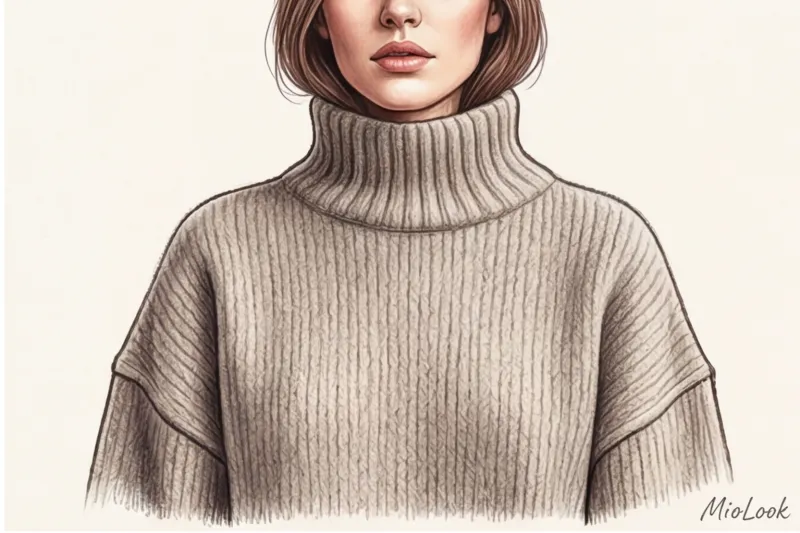
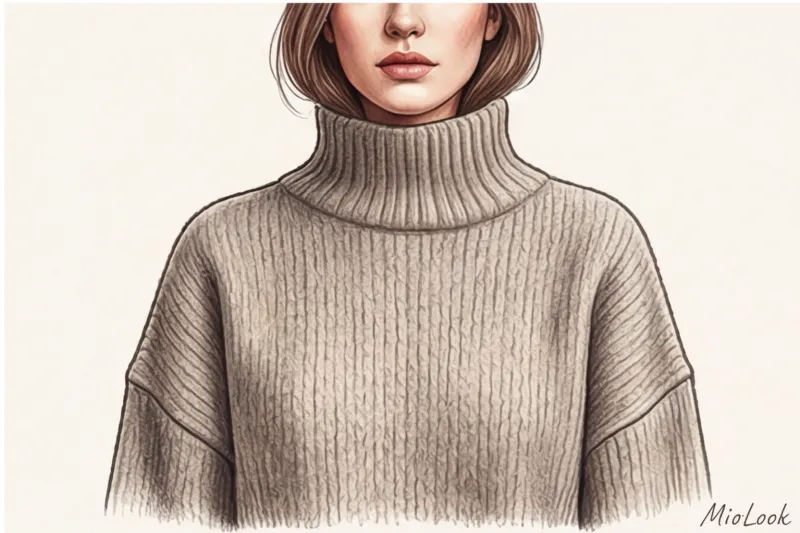
Take, for example, the cowl neck. This voluminous, shapeless piece of knitwear that hangs loosely onto the chest not only adds weight to the chest but also visually shortens the neck, casting unnecessary shadows in the portrait area. If you want to emphasize the oval of your face, replace it with a crisp, high stand-up collar (with or without a turn-up) that maintains its shape.
"The most common mistake when choosing a bulky sweater is a narrow set-in sleeve opening. With thick yarn, this creates a 'rugby shoulder' effect, making the upper body appear bulky and boxy."
The secret to a modern and luxurious cut is the drop shoulder. The seam should fall 5-10 centimeters below your natural shoulder line. This softens the silhouette, making it feminine even in a severely oversized style.
Important limitation: As a colorist and stylist, I must warn you that this advice won't work for everyone. If you have naturally sloping, narrow shoulders, an oversized sweater with a dropped shoulder seam and no internal support can make you look bulky. In this case, it's better to choose a straight-cut sweater with classic set-in sleeves, but with ample armhole width.
Your ideal image begins Here
Join thousands of users who look flawless every day with MioLook. Check the fit before you buy.
Get access — €0.99 onceA Style Myth: Why Thin Knitwear Makes You Look Fatter, Not Slimmer
Now let's address the biggest misconception I encounter on almost every shopping trip. Clients persistently reach for thin, translucent ribbed tops, assuring me, "Bulky sweaters will make me look huge, and this thin turtleneck will make me look slimmer!"
The truth is that everything works exactly the opposite.
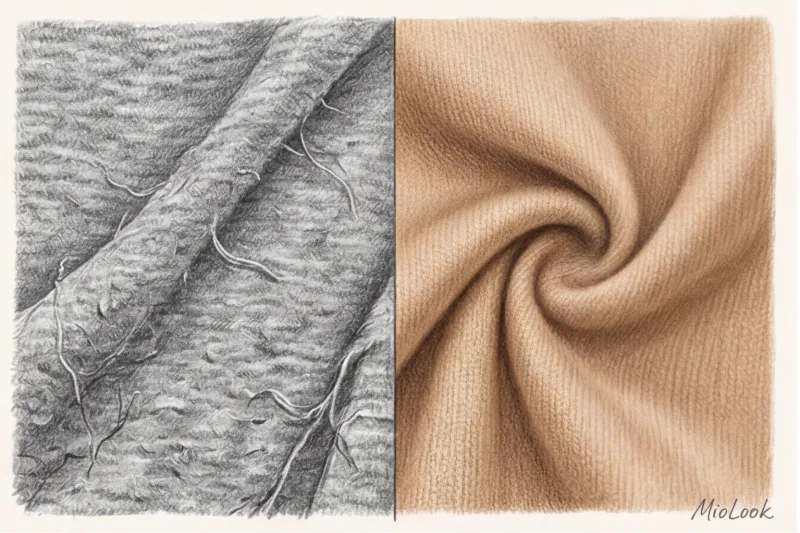
Let's turn to the physics of fabric and professional terminology. The quality of knitwear is determined by the concept gauge (the class of the machine that determines the knitting density) and tension (thread tension). Flimsy, thin, low-grade knitwear has no support of its own. As soon as you put it on, it stretches and acts like a second skin, treacherously emphasizing the contours of your bra, every micro-fold on your back, and the slightest imperfections.
For a garment to truly slim, it should have a sheath effect—holding its shape regardless of your curves. Thick cotton with acrylic, merino wool, or high-quality blended yarn create that precious centimeter of air that "hides" any nuances of your figure.
Checklist: How to Check Your Sweaters for Relevance
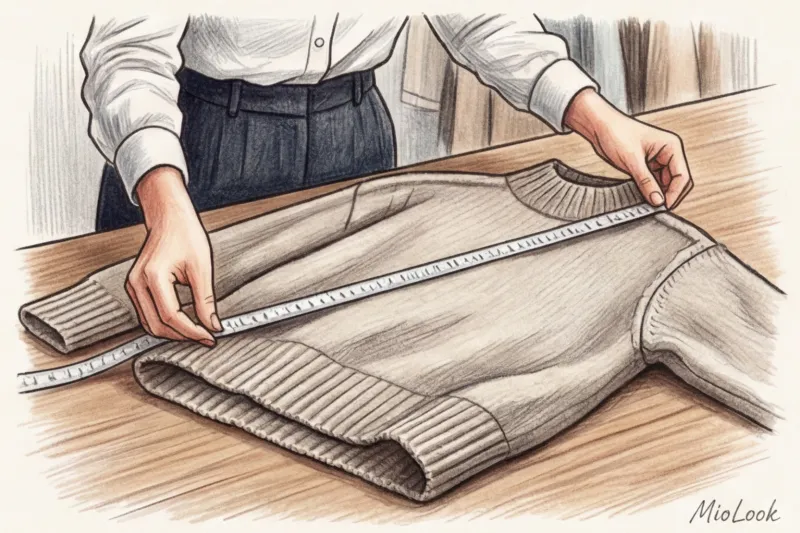
Theory is great, but let's get practical. Right now, open your closet and audit your basic knitwear using three professional tests I use during wardrobe reviews.
- Squeeze test: Take the edge of a collar or cuff and stretch it slightly, then release. If the elastic immediately returns to its original shape, the yarn is high-quality and holds its shape well. If the edge remains slightly wavy, the garment is both worn and worn.
- Tuck test: Wear the sweater with classic trousers or full-length jeans. Try casually tucking the front edge of the sweater into the waistband. If it creates a nice diagonal fold, the cut is trendy. If it creates a tight roll at the stomach and the garment is tight at the back, the silhouette is hopelessly outdated. We wrote more about the nuances of trouser fit in the article about clothes for your body type without stereotypes.
- Layer Test: Can you wear a basic cotton shirt under this sweater without the sleeves bunching up and the collar suffocating you? If the shirt doesn't fit, the armholes of the sweater are too narrow, which is a no-no.
Ready to start your wardrobe transformation?
Try the MioLook free plan—upload photos of your items and learn how to style them in a new way. No obligation.
Get access — €0.99 onceA second life for outdated items: can anti-trend sweaters be saved?
I'm a proponent of sustainable fashion and never recommend throwing away good items just because fashion trends have changed. An outdated sweater can be saved by repurposing it.
The main secret of styling: move the anti-trend from the category of “top, independent layer” to the category of “base, bottom layer”.
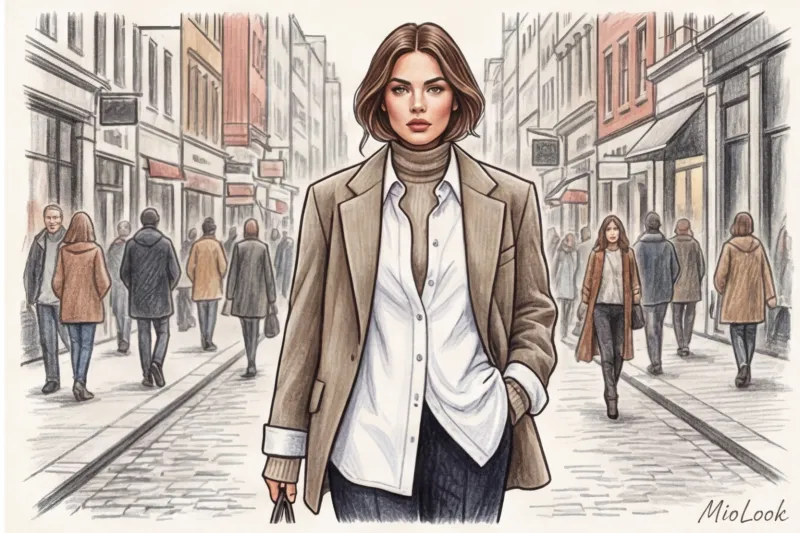
For example, that thin, tight turtleneck that so insidiously highlights figure flaws when worn solo can be worn under a thick, oversized men's shirt. Leave the shirt a few buttons unbuttoned. The turtleneck will serve solely as a color accent in the portrait area and a warming layer, while the shirt will create the right amount of volume.
This same trick works great with voluminous jackets with a sharp shoulder line, sundresses made of thick faux leather or textured tweed. By the way, in the app MioLook The smart wardrobe feature handles layering perfectly: artificial intelligence can show you dozens of combinations with a single "problem" item.
Verdict: When can something be saved?
Don't try to restore knitwear if it's covered in ineradicable pilling, has a wavy neckline, is faded, or has cheap embellishments sewn on permanently. In these cases, it's best to recycle the item.
Remember the key rule of modern style: a wardrobe's relevance isn't determined by how much money you spend on it or by brand labels, but by how much air and space you leave between the fabric and your body. Find your perfect balance of volume, and any look will look luxurious.