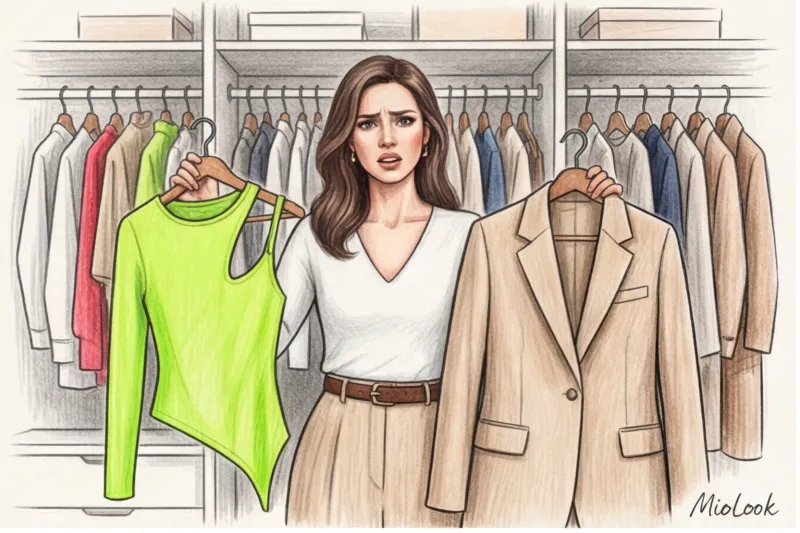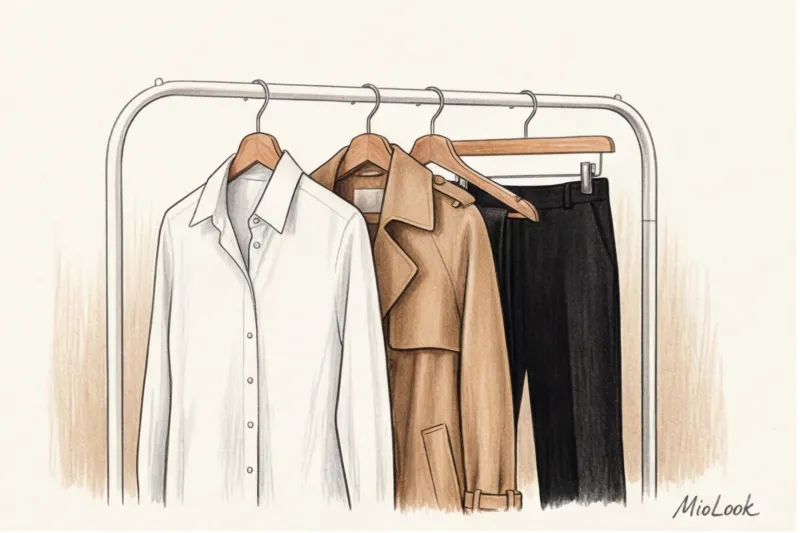
The anonymous statistics from our MioLook app are relentless: 80% of women genuinely want a change in style, save dozens of inspirational references, but ultimately buy another "safe" gray sweater or classic black pants. Sound familiar?
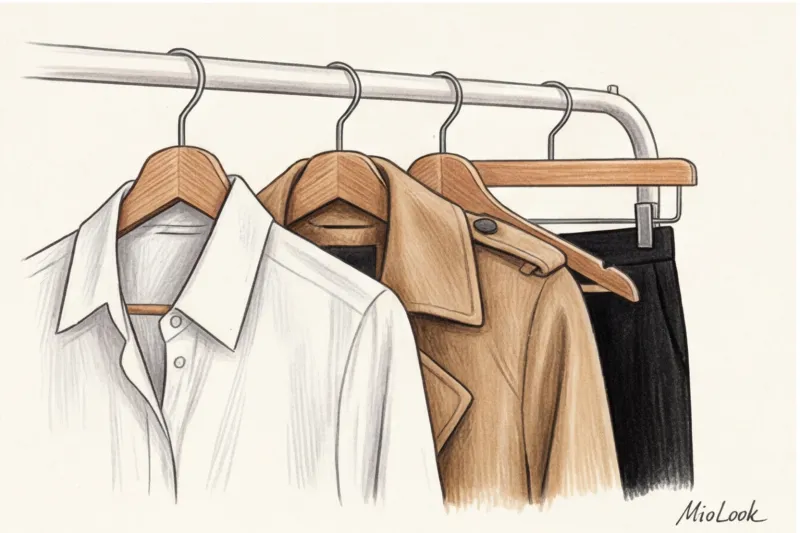
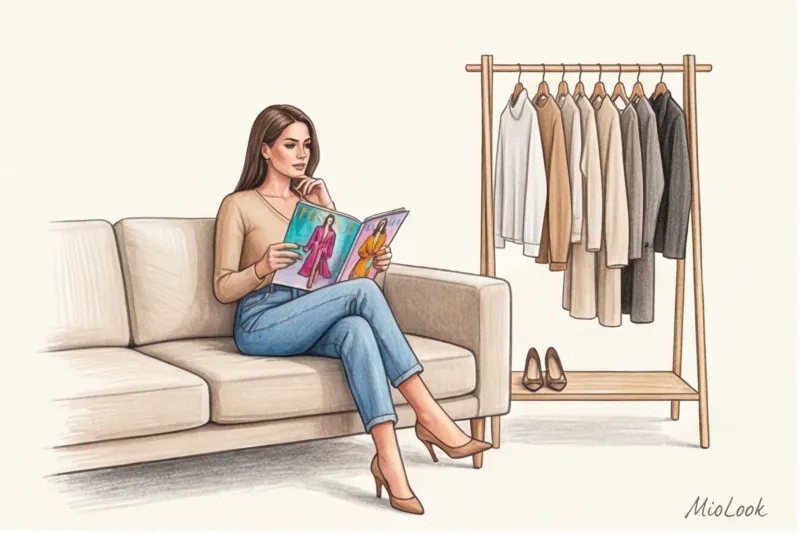
In 14 years of working as a personal stylist, I've realized one thing: the problem isn't a lack of taste or courage. The problem is that the industry forces radical measures on us. Glossy magazines scream, "Buy a fuchsia coat!" while your inner conservative hides in horror behind your trusty beige trench coat. If you're wondering, How to incorporate trends into your wardrobe To achieve your goals without losing yourself and wasting your budget, you need a strategy, not impulse shopping. We discussed psychological barriers in more detail in our a complete guide to changing your style and getting out of your comfort zone , and today we will engage in pure practice.
A Foundation for Experimentation: Why a Strict Foundation is Your Best Ally
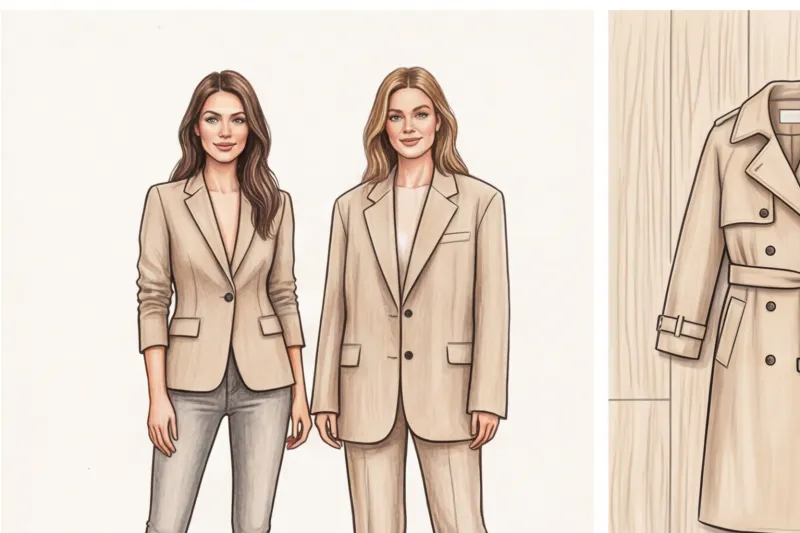
Many of my clients think that a basic wardrobe is boring. I call it the best testing ground for fashion experiments. This is where the concept comes into play. Enclothed Cognition (embodied cognition). In 2012, Dr. Karen Pine conducted a study proving that clothing directly impacts our cognitive processes and sense of security. Your basic attire—a perfectly fitting white shirt, a quality jacket, the perfect pair of jeans—is your psychological armor.
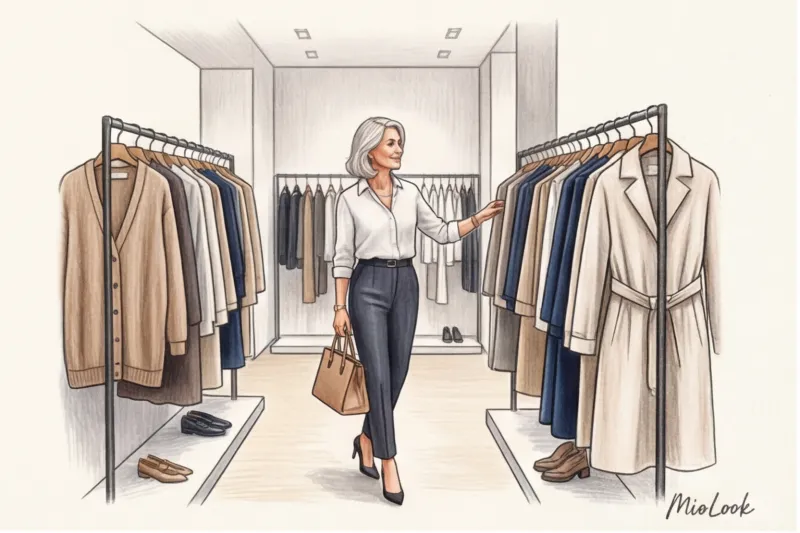
Imagine cooking. The strict base is a rich, high-quality broth. And bold trends are hot spices. If you pour a spoonful of chili into an empty plate, it's edible. But if you add a pinch to a perfect broth, the dish takes on a restaurant-quality feel. If you haven't yet assembled your own "broth," I recommend starting with ours. capsule wardrobe guides.
When 80% of your wardrobe consists of tried-and-true, perfectly fitting pieces, the remaining 20% can be downright wild. A basic wardrobe will calm any fashion fad.
Your perfect look starts here
Join thousands of users who look flawless every day with MioLook. A smart algorithm will help you integrate new trends into your database.
Get access — €0.99 onceThe Microdosing Rule: How to Incorporate Trends into Your Wardrobe Without Stress
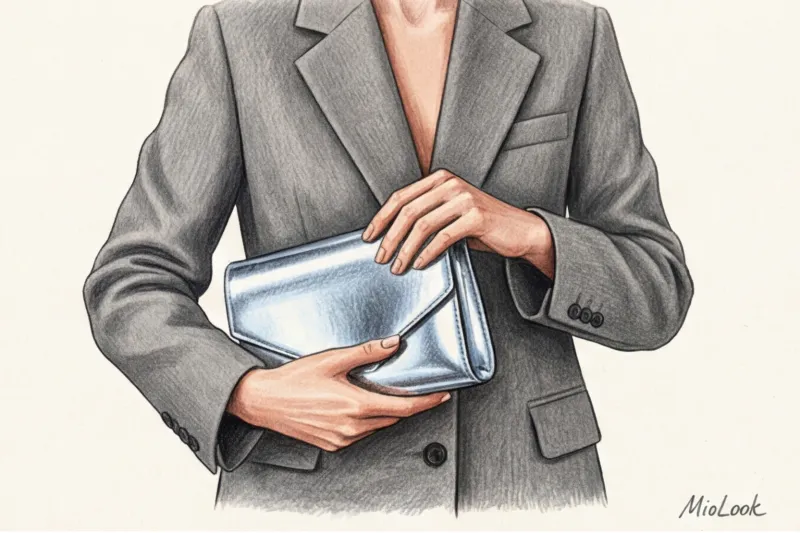
If you're used to minimalism, don't try to slip into an asymmetrical leopard print dress right away. Use styling microdosing—introducing a new element in homeopathic amounts. Our brains are extremely wary of drastic changes in silhouette, so trick them.
I had a client, Anna, the CFO of a large IT company. She had a very formal, almost masculine wardrobe. She wanted to add a feminine and predatory touch, but was frankly afraid of leopard print. We used anchoring method: They tied a frightening trend to the safest thing. Anna bought a narrow belt made of thick, python-embossed leather and wore it over her favorite dark blue jacket. The silhouette remained the same, her comfort zone intact, but the look became sharper.
Safety Zone: Accessories, Textures, and Hidden Details
Shoes, bags, and belts are the perfect testing ground. You don't have to wear a trend right in your face. If WGSN declares a bold shade as the color of the year that you don't like, buy socks in that color. Or a bag. You can read about which details elevate your look in the article about status accessories.
Another pro trick: change texture, not color. Accustomed to black? Great. Swap out the usual smooth matte leather in your shoes for patent leather or crocodile-embossed ones. It's a micro-step that instantly updates your look without the color shock.

Counterintuitive: Why You Shouldn't Test Trends on the Cheap Mass Market
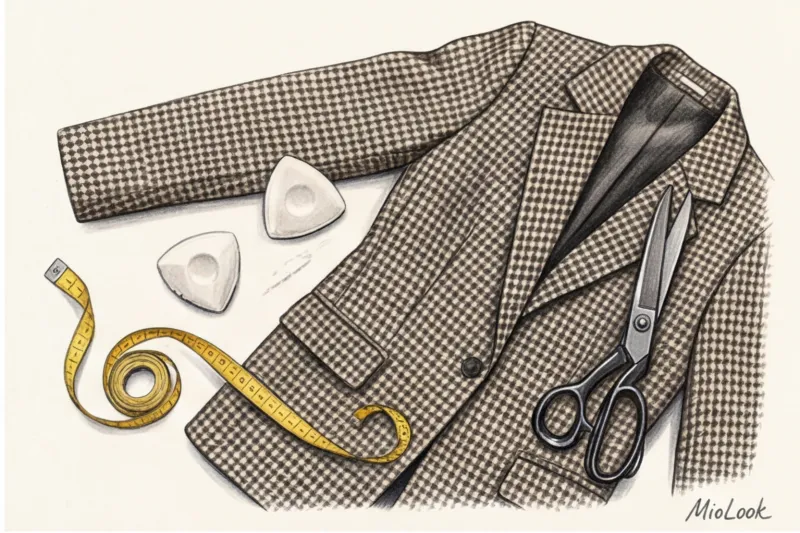
Here I want to debunk one of the most pernicious myths in style. The usual advice is, "Doubt a trend? Buy a cheap one-off just to try it out." Never do this.
Trust me: if you buy a cheap, deconstructed jacket from a fast-fashion brand, it'll be poorly made and made from cheap polyester. It'll bulge, pull at the armholes, and cheapen the whole look. You'll put it on, feel insecure, and unflattering. And your brain will jump to the wrong conclusion: "A complex cut doesn't suit me." Although in reality, the poor cut and cheap fabric simply don’t suit you.
If you want to test out a bold shape or texture, choose high-quality mid-range pieces (like COS or Massimo Dutti), invest in premium pieces, or, even smarter, rent a designer piece for a couple of days. High-quality wool or heavy cotton (from 180 g/m²) will lay flatteringly, allowing you to truly understand whether this trend flatters you.
Access to MioLook for €0.99 — one-time payment
A smart AI stylist will select the perfect outfit from your items and suggest what's missing for a trendy look.
Get access — €0.99 onceA Guide for Conservatives: 3 Bold Trends and How to Tame Them
Let's explore how to incorporate trends into your wardrobe using current macro trends as an example. According to the analytical agency WGSN, these trends are expected to persist for at least the next two to three years. I'm providing formulas tested on real women, not runway models.
Bright color (metallic or burgundy)
Black Cherry (a deep burgundy) is breaking popularity records, but for many, it's too bold. If you have a strict dress code, stick to the "one pop of color" rule. Consider glossy burgundy pumps paired with an all-gray monochrome suit. If the color suits your complexion, elevate it with a silk scarf.
Animal print
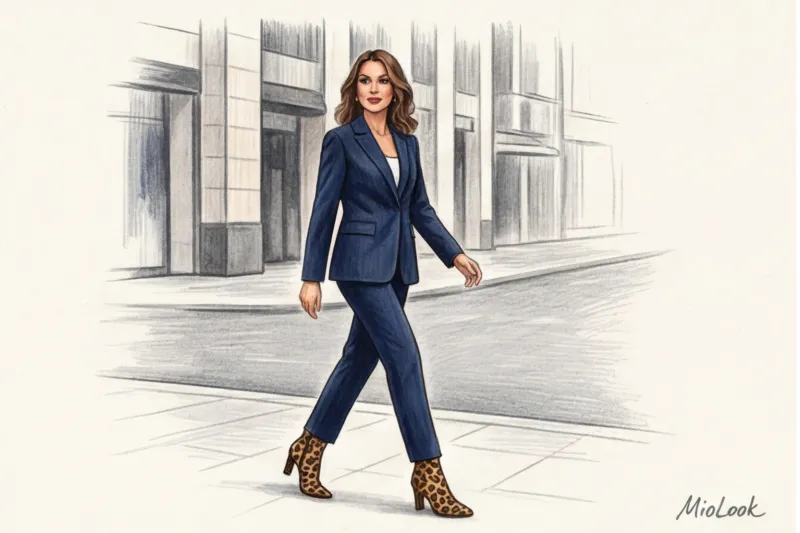
Leopard has long been a staple, but it should be worn with caution. The main rule for conservatives: predatory print requires rigid architectural forms Forget flowing leopard-print dresses in thin viscose—they're a surefire way to vulgarity. But a structured, rigid tote bag or pointed-toe ankle boots in a muted leopard print are a brilliant alternative to boring plaid.
Complex cut (deconstruction and oversize)
Asymmetry can be a daunting prospect for those accustomed to precise proportions. To avoid disrupting your figure's structure, pair a complex, voluminous top with the simplest, most straightforward bottoms possible. For example, a sweater with an off-the-shoulder design and intricate draping will pair perfectly with straight, classic trousers with a crease. If you're unsure about volume, check out our article on... How to wear oversized clothing based on your body type.
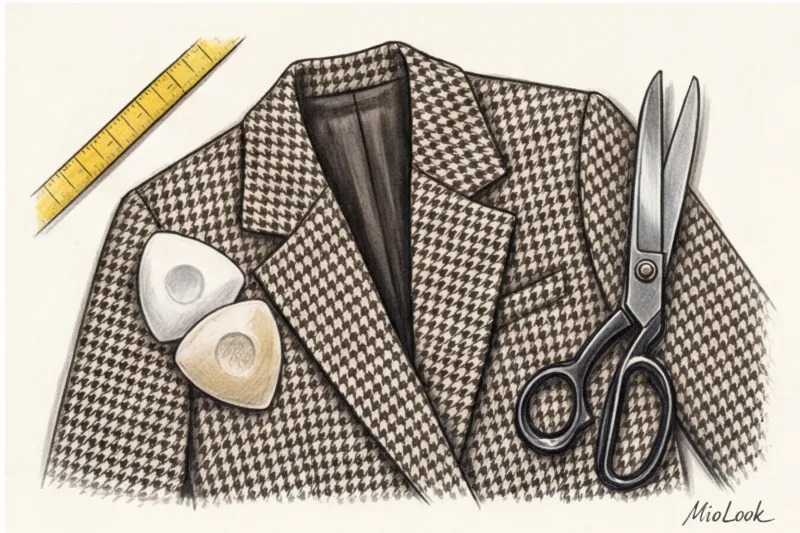
MioLook Algorithm: The 80/20 Formula in One Look
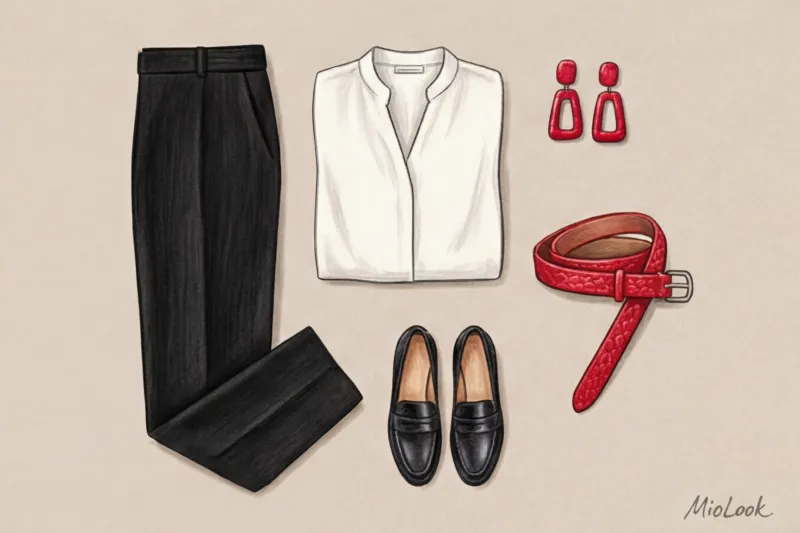
The math behind a smart wardrobe isn't just boring spreadsheets, it's real savings. In the app MioLook We track Cost Per Wear (CPE). Do you know what happens when people start incorporating one bold trend into four basic pieces? Their CPE drops by 40%.
How it works in practice:
- 80% of the look (base): Perfectly fitting straight jeans, white top, basic belt.
- 20% of the look (trend): An accent jacket made of bouclé with metallic thread or silver Cossack boots.
But there is an important limitation here. This rule doesn't apply if your basics are outdated. If you're trying to wear a trendy jacket with low-rise skinny jeans from 2012, the trend won't save you. The basics should be modern (semi-fitted or straight-leg).
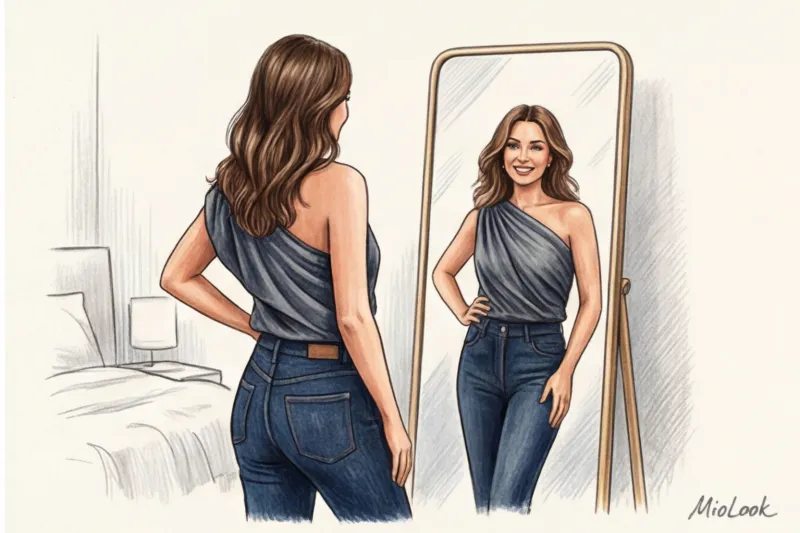
And my favorite rule is - Fitting Room Threshold If you're standing in front of the mirror at home wearing a new trendy item and you're overcome with doubts, if you want to tug, straighten, or cover something up—return the item. You'll never walk into your apartment wearing it again. A trend should give you energy, not drain you of it to fight discomfort.
Ready to get started?
Try the MioLook free plan—no commitments required. Digitize your wardrobe and let AI create the perfect combinations for you.
Get access — €0.99 onceA stylist's checklist: how to tell if a trend has become yours
Before you take that bright, trendy new item to the checkout, ask yourself three questions:
- Can I come up with 3 looks off the top of my head with this item from what's already hanging in my closet? If you need to buy three more to implement something, it's a bad investment.
- Does this item fit my lifestyle? (Luxurious satin mules with feathers are beautiful, but if you're a stay-at-home mom or a factory worker, they'll be a museum piece.) Read more about balancing life and clothing in the guide to smart casual style.
- Do I feel like “me,” but a little better?
Style is evolution, not revolution. There's no need to break yourself and throw out your favorite basic turtlenecks for the sake of a momentary fad. Incorporate trends like seasonings: little by little, taste-testing, and building on a solid foundation.
Remember this: the most stylish woman in the room isn't the one wearing the most of the season's hottest new items. It's the one whose outfit looks like she threw it on without thinking, with absolute confidence. Let your basics become your personal canvas, and then any trend will follow you, not the other way around.