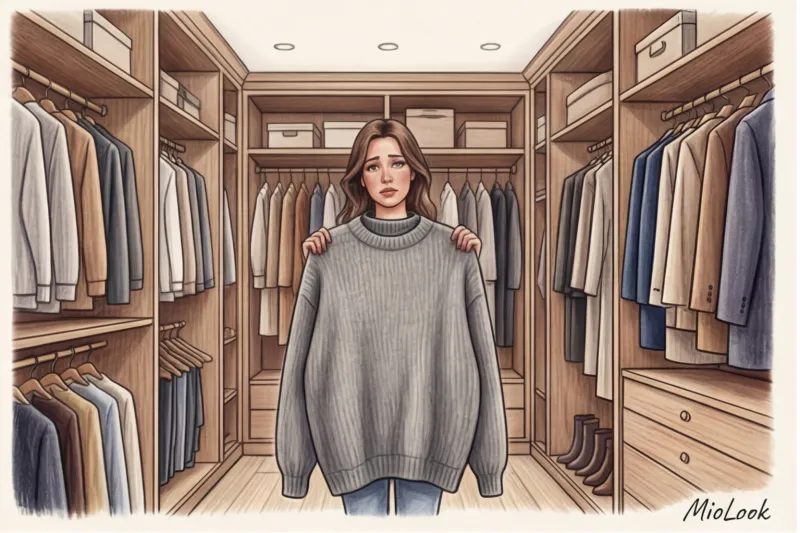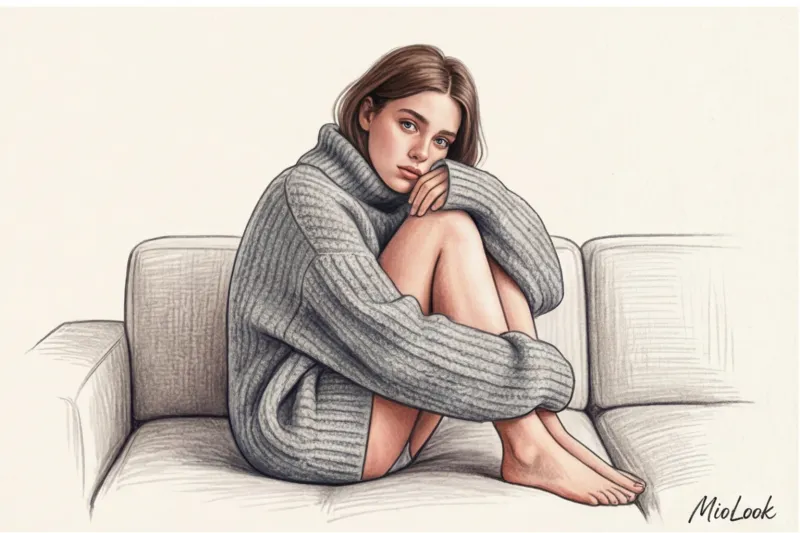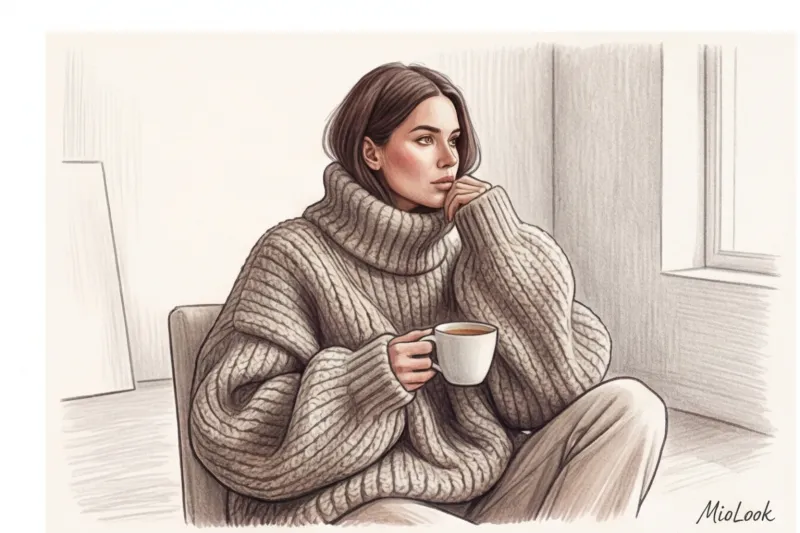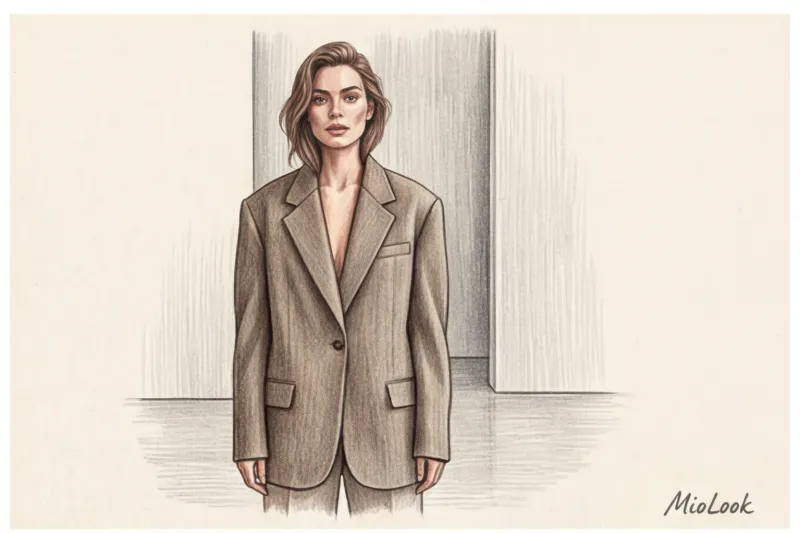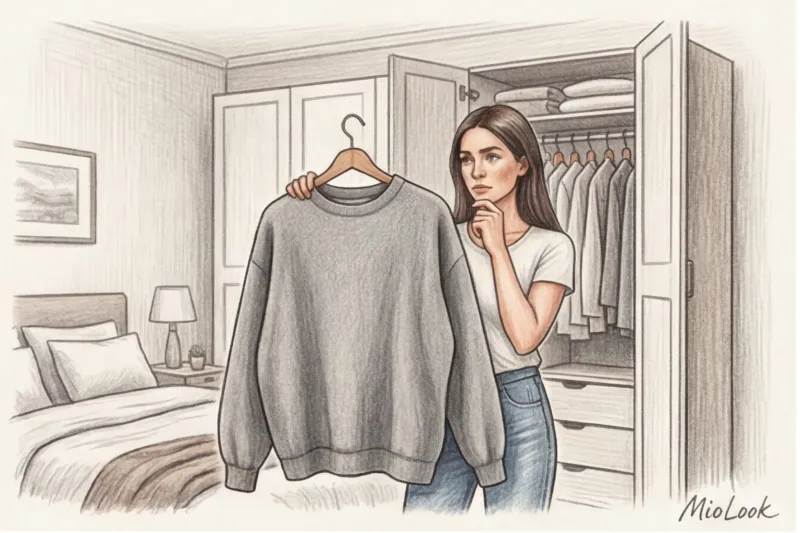
Have you ever noticed how your posture and physiognomy change the moment you slip on an oversized, cozy sweatshirt? Your shoulders involuntarily slump, your back hunches slightly, and your gait becomes heavier. I witness this metamorphosis almost every day in fitting rooms. Women wear clothes three sizes too big in the hopes of becoming "invisible," but paradoxically, they achieve the opposite effect.
And if you've just opened this article wondering, How to stop wearing oversized clothes Let's agree right away: there won't be any trivial advice here like "just love yourself" or "be sure to accentuate your waist with a belt." We've covered the psychology in detail in our a complete guide to changing your style and getting out of your comfort zone Today, we'll approach the problem differently—through the physics of fabrics, seam architecture, and cut geometry. Escape from a shapeless wardrobe isn't stressful, but rather an engaging form of textile therapy.
Cocoon Psychology: Why Do We Hide in Fabric?
In 2012, psychology professor Karen Pine published a study that proved the concept Enclothed Cognition (cognition through clothing). The idea is simple: what we wear physically alters our cognitive processes. When we wrap ourselves in shapeless, soft layers, the brain interprets this as energy-saving and sheltering mode. We literally hide in a "cocoon," which inevitably reduces our level of external confidence.
MioLook app analytics reveal a startling figure: around 80% of women get stuck in the same shopping patterns. We call this the "safety sweater" phenomenon. When buying another oversized hoodie, a woman thinks it will hide her extra weight. But this is where the biggest and most cruel illusion of oversize clothing lies.
Oversized clothing doesn't hide excess weight. Visually, it extends your size to the widest points of your clothes, making your figure appear bulkier, monolithic, and shapeless.
While trying to take up less space (psychologically), we take up much more space (physically) in baggy clothes. The viewer's eye doesn't see where the fabric ends and you begin. It perceives the entire volume of the garment as your own.
Your perfect look starts here
Join thousands of users who look flawless every day with MioLook. Our smart AI stylist will help you get out of the oversized zone without stress.
Get access — €0.99 onceThe Anatomy of a Cut: How to Stop Wearing Oversized Clothes Without Going Skinny
The biggest mistake I see newbies make when they decide to give up oversized clothing is going to the other extreme. A woman takes off her oversized sweater and squeezes into a turtleneck that's bursting at the seams. Naturally, she feels uncomfortable, notices every wrinkle, and dreads returning to her favorite sack.
The opposite of oversized isn't tight clothing. It's clothing that fits properly. allowance for ease of fit There's a clear rule in clothing design: for a garment to fit comfortably but not hang loosely, there should be 2-3 centimeters of "air" between the body and the fabric.
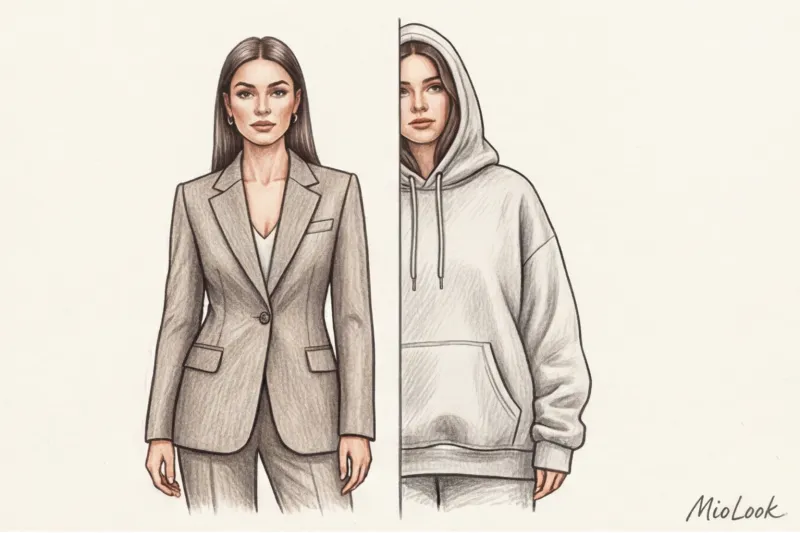
However, there's a limitation here that's often overlooked. This 2-3 centimeter rule doesn't work for completely non-stretchy fabrics like 100% linen or stiff viscose without added elastane. In such materials, the allowance should be increased to 4-5 cm, otherwise the garment will simply burst at the seams when you sit down or raise your arms sharply.
The semi-fitted silhouette is your new comfort zone.
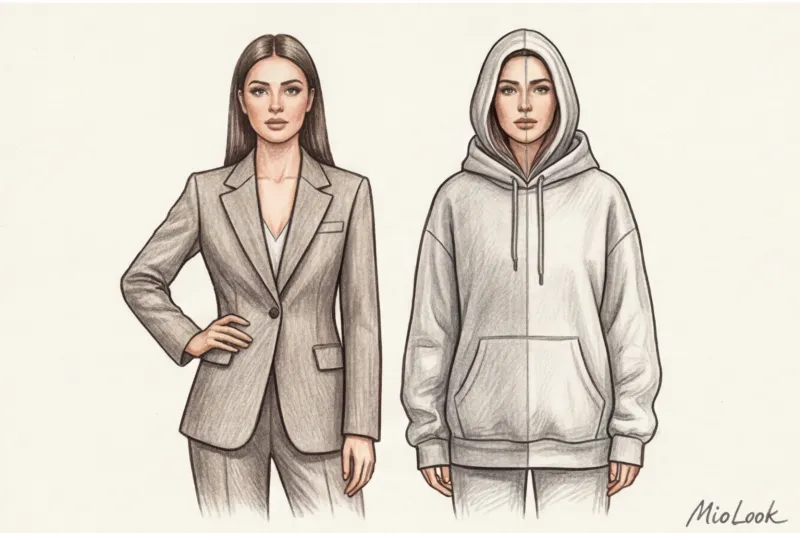
For a smooth transition from oversized, look for the phrase "semi-fitted" on tags or in product descriptions. This type of garment follows the contours of your body without digging in. Unlike the flat fit of a hoodie, semi-fitted garments feature darts at the chest and waist, as well as raised seams at the back. These structural elements create a frame that takes charge of your shape, allowing you to simply relax within the garment.
Textile Therapy: How Fabric Density Eliminates Insecurities
Over 12 years of working as a stylist, I've discovered a golden rule: the problem is often not your size, but the treacherous texture of the fabric. Thin, flimsy oversized knitwear is your worst enemy. It sags under its own weight, catches in every crease, and accentuates what's not really there.
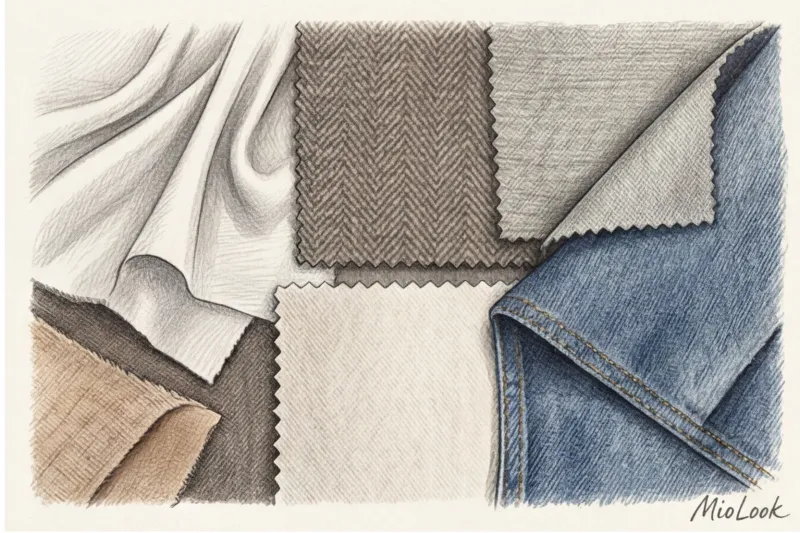
I had a classic case: a client (let's call her Anna) stubbornly hid her beautiful size 14 in a thin melange XXL hoodie. When we replaced the hoodie with a structured jacket made of a thick wool blend and a basic T-shirt of the right weight, she couldn't believe her reflection. Anna had visually "dropped" two sizes in 15 minutes in the fitting room. Why did this happen?
Because structured fabrics act like a lightweight outer corset. Thick cotton, shape-retaining wool, high-quality denim (12 oz and over), or dense Tencel don't cling to the body, but rather define it.
- How to check density: Look for the GSM (grams per square meter) rating. The ideal basic T-shirt should have a weight of 180 to 220 g/m².
- Touch test: Take a piece of fabric from the store and try stretching it slightly. If it instantly springs back to its original shape and feels like a thick sheet of paper, not a soft napkin, it's yours.
If you're interested in learning more about how to properly adapt trends to your proportions, check out our article on What to choose for your style: Kibbe theory or classic body types.
Wardrobe Ecology: Why Shapeless Clothes Are Harming the Planet (and Your Budget)
Have you ever wondered why mass-market stores like Zara, H&M, and Mango stock so many oversized and one-size-fits-all items? It's not just a fashion trend. It's a brilliant financial ploy by the fast-fashion industry.
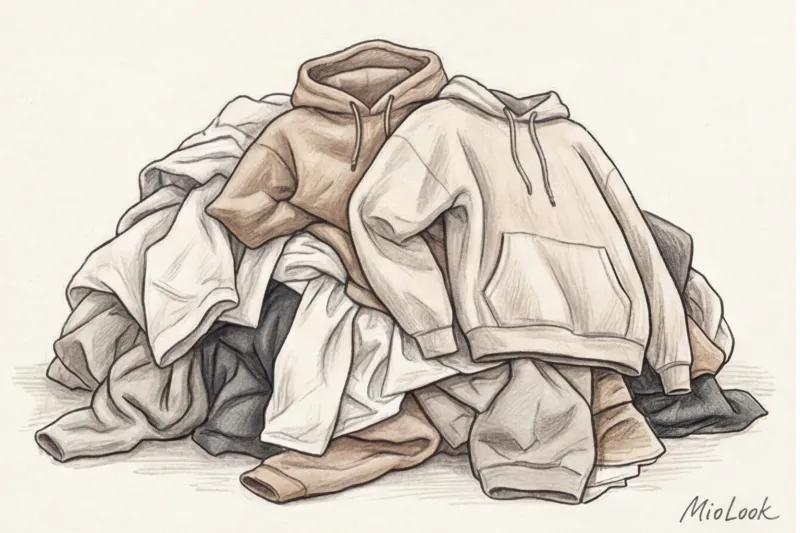
According to a 2023 McKinsey analytical report, eliminating complex construction (darts, raised seams, precise sizing) allows mass-market brands to save up to 30% on production costs. Creating a giant rectangle with armholes and calling it a "trendy oversized sweater" is significantly cheaper than sewing a semi-fitted jacket that fits perfectly.
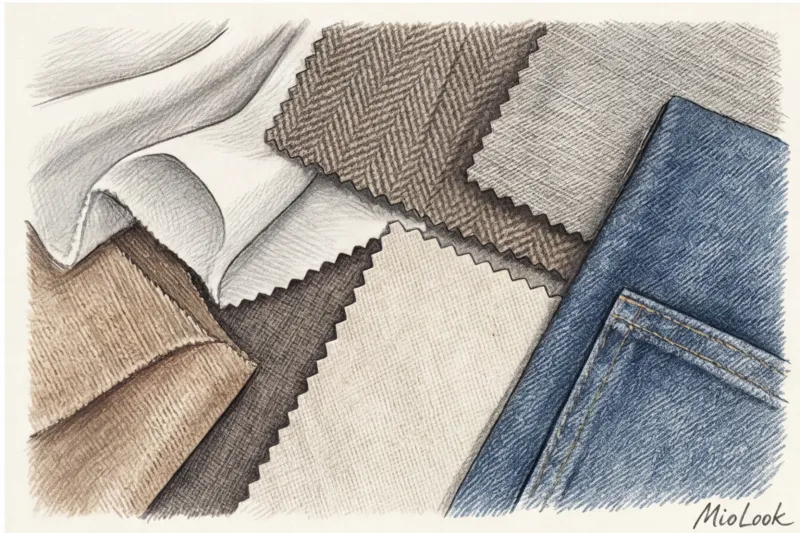
By buying yet another shapeless item, we not only support the overproduction of low-quality clothing but also hit our wallets. Unstructured garments quickly lose their shape and stretch out. Investing in one impeccably tailored item from a mid-range or premium brand (such as Massimo Dutti or COS) will eliminate the need for five new "safety sweaters."
Ready to get started?
Try the MioLook plan for free—no commitments required. Create a smart capsule wardrobe of perfectly-fitting pieces right in the app.
Get access — €0.99 onceInstructions: How to stop being embarrassed about your figure and get out of oversized clothes
Leaving your comfort zone should be gradual. If you wear a formal three-piece suit tomorrow, you'll want to burn it by evening. Let's take it step by step.
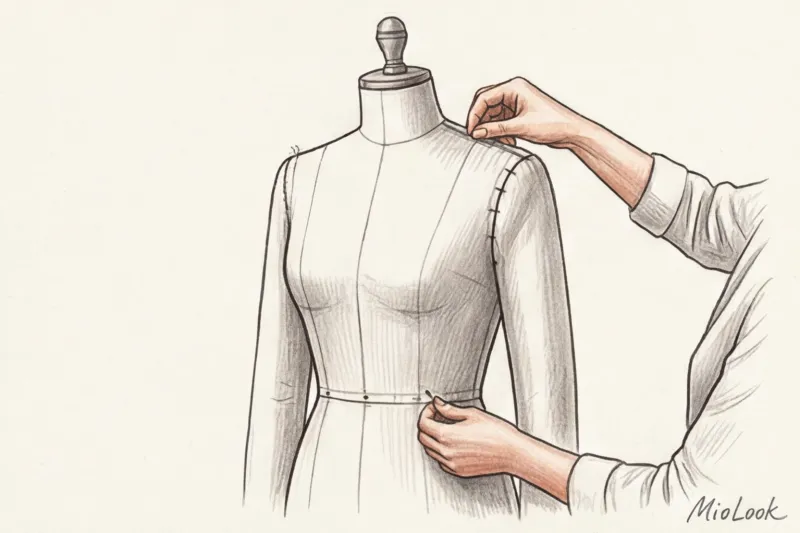
1. Method of gradual reduction of volumes
Replace oversized sweatshirts with thickly knit cardigans. They retain a cozy, soft feel, but the buttons create a vertical line that visually elongates your height. We wrote about which styles to avoid in our article about anti-trends of sweaters.
2. Restoration of shoulder architecture
The dropped shoulder seam typical of oversized clothing makes the shoulders appear sloping and the figure bulky. Your best friend during this transformation is a set-in sleeve. The seam should be positioned exactly where your shoulder ends and your arm begins. This instantly ties together your silhouette and straightens your posture. This is especially important when choosing outfits for work. We cover the intricacies of business style in more detail in our guides. choosing clothes without stereotypes.
3. Vertical lines for a sense of protection
If you feel too vulnerable without your usual volume, layer up. Wear a semi-fitted top made of thick cotton, then layer it with an unbuttoned structured jacket or a heavy shirt. The open top layer provides that "protection" at the back and sides, but creates two vertical lines in the front, slimming the figure.
4. The right length: say goodbye to tunics
Oversized tops often end at the widest part of the hip (the breeches). This horizontal line visually cuts off the figure and adds a few pounds. Choose tops that either end just above the hipbone (cropped styles) or cover the crotch completely, but don't stop at the midsection of the hips.
Checklist: Checking the fit of a new item in the fitting room
To never buy things that hide your individuality again, take this one-minute test right in the store's fitting room.
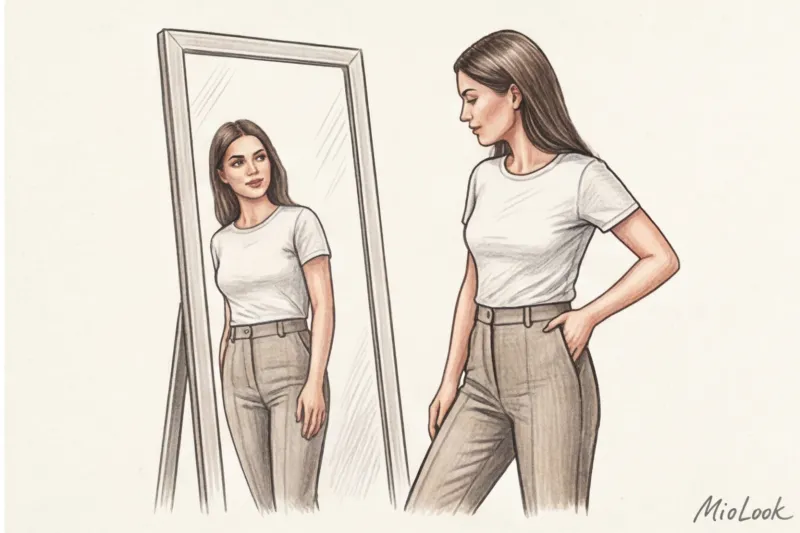
- Shoulder seam test: Make sure the seam lies directly on the knuckle (unless it's a raglan). If it hangs 3-5 cm lower, this pattern isn't for you.
- Movement test: Raise your arms parallel to the floor, then cross them over your chest. The fabric on the back shouldn't flap, but it shouldn't bunch up like a huge parachute either.
- Tension test (cross rule): Stand up straight and lower your arms. Look at your chest (for shirts) and hips (for trousers). If you see cross-shaped creases coming apart from the buttons or zipper, the item is too small. You need a larger size, but in the same semi-fitted cut , and not a transition to oversize.
Rejecting oversized clothing isn't an attempt to squeeze yourself into the rigid confines of someone else's beauty standards. It's an acknowledgement that your body deserves its rightful place in space. Clothes should serve you: sculpt your silhouette, support your posture, and inspire confidence, not hide you from the world under meters of shapeless fabric.