Fashion Tech in 2024: From Hype-Driven Metaverses to Real Profits
Remember 2022? It seemed like just a moment before we'd all be wearing digital sneakers, and fashion shows would be held exclusively on virtual platforms. Many of my colleagues were seriously discussing how to assemble 3D capsule collections for avatars. But let's be honest: the industry has taken off its rose-colored VR glasses. fashion tech technologies — these are no longer futuristic experiments for headlines. The market has returned to the harsh physical reality of producing, delivering, and selling things without breaking the bank.
The end of the NFT and metaverse era in fashion was entirely predictable. Over 12 years of working as a personal shopper and consultant in Europe, I've seen dozens of microtrends, but this one fizzled out the fastest. The reason is simple: a €2,000 virtual bag doesn't solve real problems. Neither do my clients, who need a functional everyday wardrobe staple, nor do the brands themselves, who are facing a serious oversupply crisis. Fashion is, first and foremost, a physical product and a tactile experience.
"While two years ago everyone was looking forward to digital fashion shows, in 2024, brands are far more concerned with predictive analytics of inventory levels. Pragmatism has confidently triumphed over hype."
As analysts aptly noted in the report McKinsey State of Fashion 2024 , the industry's focus has shifted radically. This year's top priority is technologies that address logistics, the catastrophic return rate (especially online), and genuine sustainability. Today, major players like H&M and Zara are investing millions of euros not in pixelated dresses, but in supply chain optimization algorithms.
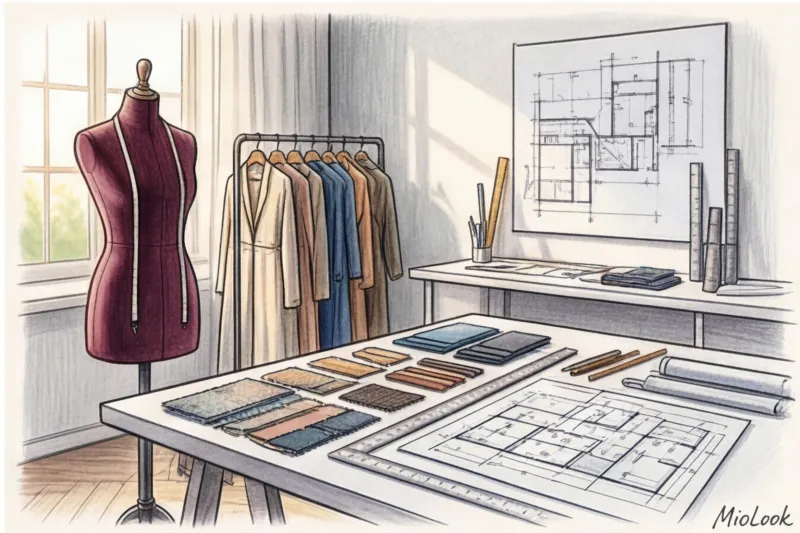
So what is fashion tech today? I'd call it a pragmatic set of utilitarian tools that adapt to the specific business needs of each market participant:
- For brand owners: It's artificial intelligence that identifies trends before they become mainstream. It helps avoid producing 10,000 extra blouses that would have to be sold at a loss at the end of the season for €5.
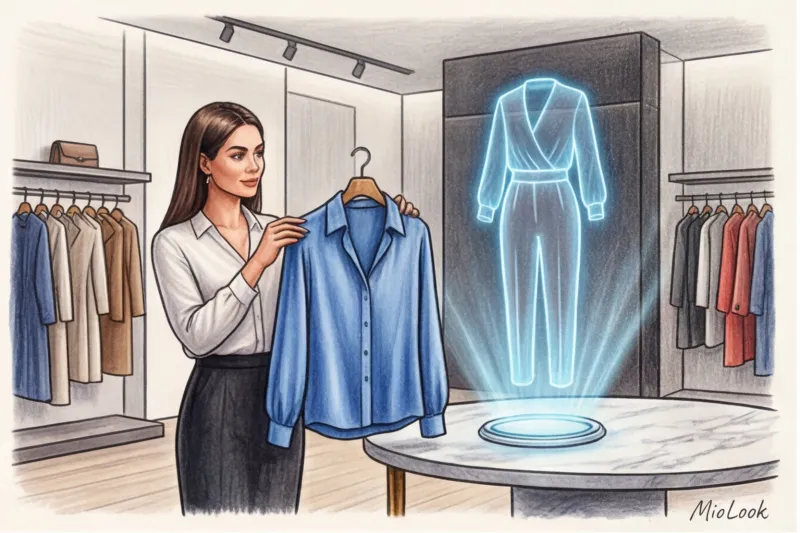
- For physical retail: it's seamless omnichannel in retail , RFID tags for instant inventory and smart mirrors in a clothing store , allowing the customer to request a different size or color directly from the fitting room.
- For stylists and buyers: This is a transition from notes in a notebook to smart platforms. For example, to digitize my clients' closets and plan looks, I use MioLook app This saves me hours of routine work, and the client can always see what they have right on their phone.
Technology for technology's sake no longer works in the fashion business. The industry has finally realized that any innovation is only meaningful when it reduces costs or genuinely improves the user experience.
Artificial Intelligence as an Analyst and Co-Stylist
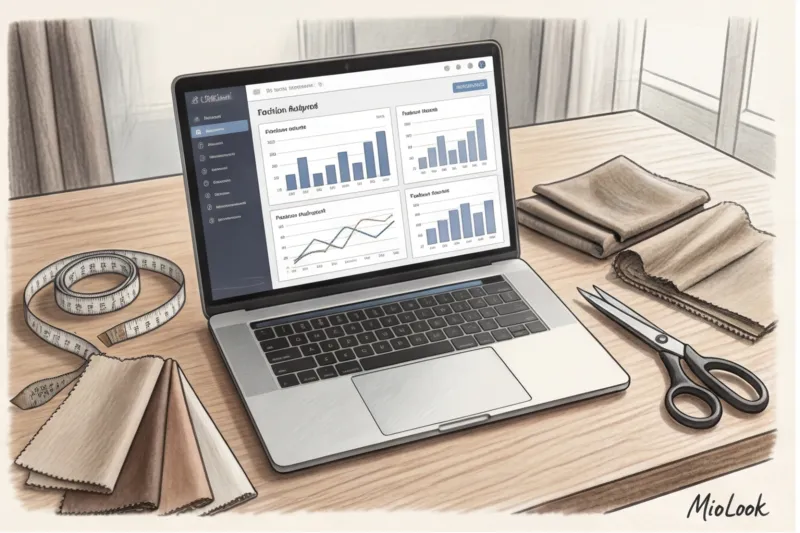
Have you ever noticed how incredibly accurate mass-market fashion is at hitting our seasonal desires? Just think about a burgundy jumper or a bubble skirt, and they're already hanging on the rails at your local mall. Spoiler alert: it's not magic or the genius intuition of creative directors. In 2024, predictive analytics will rule the roost.
Modern fashion tech technologies Artificial intelligence is being used to predict what we'll wear next fall, long before the threads even reach the factories. Algorithms analyze millions of social media images and search queries daily. For example, machine vision captures the smallest details: the shape of a collar in a street-style photo, the length of a sleeve, the popularity of a particular print in European capitals. The system literally mathematically calculates the likelihood that a leopard print will become a sales hit in six months and sends a signal to buyers.
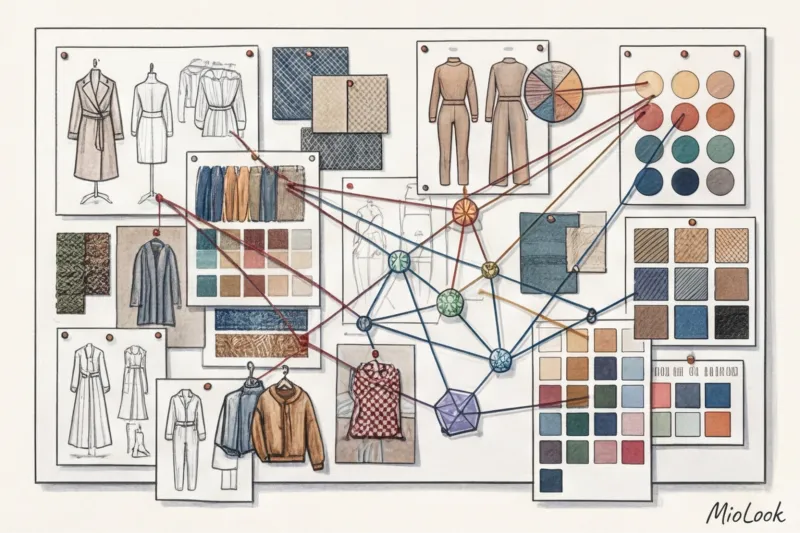
But let's face it: AI isn't changing design itself so much as the speed of delivery to the shelf and smart logistics. The main focus of European high-street retail right now is reducing overproduction. For giants like H&M and Inditex brands (Zara, Massimo Dutti), algorithms are solving a complex problem: how to optimize the supply of specific sizes to specific physical stores.
While a brand previously produced a batch of basic trousers and distributed the size chart evenly across all stores, today's AI takes into account the local characteristics of each neighborhood's audience. A boutique located near a university campus receives more sizes XS and S, while a store in a residential area with families receives more sizes L and XL. According to a McKinsey report (2024), such targeted routing helps reduce unsold inventory by 20%. This translates into savings of tens of millions of euros annually. Customers receive the right size in stock, and brands save tons of fabric from being sold at bargain prices or discarded.
When it comes to the creative process, AI design generation has become an indispensable tool. I recently discussed this process with a buyer at a Scandinavian brand (mid-price segment, dresses in the €80-€150 range). She admitted that their team no longer spends weeks creating mood boards from physical fabric samples. Creative directors now use neural networks (like Midjourney) to create prototypes, quickly combining silhouettes, textures, and colors. This doesn't replace human work, but it eliminates the need to sew dozens of test samples just to see how the drape will fall. As a result, the process from an abstract idea to an approved pattern is significantly shorter.
Access to MioLook for €0.99 — one-time payment
A smart AI stylist will select the perfect look based on your wardrobe and current trends.
Get access — €0.99 oncePersonalized AI Recommendations in E-Commerce
Let's move on from global brands to our own shopping experience. Admit it, how irritating is it for you when you buy a basic coat online for €250, only to have the website persistently offer you... another coat for the next two weeks? It's a classic example of an outdated algorithm. "people also bought this product".
We're now witnessing the long-awaited transition to next-generation algorithms that take into account a customer's existing wardrobe. The idea is absolutely brilliant in its simplicity: an online store begins to function as your personal assistant. If you add a statement pair of wide-leg trousers to your cart, the smart system won't suggest a random best-selling T-shirt. It will analyze your digital capsule and find an item that ties it to what's already hanging in your closet.
I use this approach regularly in my practice. One of my clients was constantly buying the same cardigans because she simply didn't know what to wear with the skirts she already had. When we started integrating the "smart wardrobe" feature in MioLook , her shopping patterns have changed dramatically. AI sees the whole picture: it understands that you have excellent basics, but are critically missing a structured jacket or the right shoes. This level of personalized recommendations transforms impulsive shopping into rational shopping. You spend your €50-100 not on yet another blouse, but on that one missing piece that will make several old outfits work together.
End the Returns Problem: 3D Scanning and Virtual Try-On
70%—that's the share of online clothing orders returned to warehouses. According to the National Retail Federation, this isn't just a logistical inconvenience, but a real financial drain. To put this into perspective, processing just one returned item—including round-trip logistics, defect inspection, steaming, repackaging, and refund—costs a European brand an average of €15–€25. Multiply this figure by the millions of parcels shipped monthly, and it becomes clear why retailers are desperately investing in fashion tech to solve this problem.
Do you know what's most frustrating about online shopping? Total mismatched patterns. It's a common pain point for me and my clients. In practice, it looks like this: we order a pair of basic size 38 trousers from Massimo Dutti, and they fit perfectly. Then we order the same size 38 from & Other Stories, and they're a good two inches off at the waist. Waiting for the package turns into a gamble, and trying them on at home is a disappointment. The problem is that standard two-dimensional size charts are physically incapable of accounting for the three-dimensional reality of a woman's figure and its individual proportions.

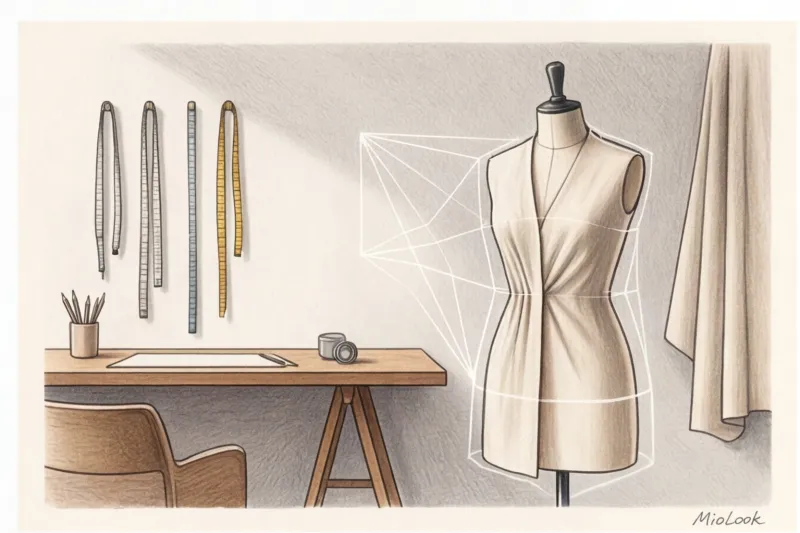
It's precisely this gap between expectations and reality that body scanners and the creation of digital customer avatars are closing. No more guessing whether you'll fit the parameters of an abstract "M-model." Today, a smartphone camera replaces the classic measuring tape. The client takes a couple of photos of themselves in tight clothing, and an algorithm creates a precise 3D model, complete with all their anatomical features. Then, a virtual fitting room literally "stretches" the digital copy of the garment onto your avatar. You immediately see a heat map of the fabric's tension: where the jacket will be too tight in the shoulders, and where, conversely, unnecessary creases will form. This turns the uncertain "I hope it will button up" into a precise "I can see how it fits." By the way, once the perfect wardrobe is already assembled, I recommend using MioLook — the app eliminates the need to rummage through shelves every morning looking for the right thing.
But while developers are still tweaking the nuances of realistic fabric physics with digital try-ons for complex shoulder garments (such as draped silk dresses or multi-layered trench coats), AR try-ons for shoes and accessories are a fully realized business case.
Why is this working right now? Feet, hands, and faces are much easier to digitize than soft tissue. Here are three successful approaches that are already generating profit:
- Sneakers and shoes: AR foot tracking technology allows users to point a camera at their feet and see how a specific pair will look in motion and under different lighting conditions. Gucci and the Farfetch platform are actively using these solutions. According to the brands, the implementation of this feature has reduced shoe return rates by 25-30%.
- Optics by face size: Ray-Ban and Warby Parker have integrated facial scanning via Face ID. The algorithm doesn't simply "stick" glasses on videos like a social media filter, but calculates the width of the bridge of the nose and the shape of the cheekbones, recommending frames that won't squeeze or fall off.
- Jewelry: Pandora has implemented AR try-on technology for rings and bracelets, with millimeter-precision accuracy. Customers can assess the actual size of the jewelry on their hand, which is crucial before purchasing a piece costing €150–€300.
Virtual try-on technology is no longer a fun marketing gimmick. It's a cost-cutting tool that will become as basic an e-commerce feature as a shopping cart or online payment button in the coming years.
Smart Fabrics and Materials of the Future: The Laboratory Revolution
Open your closet and look at the tag of the first jacket you see from a popular mass-market store. We bet you'll see polyester there? For years, we've accepted that affordable and easy-care clothing typically consists of synthetics that don't breathe and are highly static-prone. But the real fashion tech revolution is happening not on our screens, but in chemistry labs.
According to a 2024 report by the analytical agency WGSN, the industry's direction has finally shifted. We are witnessing a massive shift away from traditional polyester in favor of innovative biodegradable materials. Toxic plastics are being replaced by fabrics grown from mushroom mycelium, algae fibers, and even apple pulp.

If earlier the material Mylo While "apple leather" (a leather made from mushrooms, popularized by Stella McCartney) once seemed like an inaccessible exclusive, today mid-market brands are actively incorporating "apple leather" into their bags and shoes. In the €150-€300 range, you can find excellent accessories that are visually indistinguishable from genuine leather, yet they are produced with a minimal carbon footprint. And algae-based T-shirts (such as those from Pangaia) are not only eco-friendly but also nourish the skin, releasing beneficial antioxidants upon contact.
Clothes that think about your comfort
When we hear the term "smart fabrics," many still imagine bulky silver astronaut suits. Let's connect this to our everyday reality. In reality, smart textiles are the perfect basic white shirt for a top manager, one that won't wrinkle under a seat belt or show telltale sweat stains during a stressful presentation.
To create the perfect capsule office wardrobe, I increasingly recommend temperature-regulating textiles to my clients. These are based on technologies like Outlast — phase-change microcapsules, originally developed for the aerospace industry. Clothing made from this fabric adapts to your body temperature: it absorbs excess heat when you descend into a stuffy subway and releases it back when you emerge onto the chilly street. This completely changes the approach to layering: you no longer need to wear a T-shirt, a shirt, and a wool vest all at once.
"Technological materials allow us to reduce the size of our office wardrobe by almost a third. One high-quality temperature-regulating shirt replaces three regular ones, as it covers the needs of different temperature conditions."
The End of Dry Cleaners: A Rescue for Business Travelers
One of my regular clients is a finance director who travels three to four days a week on business. Her suitcase used to be overflowing with spare blouses, and the hotel dry cleaning budget was downright daunting. We solved this problem by reassembling her business capsule wardrobe using smart, stain- and odor-resistant fabrics.
Cutting-edge brands (such as Ministry of Supply) use nano-coatings that work like the lotus leaf: an accidentally spilled espresso on a plane simply rolls off in beads without being absorbed into the fibers. Furthermore, the material is treated with antibacterial compounds based on silver ions, which physically inhibit the growth of odor-causing bacteria.
The result is impressive: after a 12-hour flight, you emerge from the terminal in fresh clothes that retain their shape. I'm absolutely certain that an investment of €100 in such a high-tech shirt pays for itself on your first trip. However, there's a caveat: such nano-clothing requires delicate washing without harsh fabric softeners, otherwise the protective coating will quickly wash off.
If you're looking to start incorporating lab-inspired innovations into your wardrobe today, here are three markers I recommend looking for on labels:
- Tencel/Lyocell (closed-loop) — the best base for those looking for a breathable alternative to polyester in flowing fabrics.
- PCM (Phase Change Materials) — the very same smart thermoregulation for the office without temperature fluctuations.
- Fluorocarbon-free DWR - safe water-repellent stain-repellent impregnation.
Try MioLook
for free
Start creating perfect images with the help of artificial intelligence
Get access — €0.99 onceTechnology in Physical Retail: Offline is Getting Smart
For years, analysts predicted the death of traditional clothing stores. It was claimed that online commerce would displace everything. But stroll through the flagship boutiques of European capitals today, and you'll see a completely different picture. Physical retail hasn't given up—it's adapted and become a high-tech extension of our smartphones.
The most ambitious innovation, yet virtually invisible to the average shopper, is the RFID (radio frequency identification) revolution. While inventory control in a large store used to take a day and require closing the store, now an employee with a portable terminal simply walks along the rails, scanning hundreds of items per second.
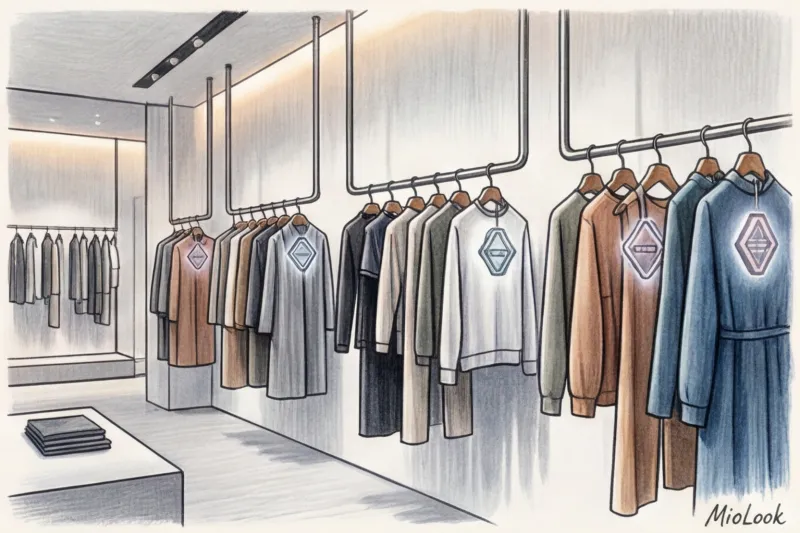
For consumers, this technology has become a true salvation from routine. Remember how Zara eliminated checkout lines with smart self-checkout machines. You simply drop a bunch of your chosen items into a special box. No more tedious searching for barcodes—the system reads all the RFID tags at once in a split second, deactivates the anti-theft protection, and displays the final total. This is a brilliant time-saver that has already become a standard feature of mass-market shopping.
Another technology that's radically changing the shopping experience is interactive fitting rooms. These mirrors allow you to request a different size or color without having to go into the showroom. How does it work? Using RFID tags, the smart mirror "sees" what you've brought into the booth and automatically displays a catalog of these items on the built-in touchscreen.
"The introduction of technology into offline spaces is more than just a customer experience. According to a McKinsey report (2024), stores with digital services retain customers in the store 25% longer and significantly increase the average order value through smart recommendations."
In my experience as a shopping assistant, these booths at Massimo Dutti or COS flagship stores are a godsend. Previously, when a client tried on a €150 jacket and realized the shoulders weren't quite right, I'd have to leave her, run to the showroom, search for the right size on the hangers, and waste precious paid time. Now, we just press a few buttons on the mirror. The consultant receives a notification on their smartwatch or tablet and brings the item right to your door. On average, this saves us up to 40 minutes per shopping trip!
All these elements shape the core demand of the modern consumer: omnichannel. This is a seamless experience between the brand's app and the physical store. The shopping scenario has become more flexible: you find the perfect pair of trousers in the app, check their availability at a specific store in your city, reserve them, and then only come in for a fitting. Or the opposite: you buy three sizes of an expensive cashmere sweater online (around €200 each) to choose the best one at home, and then return the unsuitable ones to the nearest physical boutique via a special return kiosk.
I always recommend that clients use this technological transparency to their advantage. After a successful offline shopping experience, electronic receipts with SKUs are easily integrated into styling apps. By adding updates to MioLook smart wardrobe , you close the loop: the physical purchase instantly becomes part of your digital base, and you can plan in advance how that new trench coat will fit into your everyday capsule wardrobe.
Digital Product Passports (DPP): New Rules of the Game in the EU
Let's take a look into the near future, which will arrive in just a couple of years for the European fashion market. You pick up a basic cashmere jumper for €120 off the rack, point your smartphone at a tiny QR code or hidden chip on the tag, and the entire biography of this item unfolds before you. This is the Digital Product Passport (DPP)—the main thing. fashion tech technology and, frankly, the main headache for brands right now.
"The introduction of digital passports completely reshapes the business architecture. Companies will no longer be able to hide dubious production behind attractive marketing slogans about environmental friendliness, as transparency becomes the law."
According to the new European Union Ecodesign Directive (ESPR), data disclosure will soon cease to be a voluntary PR initiative. As an expert analyzing European retail, I emphasize: for brands operating internationally, this is not an option, but a soon-to-be legal obligation. If a T-shirt or coat doesn't have a digital passport, the product simply won't clear customs and won't reach store shelves in the EU.
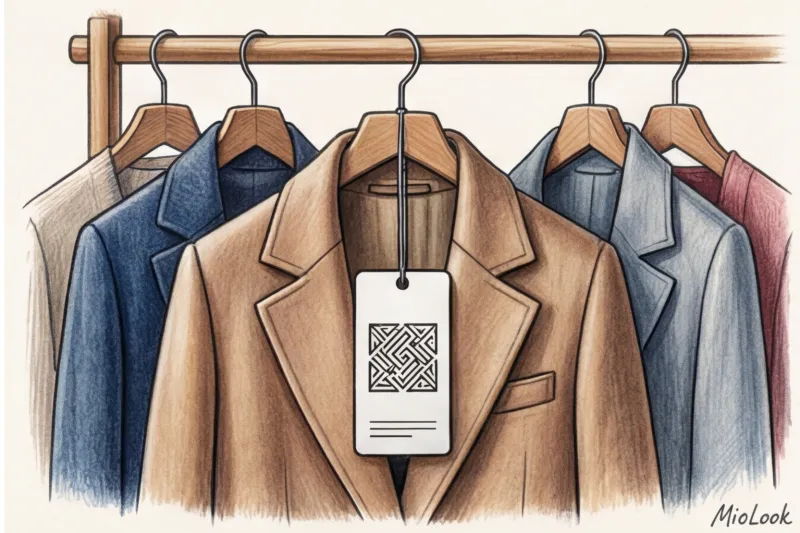
What exactly does this technologically advanced database contain? First and foremost, uncompromising supply chain traceability. Buyers (and regulators) will be able to see the entire process of garment creation: from the specific Merino sheep farm in New Zealand where the wool was carefully sheared, to the spinning mill in Prato, Italy, the sewing workshop in Portugal, and, finally, the finished sweater in a Berlin boutique. Brands will be required to disclose the garment's carbon footprint, the percentage of recycled materials, and clear recycling instructions.
Your ideal image begins Here
Join thousands of users who look flawless every day with MioLook.
Get access — €0.99 onceBeyond the obvious environmental impact, the DPP will radically impact the resale market and the fight against luxury counterfeiting. Today, the industry faces a proliferation of "super-fakes"—copies of Hermès or Chanel bags so masterfully crafted that experienced resale platform authenticators spend hours verifying them. A blockchain chip embedded in a product solves this problem in a second. It's physically impossible to counterfeit the encrypted digital signature: you simply scan the hidden tag, and the system confirms the item's authenticity.
For you and me, this means incredible convenience when reselling and managing your style. When you decide to free up some space in your closet and sell last season's trench coat, you won't have to search for receipts or take dozens of photos of the seams—all the information is already stored in the passport. Moreover, this technology will make the digitization process seamless. By scanning the chip after purchase, you can instantly transfer the item to MioLook smart wardrobe , where the algorithm will immediately suggest what from your stock it would be best combined with.
Busting the Myth: Why AI Won't Replace Your Personal Stylist
Since the mass launch of generative neural networks, everyone has asked me, "Katarzyna, aren't you afraid that algorithms will soon put you out of work?" My answer is straightforward: no, I'm not. Let's examine this popular media myth from the perspective of real-life fitting room work, not the slick presentations of silicon startups.
Of course, a machine can generate a technically correct capsule in a matter of seconds. Artificial intelligence can handle the input data perfectly: it will take into account a cool complexion, a height of 165 cm, body features, and a shopping budget limit of €800. But therein lies a fundamental problem: Algorithms see parameters, but not personality and psychological barriers The program analyzes your previous purchases and clicks, but it is completely blind to your insecurities, fears, and hidden ambitions.
In my practice, I regularly encounter situations that defy any mathematical logic. The most telling example is a woman's return to a corporate career after a long period of maternity leave. A machine, having analyzed the client's new management position, would instantly suggest the perfect tailored two-piece suit. AI can assemble a flawless base of color and cut, but it won't be able to persuade a woman to try on this business suit after a break, restoring her lost confidence. In the fitting room, such a client often feels like an impostor in structured jackets, instinctively clinging to the familiar and safe soft knit. A neural network can't look you in the eye and say, "I see you're not used to it now, but this silhouette restores your status."
This is the key role of empathy in changing your image: A person needs someone to help him get out of his comfort zone. E-commerce algorithms act as a cozy, yet dead-end, echo chamber. Bought three oversized sweaters? Here are ten more. The professional's job is to gently disrupt these patterns. As Dr. Carolyn Mair, a British fashion psychologist, notes in a 2023 study, a radical change in style is seriously stressful for the psyche, requiring emotional support that software simply can't provide.
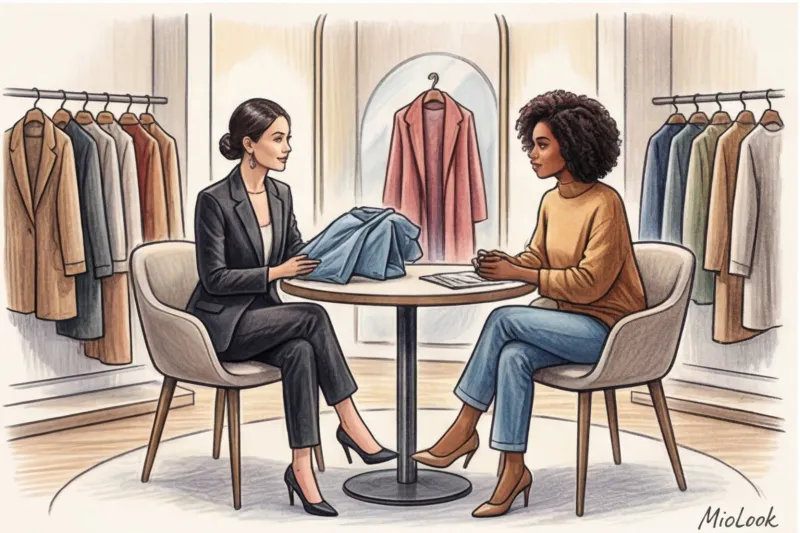
Does this mean we proudly reject progress? Absolutely not. A rigid law of survival has already been established in the market. A powerful symbiosis is emerging: A stylist armed with fashion tech will inexorably displace a stylist working the old-fashioned way..
Those colleagues who still keep track of their wardrobes in paper notebooks and spend four hours searching for the right size blazer at Massimo Dutti or & Other Stories will soon lose their customer base. They're selling a mechanical routine. I delegate this routine to machines. For example, to organize my clients' existing purchases and quickly create looks remotely, I use MioLook smart wardrobe When closet inventory is outsourced to technology, and predictive analytics helps me proactively track items in boutiques, I have more time for what matters most. I focus my time on what clients are truly willing to pay €300 and up for—personal engagement with their self-image, tactile fittings, and psychological support.
Fashion Business Checklist: What to Implement Right Now
Let's be honest. Over the past few years, I've been approached numerous times by founders of local European brands asking me to analyze their customer service strategy. And you wouldn't believe how often I hear the same phrase: "Katarzyna, we want to launch our own NFT collection to stay on trend!" My answer is always the same: "Why do you need digital tokens if the size chart on the website doesn't match the actual patterns, and customers are waiting days for a support response?"
The fashion industry loves a good news story, but the harsh truth is that PR hype doesn't pay the warehouse rent. In 2024, pragmatists will survive. If you want... fashion tech technologies To make your business work, not just eat up your marketing budget, you need strict prioritization. Below, I've put together a concrete action plan for those ready to invest in real growth.
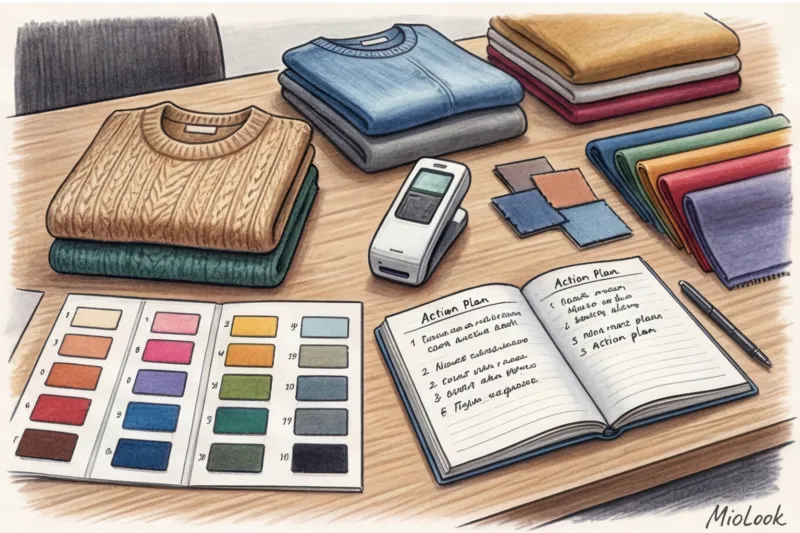
Basic level: precise size guide on the website and integration with a virtual fitting room
Don't buy complex neural networks for design generation while your customers are forced to play "guess the size." Abstract labels like S, M, and L no longer work—patterns even within the same mass-market collection can differ dramatically. The absolute minimum any modern online retailer should start with is a detailed size guide and the integration of basic virtual fitting plugins.
Provide the measurements of each specific item: back length, shoulder width, and sleeve circumference in centimeters. Yes, measuring a new batch requires resources, but when a customer enters their measurements and receives an accurate fit estimate, the return rate drops by an average of 20-30%. Integrating a high-quality fitting service can cost between €200 and €800 per month for a niche brand, but it will save you thousands of euros in reverse logistics. This is the foundation. Without it, any digital add-ons will collapse.
Advanced: AI Inventory Analytics and RFID Tracking
Once the core sales funnel is running smoothly, it's time to optimize the backend. For brands with physical stores, I highly recommend implementing RFID tags. It's time to forget the myth that this is an expensive luxury only for giant corporations. The cost of one chip today is a modest €0.10–€0.15, and this micro-investment pays for itself within the first season.
With RFID, you'll never lose items in back rooms or have to manually conduct nightly inventory counts. And when paired with AI analytics, this tool works its magic: algorithms will tell you that basic trench coats at the Berlin branch need to be restocked by Wednesday due to a cold snap, while at the Madrid store, they're best removed from the display altogether. As a result, you sell the item at full price (say, €150), without waiting for seasonal discounts—simply because the system has relocated it to the right warehouse in time.
For experts and stylists: Using aggregator apps to manage clients
Digital transformation affects not only retailers but also us, independent consultants. The days of sending clients dozens of random screenshots with voice messages like, "Pair these pants with that blouse from your last order" are a thing of the past. Today, your receipt directly depends on the level of your digital service.
I've long since implemented specialized aggregators for remote wardrobe management. I highly recommend testing them out. MioLook — a platform that automates a stylist's routine. Imagine this scenario: you digitize a client's current wardrobe, create interactive capsule collections, and plan a shopping list right on her smartphone. In the morning, instead of wasting time in front of the mirror, she opens the app and sees a ready-made lookbook for the month ahead. Personally, this approach saves me 10-12 hours a week, allowing me to take on more projects without sacrificing quality.
Bottom line: Invest in technologies that deliver ROI, not just buzz.
To conclude our review, I want to emphasize the most important point. Whether you're the owner of a major brand, the founder of a local label, or a practicing image consultant, stop chasing innovation for the sake of a slick press release. The true future of the industry isn't virtual fashion shows.
These are the pragmatic data tables, invisible microchips, and user-friendly app interfaces you use every day. Invest exclusively in tools that deliver a tangible ROI: saving you time, cutting logistics costs, and making the customer experience truly seamless. Only then will technology transform from a heavy expense into your primary competitive asset.
Guide Chapters
Smart Try-On Mirror: How to Save Boutique Sales
Are customers leaving the fitting room because they're wearing the wrong size? Find out how smart technology can help retain customers and increase retail revenue.
Neural Networks and Fashion Design: From Sketch to Catwalk
The era of virtual dresses is over. Today, neural networks don't just draw concepts; they help brands create real, perfectly fitting clothes.
Sustainable Fashion: Technology vs. Overproduction
Recycled polyester no longer saves the planet. We explore how predictive analytics and digital algorithms are truly transforming the fashion industry.
Digital Clothing: Why People Buy Virtual Items
Virtual fashion isn't just hype, but a practical tool for creating compelling content. We explore why experts are switching to digital.
Virtual Makeup Try-On: A Guide to Beauty Technology
Forget about unsuccessful cosmetic purchases. Learn how modern beauty technologies can help you create the perfect look without breaking the bank.
Smart Clothing: Technologies and Fashion Trends for 2024
The future is here: heated fabrics, hidden sensors, and color-changing materials. We explore which fashion-tech innovations are truly worth adding to your wardrobe.
Electronic Wardrobe: An App for Digitizing Your Clothes
Digitizing your clothes is a pragmatic way to manage your style and finances. Learn how to make algorithms work for you and get rid of excess clothing.
AI Stylist: How Neural Networks Solve the "Nothing to Wear" Problem
Neural networks in fashion are a mathematically precise solution to the "I have nothing to wear" problem. We'll explain how AI helps you organize your closet and put together outfits.
Color Type Definition: A Neural Network Will Select Your Colors
Artificial intelligence has revolutionized style selection. We explain how algorithms analyze appearance and why AI is more accurate at identifying color types than humans.
How 3D scanning of a figure solves the problem of choosing a size
There's no such thing as a perfect size, but technology promises to fix that. We explore whether digital avatars can save us from making mistakes when shopping online.
Virtual Fitting Room: How AR is Changing Online Shopping
Stop ordering clothes in three sizes at once and waiting for a refund. We'll explore how modern AR technologies are solving the problem of choosing sizes online.