In 12 years of working as a personal stylist, I've learned one cruel rule: there are no perfect sizes. There are only illusions sold to us by brands. One of my clients in Milan ordered a luxurious cashmere coat with raglan sleeves online for €3,200. According to all the measurement charts, it should have fit perfectly. But when she put it on, the dense fabric bunched up in rough folds at the armholes. Mathematically, the garment fit perfectly. Stylistically, it was a disaster.
Today the industry is betting on 3D scanning of a figure , promising to forever free us from the agony of choice and costly mistakes. We discussed this global shift in more detail in our The complete guide to fashion tech innovations in 2024 But can technology completely replace a tailor's eye? Let's explore how digital avatars are changing luxury shopping, when they should be trusted implicitly, and when algorithms are still powerless against the magic of tailoring.
Pragmatic fashion tech: why the industry is betting on 3D body scanning
The era of excited talk about metaverses and digital clothes that can only be worn on Instagram has come to an end. Luxury houses and global retailers are facing a harsh reality: logistics are eating into profits. According to the McKinsey State of Fashion (2024) analytical report, up to 70% of e-commerce clothing returns are due to one simple reason: the wrong size.
The main culprit behind these statistics is the phenomenon of "vanity sizing." Marketers have long understood that a woman is more likely to buy a dress if the tag says size 36 than size 40. As a result, your European size 38 at Celine and at Zara will differ by a few critical centimeters.
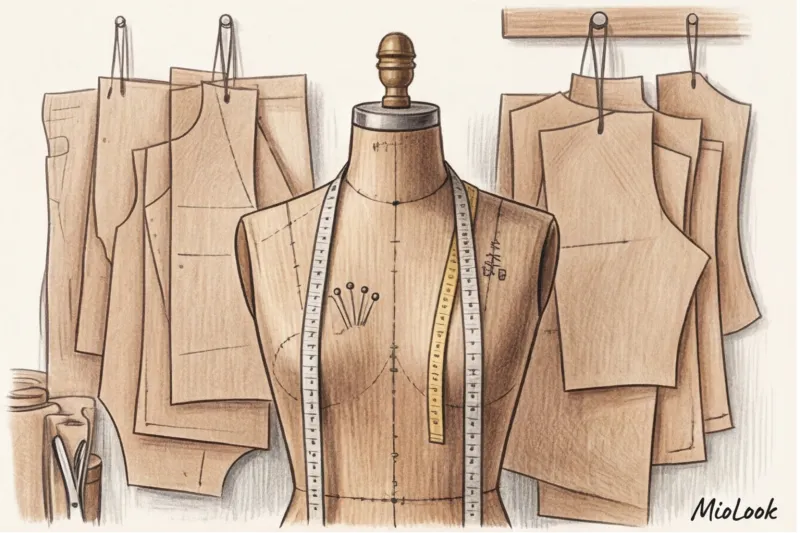
This is where 3D scanning transforms from a fun toy into a vital financial tool. By creating a precise 3D model of the body, the technology allows you to compare your actual measurements not with an abstract "M" on a tag, but with the technical specifications (patterns) of a specific garment. For those investing in a premium wardrobe, this means an end to the endless cycle of fittings and returns.
Your perfect look starts here
Join thousands of users who look flawless every day with MioLook. The smart AI stylist will take all your parameters into account.
Get access — €0.99 onceHow 3D Body Modeling Works: From Smartphone to Digital Avatar
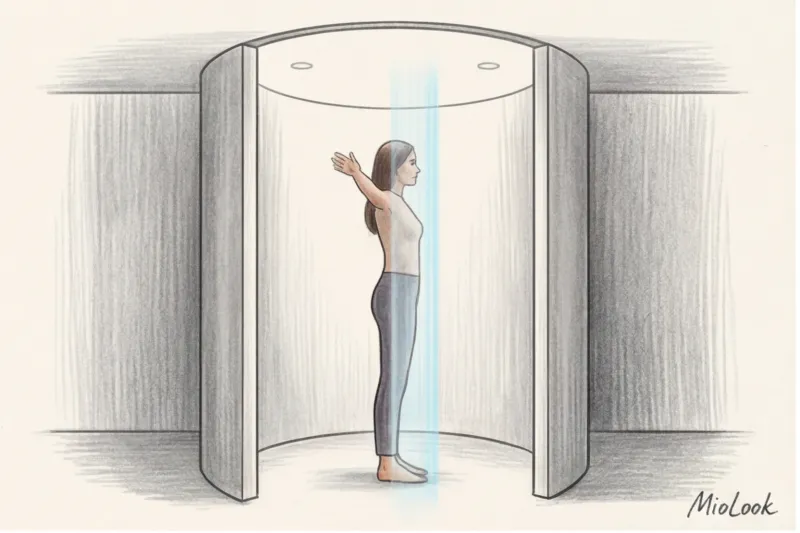
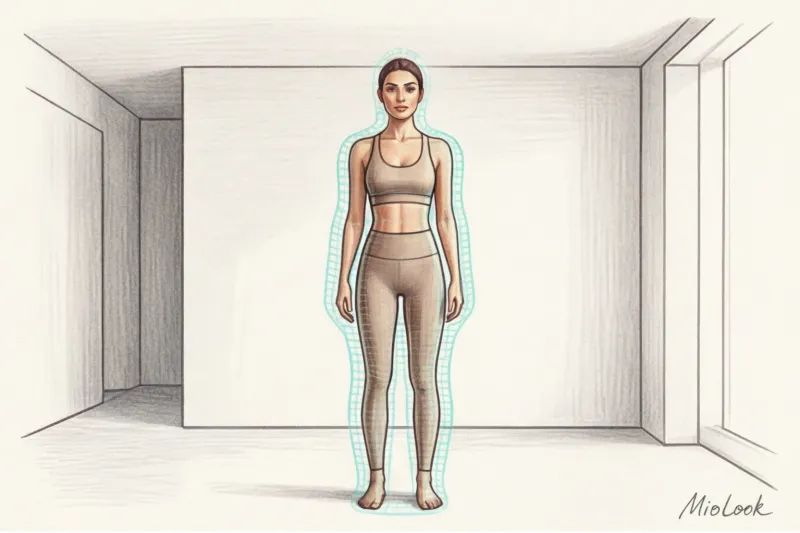
To get an accurate scan of your body, you no longer need to book appointments at specialized labs or stand in cumbersome booths. The technology is already in your pocket. Modern smartphones use a combination of photogrammetry and Lidar sensors (a technology that measures distance using light), which can create a millimeter-scale map of the terrain.
The process of creating a digital twin takes about two minutes. You position the phone at the desired angle, rotate it a few times in front of the camera, and the algorithm generates a 3D model. The most valuable feature here is the ability to integrate the resulting data into styling platforms. For example, you can upload your parameters to MioLook smart wardrobe so that the system can more accurately select capsules to suit your unique silhouette.
3D Body Scanning Accuracy: Myths and Reality
Have you ever noticed how the tape measure slips or digs into your skin when you take your own measurements? Using a regular measuring tape at home can often lead to a measurement error of 3-5 centimeters. You tighten the tape measure just a little too much around your waist, and suddenly you can't button the pants you ordered after lunch.
A modern Lidar sensor provides an accuracy of just 2–3 millimeters. The algorithm doesn't try to flatter you or make mistakes due to a shaky hand. Technically, the scanner measures volumes more accurately than a professional tailor during the very first meeting with a client, as it eliminates human error and inconsistent tape tension.
Why the size on the tag doesn't matter anymore
Sizing is the language a brand uses to communicate with its audience. And each fashion house has its own dialect. French Haute Couture has historically been built on a narrow chest and straight lines. Italian Sartorial suggests a little more room in the hips and an emphasis on the waist. American mass-market clothing emphasizes maximum ease to ensure a garment fits as many people as possible.
"The habit of relying on the letters S, M, and L when buying luxury goods is a guarantee of disappointment. We're moving to a metric approach: purchasing based on the exact match of the product's parameters and your 3D avatar."
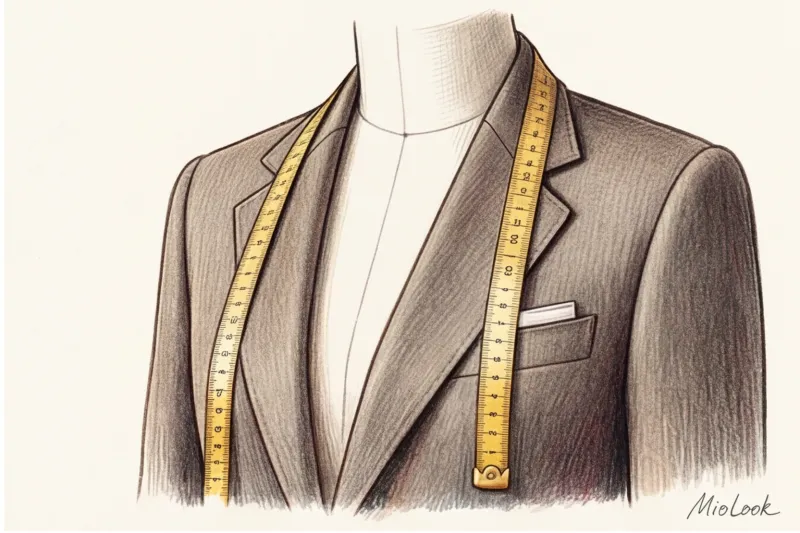
Last year, I observed how this approach is transforming the work of conservative European tailors. Italian tailors specializing in bespoke tailoring are now requesting digital scans of clients in New York and Tokyo. Using this data, a milling machine cuts a physical mannequin—an exact replica of the client's figure. A €4,000 suit is sewn on this mannequin, fitting perfectly without a single fitting.
If you want to dig deeper into how algorithms match data, I recommend reading the article MioLook AI: How to Determine Clothing Size Online Without Errors.
Access to MioLook for €0.99 — one-time payment
A smart AI stylist will select the perfect look for you, taking into account your cut and preferences.
Get access — €0.99 onceWhat a 3D scanner can't see (yet): A stylist's insider view
Now let's talk about the honest limitations of technology. There's a dangerous misconception: "A 3D scanner guarantees a perfect fit." As a practicing stylist, I categorically disagree. A scanner guarantees that a garment will fit and close properly (fit). But how it flows, gathers, or holds its shape (drape) depends on the laws of physics and careful observation, not on an algorithm.
A digital twin knows your millimeters, but it doesn't understand the density of your fabric. Imagine your ideal hip measurements. If you wear a pencil skirt made of thick wool (350 g/m² and above), it will create a rigid, sculpted silhouette that conceals any skin nuances. If you wear a skirt with the same measurements, but made of thin satin silk (19 Momme), the fabric will highlight the slightest asymmetry, highlight your underwear line, and behave completely differently dynamically.

There's also the concept of ease—the air between the body and the fabric. A designer might have intended a jacket to be oversized, adding 15 centimeters to the chest measurement. The scanner might tell you to buy a size 38 to maintain this fit. But if you've been accustomed to wearing clothes that fit your body your whole life, this jacket will feel baggy. The algorithm doesn't take your psychological habits into account.
How to properly prepare for a 3D body scan at home
If you decide to digitize your measurements, the results will depend on the quality of the source data. Technology is smart, but it can't read minds through bulky sweaters.
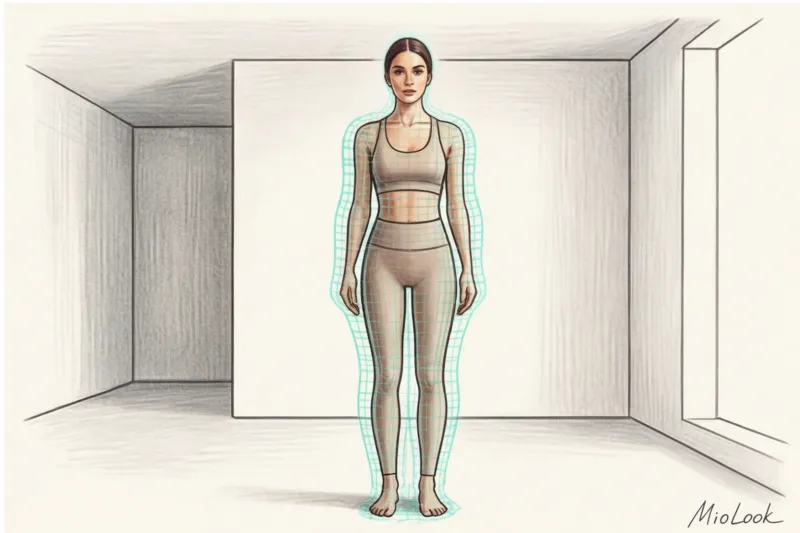
- Choice of clothes: Use a base layer that's as form-fitting as possible without being too constricting. Thin, seamless leggings and a non-push-up top are ideal. Tight shapewear will distort your actual measurements, and later-ordered clothes made from non-stretchy fabrics simply won't fit.
- Lighting and background: Avoid harsh side shadows, which the algorithm might mistake for dents in the body. Stand in front of a window (natural light) against a plain wall.
- Posture and psychology: Stand up straight, keep your shoulders down, and breathe naturally. Don't suck in your stomach! This is the most common psychological trap. If you scan yourself while taking a deep breath with your abs pulled in, pants bought to that measurement will dig into your waist with every step.

Ready to get started?
Try the MioLook plan for free—no commitments required. Create your perfect capsule in just a few clicks.
Get access — €0.99 onceWardrobe Investments: How a Digital Twin Saves Money and Stress
In the investment dressing philosophy, we often use the cost-per-wear metric—the cost of a single outfit. When you buy a €1,200 tuxedo jacket, you want to wear it for decades. But if the armholes are a bit tight or the waist button is a bit tight, the garment will just hang in the closet. Its actual cost per outfit will be €1,200.
Having an accurate 3D scan at hand gives you confidence when purchasing high-end items on international platforms (such as Farfetch or Mytheresa), especially when returns involve taxes and complex logistics.
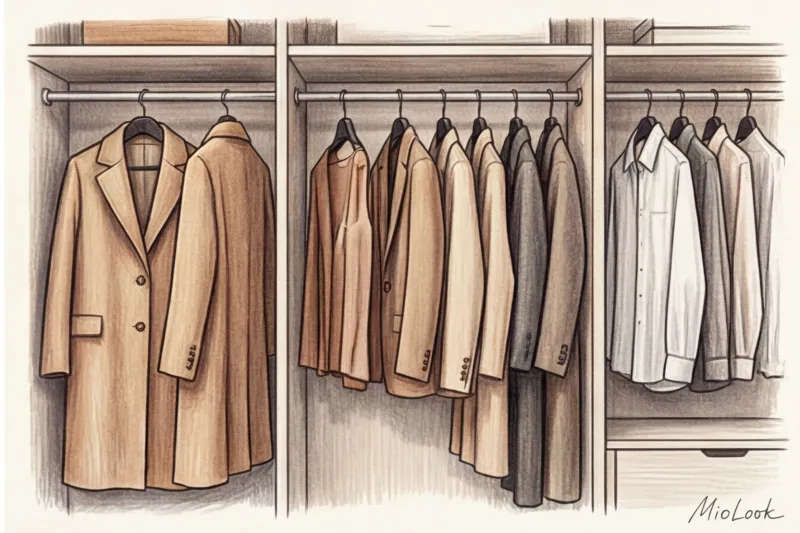
You stop buying five compromised €100 jumpers that fit "okay" and invest €500 in one perfect cashmere sweater, knowing its proportions will mathematically match your body structure. This is the foundation of conscious consumption.
Checklist: Smart Online Shopping Algorithm Using 3D Scanning
To make sure technology actually works for your wardrobe, rather than just taking up phone memory, make it a system:
- Update your avatar: Create a new accurate scan every six months or whenever your weight changes by more than 3 kilograms.
- Sync your data: Upload parameters to aggregators or applications (for example, in MioLook for image generation ) to filter out obviously unsuitable cuts.
- Check the fabric composition: If the algorithm recommends a garment that fits perfectly, make sure it contains at least 2-3% elastane or is bias-cut. For 100% heavy cotton or wool, always allow for an extra 2-3 centimeters of ease.
- Rate the design: Ask yourself, "Should this item fit tightly or loosely?" The algorithm gives you numbers, but you make the final decision about style.
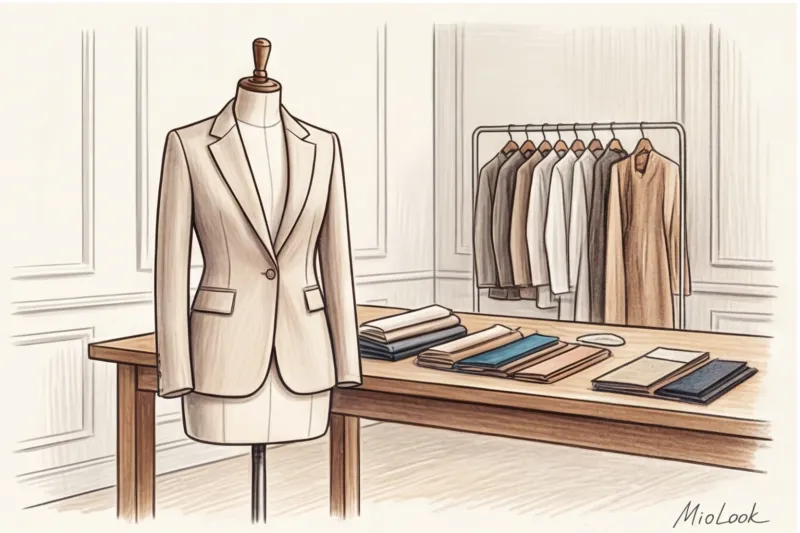
3D scanning technology has made huge strides, freeing us from the tedious task of measuring tape and the frustrations of fitting rooms. But remember: the perfect fit is born from the intersection of mathematical precision and a keen understanding of texture. Leave the tedious number crunching to algorithms, and let you choose how fabric will accentuate your individuality.