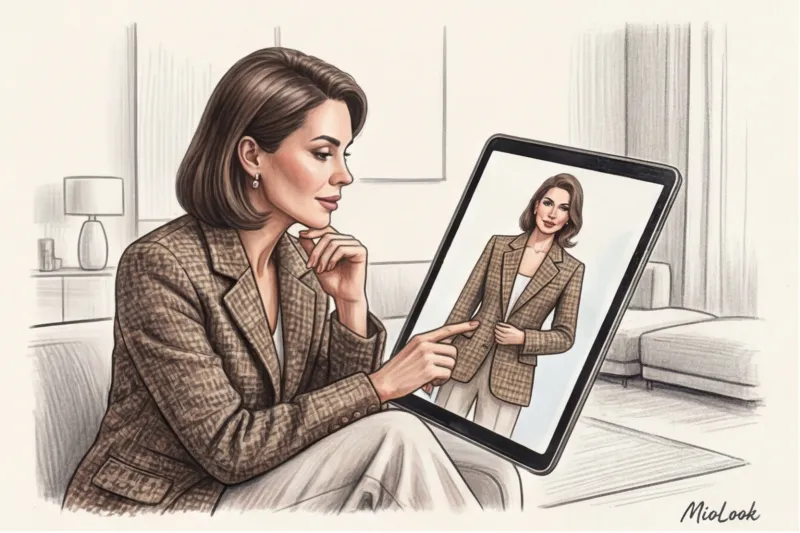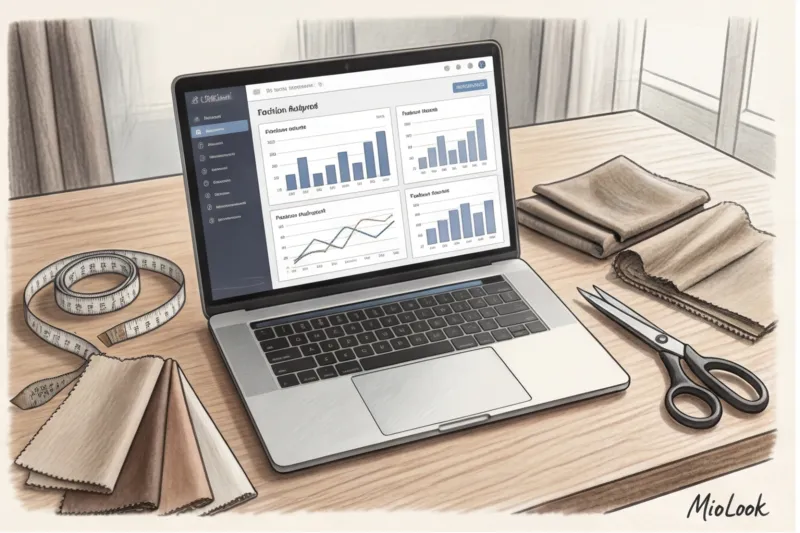
You know what I've been hearing from clients more and more often over the past year? "Olena, I created this look on Pinterest, where can I buy a similar dress?" I look at my smartphone screen and realize: nowhere. Because the laws of gravity in our physical universe work completely differently than they do in an algorithm's head.
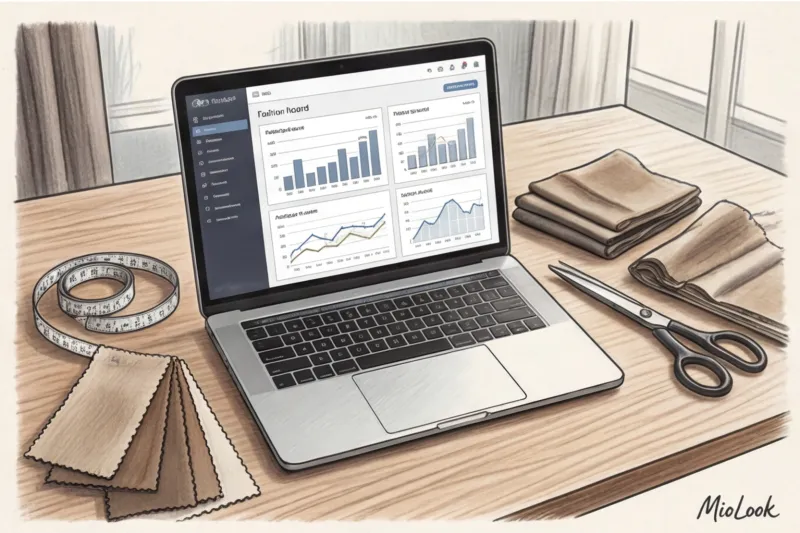
Just a couple of years ago it seemed that neural networks and clothing design — it's a story about glowing pixelated dresses and NFT sneakers worth thousands of euros. But the hype died down. If in 2022 the industry was playing in virtual worlds (we covered this in more detail in our The complete guide to fashion tech in 2024 ), today the focus has shifted to the rigorous, pragmatic B2B sector. Algorithms no longer try to dress our avatars—they help us sew real clothes that fit perfectly on real women.
Neural networks and fashion design: the end of romance or a new era?
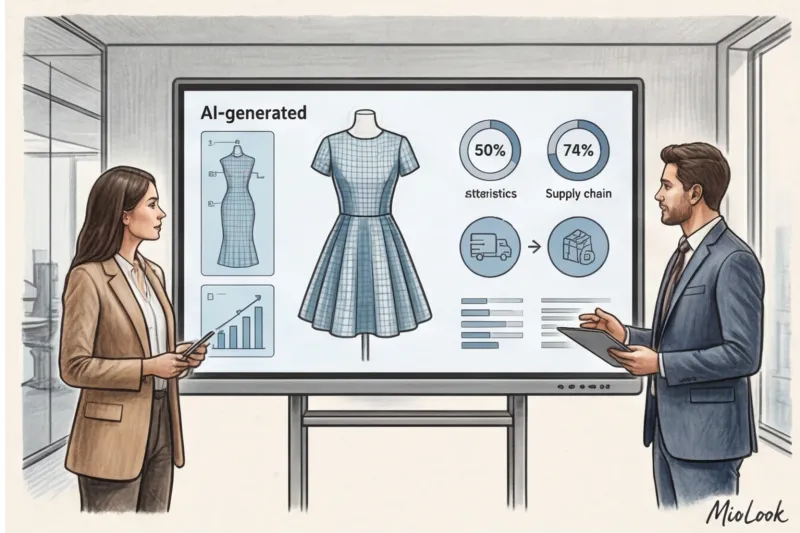
According to a large-scale report McKinsey State of Fashion (2024) 73% of fashion brand executives consider generative AI their top priority for the coming years. But they're not investing in pretty pictures for social media. They're pouring millions of euros into optimizing supply chains and reducing overproduction.
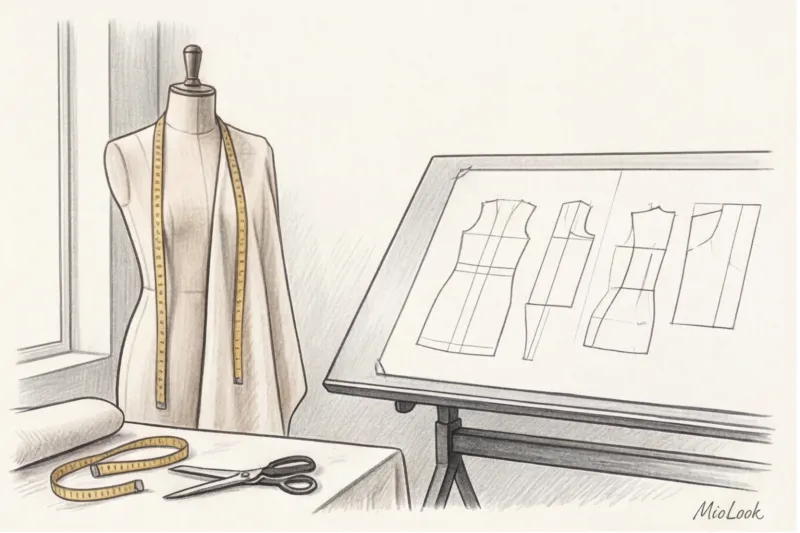
Over 14 years of working as a personal stylist, I've observed how mass-market brands' patterns have evolved. Previously, a typical mid-range jacket was tailored to fit an average mannequin. If you had a non-standard figure, buying a basic garment became a quest. Today, the integration of artificial intelligence has transformed clothing design from pure creativity into precise mathematics.
A common myth holds that neural networks will soon replace designers. The reality is completely different: algorithms will displace the routine work of patternmakers, Excel analysts, and designers, but the value of a creative director who understands the tactility of fabrics and a brand's DNA will only increase.
Your perfect look starts here
Join thousands of users who look flawless every day with MioLook. The smart algorithm takes your body shape into account.
Get access — €0.99 onceHow AI Creates Collections: 4 Steps of Integration
When you see a coat in a Zara or H&M window that suspiciously matches your current mood, know that image generation only accounts for 10% of the algorithm's work. The real magic happens in the invisible stages.
1. Predictive analytics: guess the trend before it happens
No brand wants to make 100,000 fuchsia T-shirts anymore and then sell them at an 80% discount. Software like Heuritech analyzes millions of photos on social media every day. Its AI recognizes not just "red dress," but specific patterns: collar angle, sleeve length down to the centimeter, and the texture of the material.
The algorithm can predict that in Scandinavia, a muted emerald shade on thick wool will be popular in six months, while in Southern Europe, the same color on lightweight linen will be popular. The risk of unsold stock is dramatically reduced.
2. Generating sketches and mood boards
This is where familiar Midjourney and DALL-E enter the picture. Designers no longer have to spend weeks sketching by hand. Got the idea to cross a Victorian corset with a bomber jacket? Prompt—and in a minute, the team has 40 options.
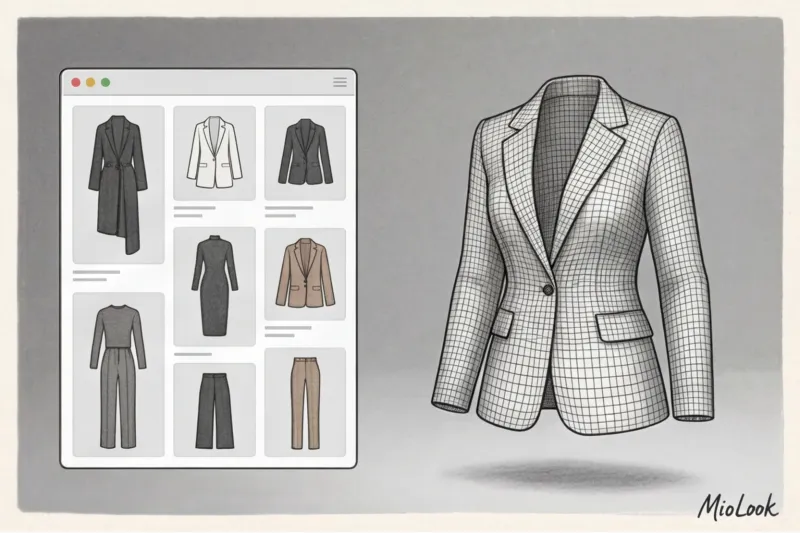
It's a fantastic brainstorming tool. But, as we'll see later, it's just a concept that requires extensive refinement.
3. Virtual patterns and 3D modeling
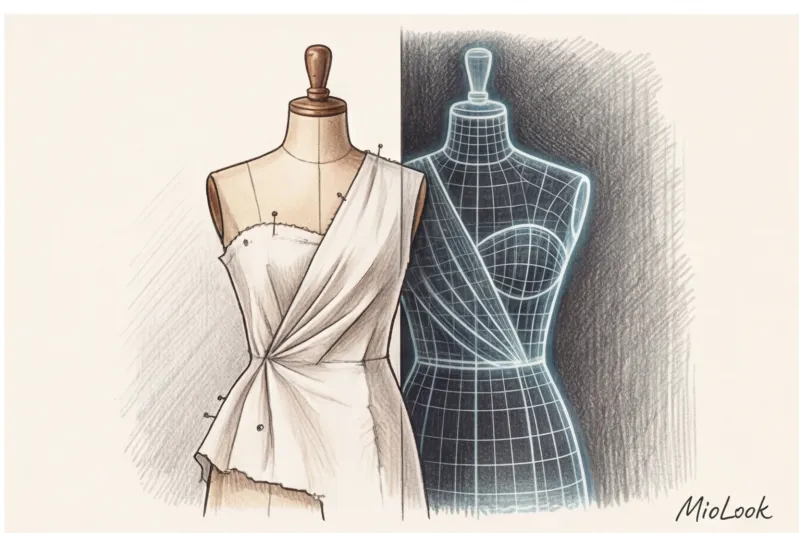
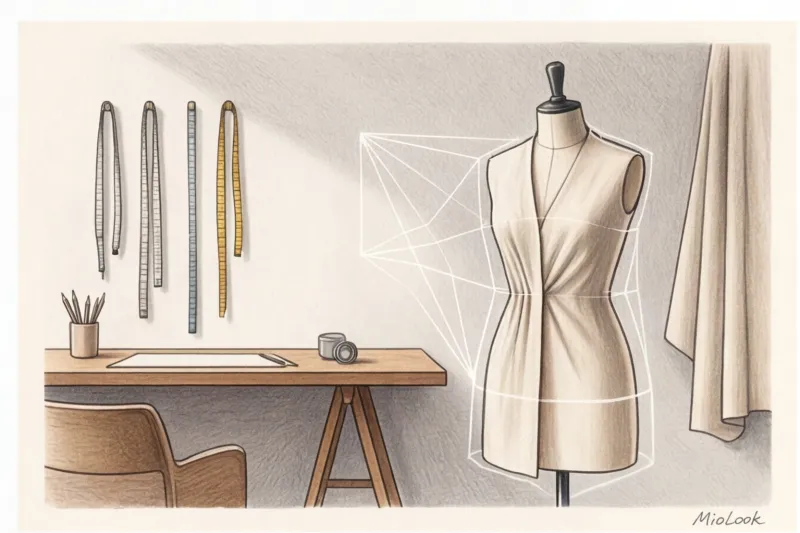
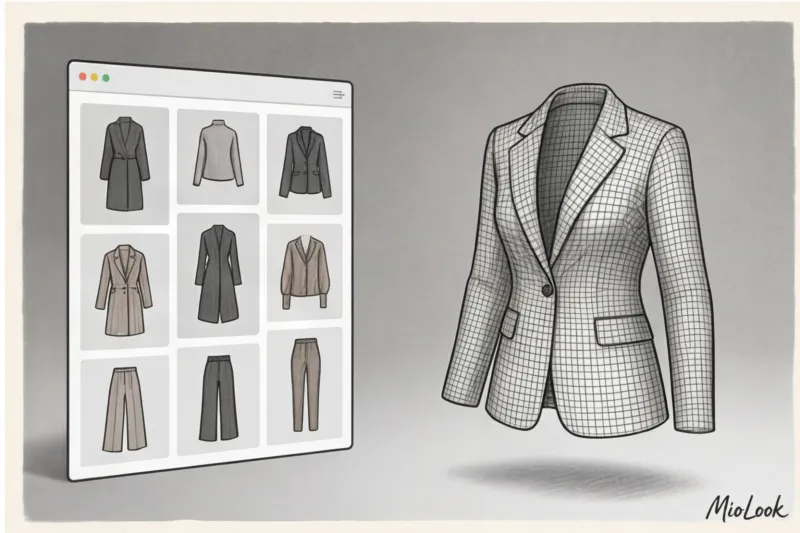
This is where the real revolution is happening. Platforms like CLO 3D and Marvelous Designer have become industry standards. The neural networks in these programs take into account physics: thread tension in the weft and warp, density (in grams per square meter), and shrinkage after washing.
Previously, the process from sketch to the first physical sample took 3-4 weeks. The fabric was cut, sewn, tried on a model, adjusted, and then sewn again. Now, precise virtual fitting of a 3D model reduces this cycle to 48 hours. The brand doesn't waste a single meter of real fabric until the pattern is perfect.
4. Optimization of cutting and production
Algorithms for automatically placing patterns (markers) on a roll of fabric work like a super-efficient Tetris. In large-scale production, even shifting a pattern by 2 millimeters can save kilometers of material.
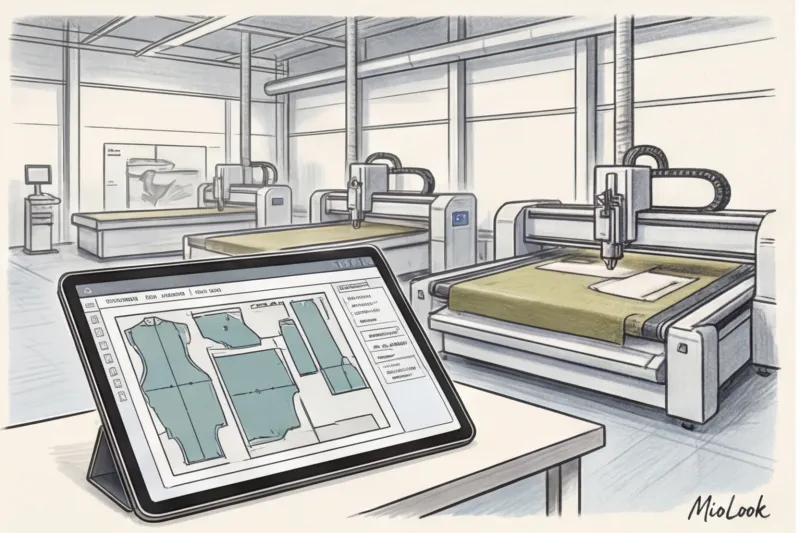
The implementation of such systems reduces fabric waste by 15–20%. This is where true sustainability, not mere marketing, lies.
The Pinterest Trap: Why Generated Dresses Are Often Unsewable
Let's get back to my client with the smartphone image. One day, a stunning woman came to me for a consultation requesting a custom-made, high-status business suit. As a reference, she brought an image generated in Midjourney: an incredible asymmetrical jacket with draping that seemed to float in mid-air.
We went to see a technologist at a premium studio. The stylist looked at the sketch and sighed: "Olena, you understand that wool doesn't lay like that?"
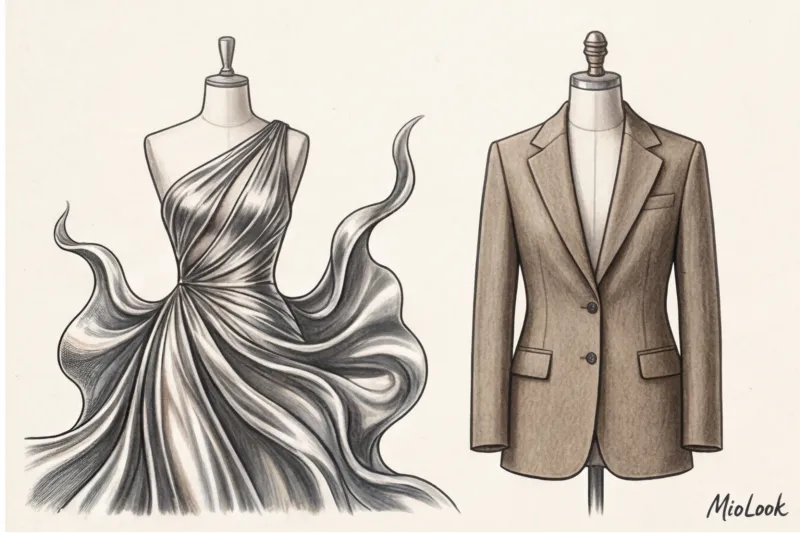
The problem with AI generators (for now) is that they draw pixels, not fibers. An algorithm can easily draw:
- A fabric that looks like heavy cashmere but flows like 19-momme silk.
- Folds that physically cannot be held without a rigid metal frame (which, of course, is not shown in the picture).
- Buttons and fasteners located where they will not withstand the strain of movement.
When trusting algorithms does NOT work: You can't hand over a crude image from a neural network to a seamstress. Between a brilliant AI concept and a finished garment, there must always be a skilled designer who understands how to translate this "magic" into the mathematics of darts, allowances, and overlapping materials.
Ready to get started?
Try the MioLook plan for free—no commitments required. Create a smart wardrobe that meets your specific needs.
Get access — €0.99 onceReal-World Cases: Who Dictates the Rules in 2024?
Mass-market giants don't use AI to entertain the public. Their goal is speed and precision. For example, the ability of brands like Inditex (Zara, Massimo Dutti) to update their product range every couple of weeks without completely losing fit quality is directly due to algorithmic pattern grading.
But the most interesting developments are happening in the niche segment. Platforms like Cala combine design, pattern development, and factory sourcing in a single AI interface. This allows young local brands with budgets starting from €5,000 to compete with large corporations. They can release a collection of basic T-shirts with a perfect fit because the software calculates the shrinkage of the cotton after washing and the percentage of elastane in advance.
The Impact of AI Design on Personal Wardrobe and Styling
How does all this inner workings of factories affect us—ordinary shoppers who just want to find good trousers?
Firstly, the problem of “undersized” and “oversized” is gradually disappearing. The ideal business wardrobe for a 30-year-old woman , I'm increasingly less likely to encounter situations where the same size M at one brand differs dramatically from another. Standards are becoming unified thanks to 3D avatars created based on real scans of thousands of bodies, not idealized mannequins.
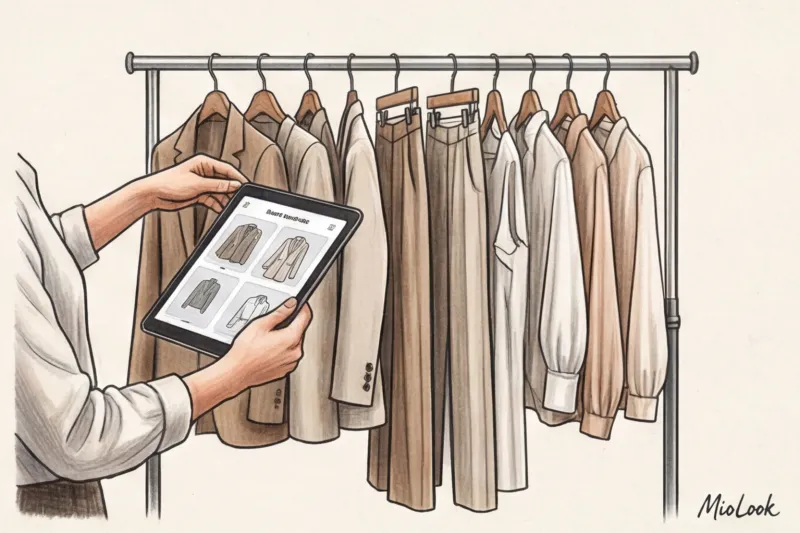
Secondly, neural networks have made a breakthrough in managing personal belongings. Ever wondered why some outfits look "expensive" even though they consist of basic items in the €50-€100 range? The secret lies in combination formulas. This is where apps like MioLook Smart wardrobe algorithms analyze your items, take into account proportions, color temperature (warm or cool) and offer ready-made capsules for every day My clients no longer have to stand for 20 minutes in front of an open closet.
A Checklist for Fashion Brands: Where to Start with AI Implementation
If you're reading this from a local brand, here's a practical B2B guide based on successful European brand cases. Don't try to generate crazy prints right away; start with the basics:
- Audit of processes and losses: Digitize your data. Where are you losing money? On slow-moving inventory, slow sample production, or a huge percentage of returns?
- Training designers in 3D software: The transition to CLO 3D pays for itself within the first six months due to savings on mock-up fabric and sample logistics from the factory.
- Testing the virtual fitting room: According to a study by Vogue Business Index, integrating AR fitting rooms and AI size recommendations on a website reduces the return rate in e-commerce by an average of 30%. You can learn more about implementing these tools in our article about virtual fitting of business clothes.
The Future of Industry: Will Algorithms Replace Humans?
Let's be honest. Neural networks are an incredibly powerful tool in fashion design. It's like the Singer sewing machine was to the hand needle in the 19th century. Did it speed up the process? Yes. Did it kill the tailoring profession? No, it took it to a new level.
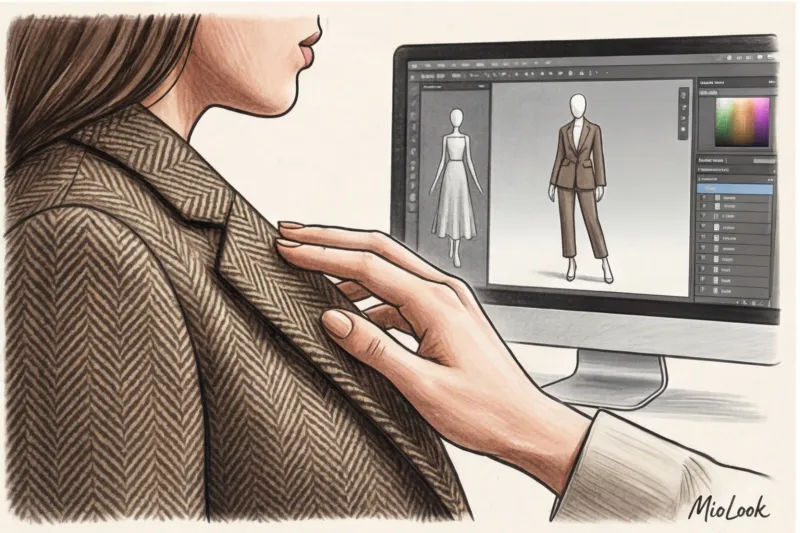
AI can calculate the perfect armhole curve down to the millimeter. But the algorithm is completely blind and insensitive when it comes to tactility. The machine won't tell you whether this wool will itch in the cold. It lacks empathy and doesn't understand how a woman wants feel yourself in these clothes before an important interview.
Technology will take away the boring stuff: calculations, shrinkage, logistics, drawings. And we, stylists, designers, and clients, will be left with the most interesting part—the art of self-expression. Invest in technology, optimize your routine, but never lose the human touch when it comes to style.