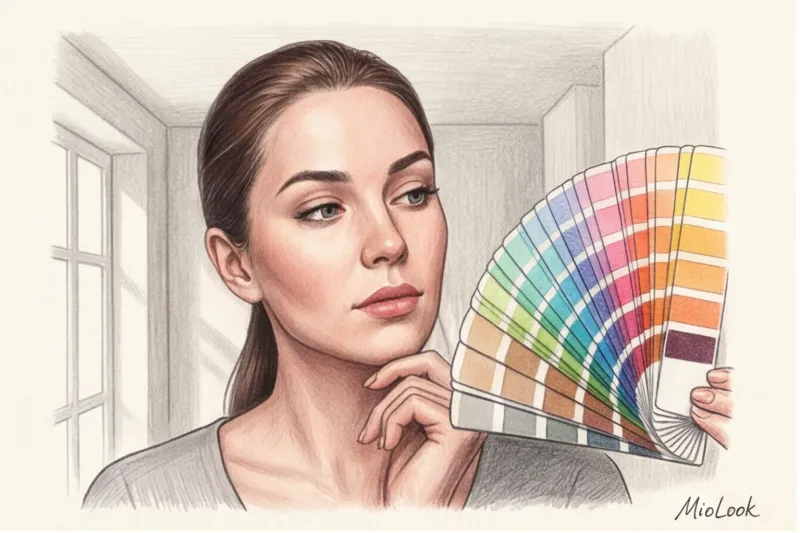
In my 12 years as a personal stylist, I've heard this phrase hundreds of times: "One app said I'm a Summer, another said I'm a Winter, and my mom's convinced I just look good in black." Sound familiar? When it comes to choosing a palette, we tend to trust anything: magazine tests, friends' advice, or intuition. But today, the industry has come a long way, and color type determination by a neural network is no longer just a fun five-minute test. We've covered how algorithms are changing the industry in more detail in our The complete guide to fashion tech in 2024.
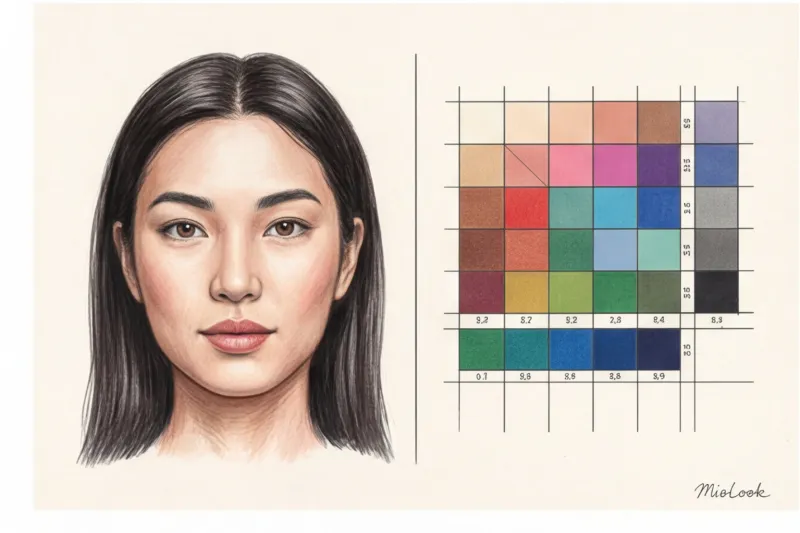
Many people still believe that a living person with a collection of colorful scarves (draping) is always more accurate than a soulless machine. As a practitioner, I can confidently say: this is not true. With ideal input data, mathematics trumps subjective perception. Let's explore how exactly artificial intelligence "sees" your appearance, why it sometimes gets it wrong, and how these technologies can help you stop buying things that make you look older.
How color type determination works via a neural network: Behind the scenes of the algorithms
Most users think that a neural network simply compares your selfie with thousands of other people's photos and looks for matches. In reality, the process is much more pragmatic. Modern computer vision algorithms don't understand the concept of "Beautiful Autumn Girl." They work with RGB (Red, Green, Blue) and LAB (Lightness, A-axis, B-axis) color spaces.
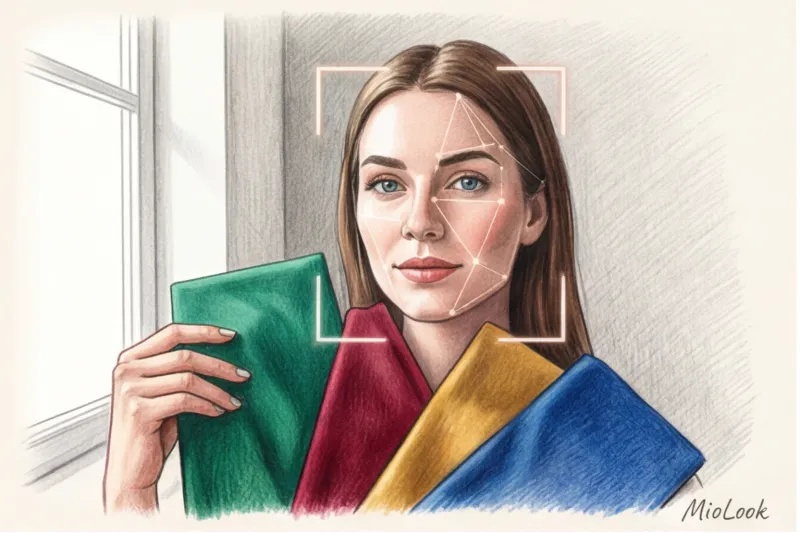
When you upload a photo, the algorithm scans 50 to 100 key points on your face. It isolates skin pixels on your cheeks, forehead, and chin, separating them from pigmentation or shadows. It then extracts the exact HEX code of your irises and hair roots (roots, as the ends are often faded or dyed). After that, the pure math begins—calculating contrast and temperature.
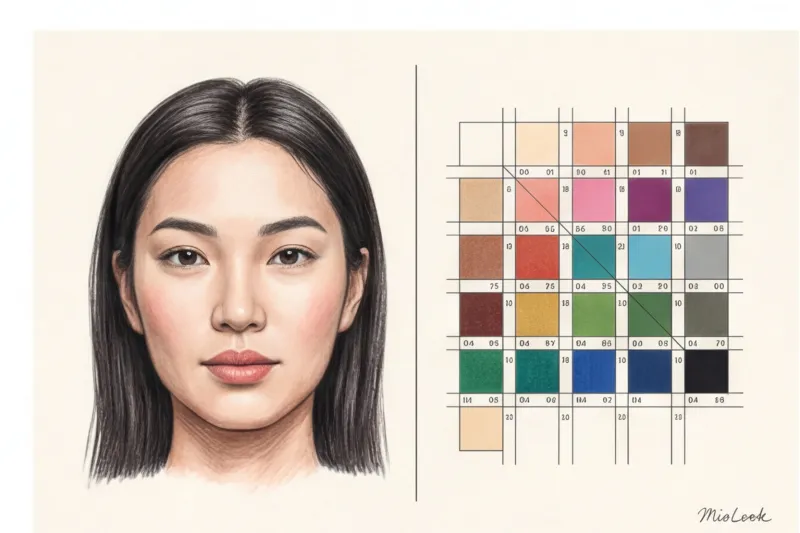
AI doesn't believe in the classic "four seasons" theory (Winter, Spring, Summer, Fall)—it's too limited. Advanced neural networks use 12- or even 16-type color systems that take into account three main characteristics: temperature (warm/cool), saturation (pure/muted), and depth (light/dark).
Your perfect look starts here
Join thousands of users who look flawless every day with MioLook.
Get access — €0.99 onceHuman Eye vs. Machine Vision
It's a common belief that a stylist in a studio sees the "real you." But the human eye is easily deceived. There's a physical phenomenon called simultaneous contrast. If you have a slight redness on your face (rosacea), the human eye automatically "mixes" a green tint into the perception of your eyes or hair to balance the image. Machine vision isn't susceptible to this optical illusion. It isolates every pixel.
Moreover, did you know that a colorist's eyes physically get tired? After 3-4 hours of working with bright test patches, human color perception becomes dull (a phenomenon called metamerism). AI, however, analyzes the thousandth photo with the same mathematical perfection as the first.
The Biggest Mistake: Why AI Sometimes Gets Wrong Results
If neural networks are so good, why do they sometimes produce completely different results for the same person? There's a golden rule in machine learning: Garbage in = Garbage out (Garbage in, garbage out).
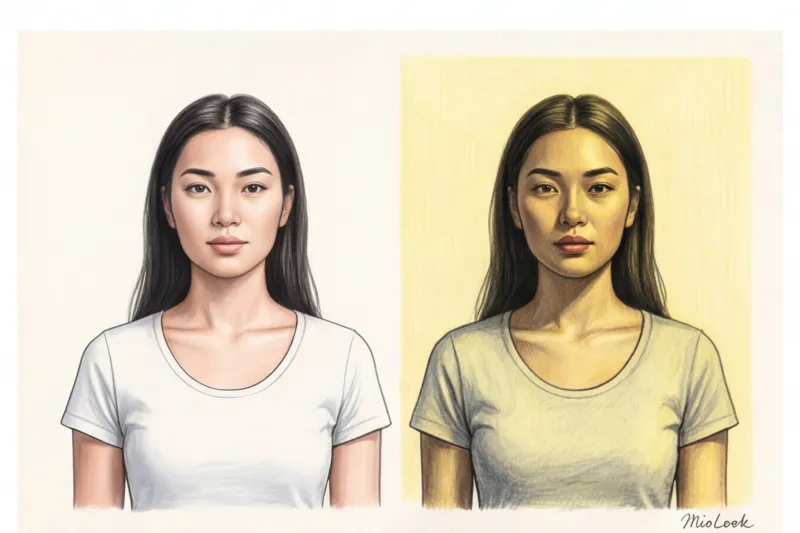
One of my clients, Anna, had been buying terracotta and mustard shades for years, considering herself a "Warm Autumn." She sent me a photo for online analysis: yellowish skin, a warm sheen to her hair. When I asked her to retake the photo by the window, it turned out she was a classic "Cold Winter" with porcelain skin. The first photo was taken in the bathroom under incandescent bulbs with a color temperature of 2700K (a very warm yellow). The bulb literally cast an "Autumn" filter on Anna.
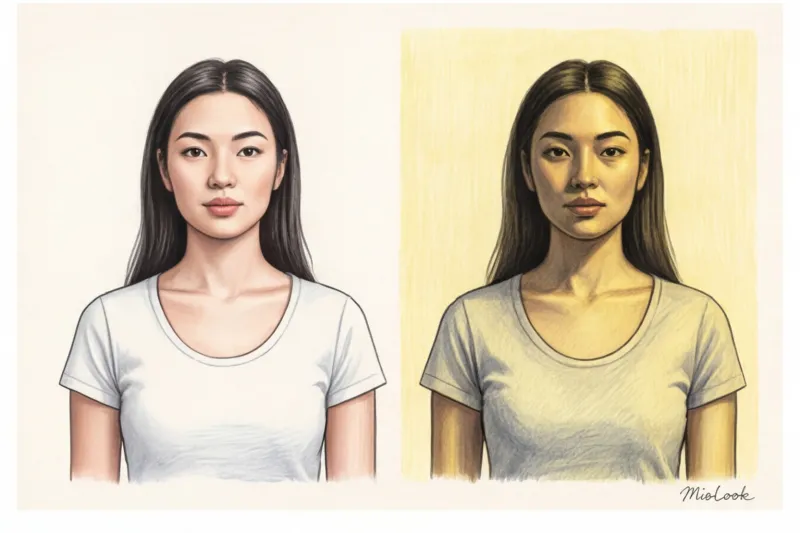
The second problem is the insidiousness of modern smartphones. The front-facing cameras of iPhones and high-end Android devices employ aggressive post-processing. Algorithms like Smart HDR automatically even out skin tone, add a "healthy" glow, and blur under-eye circles. Beauty filters mercilessly destroy your true microcontrast, which is what AI is supposed to use to determine your true color depth.
Instructions: How to Take the Perfect Photo for a Neural Network Colorist
For an algorithm to work with 99% accuracy, you need to provide it with a perfect "source." Here's a rigorous step-by-step checklist I send my clients before using digital analysis tools:
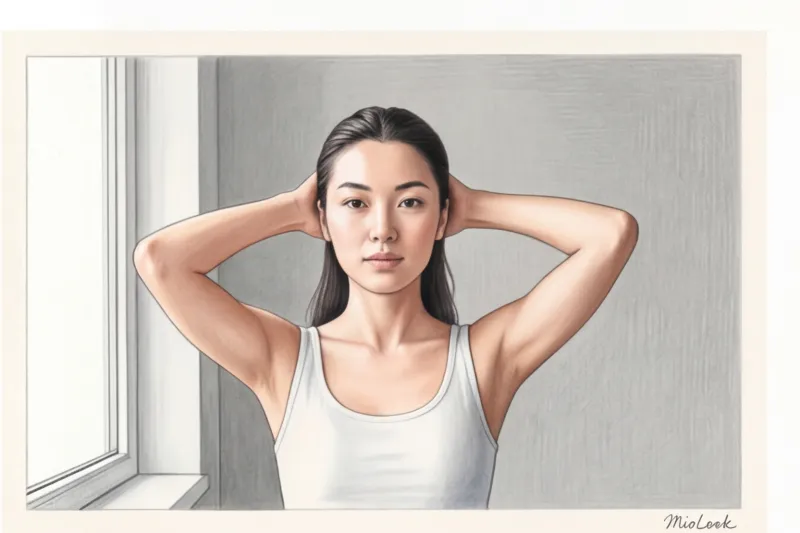
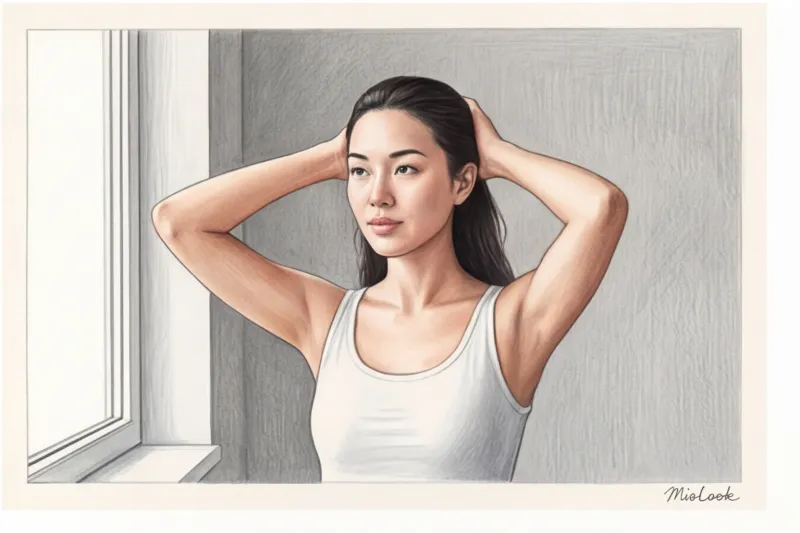
- Light: Stand facing a window during the day (ideally, a north-facing one). Avoid direct sunlight, as it creates harsh shadows and washes out your face. The light should be soft and diffused.
- Face: Absolutely clean. Remove foundation, concealer, and any remaining mascara. Let your skin sit for 15 minutes after washing to allow any redness to fade.
- Hair: If your hair is dyed (even just tinted), pull it back into a tight, sleek ponytail or hide it under a white headband. The algorithm should only evaluate your skin, eyes, and eyebrow/root color.
- Clothes and background: Wear a white or neutral gray T-shirt that reveals your collarbones (your neck should be visible). The background behind you should be neutral, without bright wallpaper or furniture that will reflect color onto your cheeks.
- Camera: Disable ALL filters, HDR, and enhancements in your camera settings. Wipe the lens.
Access to MioLook for €0.99 — one-time payment
A smart AI stylist will select the perfect look.
Get access — €0.99 onceThe Textile Trap: What AI Can't Yet Take Into Account
So, you've got your result. The neural network has told you that your ideal color is a deep emerald. You happily order an emerald dress online, put it on, and... look tired and sickly. What's wrong? Was the neural network wrong?
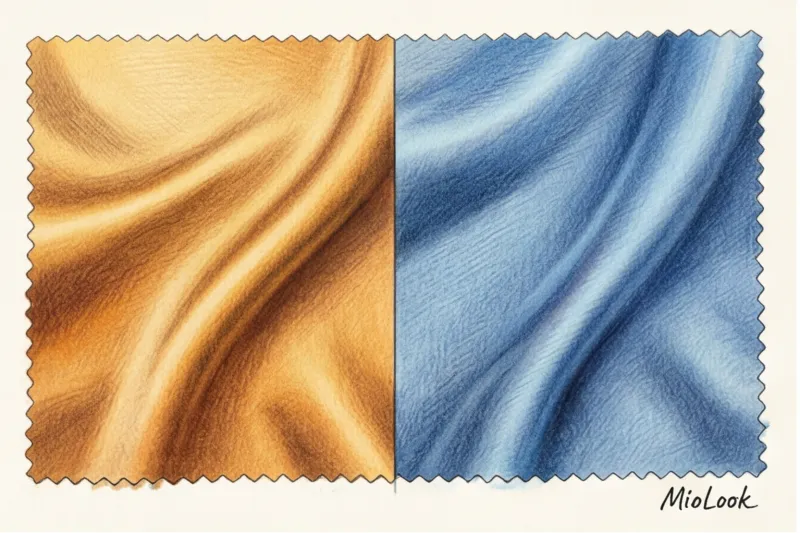
No, this is where tissue physics comes into play, which no algorithm can yet predict at the moment of palette generation. The same color behaves radically differently depending on the texture of the material.
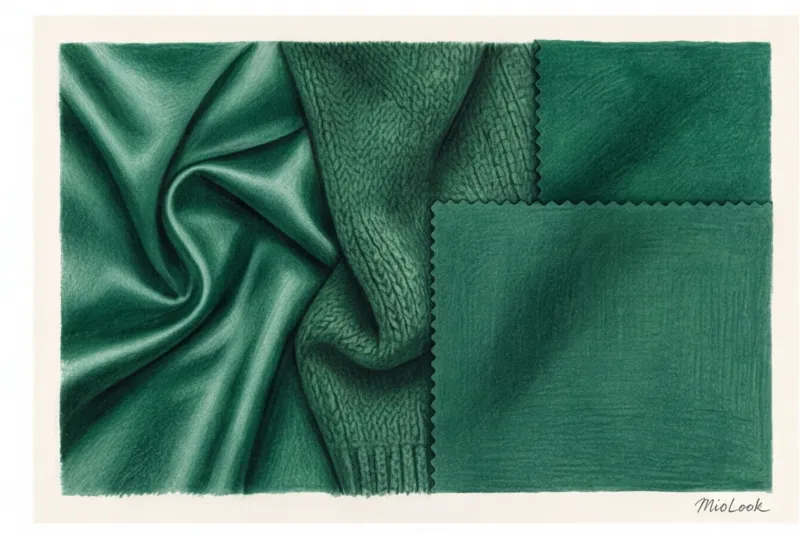
Smooth, glossy fabrics (silk, satin, viscose satin) act like mirrors. They reflect light onto your face, making the color more vibrant and bright. An emerald silk blouse for €150 will illuminate the face of a "Winter" model. But the same hex color code printed on cheap, loose polyester or matte linen (for example, a €30 summer dress) will absorb the light. The color will become dull, flat, and cast a gray shadow on the face.
Knowing your AI palette is just the first step. This is a limitation of the technology that you should be aware of: the neural network gives you color , But invoice You should choose the right contrast level for yourself. The higher your natural contrast (dark hair, light skin), the smoother and denser the fabrics you need to convey your shades.
The Economy of Color: How AI Coloristics Solves Wardrobe Problems
Today, determining one's color type isn't just a social media pastime; it's a cost-saving tool. According to the extensive McKinsey State of Fashion (2024) report, up to 70% of online clothing returns are due to two reasons: "the fit isn't right" or "the color doesn't suit me in person."
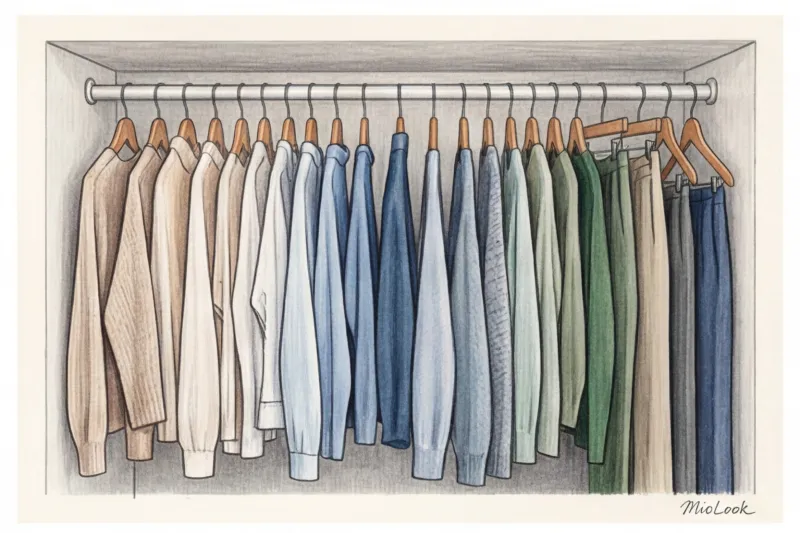
Have you ever thought about how much money is hanging in your closet in the form of clothes with tags? An €80 Massimo Dutti sweater that "seems nice, but somehow I look sick in it." A €40 Zara blouse that's "too pale." This is the price of not knowing your color palette.
When the algorithm accurately identifies your 12-season palette, the magic of a wardrobe system happens. All colors within a single seasonal palette (for example, Soft Summer) have the same saturation and temperature characteristics. This means they are automatically combined with each other You no longer have to wonder if a dusty pink top will go with gray-blue trousers. If both shades are in your palette, they'll make a perfect capsule ensemble. You buy less, but wear more often.
Ready to get started?
Try the free plan with no commitments and full access to basic features.
Get access — €0.99 onceIntegrating an AI colorist into your daily routine with MioLook
So, you've taken the perfect daylight photo and created your palette. What's next? Carrying around paper fans with flowers, like you did in the 90s, to hold them up to your clothes in the store, is no longer necessary.
The modern approach is to digitalize your wardrobe. Using the "smart wardrobe" feature in MioLook , you can upload your items and filter them based on your color type. The app's algorithms don't just store photos of your clothes; they can analyze new purchases for compatibility with your personal palette.
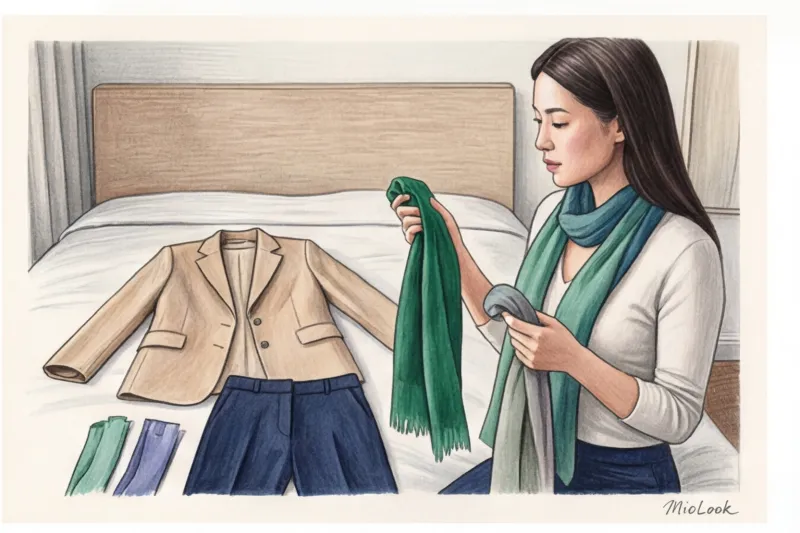
For example, you're looking for a smart-casual look for the office on Friday. The app's AI assistant will analyze your uploaded items, filter out shades that make you look tired, and suggest color combinations guaranteed to brighten your complexion. This takes the technology from theoretical to practical, everyday use.
Ultimately, a neural network colorist isn't a magic wand that will solve all your style problems without your intervention. It's a highly precise mathematical tool. Give it a high-quality, unfiltered photo, apply the resulting palette with the right fabric textures, and you'll forever forget about the "closet full, but nothing to wear" problem.