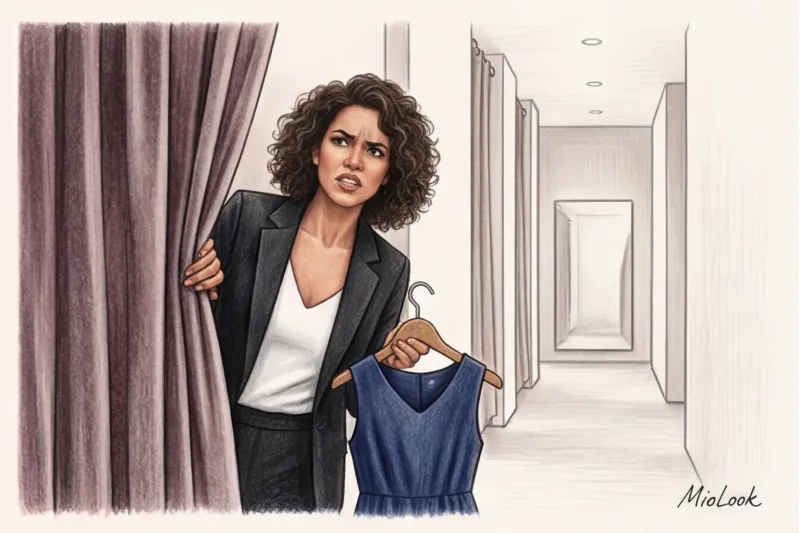
One of my clients, a top executive with an iron grip on business, once nearly burst into tears in the fitting room of an expensive boutique. She left a stunning pair of perfectly tailored trousers on the ottoman and simply walked out. The reason? To figure out what to wear with them, she would have to undress and re-dress four more times, pulling on turtlenecks that shocked her under the merciless neon lights. I call this "abandoned fitting room syndrome." This is where stores lose millions.
As a practicing stylist and colorist, I constantly see this disconnect: shopping should be a joyful experience, but physically, it often turns into a grueling workout. And that's where smart mirrors in a clothing store They're not being introduced to transform a boutique into a cyberpunk game, but to eliminate the main obstacle between a customer and a purchase—physical friction. We discussed this evolution of customer experience in more detail in our The Complete Guide to Omnichannel Retail.
What are smart mirrors in clothing stores and how do they work?
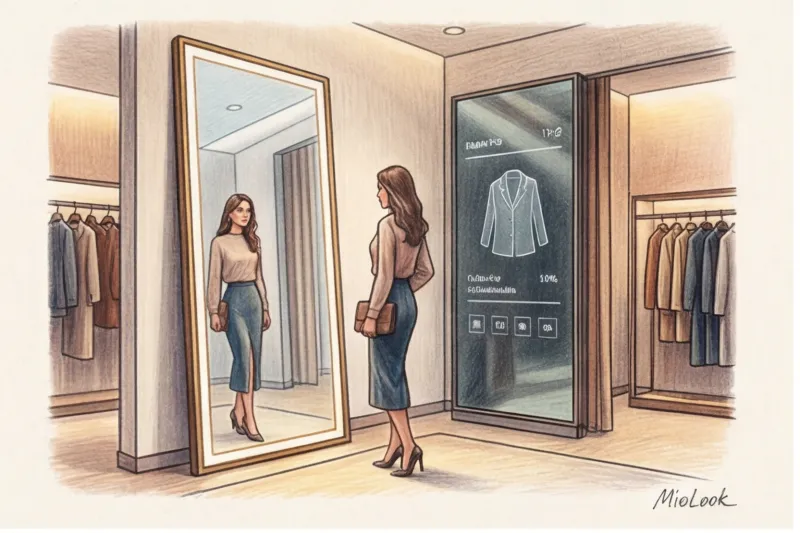
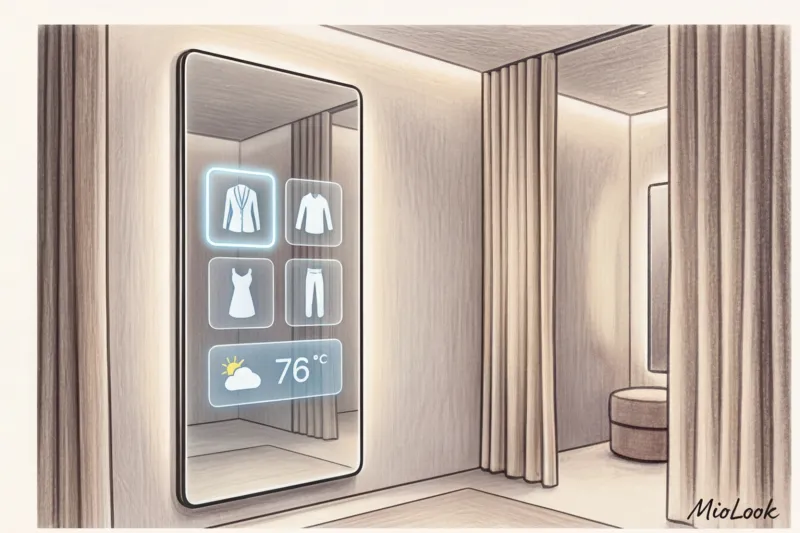
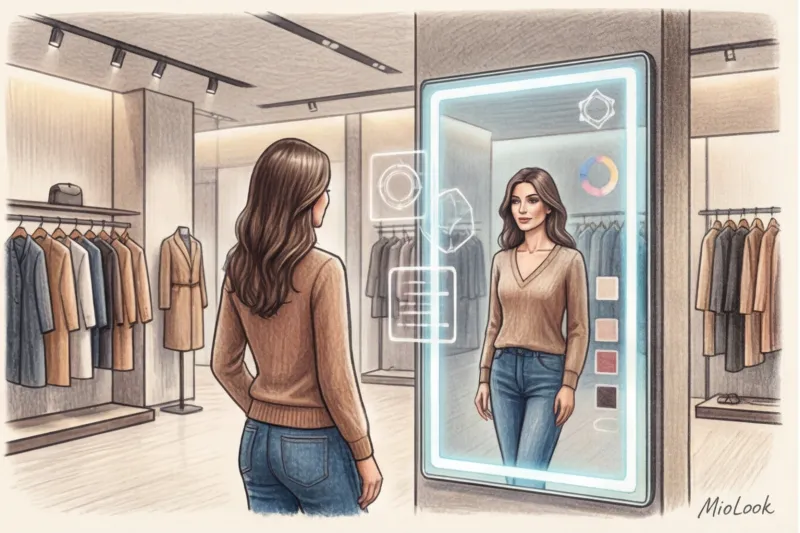
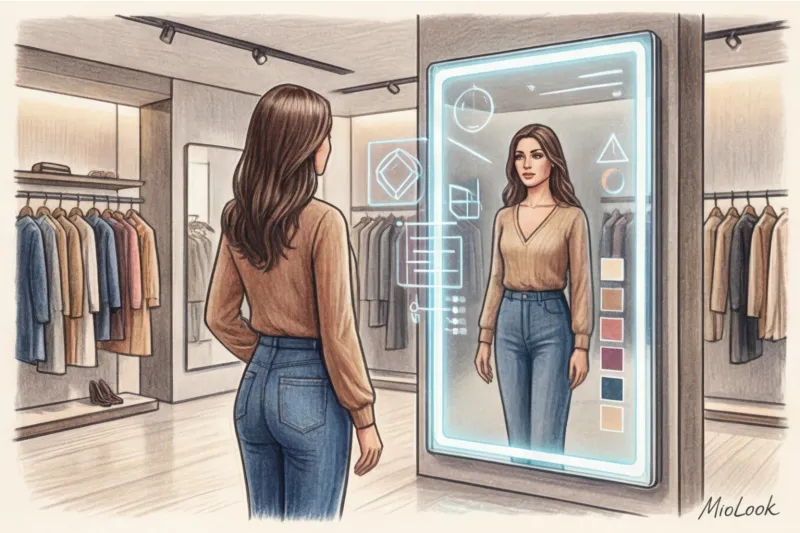
Let's forget the complex IT terms for a moment and look at technology through the eyes of a customer. You pick up a silk blouse from the rack, step into the fitting room, and the seemingly ordinary mirror suddenly comes to life. Information about the item, available sizes in the store, and styling options appear on the glass surface.
How does this magic happen? The secret lies in RFID (Radio Frequency Identification) technology. These are microscopic chips embedded in the tag of each item. The fitting room is equipped with a scanner that instantly identifies exactly what you've brought.
Then AR (augmented reality) comes into play. If the mirror supports virtual projection, the built-in camera scans your figure, and the software superimposes 3D models of clothing over your reflection in real time. When I first tested this system at Rebecca Minkoff's New York flagship, I was impressed not by the image superimposition itself, but by how quickly the system scales the garment to fit your body proportions as you move.
For businesses, this technology is directly related to data analysis. You can read about how algorithms process these arrays in the article about analytics for the fashion business.
AR try-on solves retail's biggest pain point
According to the National Retail Federation, over 60% of abandoned purchases in physical stores occur in the fitting room. People enter enthusiastically, spend 20 minutes there, and leave empty-handed and in a bad mood.
The problem isn't that sales assistants are bad. The problem is that the human psyche and body have a limit to their patience when it comes to choosing clothes.
Access to MioLook for €0.99 — one-time payment
A smart AI stylist will select the perfect look based on your virtual wardrobe.
Get access — €0.99 onceAbandoned Fitting Room Syndrome and Customer Burnout
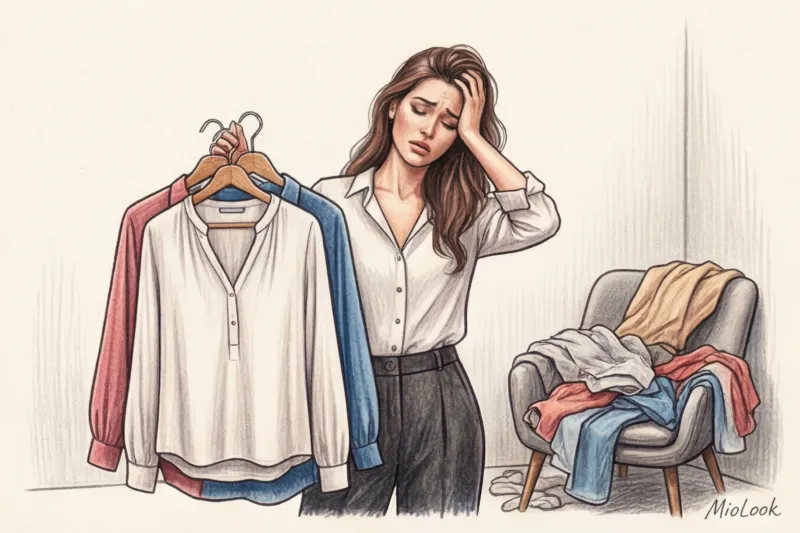
Let's do the math. To choose the perfect jacket, you need to try on three different styles. Each style comes in two colors. That's six outfit changes total. In winter, you also have to remove heavy boots and a bulky sweater, and deal with static electricity that ruins your hair. It's real physical labor.
The smart mirror is a game changer. You put it on one A basic jacket to check the shoulder fit and sleeve length (something AR can't yet accurately convey). Then, without taking it off, simply switch colors on the screen. You try on 10 shades in 15 seconds. You don't get tired, your hair is intact, and your stress level drops to zero.
Cross-selling without the pressure: the stylist inside the mirror
In 12 years of working in the fashion industry, I've learned one hard and fast rule: direct upselling doesn't work anymore. When you're standing in a fitting room and a sales associate shouts through the curtain, "And with those €80 pants, get our new handbag!" it only irritates you and makes you want to leave.
The smart mirror algorithm works differently—it shows context. You try on pants, and the finished product unobtrusively appears on the screen. business capsule clothing "Our customers most often pair this viscose top and loafers with this style." You can see for yourself on the screen how harmonious it all looks. No pressure. As a result, the average order value increases by 20-30% simply because the customer was offered a visual solution rather than being forced to buy a product.
Why Shoppers Love It: An Image Maker's Perspective
Technology for technology's sake is dead. Mirrors only work when they address real human complexes and inconveniences.
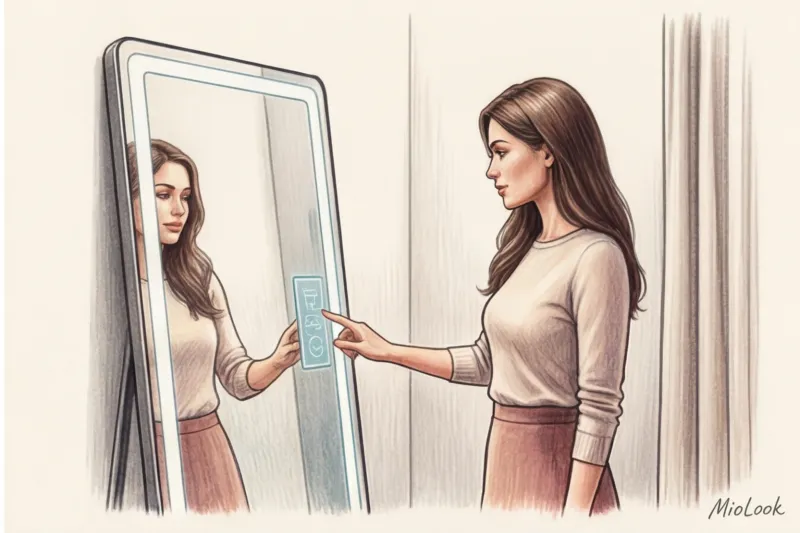
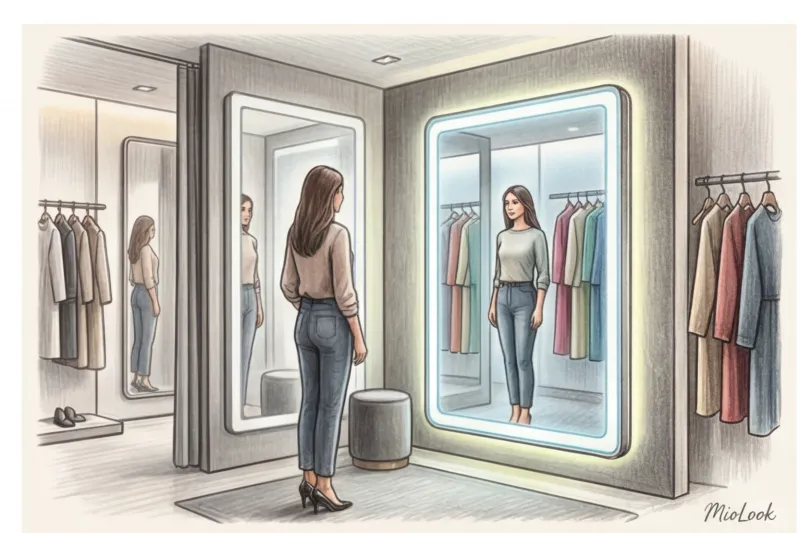
1. Honest and controlled lighting. As a certified colorist, I hate the standard lighting found in mass-market stores. Cheap fluorescent lamps drain all the warm pigments from the skin, highlight under-eye circles, and distort clothing colors (emerald green looks like a muddy swamp). Smart mirrors allow the client to choose the lighting mode: Office (cold light of open space), Evening (dimmed restaurant lighting) or Daylight (natural sunny). According to PANTONE, color accuracy increases purchase confidence by 40%.
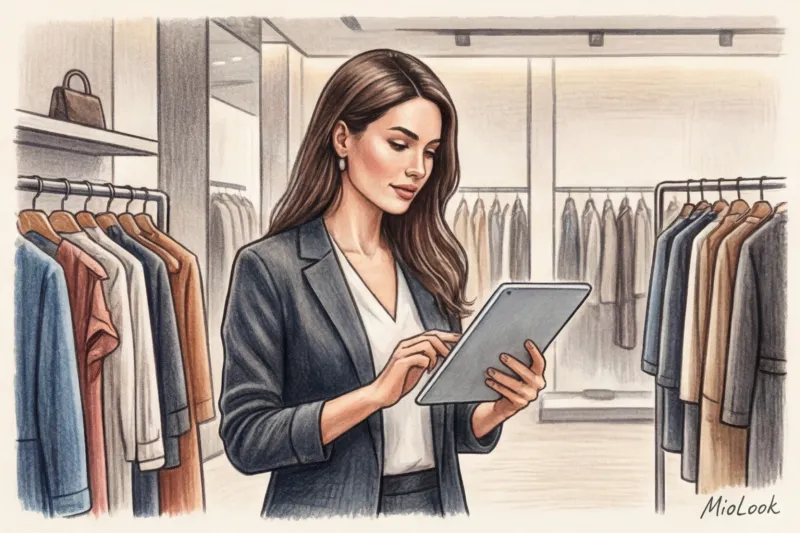
2. Salvation for introverts. For many of my clients, having to open the curtain half-naked and ask the salesperson to bring them a size M instead of an S is incredibly stressful. The interactive panel allows you to click the "Bring a different size" button, and the consultant receives a notification on their tablet. Minimizing social contact while maintaining VIP service.
The Myth of Virtuality: Why Smart Mirrors Won't Replace Fabric
A common fear among brand owners is that "if we implement the perfect AR try-on experience, people will stop coming to brick-and-mortar stores." This is a profound misconception.
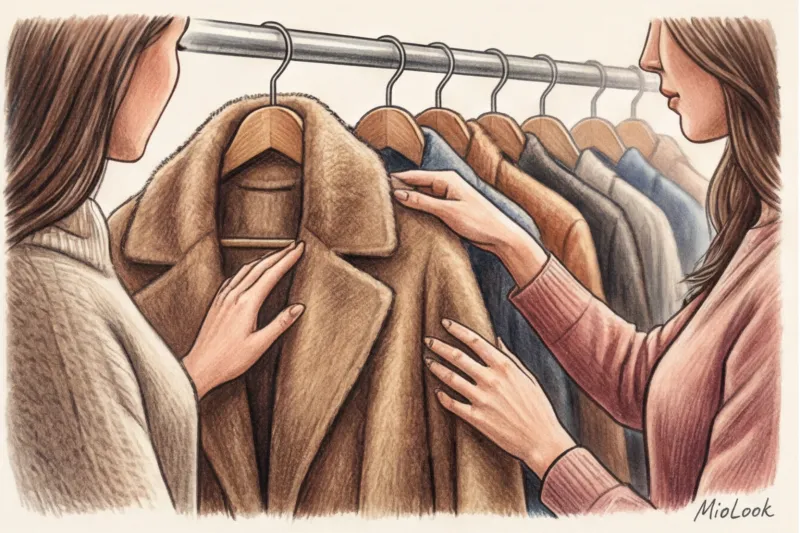
I love debunking the myth that technology will replace everything. The truth is, consumers will always buy with their hands. If we're talking about the mid-up and premium segments, then status wardrobe of a female executive It's built on textures. No 3D model can convey the weight of thick silk on the shoulders, the softness of a wool blend with 10% cashmere, or the way 180 g/m² cotton holds the shape of a collar.
A smart mirror isn't a replacement for trying on clothes. It's a powerful visual filter. We filter out unsuitable styles and shades in AR in two minutes, but physically try on only two or three finalists to feel the fabric against our skin. AR sells style and color, while physical clothing sells comfort and quality.
Of course, there are situations when AR try-ons are useless. If you have an unusual figure, severe hip asymmetry, or a pronounced lower back bend, the virtual projection will either fit crookedly or, conversely, too perfectly, hiding any imperfections. In such cases, you can't trust the screen 100%.
Your perfect look starts here
Join thousands of users who look flawless every day by managing their wardrobe with MioLook.
Get access — €0.99 onceFrom Wow Effect to ROI: Metrics for the Fashion Business
An expensive toy? Not if you can count. According to a large report. The State of Fashion 2024 According to McKinsey & Company, the integration of AI and smart mirrors in offline retail is no longer just a promotional tool but is becoming a cost-cutting system.
Reducing the return rate. Returns are a bleeding wound for retail. Processing returned items (logistics, steaming, re-tagging) eats up a huge portion of margins. Statistics from leading retailers show that the ability to evaluate the fit of an item from different angles and colors through a mirror reduces returns by 36%.
Data on unmet demand. Imagine: a customer takes a size 44 dress to the fitting room. She requests a size 46 on the smart mirror, but the system shows it's out of stock. The customer leaves. Previously, this glitch went unnoticed. Now the mirror records this request. Businesses gain invaluable insights: which specific sizes are being requested in the fitting rooms but are not available in stock.
Complete omnichannel: Integration of mirrors with applications
The real fun begins when a smart mirror stops being a standalone device and connects to your smartphone. This is the seamless experience all brands strive for.
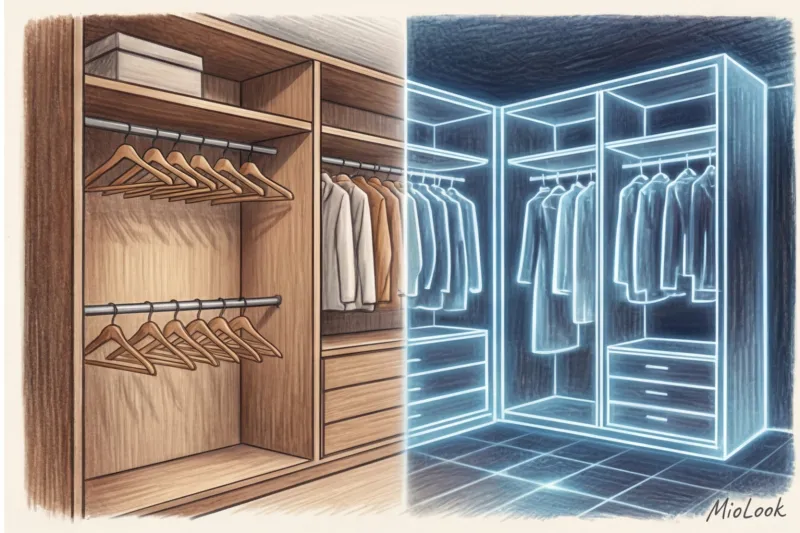
You enter the fitting room and scan the QR code on the mirror using the store's app or a smart wardrobe manager such as MioLook The mirror instantly "recognizes" you and pulls up your purchase history.
You can physically try on a new blouse in the store and, on the mirror screen, pair it with your favorite pants, which are currently hanging in your closet at home, because they're already digitized in the app. Doubts like "will this item fit my wardrobe?" disappear. What's more, you can save the entire fitting session: try it on in person, save the looks in the app, go away to think about it, and three days later buy it online with home delivery.
Business Checklist: Is Your Store Ready for AR?
If you're a boutique owner and are ready to invest €5,000 to €15,000 in a smart mirror, stop now. Without the right infrastructure, it'll just be an expensive piece of glass displaying the weather.
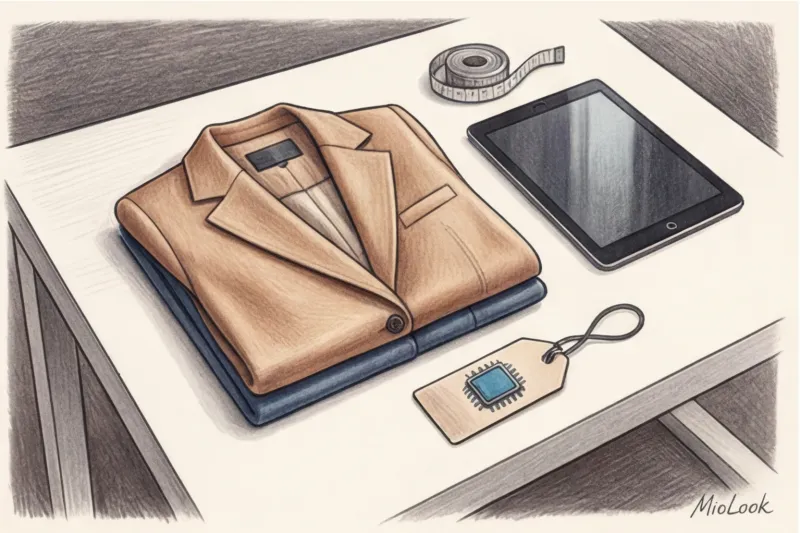
Check your readiness on 4 points:
- Is your catalogue digitized? AR try-ons require not just photographs on a white background, but high-quality 3D clothing models or high-resolution renders.
- Are RFID tags implemented? Without microchipping each item (which costs money), the fitting room will not know what the customer has brought inside.
- Are the databases synchronized? Warehouse and showroom inventory must be updated in real time. If a mirror site offers a size that's listed in the system but is actually out of stock, you'll end up with an irate customer.
- Are the staff trained? This is a critical moment. The salesperson must become a "mirror assistant," not a competitor. If consultants sabotage the technology, perceiving it as a threat to their bonuses, the investment will fail.
The future of fashion isn't about abandoning physical clothing in favor of pixels. It's about technology taking away all the routine and stress (finding your size, choosing a color, running around the store), leaving you with the pure joy of touching beautiful fabric and creating your own style.