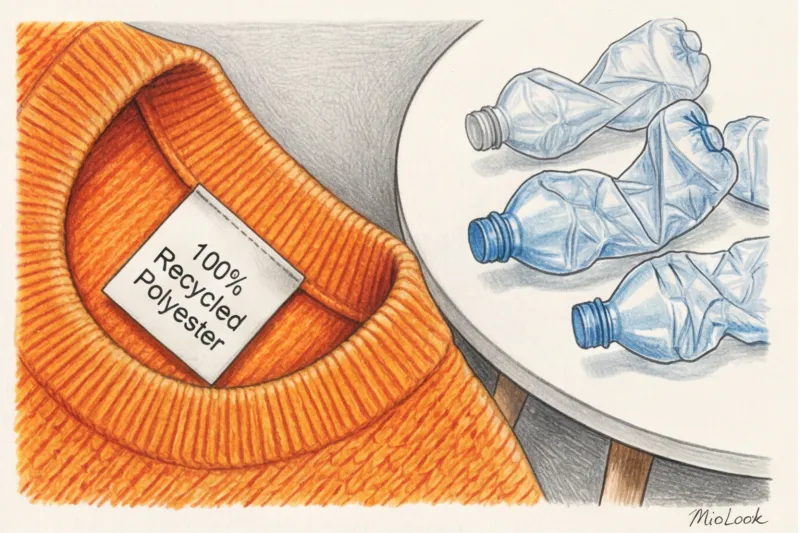
How many times have you bought something with a green "Made with recycled plastic" tag, sincerely believing you're doing your part to save the planet? If your closet is also filled with such "eco-finds," I have bad news. As a stylist, I constantly encounter the consequences of this trend, and believe me: the real thing eco-friendly fashion technology uses it completely differently.
We talked about the evolution of the industry in more detail in our The complete guide to fashion tech in 2024 , but today I want to show you the inside story. We're not talking about dresses made from plastic bottles, but about predictive analytics, digital passports, and algorithms that truly solve fashion's biggest problem—overproduction.
The Illusion of Sustainability: Why Recycled Plastic No Longer Saves the Planet
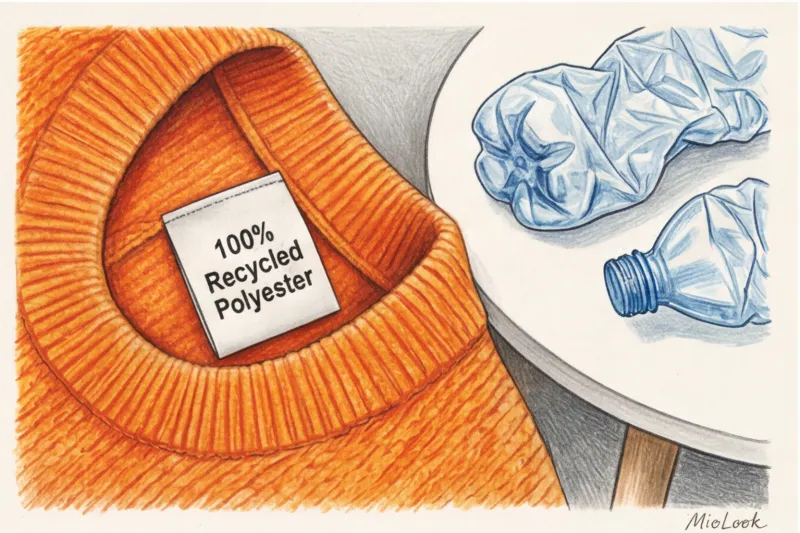
Let's be honest: recycled polyester (rPET) is one of the most successful examples of marketing greenwashing in recent years. Brands love to talk about how many PET bottles went into making your new jacket. But they're silent about what happens next.
One of my clients, let's call her Lena, bought an rPET "eco-sweater" from a popular high-street store for €80. After two washes, the item was covered in hard pilling and lost its shape. Why does this happen? The process of recycling bottles into yarn makes the fibers short and brittle. The item wears out quickly and ends up in landfills. Furthermore, with each wash, this synthetic material releases thousands of microplastic particles, which are not filtered by wastewater treatment plants and end up in the ocean.
"A dress made from plastic bottles is a dead end. A bottle can be recycled into a new bottle up to 10 times, in a closed-loop process. But by turning it into fleece, we break that cycle. An item made from rPET is virtually impossible to recycle a second time."
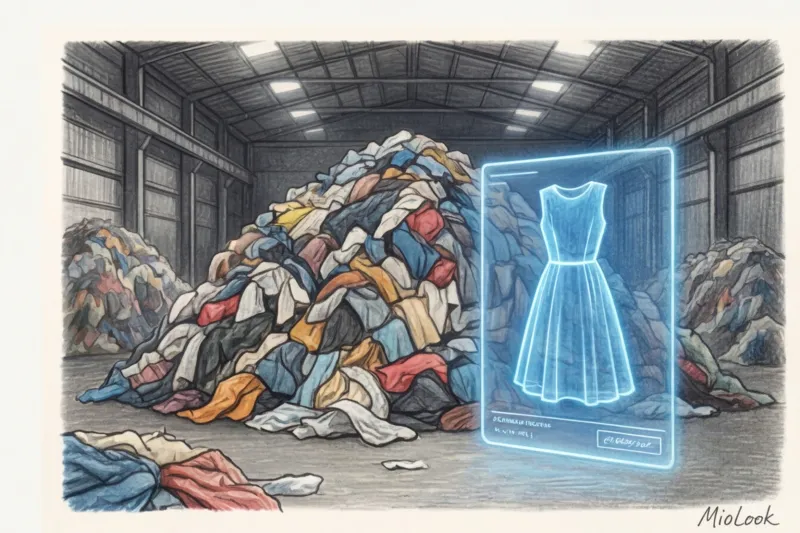
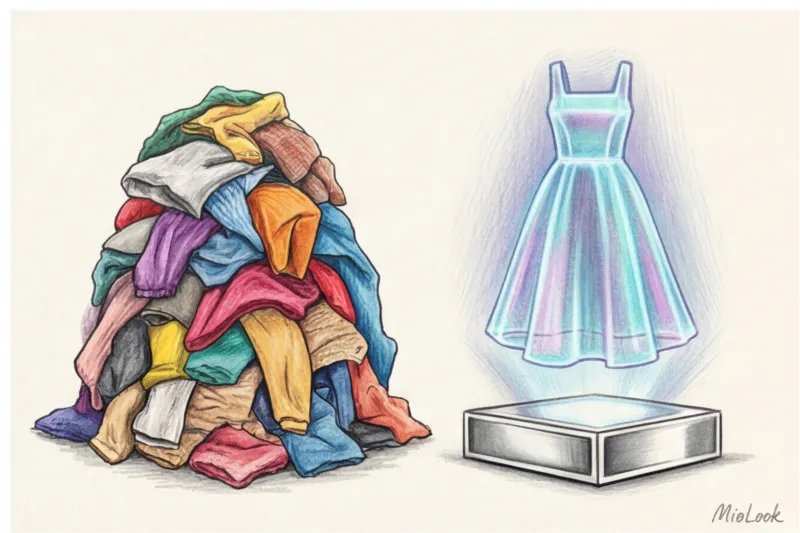
The industry's focus is finally shifting from flashy "green" synthetics to real technological solutions that prevent waste from being created at the design stage.
Try MioLook
A smart AI stylist will choose the perfect look for you and help you avoid impulse purchases.
Get access — €0.99 onceInvisible Eco-Technologies in Fashion: AI Against Global Overproduction
If you think the biggest innovations are happening on the catwalk these days, you're wrong. According to a McKinsey report State of Fashion 2024 Brands have sharply cut their budgets for hyped metaverses and NFTs. Where did the money go? Into backend, logistics, and predictive analytics.
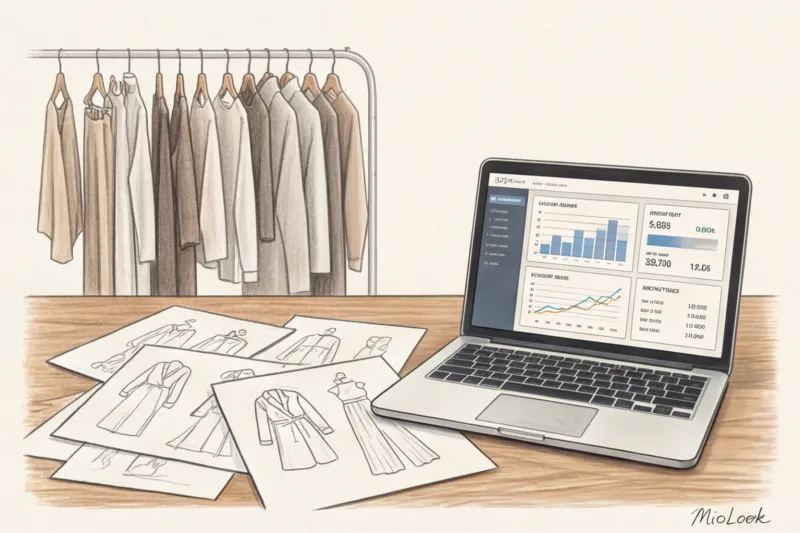
True sustainability is boring at first glance. It's hidden in data tables. Machine learning algorithms analyze sales history, weather, social media queries, and even the geopolitical situation to ensure a brand makes exactly 10,000 black pants, not 15,000 "just in case."
Global overproduction is the root of all evil. According to statistics from the Ellen MacArthur Foundation, every second, the world burns or throws away a volume of clothing equivalent to an entire garbage truck. Intelligent warehouse optimization using AI allows giants like Zara and H&M to reduce this excess to a minimum.
Innovative Materials 2024: What Really Works in Your Wardrobe
As a practitioner, I was long skeptical of bio-fabrics. Early examples of "vegan leather" made from apple peelings or pineapple leaves were 70% polyurethane (PU). In other words, they were essentially plastic, just with a fruity scent. But the materials entering the commercial market in 2024 are completely different.

Laboratory silk and leather from mycelium
When I first picked up a sample of mycelium leather (the root system of fungi) at a textile exhibition, I was amazed. It was warm, flexible, and smelled expensive. Unlike polyurethane leather, it "breathes."
The same applies to lab-grown silk, created using bioengineering. It mimics the DNA of natural spider silk, but is produced insect-free through yeast fermentation. These fabrics drape beautifully, resist static, and are ideal for premium basic wardrobes, replacing animal-based alternatives without sacrificing tactility.
Anhydrous digital coloring
Did you know that the textile industry is the second-largest polluter of freshwater in the world? Toxic runoff from dyeing factories is killing rivers in Asia. That's why Dope Dyeing technology has become a real breakthrough.
Instead of weaving fabric and then bathing it in vats of chemicals and hot water, pigment is added directly to the liquid polymer solution before the thread is created. The thread is instantly colored. This saves millions of liters of water and reduces the product's carbon footprint by 30-40%.
Ready to get started?
Try the MioLook plan for free—no commitments required. Organize your wardrobe sustainably.
Get access — €0.99 onceAR and Virtual Fitting Rooms: How Technology is Solving the Returns Problem
Another hidden environmental disaster is online returns. When you order three sizes of a jacket online with the intention of returning the two that don't fit, you set off a chain of carbon emissions.
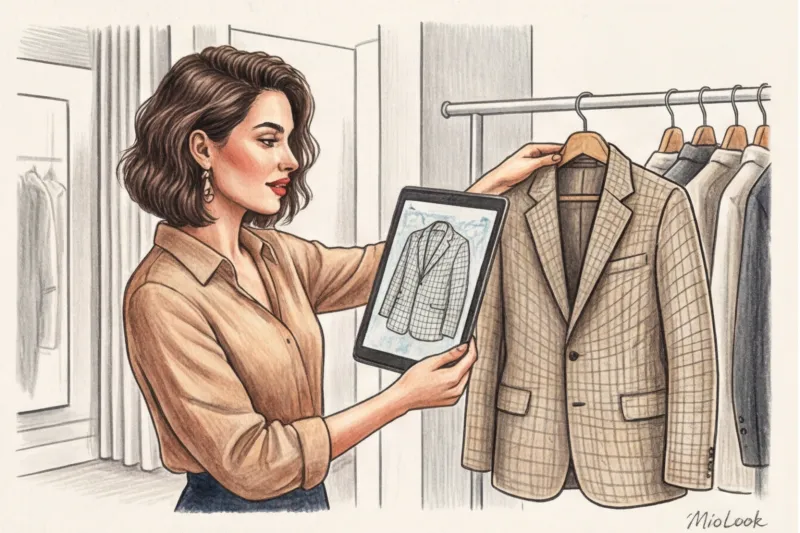
Few people know, but it's often cheaper for mass-market brands to destroy returned items (burn or shred) than to pay for inspection, cleaning, repackaging, and return to the warehouse. Up to 30% of all online returns in the low-price segment end up in the trash without ever being worn.
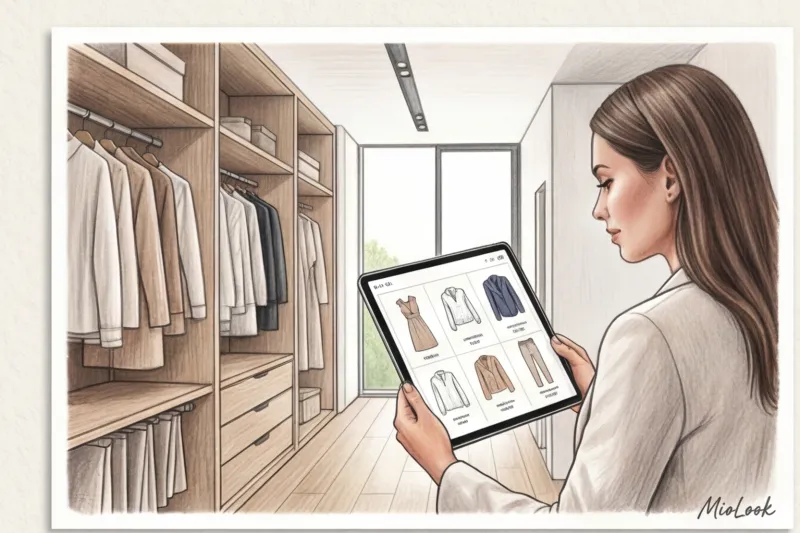
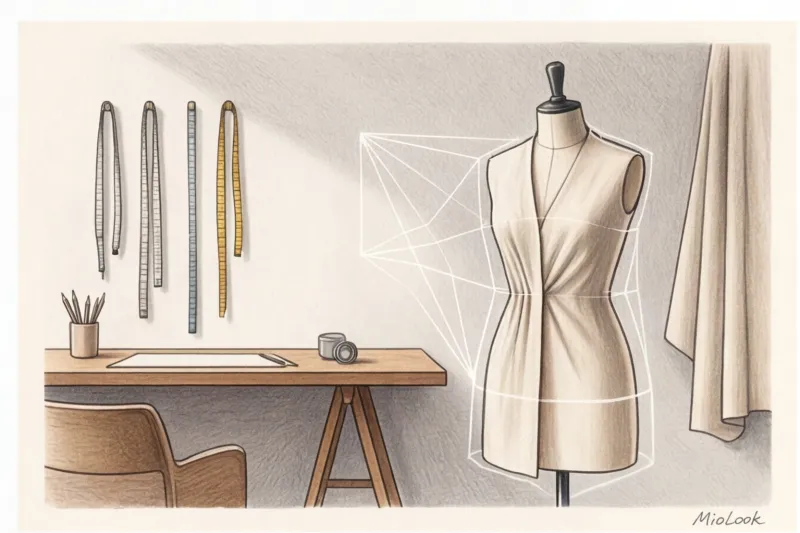
Right here eco-friendly fashion technology applies it most effectively. In my experience working with clients online, I see how digital tools change habits. smart selection feature in the MioLook app We analyze body measurements using AR scanners and virtual fitting rooms. Precise digital fitting allows you to find the perfect fit the first time. My personal client return rate has dropped from 40% to 5%, which directly reduces our logistical footprint.
Digital Passports of Things (DPP): The End of the Data Hiding Era
Imagine standing in a store, scanning a beautiful linen shirt with your smartphone, and seeing its entire history: where the flax was grown, how much water was used, which factory it was made in, and how much the seamstress earned.
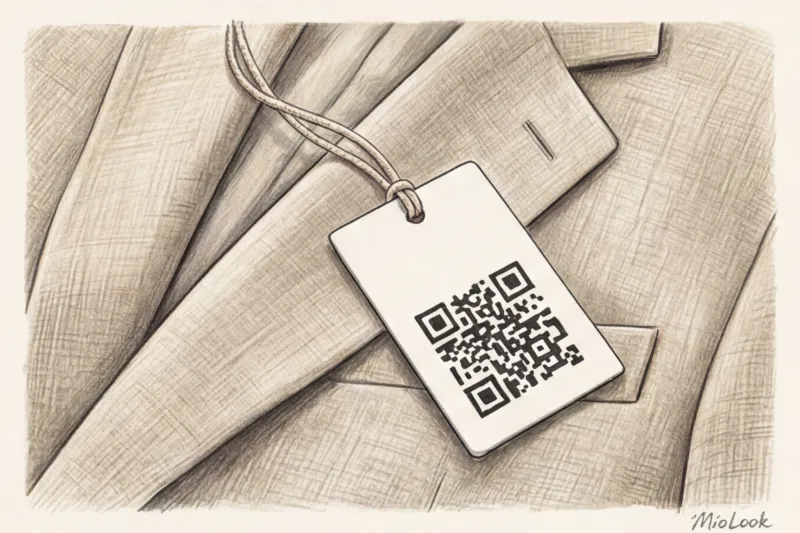
This isn't science fiction; it's a Digital Product Passport (DPP). New EU directives will make such digital passports mandatory for textiles on the European market by 2030. An NFC chip or QR code will be embedded directly into the product.
This is a huge advantage for us. DPP makes the market transparent. Moreover, it radically simplifies resale. If you decide to sell a high-quality jacket from Massimo Dutti or COS on a resale platform, you won't have to prove its authenticity—the entire database is embedded in the item itself.
A Mindful Consumer Checklist: How to Recognize Real Innovations
Technology is great. But let's be honest: no algorithm will save the planet if we continue to buy ten €15 T-shirts every month. Every eco-friendly solution has its limits.
The best eco-technology is your awareness. Here's how to recognize marketing and make the right choice:
- Look for certificates, not words. The label "Eco-friendly" doesn't mean anything. Look for specific standards: GOTS (for organic cotton) or Oeko-Tex Standard 100 (guaranteed to be free of toxic dyes).
- Check the ingredients. Avoid complex blended fabrics (e.g., 50% cotton, 30% polyester, 20% acrylic). They are virtually impossible to separate into fractions for recycling. Choose single-material fabrics.
- Calculate the cost of exit. A quality wool jacket for €200 that you'll wear 100 times (costing €2 per garment) is much more environmentally friendly than a trendy €30 "eco-top" that will lose its appearance after two washes (costing €15 per garment).
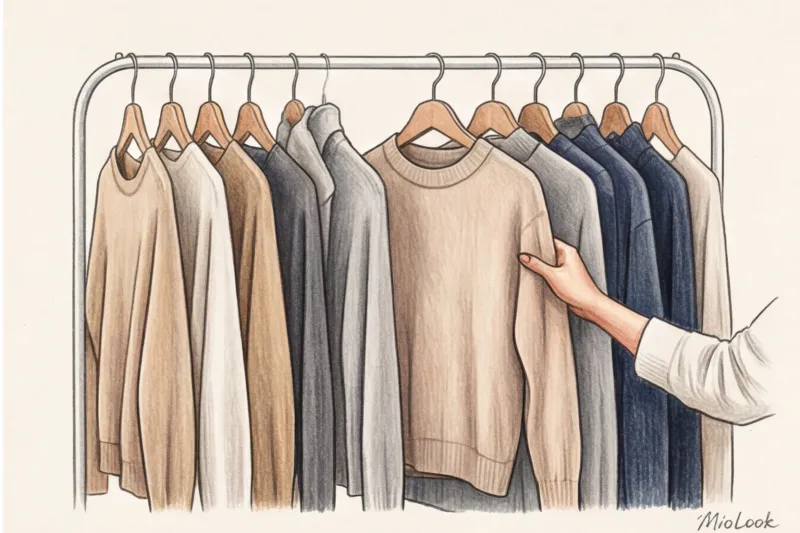
I always tell my clients: start small. Build a database. Capsule wardrobe This isn't a limitation; it's your personal contribution to reducing overproduction. When 20 items create 50 stylish combinations, the need for constant shopping disappears.
The fashion industry is on the brink of enormous change. Digitalization is shifting the focus from quick profits to durability and transparency. And every time you scan a QR code before purchasing or try on an item virtually before ordering, you're voting with your rubles—or rather, euros—to ensure these innovations become the norm, not just a pretty line in a press release.