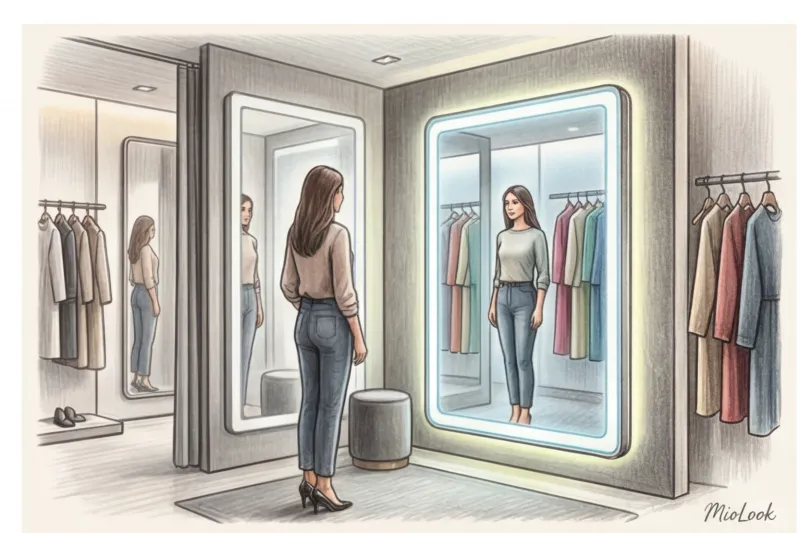
Imagine a painfully familiar situation: you're standing in the fitting room of a high-end boutique wearing only your underwear. You've just tried on a pair of €150 trousers, but they're hopelessly too small. What do you do next? Get dressed, go out into the store, find a sales associate, ask for a bigger size, and then go back to undress? According to statistics from the National Retail Federation (NRF), 7 out of 10 shoppers will simply hang the item up, get dressed, and leave. The sale is lost forever.
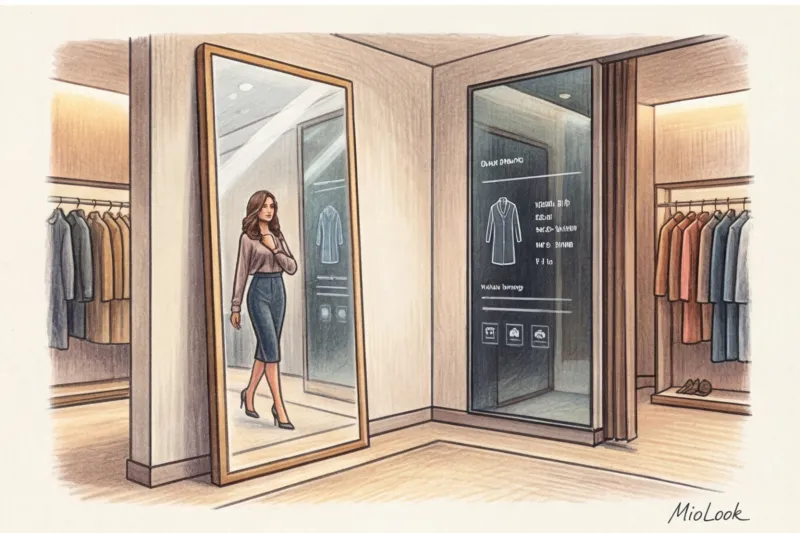
It is this problem, and not the desire to entertain the client with virtual holograms, that is solved smart try-on mirror We covered in more detail how physical retail is changing globally in our guide to Fashion tech technologies in 2024: innovations and fashion trends Today, I propose taking off the rose-colored glasses of futurism and looking at smart mirrors through the eyes of pragmatic business.
What is a smart try-on mirror? Forget the hype and look at the numbers.
If you read glossy articles from five years ago, you'd think a smart mirror is a magical screen where you can change 3D dresses with a wave of your hand. Forget it. McKinsey's "State of Fashion 2024" report clearly documented that the industry has had enough of playing with metaverses. Brand investments have shifted sharply from virtual reality to inventory optimization and customer experience in physical stores.
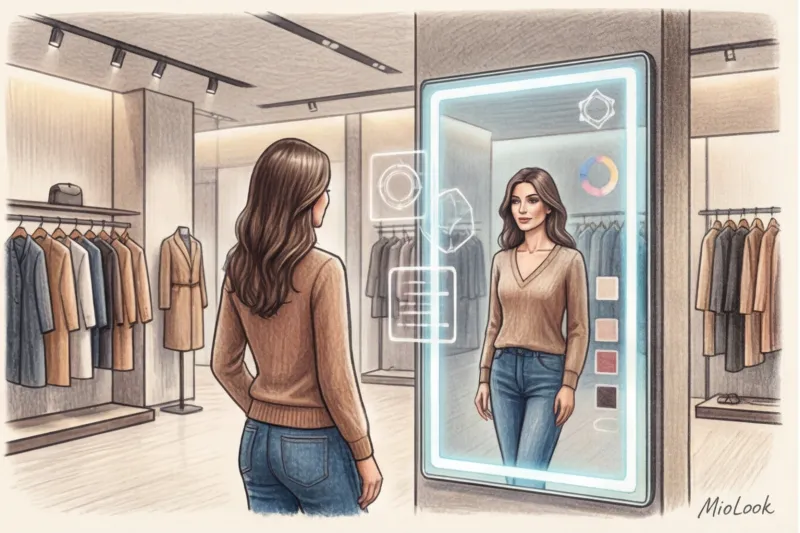
In 2024, the perfect smart mirror is an offline data collection terminal disguised as an elegant piece of furniture. This magic works thanks to a subtle combination:
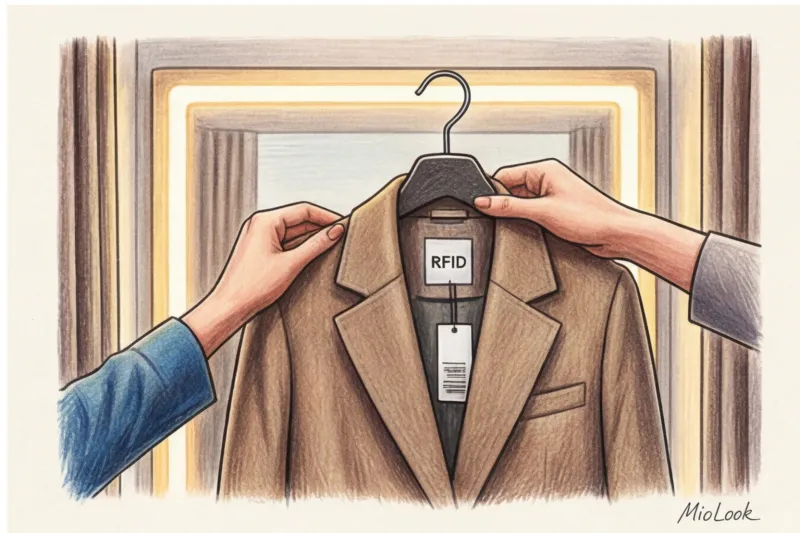
- RFID tags: tiny chips sewn into clothing tags (now widely used by brands from Zara to Massimo Dutti).
- Sensors in the fitting room: As soon as you enter the booth, the mirror automatically reads the tags and displays information about all the things in your hands on the screen.
- Synchronization with the database: The mirror instantly connects to the store's warehouse program and staff tablets.
"A smart mirror shouldn't replace clothes with pixels. It should remove all barriers between a customer's desire to try on a different size and the moment that size is in their hands," – from my speech at a fashion retail conference.
From Wow Effect to ROI: 4 Features That Really Increase Your Average Order Value
As a practicing stylist, I've spent hundreds of hours in fitting rooms with my clients. I know for sure: the most vulnerable point of offline shopping is when a person is half-dressed, embarrassed by a poorly fitting garment, and isolated from help. Equipping a single fitting room with a smart panel costs a business between €2,000 and €5,000. How does this investment pay off?
Seamless Size Request: Saving Conversion Rates
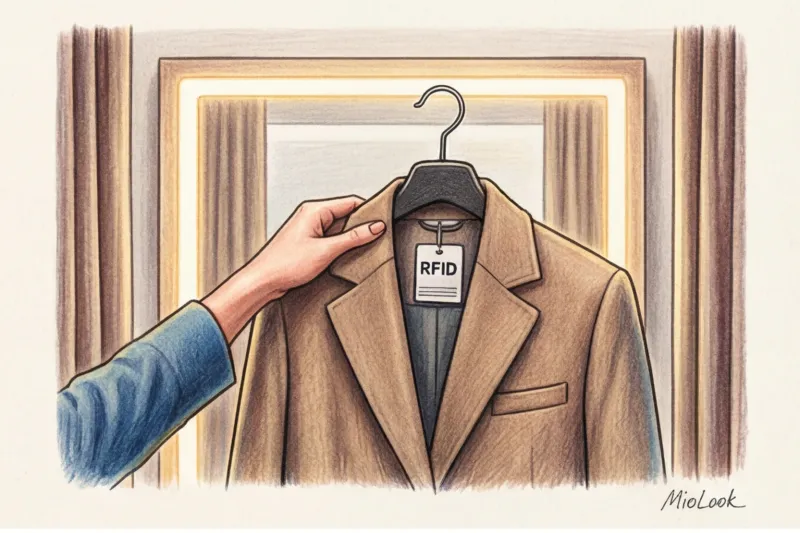
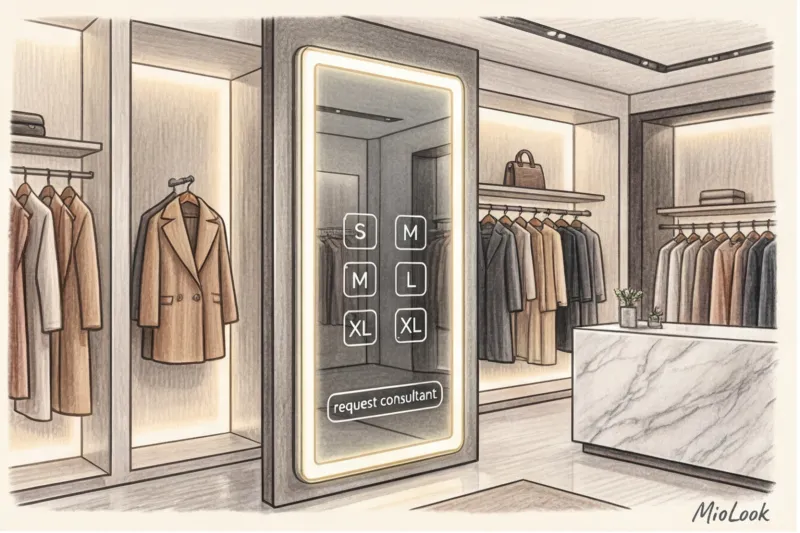
A customer simply walking around the store converts into a check with about a 10% probability. But if they enter the fitting room, that figure soars to 67%. A smart mirror allows customers to select the desired size or color with a single tap. Notifications are sent directly to the smartwatch or tablet of an available consultant.
According to internal data from fashion-tech developers, implementing this feature reduces the wait time for an item by 40%. Customers no longer need to open the curtain, catch the salesperson's eye, and shout, "Do they have the same item?!"
Automatic cross-selling: assembling the capsule
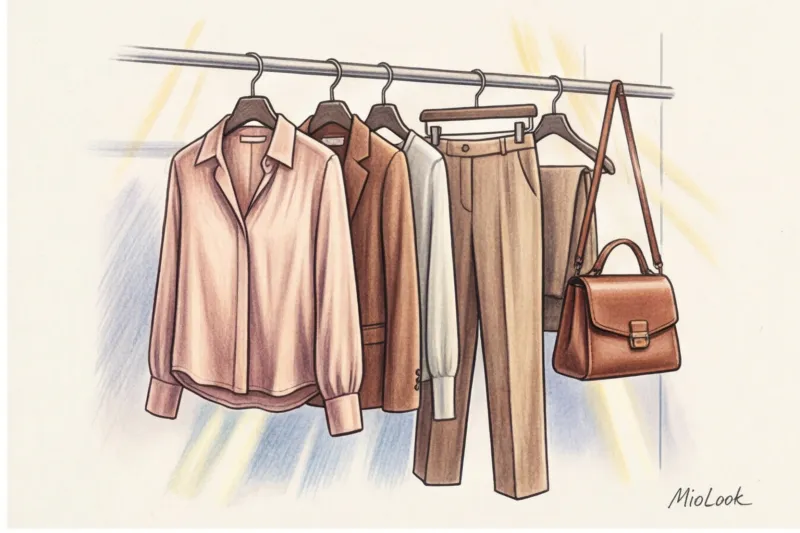
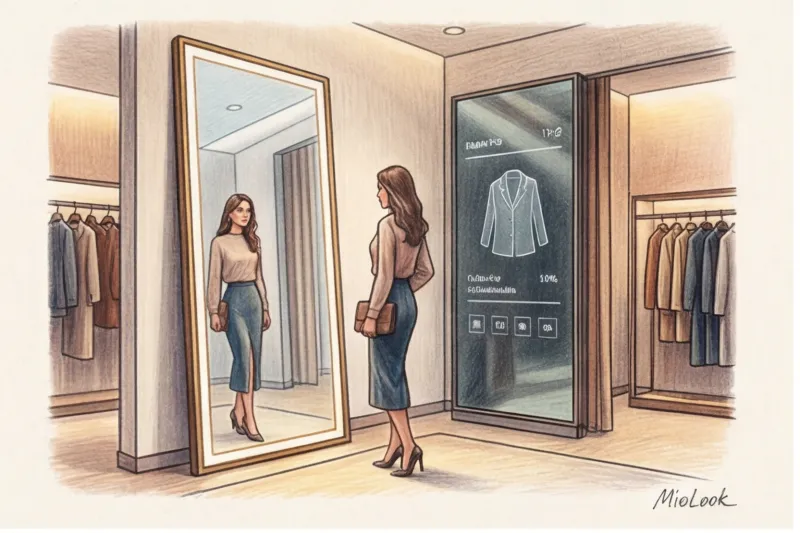
While the client tries on a basic wool jacket, the mirror delicately displays a silk scarf, a leather belt, and the perfect pair of matching trousers, all currently available in their size. The client clicks "Bring to Fitting Room."
We tested this approach while working with premium European boutiques. Using subtle visual cues on the mirror (rather than pressure from the salesperson: "Get another bag!"), accessory sales and UPT (units per ticket) increased by an average of 15%.
Your perfect look starts here
Join thousands of users who look flawless every day with MioLook, creating the perfect capsules right on their smartphone.
Get access — €0.99 onceLighting scenarios: "Office", "Evening", "Daylight"
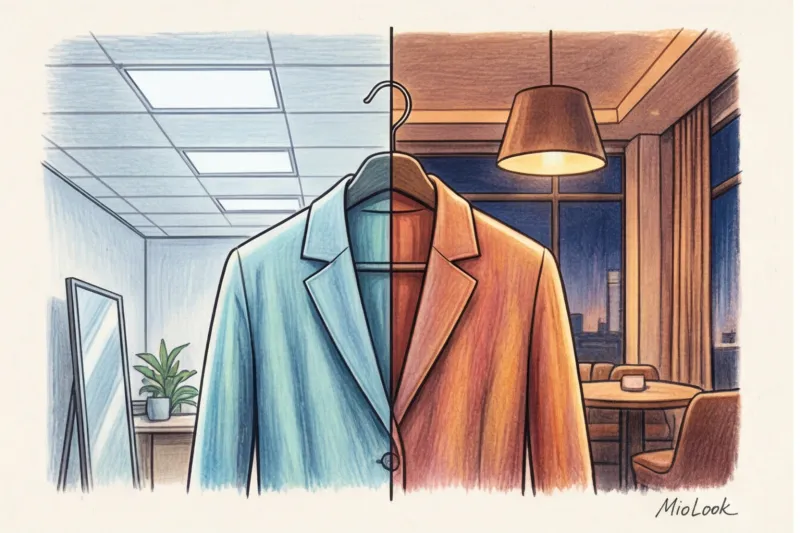
Harsh overhead lighting in the fitting room, highlighting every imperfection of the skin, killed more sales than high prices. Modern smart mirrors have interactive lighting controls. Select "Dinner at a Restaurant" on the screen, and the lighting becomes warm, subdued, and focused. Select "Office," and a neutral white light turns on. This is pure psychology: the customer should see themselves in the environment where they plan to wear the item.
Hidden Benefit: How Mirrors Open a Black Hole of Offline Analytics
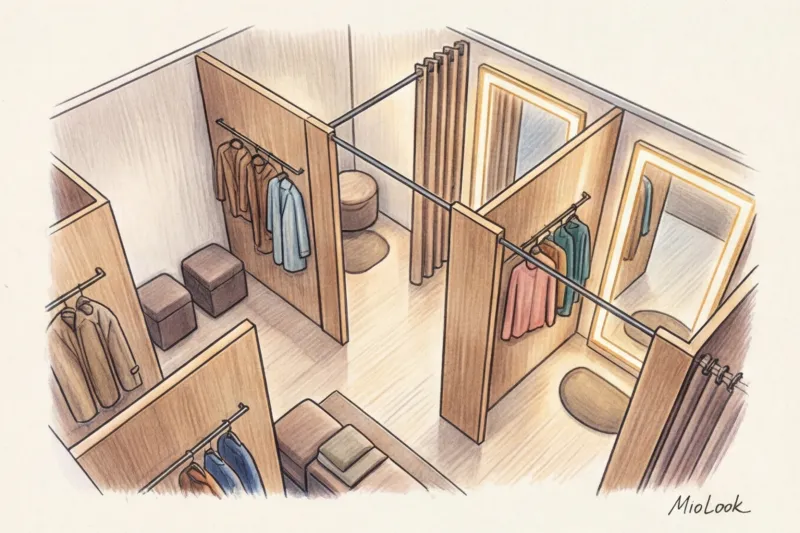
In e-commerce, marketers know everything about you: where you clicked, at what stage of the shopping cart you abandoned, how many seconds you spent looking at a photo. In a traditional brick-and-mortar boutique, analytics are a black hole. The store only knows what's entered at the checkout. If an item doesn't sell, buyers wonder: is it the wrong color? Is the price too high? Is no one noticing it on the rack?
A smart fitting mirror provides invaluable data—refusal tracking. I had a telling case with a mid-market brand. They had a shipment of excellent viscose trousers on hold for €120. The brand was about to offer a 50% discount. But the smart fitting room statistics revealed an anomaly: the trousers were tried on 180 times over two weeks, but only sold four times.
The problem wasn't the price or the presentation (they were a hit!). After analyzing the data, the designers realized the patterns were creating severe creases in the groin area for all women over size S. They didn't save the batch, but this analysis saved the brand from repeating the same mistake the following season, costing hundreds of thousands of euros.
Why AR clothing overlays are still lagging behind haptics
Here I'll allow myself an unpopular opinion, which runs counter to the press releases of many tech startups. Virtual AR try-ons (where you stand in front of a screen and a 3D model of the dress is superimposed on your reflection) are currently the most wasteful budget option for a brick-and-mortar boutique.
Why doesn't this work in a physical store?
- The Uncanny Valley Effect: The virtual fabric moves unnaturally. Digital silk doesn't flow, and digital cotton doesn't hold its shape.
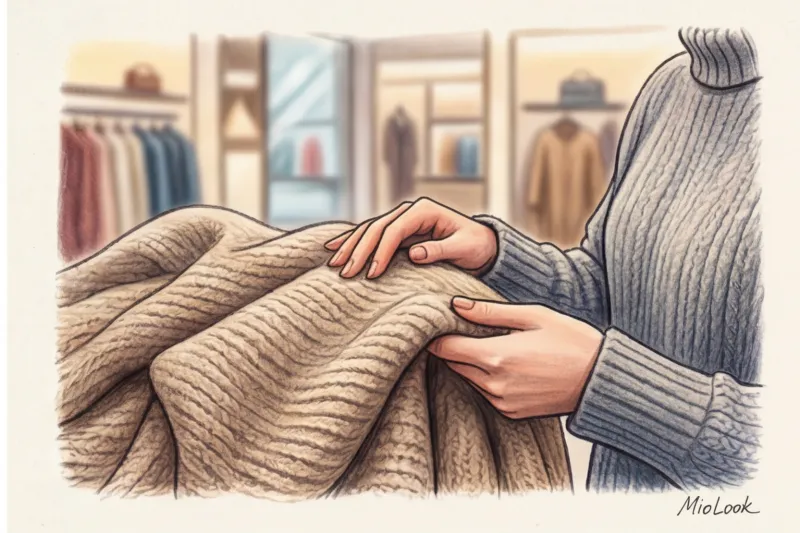
- Need for tactility: Clothing is a sensory experience. For a customer buying a €300 jumper, it's crucial to feel the softness of 100% cashmere in their fingers. No projection can convey the difference between polyester and premium merino wool.
My advice to business owners: don't waste money on AR modules for fun. Invest those euros in reliable RFID infrastructure and warehouse integration.
Access to MioLook for €0.99 — one-time payment
A smart AI stylist will select the perfect look based on your real wardrobe, not virtual projections.
Get access — €0.99 onceChecklist: Is your boutique ready for smart mirrors?
It's important to understand: a mirror alone doesn't sell. It's just the tip of the technological iceberg. Before requesting a quote from suppliers, check your business against four criteria. The technology will NOT work if:
- No continuous RFID coverage: If only 80% of the product range is tagged, the system will malfunction. The mirror must be able to "see" every single item, right down to the socks.
- Poor staff training: The most common reason for failure is consultants who ignore notifications about new sizes on their tablets because they are “used to working the old way.”
- There is no real-time synchronization: Integration with the warehouse software (ERP) must happen every second. There's nothing worse than when a mirror promises a customer a size M, only to have it sold out at the checkout two minutes ago.
- Tight fitting rooms: For the sensors to function correctly and for comfortable interaction with the screen, the panel requires a certain focal length. Installing such a mirror in a one-meter-by-one-meter booth is pointless.
The Future: The Synergy of Smart Mirrors and Personal Wardrobe Apps
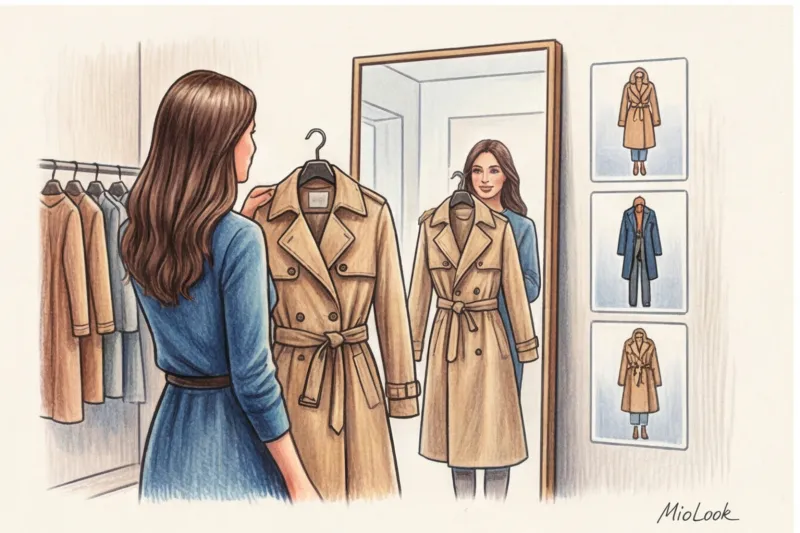
Where will we be in the next three years? The main trend will be the merging of retail technologies with personalized user apps. Imagine: you walk into a fitting room, hold your smartphone up to a smart mirror, and it syncs with your virtual closet in the app. MioLook.
You try on a new terracotta jacket made of thick viscose, and the mirror immediately analyzes your wardrobe essentials. Complete looks appear on the screen: this jacket paired with your favorite blue jeans (which are currently sitting on your shelf at home) and your basic white sneakers. It's no longer just selling an item—it's selling the confidence that this new item won't just hang in your closet with the tag still attached.
Integrating smart mirrors means shifting from aggressive sales to a more caring approach. When technology takes over the mundane tasks of sizing and analytics, consultants finally have time for what truly matters—genuine human interaction and professional styling.