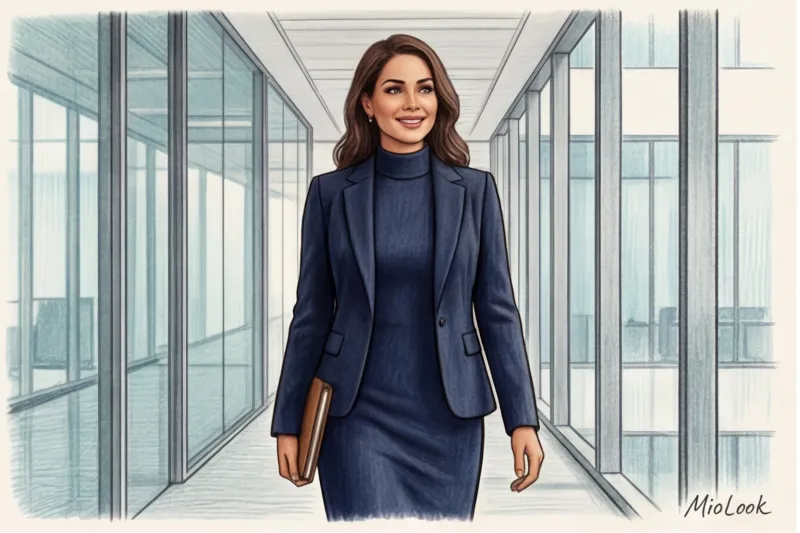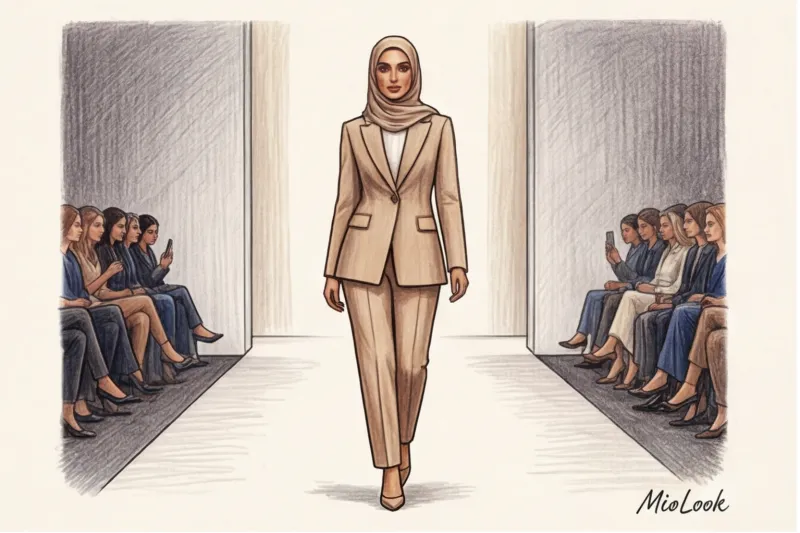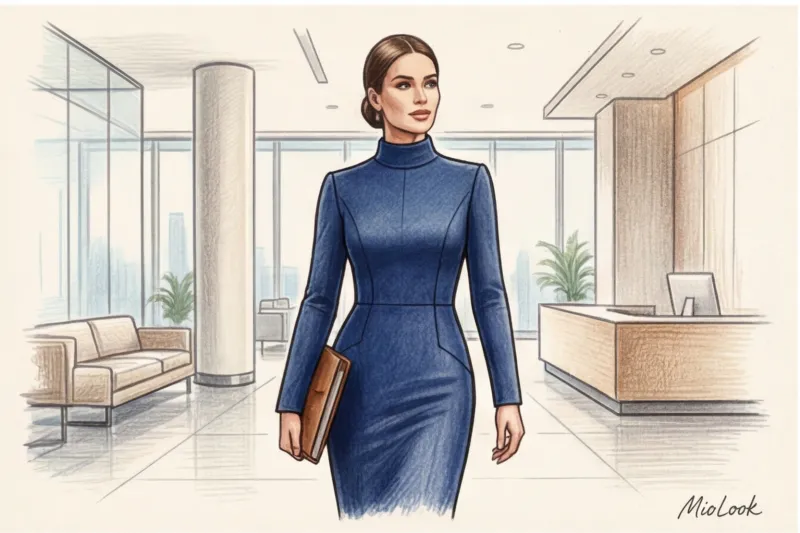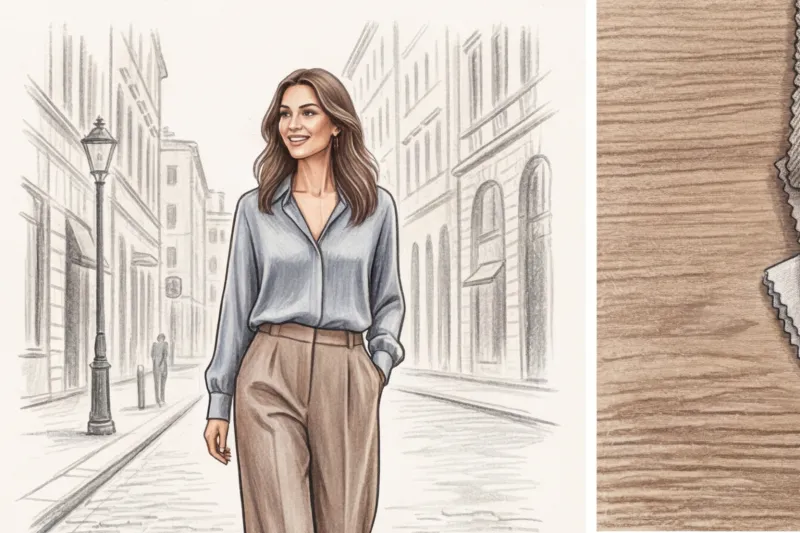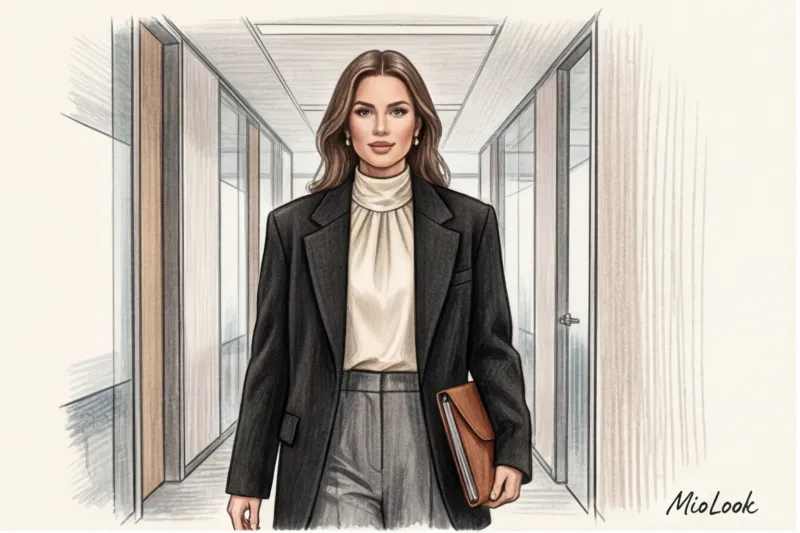
Five years ago, one of my clients, a newly appointed CFO of a large IT company, came to me with a typical request: "I want to look respectable, but I feel vulnerable in classic sheath suits, and sloppy in oversized ones." We completely removed form-fitting pencil skirts, sheer blouses, and deep V-necklines from her closet. In their place, we built a wardrobe based on dense fabrics, architectural cuts, and fully covered silhouettes.
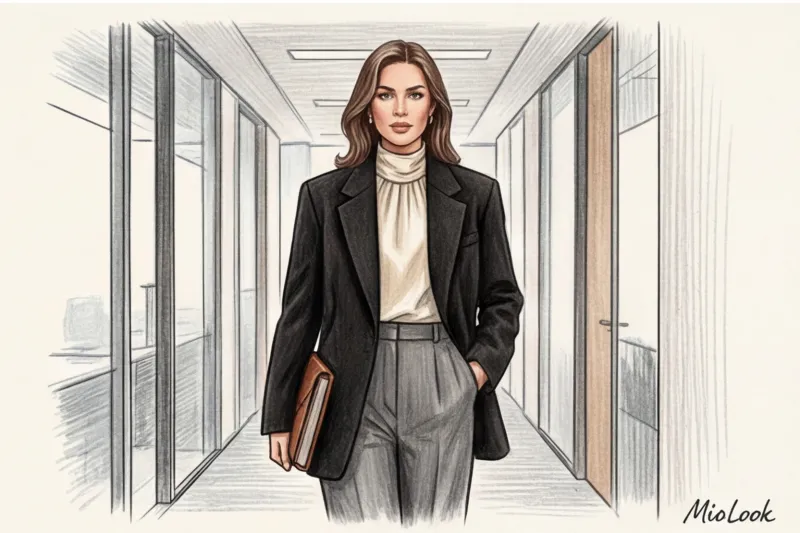
The result? After two months, she admitted that her "imposter syndrome" in boardrooms had disappeared. When you de-emphasize your body, others subconsciously begin to focus on your words, competencies, and status. I wrote more about the origins of this global trend in our The Complete Guide to a Basic Modest Fashion Wardrobe.
Today office style and closed clothing — this isn't a compromise between dress code and personal beliefs. It's a powerful tool of influence, actively used by women in leadership positions across Europe.
The New Paradigm of Power: Why Office Style and Covered Clothing Have Become Synonymous with Success
According to McKinsey's "The State of Fashion 2024" analytical report, corporate dress codes are undergoing a global transformation. The focus has finally shifted from the desire to "dress to please" to the concept of "dress to lead."
Modest fashion in the business world has perfectly aligned with the aesthetics of "quiet luxury." The essence of this phenomenon is simple: a closed silhouette creates intrigue and distance. Think of the wardrobes of influential female politicians or top managers—you'll rarely see exposed arms or plunging necklines. Covered clothing acts as armor, protecting your personal space in an aggressive corporate environment.
"The absence of exposed skin forces the interlocutor's eye to glide along the architectural lines of the cut, reading status through the quality of the fabric and the purity of the silhouette, rather than through the attractiveness of the figure."
In my experience, switching to fully covered attire (even in companies with a relaxed dress code) automatically increases the level of seriousness with which colleagues treat you. If you're unsure how to adapt this approach to your needs, I recommend studying the material about the dress code for a female manager.
Architecture vs. Formlessness: The Key Rule of Modest Fashion
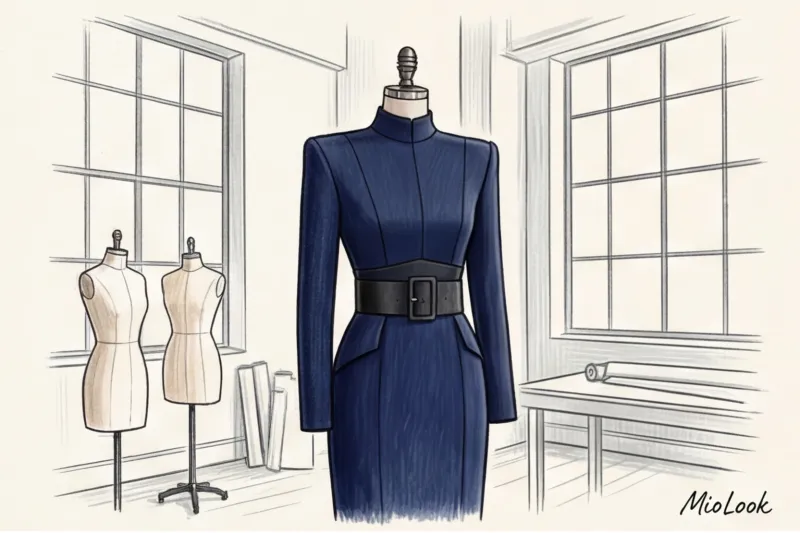
The most dangerous myth I constantly encounter is that "covering up clothes makes a woman look like a shapeless gray mouse." This only happens if you confuse modesty with bagginess.
Designers at Lemaire and Jil Sander have long proven that a closed wardrobe requires impeccable geometry. In a closed look, the shoulder line, collar, and waist of the trousers are 100% responsible for your appearance.
My ironclad rule for shopping accompaniment, which I call the "coat hanger test": If a garment doesn't hold its shape when hung on a hanger, it won't work in a closed office look.
What you will have to get rid of:
- Thin viscose jersey that highlights even the slightest folds of underwear.
- Semi-transparent chiffon.
- Soft, rag cardigans with no defined shoulder line.
What to look for instead:
- Cotton with a density of 180 g/m² (it’s very expensive, but looks incredibly expensive).
- Wool gabardine.
- Dense silk and suiting viscose with the addition of polyester for shape retention.
Your perfect look starts here
Join thousands of users who look flawless every day with MioLook. A smart AI stylist will help you create an architectural capsule wardrobe from your belongings.
Get access — €0.99 oncePutting together a capsule collection: office style and closed-toe clothing from European mass-market stores
To build a premium, exclusive wardrobe, you don't necessarily need to spend a year's salary at The Row. As a stylist, I spend hundreds of hours in European mass-market fashion and can confidently say that brands like COS, Massimo Dutti, Zara's Studio line, and &Other Stories offer excellent templates for our needs.
Let's do the math. A basic shirt made of stiff poplin at COS will cost around €80. Due to its architectural cut and thickness, it will look three times more expensive than a €150 translucent silk blouse from a lower-tier brand, which will lose its appearance after a couple of washes.
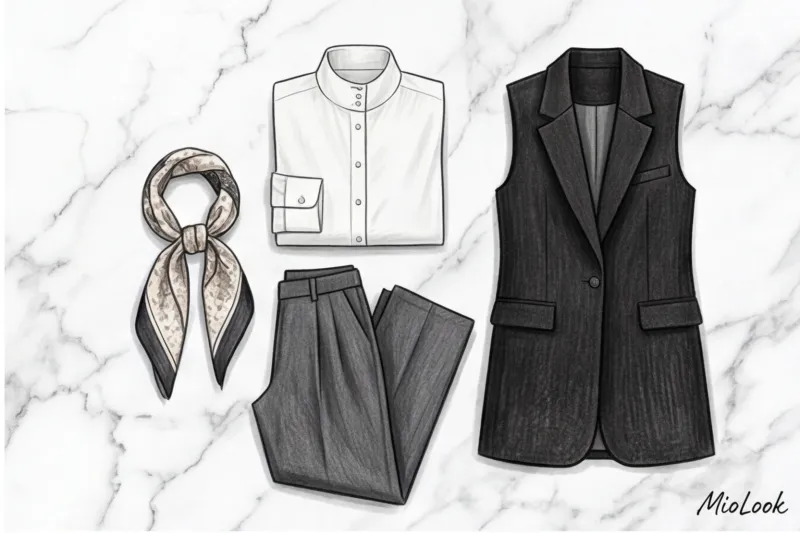
Ideal tops: blouses with a stand-up collar, thick shirts and turtlenecks
A classic office shirt with a turn-down collar can often be difficult to button up to the neck without looking suffocating. My solution is blouses with a stand-up collar or a hidden button placket.
Another secret I often use with my clients: go to the men's department Men's cotton shirts (especially slim or regular fits in smaller sizes) are made of a much thicker material than women's. They hold the collar perfectly and are not see-through.
A turtleneck is also a great option, but choose tightly ribbed merino wool or cashmere-blend models. Save thin cotton turtlenecks for weekends at home.
Structured bottoms: palazzos, maxi skirts, and culottes
The foundation of a closed-toe business wardrobe is high-waisted palazzo pants with pleats at the waist. They create that vertical line that elongates your height better than any heel.
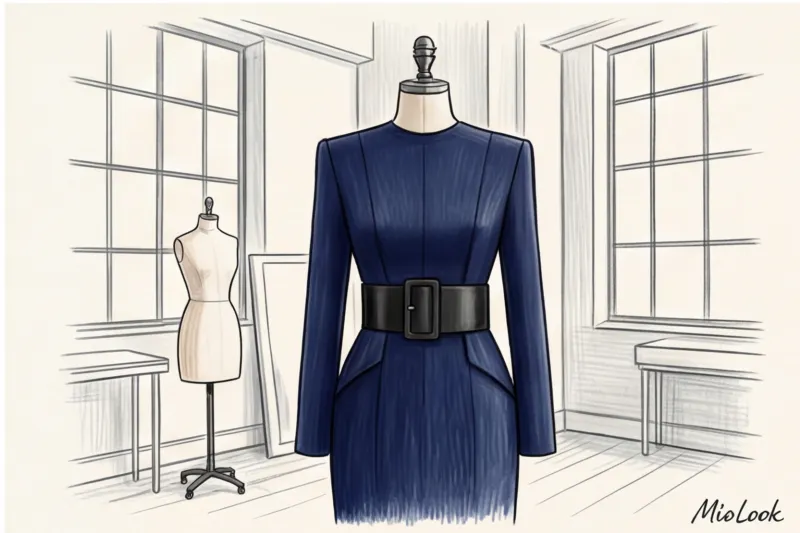
If you prefer skirts, your choice is the midi length (the golden mean between midi and maxi, ending a palm above the ankle).
An important limitation that stylists often keep quiet about: Popular pleated skirts don't work for everyone. If you have pronounced hips, the pleats will stretch out and visually add a couple of sizes. In this case, replace the pleats with an A-line skirt made of thick suiting wool. You can read more about constructing such bases in the article. On minimalism and the hero archetype in clothing.
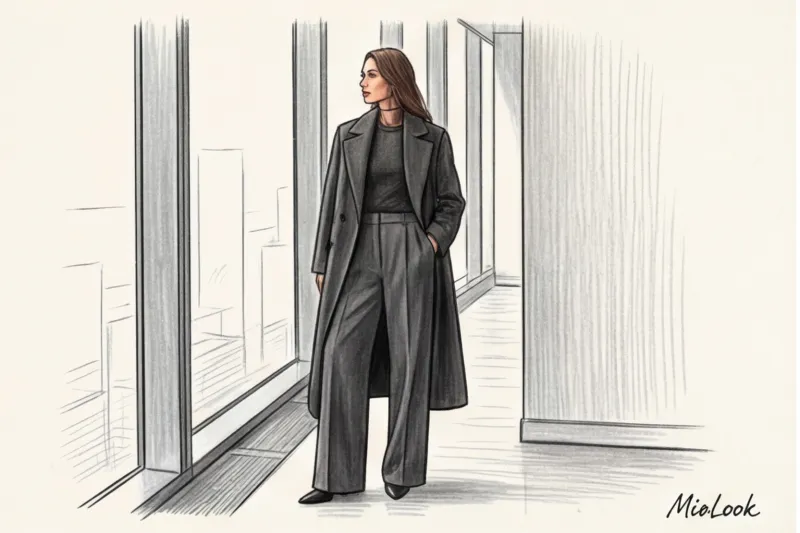
The Art of Layering: Comfort Without Overheating
The main practical problem with closed business attire in winter and the off-season is central heating. How can you maintain a modest dress code, layer up, and avoid going crazy in the office heat?
Here's where my favorite styling trick, inspired by Scandinavian fashionistas, comes in handy: using bibs (detachable collars). Instead of wearing a full shirt under a wool sweater, creating extra bulk at the waist and a "cabbage" effect, wear just a cotton bib. Visually, you'll adhere to a strict dress code, while physically keeping cool.
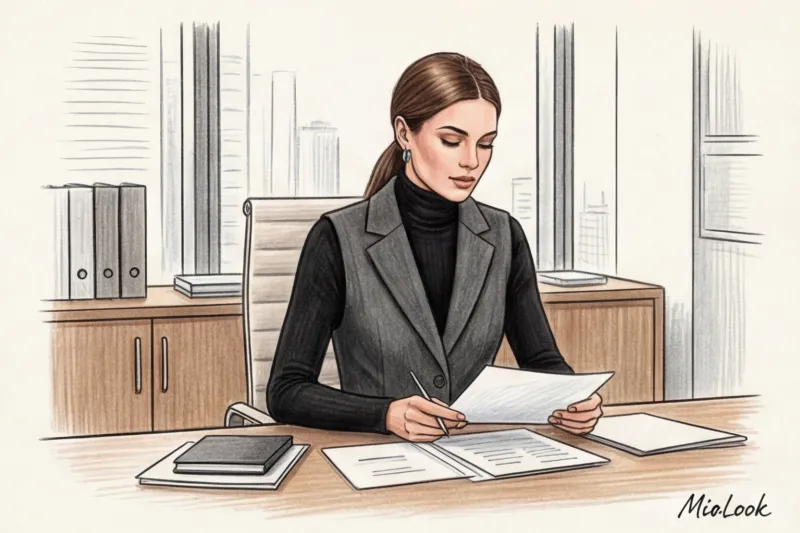
Another ingenious tool is long suit vest It solves three problems at once:
- Covers the hip area if you are wearing tighter fitting trousers.
- Creates a rigid vertical line, slimming the figure.
- Allows you to wear thin, breathable layers underneath (such as lyocell or modal blouses) while maintaining the overall structure of the look.
Ready to update your business wardrobe?
Try the MioLook free plan—no commitments required. Our AI will help you layer your pieces without sacrificing comfort.
Try MioLookAccessories in a Modest Wardrobe: Shifting Focus
There's a golden rule in styling: when clothing completely covers the body and has a simple cut, accessories and shoes take on 50% of the overall impression.
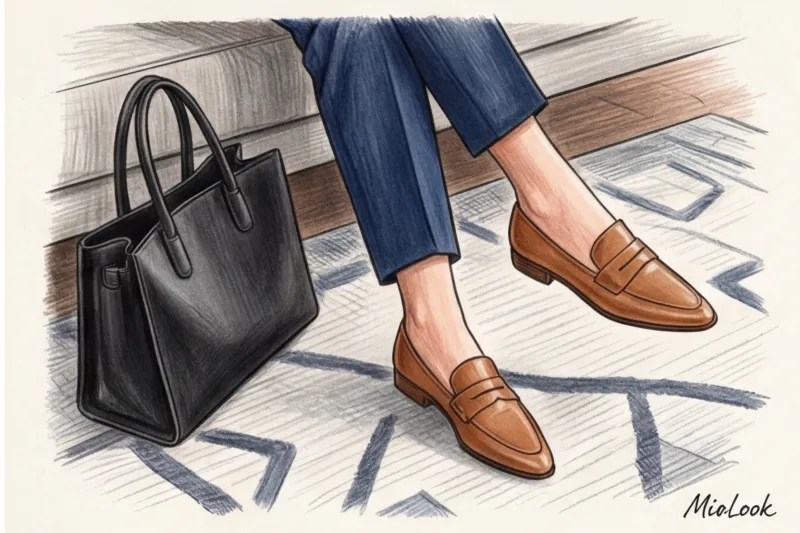
A closed-toe silhouette requires textured, statement-making footwear. If you pair wide palazzo shoes with round ballet flats, the look will fall apart, becoming too casual. Opt for shoes with character: loafers with a moderately chunky sole, ankle boots with a square or pointed toe, or masculine-style derbies.
The same goes for bags. Soft hobos and shapeless shoppers will ruin the architecture of your outfit. The go-to accessory for a modest dress code is a crisp, geometric leather tote. Check out our article about stylish bags for business trips And the psychology of a status wardrobe , to understand the mechanisms of these accents.
Checklist: Audit your wardrobe for "Smart Modest Business" compliance
Before heading out shopping, I make my clients undergo a rigorous closet audit. Here's my signature pragmatic algorithm, which you can apply tonight:
Step 1: Density test.
Go through all your tops and blouses. Hold the fabric up to the light. If you can clearly see the outline of your fingers through it, remove it from your business wardrobe. Flimsy fabrics are a dead giveaway to your credibility.
Step 2: Rule of proportions (1/3 to 2/3).
Closed-fitting clothing shouldn't cut your figure in half (1/2 to 1/2). The ideal proportions are: a cropped or tucked-in top (1/3) and high-waisted pants or skirt (2/3). If an untucked shirt cuts right down the middle of your hips, you need a belt or a tuck-in.
Step 3: Evaluate the necklines.
We're sticking with shirt collars, neat boat necks (that don't reveal underwear straps), and stand-up collars. Deep V-necks and stretched round necklines are being relegated to the casual category.
Step 4: Dynamic test.
Put the garment on. Raise your arms, sit on a chair, bend over. If you have to tug at the hem, adjust the collar, or make sure your lower back isn't exposed, that's not modest fashion—that's stress. True modest fashion gives you absolute freedom of movement.
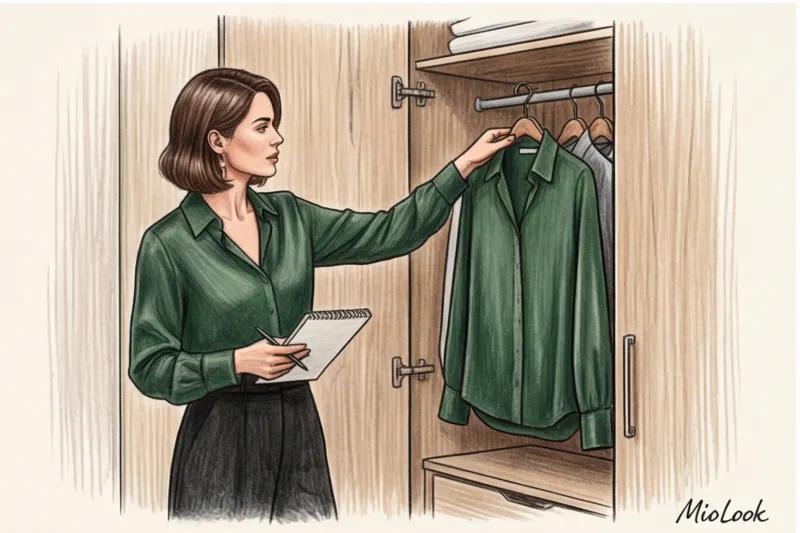
To avoid having to keep all these rules in mind, I advise my clients to digitize the selected items. Upload the database to MioLook app , and the smart algorithm will automatically suggest which closed sets can be compiled for tomorrow's board of directors, and which elements you are still missing.
Remember: by choosing a closed architectural dress code, you're not hiding from the world. On the contrary, you're taking up more space, proclaiming that your professionalism speaks louder than any cleavage.