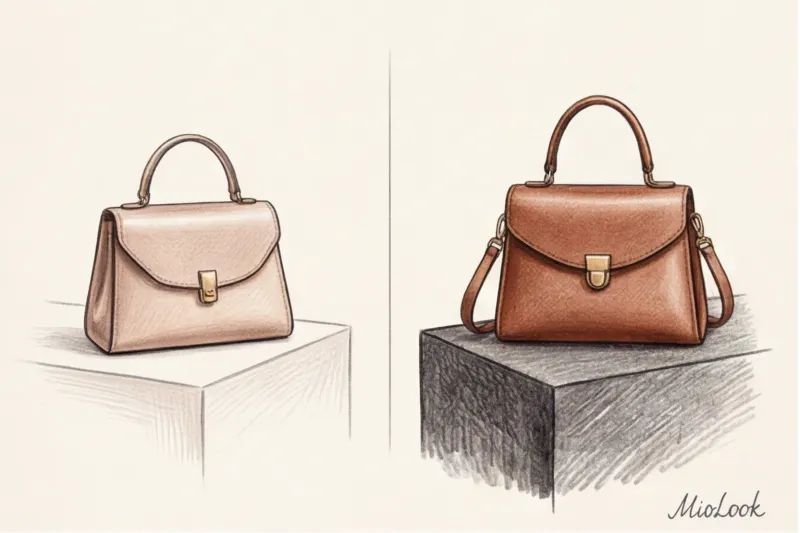
Perceptual Illusion: Why Size Matters
Have you ever noticed how a luxurious, trendy €1,500 bag looks like the perfect accessory in one woman's hand, but on another it turns into a ridiculous child's toy, visually adding a few extra pounds? The secret lies not in the brand's price tag, but in how wisely you choose accessories by body type.
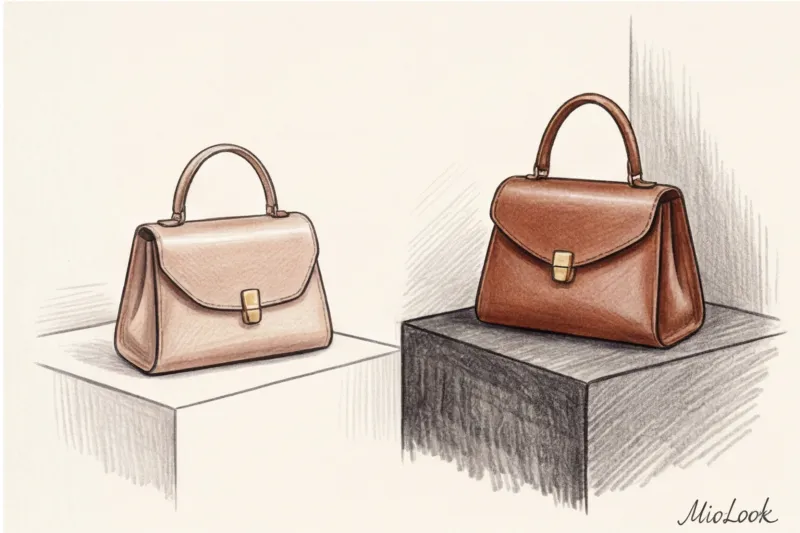
Over 12 years of working as an image consultant, I've developed a strict rule: jewelry, belts, and bags aren't just finishing touches or unnecessary embellishments. They're powerful visual anchors. They literally control the gaze of others, forcing it to drift where you see best and completely ignore areas you'd rather conceal.
Have you heard of the Ebbinghaus illusion (also known as the Titchener circle)? It's a classic in the psychology of visual perception: the same central circle appears enormous when surrounded by small dots, but tiny when surrounded by large shapes. In styling, this optical law works relentlessly.
During my first in-person consultation, I often demonstrate this effect to my clients using the iconic Jacquemus Le Chiquito micro bag as an example. When a curvy woman with a large bone structure picks up this tiny, palm-sized accessory, her figure instantly appears larger in contrast. The micro bag literally "bulks" its owner! Conversely, a petite, asthenic woman with a giant tote bag looks as if she's about to collapse under its weight.
To avoid falling victim to such optical traps, we must rely on the three pillars of a harmonious image:
- Scale - the proportionality of the thickness of your bones and facial features to the physical size of the details (large to large, small to small).
- Proportions — the ratio of lengths (for example, at what level does the crossbody strap visually cut off your height).
- Lines — geometric shapes that repeat or strictly correct your natural silhouette.
By the way, scale works with absolutely all the details of the image: I have already discussed this principle in detail earlier when we discussed, How to match glasses with clothes and control the width of the face. It can be difficult to construct this architecture on your own if you're not used to it. That's why I often advise my clients to run their ideas through MioLook — there you can upload items to a digital wardrobe and visually evaluate how the size of a bag or necklace compares to your proportions on a virtual canvas before purchasing.
Remember: the main purpose of accessories is not to "dress up" but to mathematically precisely adjust your silhouette and direct attention. Once you realize this, your clothes will begin to work for you, rather than you working for them.
Bone structure is more important than height: determining your scale
"Take your waist and hip measurements," is how most formulaic style guides begin. But when we're choosing accessories by body type I ask my clients to do something completely different: measure their wrists. Why? Because height and weight are just variables, while your bone structure remains a constant foundation.
In styling, confusing the concepts of "plus-size" and "full-figured" is considered a huge mistake. A woman can wear a size XL due to the volume of soft tissue, but still have extremely thin bones and narrow shoulders. Conversely, a size S can have a broad chest, massive joints, and large hands. It's the skeletal framework that dictates the thickness of a €300 watch strap or the width of a bracelet, so that the accessory investment complements the overall look rather than clashing with it.
To understand your natural size, we use an objective indicator—the Soloviev index. Arm yourself with a tape measure and measure your dominant hand at the most prominent wrist bone. For women, the classification looks like this:
- Up to 15 cm - asthenic (small scale). Your element: thin chains, elegant rings, straps up to 1.5–2 cm wide.
- From 15 to 17 cm - normosthenic (medium scale). You can wear most standard jewelry, based on the current proportions of the clothes.
- More than 17 cm - hypersthenic (large scale). Your choice: massive cuff bracelets, large accent rings and wide belts.
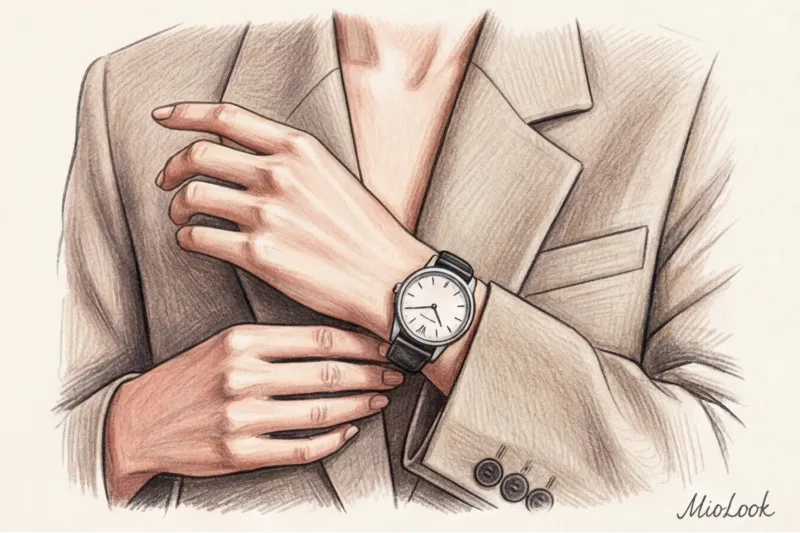
A year ago, a client approached me with a wardrobe request for a management position. She stood an impressive 182 cm tall. She seemed like a stately woman, perfect for oversized shoppers and heavy, architectural necklaces in the style of Marni. But her wrist circumference was only 14 cm! When we experimentally placed a massive necklace with thick links on her, it literally crushed her fragile collarbones, looking alien, like shackles. This case study perfectly demonstrates: height dictates length products (for example, the fit level of a crossbody bag), but it is the bone structure that determines it thickness and visual weight.
This rule also applies to portraiture. The scale of facial features is directly related to the size of earrings and necklaces. If you have large, expressive eyes, full lips, or a prominent nose, small stud earrings will simply disappear against the background, visually making your face appear even larger due to the contrast. However, delicate, detailed features require equally graceful, "jingling" lines in jewelry.
Access to MioLook for €0.99 — one-time payment
A smart AI stylist will select the perfect look based on your individual proportions and scale.
Get access — €0.99 onceThis leads to my favorite debunking of the main style myth: "Curvy women should only wear massive things, while thumb-sized women should only wear small things." This is fundamentally wrong. If a plus-size woman with a thin wrist and delicate, small features picks up a huge, shapeless bag, it won't make her look slimmer. On the contrary, it will mercilessly highlight the dissonance between her delicate natural bone structure and the bag's rough shape. True balance is always based on the physiology of your skeleton, not on the number on the scale.
How to Choose Accessories for Your Body Type: A Balanced Strategy
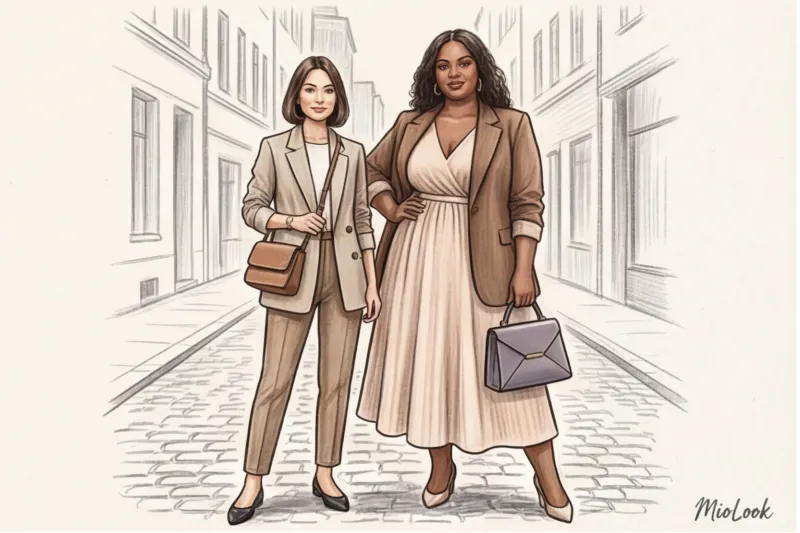
Let's get this straight: when we select accessories by body type We're talking exclusively about the geometry of the silhouette, not the number on the scale. A woman wearing a size XS and a woman wearing a size XXL can have identical body types—for example, a pear. The difference is only in scale, but the body's architecture, its dominant vectors, and balance points remain the same. This is why advice like "plus-size women shouldn't wear that" is hopelessly outdated.
In styling, we rely on one immutable law of visual physics. Remember this basic rule: where the accessory ends, there is visually added volume Your belt, the hem of your bag, the edge of your necklace, or the level at which your pendant hangs are visual anchors. They cause the observer's eye to pause and make a mental "notch," expanding that specific horizontal line.
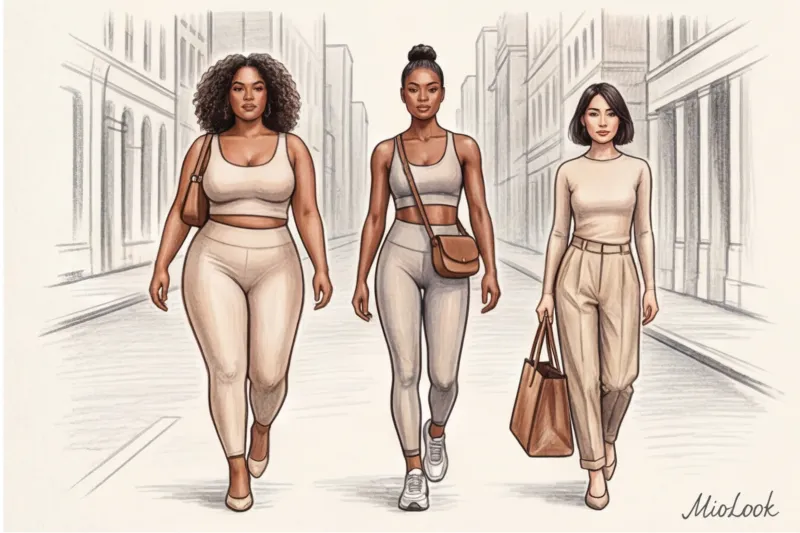
Knowing this mechanism, we can not only beautify ourselves, but literally reshape our body proportions, like sculptors. Let's explore detailed strategies for each body type.
Pear Type (Lower Type): Shifting the weight upwards
Analyzing street style on the streets of European capitals, I constantly see the same optical error. Women with voluptuous, feminine hips (the "pear" shape) wear crossbody bags with long straps, letting them hang exactly at the widest part of their hips. When carried dynamically, such a bag constantly bumps against the hip, creating excess bulk and drawing maximum attention to an area the owner might prefer to keep in the background.
The solution here is based on the principle of counterbalance. Our goal is to shift the visual weight upward, broaden the shoulder girdle, and create a powerful focal point in the portrait area.
- Decorations: Feel free to wear chunky necklaces, chokers made of large pearls or metal, architectural brooches (think Schiaparelli's surreal collections), and large statement earrings. They draw the eye to the face and collarbones.
- Bags: Your best investment is a bag with a short strap that fits snugly under the arm. Baguette or structured hobo bags visually add volume to the chest area. Even a basic mass-market hobo for €50–€70 can elongate your silhouette more than a shapeless designer bag worn at knee level.
Inverted Triangle and Apple Body Types: Balancing the Bottom
Although these two body types differ in volume distribution, the tactics for working with them have common features - we need to draw attention away from the upper or central part of the body and add dynamism below.
Problem for a triangle: Those with broad shoulders and narrow hips (like Angelina Jolie) should aim to add volume to their lower half. Large, long-strap shopper bags that end at the hips are ideal for this purpose. Also, take advantage of the "moving arms" effect: when you walk, keep your hands level with your hips. Wear chunky bracelets and large cocktail rings—they'll act as eye-catchers, visually widening your hips.
Task for the apple: This body type tends to have volume concentrated in the abdominal area, while the legs often remain slender. The key here is creating a strong vertical line. Long necklaces with a heavy pendant, creating a V-shape across the chest, act as an optical illusion, elongating the torso. Wide, contrasting belts should be strictly avoided—they will cut the figure in half, emphasizing the widest part.
"A common mistake with the Apple-shaped figure is choosing soft, shapeless bucket bags (like the iconic Pouch by Bottega Veneta). These accessories replicate and accentuate the curves of the midriff. You need structured, rigid bags with sharp angles—they'll create the necessary geometric contrast and visually 'pull together' the silhouette."
Rectangle and Hourglass: Working with the Waist
Women with a straight figure often complain about the lack of a defined curve between their waist and hips. Trying to artificially "draw" a waist with a tight, contrasting belt is a poor strategy. It will only highlight its absence.
Rectangle: Creating the illusion of curves is achieved through asymmetry. Wear your bag on one shoulder (not crossbody), choose an asymmetrical necklace or a single earring. If you use a belt, choose a medium-width model and be sure to tone-on-tone with clothing (for example, a dark blue belt on a dark blue dress). This will subtly emphasize proportions without drawing too much attention to the straight silhouette.
Hourglass: Your goal is to accentuate your natural proportions without weighing them down. Your body shape is already balanced, so accessories shouldn't overwhelm your figure. Belts (both thin and statement) are your key feature. Bags, however, are best kept medium-sized. A huge bag at hip level will instantly transform an hourglass figure into a pear shape, disrupting its natural balance.
To avoid buying accessories blindly, I always recommend trying them on digitally. You can upload a photo of yourself and the item you like to the "smart wardrobe" feature in MioLook The app allows you to visually assess how the length of a specific bag's strap or the width of a belt affects your body shape. This prevents impulse purchases costing €150–€200 and then leaving them in your closet for years because "it seems like a nice item, but somehow it makes me look fat."
Bag Math: Stiffness, Size, and Strap Length
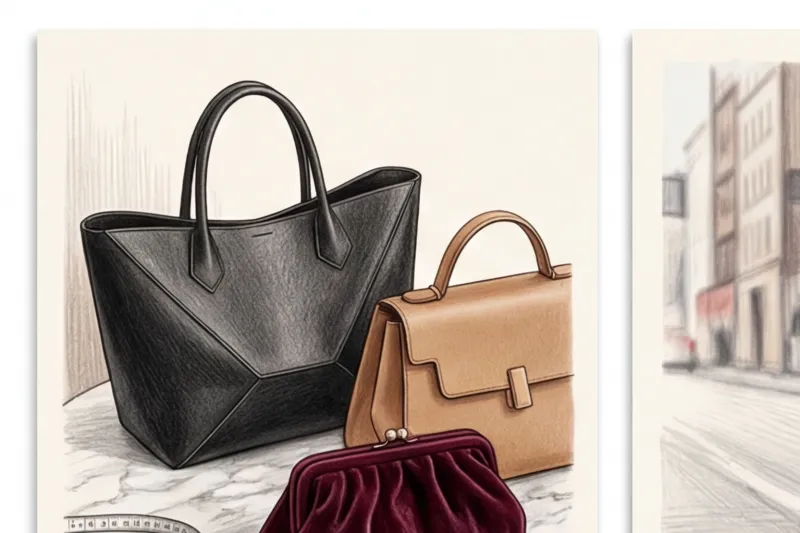
Place two identically sized bags side by side: a tailored architectural tote and a relaxed, soft, dwarf clutch. Which one will visually elongate your silhouette, and which will add a few extra pounds to your hips?
In my practice as a colorist and image consultant, this question often stumps me. The answer lies in the geometry of lines: texture and shape are always more important than physical size. A medium-sized, framed bag with sharp angles acts as a kind of exoskeleton for your look. It establishes strict verticals and diagonals that visually "pull" the figure together, making it appear more toned. In contrast, soft, shapeless styles (those popular "dumplings" or hobo bags) replicate the body's natural curves. If your goal is to correct volume in the stomach or hips, a shapeless texture will only accentuate this softness, adding visual heaviness to the entire silhouette.
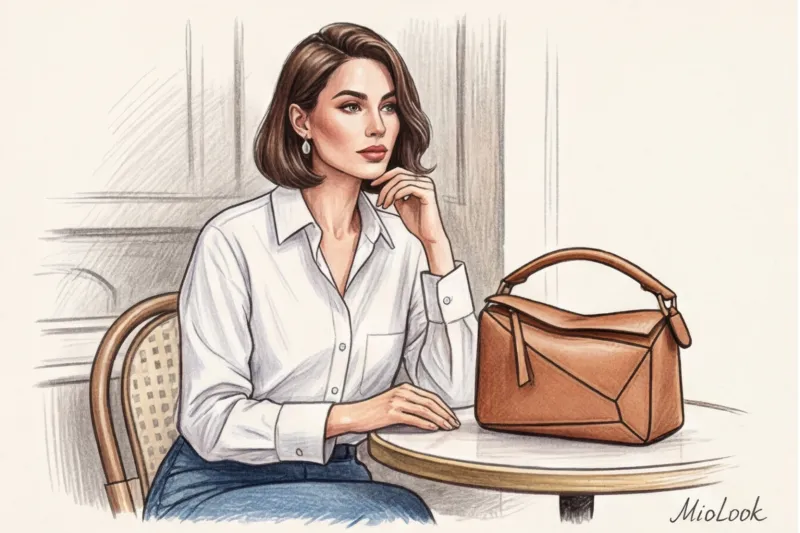
When choosing accessories for a woman's body type, I ask my clients to memorize the golden rule of width: the dimensions of your bag should never exceed the width of your waist. Imagine a voluminous 45 cm wide shopper carried by a woman with a slender 33 cm waist. Against such a massive horizontal line, the eye automatically perceives the entire silhouette as wider. The ideal everyday bag should fit within the inner contours of your torso.
The length of a crossbody strap is no less insidious, as it can mercilessly cut into your height. The point where the bag ends automatically becomes the focal point. Here the mathematics of proportions works flawlessly:
- For petite girls (up to 160 cm): A strap that lowers the bag below the hipbone shifts the center of gravity downwards. Your legs appear a good 10–15 centimeters shorter. The ideal strap length is one that places the bag at your natural waist or upper thigh.
- For tall girls (from 175 cm): A strap that's too short, securing the micro bag just under the arm or at chest level, makes your upper body look disproportionately bulky. Longer straps are needed to balance the body's natural verticality and fill the empty space.
By the way, this is why I always recommend investing in models with adjustable straps—because when you switch from sneakers to heels, your ideal bag fit will shift.
This same geometric design carries over into the business wardrobe, where bags for a business look require a fine balance of formality and proportion. According to a large-scale study on corporate image perception published in the Journal of Applied Psychology (2021), candidates with clearly defined briefcases and accessories are subconsciously rated as 32% more organized and competent. Soft shapes are dramatically inferior to rigid ones not only in visually enhancing your figure but also in conveying your status.
This is my favorite paradox: a simple, structured bag made of high-quality smooth leather for €80 will make your business look more collected, authoritative and expensive than a relaxed designer bag made of premium suede for €1,500.
Access to MioLook for €0.99 — one-time payment
Start creating your perfect looks with artificial intelligence. Upload your items to your smart wardrobe and try on bags of the perfect proportions with just one click.
Get access — €0.99 oncePortrait Jewelry: Focus on the Face and Neck
According to research in the field of perception psychology, during face-to-face communication, the other person spends more than 70% of the time looking at your "portrait triangle"—the area from the top of your head to your chest. Although we're used to thinking about what to pick accessories by body type While it's primarily used for hip or waist correction, the portrait area requires the utmost mathematical precision. Here, we manage the most important thing: focusing on your face.
Let's start with the geometry of the neck and the length of the earrings. A common mistake is buying spectacular chandeliers without considering the distance from the earlobe to the shoulder. If a long earring literally "rests" on the collarbone, the neck visually disappears, and the shoulder girdle looks bulky. In professional settings, we strictly adhere to two-centimeter rule There should always be a gap of at least 2–2.5 cm between the bottom of the earring and the shoulder line. This free space creates the necessary “air” and visually elongates the neck.
When it comes to face shape, two opposing optical approaches work: the principle of similarity and the principle of contrast. If you want to soften the sharp, angular features of a square face, use contrast—choose smooth lines, congo (ring) earrings, or teardrop shapes. A round face, on the other hand, needs clear geometry. Rectangular or asymmetrical earrings will create the desired structure. The main rule: never duplicate a problem area. Round, chunky stud earrings on a round face will inevitably exaggerate the effect of fullness.
The length of neck jewelry is a matter of pure physics. Classic chokers (35–40 cm) act as a rigid horizontal cut: they widen and shorten the neck. If you're aiming for basic versatility for everyday wear, choose a length princess (42–47 cm), which lies exactly along the collarbone line. But the chain length matinee (50–60 cm) and opera (70–85 cm) create a lifesaving vertical line. A high-quality accent pendant (excellent basic options made of architectural metal are now easy to find in the €50–€90 range) can distract attention from a heavy chin more effectively than complex contouring.
The lines of clothing and jewelry should never clash. The scale and shape of an accessory are always dictated by your neckline.
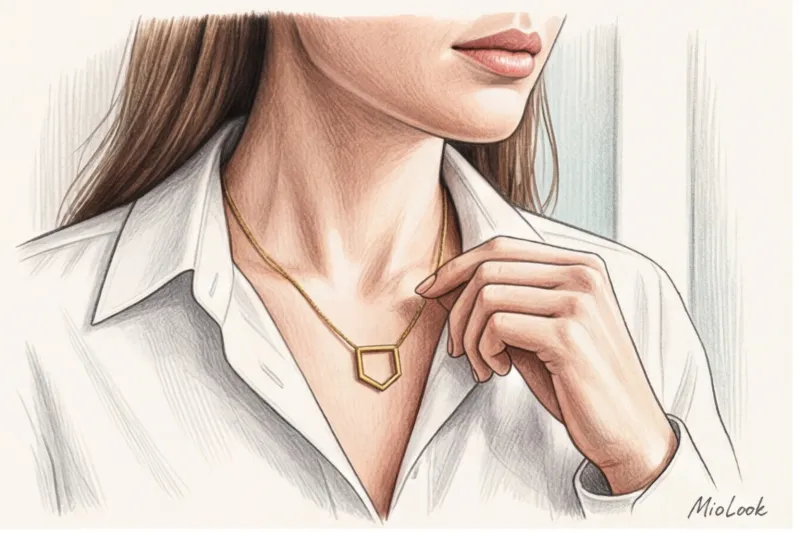
For example, the high neck of a thick turtleneck requires larger, more expressive shapes, otherwise a thin chain necklace will simply disappear against the textured fabric. And here lies my favorite professional life hack. How to visually lengthen a short neck or lighten a wide chest? Use a no-compromise combo: a deep V-neck paired with a delicate Y-necklace.
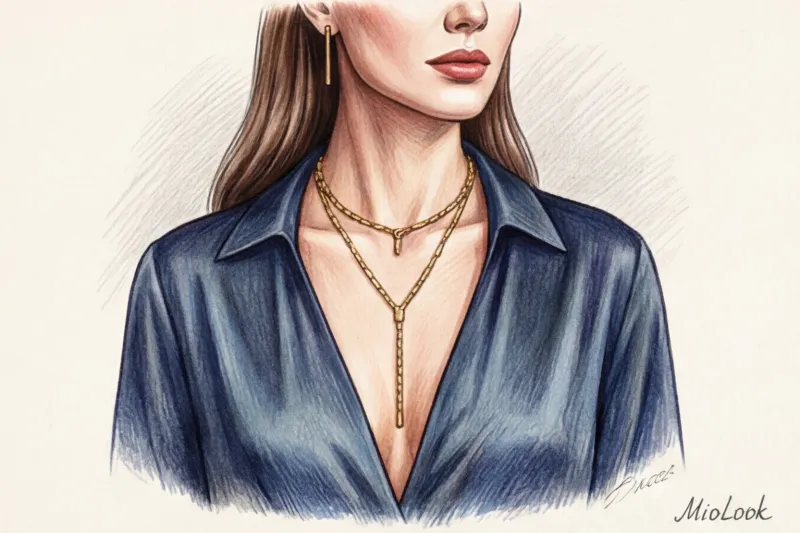
The central element of the Y-necklace descends, perfectly matching the neckline of the garment. This technique works flawlessly: the eye glides along the created vertical line, the neck appears swan-like, and the proportions of the upper body are instantly elongated. To avoid buying jewelry blind, I strongly recommend testing such combinations first. MioLook smart wardrobe Simply upload a photo of yourself wearing a basic top and virtually try on necklaces of different lengths. You'll be amazed how changing the chain length by just a few centimeters can dramatically alter the way your face is perceived.
Belts and shoes: anchors of your silhouette
When reviewing celebrity appearances at film festivals for my students, I see the same annoying mistake year after year. A luxurious €5,000 dress, impeccable hair, and... visually "chopped" legs due to one errant detail. Belts and shoes aren't just functional elements. They're your main visual anchors, which can either give you 10 centimeters of height or mercilessly ground your silhouette.
Let's start with waist geometry. Everyone's anatomy is different: for some, the distance from their lowest rib to their pelvic bone is a whole hand's breadth, while for others it's just a couple of centimeters. If you have a short torso, the wide corset belts popular today are absolutely contraindicated. Wearing a belt 10-12 cm wide will literally "eat up" all the space between your bust and hips. Your figure will instantly become boxy. For a short torso, a safe belt width is a maximum of 3 cm.
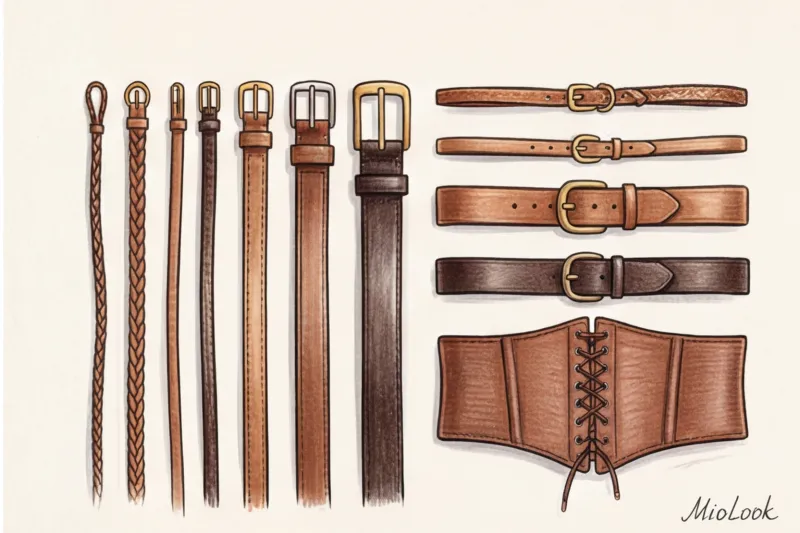
The second nuance is color. When choosing accessories based on your body type, we must remember the basic law of color: any strong horizontal contrast cuts off your height. A black belt on a white dress will divide your figure evenly, making you appear shorter and wider. If your goal is to elongate your silhouette, choose a belt that matches your outfit. It will create the desired sculpting relief, accentuating your waist while maintaining a continuous vertical line.
Moving down, we'll see how heel shape works based on the same principle of similarity we discussed earlier. An ultra-thin stiletto heel against a full calf or wide ankle creates a stark hypercontrast: the leg will appear even more massive, and the heel will appear comically fragile, as if it's about to break under your weight. For those with thick calves, I always choose shoes with a stable, architectural heel (block or slightly flared).
The most devastating optical illusion on the red carpet and in life is the contrasting ankle strap on a shoe.
This tricky element visually "amputates" the foot. If you can't resist wearing Mary Janes, be careful to maintain proper proportions: the thickness of the strap directly depends on the circumference of your calf. The larger your ankle, the wider the strap should be (2-3 cm) to prevent it from digging into your skin. The ideal way to preserve leg length is a nude strap that blends perfectly with your skin tone.
Finally, there's the toe shape. It's the final touch in establishing proportions. A pointed toe physically adds length to the foot and optically elongates the entire leg. This is a powerful tool for petite women. A round toe or a trendy square "bob" acts as a drag: they ground the look, make the foot appear compact, but also mercilessly reduce height.
Sometimes it's difficult to immediately assess how a particular toe box or waistband width will work with your proportions. Before purchasing expensive shoes (especially in the €300+ price range), I recommend uploading your planned look to MioLook A virtual try-on will immediately show you whether the accessories you choose will cut off your height.
Your ideal image
it begins Here
Join thousands of users who look flawless every day with MioLook.
Get access — €0.99 onceMioLook: An AI assistant for finding the perfect proportions
A 2023 study by Stanford University's Department of Psychology revealed a fascinating fact: our brain distorts our perception of our own proportions in the mirror by at least 15%. We focus on local insecurities, missing the big picture. That's why, when choosing accessories based on body type, I'm categorically against the "rely on intuition" approach. Intuition often deceives, but geometry does not. In my practice, I combine classical styling principles with algorithms: AI calculates proportions with mathematical precision, completely eliminating subjectivity.
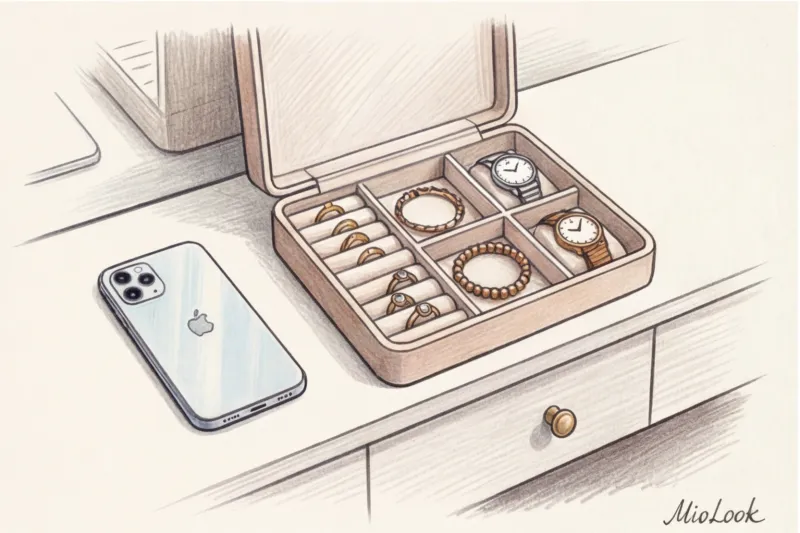
Neural networks in MioLook They analyze your busy silhouette and suggest optimal areas for accentuation. The program literally shows where your natural waistline is (which often doesn't align with your anatomical waistline) and where to best place the focal point to elongate your height.
A virtual fitting room is a true visual lifesaver. Let's say you've spotted a structured crossbody bag for €320 in an online boutique. Before you click the checkout button, you test it on your outfits. You can visually check how the length of a bag strap cuts across your silhouette, or assess whether the scale of a chunky necklace is proportionate to the width of your shoulders. This is a preventative measure against purchases that later ruin your proportions.
The final step of smart styling is creating a capsule of accessories in the app based on your bone structure measurements. By entering your Soloviev index and body type into the system, you create a digital catalog. Only belts, bags, and jewelry that physically match your natural size will be included.
Technology takes the most tedious part of the job off your hands: you no longer have to wonder in front of the mirror whether that buckle is too big. You simply open your digital wardrobe and see a ready-made, mathematically verified formula for your style.
Checklist: Auditing Your Accessories Collection
Do you know what separates a woman with impeccable style from one whose shelves are overflowing with jewelry that sits unused for years? Just one evening of ruthless auditing. I could write another hundred pages on the theory of proportions, but it will all remain empty words until you open your jewelry box. During my training at the Istituto Marangoni, we were instilled with this strict rule: 80% of silhouette problems are solved not by buying new clothes, but by simply adjusting lengths and getting rid of disproportionate details. So I urge you to conduct this audit tonight.
Step 1: Measure your wrist and determine your baseline scale. Grab a regular tape measure right now. A circumference of up to 15.5 cm indicates a delicate bone structure (asthenic), and massive choker chains will look like heavy shackles on you. From 15.5 to 17 cm is a medium-sized (normosthenic), allowing you to play with most shapes. Over 17 cm indicates a large bone structure (hypersthenic), so feel free to put away micro-rings and very thin chains, as they will only accentuate your volume by contrast.
Step 2: Calculate your "expansion zones" and "contraction zones." Put on a fitted black turtleneck and leggings and stand in front of a full-length mirror. Your goal is to honestly note the widest horizontal lines (usually your hips, shoulders, or bust) and the narrowest (waist, underbust, ankles, wrists). Write them down. When learning how to choose accessories for your body type, we follow this ironclad logic: no focal piece should end in your "widening zone," unless you're specifically looking to add volume there.
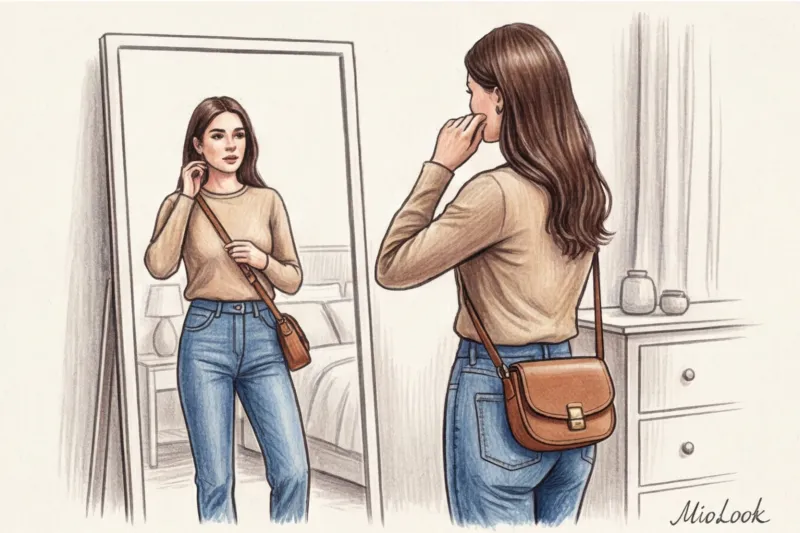
Step 3: Check the length of the straps of all crossbody bags. This is the most common and annoying mistake I see on the street. Take out all your shoulder bags. Put on a coat or jacket (the outer layer you'll actually wear them with) and adjust the straps. If you're a "Pear," the bag should end exactly at waist level or under your armpit (like a baguette). If you're an "Inverted Triangle," lower it below your hipbone. Remember: even a premium model from a well-known brand for €1,200 will visually disfigure your figure if its hem hangs right at the widest part of your hips.
Step 4: Sort belts by width and contrast level. Divide all your belts into two piles. The first includes belts wider than 4 cm and in a contrasting color to your usual clothes. The second includes thin belts (up to 3 cm) and those that blend tone-on-tone with the fabric. If you have a shorter torso, contrasting wide belts will mercilessly cut you in half, stealing a few centimeters of height—it's better to give them to a friend. Keep only those belts that serve as subtle waist markers, not harsh dividing stripes.
The 3-second rule when looking in the mirror. How do you know the audit was successful and the proportions are right? Assemble the finished look with the accessories you've chosen, close your eyes, take a deep breath, and then open them sharply. Where does your gaze fall in the first three seconds? If your focus immediately drifts to the massive belt buckle over your stomach, which you were originally trying to hide, take it off immediately. Accessories should smoothly lead your interlocutor's gaze to your face, not force them to examine your problem areas.
To avoid losing the results of this extensive practical work, I always advise my clients to digitalize successful combinations. Take a photo of the ideal proportions you've found and upload them to MioLook The app's algorithms will help you create a smart accessory capsule based on your personal measurements. So, before your next purchase, you can virtually try on an item and know for sure whether it fits within your ideal size range.
Accessories aren't just cute trinkets we throw on in a hurry before leaving the house. They're a powerful tool of optical illusion, capable of both elongating and grounding the silhouette. Don't be afraid to experiment with scale, but always remember the laws of geometry. Your style isn't determined by the size on the tag, but by how skillfully and consciously you command attention.
Guide Chapters
Micro Bags for Tall Women: How to Wear the Trend
Think tiny accessories aren't flattering on tall women? Let's debunk fashion stereotypes and learn how to wear trendy micro bags.
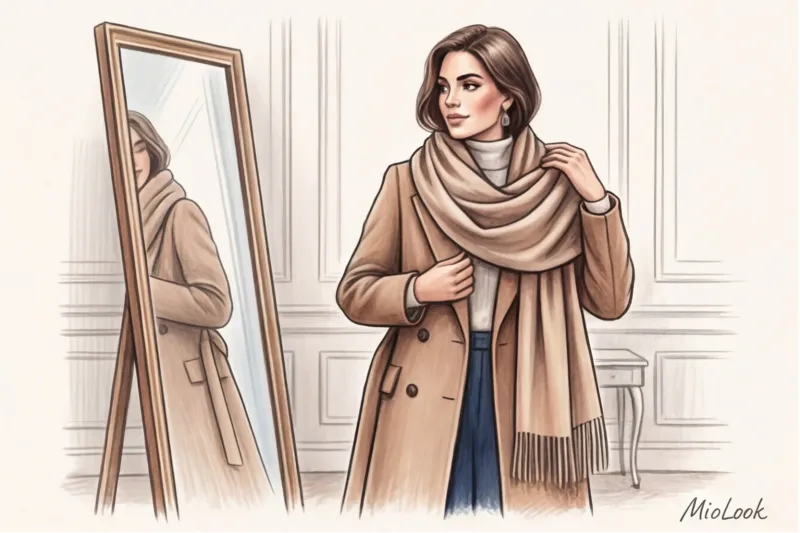
Stylist Tips: How to Wear a Flattering Oversized Scarf
A voluminous scarf not only provides warmth but also creates an optical illusion. Learn the stylist's secrets for seamlessly incorporating a chunky stole into your winter look.
How to choose a hat according to your height: the rule of proportions
Forget the clichéd advice from glossy magazines. Discover how headwear architecture and the mathematics of proportions can help you find the perfect hat for your height.
How to choose a ring based on the thickness of your fingers and the fullness of your hands
Learn the secrets of choosing rings and bracelets that will visually make your hands look more graceful. Learn the basic principles of optics and tips from a professional stylist.
How to choose glasses according to your face size: stylist's secrets
The perfect frame shape often looks out of place if scale isn't taken into account. Let's explore why face size and body proportions are more important than classic charts.
Ideal jewelry for broad shoulders and a large bust
Forget microscopic pendants that only add bulk. Learn how to create the perfect balance with the right jewelry.
How to Choose Earrings for Your Face Shape: Stylist Tips
Some earrings visually enhance the face, while others add age. Discover modern stylist secrets for choosing the perfect jewelry.
How to choose your bag size online: the MioLook algorithm
Abstract numbers in a product description mean nothing until we actually wear the item. We'll explain how algorithms help you choose the perfect bag size based on your measurements.
Who suits chunky shoes: how to avoid adding weight to your figure
Chunky boots can make you look like a style icon or visually weigh down your figure. Learn the principles of body structure and learn how to wear trendy shoes correctly.
How to choose a belt for your body type: stylist tips
A belt isn't a vice, but an architectural tool for your wardrobe. We'll explore the mathematics of lines and learn how to choose the perfect belt width for any silhouette.
Print Size by Body Type: How to Choose a Pattern
The old rule "large prints for plus-size girls" no longer applies. Learn how to choose the right patterns to accentuate your best features.
Accessories for an apple-shaped figure: how to hide volume
Forget shapeless robes. Learn how to create the perfect silhouette with accessories and visually conceal a full waist.
Accessories for a Pear-Shaped Body: Styling Tips
Stylist secrets: how to visually slim your hips with the right bags and jewelry. Learn how to properly shape an A-line silhouette.
Bags for Plus Size Women: How to Balance Your Silhouette
The right bag is your key tool for shaping your figure. Learn how to use geometric accessories to create a harmonious plus-size silhouette.
Bags for Petite Women: Size Guidelines
The wrong bag can visually take away several centimeters of height. Learn the stylists' secrets for choosing the perfect accessory for petite women.