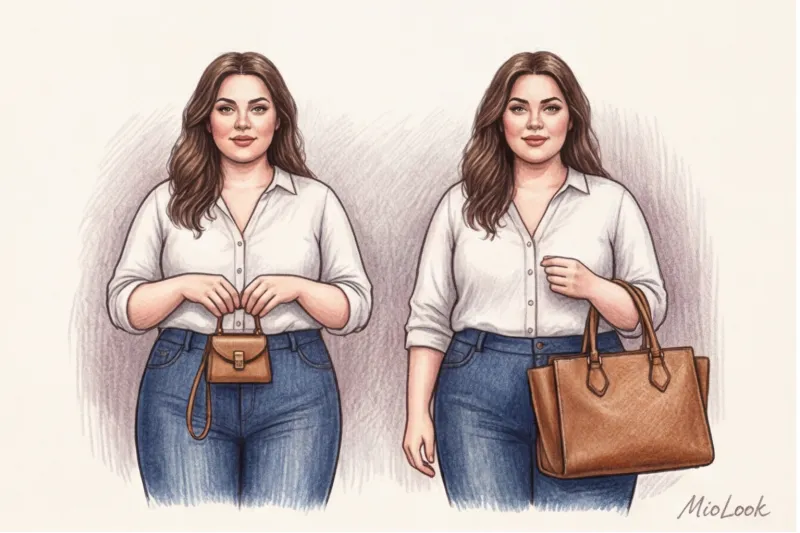
Over 12 years of working as a personal shopper, I've witnessed the same scene hundreds of times in fitting rooms. A curvy client puts on a perfectly tailored trench coat and impeccably tailored trousers, then picks up her everyday bag—an enormous, shapeless, soft duffel bag. And in that very second, her perfectly sculpted, toned silhouette collapses, becoming heavy and bulky. Why does this happen?
For a long time, fashion magazines have been perpetuating a harmful stereotype: if you're plus-size, you need to hide behind giant bag-like accessories. But the right bags for plus-size women aren't camouflage. They're your primary architectural tool. A bag can create a vertical line, draw attention away from the nuances of your figure, and visually "shed" a few pounds, if you understand the laws of geometry. We discussed the basic principles of scale in more detail in our A complete guide to choosing the perfect accessories for your body type , and today we will analyze the specific mechanics of bags.
The Illusion of Scale: Why the Right Bags for Plus-Size Women Work Like Photoshop
In cognitive psychology, there's a concept called the "Ebbinghaus illusion" (or Titchener circles). The idea is simple: the same circle appears enormous when surrounded by small objects, but tiny when surrounded by large ones. In styling, this is the basic law of scale. Your body is the background. An accessory is the object.
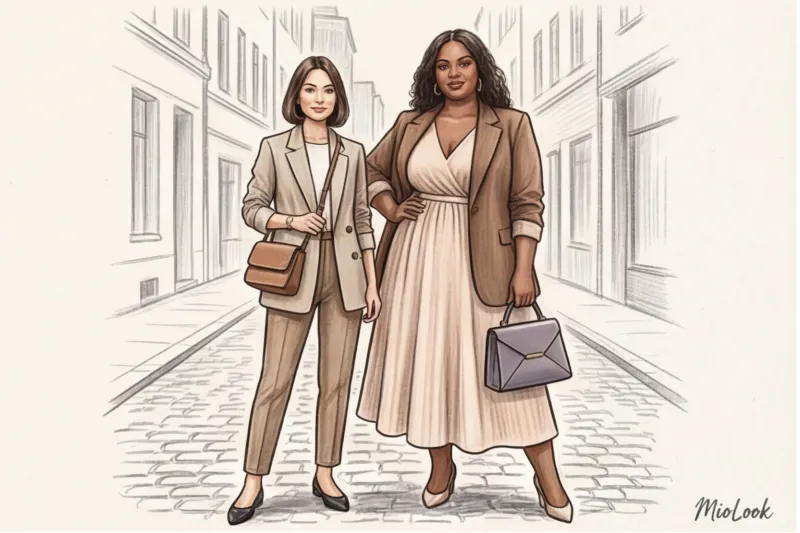
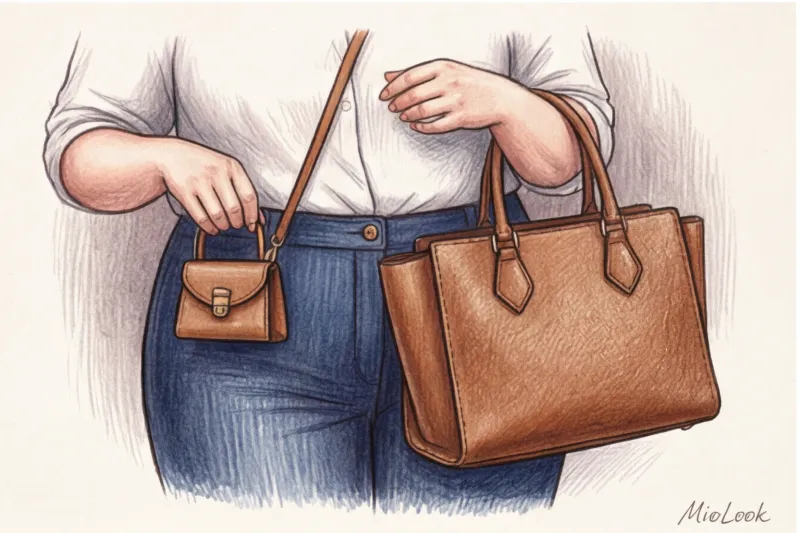
When a size 52 woman picks up a trendy micro bag (like the infamous Jacquemus Le Chiquito or a slim mini baguette), the contrast with this tiny item instantly makes her figure appear larger. The bag looks like you stole it from a doll. During one of our offline consultations, we experimented with letting a client try on a micro baguette—she burst into laughter, noticing in the mirror how her shoulders had visually doubled in width.
But going to the other extreme isn't a good idea either. The "bigger is better" rule will backfire. An overly large shopper bag that covers half your torso inevitably evokes images of '90s shuttle traders. It adds unnecessary bulk where none exists. Your ideal size is a confident medium to medium-large size, proportionate to your bone structure.
Geometry Rule: Why Shapeless Hobos Add Weight, While a Rigid Frame Makes You Look Slimmer
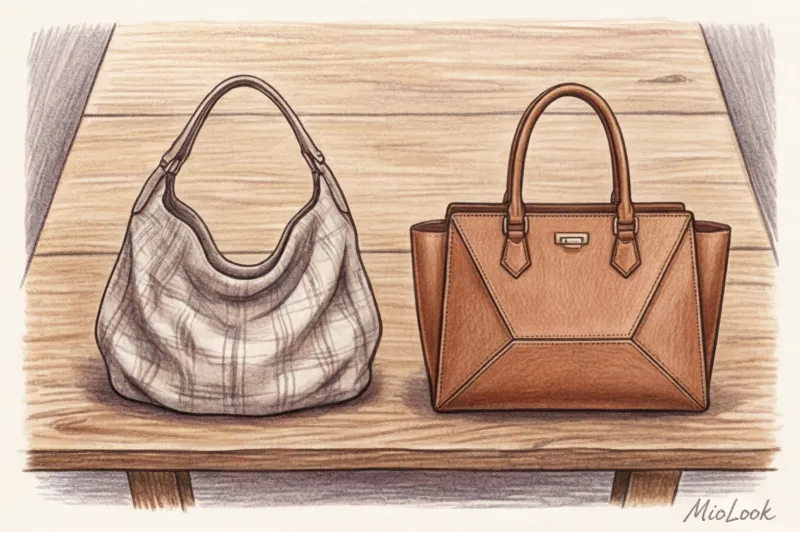
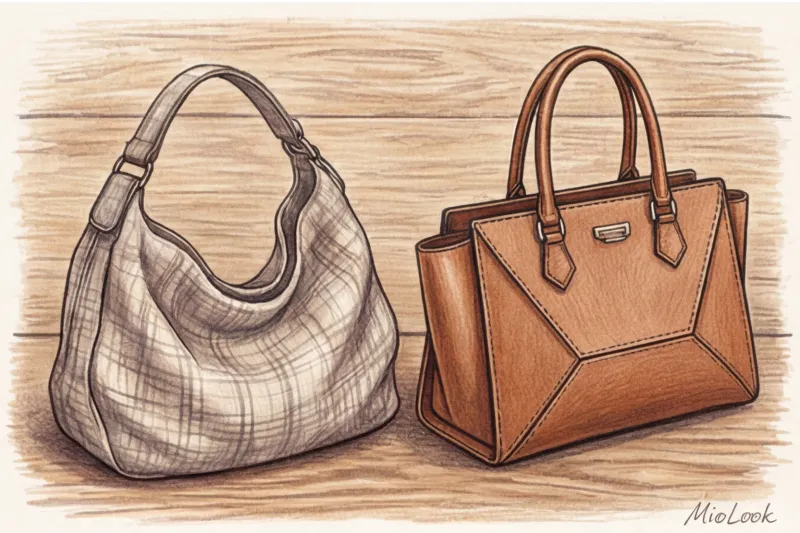
Here we encounter the main myth of plus-size styling. Many believe that soft, cozy hobo bags or fabric totes smooth out the silhouette. In fact, it's quite the opposite.
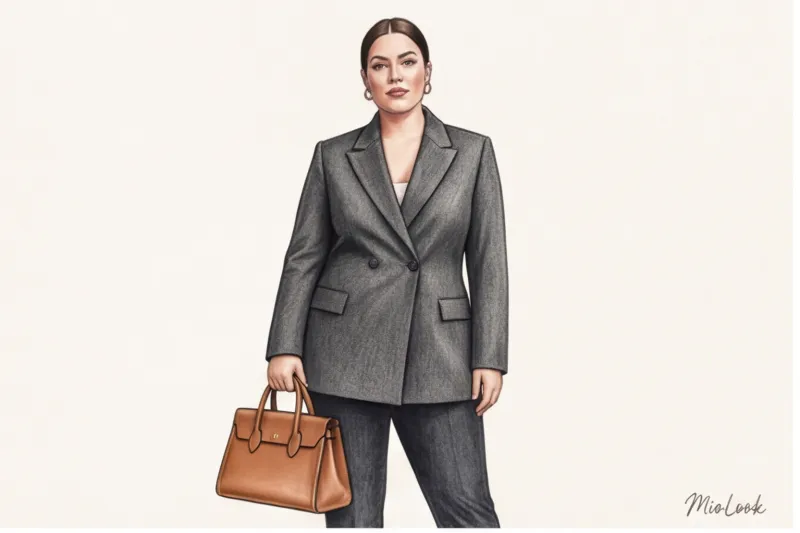
The principle of similarity is at work. A shapeless, soft bag slung over your shoulder echoes the curves of your body, the folds of your clothing, and the softness of your lines. It creates a "blurred" look. Rigid geometry—rectangles, squares, trapezoids—works through contrast. Sharp angles and clean lines add structure to the figure, creating those very vertical lines we strive for.
"Every soft crease on your bag visually adds an extra fold to your silhouette. Want to look toned? Buy bags that look like they have a spine." — Katarzyna Nowak
I had a client, Elena (size 54), who loved wearing a soft leather backpack-sack over one shoulder. It made her back look round and her posture slouched. We replaced the backpack with a structured tote from Massimo Dutti with a rigid base and sharp edges. At our next appointment, Elena admitted that her colleagues asked if she'd lost weight. She'd visually "lost" about 5 kg simply because a hard, disciplined line had appeared next to her soft silhouette.
Sort out your wardrobe wisely
Upload photos of your bags to MioLook, and our smart algorithm will suggest which ones will best complement your everyday looks.
Get access — €0.99 onceTop 3 frame models for every day
If you want to build a functional base, consider these three forms:
- Structured Tote: A4-size rectangular bag with a rigid bottom and walls that stay in place when empty. Ideal for the office.
- Saddle bag with a rigid edge: A semicircular shape, but always with a tight, rigid edge. Good for casual looks.
- Satchel: A briefcase-style bag with a crisp flap and accent metal hardware.
Fair Limit: Of course, a rigid frame is inappropriate if you're heading to the gym in joggers and a hoodie. For hyper-relaxed athletic looks, a textile shopper is justified by its functionality, but for urban and business outfits, geometric shapes are a must.
Crossbody for Plus Size Women: How to Avoid the "Overstretched Sausage" Effect
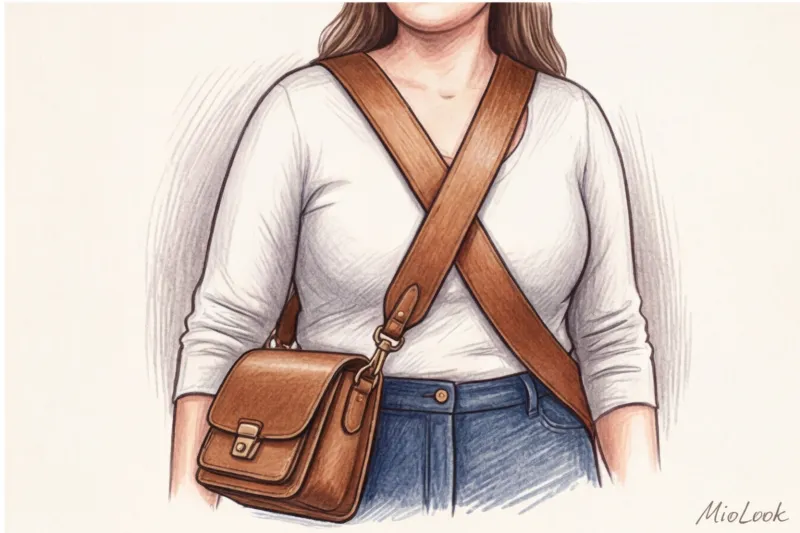
A crossbody bag (slung diagonally over the shoulder) is convenient and leaves your hands free. But for plus-size women with fuller breasts, it's often a disaster. The thin strap sits right between the breasts, accentuating their fullness in an unflattering way, and cuts into the body, creating unnecessary folds in clothing—the very same "overstretched sausage" effect.
To avoid this, always measure drop length (The height of the strap from the shoulder to the top of the bag). For a D+ bust and a height of 165 cm or more, this measurement should be at least 55–60 cm. Many mass-market brands (especially Zara) make straps 48–50 cm long, designed for a height of up to 170 cm and a size 44. Such a bag would dangle comically under the bust on a plus-size woman.
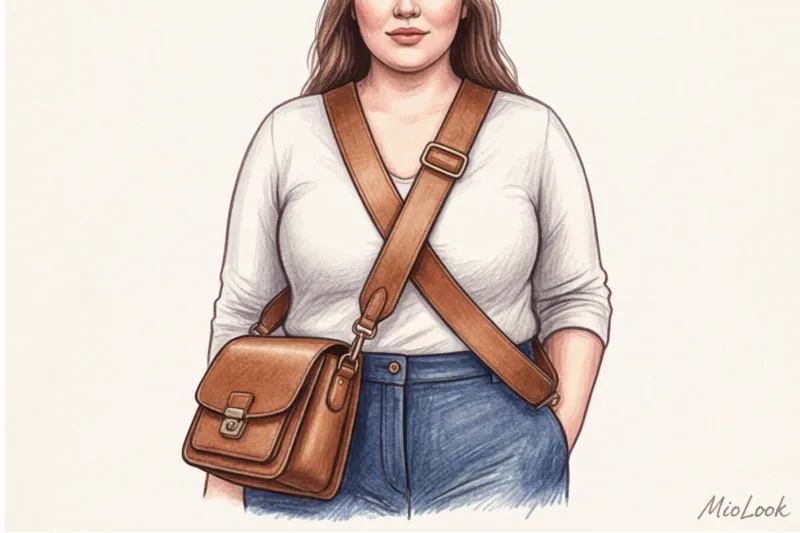
The ideal crossbody bag position is at or just below your hipbone, but definitely not at the widest part of your hip (otherwise, the bag will add bulk to your hips). If a diagonal fit is completely unflattering, try an elegant alternative: simply wear the bag over one shoulder, extending the strap as far as possible.
Belt width and hardware size matter
Another pain is chains. A thin metal chain on a large shoulder not only digs into the skin mercilessly, but also disappears from the background, emphasizing the bulk of the body.
- Ideal shoulder strap width: Strictly from 3.5 to 5 cm. If a good bag comes with a narrow belt, simply buy a wide fabric belt separately (they are sold everywhere now and perfectly refresh the look).
- Proportionality of fittings: Forget micro-zippers and tiny buckles. Large snap hooks, chunky locks, and wide zippers balance out a large bone structure and always make an accessory look more expensive.
Eye control: where the bag ends, there is the focus of attention
There's a golden rule in styling: the human eye always stops where there's a contrasting object. Understanding this, you can manipulate others' attention like a magician, directing the gaze away from problem areas.
1. Underarm bag (trendy baguette with a short strap).
It draws all the attention to the chest and forearm area. Carefully: If you have full arms at the top or a large chest that you don't want to emphasize, such a bag will make this area visually even wider.
2. Bag on the elbow.
A classic 2010s gesture, this bag sits right at your waist or stomach level. If this is a problem area, a bag in the crook of your elbow will act as a magnifying glass, adding an extra 10-15 centimeters to your waist.
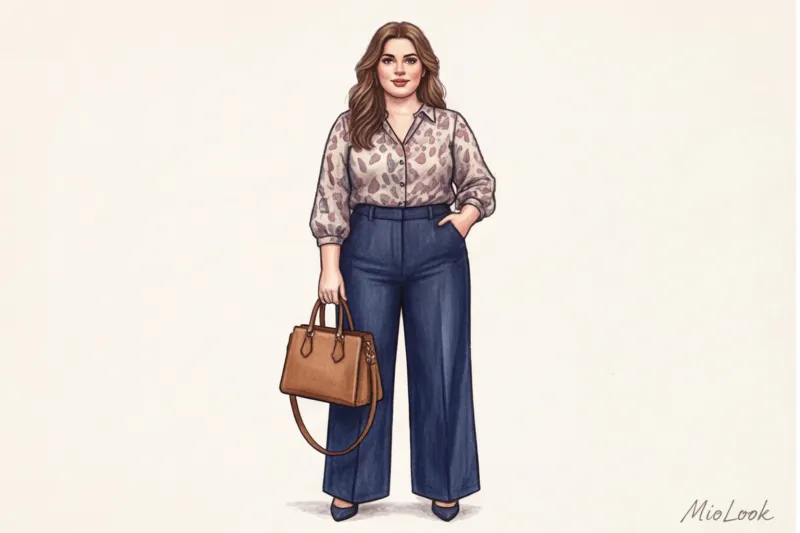
3. Bag with the hand lowered (top-handle models).
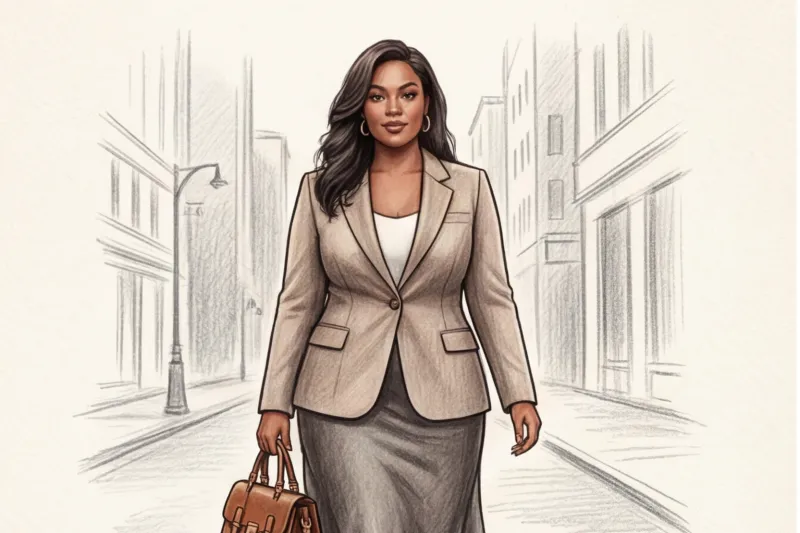
This is the most complimentary way to wear a bag for plus-size women. When you hold the bag by the short handles with your hand hanging down, it rests near your knees. This draws people's eyes up and down, elongating your silhouette. Plus, the bag doesn't add bulk to your hips or waist in this area.
Create a look with the perfect bag
Use MioLook's Smart Wardrobe feature to see in advance how a new bag will pair with your favorite dresses and pants.
Get access — €0.99 onceEuropean Mass Market Review: What Bags to Look for at Zara, COS, and Massimo Dutti
As a seasoned shopper, I constantly monitor European retail. You don't have to spend €1,500 on luxury for an accessory to flatter your figure. Often, a structured, dense faux leather bag for €50 flatters your silhouette better than a soft, sagging designer bag for €500. Here's what to look for in popular brands:
Zara:
You have to be very careful here. Their basic polyurethane crossbody bags often have straps that are too short and have cheap, small hardware. It's worth looking for their limited edition genuine leather collections (usually in the €80–€120 range) – they feature stunning, rugged designs with large buckles and excellent cuts.
COS:
A mecca for lovers of architectural minimalism, their bags are a triumph of geometry. They hold the frame perfectly, have no unnecessary details (great if you prefer simplicity), and the straps are often wide and adjustable. Prices range from €100 to €180, but they're an investment that will last for years.
Massimo Dutti and &Other Stories:
The best places to buy A4 work totes and satchels. They feature excellent quality thick leather (budget €120-€200). The hardware is well-proportioned, matte or with a refined sheen (without the cheap, "samovar" yellowness).
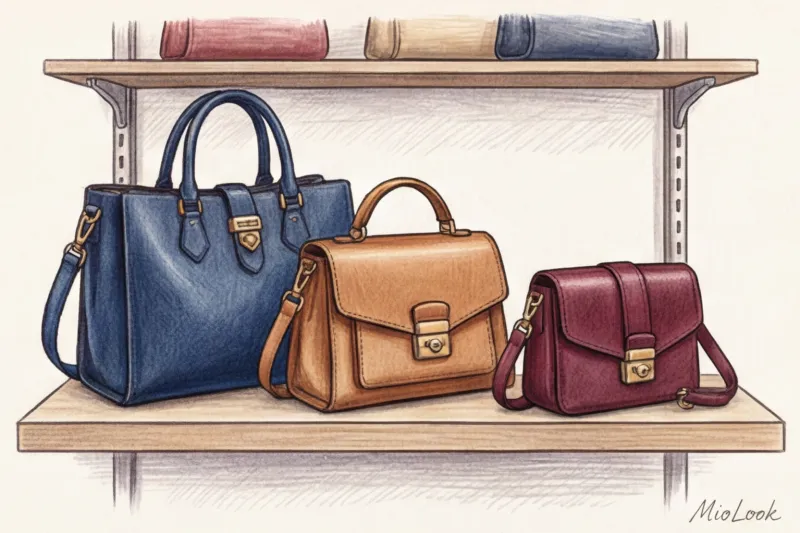
Count it cost-per-wear (price per outing). If you buy the perfect hard tote for €150 and wear it 200 days a year, each outing will cost you less than €1. That's much cheaper than buying five shapeless cloth bags for €30 each that will ruin your silhouette every day.
Pre-purchase checklist: 5 questions for the perfect bag
Next time you're shopping or ordering online, don't just look at color. Ask yourself these five practical questions I make all my clients learn:
- Does it hold its shape? Place the empty bag on the table. If it sags like a deflated balloon, leave it in the store. We need a frame.
- Is the belt proportionate to my proportions? Is it wider than 3.5 cm? Will it not cut into the shoulder and highlight the folds of clothing?
- Is the strap long enough? If it's a crossbody, does the bag reach your hip bone or sit under your bust?
- Quality of fittings? Are the zippers and snap hooks large enough to blend in with my figure?
- Where is the bag when I stand with my arms down? Doesn't it add volume where I want to hide it?
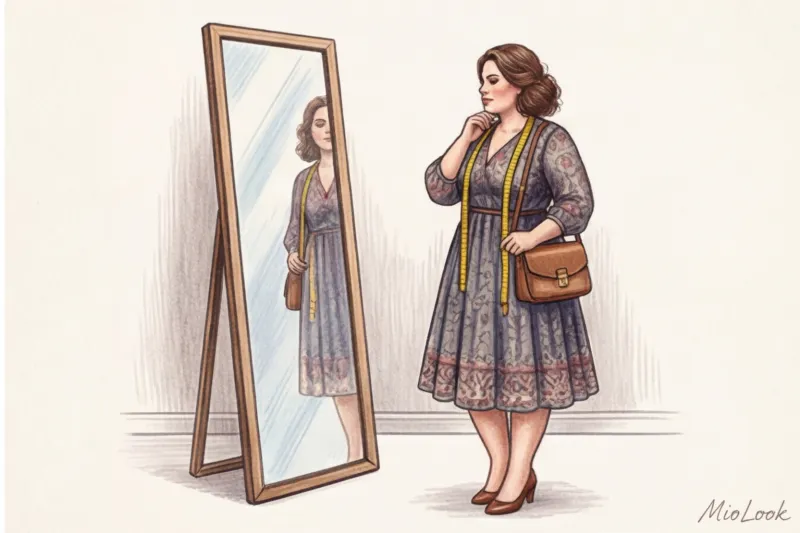
Remember the key: a bag is more than just a container for keys and a phone. It's a tool that can either disrupt proportions or elongate a silhouette, making it look classy and put-together. Choose strong shapes, pay attention to scale, and you'll see how one well-chosen accessory can transform the overall look of your wardrobe.