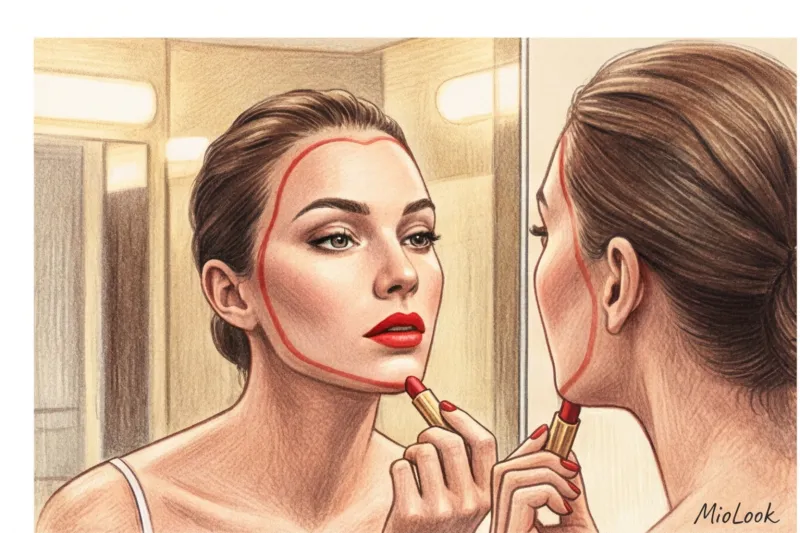
Have you memorized the rule that a round face needs rectangular glasses, and a square one needs round ones? Forget it. But have you ever noticed that a shape that fits perfectly according to all the classic charts often looks out of place on the face? Over 12 years of working as a stylist, I've seen hundreds of women who bought the "right" shape, only to have their faces visually heavy, tired, or comical. There's only one reason: they didn't consider the scale.
Blind faith in outdated formulas works against you. A perfect oval shape won't save you if the frame doesn't match the width of your bone structure and the volume of your facial features. We discussed silhouette architecture in more detail in our The complete guide to the perfect accessories for your body type , but when it comes to the face, millimeters decide everything. Today we'll look at How to choose glasses according to your face size , why the thickness of the plastic is more important than the shape of the chin, and how your height affects your choice of optics.
The Ebbinghaus Illusion on Your Face: Why Scale Matters More Than Shape
Our brain judges the size of objects not in isolation, but in comparison to their surroundings. This is the basic principle of visual illusions, known in psychology as the Ebbinghaus-Titchener illusion. The same circle appears enormous when surrounded by small dots, but tiny when compared to large ones.
Let's transfer this to your face. If you have wide cheekbones and large cheeks, tiny "John Lennon"-style frames will create a disastrous contrast—your face will appear wider and more massive than it actually is. Conversely, oversized mask-style glasses on a narrow face will make it look painfully thin and visually "pull" your eyes toward the bridge of your nose.
One of my clients, a petite woman with delicate, fine features, came in for a wardrobe review wearing trendy, chunky Celine frames (these models average around €350-€400). The heavy black acetate frame literally "disappeared" her face, making her eyes appear tired. The sheer scale of the frame completely detracted from her appearance. Once we replaced the oversized frames with a thin metal semi-rimless model from Massimo Dutti, her face instantly "opened up."
The frame size should be proportionate to your bone structure. Size always trumps shape: it's better to buy the "wrong" round frame that's the perfect size than the "right" rectangular frame that's too small.
The Anatomy of a Perfect Fit: How to Choose Glasses by Face Size
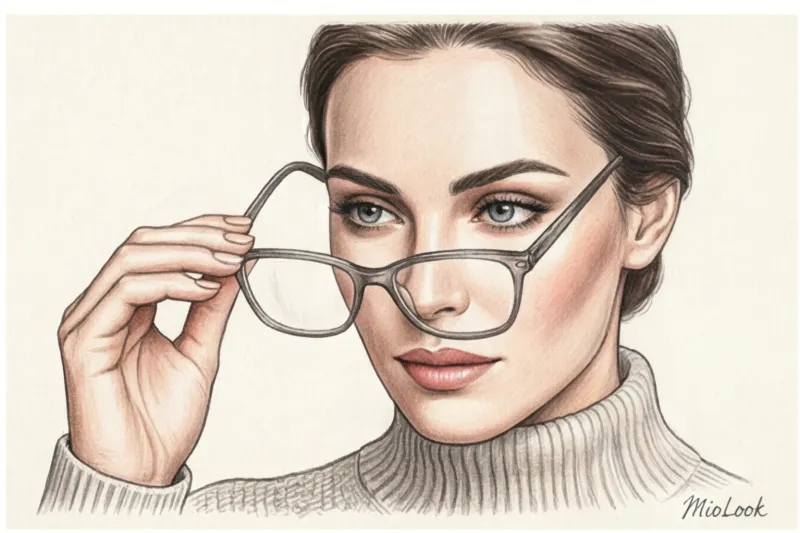
Professional opticians and stylists rarely look at the chin shape. We focus on the fit points. If you want to understand how to choose glasses for your face size without making mistakes, use this professional checklist:
- Eyebrow line: The top edge of the frame should follow the curve of your eyebrow, but not completely cover it. Your eyebrow is the frame of your face. If glasses obscure or hide it, your face loses expression.
- Pupil position: Your eye should be exactly centered horizontally across the lens and slightly above the center vertically. If your eyes are shifted toward the inner edge, the frames are too big for you.
- Frame width: Glasses should not extend beyond the widest part of your face (usually your cheekbones) by more than 2-3 mm on each side.
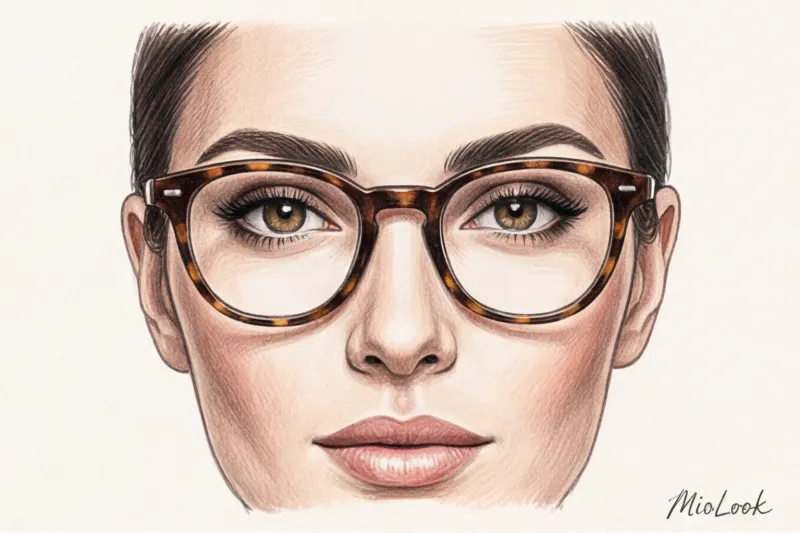
Important limitation: This advice doesn't work for everyone. If you wear lenses with high diopters (especially with myopia of -5.0 or higher), the lenses will optically "cut off" the contour of your face at the sides inside the frame. In this case, wide frames are absolutely avoided—the distortion of your face (the "step effect") will be too noticeable. Your ideal width is exactly at your cheekbones, not a millimeter wider.
Your perfect look starts here
Join thousands of users who look flawless every day with MioLook. Upload your photos and let AI assemble a capsule.
Get access — €0.99 onceWhat do the numbers on the temple mean (and why you need to know them)
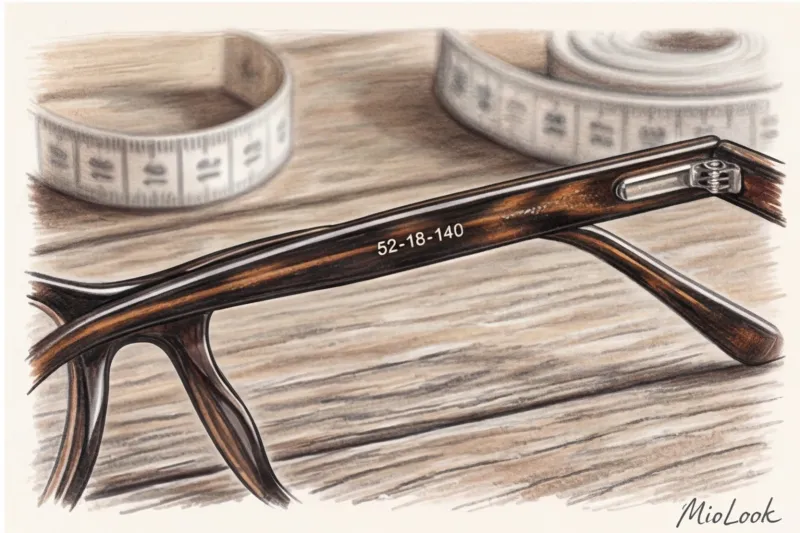
To avoid guessing when ordering sizes on the Zara website or at an optical boutique, learn to read the markings. According to international optical measurement standards (the Boxing System), three numbers separated by a hyphen or a square are always printed on the inside of the left temple, for example: 52-18-140.
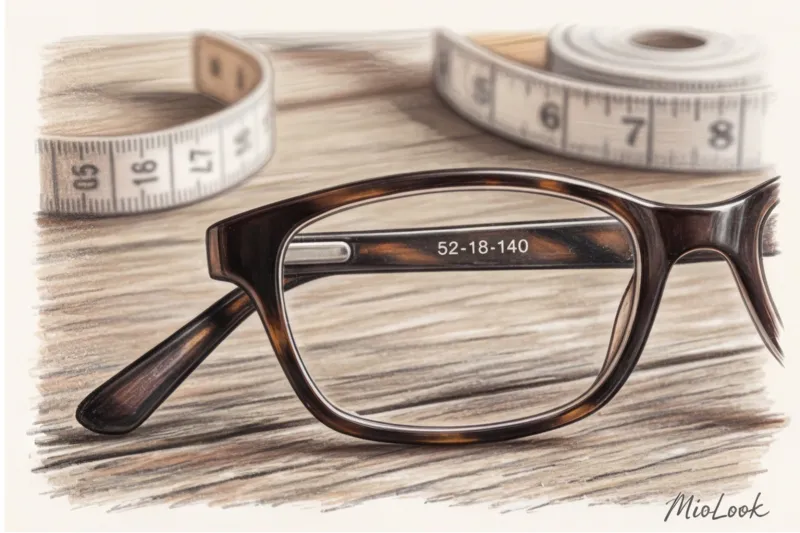
- 52 (A size) — the width of one lens in millimeters.
- 18 (Bridge) — the width of the bridge of the nose. This determines how comfortably the glasses fit on the nose. Narrow noses require a bridge of 14–16 mm, while wide noses require a bridge of 18–22 mm. The wider the bridge, the further apart the eyes appear.
- 140 (Temple length) — the length of the temples to the very tip. If it's shorter than necessary, the glasses will press painfully on the ears.
If you have old, comfortable glasses, simply rewrite these numbers. When looking for new frames in the same price range (whether a basic model for €50 or a premium model for €250), the lens tolerance is allowed to be ±2 mm and the bridge tolerance is ±1 mm.
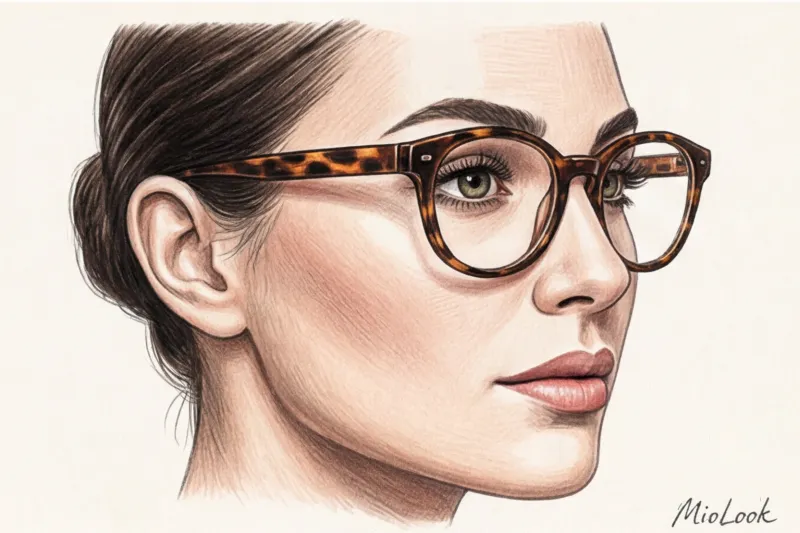
Frame thickness and facial features: finding balance
Why does the same cat-eye frame make one woman look like a sassy Parisian and another like a stern schoolmistress? It's all about the thickness of the material and the contrast.
The principle of similarity states that large, expressive facial features (full lips, a wide nose, prominent cheekbones) require visual support. A thin wire frame will simply disappear on such a face, making it appear bulky. Your choice is chunky acetate, horn frames, or combination styles with a prominent top line. You can read more about choosing basic shapes in the article about basic timeless sunglasses.
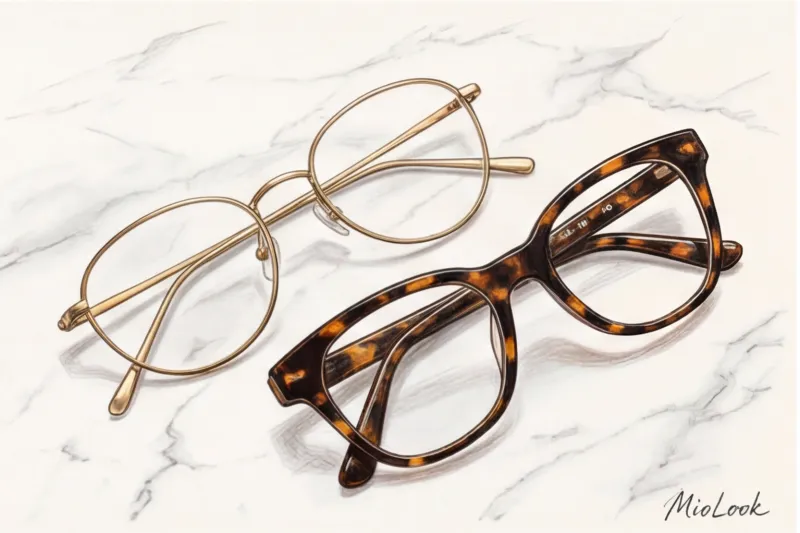
If you have thin lips, a neat, narrow nose, and low contrast in your appearance (for example, fair skin and light brown hair), heavy black plastic will "kill" you. Opt for titanium frames, thin metal, translucent colored plastic (shades of champagne, olive, caramel), or rimless models.
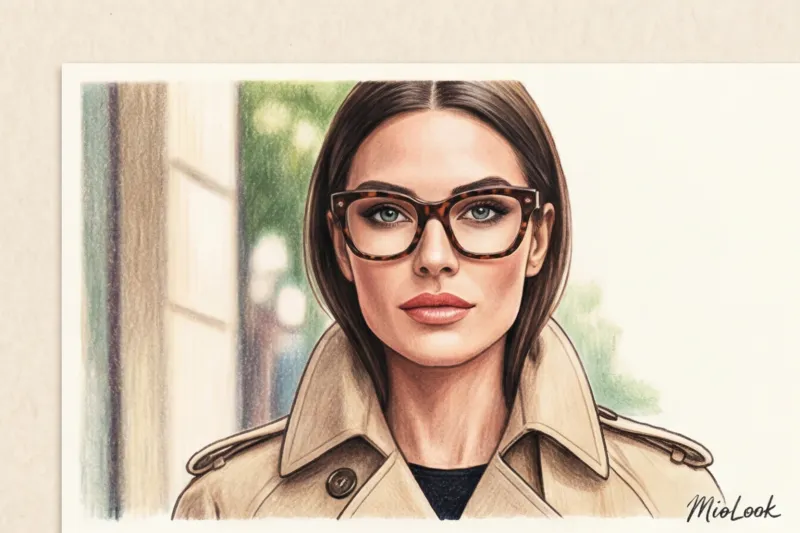
As PANTONE Institute colorists note, it's the balance of contrast in the portrait area that creates a harmonious facial appearance. A sultry brunette with dark eyebrows can easily pull off heavy, 5mm-thick black frames, while a blonde with light eyelashes would be better off with a medium-thickness tortoiseshell print. Want to find out your contrast level? Check out our article about 12 color types of appearance.
Access to MioLook for €0.99 — one-time payment
A smart AI stylist will select the perfect look based on your appearance and favorite accessories.
Get access — €0.99 onceGlasses and body proportions: what opticians don't tell you
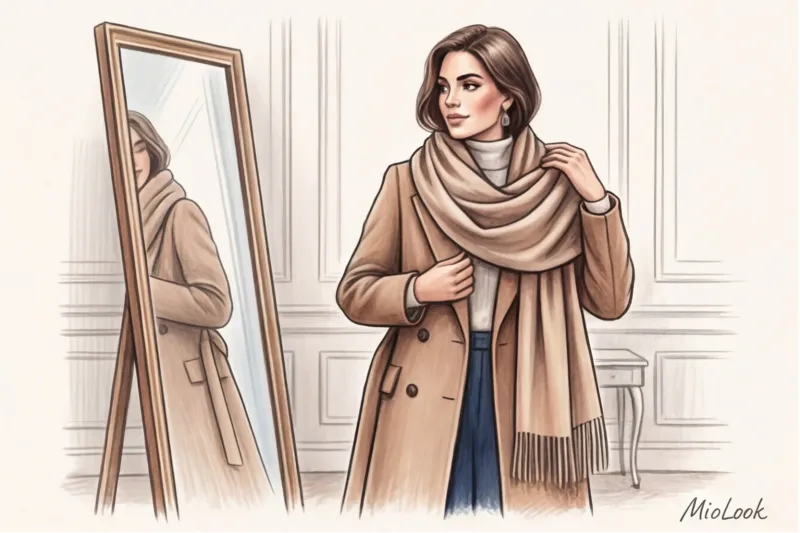
The most common mistake 90% of women make at the optical store is evaluating glasses using a small table mirror. This is fatal. Glasses are an accessory that affects the perception of your entire silhouette, not just your head.
WGSN's 2024 trend study confirms that consumers have come to view eyewear as an architectural element of their overall look. Always step away from the counter and look in a full-length mirror.
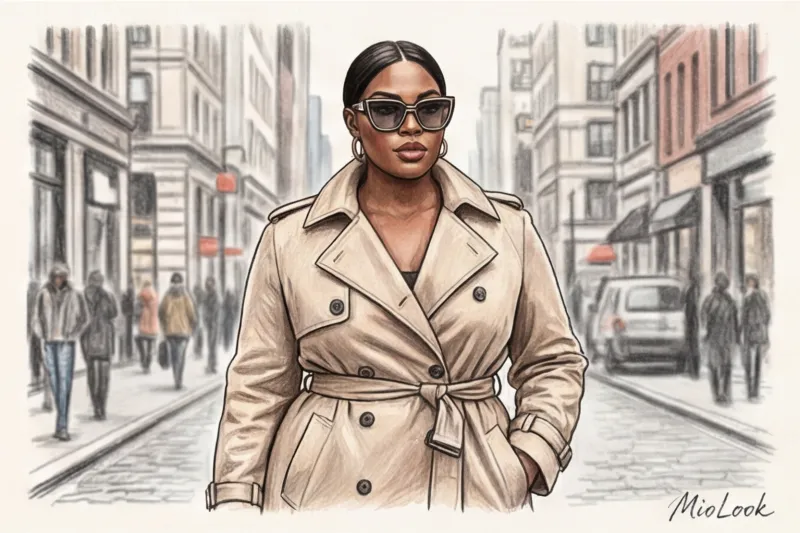
How it works in practice:
- Plus-size girls and tall figures (from 170 cm): Small, narrow glasses (micro-styles) against a statuesque figure will look like you borrowed them from a child. They will emphasize the volume of your body. You need larger, more structured frames that will balance your proportions.
- Petite girls (up to 160 cm): Oversized mask-like glasses that cover half the face visually make the head appear disproportionately large, evoking the "ant" image. Choose a medium-sized frame.
Take into account that, too, How to match glasses with clothes If you wear oversized, mannish jackets and thick textures (tweed, leather), a thin gold frame can get lost against such a dramatic backdrop.
Oversized and micro-glasses: how to wear trends without compromising your image
Oversized glasses are still trending in optics, but it's important to understand the difference between "stylish oversized" and "glasses that are three sizes too big."
The right oversize increases in height , not in width. The lens can extend almost to your cheekbones, but the frame should still fit snugly on the sides. If you can fit two fingers between the temple and the temple, they're not oversized; they're simply too big. They'll constantly slide down when you walk, and the center of the lens will shift, causing headaches.
Micro-glasses (slim fox-eye or '90s-inspired rectangles) are a great trend, but they should be used as an accent. They don't offer much sun protection, but they work great in smart-casual looks as a substitute for heavy eye makeup.
A universal life hack: any shape with upward-facing outer corners (like a cat eye or butterfly) creates an optical lifting effect. The face appears lifted, cheekbones appear higher, and the look appears fresher.
Katarzyna's Checklist: 5 Tests to Consider Before Buying Frames
Never buy glasses by simply trying them on with a straight face for 10 seconds. I make my clients complete this checklist right in the salon. Only if the frames (whether they're €20 H&M or €300 handmade optics) pass all 5 tests do we proceed to the checkout.
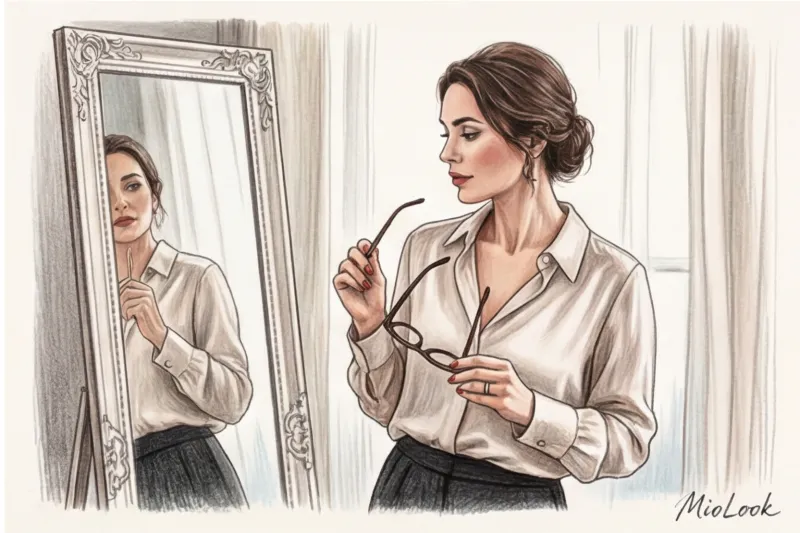
- Smile test: Smile broadly. The frames shouldn't rest on your cheeks or bounce when you make facial expressions. If they rise when you laugh, they'll fog up instantly in the winter and collect foundation in the summer.
- Tilt test: Tilt your head down as if you were looking at a phone and shake it slightly. Are your glasses sliding down your nose? The bridge is too big for you; look for a different model.
- Temple test: The temples should hug your head, not squeeze it. If red indentations remain on your temples after five minutes of trying them on, this will lead to migraines.
- Eyebrow test: Check the top edge. It shouldn't cut the brow in half or create the appearance of a second (double) brow.
- Full-length mirror test: Assess the proportionality of your figure, height and current outfit.
Ready to get started?
Try the MioLook plan for free—no commitments required. Create your smart wardrobe today.
Get access — €0.99 onceNext time you find yourself in front of a stand with hundreds of beautiful models, don't try to remember the geometry of your chin. Look at the frame thickness, assess your natural size, and test the fit. The right glasses size can do for your face what a perfectly cut jacket does for your figure—highlight your best features, pull your look together, and demonstrate your impeccable taste.