Optical illusion of volume: why a scarf is more than just warmth
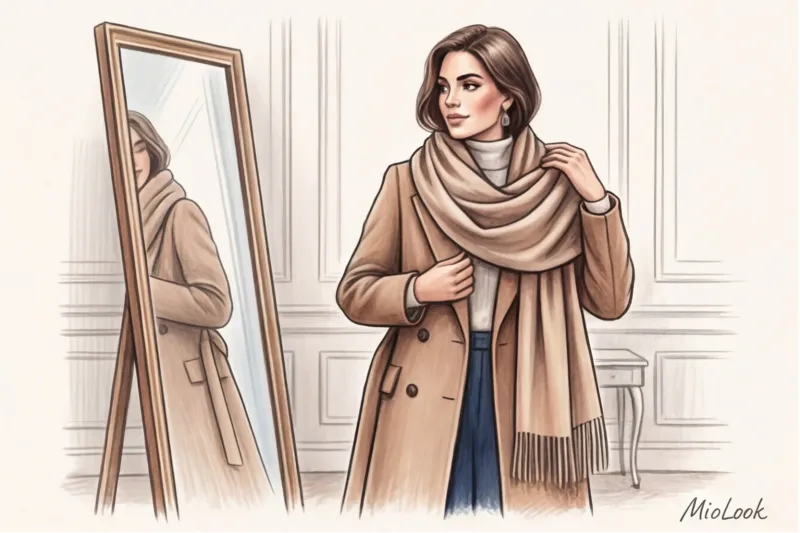
Every November, for the 14 years I've been a stylist, clients come to me with the same seasonal pain point. It sounds something like this: "Olena, I bought a stunning, trendy scarf, but in it and my winter coat, I look like a snowman." And they're right. The problem isn't their figure or even their coat. It's the geometry.
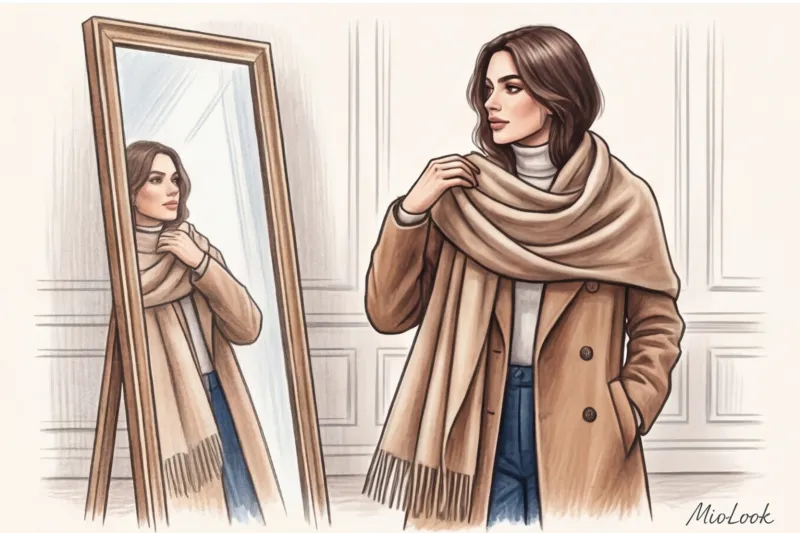
From a styling perspective, a huge piece of fabric near your face is pure physics and the laws of visual perception. Have you heard of the Ebbinghaus illusion (or Titchener's circles)? It's that an object appears smaller if it's surrounded by large details, and vice versa. When you wrap a massive stole around your neck, your face can become visually lost, and your shoulder girdle can expand to the scale of a professional swimmer. We've covered how scale affects silhouette in more detail in our article. a complete guide to choosing accessories based on your body type.
The "bigger and fluffier, the cozier" rule sells aesthetics well on Pinterest photos. But in real life, where we carry shoulder bags, ride public transportation, and zip up down jackets, a strict mathematical approach is required. Today, we'll explore how to wear a voluminous scarf so it works as a body-architectural tool, elongating your silhouette without adding a virtual ten pounds.
The Biggest Mistake: The "Severed Head" Effect and How to Avoid It
Let's start with the harsh but necessary truth. The popular "French knot" (when you fold a scarf in half, wrap it around your neck, and thread the ends through a loop) is a style crime for 70% of women. Yes, it's quick. Yes, it doesn't create any drafts. But let's look at the results.
If you have a full bust (D-size and up) or a naturally short neck, a tight horizontal drape under the chin creates a "floating head" effect. The neck visually disappears completely, and the chest and chin merge into a single, massive block. One of my plus-size clients visually "dropped" about 5 kg during our fittings simply by stopping draping her neck with a snood and switching to vertical draping. You can read about other techniques that work for the portrait zone in the article about How to visually lengthen your neck.
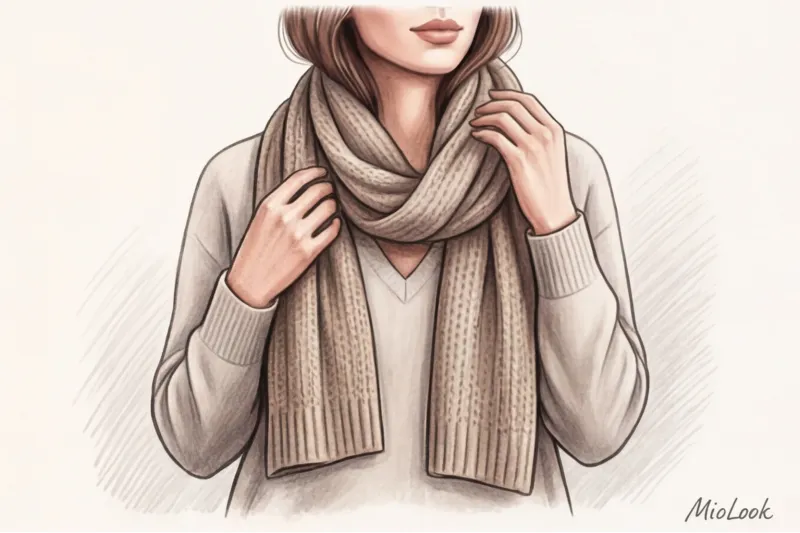
"The golden rule of portraiture: horizontals broaden, V-shaped lines elongate. Letting the ends of a scarf hang loosely down can add 3-5 virtual centimeters of length to your neck."
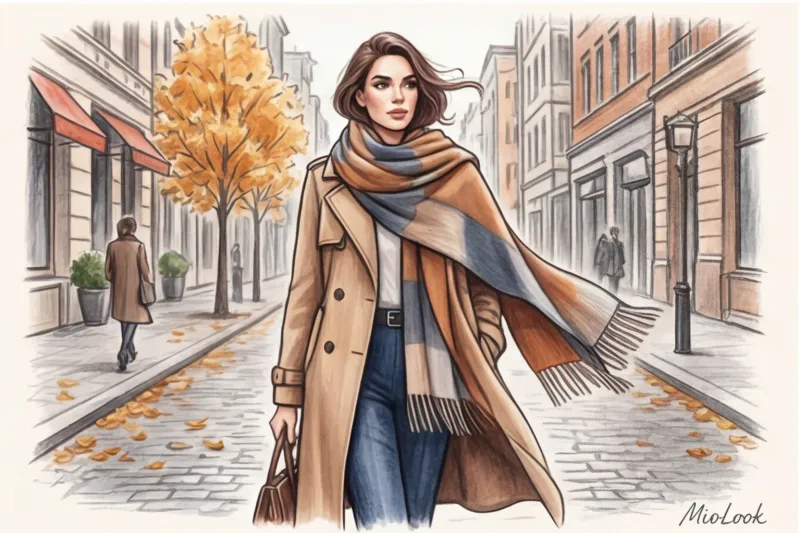
Instead of a closed loop, use an asymmetrical throw or simply let the stole hang loosely along the coat's lapels. If it's cold, wrap it once, but be sure to pull the bottom of the wrap down to expose the cleavage and create that all-important V-neck.
Access to MioLook for €0.99 — one-time payment
A smart AI stylist will select the perfect look and suggest how to correctly place accents based on your proportions.
Get access — €0.99 onceSelecting fabric and texture: the mathematics of accessory weight
Fabric texture plays an even more important role than its surface area. The trendy "oversized sweater and chunky scarf" combo is a trap. According to the WGSN 2024 report, the focus in winter accessories has shifted from hyper-oversized chunky knits to high-tech and premium, thin materials. And there's a pragmatic reason for this.
Let's do the math. A basic cashmere stole measuring 70 x 200 cm weighs around 200–300 grams. It's more expensive (ranging from €100–€250 depending on the brand), but it provides incredible warmth thanks to the hollow fibers of mountain goat down. A chunky knit scarf from a mass-market store, made of 70% acrylic and 30% wool (average price €30–€50), weighs around 600–800 grams. It doesn't provide warmth better than cashmere, but it lays on your shoulders in a stiff, non-draping hump.
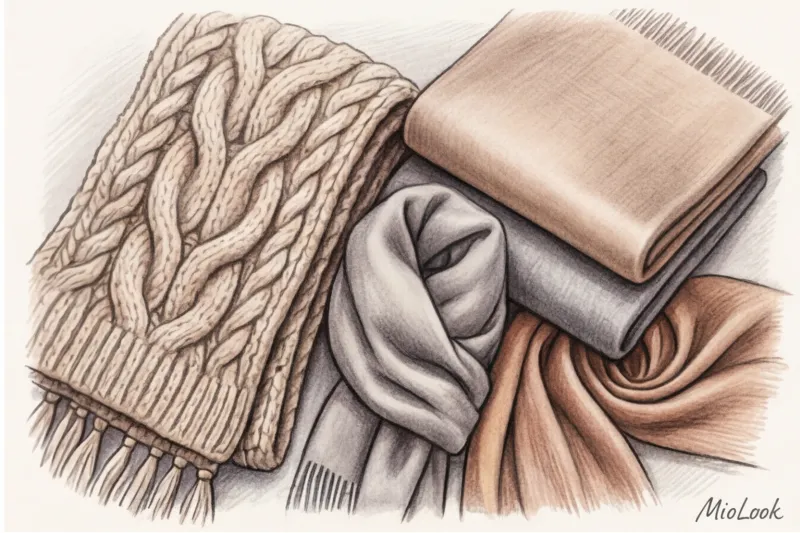
Remember the rule of contrasting textures: if your coat is thick and fuzzy (for example, alpaca wool or a fashionable teddy coat), the scarf should be smooth (silk with cashmere, fine merino wool). Conversely, a smooth leather coat can be complemented with a voluminous, fluffy mohair scarf. Similar textures blend into a shapeless blob.
How to Wear a Flattering Oversized Scarf: Strategies for Different Silhouettes
The basic principle of proportionality states: the dimensions of any accessory, from a bag to a glasses frame (which we wrote about in glasses selection guide ), should match your bone structure. There's no one-size-fits-all way to tie a stole. Let's take a closer look at the anatomy of the style.
For the Apple and Rectangle shapes: create verticals
Women with a defined waist or abdominal volume should avoid bulky wraps around the neck—they'll make you look like a ball on legs. Your strategy is to create two strong vertical lines.
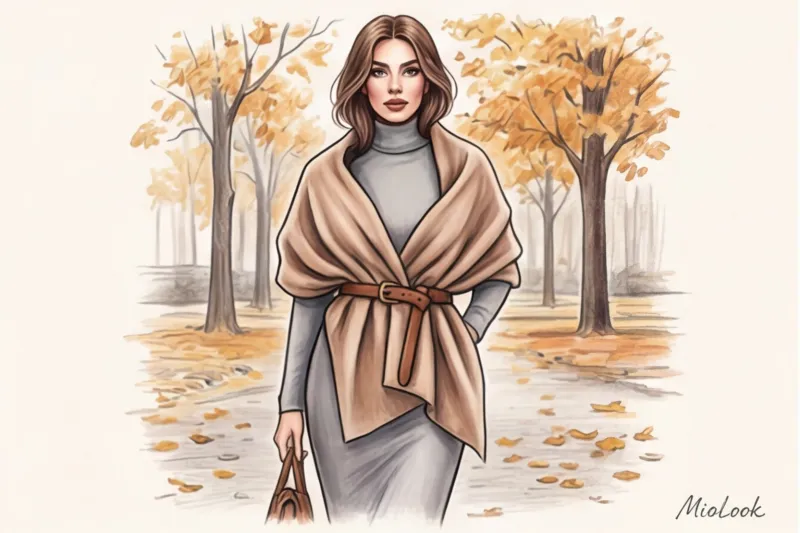
Drape a sleek stole around your neck, letting both ends hang parallel to each other, reaching mid-thigh. Now for the main trick: layer a structured leather belt over the scarf and coat (or jacket). These two vertical lines of fabric will visually "cut" your torso into three narrow segments, instantly creating the illusion of a waist where there was none.
For a Pear-Shaped Body: Balancing Your Hips
If your bulk is concentrated in the lower body, a voluminous scarf is your best ally. Unlike the previous type, here we intentionally use fabric to broaden the shoulder girdle and balance out heavy hips.
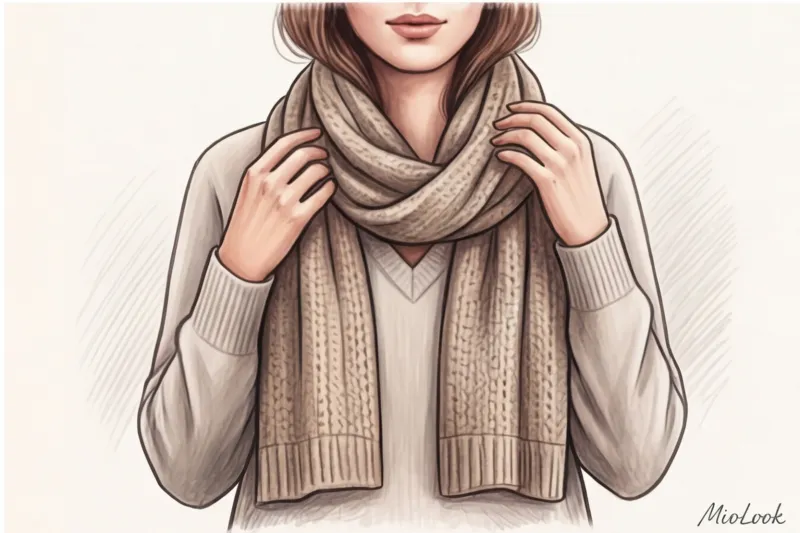
Use asymmetrical draping: wrap a scarf around your neck, leaving one end on your chest and the other casually draped over your shoulder. Choose accessories in light or bright shades (cream, camel, deep burgundy) – they will act as an eye-catcher, drawing attention away from your hips. To ensure all your looks are balanced, I recommend digitizing your pieces and collecting them. Capsule wardrobe in the MioLook app , which will help you see the proportions in advance.
For the Inverted Triangle: Soften the Top
Broad shoulders, an athletic back, and narrow hips require subtlety in the upper area. Any chunky cowls, snoods, or stiff scarves will turn you into an American football player.
Avoid short, voluminous knots. The goal is to visually break up the broad horizontal line of your shoulders. Choose long, flowing stoles made of fine cashmere or viscose. Tie a loose, relaxed knot at collarbone level, allowing the long ends to hang down, creating diagonal lines that soften the geometric shape of your top.
Thumbelina: Rules for Miniature Growth
A long-standing observation: girls under 160 cm tall often "drown" in trendy blanket scarves. The effect is comical, as if the scarf is carrying the girl, not the other way around.
Scaling is key here. You'll want a medium-volume style. Be mindful of the length of the ends—they should never fall below the knee, otherwise they'll visually "cut off" your legs and make you look even shorter. If the stole is too long, wrap it around your neck (without tying it too tightly) or use an intricate braided drape to "eat up" the excess fabric.
Your perfect look starts here
Join thousands of users who look flawless every day with MioLook. Digitize your wardrobe and get ready-made looks in seconds.
Get access — €0.99 onceStoles vs. Down Jackets and Coats: Outerwear Rules
The most common question during winter wardrobe reviews is: how to pair a huge oversized puffer jacket with a large scarf? The stylist's answer, which you might not like, is: you can't, unless you try to wear them both untucked.
Oversized oversized looks only work on tall and very thin models. If you're wearing a puffer jacket, tuck the scarf inside. Choose thin merino wool options and tuck them neatly under the collar like a bib. If the jacket is collarless, use a hood or a thin cashmere scarf that fits snugly around the neck.
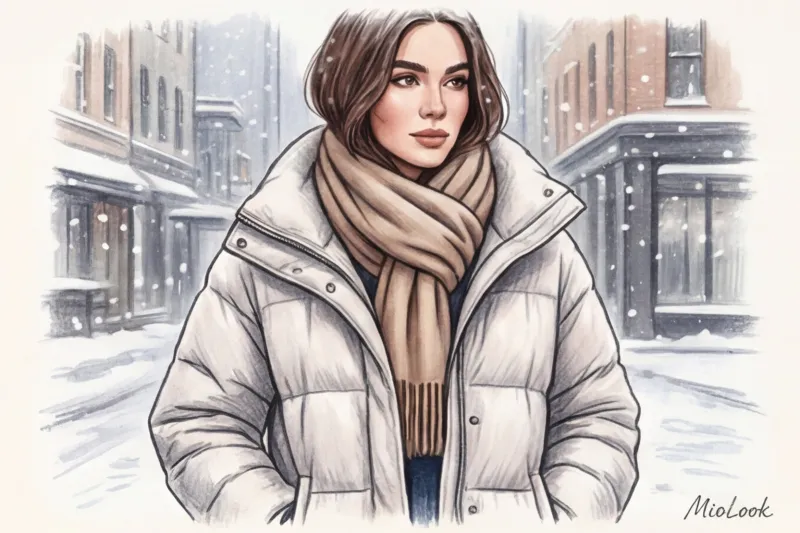
With a classic, formal coat (wool, cashmere), the rules change. A scarf worn over the lapels softens the formality and adds a relaxed chic touch. And when paired with rugged leather biker jackets or aviator shearlings, a soft, fluffy stole creates a stunning contrast between ruggedness and femininity.
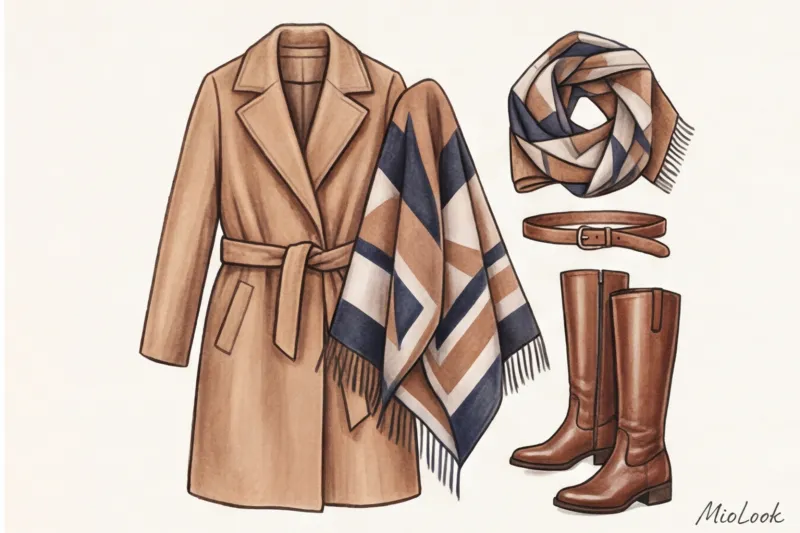
Fair Limit: The belt-over-stole trick I praised so much above won't work at all with puffer jackets or down coats—you'll end up with a tied-up sausage effect. Save this trick for coats, trench coats, and jackets only.
Stylist Checklist: 5 Steps to Perfect Draping
To avoid standing in front of the mirror in irritation before leaving the house, I've put together a 5-step process for you. I use it every morning.
- Estimate the density: If the coat is thick, choose a flexible scarf. Two stiff items in one outfit will create creases.
- Select geometry: A square scarf folded into a triangle adds volume to the chest (perfect for V-neck coats). A long rectangle is ideal for creating vertical lines.
- Give me some air: Never pull the loops too tight. Two fingers should fit between the fabric and your neck. This not only makes you look slimmer but also creates a layer of air for warmth.
- Full-length test: Move two meters away from the mirror. What does your overall silhouette look like? If you appear wider than you are, change your wrapping. You can upload your images to MioLook to objectively assess the proportions from the side.
- Fixation: My favorite stylist secret: A heavy stole draped over the shoulder always slips. Use a large safety pin on the inside or a stylish brooch on the shoulder to secure the drape all day long.
Conclusion: A scarf as an investment in the geometry of an image
A scarf has long since ceased to be just a piece of wool used to ward off a sore throat. It's a powerful architectural element. It can create a waist where there isn't one, elongate the neck, and add a touch of luxury to a look without investing in a new designer coat. According to analytics platform Lyst, premium accessories (including scarves from Acne Studios and Loewe) have become the smartest wardrobe investment in the past couple of years, as they transform the DNA of any basic outfit.
Don't keep scarves that make you look shapeless, no matter how cozy they feel. Keep only textures and volumes that suit your size. Tomorrow morning, before you go out, try draping your stole asymmetrically instead of wrapping it tightly around your neck. I promise, you'll see a completely different, more graceful silhouette in the mirror.