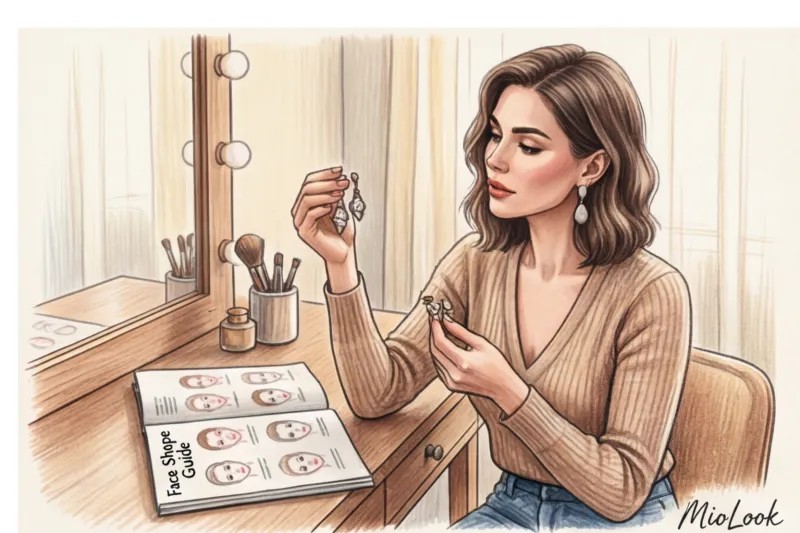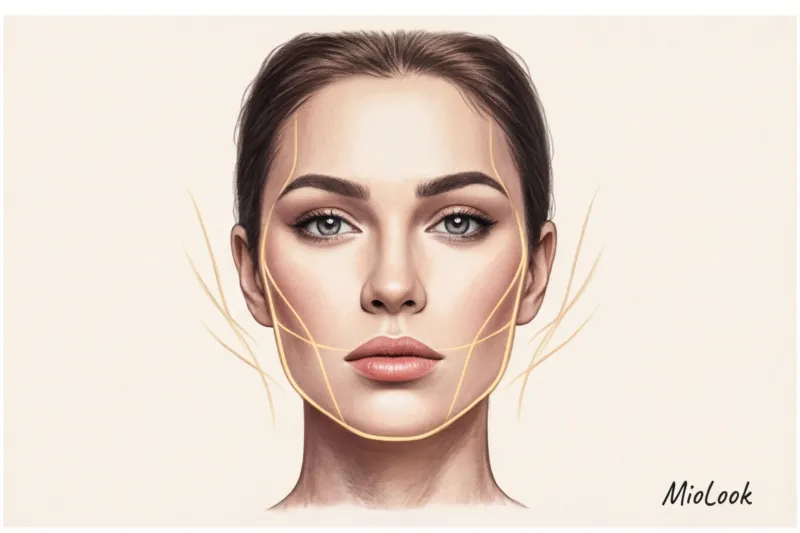
Have you ever noticed how some earrings work like subtle Photoshop—visually lifting your face and brightening your gaze, while others, even those purchased for hundreds of euros, instantly add heaviness and age to your face? I constantly encounter this paradox in my styling practice. When clients ask me how to choose earrings for their face shape, they usually expect a standard chart of circles and squares from glossy magazines of the 2000s. But let's be honest: the human face is not a flat figure from a geometry textbook.
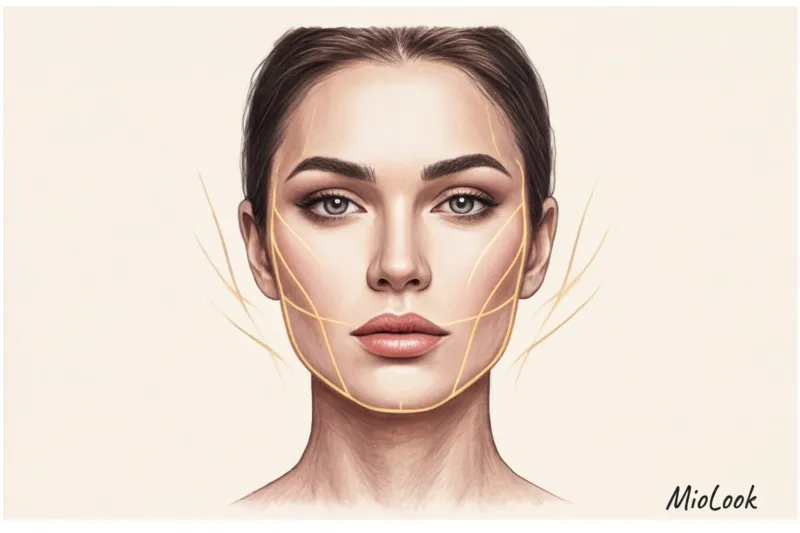
We've already covered in more detail how the three-dimensional proportions of our body dictate the choice of any wardrobe item in our complete guide to ideal accessories for your body type Today, we'll focus exclusively on the portrait section and explore the styling rules professionals use when creating red carpet looks.
Facial Architecture vs. Flat Geometry: Why the Old Rules Don't Work
The classic division into five face shapes is hopelessly outdated. The face is a complex 3D architecture, where the height of the cheekbones, the depth of the eyelids, and the angle of the jaw play a key role. Ignoring volume, women have been buying jewelry "correct according to the charts" for years, but it doesn't flatter them at all.
This is where the Ebbinghaus illusion—a cognitive distortion of scale perception—comes into play. It's simple: an object appears smaller when surrounded by large details, and vice versa. In practice, this means that tiny diamond studs (3 mm in diameter) placed against wide cheeks or a strong jawline will make the lower third of the face appear even larger. Earrings serve as visual anchors. Where you place this anchor, your interlocutor's gaze will fall.
Ready to get started?
Try the MioLook free plan—no commitments required. Start creating perfect looks with AI.
Get access — €0.99 oncePerceptual Illusion: How to Choose Earrings for Your Face Shape
The basic principle of architectural styling is to always choose a shape that is opposite to the dominant lines of the face. When designing jewelry, the artisans at Place Vendôme (the historic center of High Jewelry in Paris) always consider the dynamics of the pendant and so-called "visual weight." Earrings that are hollow inside but voluminous on the outside are much more effective than solid, thin metal, as they create the desired shape without adding physical weight.
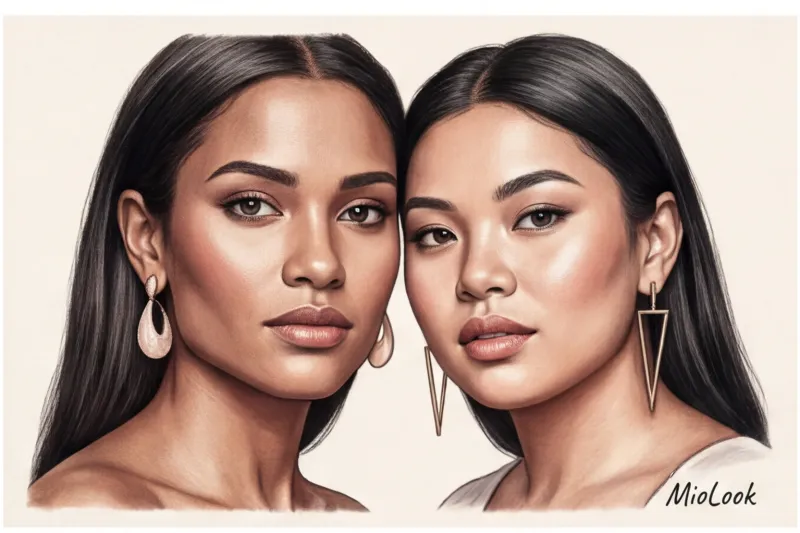
The main no-no I never break is the "jawline rule." Earrings should never end exactly on the horizontal line with the widest part of your jaw. Otherwise, they will add about 20% visual volume to the lower third of your face.
For a round and square face: draw a vertical line
Women with round faces should be wary of trendy round congos (hoops). Doubling the shape will only accentuate the roundness of the cheeks. The goal is to create a strong vertical line. Choose elongated rectangles, anchor chains, or asymmetrical geometric designs.
For a square face with a strong jawline, geometric shapes, on the other hand, are contraindicated. Drop earrings and fluid, creased metal are ideal. They visually soften the face, offsetting the sharpness of the angles and creating a lifted effect on the cheekbones.
For an elongated and triangular face: adding volume
If you have a pointed chin (heart-shaped or inverted triangle), the lower part of your face often appears disproportionately narrow compared to your forehead. Chandelier earrings or any styles that widen at the bottom are ideal. They fill the gaps near the chin, harmonizing your proportions.
Long strand earrings are the worst enemy of an elongated oval face. Skip them in favor of voluminous studs, wide textured hoops, or ear climbers that extend up the lobe, creating horizontal movement.
Styling Blind Spot: Neck Length and Head Position
We've reached the biggest myth in the fashion industry. It's commonly believed that long earrings automatically elongate the neck. This is a complete lie, ruining hundreds of looks. Neck length and shoulder slope are often far more important than face shape when choosing statement jewelry.
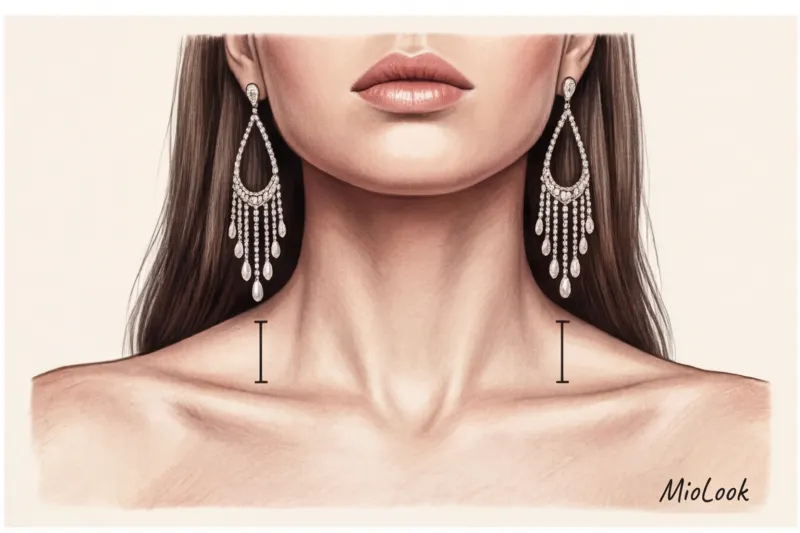
Backstage at Paris Fashion Week in 2023, I witnessed the show's head stylist force his assistants to urgently change one model's drop earrings. The reason? They were touching her collarbone. There's a strict rule of "negative space" in styling: there should be at least 2-3 centimeters of "air" between the bottom edge of the earring and your shoulder.
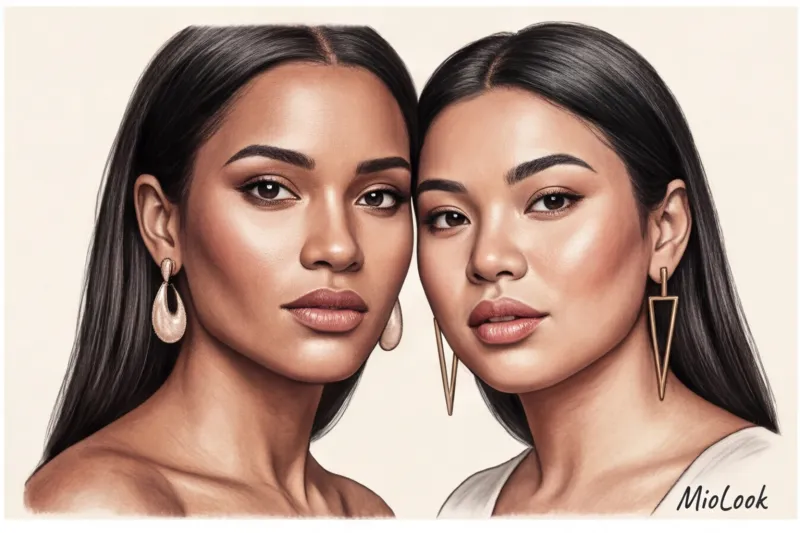
When a long earring rests on the shoulder or collarbone, it visually "cuts" the neck, eliminating negative space. As a result, the head appears drawn into the shoulders, and the posture appears hunched. This is a case where the rule has a strict limitation: long jewelry doesn't work if the anatomy doesn't allow for wiggle room.
Specifics of selection for short and long necks
If you have a short neck or sloping shoulders, your salvation lies in minimalist pins, short but wide drop hairstyles, and updos. They free up the décolletage, allowing the eye to move uninterrupted. Incidentally, the correct neckline also plays a crucial role—we wrote about this in detail in the article about How to visually lengthen your neck.
Those with a long, swan-like neck have stylistic freedom. You can indulge in the boldest multi-tiered pendants and massive chandeliers without fear of losing height.
Your perfect look starts here
Join thousands of users who look flawless every day with MioLook. A smart wardrobe is always at your fingertips.
Get access — €0.99 onceThe scale of facial features and the physical weight of jewelry
One of my clients couldn't figure out for a long time why her luxurious vintage Dior clip-on earrings made her face look harsh. The problem wasn't the shape, but the scale. Small, delicate (asthenic) facial features require delicate, "lace-like" jewelry. If you're blessed with large, expressive features, micro-minimalism will fade into the background. You need a solid, solid metal shape, whether it's a luxury item or a high-quality mass-market piece in the €40-€90 range.
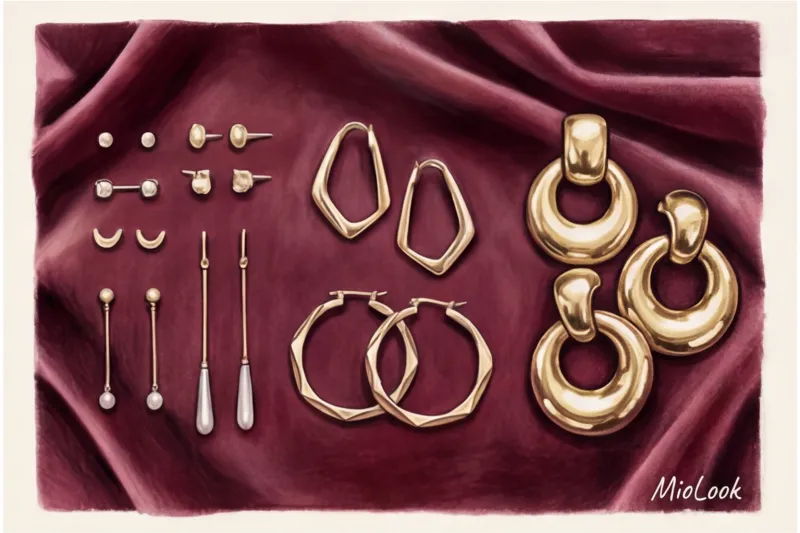
But don't confuse visual volume with physical weight. A medical fact, confirmed by surgeons, is that wearing earrings weighing more than 10-12 grams per ear inevitably leads to lobe ptosis. A downward-pulled earlobe with a visible vertical piercing instantly creates a sloping appearance and visually ages a woman by at least five years.
Earlobe Anatomy: What Style Guides Don't Tell You
This is a real "blind spot," rarely mentioned by glossy copywriters but always taken into account by practicing stylists. The exact fit of an earring depends 50% on the anatomy of your piercing.
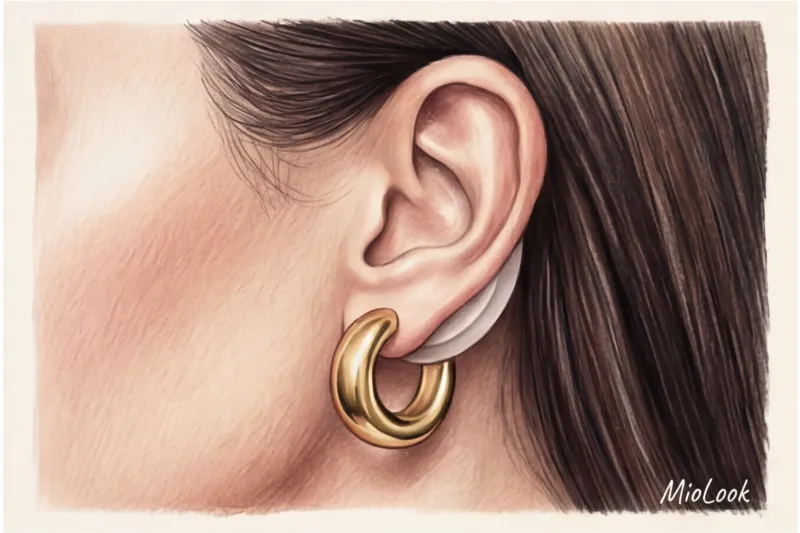
If you have a low piercing, heavy studs will constantly "dip" downward, creating an unsightly gap. Pro tip: in such cases, always use wide silicone discs (stoppers) instead of standard metal plugs. They press the jewelry firmly against the ear, maintaining a perfect shape.
For stretched piercings or large, fleshy lobes, the best choice is an English clasp with a low post. The post (the small needle inserted into the ear) should be positioned a couple of millimeters below the earring, not at the very top. This allows the decorative part of the jewelry to completely cover the piercing.
Checklist: How to Try on Earrings Perfectly Before Buying
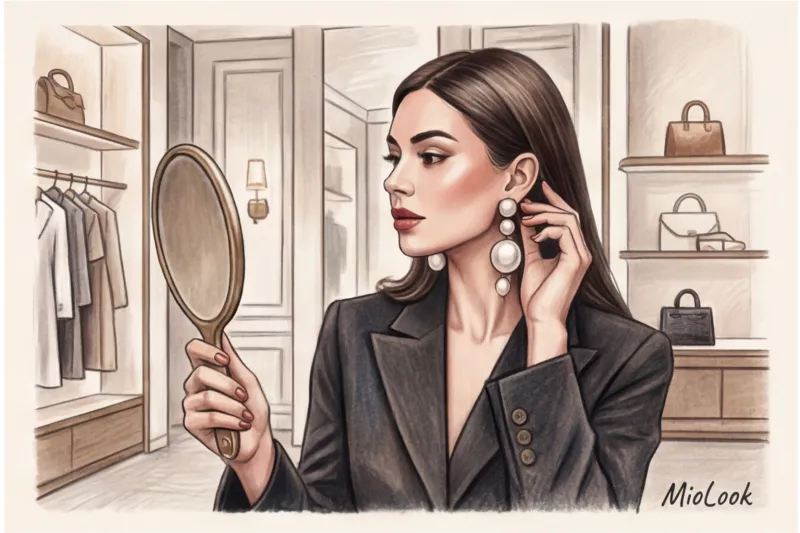
Forget the habit of judging earrings by looking only in the small portrait mirror at a jewelry boutique. I've developed a four-step algorithm that will protect you from making bad investments:
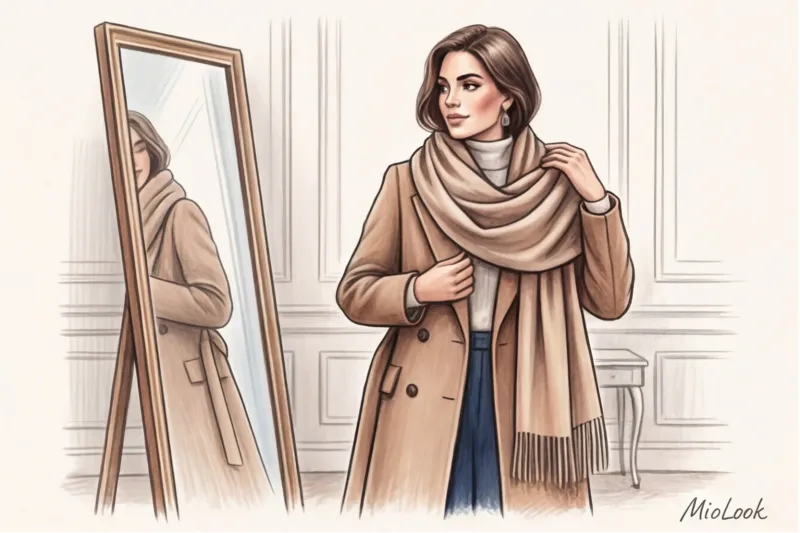
- Look in the full-length mirror. Earrings should be proportionate to your entire body, not just your head. What looks huge up close can perfectly balance wide hips from a distance.
- Test in motion. Put on the earrings and vigorously move your head. If they hit your collarbones painfully, get tangled in your hair, or make an annoying ringing sound, they're not for you.
- Light test. Metal is a reflector. Consider how gold or silver highlights your skin tone. A cool platinum sheen can make olive skin appear sallow, while a warm gold can accentuate redness on a porcelain complexion.
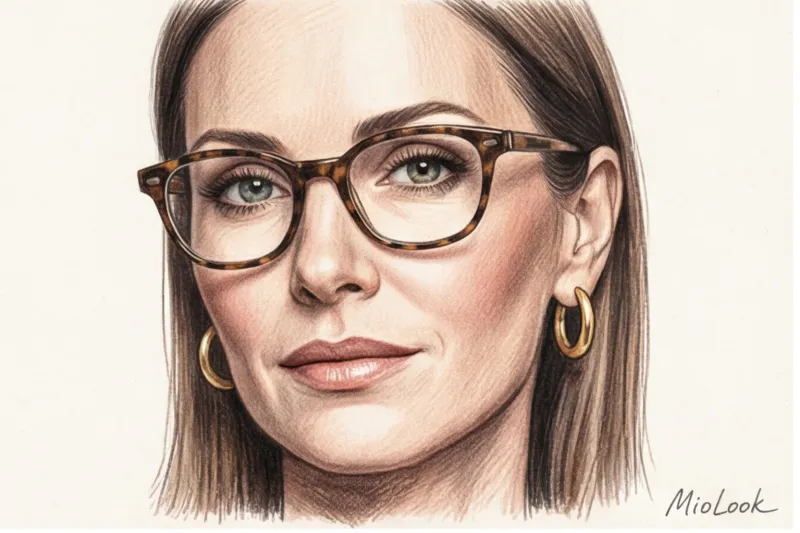
- Synchronization with glasses. If you wear frames every day, try on earrings only with them. Glasses are already a powerful accent. Read more about this balance in our article. about the rules for combining glasses with clothing.
Wardrobe Integration: How Earrings Transform an Outfit
According to research by the Lyst platform (2024), interest in status-conscious, minimalist jewelry has grown by 45%, confirming the global trend toward "quiet luxury." In a business attire, earrings serve as a marker of authority. Essential office earrings aren't boring studs from your mom's jewelry box. They include simple hoops in brushed metal, baroque pearls of irregular shapes, or statement knots.
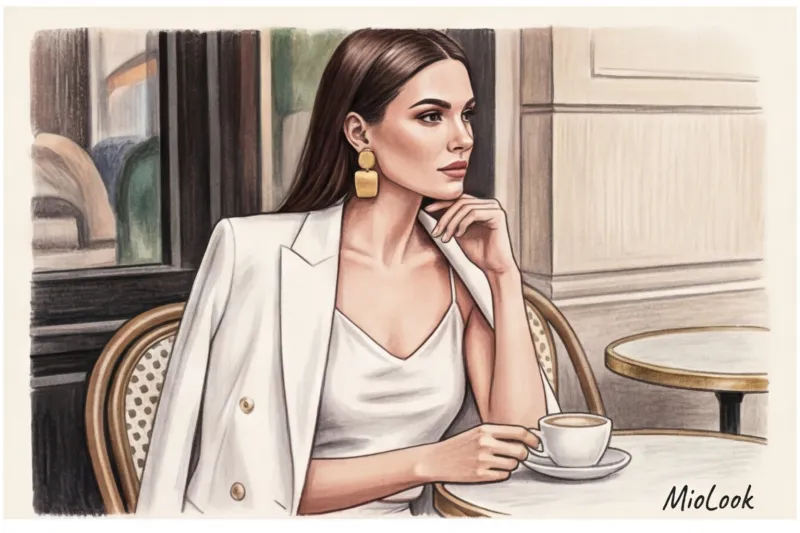
If you're incorporating trendy shapes, remember the "one-accent rule." Massive, sculptural earrings require a calm backdrop: a simple stand-up collar, a sleek hairstyle, or an open neckline. If you're looking to delve deeper into the topic of classy minimalism, I recommend checking out our A guide to clean girl jewelry.
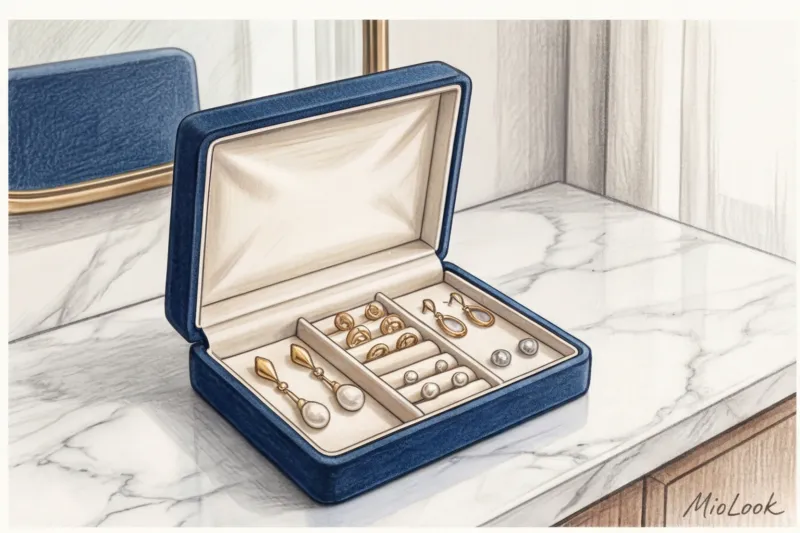
To avoid confusion in combinations and always understand which jewelry goes with a particular dress or jacket, use the “smart wardrobe” function in MioLook The app helps you digitize your accessory box and offers ready-made look formulas based on your appearance architecture.
Access to MioLook for €0.99 — one-time payment
A smart AI stylist will create the perfect look for you and help you integrate any jewelry into your everyday wardrobe.
Get access — €0.99 onceUltimately, choosing earrings isn't about blindly following geometric formulas. It's about understanding how lines, weight, and voids interact with your unique physiology. Put the ruler aside and start treating your face as a masterful sculpture that simply requires the right lighting and clever framing.