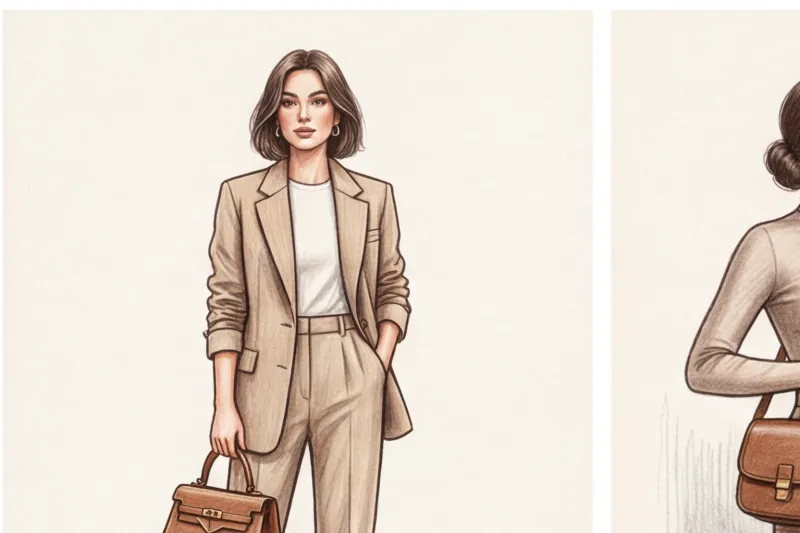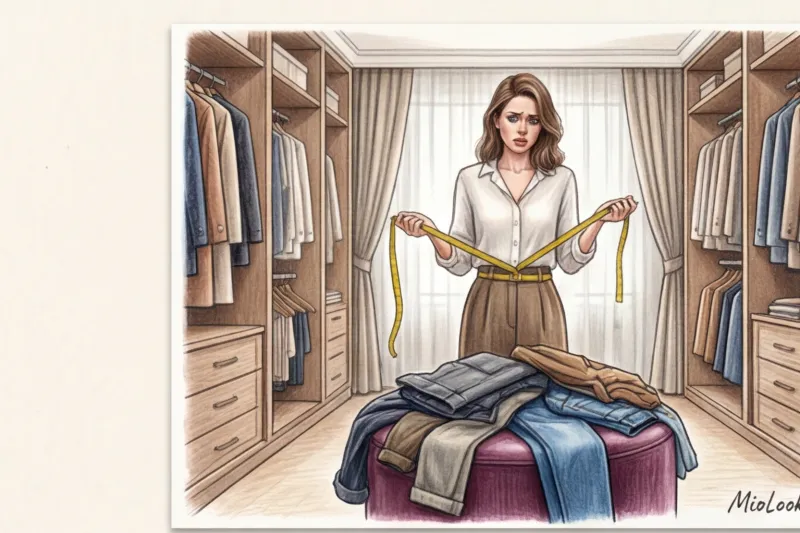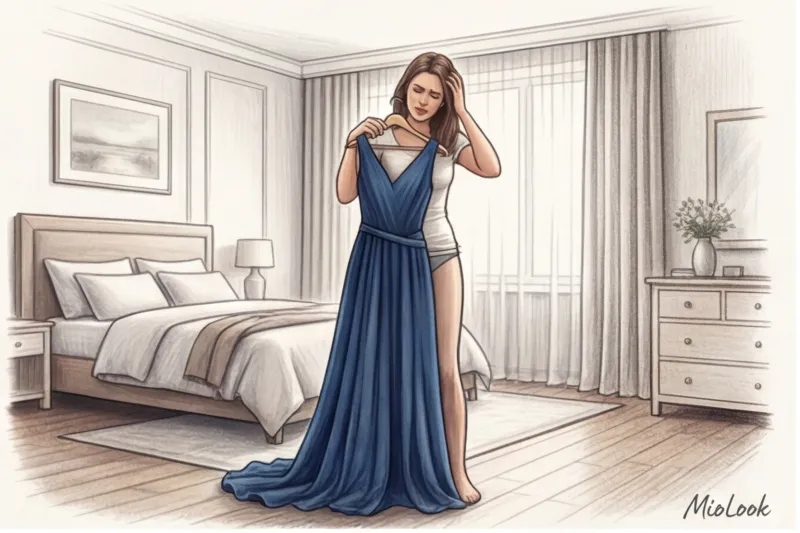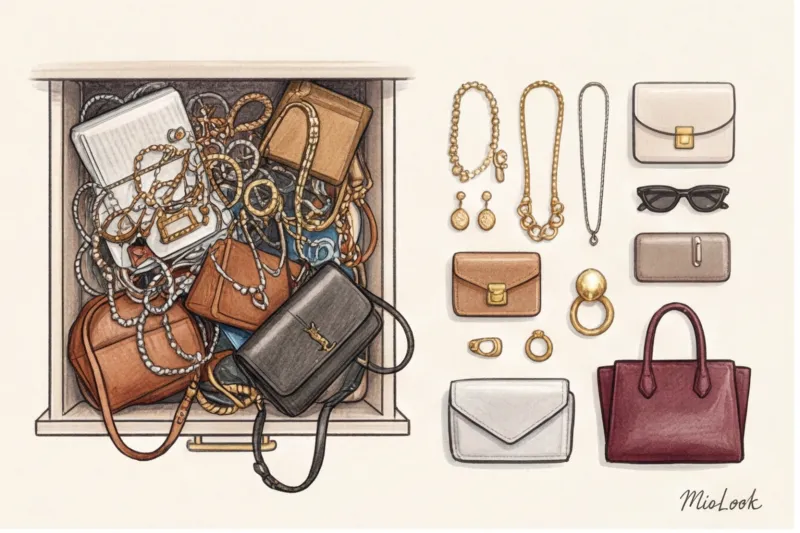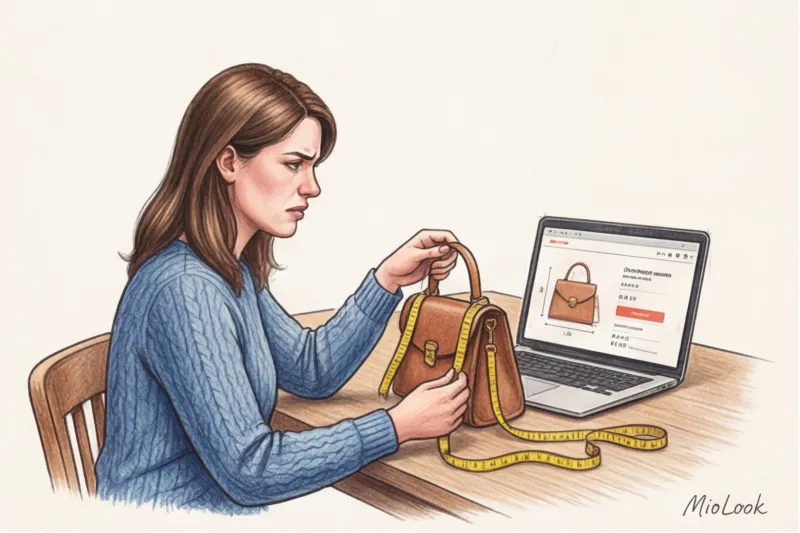
Recently, my client Anna ordered a luxurious leather COS shopper for €175. In studio photos, the model casually held it under her arm, looking the epitome of Scandinavian minimalism. But when Anna (158 cm, size 40) unpacked the package and stood in front of the mirror, the elegance evaporated. The bag transformed her into someone preparing for a long expedition with a huge duffel bag. Sound familiar?
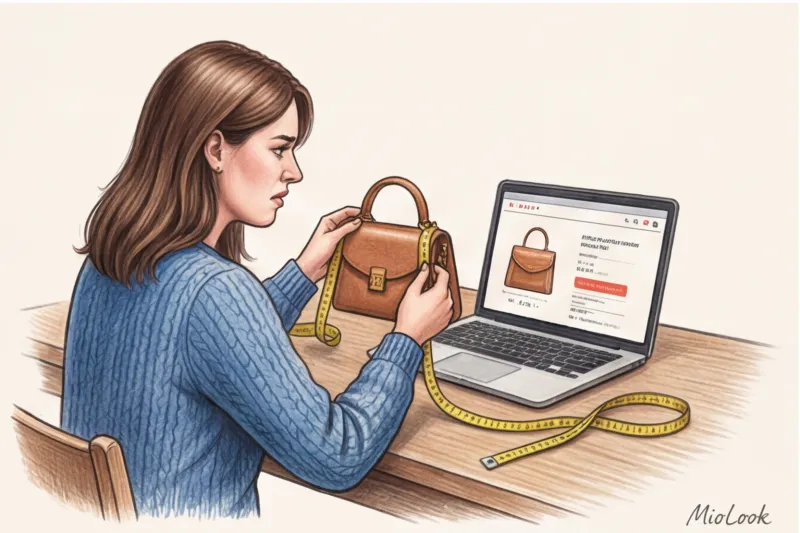
Right choose your bag size online — this is perhaps one of the most challenging tasks in modern digital shopping. Abstract numbers like "30x40 cm" in a product description mean nothing to our brain until we actually hold the item to ourselves. We've already covered optics and body geometry in more detail in our The complete guide to the perfect accessories for your body type Today, I want to explore the specific mechanics: how to translate your physical parameters into the centimeters of your ideal bag, and why algorithms do a better job than intuition.
Shopping Blind Spot: Why It's So Hard to Find the Right Bag Size Online
Online store photos lie. And they do so completely legally. The main problem with e-commerce is the lack of an objective reference point. Against the crisp white background of a catalog, a crossbody bag and a roomy tote can look identical. Studio stylists use clever angles, and the models modeling H&M or &Other Stories bags are typically 175–180 cm tall and wear a size 34–36 (XS).
Standard labels like S, M, or L are completely fictitious, invented by marketers to simplify logistics. This season, Zara's "Medium" size may be twice as large as last year's "Medium" simply due to shifting microtrends. According to a Shopify analytical report (2023), up to 40% of accessory returns are due to the actual size not matching the customer's expectations.
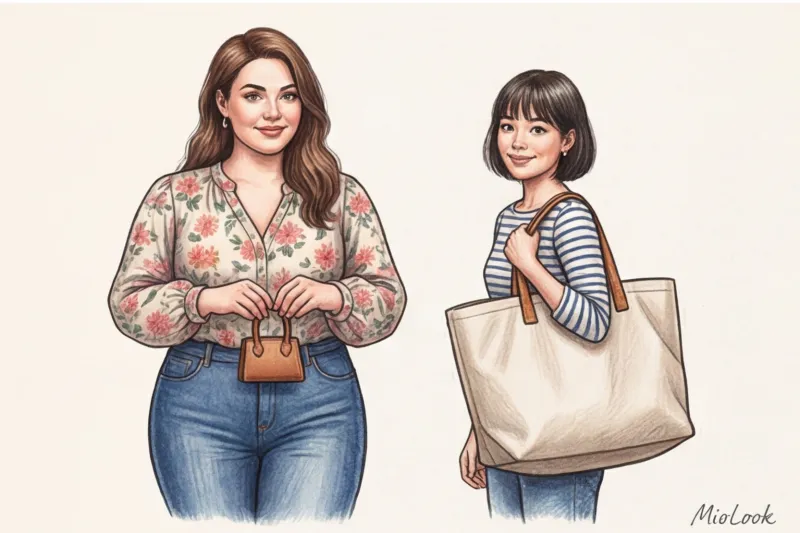
I worked with a size 48 (L/XL) client who succumbed to the trend and bought a Jacquemus-style micro bag for €450. Worn by Bella Hadid on the runway, this accessory seemed like an ironic accent. In reality, however, this tiny detail, juxtaposed with her ample figure, acted as a cruel caricature: it visually widened her hips and waist, accentuating every extra centimeter.
A bag is more than just a container for keys and a phone. It's a powerful visual anchor. It either pulls your silhouette together, proportionally complementing your height, or mercilessly disrupts the harmony.
Access to MioLook for €0.99 — one-time payment
A smart AI stylist will select the perfect look.
Get access — €0.99 onceThe Ebbinghaus Illusion: How the Size of Accessories Changes Your Figure
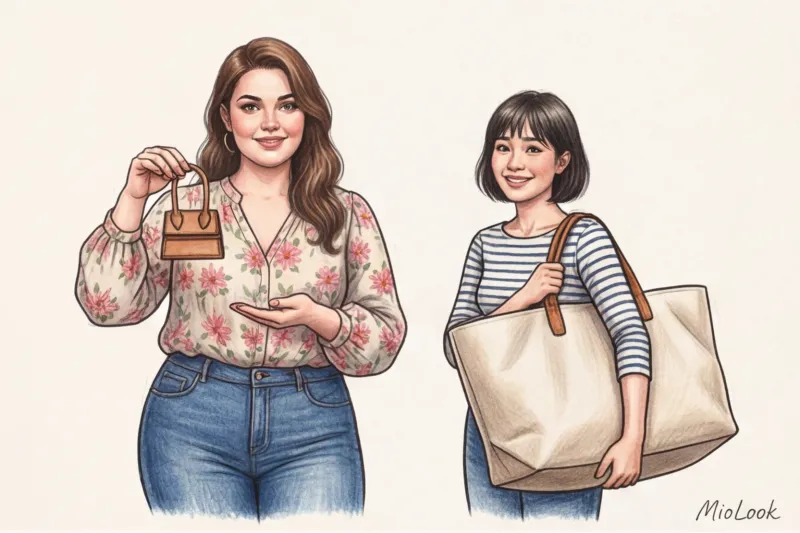
In styling, we constantly work with the laws of visual perception. The most important one for choosing accessories is the Ebbinghaus illusion (or Titchener circles). The essence of this optical effect is simple: the same circle appears smaller when surrounded by large objects, and appears larger when surrounded by small details.
How does this work in your wardrobe? Applied similarity rule Women with a hypersthenic body type (large bones, prominent volumes) are strictly advised against micro-bags. A tiny clutch against wide hips will make them appear even wider (the aforementioned Titchener effect). Conversely, a huge 45 cm wide shopper will literally crush a petite woman with an asthenic body type, visually stealing 5-10 cm from her height.
A 2022 Cornell University study on the psychology of visual silhouette perception demonstrated that accessories with contrasting scales can visually add up to 5 extra pounds to your figure. That's why the key principle of a smart wardrobe is: the scale of an accessory should mirror your natural size.
Access to MioLook for €0.99 — one-time payment
Start creating perfect images with the help of artificial intelligence
Get access — €0.99 onceInside the Algorithm: How MioLook's Smart Analytics Reads Your Appearance
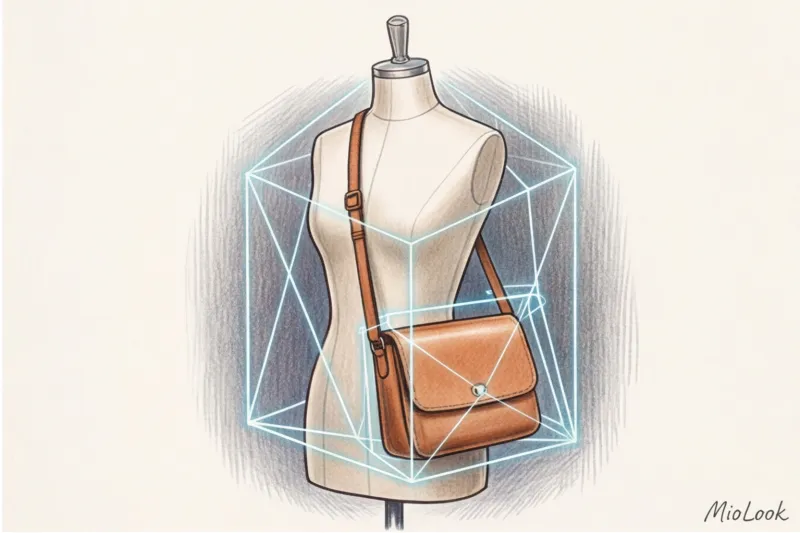
Fashion advice from glossy magazines often sounds abstract: "tall people need big bags." But what if you're 170 cm tall but have narrow shoulders and tiny wrists? This is where precise math comes into play.
When I first tested the functionality MioLook On my clients (from petite XS to curvy XXL), I was struck by how the AI moves away from flat clichés. The algorithm doesn't just look at a single digit in your passport. It analyzes your digital profile holistically, based on the principles of the golden ratio.
Evaluation of bone structure and volume
The app differentiates between height and build. The neural network needs to determine whether you have an asthenic (small bone structure), normosthenic, or hypersthenic (wide bone structure). This volume index directly dictates not only the dimensions of the bag itself but also its details.
- Strap width: A thin chain strap on a broad shoulder will visually "cut" the volume and get lost, but on a fragile collarbone it will look organic.
- Fittings: Massive metal buckles require the appropriate density of fabric and the size of the owner.
- Dimensions: The algorithm matches the bag's width to the width of your waist and hips. The ideal everyday bag should be no more than half the width of your frontal silhouette.
Calculation of proportions and placement points
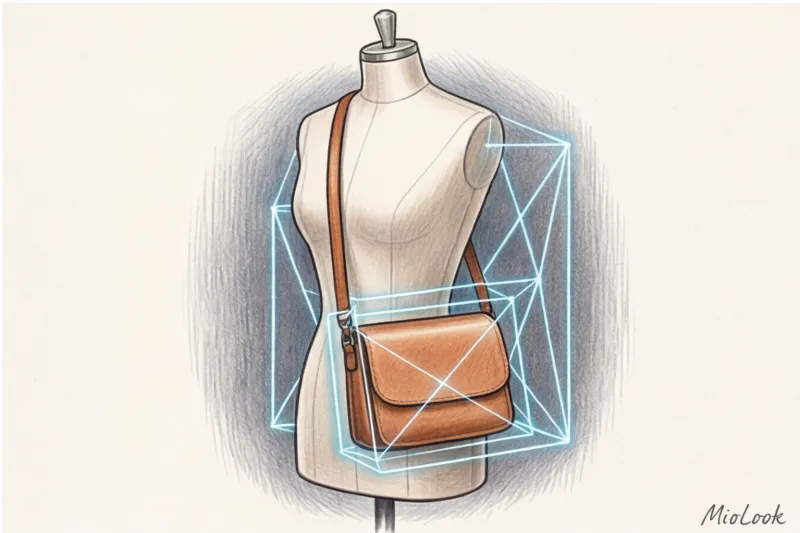
Even a perfectly sized bag will ruin your look if it's hanging in the wrong place. The eye is always drawn to the horizontal line formed by the bottom edge of the bag. This is your "attention zone."
If you have heavy hips (a pear-shaped figure), and a long crossbody strap ends right at the widest point of your breeches, you're accentuating this problem area. MioLook analytics calculates the optimal handle length so the bag sits in your most flattering area (for example, at waist level or under your armpit).
Your perfect look starts here
Join thousands of users who look flawless every day with MioLook.
Get access — €0.99 onceInstructions: How to choose your bag size online using MioLook
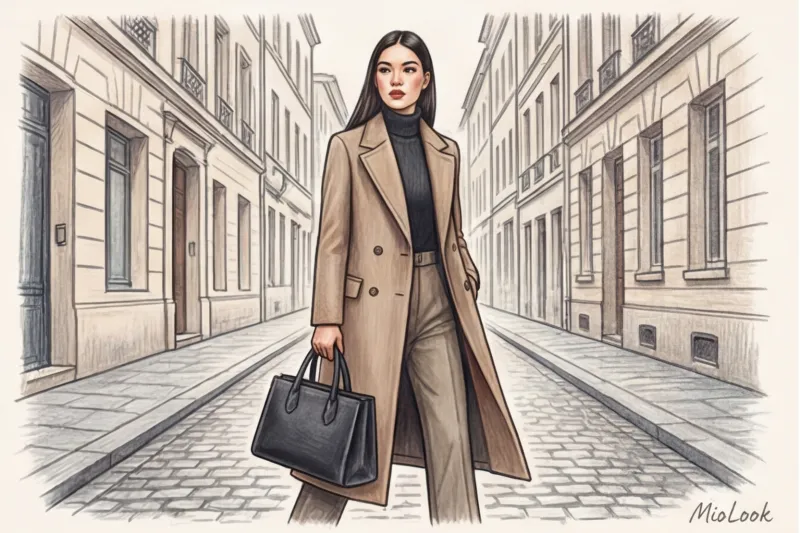
Blind shopping is expensive. The average price for a high-quality mass-market bag these days ranges from €80 to €150, and returns often require time and effort. Here's a clear checklist for avoiding mistakes when shopping online using smart tools.
- Profile digitization: Log in to the MioLook app and fill out your physical measurements as honestly as possible. Height, weight, body type, clothing size—every number counts for the calculations.
- Analysis of recommendations: Check out the accessory recommendations section. The AI will give you precise measurements in centimeters (e.g., "Your ideal crossbody size: width 22–26 cm").
- Checking with the store: When choosing a bag on the Zara or Massimo Dutti website, be sure to check the "Specifications/Sizes" tab. Never rely on photos of the model. Compare the brand's measurements with the app's recommendations.
- Virtual fitting: If the brand provides high-quality photos, Use the virtual photo try-on feature to appreciate the contrast in scale before the money is debited from your card.
Busting the Myths: Why the Ultimate Basic Bag Doesn't Exist
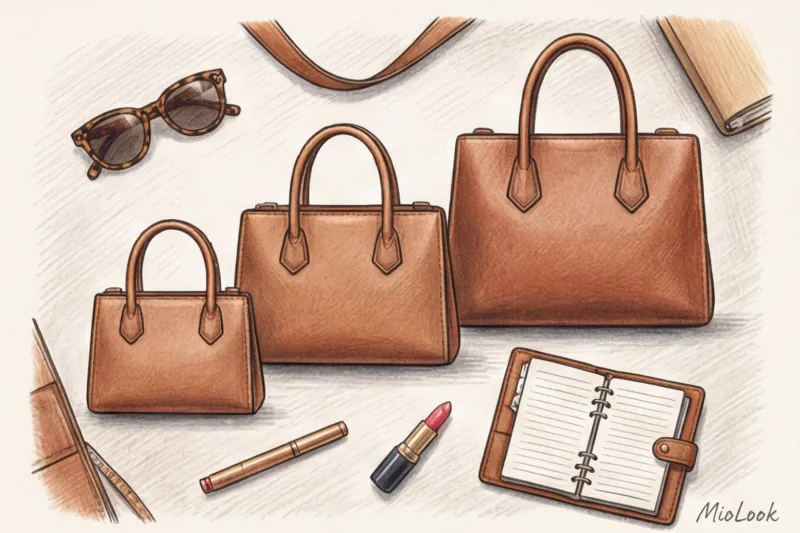
One of the most harmful myths propagated by Instagram stylists is: "Buy a basic structured bag in a medium size; it suits absolutely everyone and goes with everything." This is a dangerous misconception.
Let's take a specific example: the popular leather hobo bag from Massimo Dutti, priced at around €129. The brand markets it as a versatile urban bag. The width is 36 cm. Now let's look at the visual impact.
On a woman 178 cm tall and wearing a size 46-48, this bag looks like a neat, everyday accessory that accentuates her figure. It's proportional. But if you put the same bag on a woman 155 cm tall and wearing a size 40, it becomes a travel bag. Against a petite figure, the 36 cm width steals the show, visually shortening the legs and making the look bulky. What's elegant and classic for one woman is a disproportionately ugly bag for another.
A Practical Checklist: Auditing Your Current Bag Collection
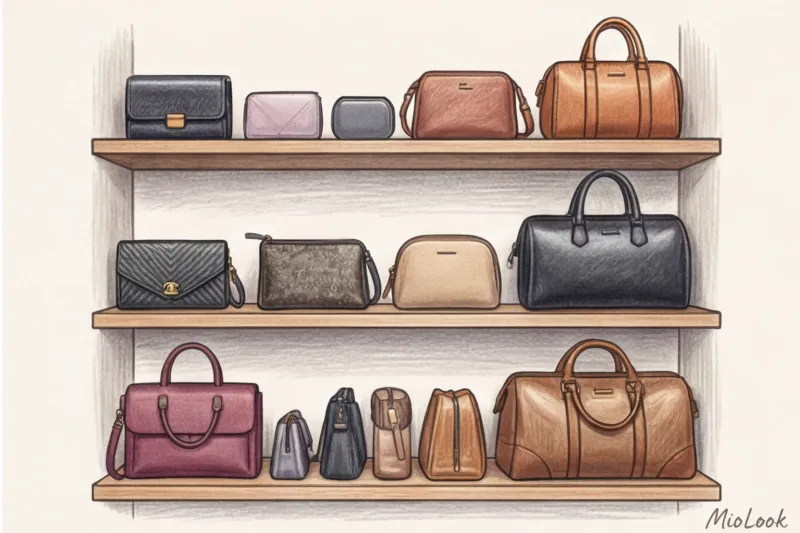
Before you buy new things, take stock of what's already on your shelves. This will help digitization of accessories But you can do a preliminary test right now in front of a full-length mirror.
Proportion test: Put on your usual street clothes and shoes. Grab your bag, fill it as you normally would (an empty bag hangs differently!), and stand directly in front of the mirror.
- Does the bag look too bulky compared to your legs?
- Doesn't it get lost against the backdrop of your winter coat?
- Where is the bottom edge of the bag? Does it cut into the silhouette at the widest point?
The Three Things Rule: Your everyday bag should be proportionate not only to your bone structure but also to your tasks. If you only carry your phone, cardholder, and keys, there's no point in buying a 40cm wide tote, even if you're 180cm tall—a half-empty, oversized bag looks sloppy.
A fair warning from a stylist: all this strict mathematics doesn't work in only one case. If you're intentionally creating an avant-garde look in the vein of Balenciaga or Margiela, where exaggerated, distorted volumes (giant bags or micro-purses) are a deliberate artistic device. But for 95% of everyday urban tasks, harmony trumps outrageousness.
Intuition often fails us in fitting rooms, and the studio lighting of online stores is masterfully deceptive. Trust algorithms to calculate the scale, and you'll forever forget the disappointment of unpacking online purchases.