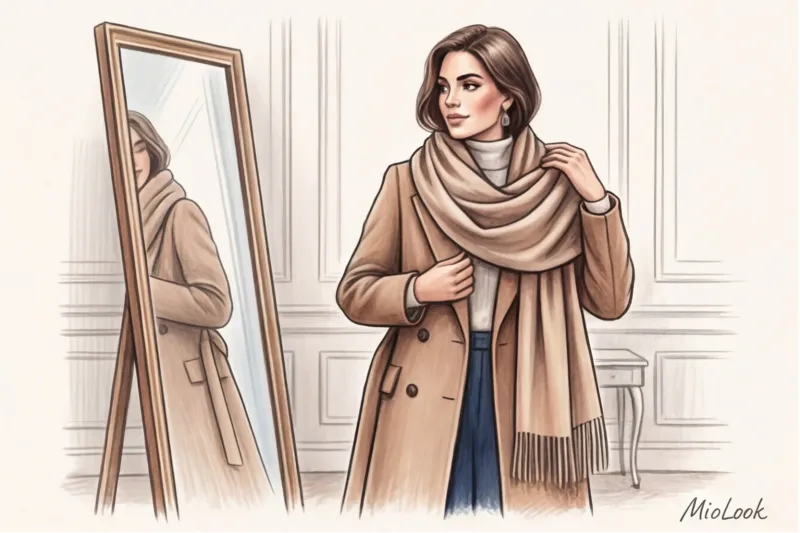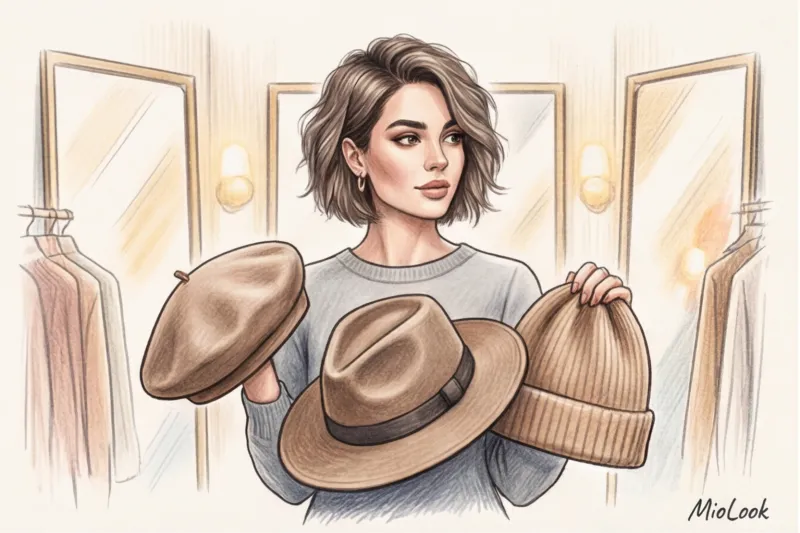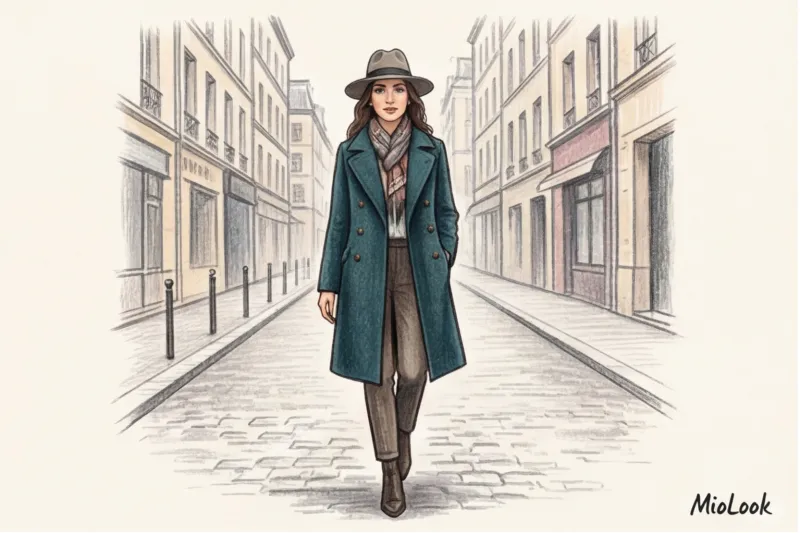
Imagine the classic Ebbinghaus optical illusion: two identical circles appear different in size if one is surrounded by tiny dots and the other by giant spheres. This very law of neurobiology relentlessly plays out every time a petite woman dons an enormous, wide-brimmed hat. Instead of bohemian chic, the result is a "mushroom" effect, where the head visually presses the figure to the ground.
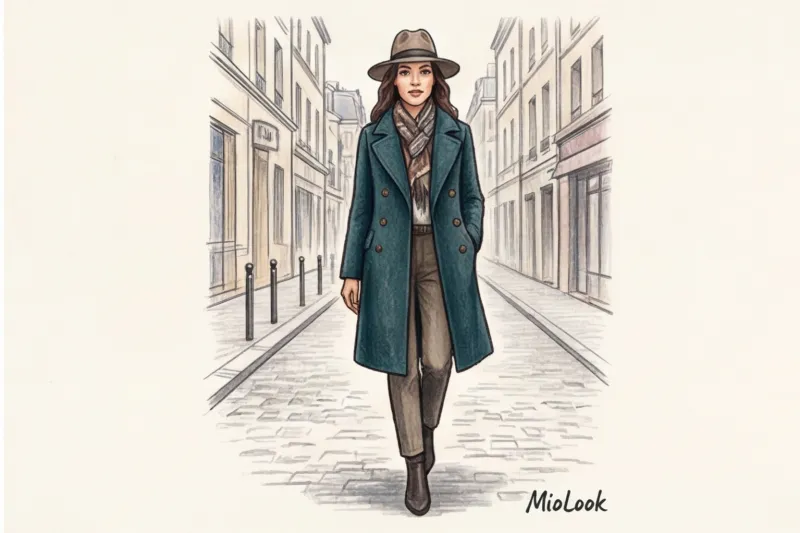
Most glossy magazine articles limit themselves to the platitude: "tall hats - big hats, short hats - small ones." But after 12 years of working as a stylist and studying textile physics, I realized that the devil is in the millimeters of the crown, the density of the felt, and the width of your shoulders. We've already touched on the topic of optical illusions when we discussed in detail Ideal accessories for your body type: selection rules , however, the portrait zone requires separate, much more rigorous mathematics.
Today we'll explore the architecture of hats. You'll learn how to choose a hat based on your height using the HSR (Head-to-Shoulder Ratio) rule, why popular beanies actually steal inches from your figure, and how the density of eco-friendly wool affects the retention of defined silhouette lines.
Scale and Geometry: Why Height Dictates Selection Rules
A hat isn't just a way to stay warm or hide a bad hairstyle. It's the highest point of your silhouette. The human eye always reads the proportions of a person from top to bottom. What's on top of your head sets the scale for the entire body.
The secret to a perfect fit lies in the HSR (Head-to-Shoulder Ratio) rule. A hat doesn't exist in a vacuum based on your height; it works in conjunction with your shoulder width. If the brim extends beyond your shoulders by more than 1–2 cm on each side, you're visually shortening your height, creating a horizontal line that blocks the eye. This is why two women of the same height (say, 165 cm) but with different body types (an asthenic with narrow shoulders and a swimmer with wide ones) will never be able to wear the same fedora style.
How to choose a hat based on your height: the math of proportions from a stylist
To understand how headwear controls growth, it must be broken down into two architectural elements:
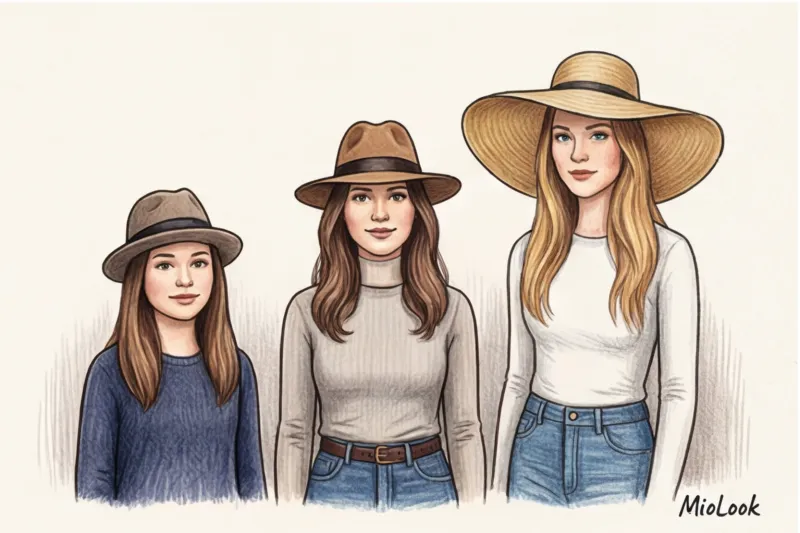
- Crown: Responsible for the vertical. The higher and more rigid it is, the more visual growth you achieve.
- Fields: They are responsible for the horizontal line. The wider they are, the more volume they add to the figure, while simultaneously reducing height.
Let's move on to specific millimeters and Millinery standards.
For petite (up to 160 cm): focus on the crown
If you're under 160 cm tall, your main rule is strict brim discipline. They shouldn't exceed 5–7 cm in width. Anything wider will inevitably create disproportion.
One of my clients, 32-year-old Anna (156 cm tall), avoided hats for years. She was convinced that any headwear made her look like a child trying on her mother's clothes. The problem was that she was trying on the popular soft hats with wavy brims. Once we found her a stiff felt boater with a 9 cm crown and a straight brim exactly 5 cm wide, a miracle happened. The stiff, geometric vertical crown visually added height to her figure, while the narrow brim didn't widen her silhouette.
- Ideal models: pork pie, boater hat, classic narrow-brimmed fedora (trilby).
- Taboo: slouch hats (with soft, drooping brims).
For average height (160–170 cm): play with asymmetry
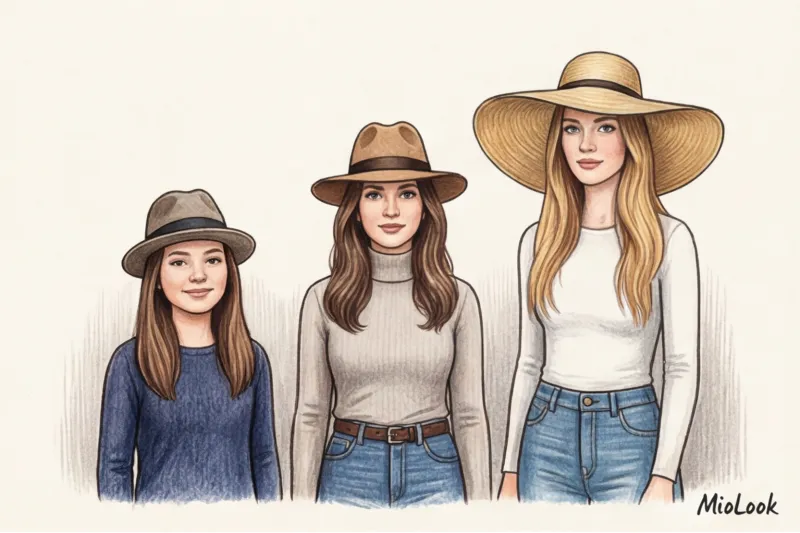
Women of average height have the most freedom of choice, but there's a pitfall—the risk of looking "unflattering." The ideal brim width for this segment is 7–9 cm.
Asymmetry works great here. Hats with a medium brim, slightly angled downwards on one side (cloche) or boldly turned upwards, create diagonal lines. According to the laws of visual correction, diagonal lines always make a look more dynamic and slimming. Since your height allows for some variability, focus on how the crown shape complements the oval of your face.
Are you unsure about choosing accessories?
MioLook's smart AI stylist will analyze your measurements and help you find the perfect wardrobe proportions.
Get access — €0.99 onceFor tall people (from 170 cm): architectural fields
A height of 170 cm or more requires a completely different scale. Here, narrow brims (up to 5 cm) and micro-hats work against you. Recall the Ebbinghaus illusion: a tiny pillbox hat on a tall, stately woman visually makes her head appear disproportionately large and her shoulders appear massive.
Your range is brims of 10 cm and wider. Wide-brimmed fedoras and floppy hats (hats with soft, wide brims) are your best friends. A long silhouette and long limbs need to be balanced with voluminous horizontal lines in the portrait area. Tall women can afford the luxury of oversized, runway-style hats (in the style of Jacquemus) without the risk of getting lost under them.
Hats, Berets, and Caps: Hidden Scale Traps
We've talked about hats, but what about winter? This is where one of the most persistent and damaging styling myths resides.
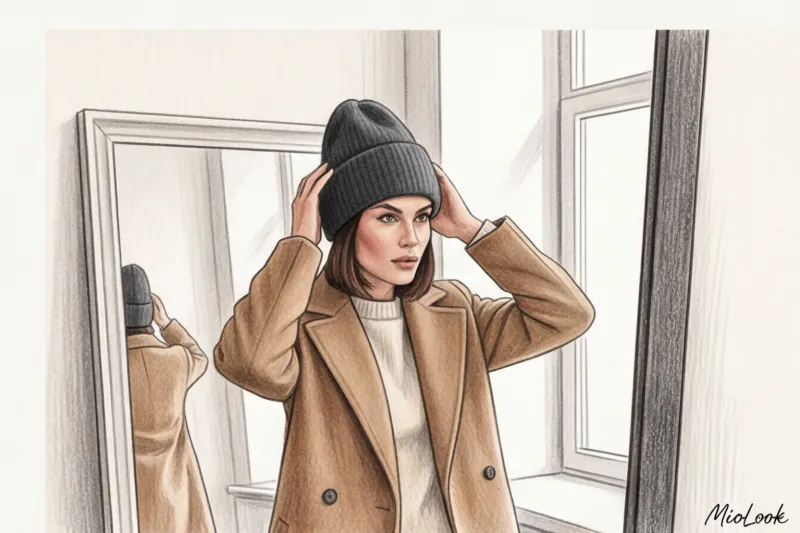
"Many glossy magazines write that voluminous, slouchy beanies that hang down at the back of the head add a relaxed look and visually elongate the figure due to their volume. This is a complete lie to the physics of silhouette."
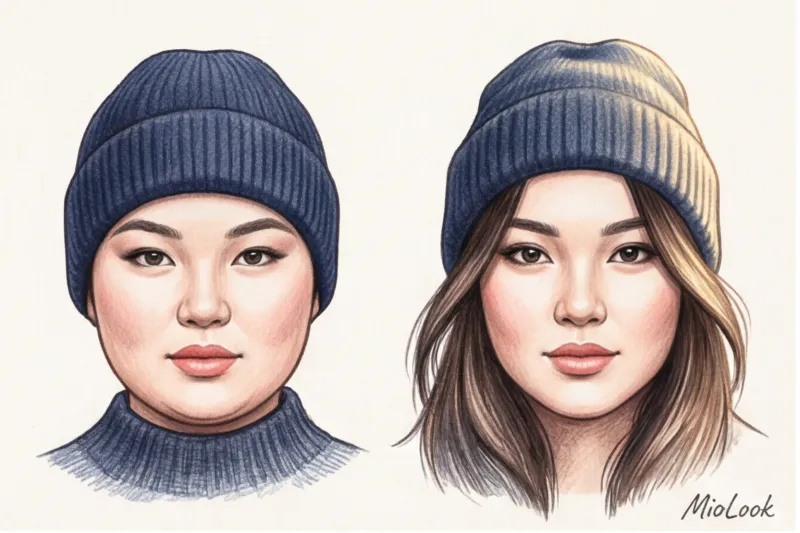
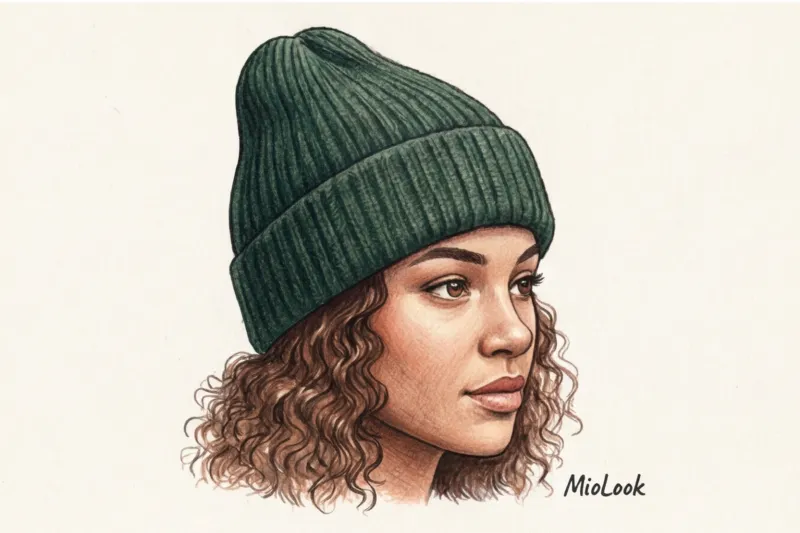
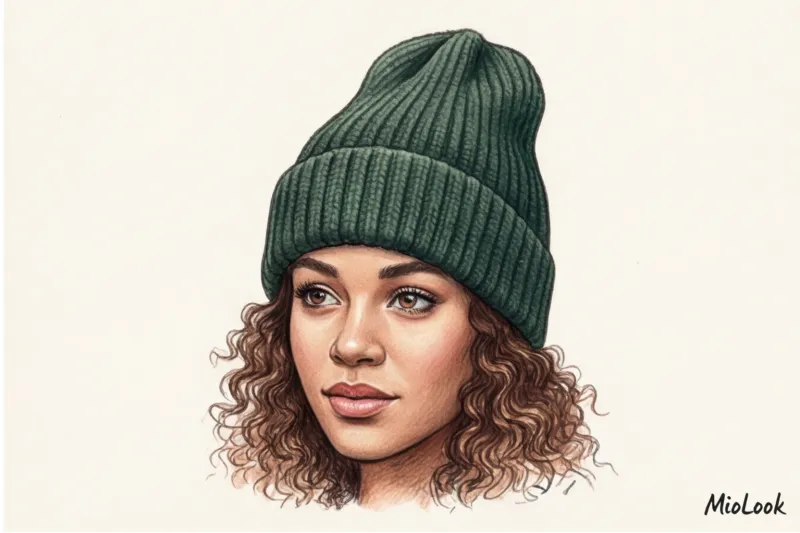
What's really going on? The soft, heavy brim of a shapeless hat, slipping down the back of your head, shifts your head's center of gravity downward. This visually shortens your neck and pulls your entire height toward the ground. If you want to appear taller and slimmer, you need a tight hat that maintains a hemispherical or slightly conical shape on top.
Knitting size and height:
Petite women should avoid chunky knits. Choose smooth or medium ribbed knits. Tall women, on the other hand, may find fine machine knits too skimpy—those with voluminous textures are ideal.
Beret life hack:
A French beret can be both a proportion killer and a savior. Never wear it pulled down over your forehead like a pancake (this creates a harsh horizontal line that cuts off your height). Fold the beret to one side, revealing part of your forehead and hairline. This will create an upward diagonal line that will instantly add 2-3 centimeters to your height.
Textile expertise: how material quality affects volume
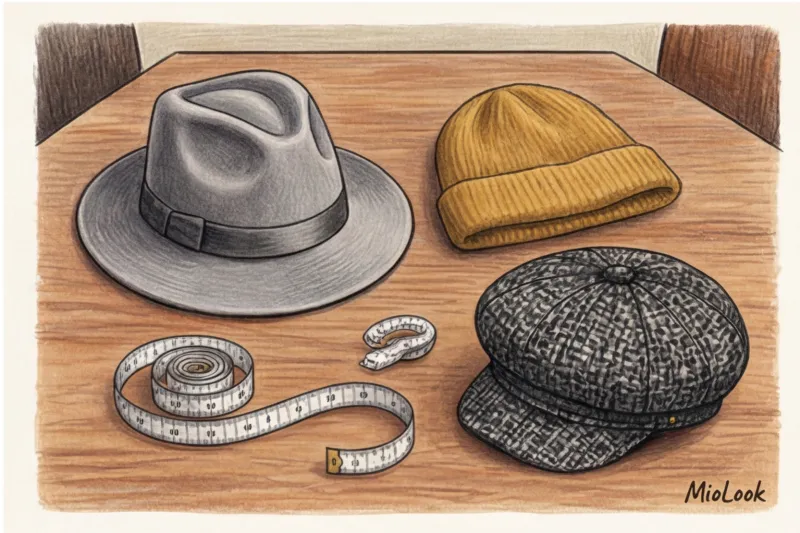
As a specialist in sustainable fashion and fabrics, I can't ignore the physics of materials. You can create the perfect hat, but if it's made from cheap materials, all the magic will disappear within a week.
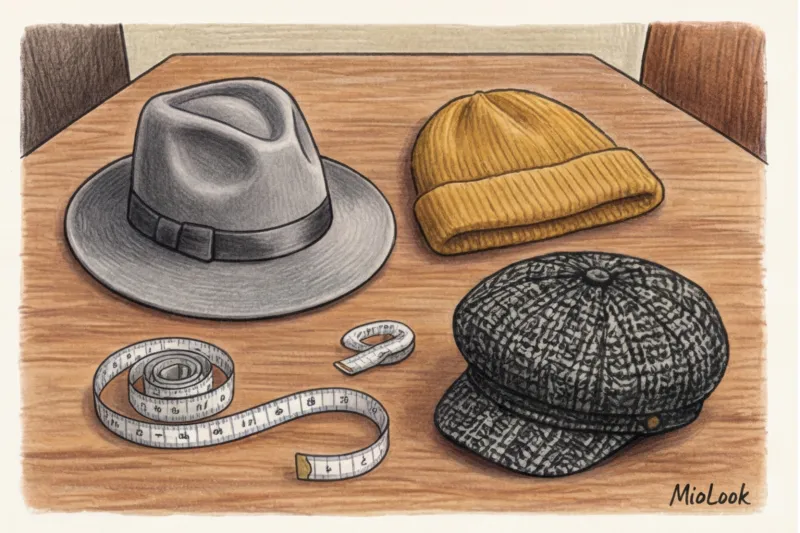
Cheap acrylic in hats and mass-market caps (usually in the €20-30 range) is the worst enemy of your proportions. According to a 2024 Textile Exchange report, budget synthetic fibers have zero "structural memory." After just three washes, an acrylic hat will stretch, lose its elasticity, and begin to cling to your skull, highlighting all the unevenness and depriving you of that essential vertical line at the crown.
What to look for on labels:
- Felt made from 100% wool. The density of the felting ensures that the crown won't collapse, and the brim won't droop into dull waves after the first rain. A high-quality basic hat made of 100% wool will cost you approximately €80–€150—an investment in your facial architecture for years to come.
- Merino wool. For beanies and berets. Merino wool has a unique natural springiness. The yarn is thin yet dense: it doesn't create a "big head" effect, yet maintains its shape perfectly on the crown.
In-store quality test: Lightly pinch the brim of a felt hat with two fingers, then release. A high-quality, densely felted hat will instantly return to its original brim without creasing.
Optimize your wardrobe
Upload your hats and outerwear to the MioLook app to see in advance which combinations work for your proportions.
Get access — €0.99 onceTry-on Algorithm: A Checklist for a Shopping Trip
Theory is dead without practice. Here's a specific algorithm I make every client follow when choosing a hat. Save this checklist.
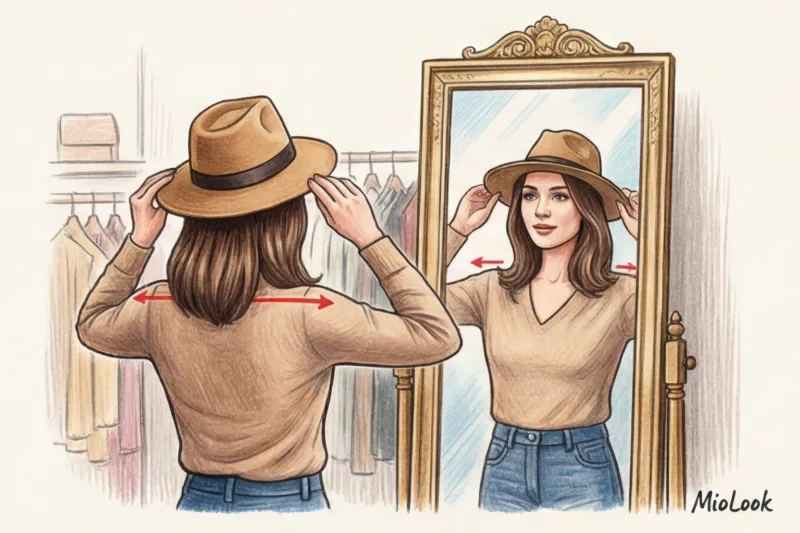
1. Only a full-length mirror
Trying on a hat while sitting in front of a small vanity mirror is a crime against style. You need to see the entire silhouette, from the tips of your shoes to the crown of your head. Only then can your brain properly assess proportions.
2. Shoulder width test (HSR)
Put on a hat and stand up straight. Place your palms vertically on the outer points of your shoulders. Look in the mirror: does the brim of the hat touch the imaginary line from your palms upward? Perfect. Does it extend beyond it? This hat will "eat" your height.
3. Checking the profile and posture
Turn sideways. A wide-brimmed hat pulled down over your eyes can accentuate a slouched posture, visually pushing your neck forward. Make sure the back brim doesn't fall over your coat collar—this is not only uncomfortable but also disrupts the beautiful line of your neck.
Fair Limit: When Do These Rules Not Work?
To be fair, I should point out: all these mathematical calculations are necessary for creating a harmonious, balanced everyday look. If your goal is a theatrical appearance, an avant-garde photo shoot, or a deliberately grotesque fashion look, feel free to break all the rules. An oversized hat on a petite woman is a statement in a high fashion context. But for work or brunch with friends, it's better to trust geometry.
Ultimately, choosing a hat is a skill of attention management. By choosing the right crown height and brim width from high-quality, shape-retaining materials, you literally take control of your silhouette. Start with an honest shoulder measurement and an assessment of your coat, and you'll never again buy a hat that will gather dust in the closet.