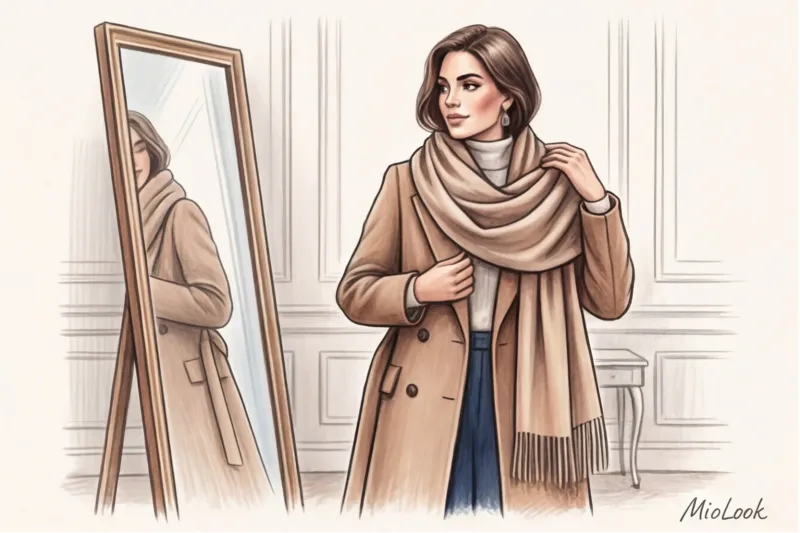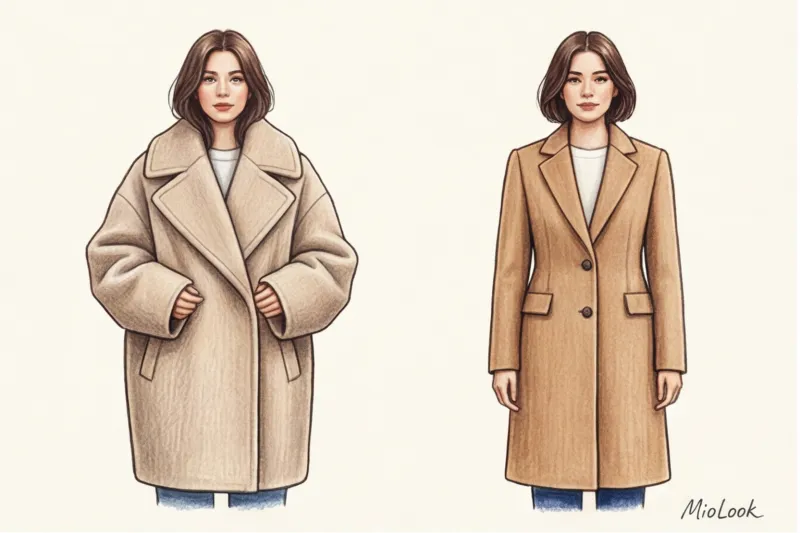
Have you ever noticed how it happens? You take a gorgeous cashmere coat off the hanger, put it on in the fitting room, and... suddenly you look like a kid who secretly put on his dad's jacket. The waistline has sunk down to the hips, the pockets are at knee level, and the shoulders make you look like a hockey player. Sound familiar?
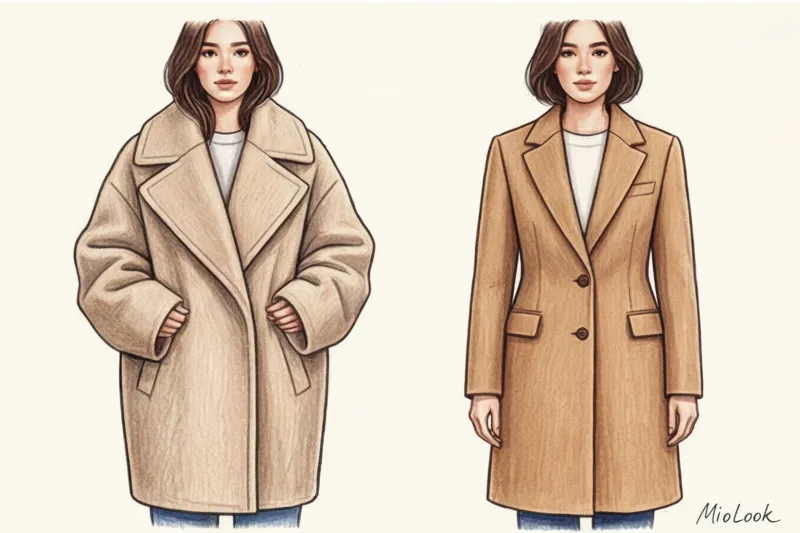
Ideal coats for short women — it's not just a garment that's two sizes too small. It's a completely different cutting math. Over 12 years of working as a stylist and studying textile construction, I've learned one important thing: petite women can wear absolutely any style, including oversized and maxi. The secret lies not in the size on the tag (be it XS or XXS), but in the scaling of specific details.
We have already discussed the basic architecture of the wardrobe in more detail in our A complete guide to stylish clothing for petite women up to 160 cm , and today I invite you to look at outerwear through the eyes of a tailor. No trivial advice like "just put on higher heels." We'll explore armhole height, lapel width, and fabric drape index.
Why is the standard coat for short women always a compromise?
When mass-market brands make coats, they use basic patterns. According to the international garment construction standard ASTM D5585, a standard female mannequin is designed for a height of 168–170 cm. If you're 155 cm tall, the problem isn't solved by simply shortening the hem at the tailor's.
Let's look at the anatomy of proportions in numbers. The back length (the distance from the seventh cervical vertebra to the natural waistline) of a standard mannequin is 41-42 cm. For a petite figure, this measurement is typically 36-38 cm. What happens when you put on a standard garment?
- The waistline of the coat falls 4-6 cm below your actual waist.
- The silhouette's center of gravity shifts downwards, visually shortening the legs.
- The patch pockets end up at mid-thigh level, although they should be located just below the hip bone.
That's why simply cutting off the bottom of a long coat is a bad idea. You'll shorten the hem, but the waist, pockets, and darts will remain in the wrong places. It disrupts the balance of the garment.
Your perfect look starts here
Join thousands of users who look flawless every day with the MioLook smart wardrobe.
Get access — €0.99 onceLength Myth: Is It True That Petite Women Can't Wear Maxi Dresses?
One of the most harmful fashion stereotypes is: "Short girls shouldn't wear long coats; they'll weigh you down." In fact, it's quite the opposite.
Short coats that reach mid-thigh are absolutely NOT flattering for petite women (especially when paired with contrasting trousers). This length visually cuts your figure in half, creating a sharp horizontal line at the widest point. This instantly makes your silhouette appear squat and widens your hips.
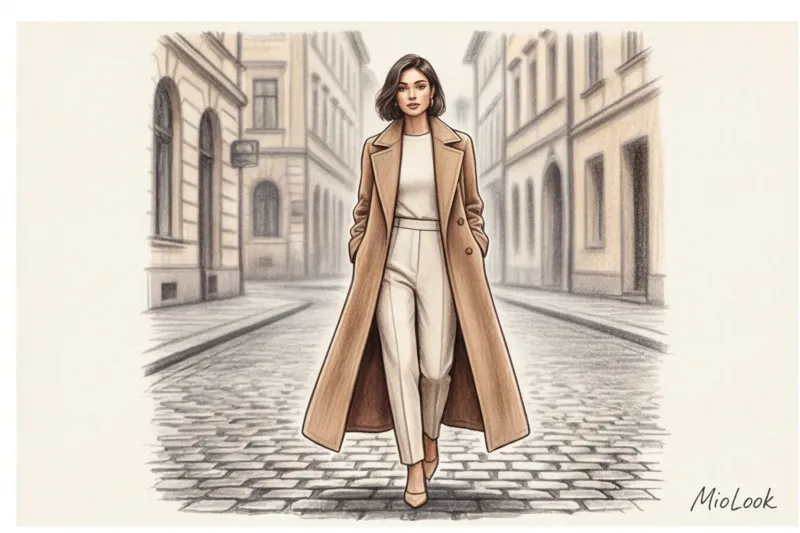
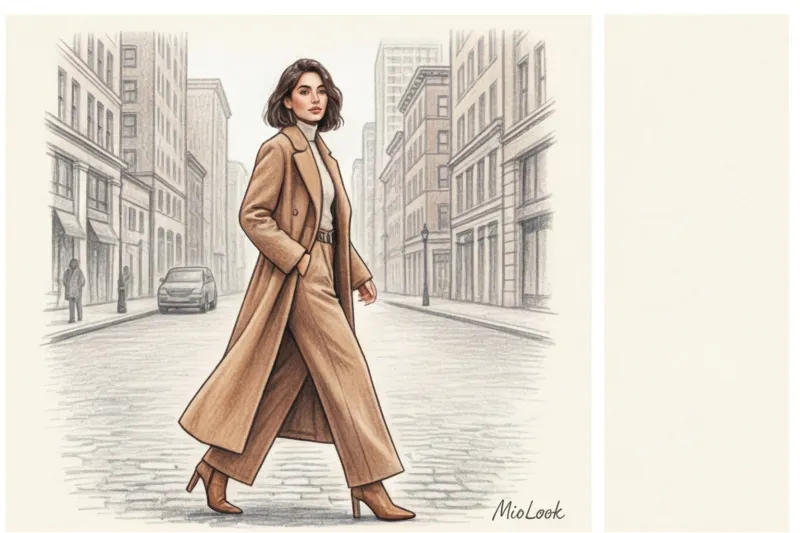
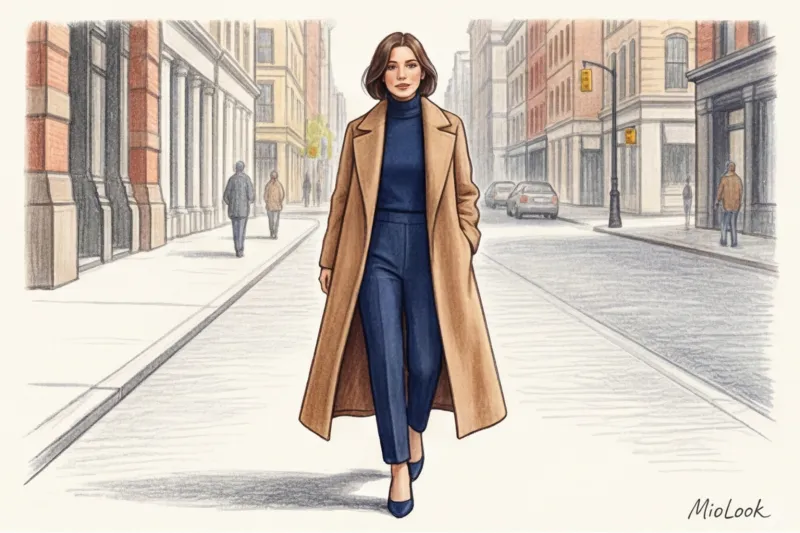
"A long midi-length coat (to mid-calf) or a full maxi coat works as a single vertical color line. If you wear it open, it creates another narrow vertical line from your main outfit. This visually elongates your height by at least 5-7 centimeters."
A case from my practice: one of my clients (height 152 cm) stubbornly bought cropped coats and jackets for five years, afraid of being overwhelmed by the volume. When I persuaded her to try on a perfectly tailored camel-colored straight-cut maxi coat, she couldn't believe her reflection in the mirror. The vertical line worked flawlessly, and now long coats are a staple of her fall wardrobe.
Cut Architecture: 3 Details to Look at Before Trying on a Dress
When choosing a coat for petite women, we must consider the proportionality of the design elements. The perfect fit is the result of the correct scaling of three key components.
Shoulder line and armhole height
The global trend for hyper-oversized, dropped-shoulder dresses has played a cruel joke on petite women. When the shoulder seam falls too low, it visually widens the upper body, creating a square effect.
What to look for? If you want a loose coat, choose a style with set-in sleeves but a slightly looser fit, or a raglan sleeve. Pay special attention to the armhole height (the opening for the sleeve). Wide, deep armholes are the enemy of petite women. When you raise your arms, they will pull the entire coat down with them. Look for high, compact armholes: they allow for freedom of movement and make the chest appear more graceful.
Lapel and collar size
The width of your lapels should be proportionate to your face and shoulders. Large, English collars that cover half your chest mercilessly reduce height and shorten your neck.
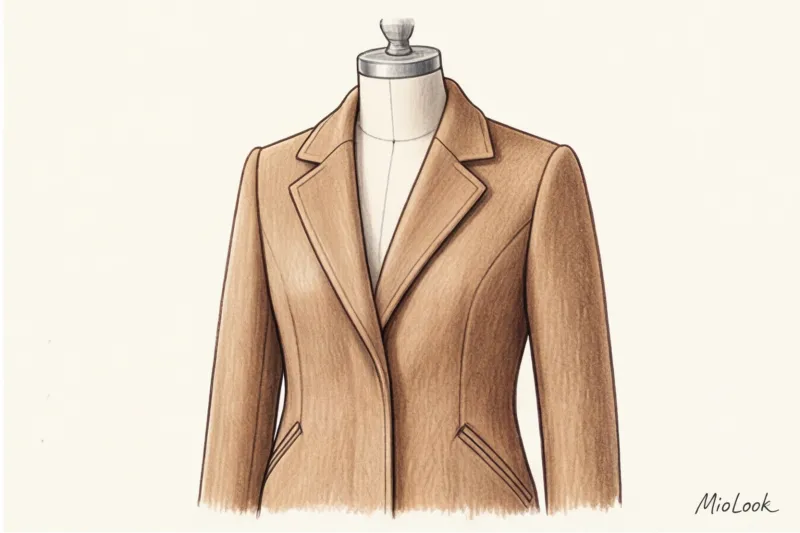
The ideal lapel width for a height of up to 160 cm is narrow or medium (no more than 7-8 cm). It is critically important break point — the point where the collar meets the lapel. The higher this point is (closer to the collarbone), the longer your neck appears and the slimmer your silhouette.
Location of pockets and belt loops
We've already established that pockets positioned downwards can distort proportions. When choosing a style, opt for diagonally placed welt pockets—they create the right flow and don't add bulk to the hips.
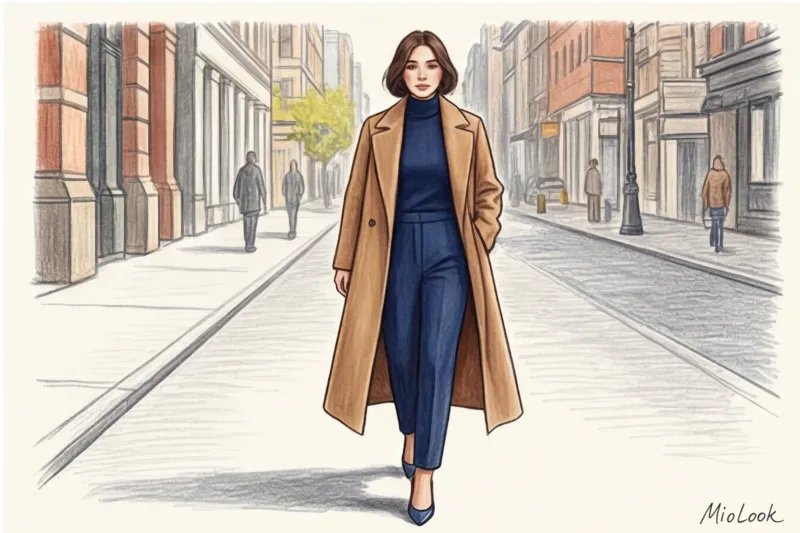
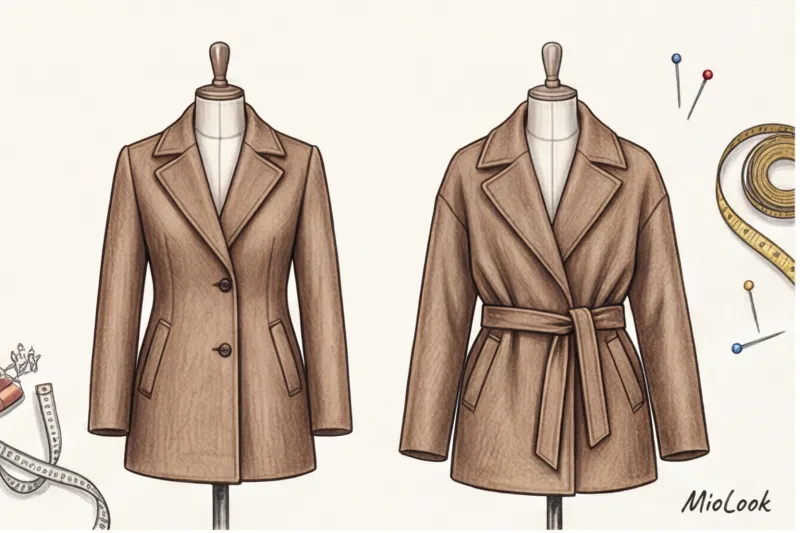
Regarding belt loops: if a coat belt in the store sits on your hips instead of your waist, refuse the purchase immediately or be prepared to rip out the belt loops. I always recommend my clients wear the belt loosely, without securing it in rigid belt loops, or tie it at the back to create a fitted silhouette without visually cutting into the figure.
Textile Science: How Fabric Density Affects Silhouette for People Up to 160cm
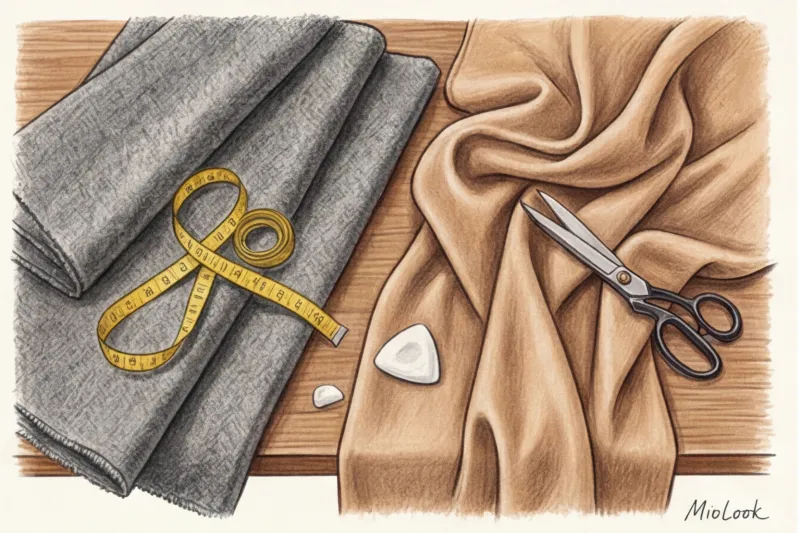
The fit is 50% pattern-related and 50% fabric-related. Thick, stiff materials (stiff English tweed, heavy broadcloth, heavy drape) create a rigid frame around a petite figure. You'll look like you're hiding in a box.
The main indicator for us is drapeability A coat should flow softly along the body, without creating unnecessary angles. According to the WGSN research institute (2024), the focus in modern tailoring is shifting toward "fluid tailoring"—flowing, flexible shapes.
How to determine the right fabric?
- Look for the Super 100s, 110s, or 120s markings. This classification system indicates the thickness of the wool fiber. The higher the number, the finer, lighter, and more flexible the thread.
- Look at the ingredients. The addition of cashmere (even 10-15%) radically changes the elasticity of the wool, making it soft.
- Avoid 100% polyester in winter styles. Not only do synthetics not provide warmth, they also don't lend themselves to heat treatment. A tailor won't be able to iron the back properly, and the coat will always bulge.
From a conscious consumer and sustainable fashion perspective, it's better to invest in one quality wool-blend coat that will last 10 years than to buy stiff acrylic models every season. To maximize the life of such a coat, I recommend digitizing it. MioLook wardrobe — the app will help you create dozens of looks using one basic item, saving you time in the morning.
Trench Coats for Petites: How to Avoid the Pitfalls of the Classic Cut
While we've covered the coats, trench coats pose their own dangers. The classic trench coat (with epaulettes on the shoulders, a flyaway yoke, a double row of buttons, and straps on the cuffs) is historically a military uniform. It's overloaded with details.
On a woman 155 cm tall, this array of accessories creates a visual buzz. The double-breasted cut visually expands the chest, and the epaulettes add weight to the shoulder girdle.
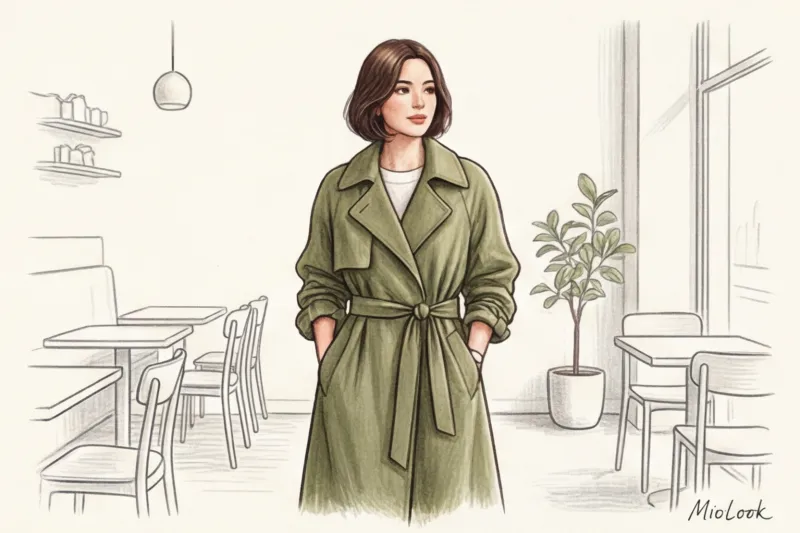
What to choose instead? A single-breasted macintosh or flowing trench coat made of lyocell, cupra, or fine gabardine. The lack of unnecessary details creates a light and modern silhouette.
And here's my favorite styling trick: never wear your trench coat sleeves all the way down. Pull them up slightly or roll them up, revealing your wrists and forearms. Exposing thin skin instantly lightens the look and shows that the garment fits you, simply because you're wearing it casually.
Ready to get started?
Try the free plan—no commitment. Artificial intelligence will help you find the perfect proportions for your figure.
Get access — €0.99 onceA Practical Guide: The Perfect Coat Fitting Room Checklist
How can you tell if your coat fits properly before you even go to the tailor? Use the algorithm we stylists use during shopping assistance:
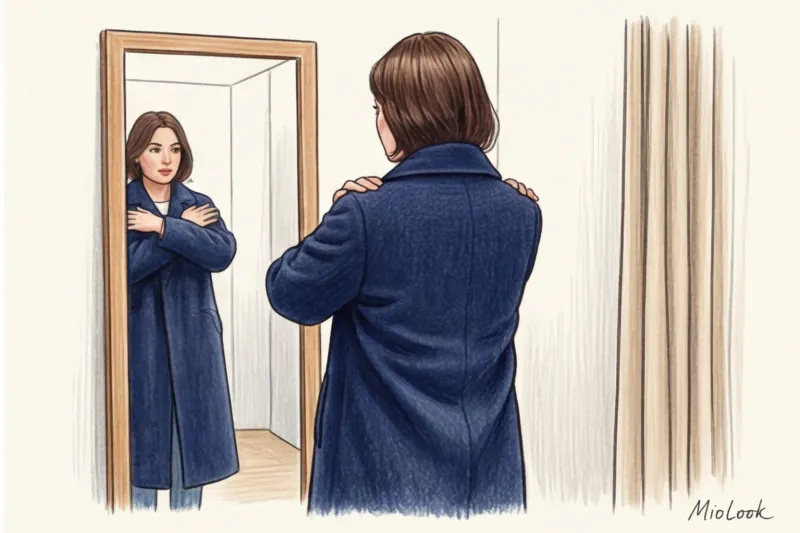
- Hug test. Put the coat on over the sweater you plan to wear in winter (never try it on over a thin T-shirt). Cross your arms over your chest, mimicking a hug. There shouldn't be any tension on your back, and the fabric shouldn't be creasing, but it shouldn't bunch up like a huge bubble either.
- Sleeve length assessment. Lower your arms. The ideal sleeve of your outerwear should end right at the base of your thumb. If it covers your knuckles, you look like you're wearing someone else's clothes.
- Test in motion. Take a few wide steps. If it's a double-breasted coat, the hem shouldn't open too much, exposing your legs above the knees. Check the back vent—it shouldn't open up when you're standing up straight.
An eco-friendly approach to fitting: what can and can't be fixed in a tailor's shop
Let's be honest: finding the perfect coat for petite women in a regular store is rare. You'll likely have to take it to a tailor. But it's important to understand the limitations of the design to avoid buying something that can't be salvaged.
What NOT to do: Never buy a coat if it doesn't fit properly. Changing the shoulders (reducing the back width, moving the armholes) costs almost as much as the coat itself. It's not cost-effective.
What can be fixed:
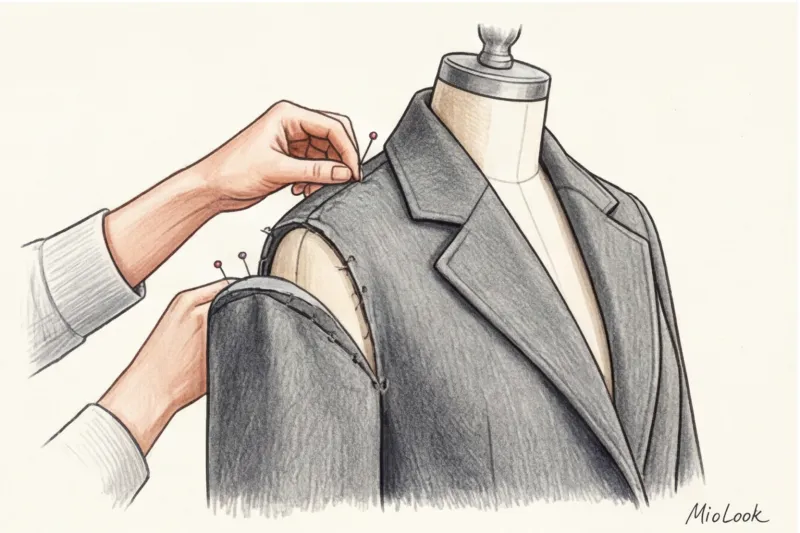
- Shortening the sleeve. If the sleeve has a complex design (slits, decorative buttons at the bottom), a competent craftsman will shorten it not at the bottom, but over the shoulder cap Yes, the sleeve is ripped out completely, trimmed at the top, and sewn back in. This preserves the original hem of the garment.
- Transfer of pockets. Patch pockets can be easily ripped out and sewn back 5 cm higher. However, welt pockets (especially those with flaps) are impossible to move. The hole in the fabric cannot be mended. If the welt pockets are not in place to begin with, leave the coat at the store.
- Length adjustment. The simplest procedure, but remember the balance we discussed at the beginning of the article.
An eco-friendly and thoughtful approach to wardrobe means that a garment should fit you at least 80% of the time, even when you try it on. Don't fall for the illusion that "the tailor will make it all right." Invest time in finding the right brands with petite lines or brands whose patterns are designed to fit small.
Ultimately, the right coat is your armor and your calling card for the cold season. Don't compromise with a dropped waist and overly long sleeves. Remember: your height isn't the problem, but rather the average mass-market cut. Look for flexible fabrics, high armholes, and don't be afraid of maxi lengths—and you'll be surprised how elegant and stately your silhouette can be.