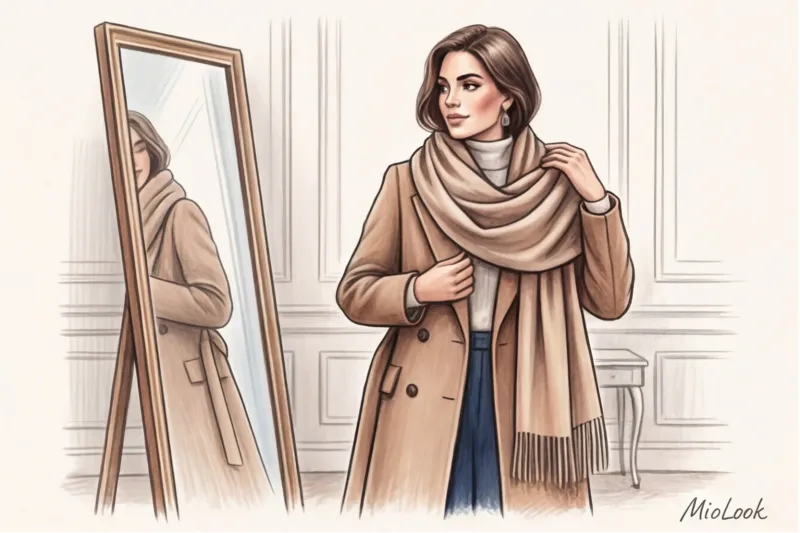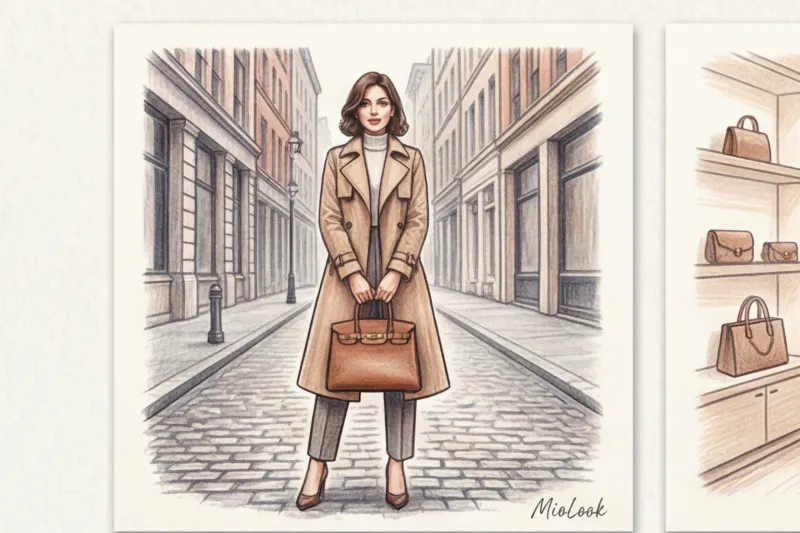
Recently in Milan, a client (she's 156 cm tall) and I were standing in front of a huge mirror in a prestigious boutique. She was holding a luxurious, oversized hobo bag. She sighed, "I look like I'm going hiking, and this bag is going to eat me." And she was absolutely right. The problem wasn't her height or the garment itself—it was the geometry and the out-of-proportion design.
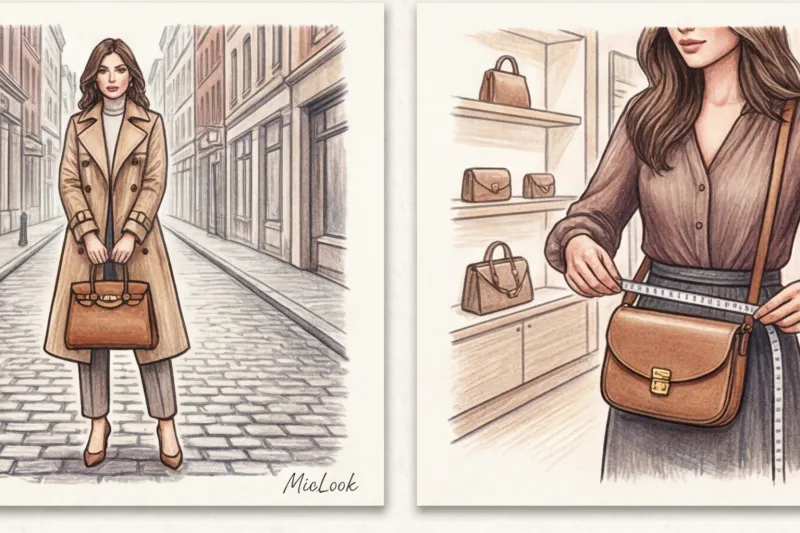
As a personal stylist working with the premium segment, I see every day how one poorly chosen accessory can visually reduce a woman's height by 5-7 centimeters. Conversely, the right bags for petite women act as an architectural tool, elongating the silhouette and bringing the look together. We've covered the basic principles of scale in more detail in our The complete guide to the perfect accessories for your body type , but today we will talk about the hidden nuances that glossy magazines are silent about.
The Illusion of Scale: Why Bags for Short Women Require a Special Approach
In styling, we often rely on the laws of visual psychology. Have you heard of the Ebbinghaus illusion? Two identical circles appear different depending on the objects surrounding them. In the context of a wardrobe, a bag acts as a visual anchor.
If an anchor is too massive and shapeless, it inexorably drags the figure down. The main mistake I see is trying to reduce everything solely to height. "I'm small, so I only need small things" is a dangerous misconception. When choosing an accessory, your bone width, bust size, and body type play a much more important role than the number on the height chart. A bag should be proportionate to your build, otherwise it will "carry you," not you.
Geometry of Style: Key Rules for Choosing a Size
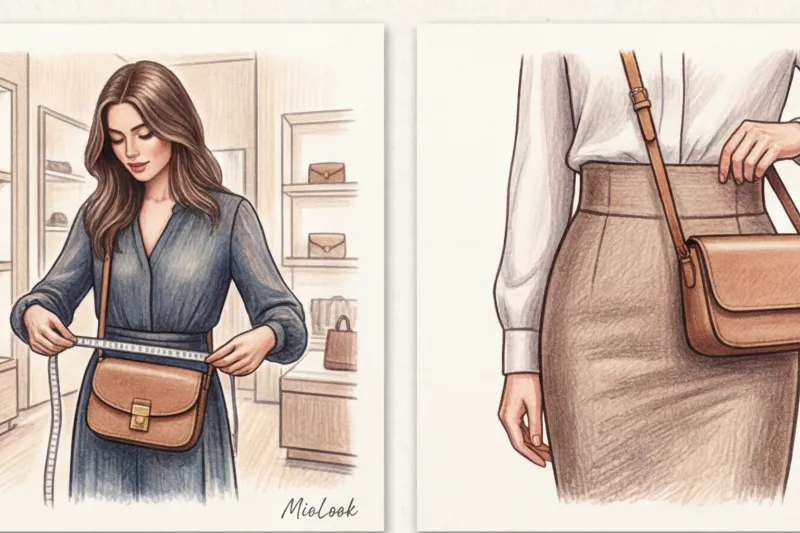
Let's get down to specific numbers. According to the laws of visual harmony, based on the golden ratio (ratio 1:1.618), the ideal width of an everyday bag for a petite woman should not exceed the visual width of her waist when viewed from the front. For most of my clients, this ranges from 20 to 25 centimeters.
Another important guideline is the "rule of thirds." A bag slung over your shoulder or carried at arm's length should not cover more than one-third of the visible length of your legs. As soon as the bag reaches lower and covers half your thigh, your legs appear half as short as they should be.
Structure always trumps volume. Structured bags organize the space around them. Soft, shapeless hobos or sacks, on the other hand, create a blurry effect. Given the same volume in liters, a rigid tote will always look neater on a petite woman than a soft leather bag.
Vertical vs. Horizontal (North-South vs. East-West)
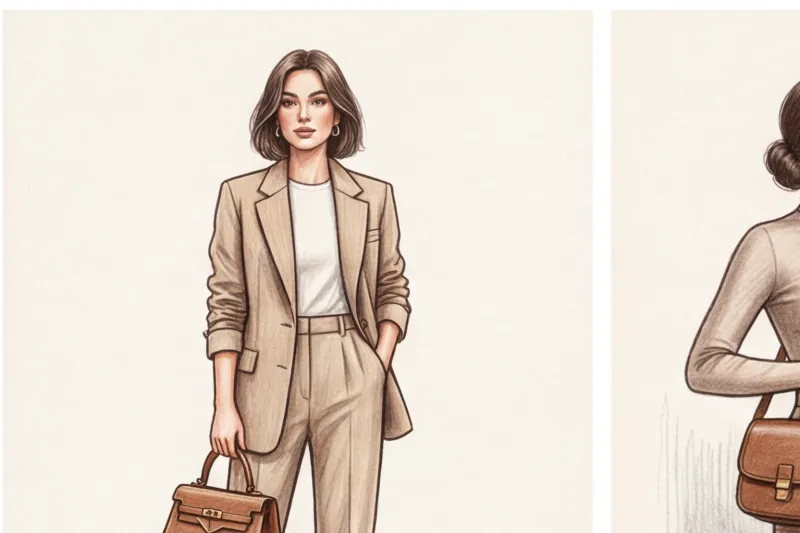
The direction of the lines is everything. Popular horizontal bags (East-West), such as classic baguettes or wide totes, create a horizontal line that mercilessly cuts the silhouette in half. If you're shorter than 160 cm, consider the North-South format—bags that are elongated vertically. They draw the eye downwards, adding those coveted visual inches.
Your perfect look starts here
Join thousands of users who look flawless every day with the smart AI stylist MioLook.
Get access — €0.99 onceStrap Drop: The Hidden Enemy of Your Proportions
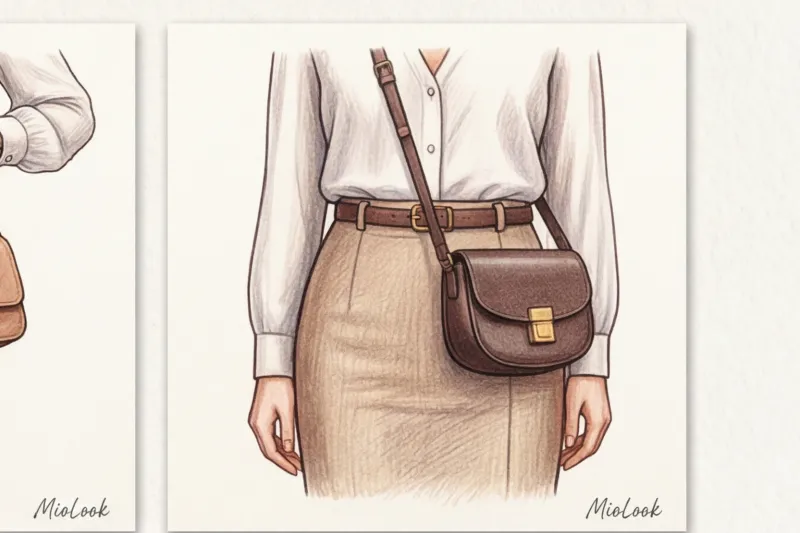
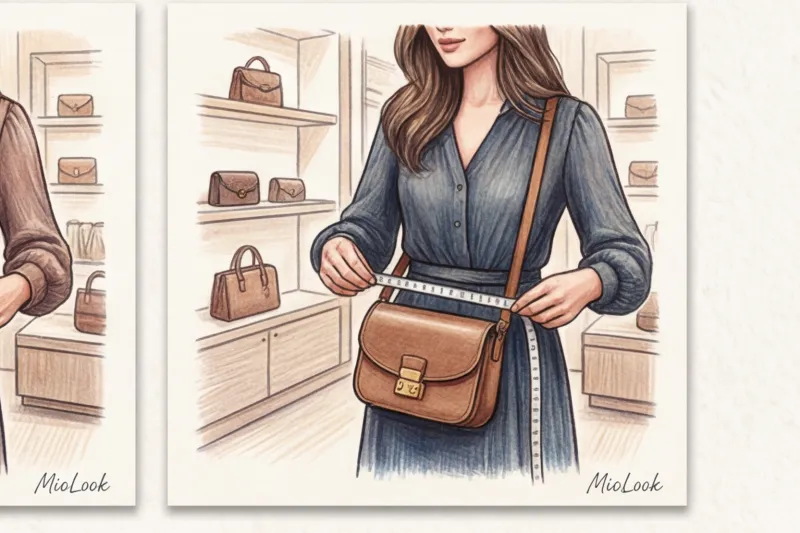
I once took a client's stunning Celine crossbody bag to a leather craftsman I knew in Milan. I asked her to shorten the strap by exactly 8 centimeters. The client was horrified: "Julia, it's an original belt!" But when she put on the redesigned bag, her delight knew no bounds. Her legs seemed endless, and her silhouette gained a lighter, more airy feel.
In the luxury industry there is a concept Strap Drop — the distance from the highest point of the strap to the top edge of the bag. European patterns for premium brands typically set the drop at 55–60 cm. For a woman 175 cm tall, this is perfect. For a woman 158 cm tall, it's a fashion disaster.
The ideal placement for a crossbody for a petite woman is exactly at waist level or at the top of the hipbone. Not a centimeter lower.
If a bag hits the widest part of your hips, it automatically widens that area and steals at least 5-7 centimeters of leg length. Always check the adjustable strap before purchasing.
Busting the Myth: Why Micro Bags Aren't Suitable for Every Petite
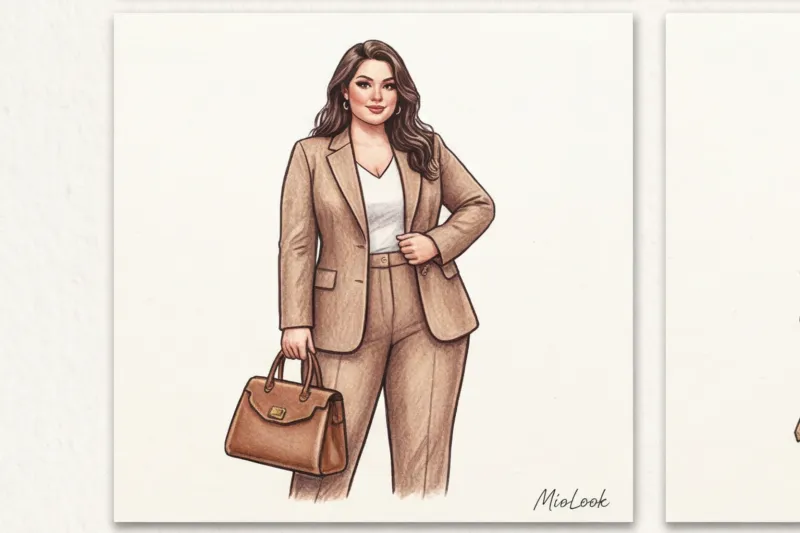
A dangerous stereotype has taken root in the fashion world: if you're short, your bag should be tiny. This rule absolutely doesn't apply if you have a feminine figure, an athletic build, or are plus-size.
Place a micro bag (like the popular Jacquemus Le Chiquito) in the hands of a petite woman with an hourglass figure, and you'll get the opposite effect. The tiny accessory will make her bust, hips, and shoulders appear much larger than they actually are, making her look bulkier.
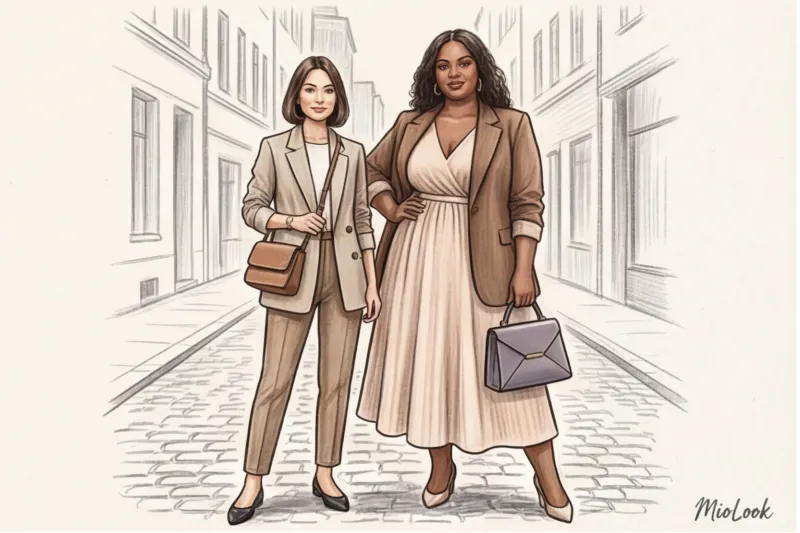
It's important to acknowledge the limitation here: yes, ultra-miniature bags look stunning on petite women with a size 0 frame. But for curvy women, proportionality is more important than extremes. A structured, medium-sized bag is the safest and most flattering choice, balancing fullness and maintaining proper proportions.
How to Wear Roomy Shopper Bags as a Short Girl (Without Compromising Your Height)
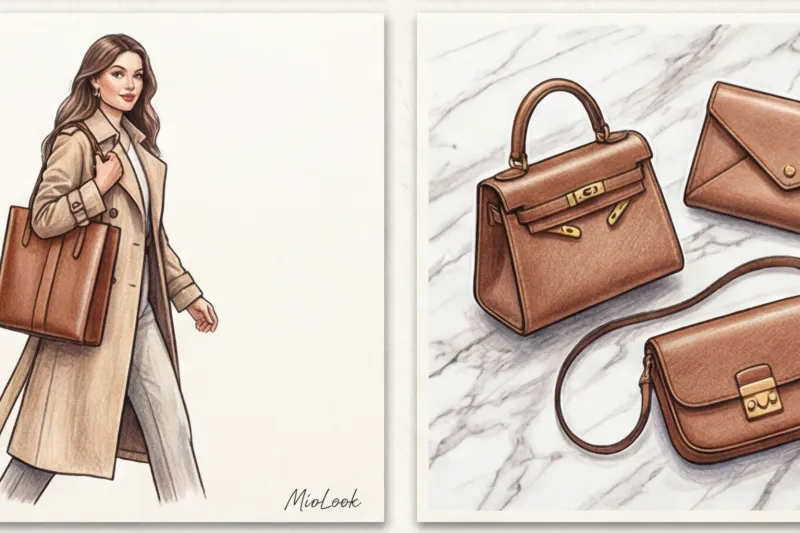
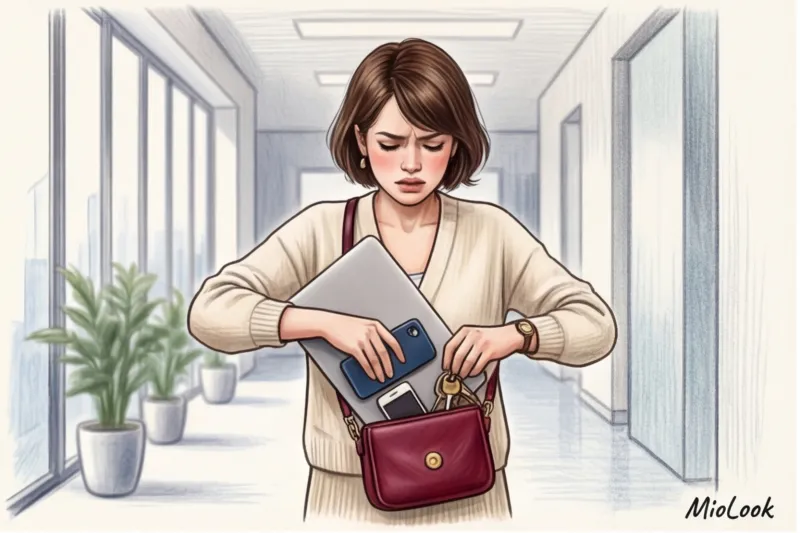
I often hear from clients: "Julia, your advice about medium-sized bags is great, but I carry my laptop, documents, and makeup bag every day. What should I do?" Real life requires real solutions. You can carry large bags, but you need to be strategic about it.
- Secret #1: Wear your bag strictly under your arm. Use a short strap. When a large shopping bag is held close to your torso and meets your chest line, it becomes part of your vertical line. If the same bag is dangling near your knee with a long strap, it will weigh you down.
- Secret #2: Tone on tone. Choose oversized bags that match your outerwear (coat or trench coat). This will help avoid harsh color blocking, which visually breaks up your height.
- Secret #3: Exquisite fittings. Opt for thin, elegant leather handles instead of wide, sporty textile straps.
Ready to get started?
Try the MioLook free plan—upload your accessories to the app and create harmonious capsules without any commitment.
Get access — €0.99 onceWardrobe Investment: Essential Handbag Shapes for Petite Women
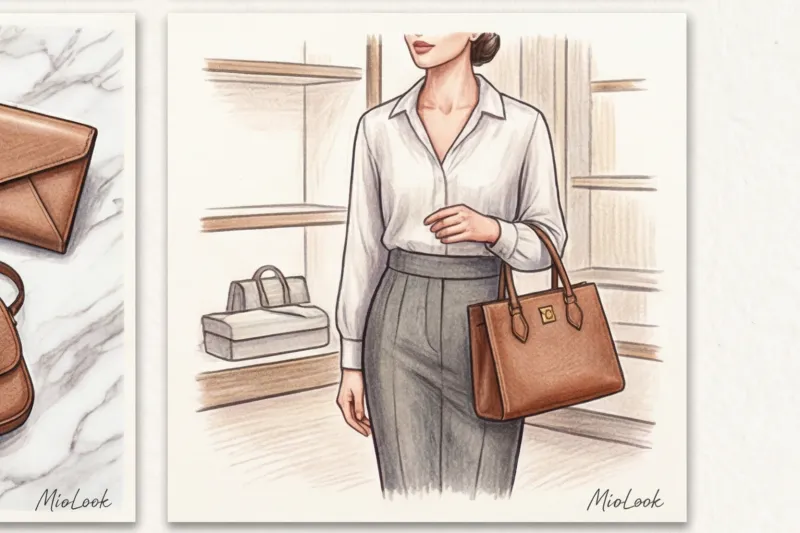
According to McKinsey's Luxury Market Analysis Report (2024), shoppers are increasingly eschewing fleeting trends in favor of timeless accessories. If you're planning to invest €300 to €1,500 in a quality leather bag, consider these three iconic shapes that will never ruin the proportions of a petite figure:
- Top-handle (bag with a short top handle). A perfect classic. You can carry it in your hand or on the crook of your elbow. It doesn't cut across your silhouette diagonally and always maintains its scale. There are excellent options in the mid-price range (around €250–€400) from brands like Furla or Coccinelle.
- Structured crossbody. Choose models with a rigid bottom and defined corners. A strap with sufficient openings for length adjustment is a must.
- Envelope clutch. Indispensable for business meetings and evening outings. Since you hold it in your hand, the scale is determined not by your height, but by the size of your hand, creating a truly natural look.
My clients often upload their investment purchases to MioLook , to use an AI stylist to calculate the cost-per-wear in advance and create capsule collections where the bag plays a 100% role.
Stylist Checklist: Test Drive a Bag Before Buying
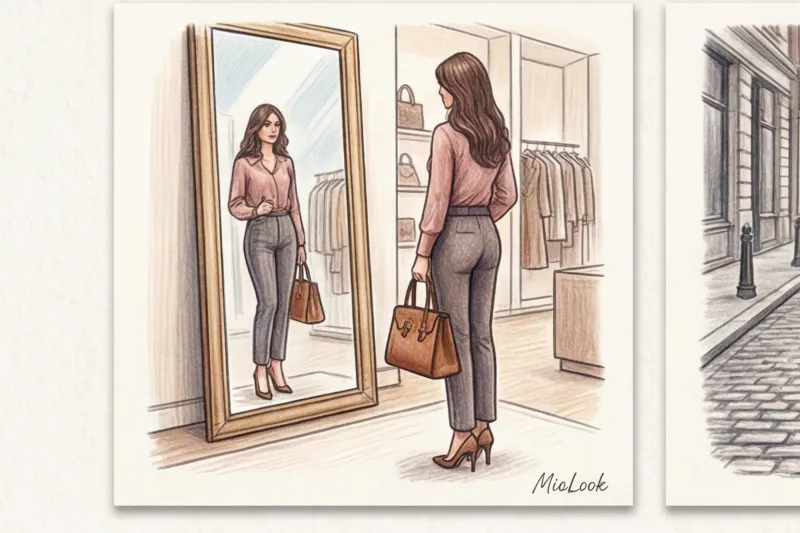
Over the years of shopping with friends, I've developed a strict protocol for trying on accessories. Never make a decision by examining a bag at chest level in a small boutique mirror. Follow these steps:
- Move away 2 meters. Wear the bag the way you plan to carry it (over your shoulder, crossbody, or in your hand), stand in front of a full-length mirror, and take a few steps back. Only from this distance can you see the true proportions.
- Check the Drop point. Where does the bottom of the bag end? If it's below the hipbone, the strap needs to be shortened.
- Estimate the width. Does your bag cover more than a third of your body width? If so, it's too big for everyday wear.
- Examine the belt. Is it possible to punch additional holes in a leather belt without ruining its symmetry? Is it even possible to remove the belt and replace it with a shorter one?
Remember the main rule of an investment wardrobe: you shouldn't adapt to an accessory. Luxury is when pieces flawlessly serve your individuality, highlighting your figure's best features rather than dictating their own terms.