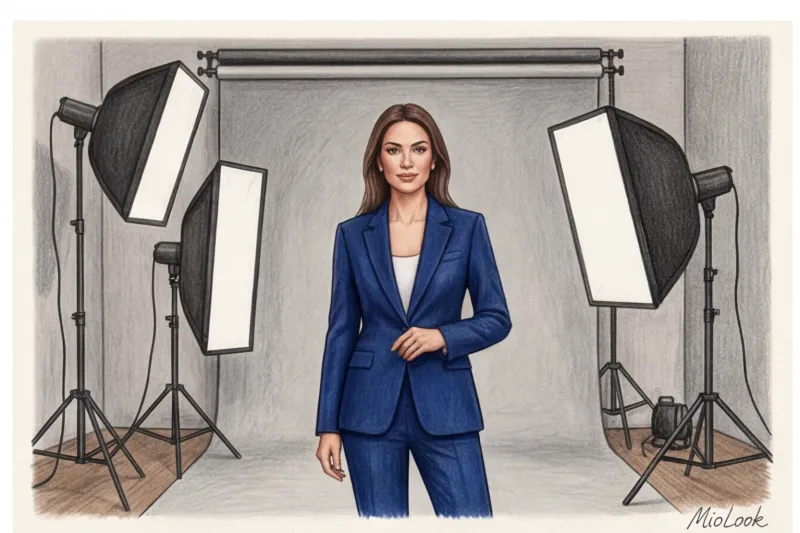
Optics and style: why business photoshoot looks differ from office attire
Have you ever noticed a paradox: your favorite, impeccably fitted suit suddenly looks like a shapeless sack in professional photos? When expert clients come to me to put together looks for a business photo shoot, their first instinct is to choose the tried-and-true pieces they wear to work every day. And this is a major mistake that can cost you your image.
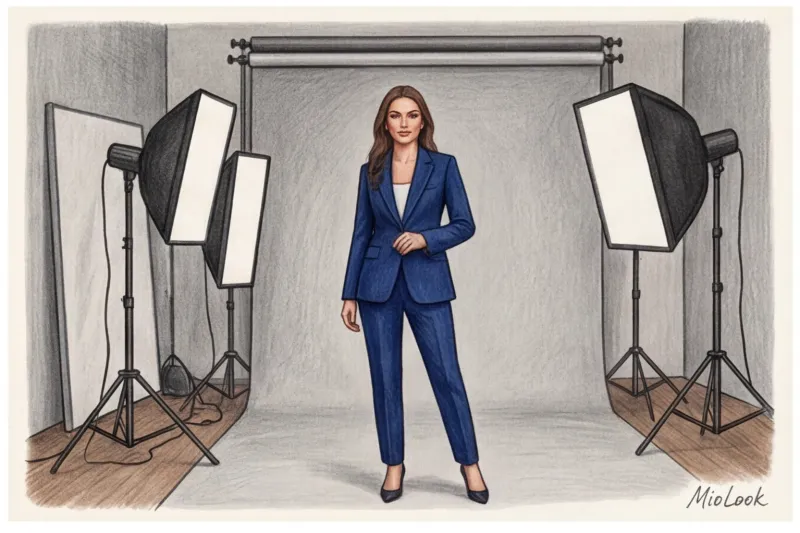
The difference lies in the brutal physics of the frame. In real life, we're constantly moving: gesturing, shifting our weight, fabric flowing and draping as we move, concealing minor imperfections in fit. Photography, however, is static, a flat, 2D projection of a frozen moment. A comfortable cut that allows for freedom in the office is instantly perceived by the camera as sloppiness. Over 12 years of working on film sets from Paris to Moscow, I've learned an ironclad rule: to create the perfect, chiseled silhouette in the frame, the photographers and I often have to literally tighten the models' jackets with clips and clothespins at the back. What's comfortable for life and allows for breathing is often too big for the lens. The camera demands a tight fit and precise geometry.
The second pitfall is studio lighting. If you think powerful softboxes simply make you look brighter, you're mistaken. A 500-1000 joule pulsed flash literally "pierces" fabric. A thin viscose viscose or a basic office blouse, which seemed perfectly solid under room lighting, suddenly becomes translucent under studio lights, revealing the texture of the underwear and the contours of the body. The camera is unforgiving of cheap textures: micro-pilling, loose weave, and the telltale synthetic sheen of polyester will be visible as if under a microscope. Therefore, for shooting, we always choose hyper-dense materials: heavy crepe silk, dimensionally stable cotton, and matte wool with a rigid backing.
And here we come to the concept of the "portrait zone." In corporate photography, 90% of shots are close-ups or medium shots (for LinkedIn, a speaker profile at a conference, or a Forbes column). This means that 80% of your budget, attention, and preparation time should be invested in the top half of the image. The architecture of the collar, the sharp line of the jacket shoulder, or the perfect neckline of the top will play a decisive role. You can show up to the shoot in your favorite jeans if they're not in the frame, but your top must be impeccable.
If you are still searching for your visual DNA, I recommend studying the basic principles in our material on How to Find Your Style: A Guide for Women. And to avoid racking your brains over which items from your closet will work in the frame, I advise you to upload them to MioLook The app's algorithms will help you sort your wardrobe and assemble a capsule wardrobe in advance, ensuring you bring to the studio only those shirts and jackets that are guaranteed to withstand the test of strong light and optics.
Formulas and archetypes: creating images for a business photo shoot tailored to your needs
A 2006 Princeton University study proved that our brains need only one-tenth of a second to form an impression of a person from a photograph. In the context of a business portrait, this means the viewer "reads" your competence, income level, and approach to work long before they read the credentials in your profile. That's why the archetype method, adapted from Carl Jung's analytical psychology for personal branding, has become my primary tool in preparing clients for photo shoots.
The clothes in the frame aren't just fabric. They're a visual promise of the service you provide. A firm shoulder line promises protection, soft cashmere promises empathy, and an asymmetrical cut promises unconventional thinking.
In 2021, a brilliant family law attorney approached me. For the first test fitting, she brought a stunning oversized fuchsia suit from a fashion brand. Impeccably stylish? Yes. But for her clients, who were going through a difficult divorce, this look conveyed unpredictability and drama. We replaced it with a structured graphite jacket, and, according to her, the conversion rate from website views to actual inquiries increased by a third. This case perfectly illustrates the direct connection between visual message and profession: the same trendy suit will never work equally well for a corporate lawyer and a creative director.
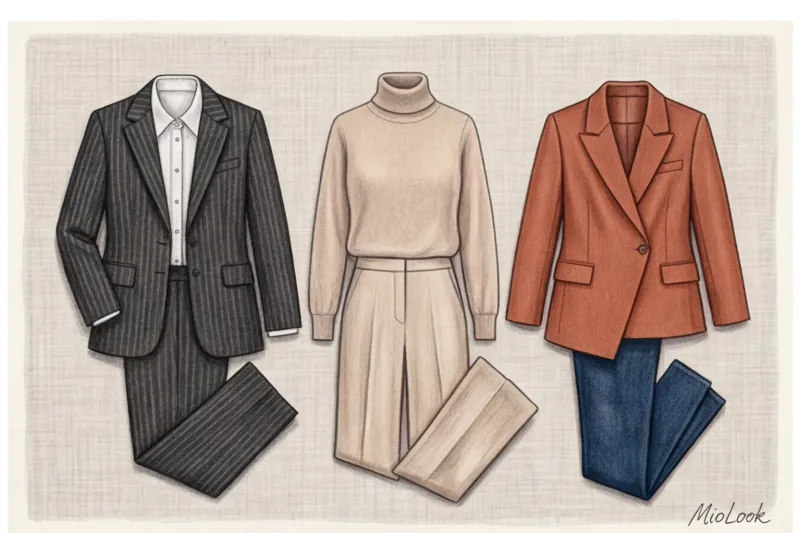
In my stylistic practice, I identify three basic formulas that work reliably in front of the lens. Of course, archetypes in their pure form are rare, but to create a strong shot, we need to rely on one dominant vector.
Strict conservative (lawyers, financiers, top management)
The purpose of this archetype is to convey absolute reliability, stability, and control over the situation. The viewer, looking at your photo, should subconsciously understand: "My money and my secrets are safe."
- Color palette: Deep navy, graphite, cool beige. I strongly recommend avoiding stark white and jet black. A black suit against a studio background often turns into a flat, dull blob without volume, while deep blue, on the other hand, retains a noble depth and evokes authority.
- Key elements: A three-piece suit, a stiff shirt collar, and a complete lack of unnecessary details (no ruffles, cargo pockets, or complex hardware). The collar here acts as an architectural pedestal—it firmly anchors the portrait and directs the viewer's attention directly to your eyes.
- Invoices: Matte wool (ideally Super 120s or 140s twist) and dense cotton. Matte fabrics absorb light from studio flashes, creating a monolithic, confident silhouette. Gloss and shine are unacceptable in this archetype—they cheapen the look and create unnecessary glare.
Empathetic expert (Psychologists, coaches, HR, doctors)
If a conservative sets boundaries, an empathic expert should gently erase them. The visual message here is: "I hear you, you're safe with me, I'll help."
- Color palette: Pastel tones, warm beige, dusty rose, muted olive. These shades mimic the natural environment, are visually unobtrusive, and physiologically reduce anxiety in the viewer.
- Key elements: Premium knitwear, soft jackets without stiff shoulder pads, blouses with delicate draping. We remove all the "armor." A V-neck on a soft cardigan or blouse acts as an open gesture, inviting dialogue.
- Invoices: Cashmere, dense silk, natural suede. The camera captures the tactility of materials beautifully. The fuzzy texture of suede or the down of cashmere (recall the aesthetics of Loro Piana) create a feeling of physical warmth and unconditional trust.
Creative leader (IT, marketing, design, media)
The most challenging and interesting archetype to style. You must demonstrate that you know the rules of the game (business environment), but know how to break them gracefully (innovation and creativity).
- Color palette: Achromats (grey, white, black) as a base, broken up by complex, deep accents – emerald, terracotta, cobalt.
- Key elements: Asymmetrical cuts, layering, and polished smart casual. A classic look is pairing a tailored jacket with a basic T-shirt. But there is a nuance: The T-shirt should be made of very thick cotton (at least 200 g/m²) so that it holds its shape and does not show through under the softbox light, otherwise the look will look sloppy rather than creative.
- Invoices: Leather, chunky corduroy, and high-quality denim in bold combinations with classic suit wool. It's the contrast of textures (smooth versus rough, matte versus delicate sheen) that creates a dynamic look and compels the viewer to stare at your portrait longer than usual.
To properly assemble such a complex multi-layered composition and not overload the frame, I recommend digitizing potential items in advance. Upload them to MioLook — The algorithm will help you see how contrasting textures and colors will look together on your smartphone screen before you even start packing your suitcase for the studio. This saves you a lot of stress the day before the shoot.
Access to MioLook for €0.99 — one-time payment
A smart AI stylist will select the perfect look for your next business photo shoot, taking into account your profession and archetype.
Get access — €0.99 onceFrame Geometry: How Style Affects Posing
There's a common saying among professional photographers: "The camera adds ten pounds." As a journalist and stylist, I was always skeptical of such cliches until I delved into the physics of the process. Human vision is binocular—we see the world in three dimensions. A camera lens, by contrast, is "one-eyed." According to the laws of portrait optics, popular focal lengths (especially 50mm and 85mm lenses) inevitably flatten a three-dimensional object, transforming it into a flat 2D image. Every extra centimeter of fabric, which drapes beautifully and moves with you in real life, turns into a solid splash of color in a photograph, visually expanding your silhouette.
That's why the hypervolume trend, beloved by many, is your main enemy when we select images for a business photo shoot What looks incredibly stylish in motion on the streets of the Parisian Marais (remember the deconstructed, deliberately oversized Balenciaga suits) makes the figure appear bulky and shapeless in a static studio shot. The viewer's brain automatically draws your body based on the outer edges of your clothes, without regard for fashion trends.
In the studio, we constantly struggle with excess volume. My favorite lifehack, used by stylists on glossy magazine cover shoots, is binder clips or strong hidden pins. If we're shooting a full-face portrait, I mercilessly pull and pin the excess jacket fabric at the waist from the back. This instantly defines the silhouette and compensates for those lens distortions.
The second critical point of geometry is the architecture of the shoulder. A soft, sloping shoulder (as in knitted cardigans or relaxed casual jackets) conveys comfort, but in a business portrait it often looks like a slouched, tired expression. A hard shoulder line in a jacket, on the other hand, acts like the supporting structure of a building. It literally "pulls" the entire frame together.
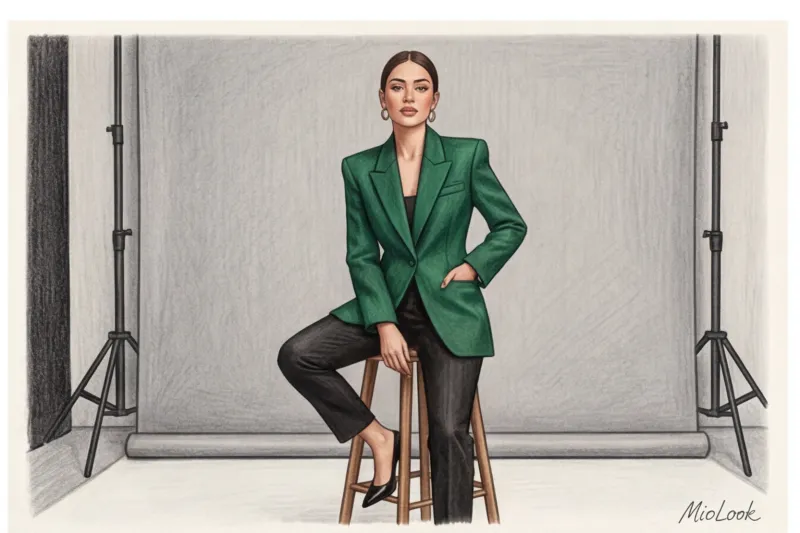
Remember the era power dressing 1980s: Exaggerated shoulder pads weren't just a shocking design. They visually widened the upper body, making the waist appear narrower by contrast. The sharp, graphic angle between the neck and shoulder—a direct reference to the iconic Yves Saint Laurent tuxedo—was subconsciously perceived by the audience as a marker of absolute confidence, control, and inner strength.
The third, and perhaps most subtle, attention-getting tool is sleeve length and the "open wrist" rule. The wrist is the thinnest part of a woman's hand. When you completely cover it with a long, closed sleeve that reaches to the thumb bone, the pose becomes heavy and static.
To create a dynamic look, simply pull up or roll up your jacket sleeves three-quarters of the way. Here's another behind-the-scenes secret: to prevent your sleeves from slipping down while posing, place a regular elastic band over the cuff, pull the fabric up to your elbow, and tuck the elastic into the resulting crease. Bare wrists create the perfect diagonals in the frame, visually lighten the silhouette, and make your body language appear more open. This also allows you to gracefully integrate a statement watch, peeking out from under the fabric just enough to highlight your style.
By the way, in order not to spend hours searching for things with the right proportions in your own closet, I advise my clients to use MioLook The app allows you to digitize your wardrobe in advance and filter items by cut, so that only jackets that hold their shape perfectly and have the right construction are fit for your pre-shoot fitting.
Color Palette: Debunking the Myth of Corporate Colors
One of the most harmful pieces of advice I regularly hear from PR managers and marketers before shoots is: "Make sure you wear something in your logo's colors." As a fashion journalist, I understand the logic of branding, but as a stylist, I'm categorically against this approach. A brand book is created for digital screens and print, not for human skin.
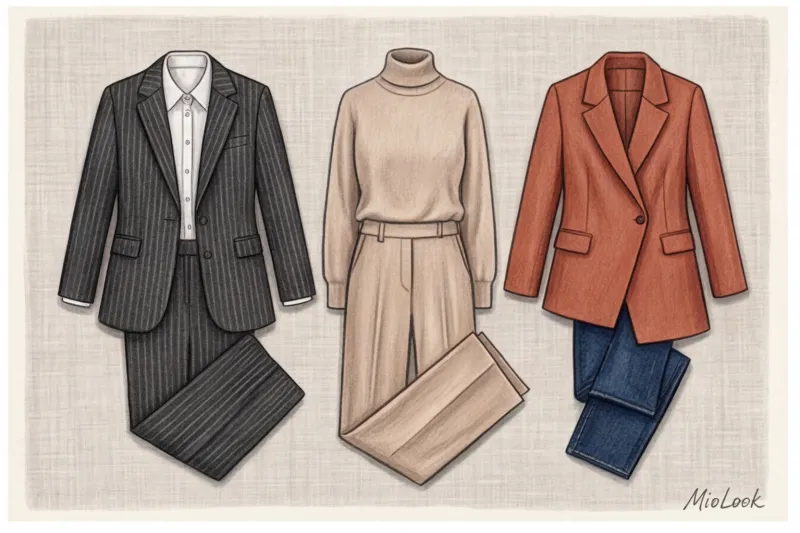
Just because your company's corporate color is fuchsia, electric blue, or vibrant orange doesn't mean it should appear near your face. This is where the merciless physics of light reflection comes into play. Studio flashguns are incredibly powerful. When light hits bright fabric, it acts as a colored reflector. Wearing a neon green blouse will create an earthy-green shadow on your neck and chin. A retoucher will have to painstakingly remove this reflection, inevitably losing the natural texture of your skin in the photo.
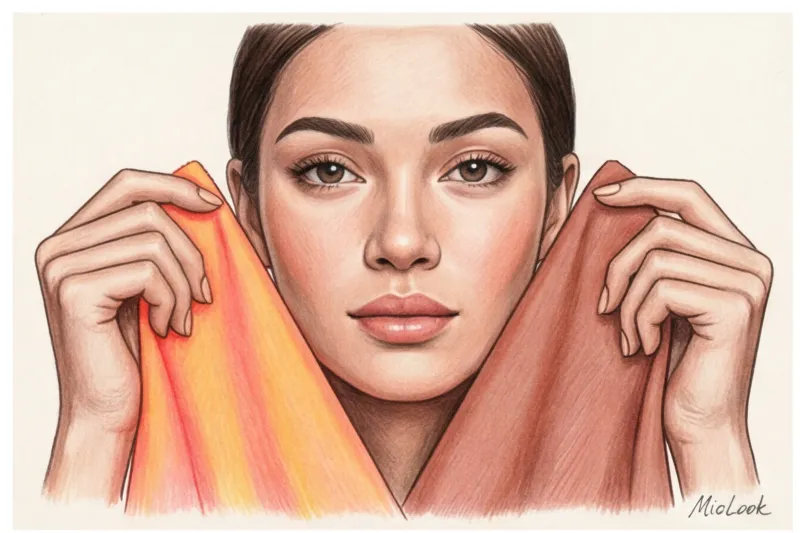
According to colorists at the PANTONE Color Institute, the perception of a color changes by 30–40% depending on the temperature of studio lighting. If you're committed to incorporating signature shades when putting together looks for a business photo shoot, relegate them to the lower half of the silhouette or choose muted, deeper versions. Instead of a garish red, opt for a refined burgundy; instead of a vibrant blue, opt for a navy shade.
Besides neon tones, there's another category of textures that a digital camera sensor simply can't handle: fine, contrasting patterns. Classic black-and-white houndstooth (pied de poule), narrow suit pinstripes, or small Vichy checks create a stroboscopic moiré effect. In the final image, such fabric will appear as rippling waves of color. Even in Chanel lookbooks, where finely patterned tweed is a staple, photographers often use special filters or choose larger weaves precisely because of the optical distortions.
Another cornerstone of studio photography is the rule of contrast with the background. One of the most common and unfortunate mistakes experts make is showing up in a black turtleneck suit for a shoot with a dark graphite background, or choosing a cream jacket for a snow-white cyclorama. Without complex backlighting (and there's rarely time to create one in standard live shoots), you'll blend into the background, turning into a talking head without a body. A flat 2D image will deprive the figure of volume and proportion.
Always ask the photographer for studio references in advance. Your clothing should be at least two to three shades darker or lighter than the background to ensure a clear and graphic silhouette.
Access to MioLook for €0.99 — one-time payment
Start creating perfect images with the help of artificial intelligence
Get access — €0.99 onceTo avoid guessing before the shoot how the shades will look together and whether they will merge into a single spot, I recommend digitizing the prepared items. After uploading your capsule collection to MioLook app , you can clearly evaluate the contrast of the kits on your smartphone screen even before you pack them in the case.
Details and accessories that make or break a portrait
On a recent shoot for the top management of a major bank, we lost about forty minutes of shooting time due to one tiny detail—the subject's diamond stud earrings. Powerful flash units transformed the elegant stones into two blinding white spotlights in the final shots. In portrait photography, accessories act as a magnifying glass for your taste, but the physics of light dictates its own strict rules.
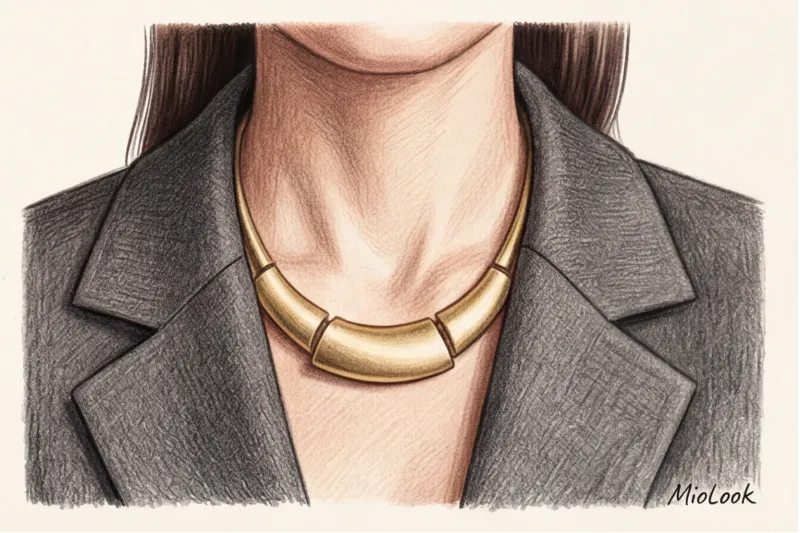
Jewelry with a glossy finish and faceted inlays is a retoucher's worst enemy. Smooth gold or silver acts as a micro-mirror, catching unwanted glare from lighting fixtures. If you're putting together images for a business photo shoot, opt for a matte (satin) or brushed metal. Baroque or classic pearls are an ideal alternative to diamonds—their porous structure gently diffuses light, creating a refined inner glow rather than a harsh glare.
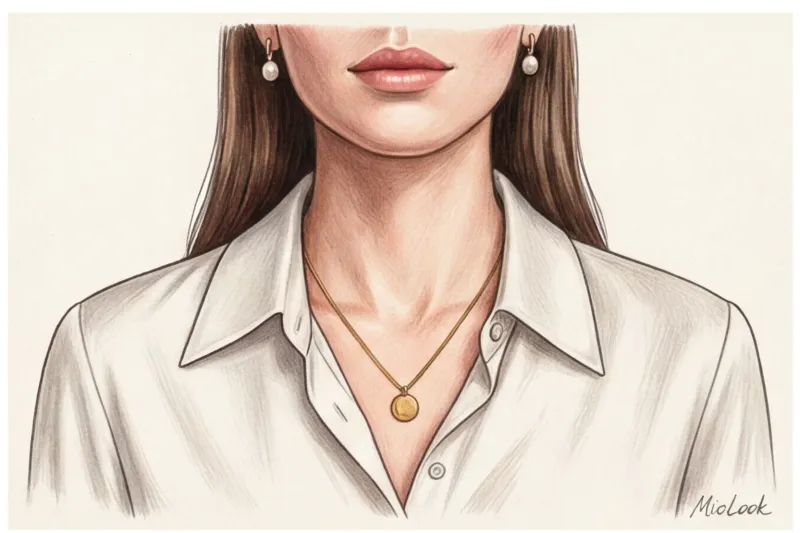
Let's move on to the key status marker in the business world—the watch. A strict sartorial rule applies here, often overlooked in static portraits: exactly one-third of the watch face should be visible from under the shirt or jacket cuff. If the watch is completely exposed, it creates the impression of a short sleeve or a deliberate brand display (which is considered bad taste in a business portrait). If it's completely hidden, you lose an important accent that ties the look together. Before the shoot, be sure to check how tightly the cuff fits your wrist. For formal, conservative portraits, I often choose watches with a matte leather strap—a heavy metal bracelet can clash with the texture of a fine wool suit.
A particular headache for portrait photographers is glasses. A classic mistake made by inexperienced models is looking directly into the light source, which results in the softboxes' white rectangles being reflected in the lenses, completely obscuring their eyes. To avoid this, use a micro-tilt: tilt your chin down just a few millimeters or turn your face a few degrees away from the direct light source.
Many media experts and speakers who wear glasses regularly have special "shoot" frames—completely empty ones. Yes, removing lenses for photo shoots is a standard industry practice, saving hours on post-processing and ensuring a clear, deep look in the frame. If this radical option isn't for you, make sure your lenses have a high-quality anti-reflective coating.
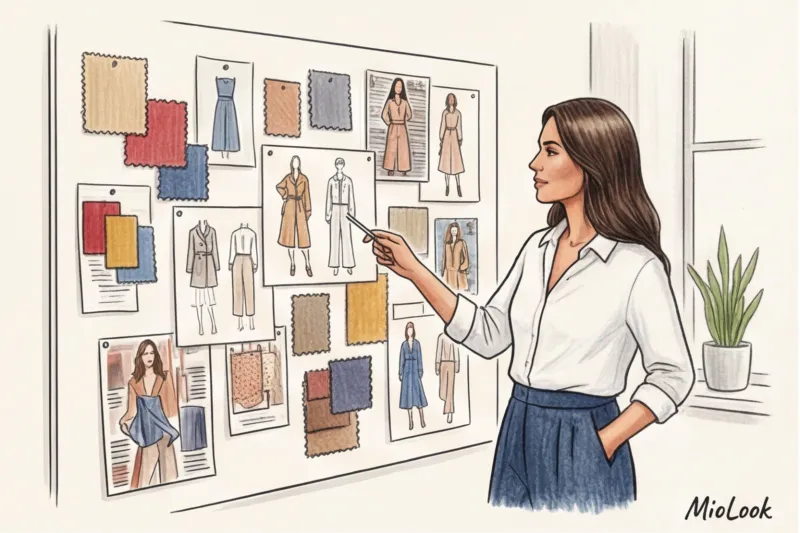
Styling the portrait area requires impeccable coordination. To avoid forgetting the right belt, the right matte earrings, or that one empty frame on the big day, I recommend creating a mood board of details in advance. Add all the accessories in MioLook smart wardrobe When assembling the shooting capsule, you can visually assess on one screen whether the portrait block is overloaded and whether the selected metals are in harmony with each other.
Stylist Checklist: Preparing Your Wardrobe 24 Hours Before a Shoot
Renting a professional cyclorama and hiring a premium photographer costs an average of 1500 to 3000 € per hour. In commercial photography, time literally equals money. The most common mistake beginners make is arriving at the studio unprepared and wasting forty minutes of their paid time frantically ironing their pants or searching for the right belt. To avoid this, I implement a strict preparation protocol for all my clients the day before the shoot.
Let's start with the mathematics of the frame. For a standard two-hour business photo shoot rule of three images It works flawlessly. Why three or four different outfits instead of a suitcase full of clothes? Firstly, changing outfits, adjusting lighting, and touching up makeup takes up about 20-30% of studio time. Secondly, masters of portrait photography always point out that the peak of a person's natural facial expressions in front of the lens lasts about 45 minutes. If you bring eight outfits, you'll shoot half of them with a completely stony, tired face.
I always assemble a capsule collection using a pragmatic approach: one ultra-strict conservative look for specialized media, one relaxed smart-casual look for social media, and one "portrait" look with an accentuated texture around the face for avatars.
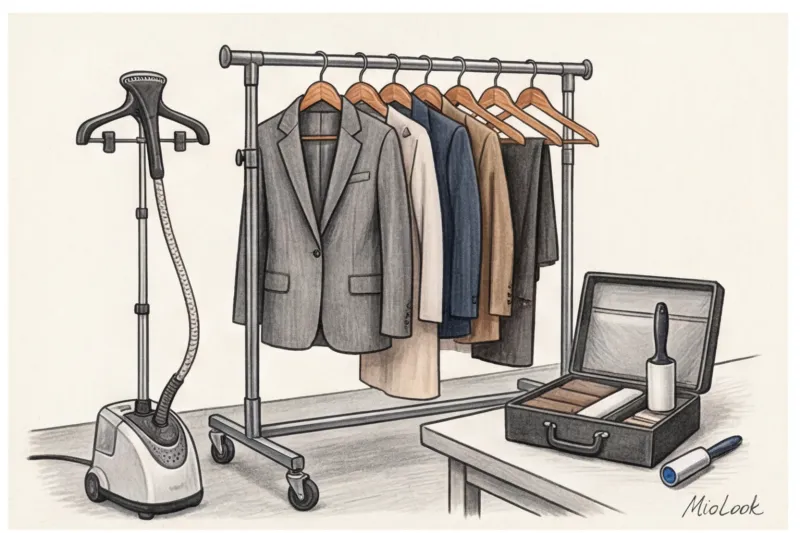
The main taboo that can get assistants fired on a single day on major magazine shoots is arriving on location in the clothes you plan to wear for the photo shoot. Seat belt creases on a silk blouse or deep creases in trousers from sitting in a taxi are impossible to remove in post-production without creating a plasticky, soapy effect. All clothing must be transported exclusively in large garment bags and trunks. Clothes may only be put on in the dressing room after a final steaming with a powerful studio steamer.
Finally, your lifeline is stylist's first aid kit Over the years, I've assembled the perfect vanity kit that solves 99% of on-site emergencies. It must contain:
- Diagonal lint roller: Studio flashes mercilessly highlight every microscopic speck of dust on dark fur, instantly turning an expensive suit into an unkempt one.
- Antistatic: This is critical for silk tops and viscose jacket linings. The dry air of studio air conditioners can cause the fabric to cling to the body, ruining the silhouette's geometry.
- Double-sided tape for clothing: (In the industry, we use professional tapes like Hollywood Fashion Secrets.) We use this tape to fix unruly lapels, close treacherous gaps between chest buttons, and secure long cuffs at the desired height.
- Blotting papers: Even if you're working with a top makeup artist, your skin will start to shine after just fifteen minutes under the hot light of softboxes. These wipes absorb sebum without damaging your powder and foundation.
Your ideal image begins Here
Join thousands of users who look flawless every day with MioLook.
Get access — €0.99 onceHow MioLook's AI stylist helps plan looks for a business photo shoot
On the eve of an important shoot, 90% of my new clients experience what I call "suitcase-on-bed syndrome." You empty half your closet, mentally trying to pair that graphite jacket with that silk blouse, get nervous, and end up packing a huge duffel bag of clothes "just in case." On set, this turns into a disaster: the studio rental time ticks inexorably, and you frantically change, trying to figure out if the look works in the dressing room mirror. And more often than not, it doesn't, because the static nature of the shot requires mathematical precision, not improvisation.
That's why I'm a firm believer in pre-visualization. While my assistants and I used to spend hours assembling physical mood boards on rails, now this process is elegantly automated. MioLook app You can completely digitize your wardrobe in one free evening. The algorithm allows you to assemble a capsule photo shoot in advance and visually see how your pieces will look on your smartphone screen. You'll immediately see in collage mode that the matte texture of your favorite cashmere turtleneck visually clashes with the density of your suit pants, even before you start steaming and packing. This saves not only time but also your nerves.
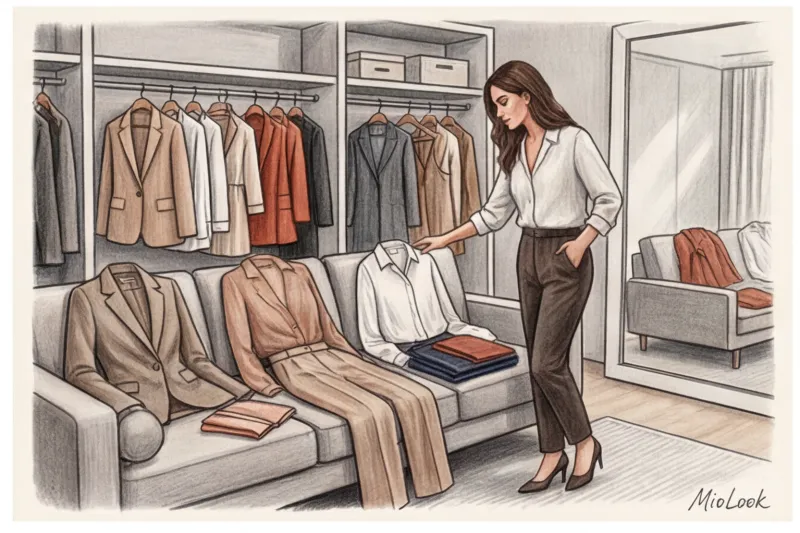
The next critical stage of preparation is working with the palette. As we've already discussed, studio flash lighting is merciless to random shades. The virtual try-on feature offers a phenomenal opportunity to test color schemes before you bring your clothes to the studio. According to the Pantone Color Institute, the perception of a color changes by 30% depending on the surrounding background. Using the app, you can pair your intended look with a studio reference (for example, a textured concrete wall or a classic gray cyclorama) and see how the clothes will contrast with the surroundings. One of my lawyer clients decided against a sand-colored suit just in time—we saw on the screen that it would have simply turned into an invisible blot against the wood paneling of the office.
But the technology's true value comes when you're stuck in a creative rut and don't want to spend your budget on a personal stylist. MioLook Smart Assistant It generates ideas based on your archetype and body type using built-in algorithms. You specify the task: "empathetic expert, inverted triangle body type, shoot for a clinic website." The AI instantly analyzes your proportions and suggests ready-made formulas based on your digitized clothing. It will mathematically accurately suggest that to balance broad shoulders in the frame, a jacket with a soft raglan line and a V-neckline is better than stiff shoulder pads, which will make the silhouette appear monumental.
A business photo shoot is always a serious investment of your time, money, and personal brand. Your only task on set is to relax, make eye contact with the photographer, and project confidence in your expertise. You shouldn't be worrying about how your collar bulges or whether the shades of blue go together.
My final piece of advice, honed over years of practice: 48 hours before leaving home, approve exactly three images digitally, pack only those, put everything else aside, and forbid yourself from doubting. Technology has already calculated the geometry, color, and style for you—all you have to do is step into the frame and pick up your perfect, iconic portraits.
Guide Chapters
Looks for a business photo shoot in a studio: stylist tips
Comfortable clothing often ruins studio shots. Learn from a professional stylist how to choose the right silhouette and texture for the perfect business portrait.
How to Dress for a Resume Photo: Tips from a Top Stylist
Your avatar is your reputation and status. Discover stylist secrets that will help you create the perfect image for a business portrait and stand out from the competition.
Poses for a business photo shoot: tips from a stylist
Standard poses often ruin a photo by distorting the geometry of a business suit. Learn how to pose correctly to make your clothes complement your status.
Makeup for a Business Photoshoot: Secrets of Light
Why does everyday makeup get lost in the studio? We explore how studio lighting interacts with cosmetics and how to prepare your face for a professional shoot.
Clothing Color for a Business Photo Shoot: Selection Rules
The camera sees colors differently than the human eye. Learn how to avoid wardrobe mistakes and choose the perfect shades for a business portrait.
Business photoshoot for plus-size women: stylist tips
A successful photoshoot isn't about sucking in your stomach, but about the right cut. We'll explore the main mistakes and secrets of choosing a plus-size wardrobe for a studio shoot.
Photoshoot for a Psychologist: Images that Convey Trust
Clients choose a psychologist in 3 seconds based on their profile photo. Learn how to choose your photo shoot wardrobe to convey trust and professionalism.
Hairstyles for a business portrait: how to look expensive on camera
What looks beautiful in real life often looks sloppy in a studio photo. We'll explore the main mistakes and secrets of "expensive" hair styling for a business photo shoot.
Top 10: Clothing Mistakes in a Photo Shoot and How to Avoid Them
The camera is merciless when it comes to poorly chosen wardrobe. Learn about 10 critical clothing mistakes that can ruin any business portrait.
Business photoshoot in the office: how to fit the image into the interior
Why can an expensive suit ruin a photo? We explore how light, color, and texture interact with interiors to ensure your corporate photos are flawless.
Outdoor Business Photoshoot: Choosing Locations and Looks
Outdoor business photography requires a special approach to lighting and wardrobe. Learn how to create stylish action shots and avoid common mistakes outside the studio.
Business photoshoot for women over 40: style secrets
First impressions are formed in a split second. Learn how to choose the right wardrobe for a business portrait to look classy and elegant.
Photoshoot Capsule: 5 Items for 10 Business Looks
Don't bring your entire wardrobe to a business shoot! We'll show you how to create 10 stylish looks from 5 basic items and save time in the studio.
Accessories for a business photo shoot: stylist tips
The right details are the key to a successful business portrait. Learn how studio lighting changes the look of jewelry and what to wear for a shoot.
Photoshoot for the creative profession: status images
How can designers and architects look creative yet classy in a business shoot? We explore common mistakes and clothing tips with a professional stylist.