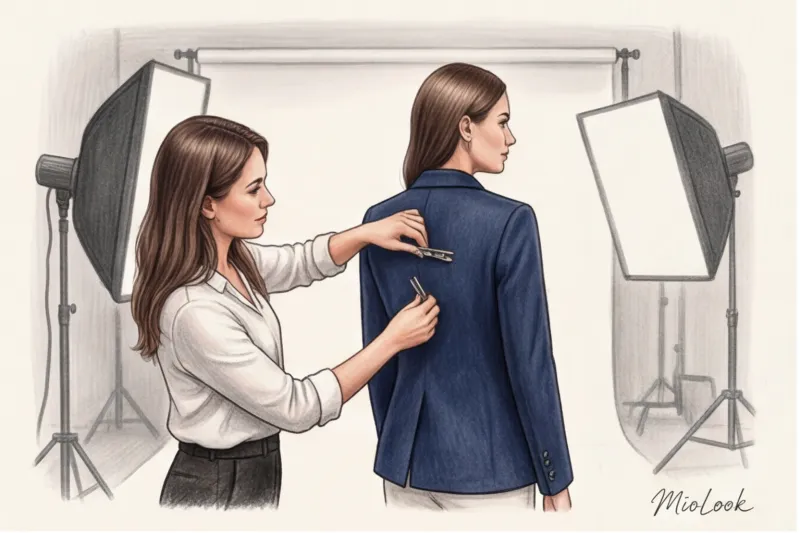
Comfort is the greatest enemy of the perfect shot. I often hear from clients: "Camilla, I want to shoot in this cashmere suit; it's so cozy, I practically live in it." And every time, I have to explain the brutal truth: clothes that make you comfortable in an office chair look like a shapeless sack in a static studio photo.
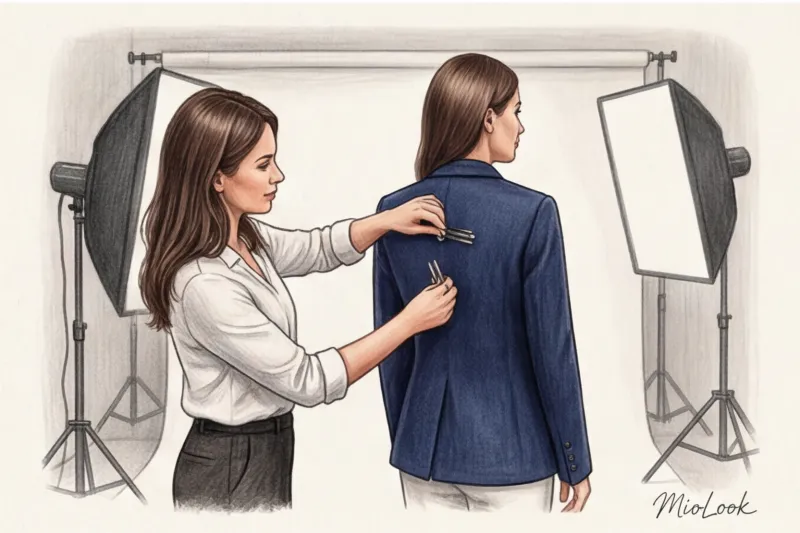
The camera doesn't see your comfort. It sees silhouette, light, and texture. Choosing the right looks for a business photo shoot in a studio isn't a matter of personal taste or current microtrends. It's a matter of geometry, optics, and understanding how pulsed light interacts with fabric pigment. We discussed the basic principles of positioning in more detail in our The Complete Guide to Business Photoshoot Looks: An Expert's Guide , but today I want to analyze the physics of the process.
After 12 years of working as a stylist on film sets in Paris and Moscow, I've learned one thing: what works flawlessly in real life often falls flat in front of the camera. Let's explore how to create a look that will sell your expertise at first glance.
Studio Photography Physics: Why Your Favorite Office Stuff Aren't Working
The biggest mistake beginners make when preparing for a shoot is confusing the dynamics of real life with the static nature of photography. In real life, your oversized jacket flows as you walk, you gesture, and shift poses. In the studio, time freezes at 1/200th of a second.
Studio flash lighting is a merciless X-ray. A standard flash of 500-1000 joules literally pierces fabric. I once had a client bring in a luxurious silk blouse worth 800 euros. In the dressing room, it looked classy and solid. But as soon as we placed it under the softboxes, the fabric became completely transparent, revealing the contours of a lace bra. We had to urgently apply matte tape from the inside and change the lighting setup.
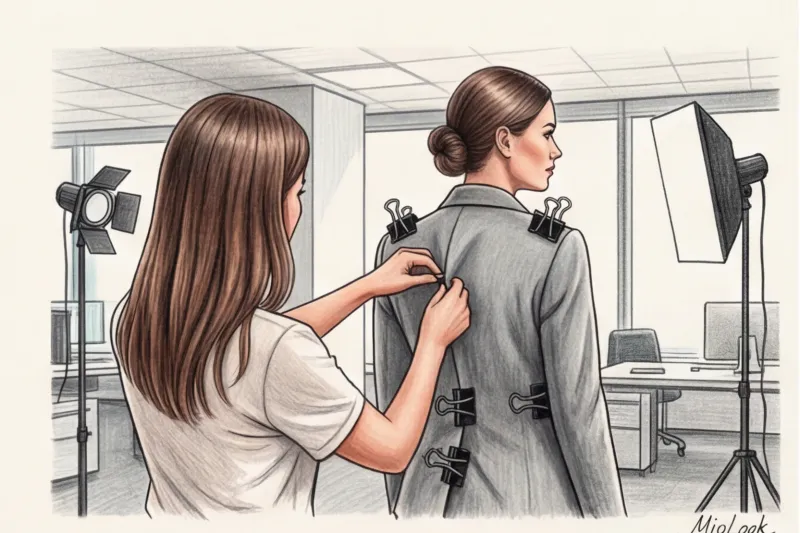
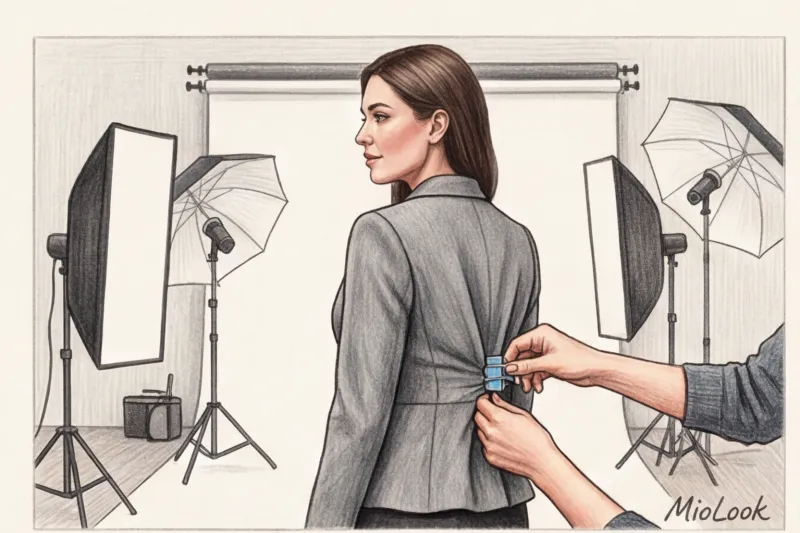
That's why, in professional fashion shoots, garments almost never fit the model exactly as they do in real life. We use dozens of clippers on the back to tighten the jacket until the seams burst. Why? To create that architectural rigidity in the shoulder girdle. In real life, you'd have trouble breathing in such a jacket, but in a flat photograph, it looks like the armor of a modern leader.
Fair warning: this clothespin trick does NOT work if you're shooting dynamic action shots or video interviews. It's only suitable for static portraits.
Access to MioLook for €0.99 — one-time payment
A smart AI stylist will find the perfect look for your next photo shoot.
Get access — €0.99 onceSilhouette Architecture: How to Create Looks for a Business Photoshoot in a Studio
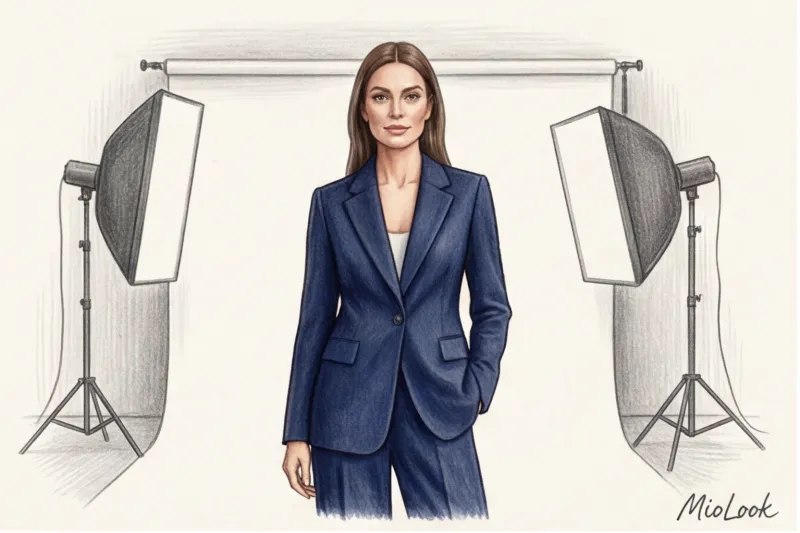
If you want to look expensive on camera, forget about thin knitwear and viscose. Cameras love thickness. A stylist's golden rule: for close-up portraits and waist-ups, choose suiting fabrics with a weight of at least 250 g/m².
- Wool, heavy cotton, heavy tweed — they hold their shape even without your help. Excellent examples of such textures are often found in premium lines from COS or Massimo Dutti.
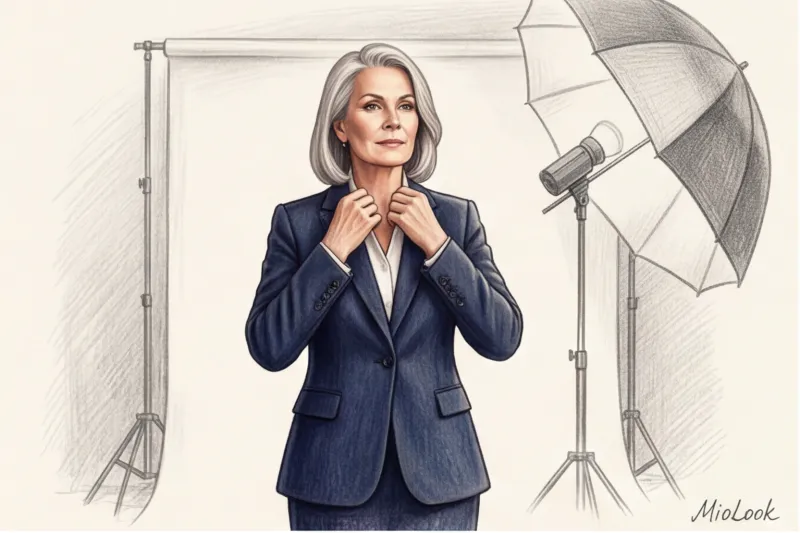
- Cutting geometry: You need a defined shoulder line. If your jacket doesn't have shoulder pads, the camera will make your shoulders appear sloping and your figure look tired.
- The dangers of glitter: Satin, cheap silk, and polyester reflect flash light unpredictably. In areas of glare, the camera's sensor captures "overexposure" (blown white pixels), which cheapens the image and adds extra weight.
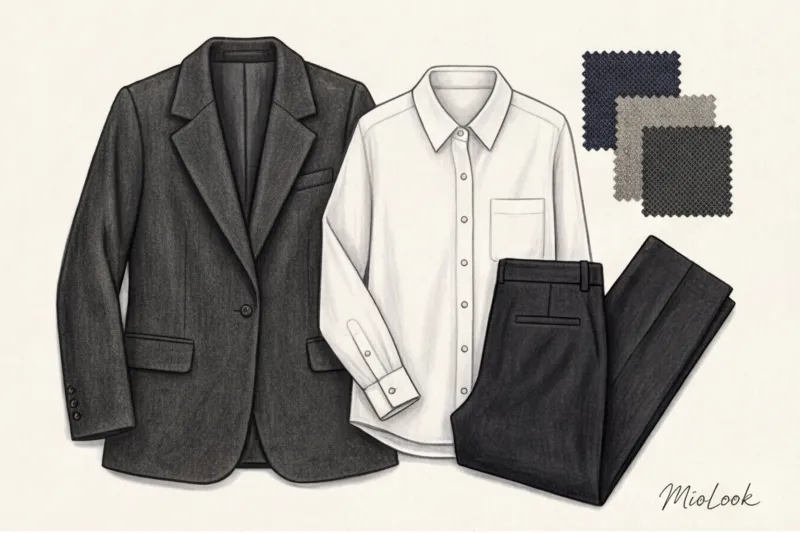
But the most insidious enemy of studio photography is the moiré effect. Did you know that about 80% of technical defects in corporate photo shoots are related to this very effect? Moiré occurs when a fine pattern on your clothing (houndstooth, pinstripes, small checks) overlaps the pixel grid of the camera sensor. The result is rainbow-colored, psychedelic waves across your expensive suit that are impossible to remove with retouching. Choose solid-color items.
Multilayering as a tool for attention management
Photography translates our three-dimensional world into a 2D plane. To restore depth to the image, we need layering. A plain basic T-shirt under a jacket is boring. But a thick ribbed cotton top, worn with an unbuttoned poplin shirt and a structured wool jacket over it, compels the viewer's eye to travel around the frame.
The contrast of textures works flawlessly: combine matte with a light satin sheen (but not an overt shine), smooth leather with loose knitwear.
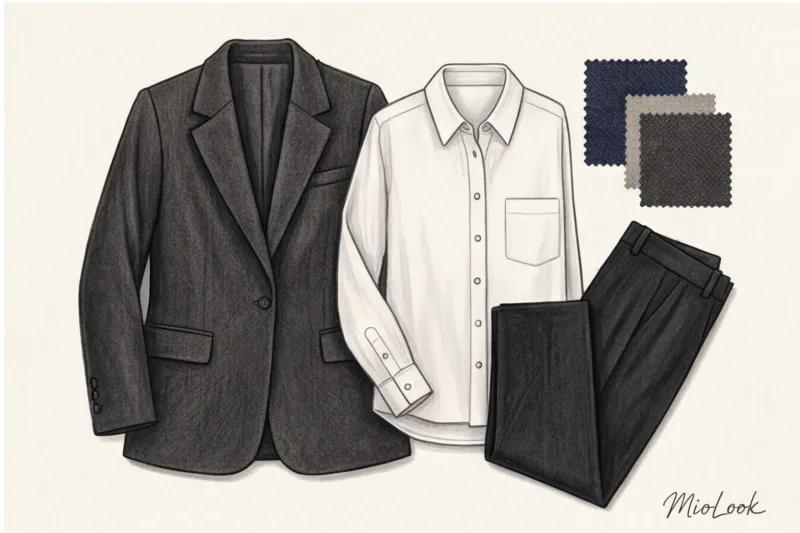
Color Direction: Matching Clothing to the Studio Background
The choice of clothing color cannot exist in isolation from the background color. This is where Johannes Itten's color theory and the psychology of perception come into play. Your goal is to create the right contrast so as not to blend into the cyclorama, but also to avoid looking out of place.
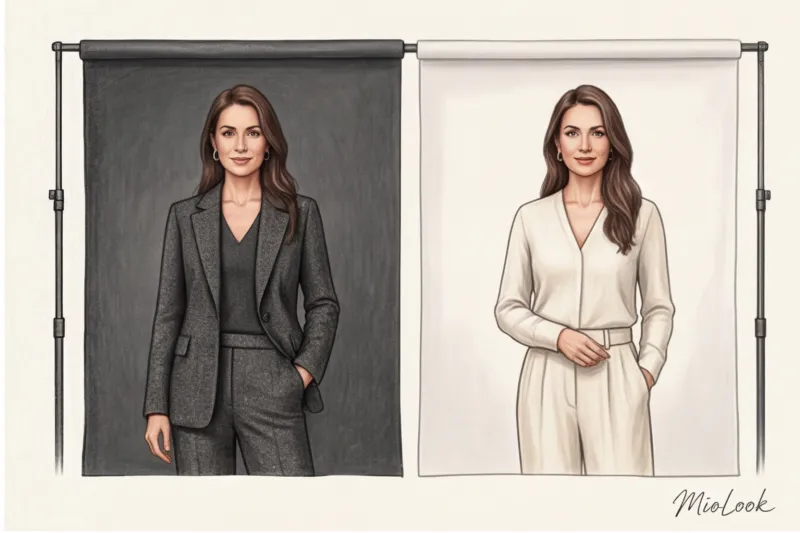
Dark background (Low Key): Many experts like to pose against a dark gray or black background in a black suit, wanting to look dramatic. Wrong! If your black suit has a smooth texture, the light will be absorbed by the fabric, leaving only your "flying head" in the photo. For dark backgrounds, choose a black with a pronounced texture (bouclé, chunky knit, velvet)—this will allow the light to create volume.
Light background (High Key): The white-on-white trap. If you wear a crisp white shirt against a white cyclorama, you'll lose the contours of your body. As the PANTONE Color Institute notes in its 2024 reports, complex, shifting hues perform much better on camera. Replace pure white with ecru, ivory, oatmeal, or pearl.
Colored paper backgrounds: Use complementary colors (opposite on the color wheel). If the background is olive or muted green, a deep burgundy or terracotta suit will make you a real eye-catcher. If the background is blue, warm sand and caramel shades will highlight your confidence.
Your perfect look starts here
Join thousands of users who look flawless every day with MioLook.
Get access — €0.99 once4 ready-made formulas: win-win looks for a business photo shoot in the studio
Enough theory, let's move on to practice. Here are four scenarios that I regularly put together for top managers and entrepreneurs. They work without fail.
Formula 1: "New Severity"
A classic three-piece pantsuit, but with one twist: the vest is worn over bare skin. This tones down the formality, removes the bank clerk image, and adds a modern dynamic to the look. Ideal for creative agency executives.
Formula 2: "Intelligent Casual"
A thick knit turtleneck (a blend of merino and cashmere) paired with a structured blazer in a fine, barely noticeable herringbone pattern (remember the moiré—the texture should be larger than a pixel). This look exudes calm confidence. Steve Jobs made the turtleneck iconic for a reason—it draws all the attention to the speaker's face and eyes.
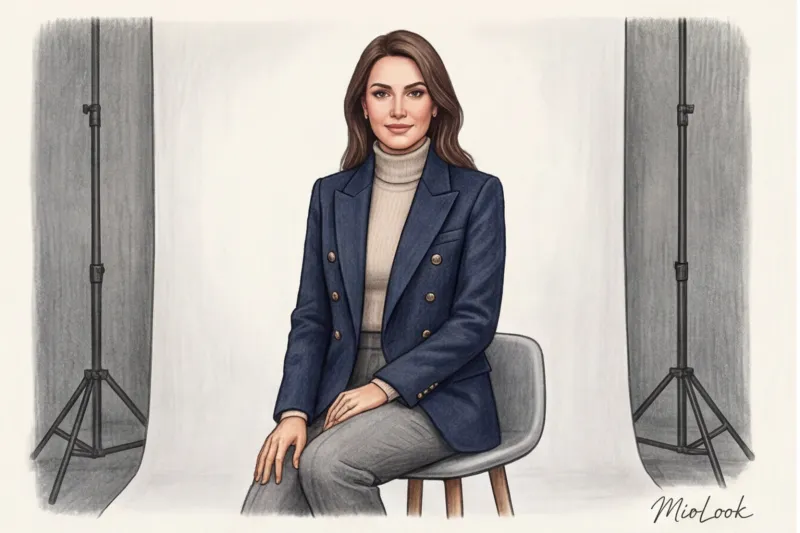
Formula 3: "Modern Femininity"
A sheath dress, but not one from the 2000s. Look for styles with architectural, exaggerated sleeves or an asymmetrical neckline. The fabric is a thick matte viscose. By the way, if you're unsure about the silhouette, I recommend checking out our article on How to choose clothes for your body type without stereotypes.
Formula 4: "Creative Leader"
A monochrome look with a complex cut. For example, wide palazzo pants and an asymmetrical draped top in a single shade of dark chocolate. The monochrome elongates the silhouette, and the asymmetry draws the viewer in for a longer look.
Important rule: even if you're only planning on taking a half-length portrait for LinkedIn, be sure to wear the right shoes. Heels or stiff loafers physiologically alter your center of gravity. Your back will automatically straighten, your head position will change, and your gaze will shift. You won't be able to play the leader in slippers.
Details That Ruin a Shot: A Stylist's Checklist of Mistakes
The devil is in the details. What the eye forgives in person, a 45-megapixel camera sensor will expose.
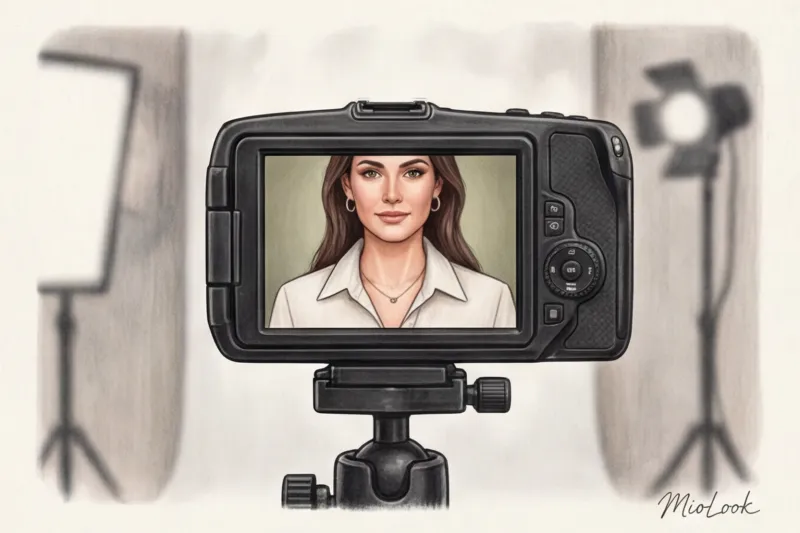
- Treacherous underwear: Forget lace. Only smooth, seamless lingerie in nude (not white!) colors. A white bra under a white shirt will glow like a neon sign under the flashing lights.
- Shiny tights: This is a common photographer's pet peeve. Lycra-blend nylon reflects the flash's light, turning your legs into plastic sausages. The rule is strict: either completely opaque 8-15 denier tights or bare legs moisturized with a shimmer-free lotion.
- Cheap fittings: Plastic buttons on a mass-market jacket will betray the budget nature of the look. Replace them at a tailor's with horn or matte metal ones—the garment will instantly look three times more expensive.
- Watches and jewelry: I once had to pay for two hours of retouching because the convex sapphire crystal of a client's expensive watch caught a glare from the main light and washed out half the frame. Choose matte metal jewelry or remove the watch for close-up portraits.
A bug-out bag: what to take to the studio besides clothes
No professional fashion stylist arrives on set empty-handed. Even if you're putting together your look yourself, put together this mini-kit—it'll save your shoot.
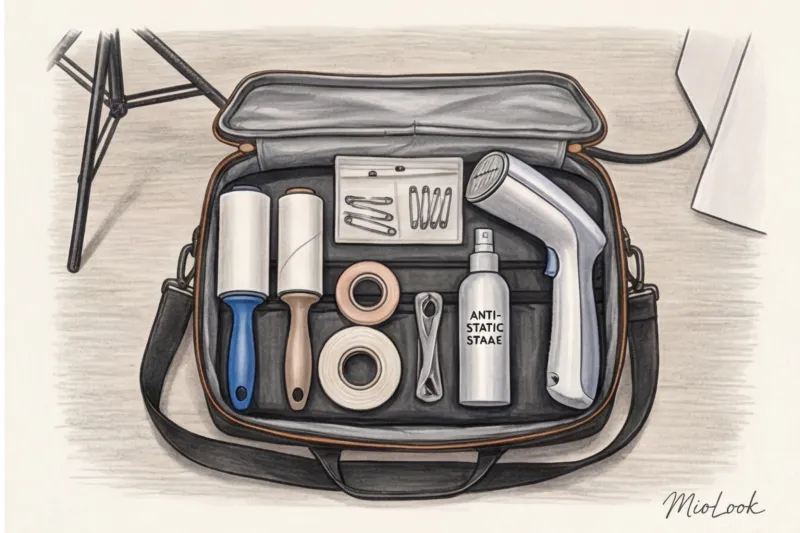
- Double-sided tape for clothing (fashion tape): Fixes the spreading flaps of a shirt on the chest, holds in place an unruly jacket collar.
- Antistatic and sticky roller: Paper backdrops in the studio (especially colored ones) are highly static and attract dust. A dark suit will attract all the lint within a meter.
- Safety pins (black and silver): For emergency adjustment of items to the figure from the back.
- Mattifying Facial Tissues: Even if you've had a top makeup artist work on you, your skin will start to shine under hot modeling lamps after 40 minutes.
Ready to get started?
Try the MioLook free plan—no commitments required. Digitize your wardrobe and plan your shoot looks in advance.
Get access — €0.99 onceSummary: How to Make Studio Photography Work for Your Brand
A professional photo shoot isn't just a waste of money on pretty pictures. It's an investment in your audience's trust. Marketing agency research shows that high-quality visual content directly impacts the perception of a professional's bill.
Before heading to the studio, put on your entire outfit, including shoes, stand in front of a window (facing the daylight), and take a waist-up selfie. If you're comfortable with it, you're ready.
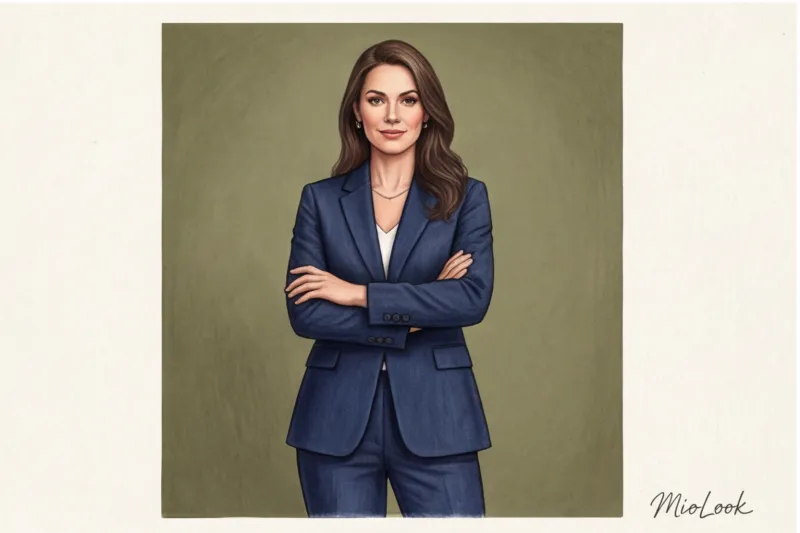
To avoid stress on the eve of the shoot, move your preparation process to a digital environment. Digitize your best business essentials in MioLook app A smart algorithm will help you create a capsule photo shoot in advance, check textures for compatibility, and show you which elements are missing to complete the perfect shot. Leave chaos outside the studio—the only thing that matters is your confidence.