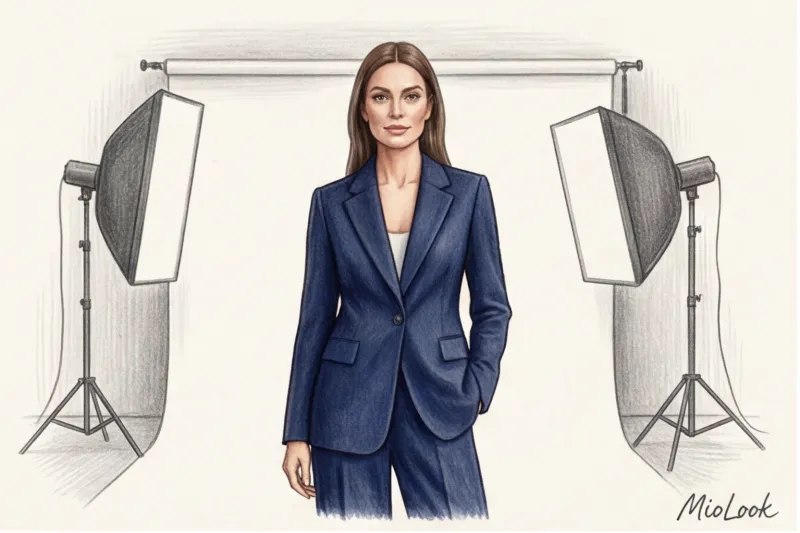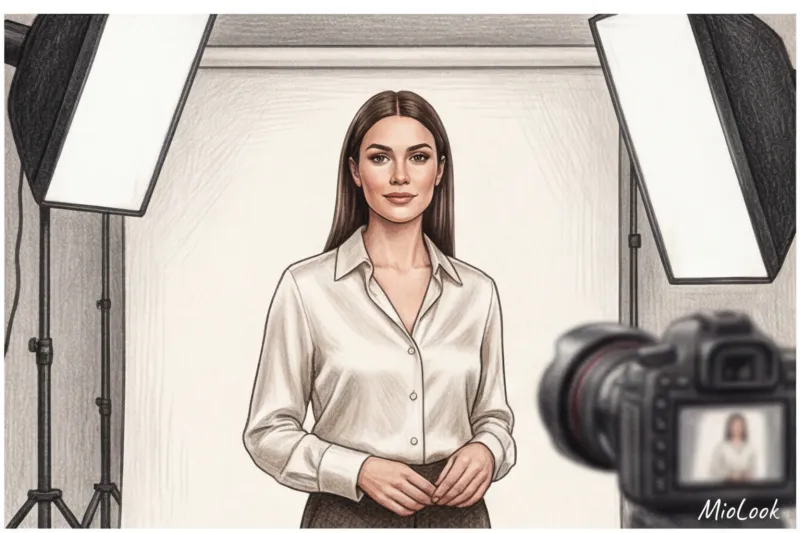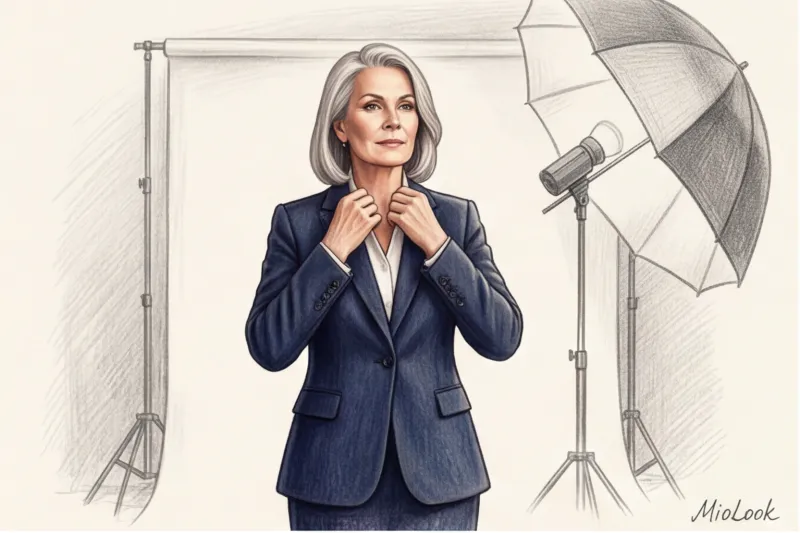
Imagine this: you bought a flawless wool suit, hired a top photographer, booked a meeting room, and when you receive the finished photos, you sigh in disappointment. In the photos, you look like a tired extra who accidentally wandered into a stock photo, and the luxurious jacket looks out of place. Why is this happening? Because business photo shoot in the office This isn't just a portrait. It's a complex architectural composition, where the interior dictates strict rules, and the laws of physics work against your everyday wardrobe.
We have already discussed in more detail the basic rules of posing and capsule selection in our The Complete Guide: Business Photo Shoot Looks: An Expert's Guide But today, as a colorist and practicing stylist, I want to dig deeper. We'll explore how light, color, and texture interact in a corporate space, and why your favorite work outfit can be a major mistake in a photo.
Why Your Favorite Suit Will Ruin a Business Photoshoot at the Office
In 12 years of working as a stylist on film sets from Moscow to Paris, I've learned one cruel rule: what looks incredibly comfortable and stylish in a fast-paced life often turns into a shapeless sack on camera. It's the paradox of comfort.
In real life, we exist in 3D space. We move, gesture, fabric flows, and our silhouette constantly shifts. The camera, however, mercilessly flattens this dynamic into a flat 2D projection. Any air between your body and the fabric, which allows you freedom of movement at your desk, appears in a photograph as excess weight or a poor fit.
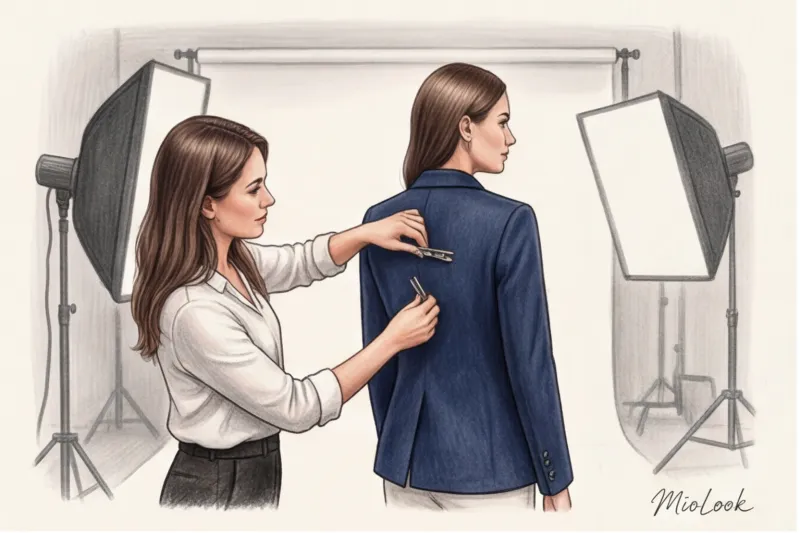
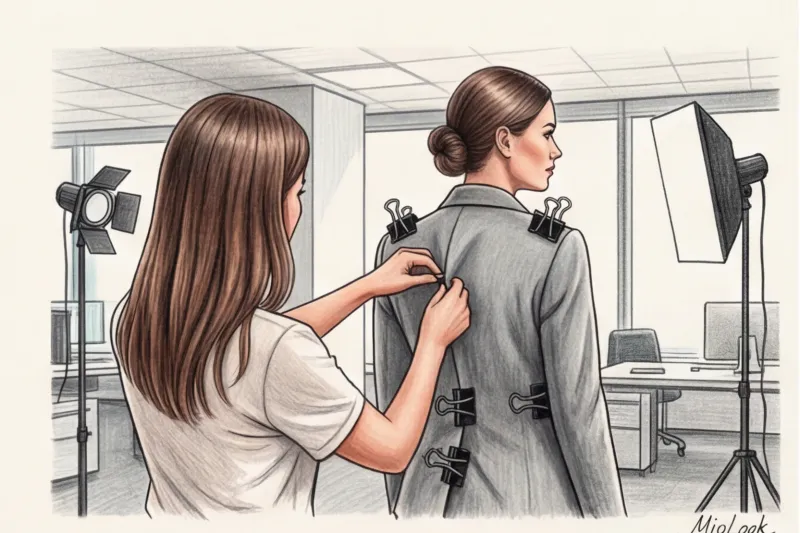
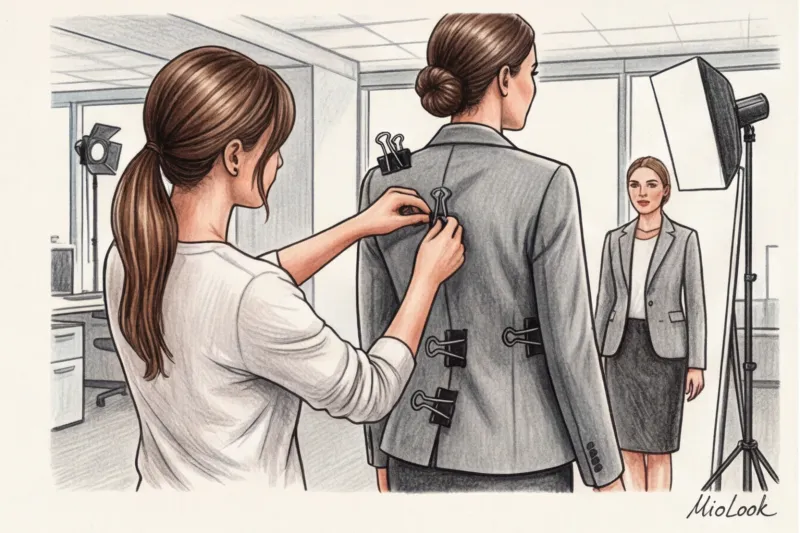
I'll let you in on the biggest insider secret of glossy magazines: clothes for the shoot should fit one and a half times tighter than they do in real life. During one shoot with a top manager in Paris, I had to cinch the back of her seemingly perfect The Row jacket with huge black paper clips. We literally tautened the fabric around her back to create that chiseled, classy silhouette from the front. If a stylist or photographer suggests you pin your jacket at the back during a shoot, don't be offended. It doesn't mean you've chosen a bad piece. It means the professionals are framing the shot correctly.
Access to MioLook for €0.99 — one-time payment
A smart AI stylist will select the perfect look for your next shoot, taking into account every detail of fit.
Get access — €0.99 onceFrame architecture: how to avoid blending into your own office
An office isn't just a pretty backdrop. It's a full-fledged, and sometimes even aggressive, participant in your shoot. Before opening a cabinet, you should analyze the space you'll be shooting in.
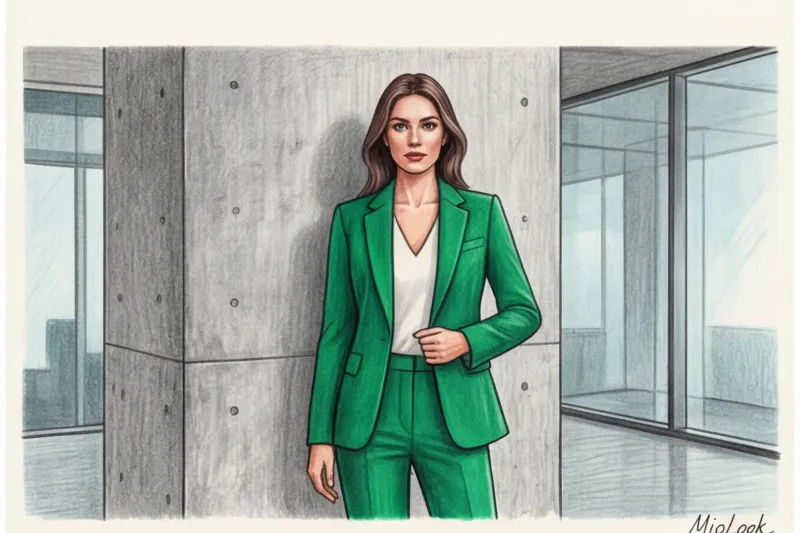
According to Johannes Itten's classic theory of color design, an object visually comes to the foreground and attracts the viewer's attention only when there is adequate contrast—in lightness or color. If you wear a beige suit in a beige conference room, the camera won't be able to separate your silhouette from the walls. You'll become a flat part of the interior.
The Corporate Color Trap
The most dangerous myth I regularly hear from HR professionals: Wear your corporate colors to show brand loyalty. It sounds logical, but in practice it's a disaster.
"One of my clients, the CFO of a large IT company, showed up for a shoot wearing a flawless cornflower blue suit. The problem was that the walls of her office and the brand wall were painted the exact same corporate blue. In the original shots, all that remained of her was her floating head and hands. We had to quickly change the concept."
To seamlessly integrate your look into your corporate palette while remaining the main focus, use the 60-30-10 design rule, adapted for photo shoots. In the frame, 60% of the color should be the interior (background), 30% should be the base color of your suit (it should be complementary, i.e., contrasting, to the background), and only 10% can be dedicated to a corporate accent (tie, scarf, glasses frames, or the color of the blouse under the jacket).
Office Light vs. Flash: The Battle for Fabric Texture
According to 2024 commercial real estate research, approximately 80% of modern offices use cool LED lighting with a color temperature of 4000K to 5000K. This light kills warm skin tones and clashes with soft clothing colors. To remedy the situation, photographers bring in strobe studio lights.
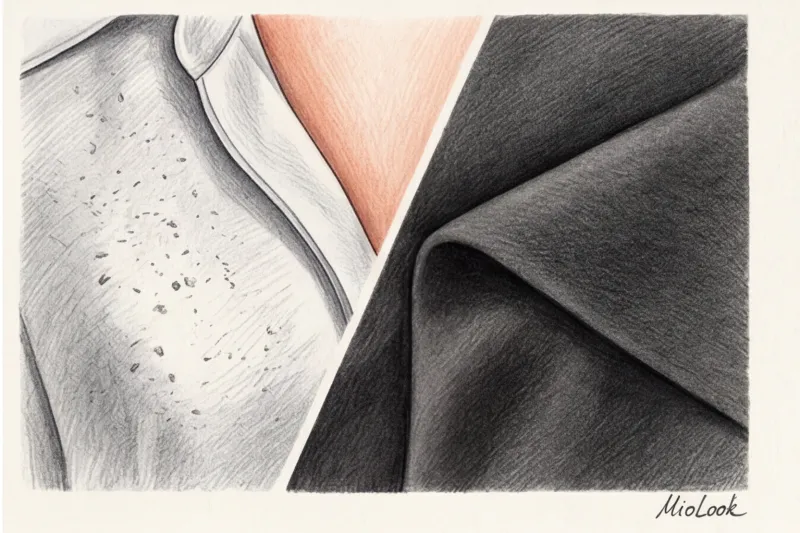
And here begins the real battle between physics and textiles. A studio flash with 500-1000 joules of power literally "pierces" the fabric. Your basic white viscose office blouse, which seemed perfectly thick and decent in the bathroom mirror, suddenly becomes transparent under the flash, revealing the contours of your underwear to your colleagues.
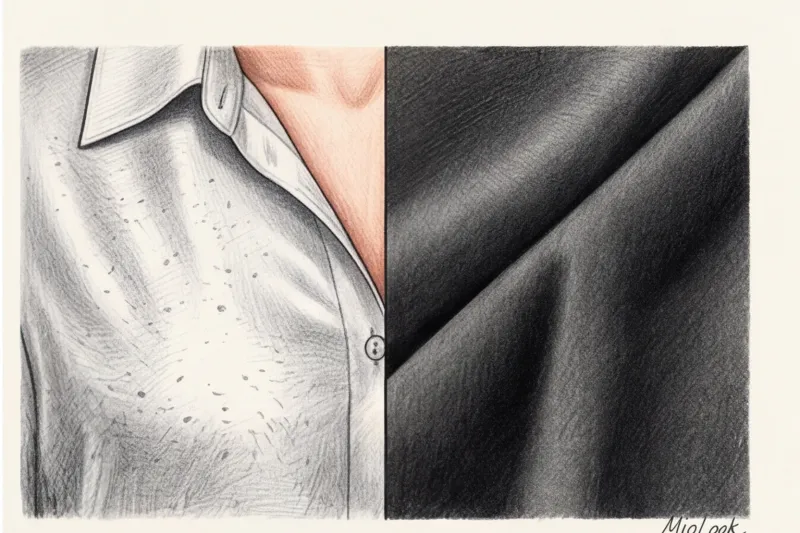
Moreover, hard light acts as a macro lens for textures. Cheap polyester will develop a telltale shine, and micro-pilling on your favorite cardigan, invisible to the naked eye, will cast micro-shadows and create the effect of a washed-out, unkempt garment.
What to choose for the frame:
- Thick wool crepe (it is matte and absorbs light well, creating an expensive deep color).
- Structured wool or tweed.
- Matte, dense silk (but not satin - it gives cheap glare).
- Cotton with a density of at least 180 g/m².
Your perfect look starts here
Join thousands of users who look flawless every day with MioLook. Upload your wardrobe and get ready-made solutions.
Get access — €0.99 onceIntegrating wardrobes into different types of workspaces
A business photo shoot in an office requires context. You can't wear the same outfit for a shoot in a glass skyscraper and a creative loft. The clothing should continue the architectural story of the space.
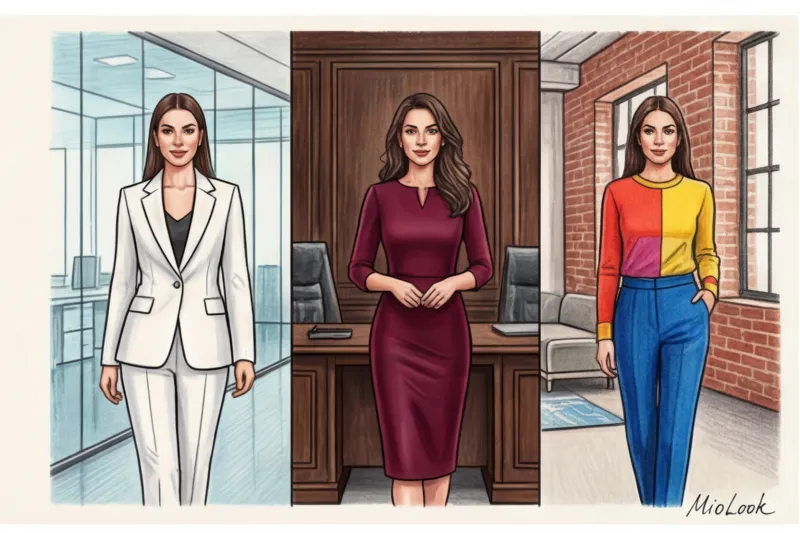
Open space and glass partitions
The main problem with modern outdoor spaces is the abundance of visual noise and glare. If you wear a floral print dress or a pinstriped suit, a moiré effect (ripples) will appear on the camera sensor.
Solution: Monochrome looks with clear, architectural geometry. A bright white or deep graphite suit will create the necessary contrast with the transparent background and visual chaos in the background.
Classic office: wood, leather and status
Heavy oak tables, green lamps, leather Chesterfield chairs. It's prestigious, but also fraught with danger. Against the backdrop of heavy, classic furniture, a traditional black or brown suit will instantly transform you into an old-fashioned antique.
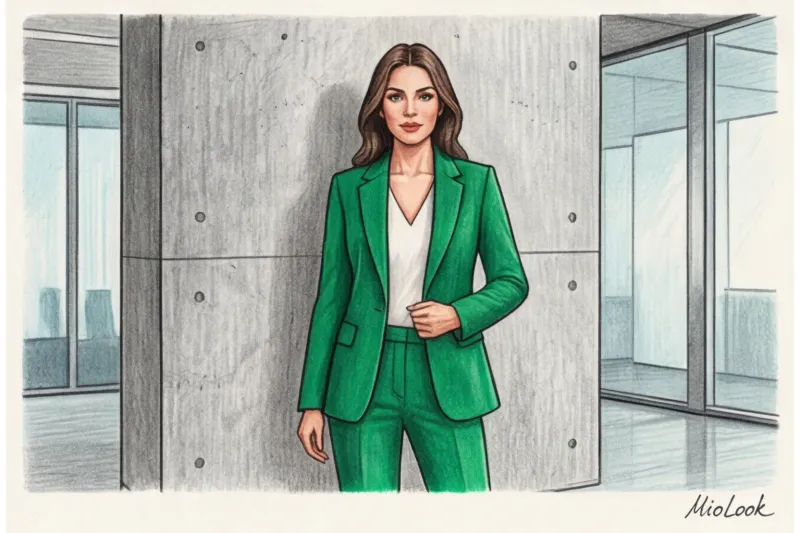
Solution: Use "jewel tones"—deep, precious shades (emerald, sapphire, rich amethyst). They refresh a heavy interior while maintaining a high-status feel.
Creative coworking and loft
Exposed concrete, brickwork, exposed utility lines. Here, the austere classicism would look comical, as if you were being audited by the tax office.
Solution: Smart casual style. Use color blocking and expressive textures. A bouclé or thick corduroy jacket against a cool concrete background will create a stunning tactile contrast. Incidentally, I recommend using it for just such occasions. MioLook app — Upload photos of your textured pieces, and AI will help you create a multi-layered look that balances informality and elegance.
Posing Geometry at the Desk: Secrets of Posture
Most people try on clothes standing in front of a mirror. But for a business shoot in an office, you'll likely be sitting at your desk. And that's where the magic of changing proportions begins.
When you sit down, your skirt inevitably rides up (sometimes revealing more knees than is business etiquette), and a buttoned jacket presses against your hips, rides up to your shoulders, and forms an unsightly bulge on your stomach. This bulge in a photo will add visual weight by 5-7 kilograms.
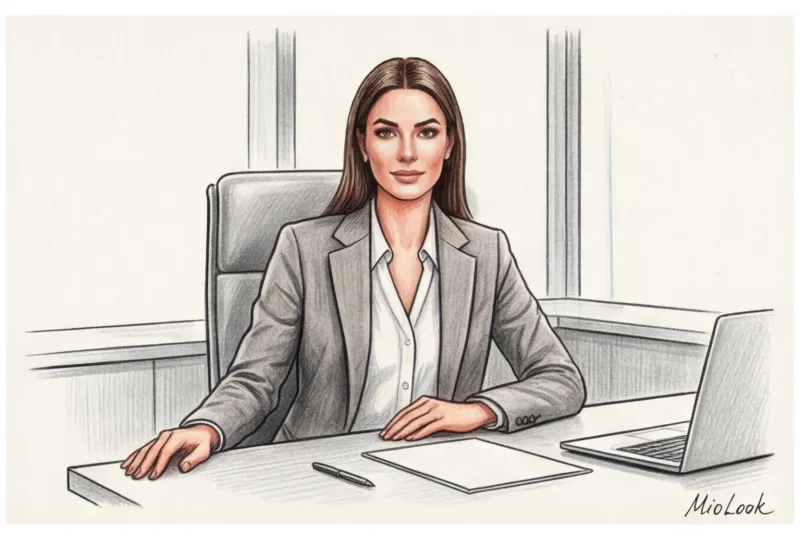
Golden rules of posing while sitting:
- The Unbuttoned Button Rule: When sitting down at the table, always unbutton your jacket. The hem should fall loosely at the sides, revealing the vertical line of your blouse—this visually elongates your silhouette.
- Cuff control: When you rest your hands on the table or keyboard, your jacket sleeves may ride up slightly. Make sure exactly 1.5–2 centimeters of shirt cuff peeks out from under the jacket sleeve. This is a sign of a well-made jacket.
- Posture and fabric: Don't lean back completely against the chair, or the fabric will bunch up on your back. Sit on the edge of the chair, shifting your weight forward.
To be fair, this advice doesn't work for all cuts. Oversized, rigid double-breasted jackets are sometimes best left buttoned, but then you'll have to sit with a perfectly straight back, sucking in your stomach for every take. You can read more about how cut interacts with body proportions in my article. How to choose clothes for your body type without stereotypes.
Checklist: Preparing Your Look for a Business Photoshoot in the Office
No shoot goes perfectly. Coffee spills, fabric gets staticky, the booked conference room is suddenly occupied, and you're transported to an office with completely different wallpaper. To avoid panic, pack a "stylist's first aid kit."
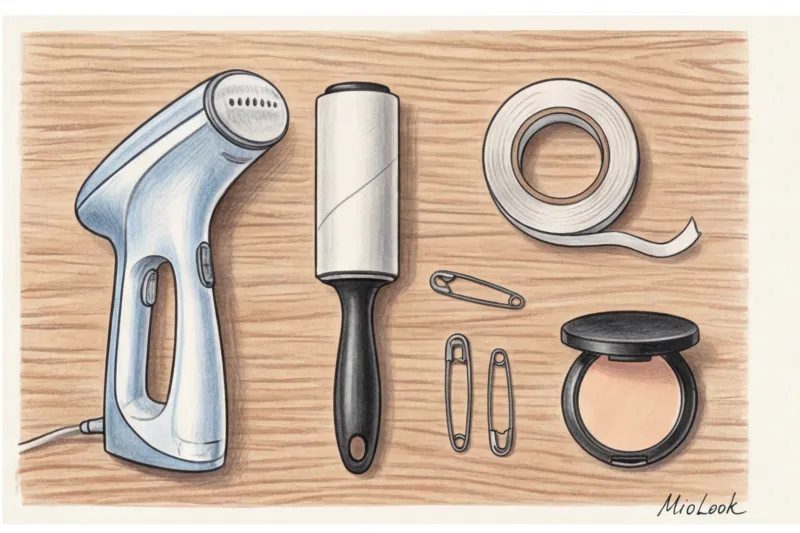
What you need to do the day before and take with you:
- Translucent test. Stand near a window on a sunny day, wearing the clothes you plan to wear for the photoshoot. If you can see the outline of your legs through your pants, everyone will see it under the flash. Change your clothes.
- Double-sided tape for the body. This is a salvation for unruly jacket lapels that stick out, and for silk blouses that are always trying to open up at the chest at the most inopportune moment.
- Antistatic and roller with adhesive tape. Office dust and pet hair brought in on your coat will glow like Christmas lights under studio lighting.
- Plan B. Always bring a spare set of clothes in a completely different color and texture. If you're suddenly photographed not in a bright open space but against a dark corporate wall, you should have a lighter alternative to blend into the background.
Ready to get started?
Try the MioLook plan for free—no commitments required. Upload your wardrobe and plan looks for any occasion.
Get access — €0.99 onceA business photo shoot in the office is always a strategic play with space. A photograph is a frozen moment, where there's no room for excuses. In real life, your expertise, charisma, and confident voice compensate for any flaws in your wardrobe. But in the frame, when the sound is muted and the movement is frozen, it's the texture of your fabric, the contrast with the background, and the clarity of your silhouette that speak for you. Manage this impression consciously.