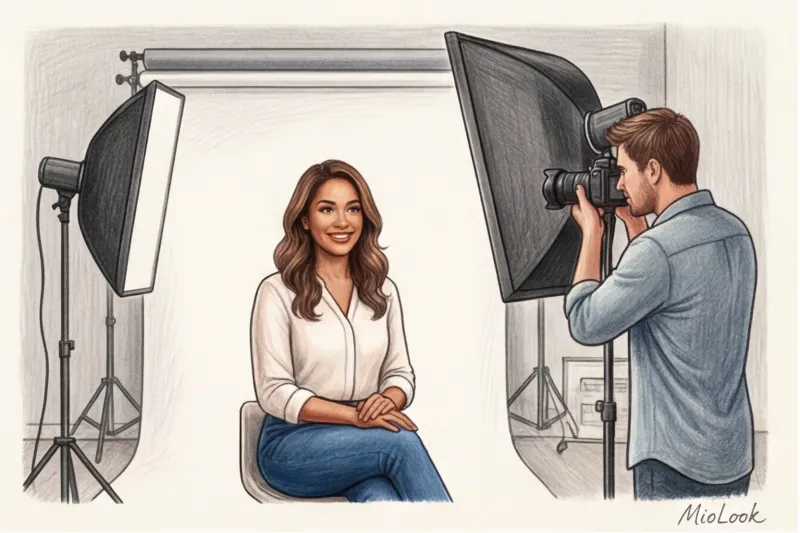
You have exactly 400 by 400 pixels. That's how much space your avatar takes up on the screen of a recruiter or potential business partner. Have you ever considered that this tiny circle contains your reputation, your status, and your salary? As a stylist with 12 years of experience working with top executives from Paris to Moscow, I constantly see the same mistake: brilliant professionals put on their best, most expensive suit, sit in front of the camera... and look completely ridiculous in the final thumbnail.
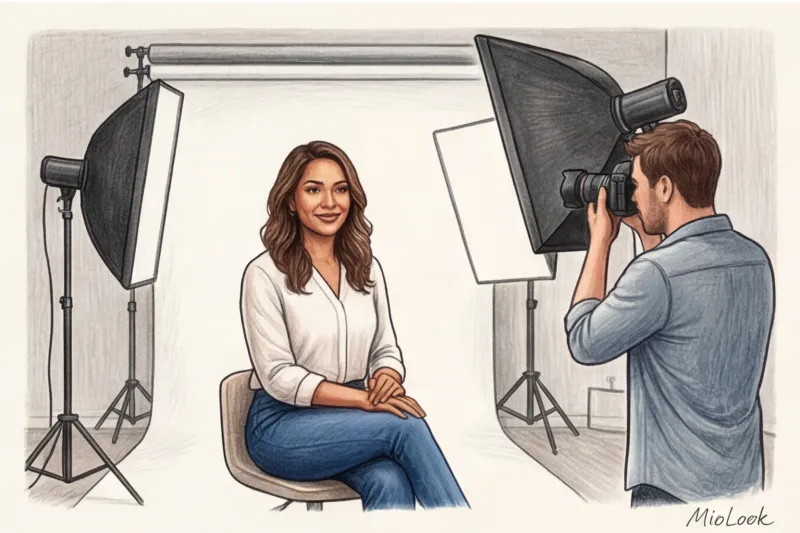
Understanding, How to dress for a resume photo and LinkedIn, we must forget the rules of the typical office dress code. The camera sees the world differently. We've already covered the physics of studio shooting in more detail in our A complete guide to looks for a business photo shoot , but today we'll narrow the focus. We'll talk about the geometry of the portrait area, the treachery of studio flashes, and a Mediterranean approach to color that will make you stand out in an endless sea of gray jackets.
The psychology of the frame: why a resume photo is more than just a pretty portrait
Let's look at the numbers. According to official LinkedIn data for 2023, profiles with a professional photo receive 14 times more views and 36 times more messages. Your photo is your digital handshake. But why does what works perfectly in the conference room often fail in the studio?
The answer lies in the brutal physics of photography. In real life, we perceive people dynamically: you gesture, walk down the hallway, the fabric of your suit drapes beautifully as you move. A photograph is static, a split second taken out of context. Moreover, the standard LinkedIn crop is a circle with an aspect ratio of 1:1. This means that 80% of your stunning appearance, including your perfect trousers and luxurious shoes, will simply remain out of frame. Only your face, neck, and shoulders are in focus.
"Your goal is to convey confidence in the smallest possible space. There's no room for accidental folds or awkward cutouts in a portrait—the camera works like a magnifying glass."
The main trap: "bare shoulder syndrome" and the geometry of the portrait zone
Herein lies my favorite paradox, one that's not mentioned in standard style advice. A perfectly tailored, insanely expensive business suit can be the worst choice for a portrait. Why? Because of the lapels (the point where the lapels meet).
A brilliant IT director once approached me. For a photo shoot for the company's website, she chose a luxurious Tom Ford jacket worn over a lingerie-style top—a stunning, powerful look for the stage. But when the photographer cropped the shot to a portrait circle, the deep V-neck and low-buttoned jacket played a nasty trick. In the thumbnail, it looked like she was wearing... nothing at all. We called it "bare shoulder syndrome."
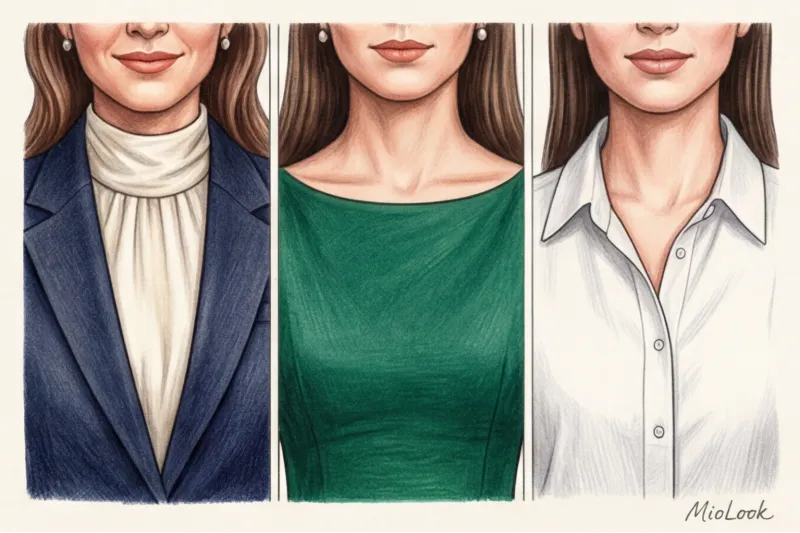
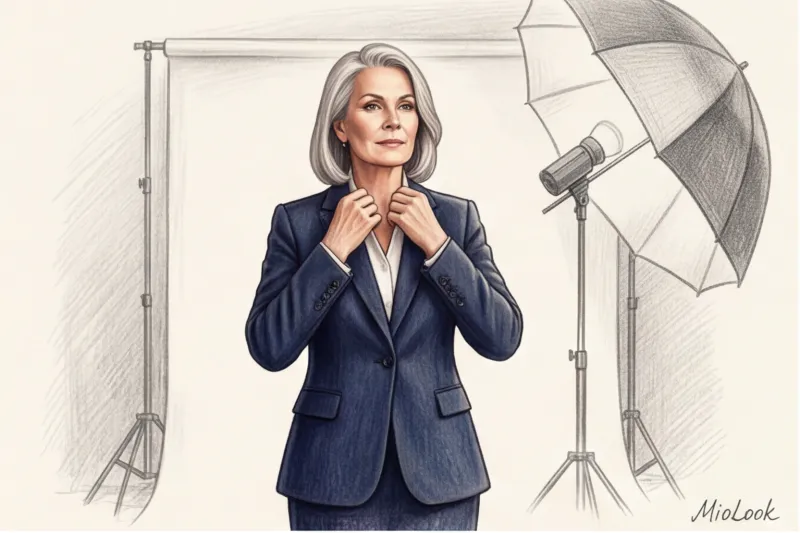
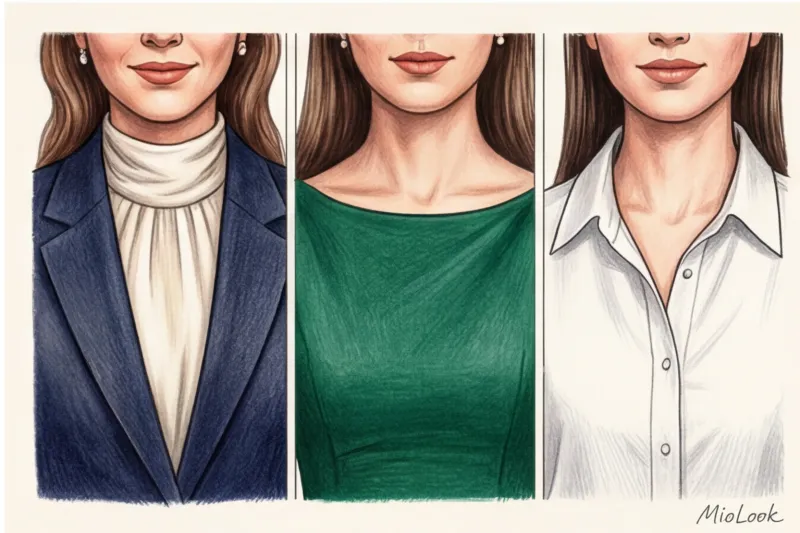
My golden rule for a portrait is: "Three fingers from the collarbone." The neckline of your clothing should not fall below this line. This is why the camera's best friends are:
- The bateau neckline visually broadens the shoulders and makes the posture look regal.
- High stand-up collars and turtlenecks create a clear frame for the face.
- Blouses with an ascot collar tied in a soft knot.
Access to MioLook for €0.99 — one-time payment
A smart AI stylist will select the perfect look for your next photo shoot, taking into account your body type and dress code.
Get access — €0.99 onceImage Formulas: How to Dress for Resume Photos in Different Industries
Your outfit should reflect the DNA of your industry, but be a half-step more formal than your typical work Tuesday. I always advise clients to use ready-made formulas—it saves nerves the day before the shoot. By the way, you can upload items from your closet to MioLook app , and the algorithm will help you assemble these combinations from what you already have.
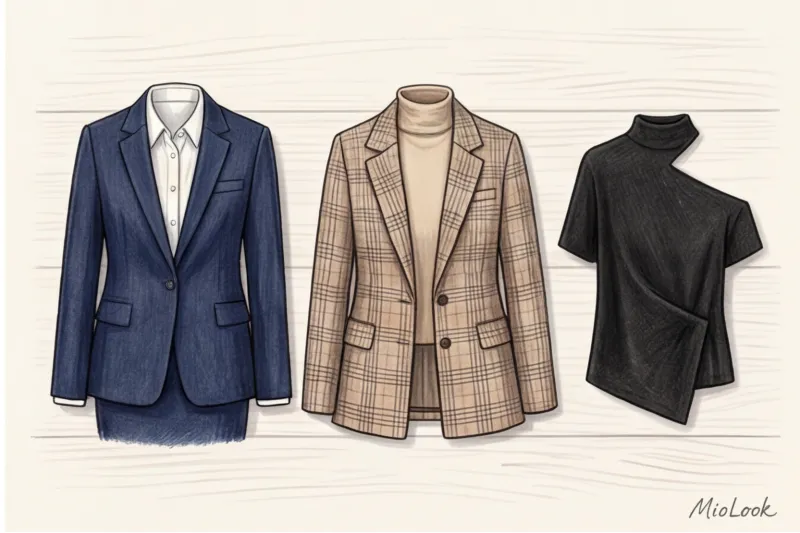
Corporate sector (Finance, Law, Consulting)
Conservative elegance reigns supreme here. But that doesn't mean you have to look boring.
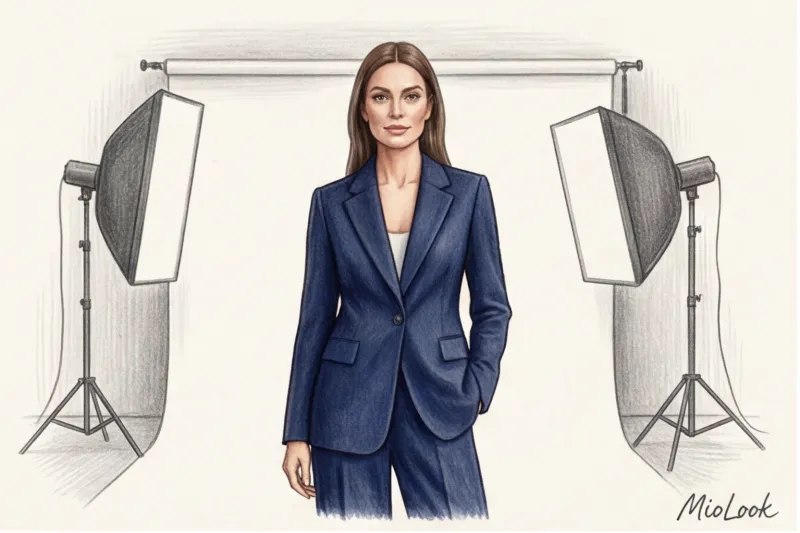
Formula: A structured jacket with a crisp shoulder line + a silk blouse with a notch (or ascot) collar + minimalist stud earrings.
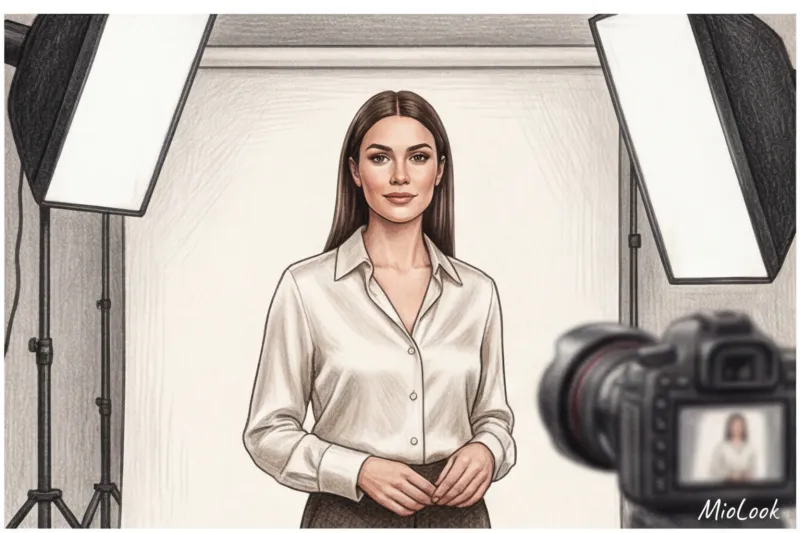
What should you absolutely avoid? Crisp white shirts without a jacket. White without a contrasting frame blends into the light studio background, creating a "waiter" or "medical worker" effect. If you love white blouses, be sure to layer a dark blazer over them.
Creative and Tech Sector (IT, Marketing, Design)
In these areas, a formal three-piece suit will raise eyebrows—you'll be considered too rigid and inflexible. Smart casual should showcase creativity through texture, not crazy prints.
Formula: High-quality knitwear (for example, a 100% merino turtleneck) + an oversized jacket + an accent detail (a geometric brooch on the lapel or stylish horn-rimmed glasses).
Color in a Small Circle: How to Manage Impressions
On a computer screen, color acts as a psychological trigger. Research by the Institute for Color Research shows that people form subconscious judgments about a person within the first 90 seconds, and 62% to 90% of this assessment is based solely on color.
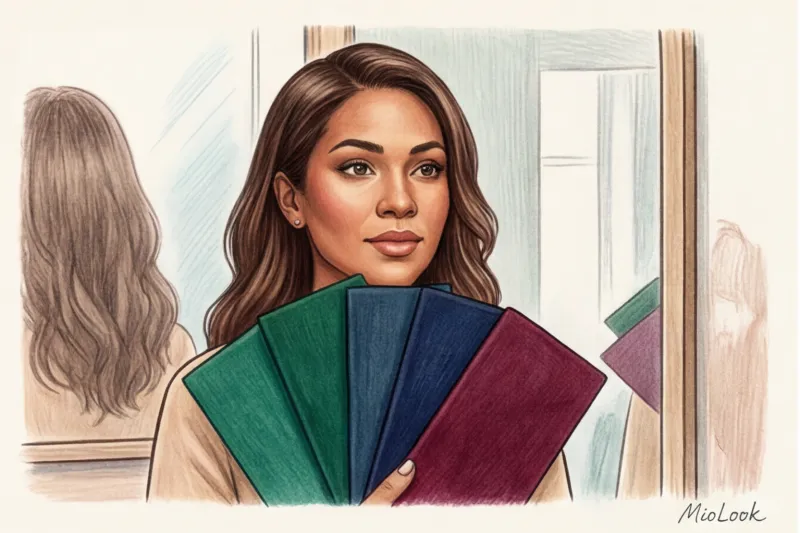
The absolute world leader in trust is navy. It conveys reliability, expertise, and calm. But as a stylist with a love of Mediterranean aesthetics, I urge you to avoid stark black. Black in photos often looks flat, obscuring detail.
Replace it with deep, noble shades:
- Emerald - perfectly highlights light eyes and conveys confidence.
- Wine (Burgundy) — adds energy and dynamism to the image without turning into the aggression of red.
- Terracotta - ideal for creative professions, radiates warmth and openness.
Technical warning: Never wear clothes with fine, contrasting stripes or houndstooth patterns. Digital cameras can't handle these patterns, creating a moiré effect—the image becomes unpleasantly rippled and shimmers with rainbow waves. The photographer will hate you during retouching, and the viewer will subconsciously want to look away.
Your perfect look starts here
Join thousands of users who look flawless every day with MioLook. Digitize your wardrobe in just a few clicks.
Get access — €0.99 onceFabrics and textures: what studio lighting loves and what it mercilessly exposes
Studio flash lighting (softboxes with 500-1000 joules) works like an X-ray. What looks like decent fabric under soft office lighting reveals its cheapness under a flash.
Light pierces through thin viscose, making it translucent. Cheap polyester immediately produces a telltale synthetic sheen that looks like a greasy stain in photos.
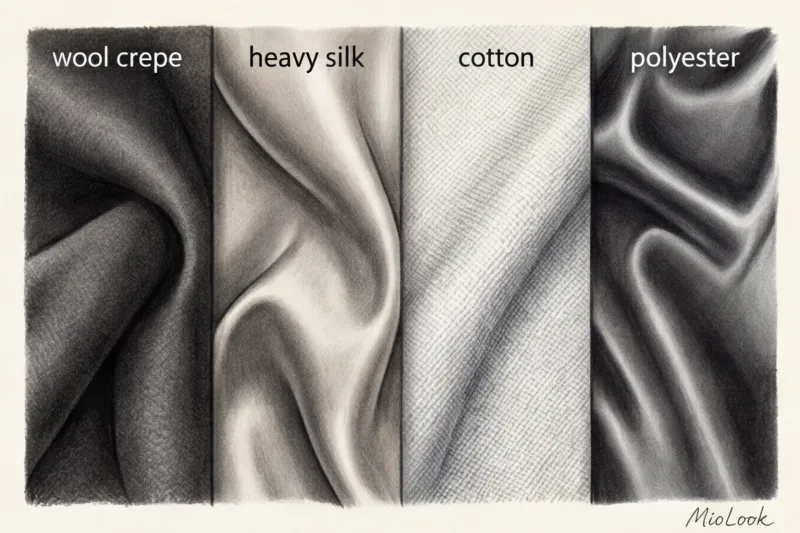
Winning fabrics for the studio:
- Wool crepe (holds shape perfectly and absorbs light).
- Matte silk with a density of at least 19 momme (provides a noble, discreet glow).
- Thick cotton (from 180 g/m²).
- High-quality cashmere or merino wool, tightly knit.
Fair Limit: This advice applies specifically to studio photography with flashes. If your photographer is shooting a lifestyle portrait outdoors with natural light, light, flowing fabrics are appropriate. But in the studio, only solidity and structure are appropriate.
Accessories and beauty zone: the final touches of a portrait
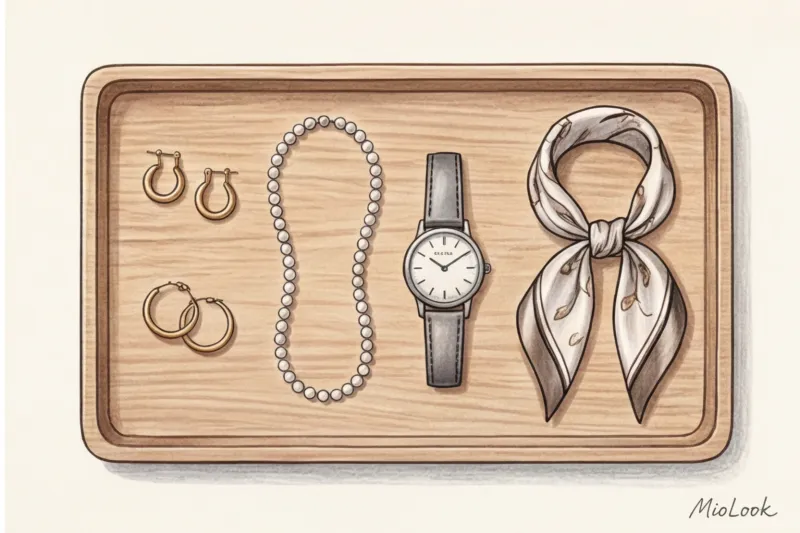
In portrait photography, accessories act as exclamation points. The rule is simple: there should be only one accent near the face. If you've chosen large geometric earrings, skip the necklace. The ideal choice is pearls, smooth metal without a scattering of small stones (they'll glare), and a simple watch.
If you wear glasses, you'll have to contend with glare from softboxes. Insider tip: During the shoot, the photographer will ask you to tilt the temples of your glasses upward slightly (a couple of millimeters) so that the lenses point downward. This instantly eliminates the reflection of the lamps. Alternatively, use frames with a high-quality anti-reflective coating.
Regarding makeup: everyday nude looks like a complete lack of face in photos. Flash reduces the contrast of your makeup by about 30%. Be sure to use matte textures—any highlighter or glossy lip gloss will create an oily effect under studio lighting.
Ready to get started?
Try the MioLook free plan with no commitment. Use AI to analyze the pairing of your accessories and clothing.
Get access — €0.99 onceChecklist: Action Plan 24 Hours Before a Photo Shoot
Over the years of working on film sets, I've developed a rock-solid preparation routine. The camera sees every speck of dust, so your outfit must be impeccable.
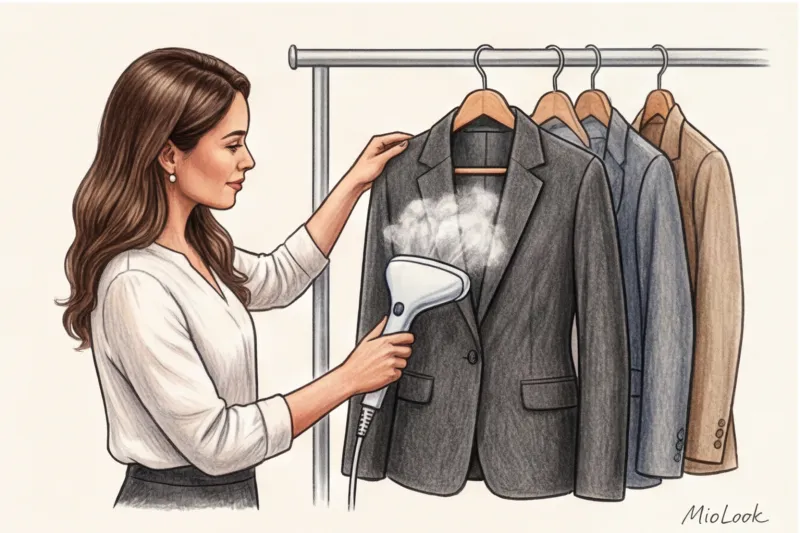
- A steamer is your best friend. No creases. If you're driving to the studio, take off your jacket and hang it on a hanger.
- Roller for cleaning clothes. Small hairs on a dark background under flash light look like dandruff or snow.
- Duplicate the top. Bring two or three different blouses or turtlenecks. Once you're there, you might find that your favorite emerald color clashes with the photographer's chosen background.
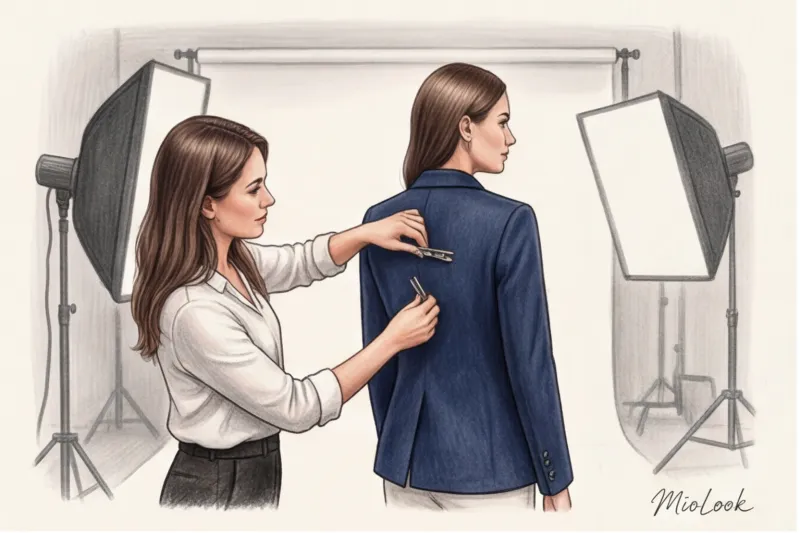
- Stylists' secret: construction clamps. It sounds crazy, but during shoots, we often use binders (clothespins) to pin excess jacket fabric to the client's back. This creates that perfect, tailored fit in the frame. Don't be afraid to ask the photographer to adjust the fit from behind—no one will see it in the photo, and the silhouette will be flawless.
A resume photo is an investment in your personal brand. Forget about compromising on your portrait. Choose thick fabrics, deep colors, and a well-defined neckline. And remember: clothing should be nothing more than an expensive frame for a picture of a confident professional. Your eyes should always be the center of attention.