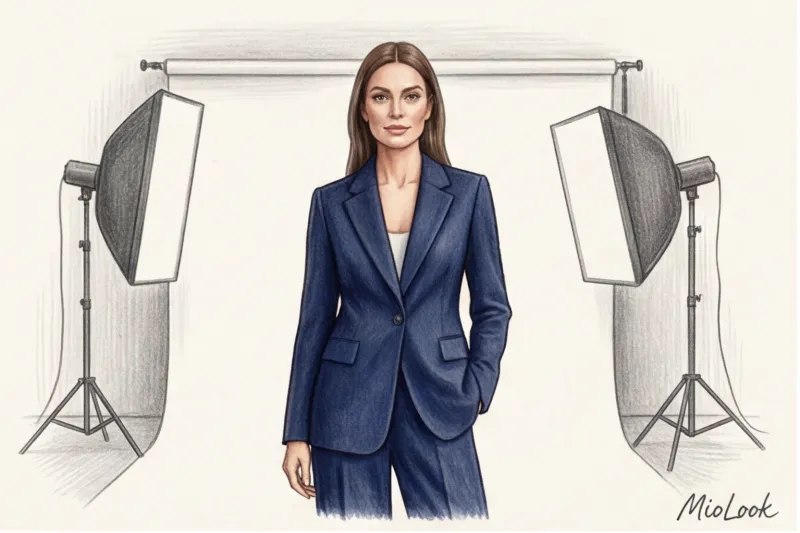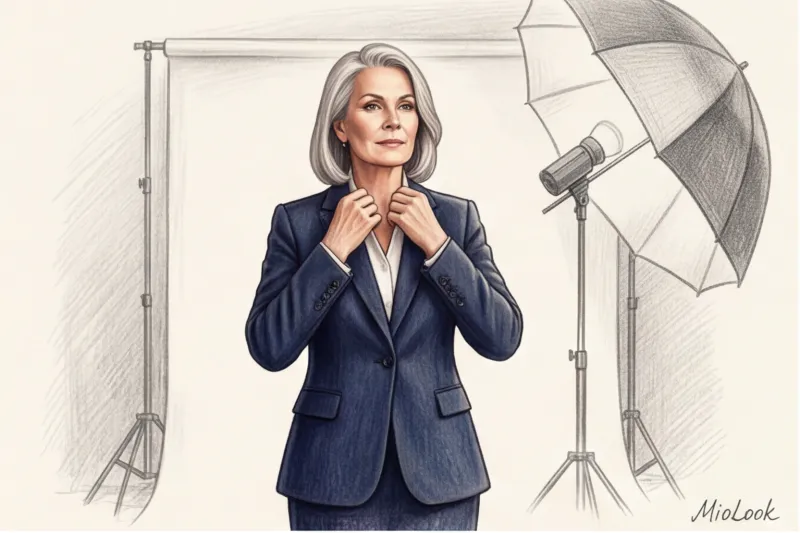
Imagine: you spend weeks preparing for an important meeting, perfecting your presentation, gathering analytical data, and then your potential partner turns down the deal simply because they visited your LinkedIn profile. Sounds harsh? But that's exactly how the human brain works. According to a renowned Princeton University study (2006), forming a first impression from a facial photo takes exactly 0.1 seconds. And in the business world, that tenth of a second is very valuable.
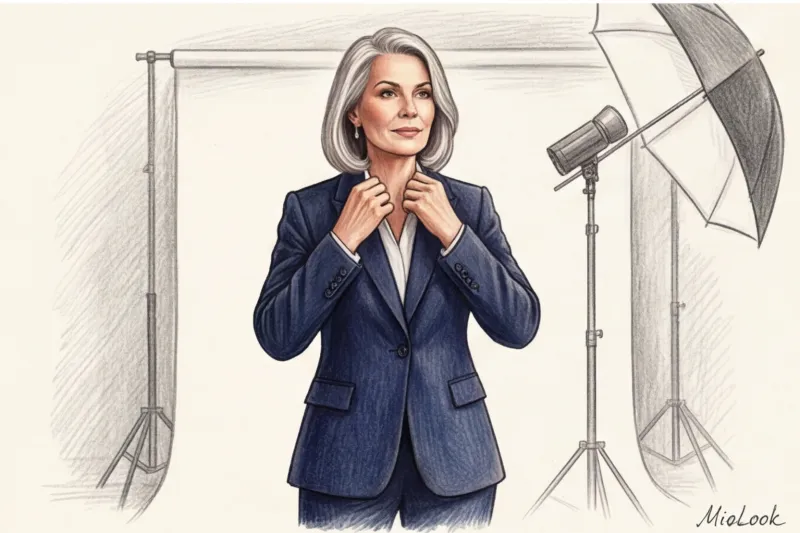
If you're planning a business photo shoot for women over 40, forget everything you know about casual office attire. What makes you a star negotiator in real life can be a real joke in front of the camera. We've already covered the basics of wardrobe preparation in our The Complete Guide: Business Photoshoot Looks: An Expert's Guide Today I want to talk to you about the physics of light, the architecture of tailoring, and why it's best to leave your favorite cozy cardigan at home.
Business photoshoot for women over 40: why your favorite office suit won't work
In real life, your image is dynamic. You gesture, smile, and shift your posture. Your charisma smooths over any imperfections in your clothing. But photography is a merciless, static, 2D image. The camera lens flattens the figure, distorts familiar proportions, and freezes the moment forever.
For a female executive or expert over forty, a wardrobe ceases to be simply a fashionable shell. It becomes a tool for impression management. At this age, we convey not a search for self-discovery, but confidence, status, and mastery. And here, the design of a garment, rather than its trendiness, takes center stage.
Harsh frame physics and studio lighting
Did you know that a professional studio flash produces between 500 and 1000 joules of power? This is a veritable X-ray for your clothes. Under this light, a typical office blouse made of thin viscose or low-density silk instantly becomes translucent, revealing the contours of your underwear.
Softboxes also act as a microscope for texture. The slightest pilling on a sweater, invisible to the naked eye, will scream carelessness in the frame. The synthetic sheen of polyester looks cheap under flash and creates unsightly whitish highlights. My golden rule for the studio: choose completely matte fabrics with a high thread count. Suiting wool with a minimum weight of 280 g/m² is ideal.
Access to MioLook for €0.99 — one-time payment
A smart AI stylist will select the perfect look for your next business shoot.
Get access — €0.99 onceThe main myth: “Clothes for a photo shoot should be comfortable.”
This is perhaps the most dangerous misconception I hear from new clients. "Julia, I want to feel relaxed, so I'll wear my favorite loose suit." No, no, and no again.
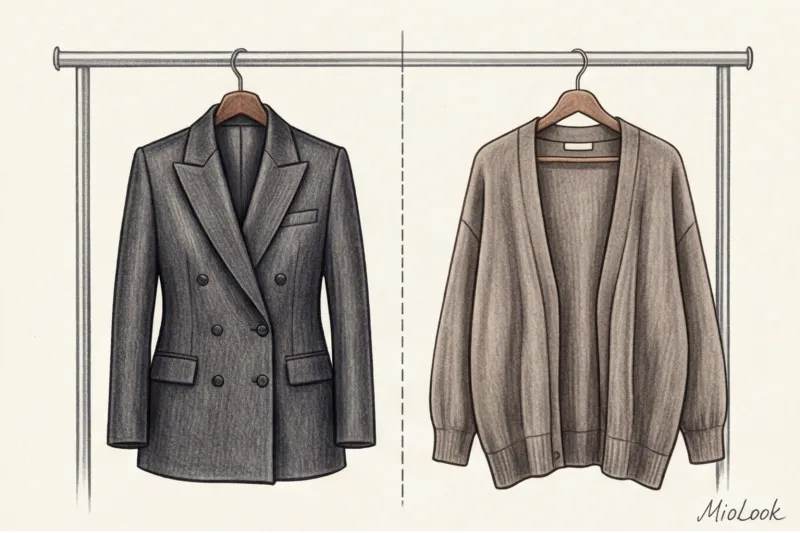
What's comfortable in real life—soft knitwear, relaxed oversize, a dropped shoulder—the camera reads as shapelessness and sloppiness. For the perfect shot, you need architectural rigidity, even if that jacket makes it hard to lift your arms above your chest.
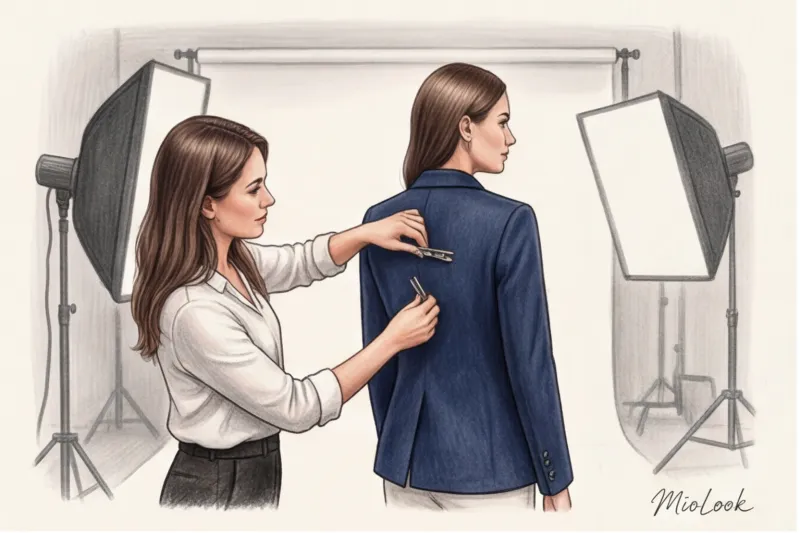
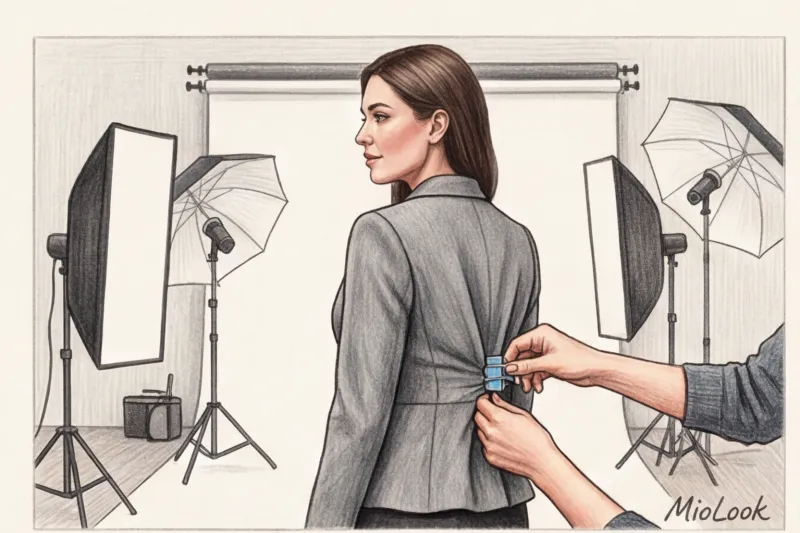
Insider secret: on film sets in Paris, stylists constantly use massive binder clips. We pin jackets and shirts to the models' backs so tightly that the fabric fits perfectly in the front, without a single wrinkle. It's impossible to walk like this in real life, but on camera it creates a flawless, chiseled silhouette.
Silhouette architecture: elegant looks that convey status
The best investment in your visual capital is a structured jacket with a sharp shoulder. A clear shoulder line is psychologically perceived as a marker of responsibility, support, and professional weight.
It's important to understand the difference in tailoring techniques. Most mass-market jackets are assembled using a fusing backing. Under studio lighting, they look flat, like cardboard. High-end pieces are made bespoke using canvas—a padding made of horsehair and cotton that's hand-quilted. Italian craftsmen spend hours on this for a reason: a fusing jacket "remembers" the shape of your body, adapts to your movements, and looks expensive and voluminous on camera.
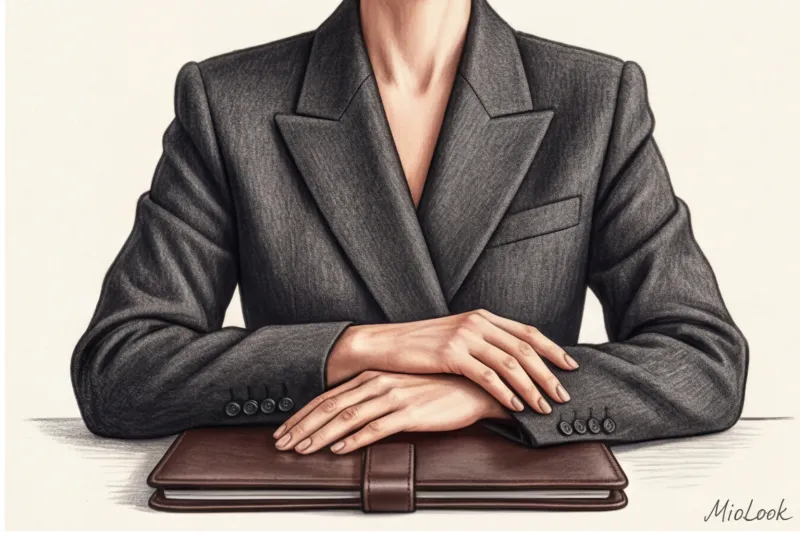
Regarding the bottom: if you're planning seated portraits, make sure your pants don't bunch up in the groin area, and your pencil skirt doesn't ride up unsightly. Always test your look in front of a mirror on a chair.
The dangers of thin knitwear after 40
One of my clients, the CEO of a large IT company, brought her favorite thin cashmere sweater from Loro Piana to a shoot. In person, it looked incredibly elegant. But as soon as the photographer adjusted the lighting, the sweater visually added 5 kilograms to her weight, highlighting every nuance of her posture and the contours of her lace bra. We had to quickly swap it for a stiff blazer from my props.
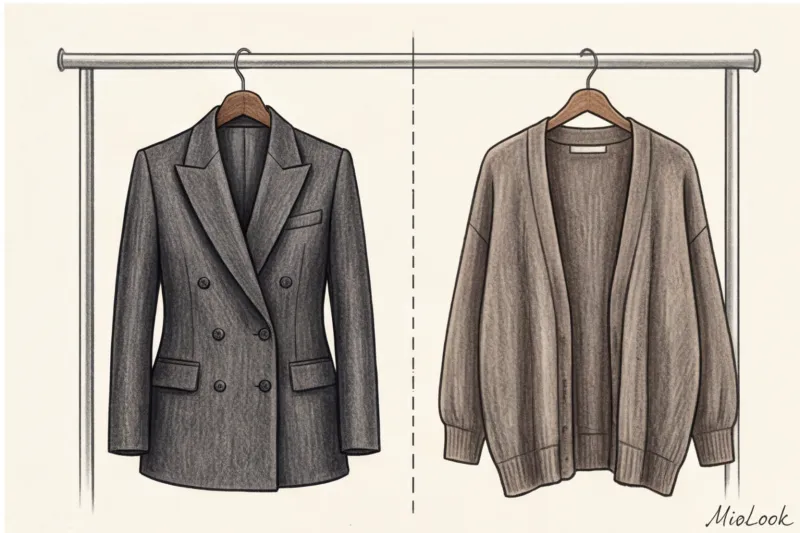
Fine knitwear (especially turtlenecks) is unforgiving. If you want a softer look, choose a thick jersey that holds its shape or a double silk blouse.
Color Palette: Shades the Camera Loves
Many women instinctively choose black for a business portrait, believing it to be formal and slimming. This is a mistake. In digital photography, pure black turns into a "black hole"—a flat spot where all the details of the cut, lapels, and texture of the fabric disappear.
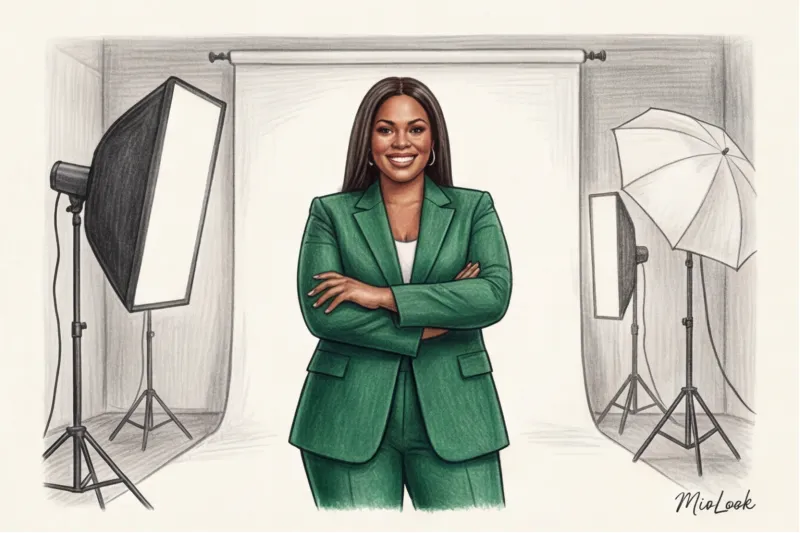
Replace it with more refined alternatives. The camera loves deep navy, rich emerald, burgundy, anthracite gray, and dark chocolate. These shades look just as formal, but retain volume and depth.
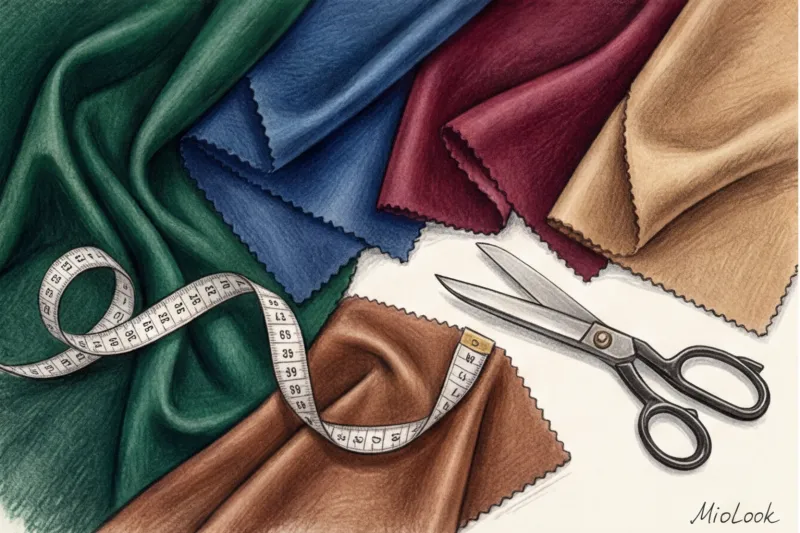
Also, be mindful of reflections. The color of your clothing reflects on your face. Neon tones will cast an unhealthy glow on your skin (for example, fuchsia can highlight rosacea), while overly pale pastels will blend into your face, making your portrait look dull.
Your perfect look starts here
Join thousands of users who look flawless every day with MioLook.
Get access — €0.99 onceInvestment Accessories: The Touches of a Successful Business Woman
In a business portrait, accessories speak louder than words. And the main status marker here is a watch. I strongly recommend removing your Apple Watch or other smartwatch before the "move" command. A smartwatch communicates, "I'm always connected and tracking my steps." A Swiss classic (like a Cartier Tank or Jaeger-LeCoultre) communicates, "I value my time and manage it."
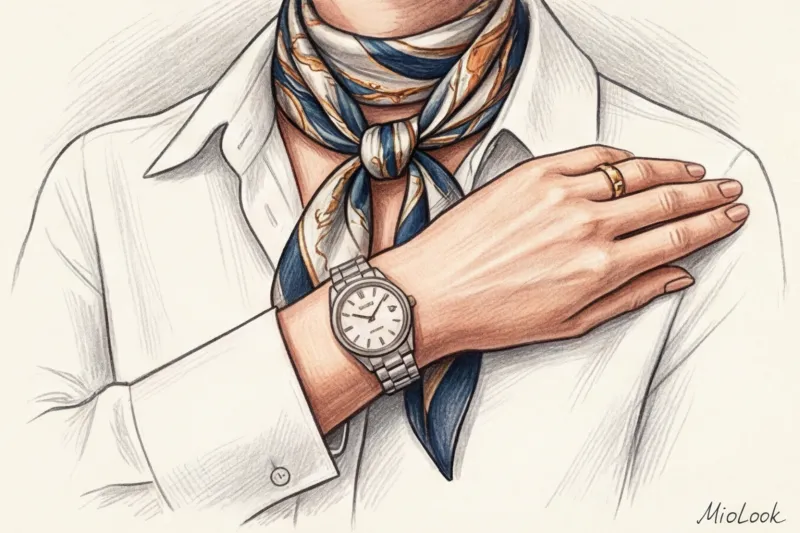
When it comes to jewelry, the rule "less is more" applies. Avoid large, jingling pieces. Minimalistic gold or platinum stud earrings, a thin ring, or perhaps a strand of quality pearls—these are enough to highlight your face without distracting.
Glasses are a particular pain point for photographers. If you wear them constantly and want to be photographed wearing them, make sure the lenses have a high-quality anti-reflective coating. I once lost two hours of studio time trying to set up the lighting so the softboxes wouldn't reflect off the speaker's glasses. Without anti-reflective coating, your eyes will simply disappear behind the white spots of light.
Checklist: Preparing Your Wardrobe for a Business Photo Shoot
80% of a successful photoshoot depends on home preparation. Here's my tried-and-true checklist:
- Transportation: Bring your gear only in garment bags. Don't drive while wearing your photoshoot clothes—the seat belt will leave a permanent wrinkle in silk or wool, which will be visible in every photo.
- Lingerie: Choose smooth, seamless underwear in a nude (not white!) color. It should fit perfectly so the straps don't dig into your skin.
- Diversity: Prepare three different looks: a formal attire (suit) for official releases, an elegant smart casual look (jacket with a silk top or thick jersey turtleneck) for social media, and a portrait look that emphasizes interesting facial features.
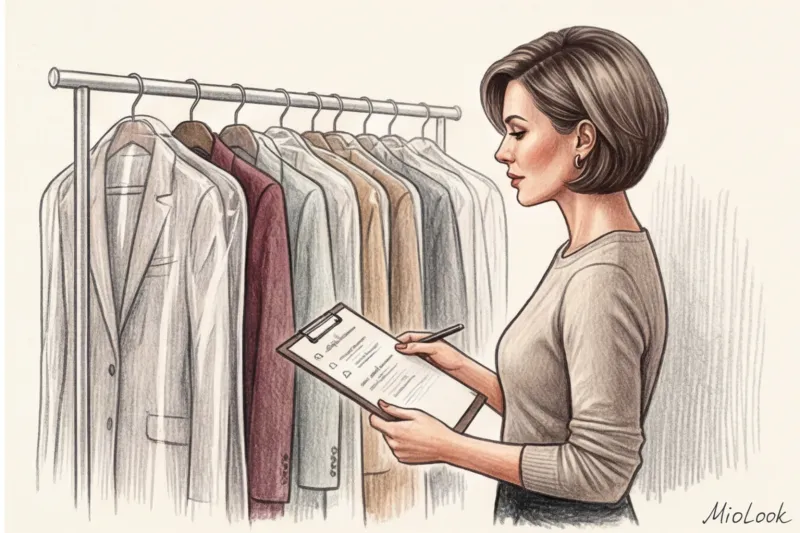
By the way, in order not to carry unnecessary things with you and to see in advance how things go together, I recommend using wardrobe digitization feature in the MioLook app You can create a capsule moodboard directly on your phone and coordinate it with the photographer in advance.
Summary: Your Visual Capital
Your business photography works for you 24/7. It greets clients on your website, "conversations" with partners in instant messaging, and represents you on the pages of Forbes or RBC. It's not just a picture; it's an investment that pays off in trust.
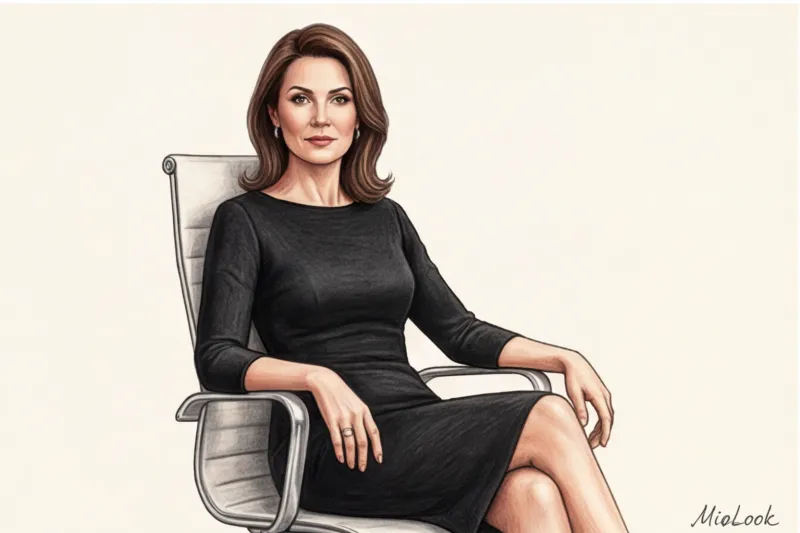
Style after 40 isn't about chasing fleeting trends. It's about calm confidence in your professionalism, expressed through impeccable tailoring, luxurious textures, and attention to detail. Let your clothes be a worthy frame for your intellect and experience.