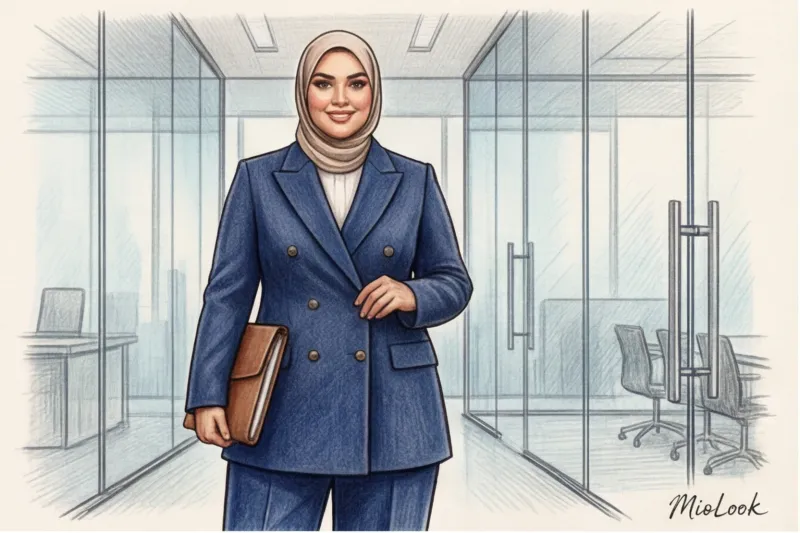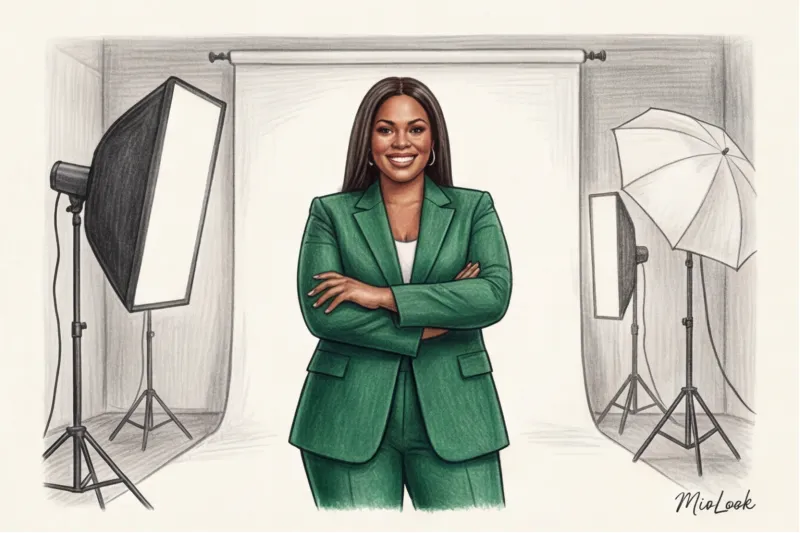
Do you know what my favorite moment on set is? When a client looks at the first shots on the photographer's monitor and gasps in amazement: "Wow, is that really me?" Over 12 years as a stylist, I've done hundreds of shoots, and I can say for sure: a successful business photoshoot for plus-size women isn't about sucking in your stomach or retouching skills. It's about the pure physics of light and the correct architecture of the cut. We covered this in more detail in our A complete guide to looks for a business photo shoot , but today I want to tackle the most difficult and interesting task – preparing a wardrobe for a plus-size figure.
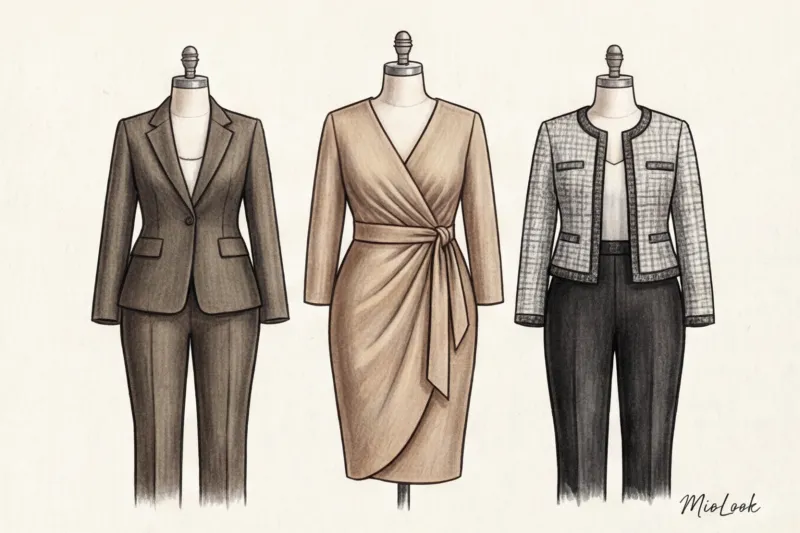
Business Photoshoot for Plus Size Women: Why Your Favorite Office Clothes Won't Work
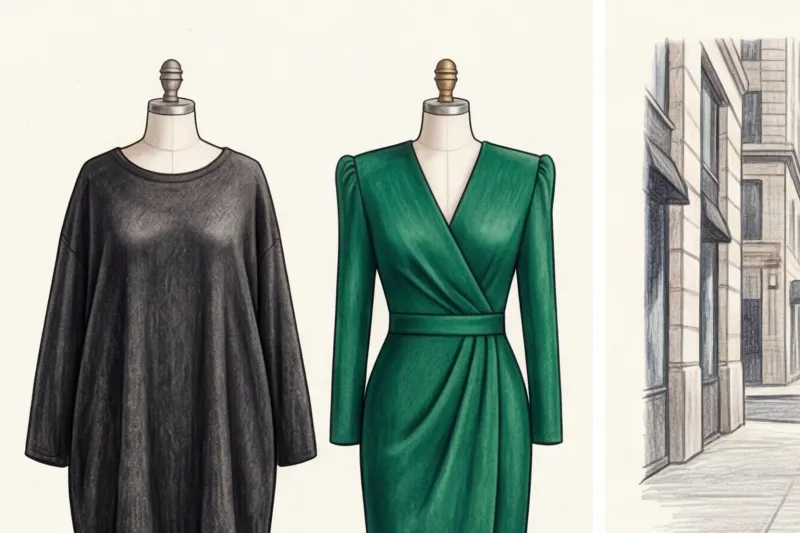
We often confuse the dynamism of life with the static nature of a photograph. At the office, your favorite soft oversized cardigan looks cozy and stylish because you're constantly moving. But in front of the lens, the cruel laws of physics apply. Studio flash lighting with an output of 500–1000 joules literally pierces delicate fabrics, highlighting the slightest unevenness of a silhouette and the contours of underwear.
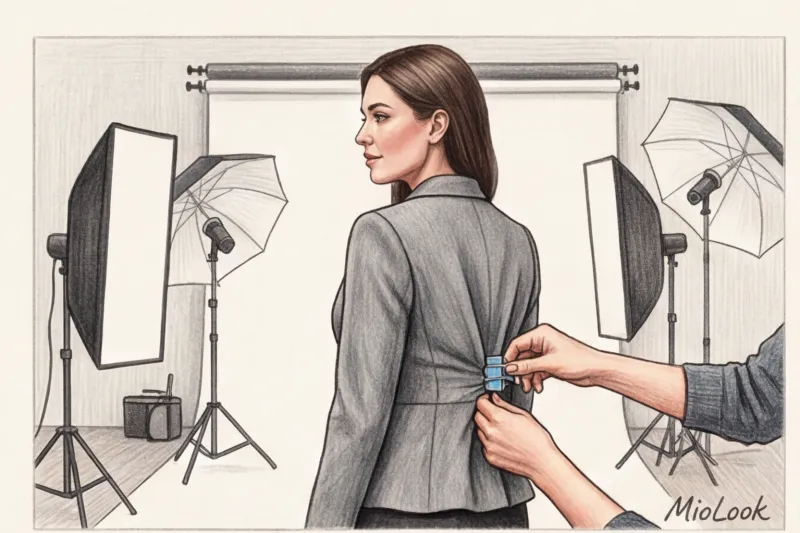
I had a revealing case in my practice. I had a client, an executive, who adored her comfortable, loose-fitting knit suit. In person, it looked relaxed and elegant. But in test shots, the expensive garment turned into a shapeless sack, visually adding at least two sizes to her figure. The desire to "hide" behind oversized clothing is the main psychological trap in front of the camera. To save that shoot, I had to use a stylist's arsenal: we pinned the fabric at the back with heavy construction clips (yes, we often do this on set!), artificially creating a fitted silhouette. And magic happened—a stately, confident woman appeared in the frame.
Black Trap and the Black Hole Effect
Let's bust the biggest myth right off the bat: black is slimming. In photos taken with powerful studio flashes, this rule works exactly the opposite.
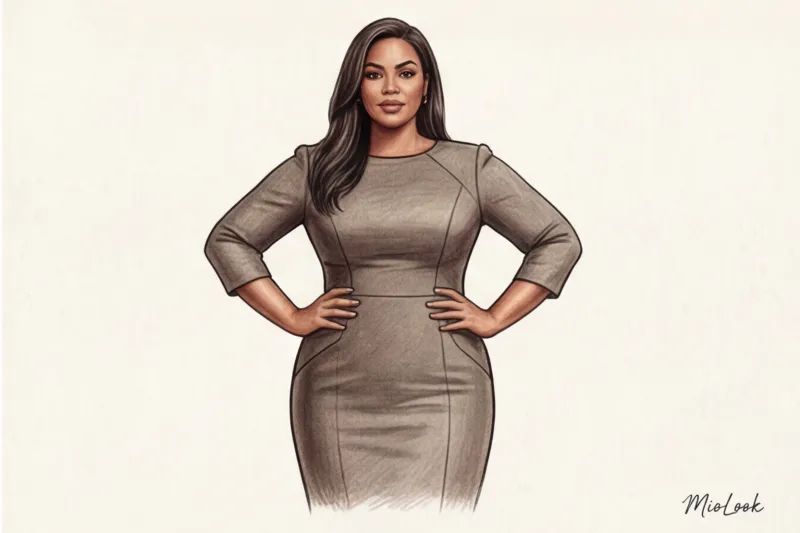
Smooth black fabric absorbs light and completely deprives the figure of volume. The camera interprets this as a flat 2D spot, a veritable "black hole." Due to the lack of chiaroscuro (highlights and shadows at the folds of the fabric), the viewer's brain automatically constructs volume at the extreme points of this dark spot. As a result, a plus-size figure appears larger and heavier.
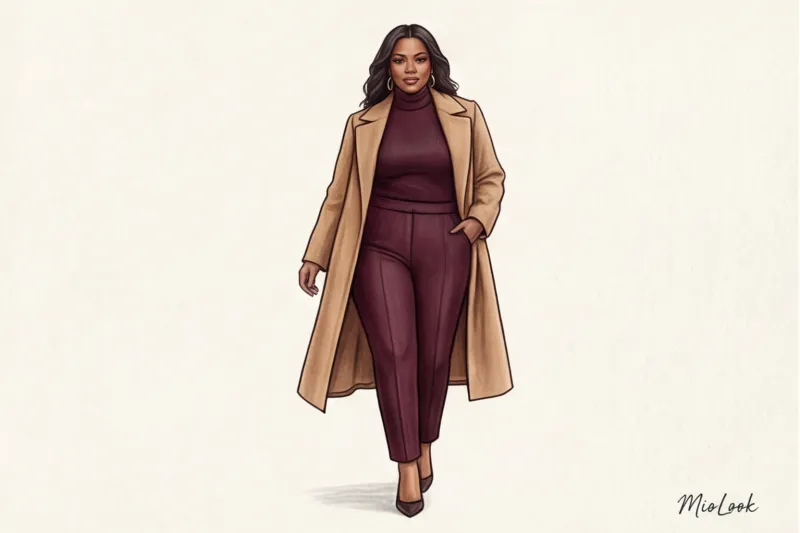
Instead of all-black, choose deep jewel tones: rich emerald, sapphire, deep wine. If the dress code or personal taste calls for black, it should be textured—tweed, bouclé, or thick jacquard. Texture catches the light, creates micro-shadows, and restores the body's natural contours.
Access to MioLook for €0.99 — one-time payment
A smart AI stylist will select the perfect look for your photo shoot, taking into account your body type.
Get access — €0.99 onceBody architecture: winning styles for plus-size models in the frame
The camera loves geometry. Soft, sloping lines visually widen the torso, while sharp angles bring it together. Rule number one for a business portrait: a firm shoulder.
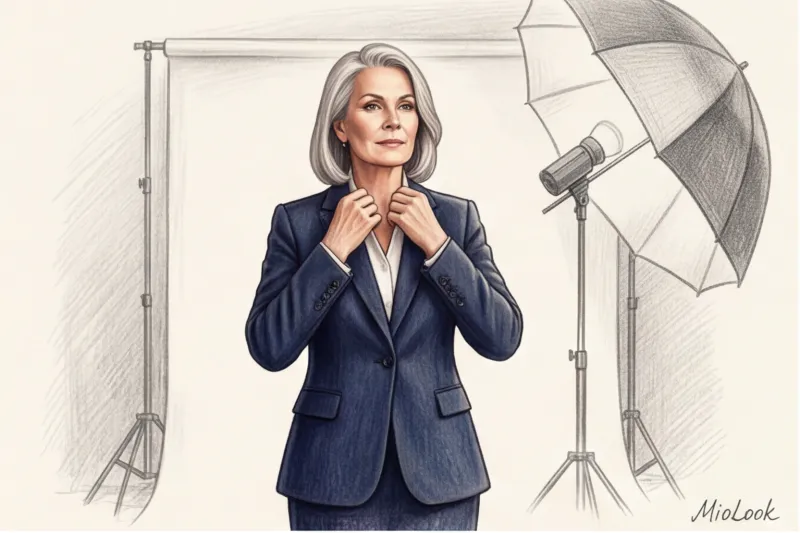
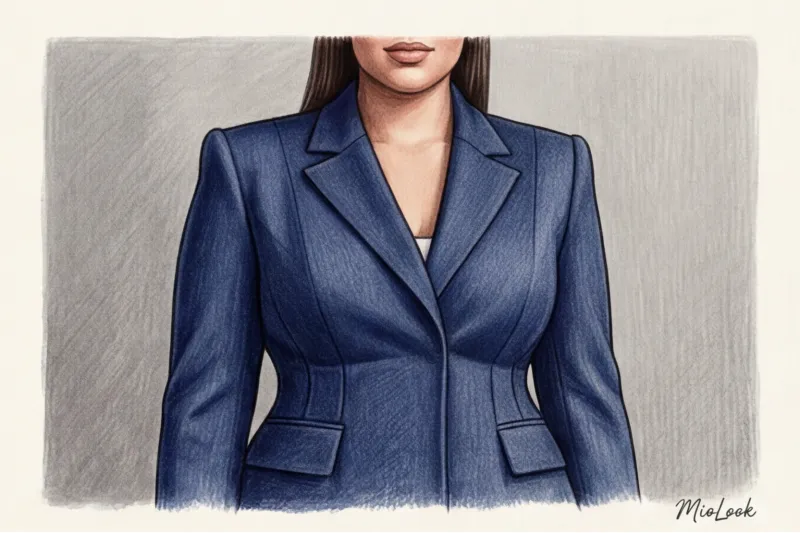
Set-in sleeves and neat shoulder pads are a must. Avoid dropped shoulders, dolman sleeves, and raglan sleeves. In a two-dimensional perspective, they blur the line between the arm and the body, transforming the upper body into a monolithic rectangle. A crisp shoulder line creates an inverted triangle (V-shaped silhouette), which is subconsciously perceived by viewers as a marker of status, energy, and confidence.
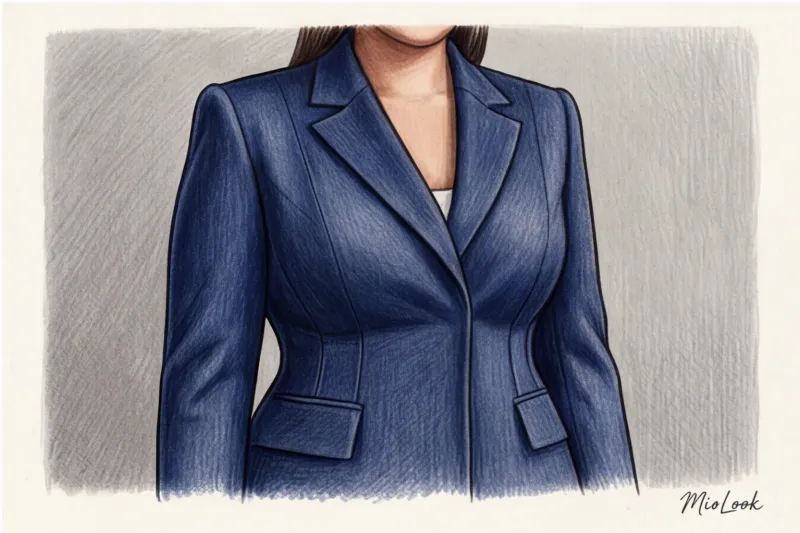
Pay special attention to the length of your jacket. It should never end at the widest point of your hips—this will visually cut your figure in the most unflattering place. The optimal length is either a hand's breadth above this point (short, structured styles) or lower, covering the groin and tapering into the natural narrowing of the hip.
Trousers and Skirts: The Right Fit for Seated and Full-Frame Portraits
Always choose high-waisted pants for photoshoots. They not only elongate your legs but also provide secure support around your midsection, which is crucial when you're sitting for the camera.
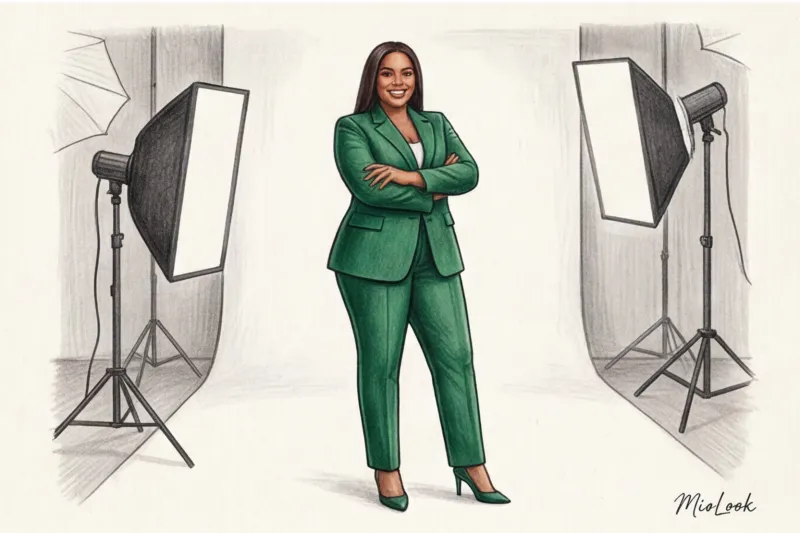
Speaking of sitting positions, the midi length (to mid-calf) is extremely tricky: when you sit on a chair or armchair, the fabric inevitably rises, and your legs can appear half as short on camera. A safe bet is a pencil skirt made of very thick fabric that just covers the knee, or full-length palazzo pants (always with heels).
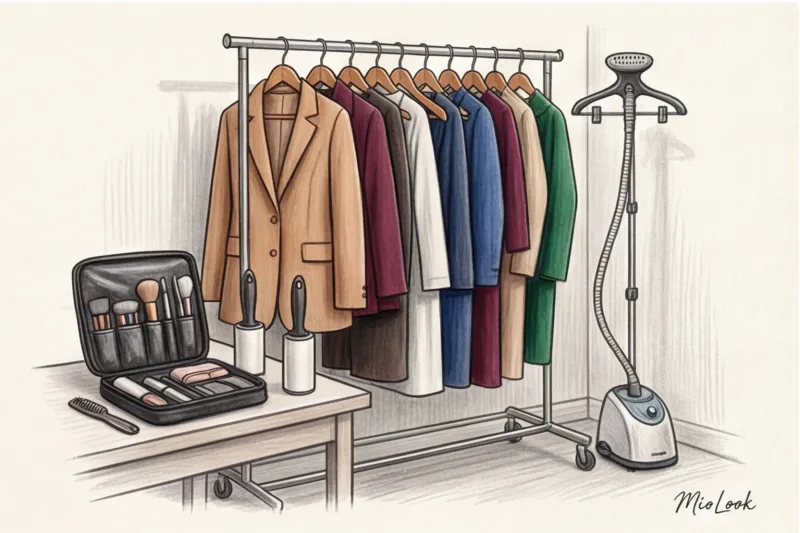
To avoid racking your brains over how your items go together, I recommend uploading your wardrobe to MioLook — the algorithm will help you assemble a capsule in which the proportions of the top and bottom will be perfectly balanced.
Fabrics the Camera Loves: Density is Everything
Thin viscose, plain jersey, and cheap polyester are the worst enemies of a business photo shoot. Under softboxes, they treacherously shine, gather into tiny folds, and reveal even the slightest contours of lingerie.
A 2024 study by the international trend bureau WGSN confirms that premium corporate dress codes standardize on fabrics with a density (GSM) of 250 g/m² or higher. These are the materials you need for your studio attire. Thick crepe, suiting wool, and heavy gabardine—they hold their shape like elegant armor, smoothing out every nuance of the figure.
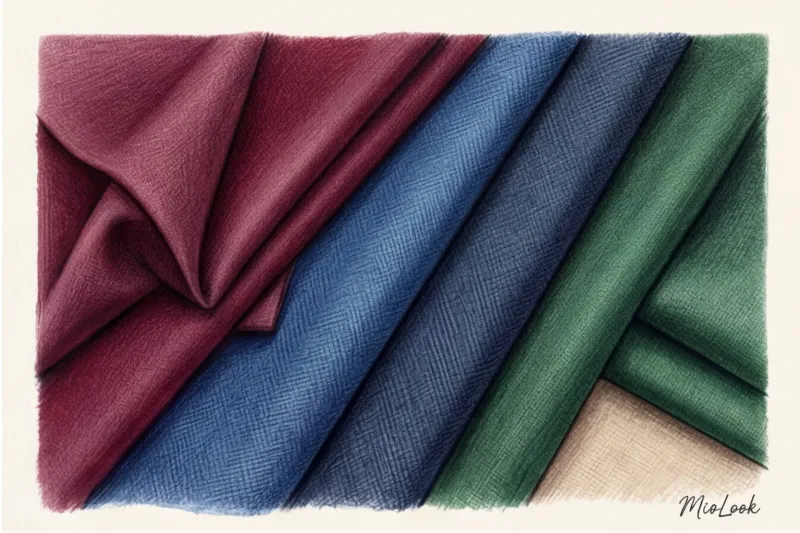
The second ironclad rule: matte textures always beat glossy ones. Satin, silk, and satin are highly reflective. A glint of light on a protruding belly or hip will visually enlarge the area by a few centimeters. Save silk for subtle accents—for example, a top worn under a matte jacket.
Your perfect look starts here
Join thousands of users who look flawless every day with MioLook.
Get access — €0.99 onceColor schemes and prints: how to control the viewer's attention
One of my favorite styling techniques for shoots is color blocking. By wearing a contrasting top under an unbuttoned jacket, you create a narrow internal vertical line of color. Your silhouette, as seen by the camera, is now limited not by the actual width of the jacket's shoulders, but by the width of the visible part of the top. This optical trick visually elongates the figure by 10-15%.