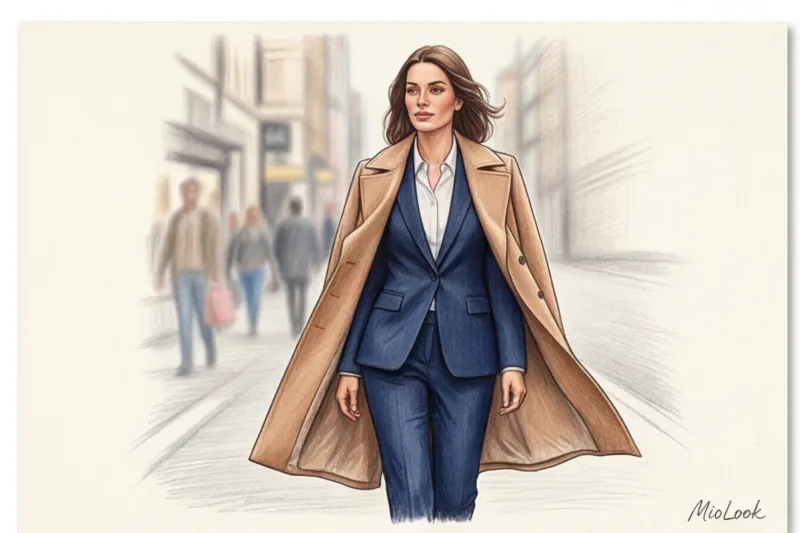
Do you know what the most common request I get from clients when the warmer weather arrives? "Darina, let's do a business photo shoot outside! I want it to be lively and moving, like in the pictures on Pinterest." And do you know what happens on the very first shoot if you approach it with the standards of a regular studio shoot? The wind turns an expensive silk blouse into a shapeless ball, and the bright sun highlights every speck of dust on a formal black jacket.
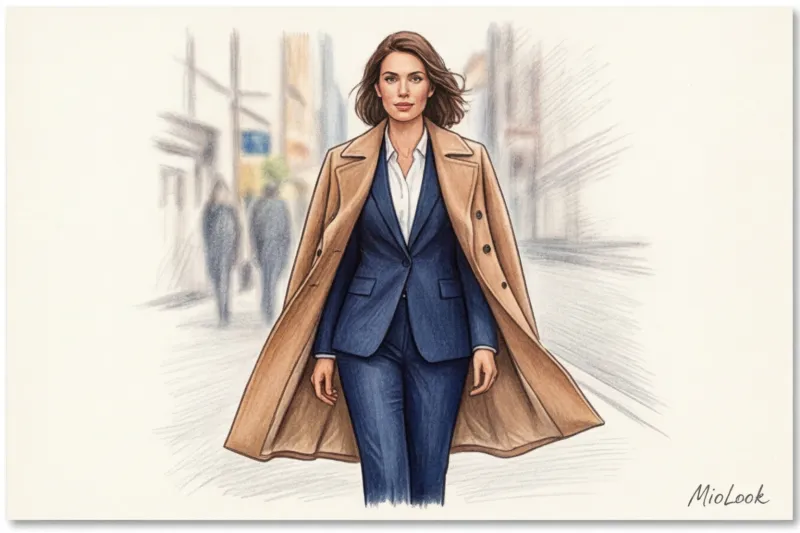
Street photography is a completely different genre. Here, we work not with obedient studio flashes, but with the physics of light, the aerodynamics of fabrics, and the color harmony of an entire city. We covered the basic principles of posing and wardrobe selection in more detail in our A complete guide to looks for a business photo shoot , but the street dictates its own, sometimes very harsh, laws.
Outdoor Business Photoshoot vs. Studio: What's the Real Difference?
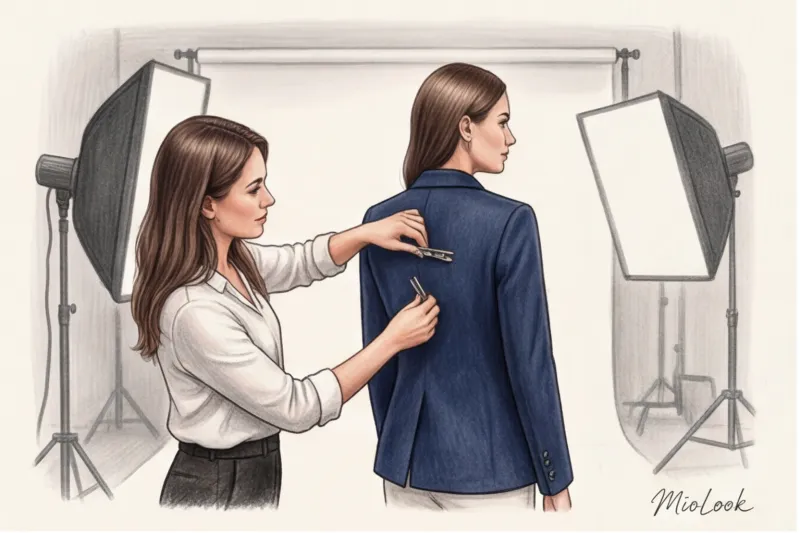
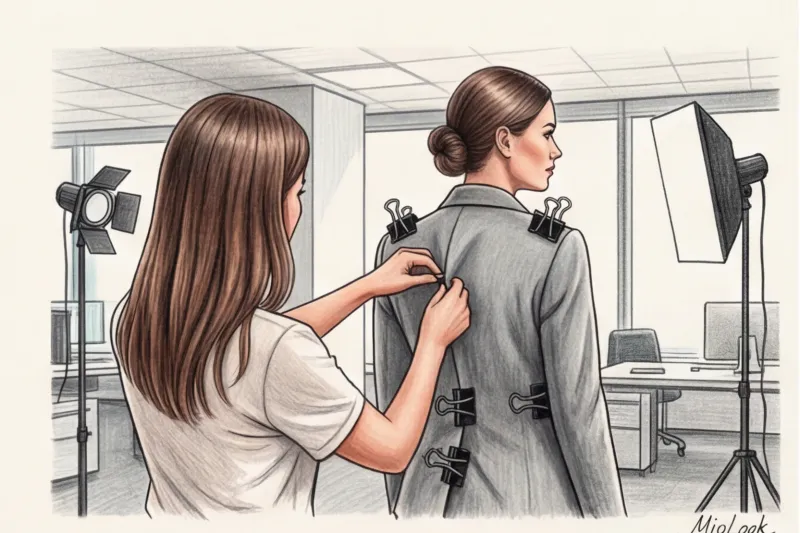
In the studio, we have complete control over the environment. If a jacket is a little loose, we discreetly tighten it with pins at the back for perfect static posture. This trick won't work outdoors. A city shot demands movement—a confident stride, a turn of the head, a gentle breeze in your hair. Your clothes shouldn't just fit well; they should move beautifully with you.
One windy day during a shoot, my lawyer client's thin viscose blouse literally clung to her body, completely ruining the clean silhouette we'd so carefully crafted. Over 12 years of practice, I've developed a clear rule: wind speed over 5 m/s is a critical threshold In such weather conditions, it is imperative to categorically avoid flowing fabrics (thin silk, chiffon, light viscose) in favor of rigid, architectural silhouettes.
For street style, choose heavyweight cotton (180 g/m² and above), structured wool, gabardine, or high-quality faux leather. These materials have the right aerodynamics: they don't deform in gusts of wind, but rather shift slightly, maintaining the premium look of your outfit.
The Treachery of Natural Light
Natural light outdoors constantly changes its color temperature—from a warm 3000K at dawn to a cool 7000K on a cloudy afternoon. This directly affects how the camera captures the texture of your clothing.
The harsh midday sun acts like a merciless X-ray. That same fashionable linen suit that seemed the height of elegance in the mirror will look like you've been sleeping in it in the bright sun—the camera will highlight every tiny crease. Furthermore, the zenith sun creates a "raccoon eye" effect (deep shadows under the brows). A well-chosen English jacket collar, which creates beautiful geometric shadows on the collarbones, or a pair of stylish sunglasses can help save the shot in this situation.
Access to MioLook for €0.99 — one-time payment
A smart AI stylist will select the perfect look for your next photo shoot.
Get access — €0.99 onceStreet Style Color Palette: Blending Your Look into Architecture
As a certified colorist, I can assure you: a city isn't a white cyclorama backdrop. It has its own vibrant color, and it can't be ignored. If you choose a suit's shade without considering the location, you risk either blending into the wall or looking like a foreign object.
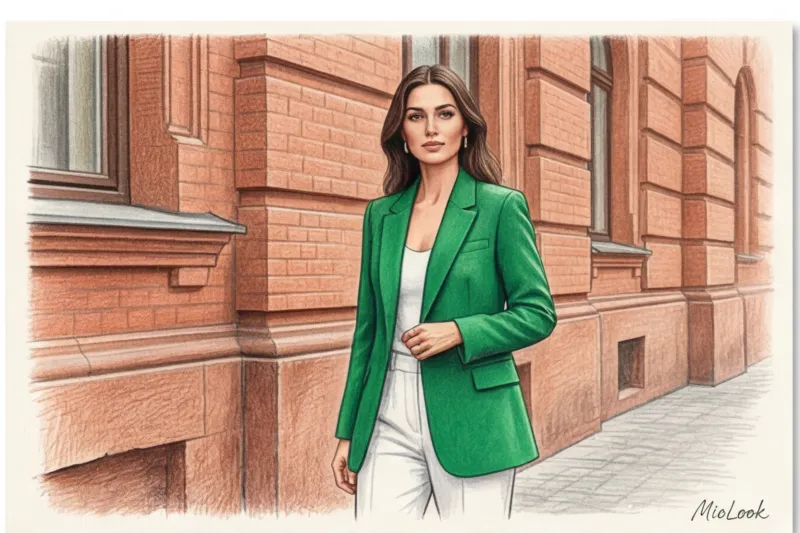
Based on Johannes Itten's color theory, I always use the principle of temperature contrast to highlight the expert's figure against the city background:
- Filming in the historical center: Warm ochre, brick, sand, and terracotta tones predominate here. To stand out, choose cool suit shades—deep emerald, cobalt, graphite, or icy blue.
- Shooting in a business district (glass and concrete): Modern business centers exude a cool blue-gray undertone. Wearing a gray suit here will simply make you disappear. Add warm accents—camel, rich terracotta, burgundy, or warm olive.
Why wearing a black suit on the street is a mistake
Let me bust the biggest fashion myth: black is slimming and classy. far from always While a black suit might make you look like a powerful leader in a studio with proper lighting, it creates an optical illusion on a sunlit street.
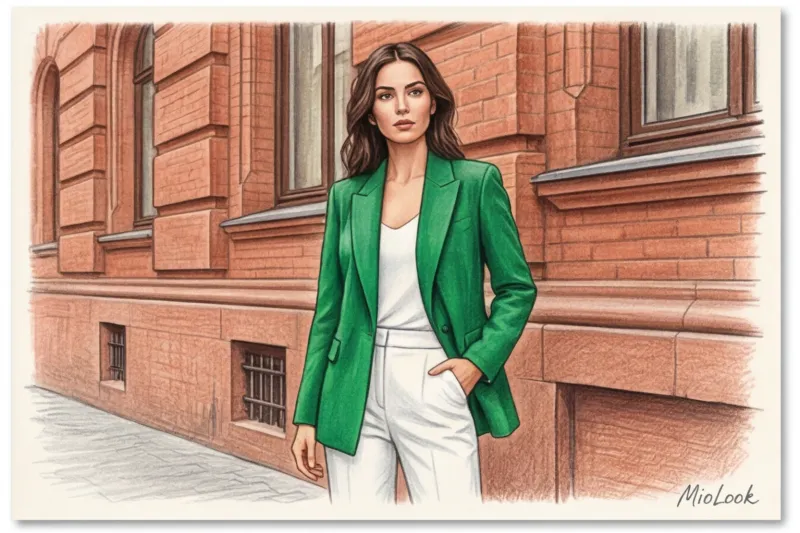
Matte black fabric absorbs natural light. In a photograph, you become a flat "black hole," where all the details of the cut, lapels, and buttons are lost. Worse, outdoors, black acts as a magnet for visual clutter, highlighting every speck of dust. According to the WGSN (2024) report on corporate style trends, "new black" has replaced dull black. Use deep navy, dark chocolate, or dark eggplant—they create the same austerity while maintaining volume and depth in the frame.
Top 4 Street Style Looks for an Expert (and Why They Work)
Business streetwear requires a balance between formality and relaxed style. Here are four fail-safe formulas I regularly use for my clients.
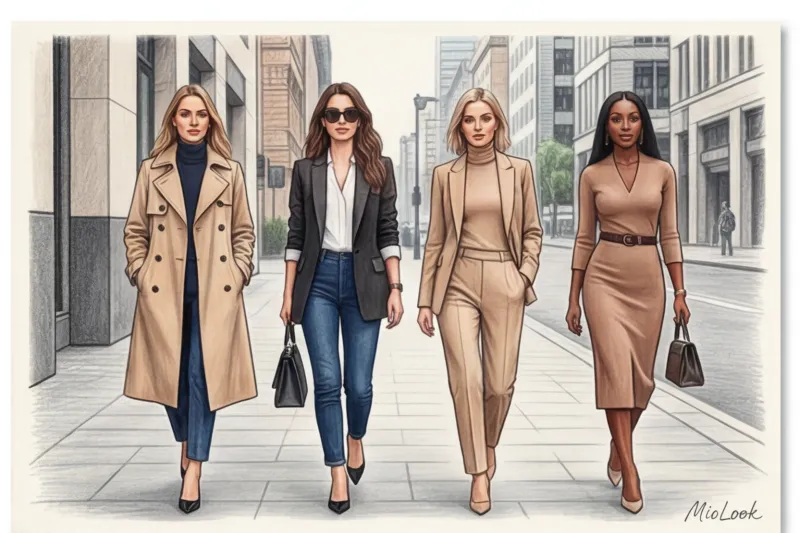
- Structured trench coat + classic suit. An ideal option for dynamic, on-the-go shots. The flowing hem of a thick trench coat creates stunning geometric shapes in the frame, adding energy and purpose to the image.
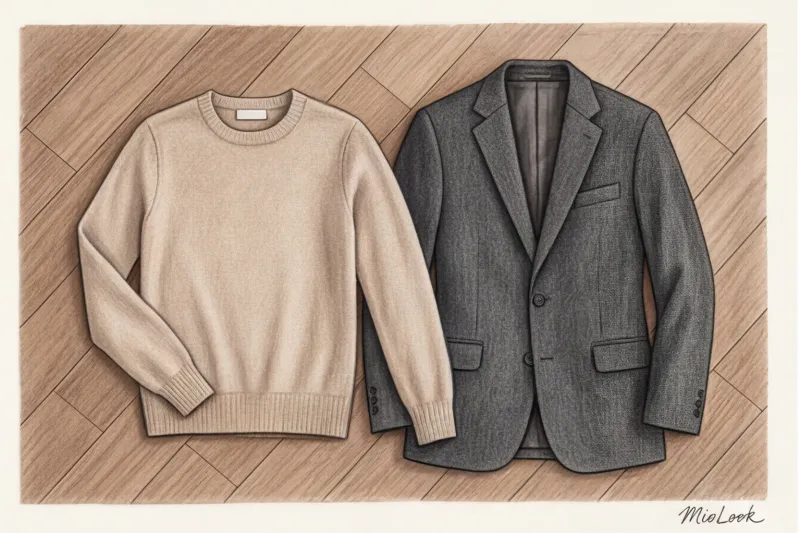
- Relaxed classic (structured jacket + quality denim). A formula that works flawlessly for psychologists, coaches, and IT professionals. Important: jeans should be made of raw denim, free of frays and holes. This conveys the "I'm professional, but easy to talk to" attitude.
- Monochrome minimalism in light tones. A beige, off-white, or light gray pantsuit looks incredibly expensive against the asphalt. The light monochrome visually elongates the silhouette and acts as a natural reflector, illuminating the face from below.
- Three-piece suit with a vest (without a jacket). A lifesaver for a summer business photo shoot. A vest made of heavy suiting fabric maintains the necessary expert formality without leaving you sweating in the scorching sun.
Your perfect look starts here
Join thousands of users who look flawless every day with the help of artificial intelligence.
Get access — €0.99 onceChoosing a Location for an Outdoor Business Photoshoot: A Stylist's Checklist
The city's architecture is a full-fledged participant in your photo shoot. The location should enhance your personal brand, not compete with it.
- For lawyers, financiers and top managers: Look for strong vertical lines. Columns of historic buildings, wide marble staircases, minimalist bank facades.
- For creative directors and marketers: Loft neighborhoods, textured brick walls, and contemporary art spaces allow for more complex cuts and vibrant color blocking.
- IT sector and startups: Glass, metal, modern pedestrian bridges. Shots against the backdrop of dynamic city traffic (taken with a long exposure) work great.
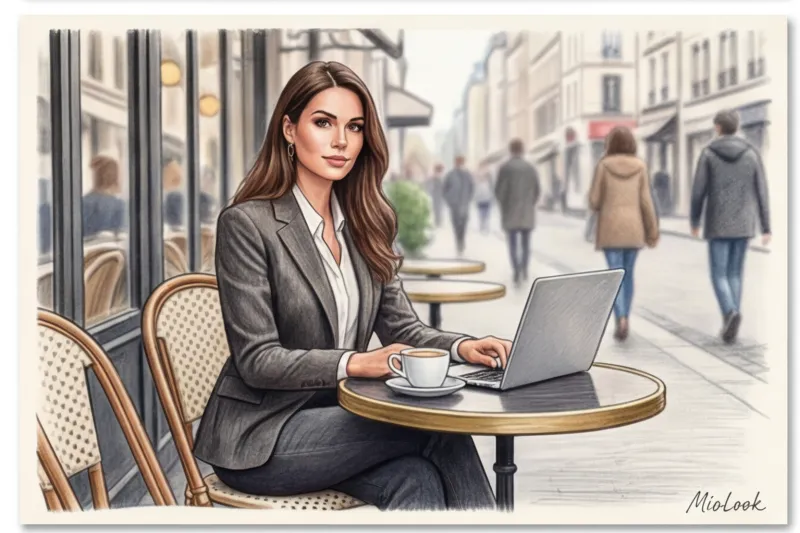
A separate genre is shooting at a table at a street cafe. It's the perfect setting for a smart casual look. To avoid a photo with a laptop or a cup of coffee looking banal, avoid looking directly at the camera. Read a document, adjust your watch, or gaze into the distance—create the illusion that the photographer is simply capturing a moment of your workday.
Insider advice from my practice: Always check the location exactly at the time you plan to shoot. That cozy courtyard you spotted on Sunday morning might be packed with parked cars by Tuesday afternoon, and the beautiful facade might be in the harsh shadow of a neighboring skyscraper.
Shoes and accessories: what defines status in a city photo
The camera instantly picks up on your discomfort. If you wear 10-centimeter stilettos for a photo shoot on cobblestones, the tension in your shoulders and unnatural gait will ruin any shot. Save the thin heels for the studio.
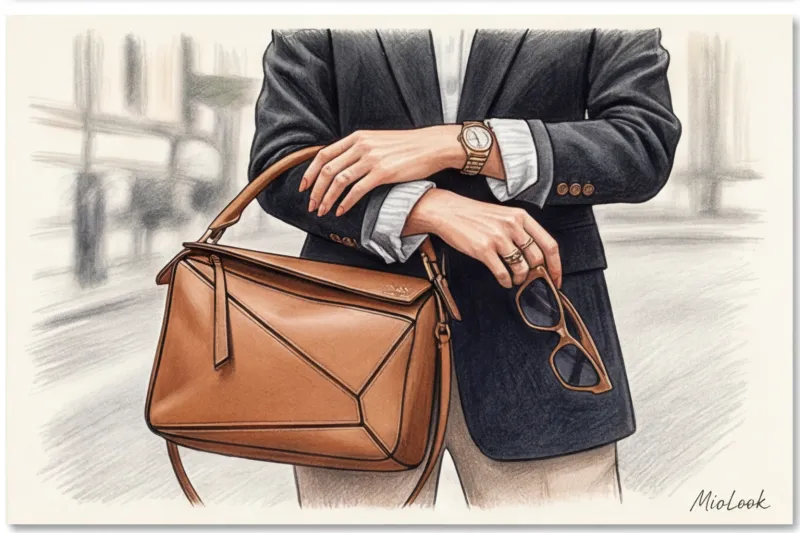
For a business street photo shoot, choose loafers with chunky soles, classic brogues, oxfords, or ankle boots with a sturdy block heel. They give you that confident, expert gait that looks so cool when worn dynamically.
A bag in a street shoot isn't just an accessory; it's your main prop. The most common complaint clients have is, "I don't know what to do with my hands." A rigid, geometric tote or leather briefcase solves this problem instantly. Important: avoid bags with lots of shiny, cheap hardware. In bright sunlight, cheap metal will glare and cheapen the entire look. Opt for matte leather and minimalist designs.
Checklist: How to Prepare for Street Photography and Avoid Failure
Let me be clear: this list may seem excessive, but it's these little details that separate a professional result from an amateur one. My on-location stylist always has these four things in my kit:
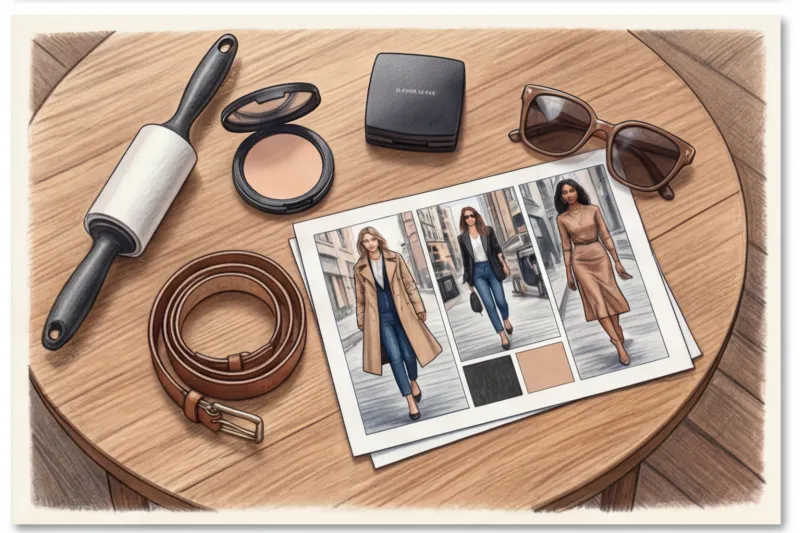
- Mattifying wipes and translucent powder. Wind plus sun equals a shiny face 15 minutes into the shoot. The camera doubles any shine on the skin.
- Sticky roller for clothes. As I mentioned before, dark fabrics are instantly coated with urban dust and lint outdoors. Rolling them on with a roller is essential before each change of location.
- Thermal underwear (for the off-season). If you're shooting spring content in chilly April, wear thin silk or high-tech thermal underwear under your suit. If you're cold, you'll instinctively raise your shoulders toward your ears—which looks awkward and tense in photos.
- Comfortable change of shoes. Sneakers or slip-ons for moving between shooting locations. We change into camera shoes only just before the shutter clicks.
Ready to get started?
Try MioLook's free plan—no commitments or card required.
Get access — €0.99 onceConclusion: Your city is your best backdrop
An outdoor photoshoot offers something even the most expensive studio can never match: real context, scale, and a vibrant atmosphere. Yes, it requires more careful preparation. You'll have to consider the density of fabrics, play by the rules of color contrast with the architecture, and contend with the wind.
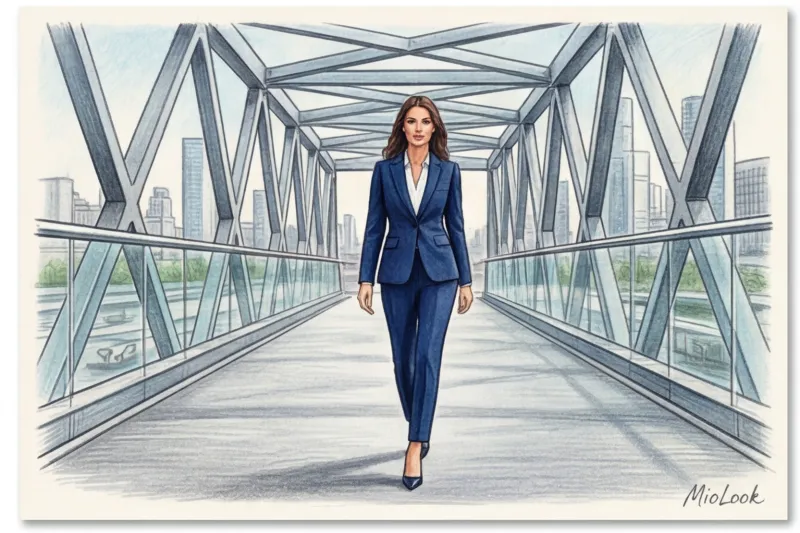
But the result is worth it. You get not just a "photo in a suit," but a whole story about a professional in their natural habitat. The main rule: don't try to fight the city; use its dynamism to your advantage.
To avoid making mistakes in choosing a palette and styles before an important shoot, I recommend digitizing your ideas in advance. Upload your items to MioLook app — a smart algorithm will help you put together looks, evaluate their color combinations, and ensure your wardrobe is 100% street-ready.