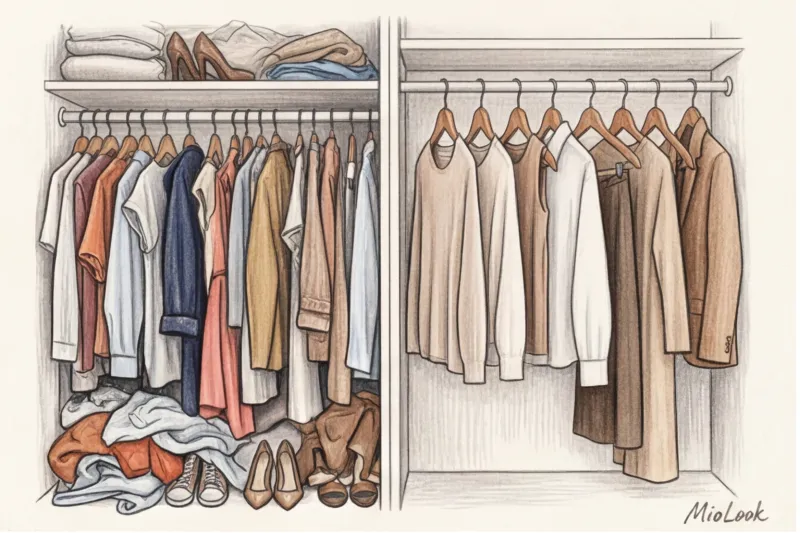
What is a basic wardrobe for a woman, really?
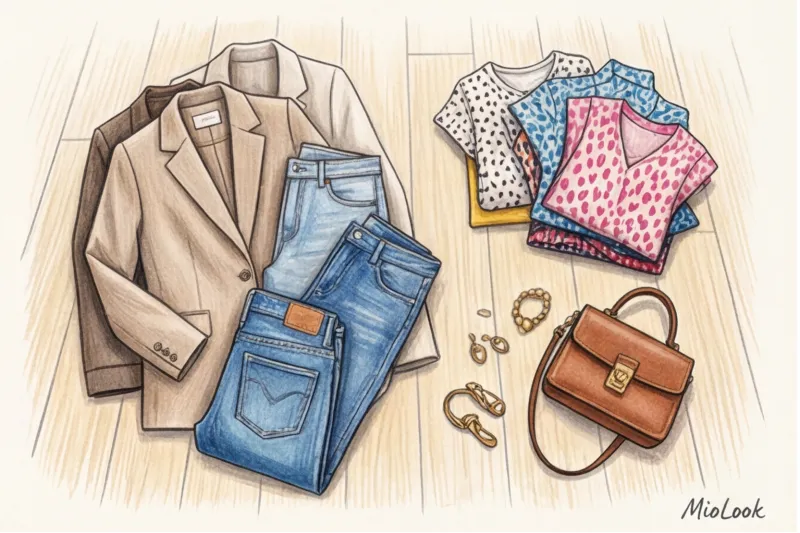
According to research firm WGSN, the average woman regularly wears only 20% of her closet's contents, leaving the remaining 80% hanging like dead weight on hangers, awaiting a "special occasion" or a five-kilogram weight loss. Sound familiar: the closet won't close, and there's nothing left to wear? This problem arises when we buy into emotional microtrends while ignoring the essentials. Properly assembled basic wardrobe for a woman solves this problem once and for all. Our goal isn't to force you to wear 100% of the clothes you buy (we'll leave that utopia to marketers), but to apply the Pareto principle (80/20) to your advantage. We need to ensure that those 20% of the clothes you wear day after day are flawless, visually appealing, and work flawlessly for you.
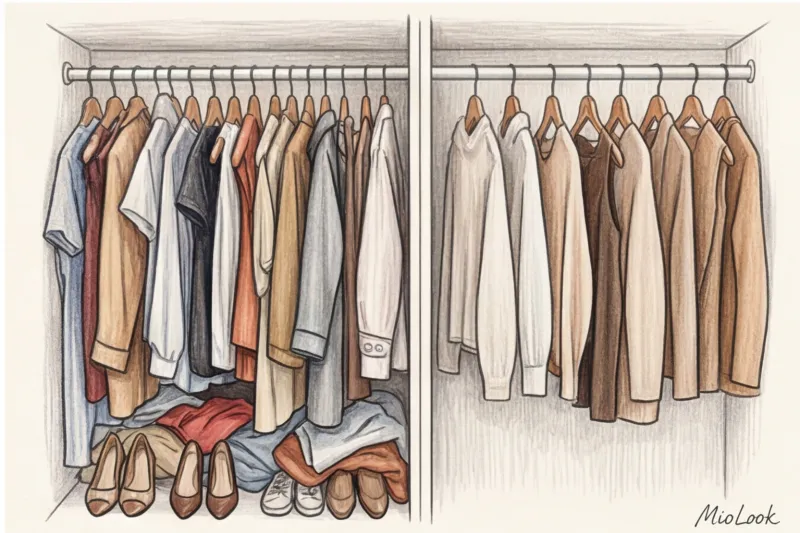
Having an academic background in interior design, I always encourage my clients to consider their style through the lens of architecture. When we design a house, we don't start by buying velvet pillows or antique vases. First, a solid concrete foundation is poured, smooth walls are erected, and high-quality flooring is laid. Personal style is exactly the same. By definition, basic clothing is an investment piece that acts as a completely calm background and a reliable connecting link (a kind of stylistic cement) for any accent elements. Without such a neutral foundation, trying to express a complex character through clothing or, for example, integrate the creator archetype in clothing will inevitably turn into visual chaos.
The main difference between a basic wardrobe and a capsule wardrobe is their scale and lifespan. Glossy magazines often confuse these concepts, but let's set the record straight. A capsule is a strictly situational set of clothes (usually 10-15 items), assembled for a specific, narrow purpose. There's a capsule for a two-week vacation, a capsule for a business trip, or a summer office capsule. A basic wardrobe, however, is a comprehensive foundation for years to come. While situational sets can be easily changed each season, a high-quality basic wardrobe, based on your classic style type and the color of the exterior will serve you for 5-7 years without losing its relevance.
"Basics don't have to be boring. They have to be impeccable in cut and quality, so you can throw them on blindfolded and still look like a million bucks."
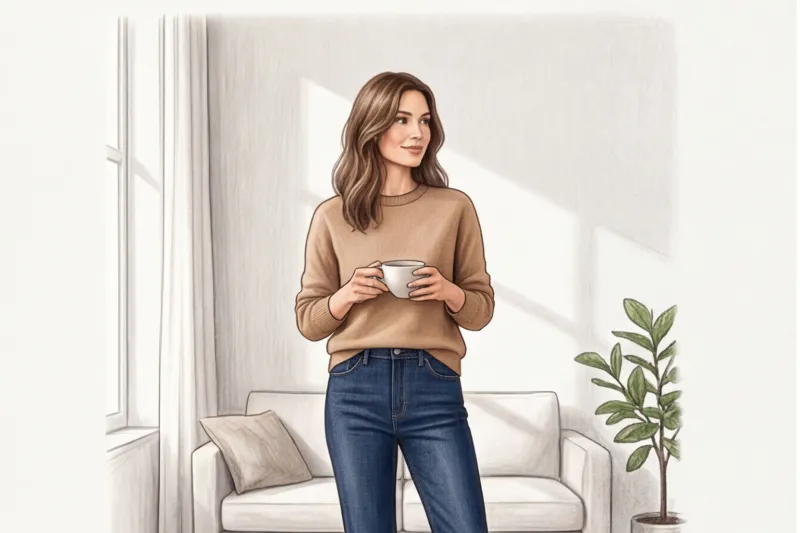
Over 12 years of practice, I've noticed a clear pattern: as soon as a woman begins to wisely invest in this "cement," the morning stress of opening her closet disappears completely. You simply take the perfect straight-leg jeans, a basic thick sweater, and add any accent bag. To clearly see which basic "building blocks" are missing from your foundation, I recommend starting with digitizing your closet. By uploading your most wearable items to MioLook , you'll instantly visualize your real assets and understand why it's so difficult for you to combine the remaining 80% of your wardrobe.
The Main Myth: "The Universal List of 10 Basic Things"
Remember those glossy magazines of the 2000s with their uncompromising headlines? "Ten Things Every Girl Must Have in Her Closet." Then came the ironclad list: a crisp white shirt, black pleated trousers, a beige double-breasted trench coat, and a pencil skirt. As a practicing stylist, I officially declare: this universal template is the worst enemy of your personal style. In fact, basic wardrobe for a woman should be built exclusively according to individual parameters, and not according to a widely disseminated cheat sheet.
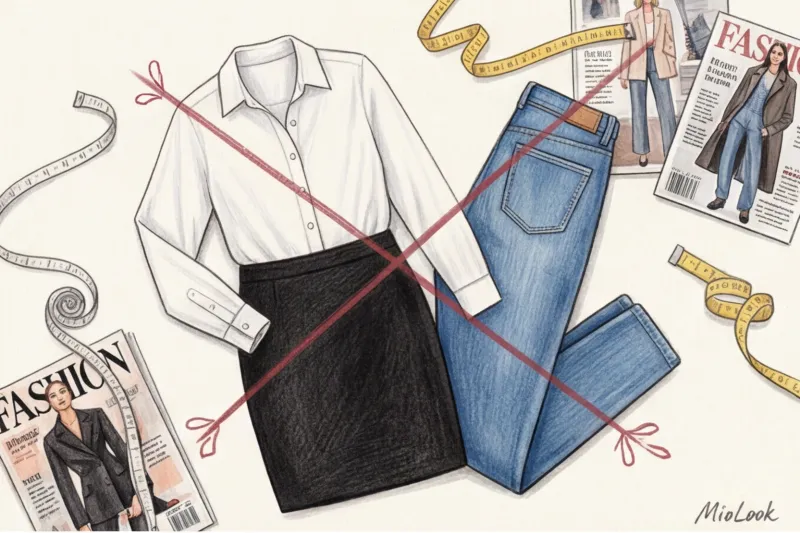
Today, Pinterest has taken the place of glossy magazines. We spend hours saving aesthetically pleasing images—for example, images of Scandinavian fashion influencers in deliberately oversized menswear jackets and straight-leg jeans—and then blindly copy them at the nearest mass-market store. The hidden danger of this approach is that you're trying to buy someone else's life and body structure. What looks stunning on a tall woman with a dramatic contrast in her appearance can make someone with a shorter stature and softer features appear wider, and the entire look appear sloppy and heavy.
Let's be honest: the basic attire of a corporate lawyer and a freelance illustrator are completely different. For a lawyer, the foundation will be structured jackets made of thick wool blends (ranging from €150 to €300), silk blouses with a closed collar, and perfectly fitted trousers. But for a freelancer working from their favorite coffee shop or coworking space, the essentials will be high-quality cashmere joggers, loose cotton long sleeves, and textured chunky knit cardigans.
"One of my clients, marketer Anna, came to me in utter despair. She'd spent about €800 on that same "classic essential" from the internet: a stiff gabardine coat, a crisp white poplin shirt, and classic pumps. The clothes ended up hanging with the tags still attached. Anna complained that they felt "like a cardboard box"—squeezed and boring. And no wonder! Her creative direction and soft color palette required completely different solutions: enveloping textures, knitwear, delicate drapes, and complex muted shades, not aggressive, hard lines."
The formula for the perfect base: Lifestyle + Color + Silhouette
To avoid repeating the mistake of buying beautiful but useless things, I always start by building lifestyle charts This is a brilliantly simple visualization tool: list all your regular activities (office, dog walks, sports, children's clubs, home relaxation) and estimate their percentages.
The rule is strict but fair: if you spend 70% of your time in informal settings, then 70% of your stylistic foundation should consist of relaxed, tactile pieces. Trying to buy three formal suits simply because "a grown woman should have them" when you only have 5% of your monthly business meetings is a surefire way to freeze your budget.
The second critical element of the formula is impeccable fit. A basic garment is the backdrop, the canvas on which the image is built. And this canvas cannot wrinkle or hang loosely. A proper cut has a therapeutic effect: it directly affects your posture and how others perceive your status.
A perfectly positioned armhole, well-placed darts, and a trouser length that's precisely tailored to your usual shoe height—all of this works as a visual lift. Even a simple white, thick cotton T-shirt for €30, if chosen with your silhouette's proportions in mind (the right neckline, the perfect sleeve length), will look more prestigious and more expensive than a poorly fitting designer top for €250.
Access to MioLook for €0.99 — one-time payment
A smart AI stylist will select the perfect look based on your natural features and lifestyle.
Get access — €0.99 onceFoundation Color Schemes: Why You Should Ditch the Black
Have you ever noticed that Coco Chanel's famous quote about the little black dress has played a cruel joke on us? As a certified colorist, I encounter the consequences of this myth daily. Women are buying up black clothes en masse, convinced that it's the safest and most versatile wardrobe staple. But let's look at this from the perspective of physics and color theory, as taught by Johannes Itten at the Bauhaus.
Color isn't just dye on fabric; it's light that reflects off the surface and onto your face. Black (the complete absence of light, in physics) has zero reflectivity. It absorbs light. When you wear a solid black turtleneck or jacket close to your face—in what's called a "black-on-black" pattern—it's like a black blazer. portrait zone — the fabric literally sucks the radiance out of your skin. The result? Deep under-eye shadows, accentuated nasolabial folds, and visually sharpened facial features. This is the infamous "tired face" effect.
"Last week, I was doing a wardrobe audit for a client. We simply took off her favorite €350 black blazer and applied a dark chocolate-colored piece to her face. She looked in the mirror and was genuinely surprised: 'Did I just look five years younger?'"
A similar story occurs with pure white. Optical white reflects the maximum cool spectrum. If your skin doesn't have a perfect porcelain tone, next to such an aggressive white, it will appear sallow, grayish, or flushed. Moreover, optical white instantly highlights the slightest yellowness of teeth and the whites of the eyes.
So what can replace these "safe" colors? In my practice, I use elegant alternatives to black that provide the same depth and grace, but with a soft contrast. Pay attention to deep dark blue (navy) , graphite , dark chocolate and thick pine needles According to Pantone research, navy is perceived by the human eye as the color of high intelligence and trust—which is why it's the best choice for a woman's business wardrobe.
Instead of harsh white, introduce soft alternatives into the base: ecru , ivory (ivory), lactic And pearl They contain a drop of yellow or gray pigment, which makes them complementary to the natural undertone of human skin.
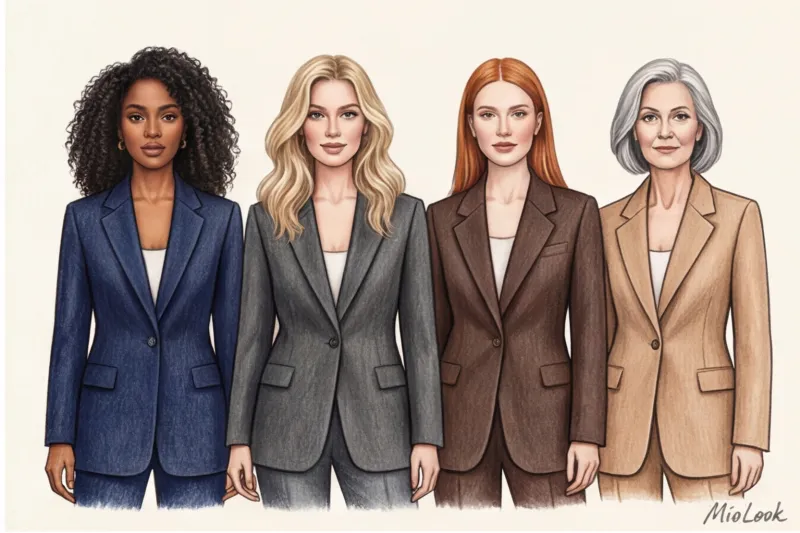
A neutral palette to suit your color type
The seasonal theory of color types isn't astrology, but rather physiology, based on the ratio of melanin, hemoglobin, and carotene in your skin. A basic wardrobe will only work 100% for you if its foundation matches your natural coloring. Of course, this rule primarily applies to the portrait zone (tops, sweaters, shirts, and jackets)—pants can be any shade, as they sit away from the face. But for ideal combinations, it's best to keep your entire wardrobe consistent with the same temperature range.
- Winter: cold, clean, dark tones. You're a happy exception to the rule. "Winter," with its high natural contrast (dark hair, bright whites of the eyes, clear skin tone), is the only color that really suits you. black And icy white. Your ideal base is also built on dark blue color and shade of dark chocolate without red tint.
- Spring: warm, light, clear tones. A warm, golden glow instantly fades in heavy, dark colors. Your basic wardrobe should sparkle. Choose camel (camel), warm beige And cream These shades create an old-money, "expensive casual" effect.
- Summer: cool, muted tones. The most common coloring in Eastern Europe, it has a soft, ash-toned undertone. Your appearance is built on undertones, so the base should be complex, as if lightly powdered. Ideal choice: gray-blue , taupe (gray-brown) and dusty pink These colors will make you look aristocratic.
- Autumn: warm, deep, complex tones. Rich, saturated colors of nature. Your base shouldn't be pale. Choose earthy and spicy shades: terracotta , saturated olive And mustard When paired with dense textures like suede or corduroy, these colors look extremely classy.
It's practically impossible to keep this entire palette in your head while standing in a poorly lit fitting room. That's why I always recommend that clients digitize their purchases. You can use image visualization function in MioLook To see in advance how a new taupe sweater will pair with your favorite navy pants. A well-chosen palette guarantees that your pieces will go together seamlessly.
Wardrobe Architecture: A Step-by-Step Guide to Building a Stylistic Foundation
Once we've decided on the color palette, we move on to the most important part—designing the uniform. As a teacher of image courses, I often compare this process to building a house: no paint, even the most expensive, won't save the walls if there are cracks in the foundation. In clothing, this role is played by cut, proportions, and the proper distribution of roles between elements.
Foundation: Bottoms and Wardrobe Math
If you want your closet to work 100% for you, implement this no-compromise rule: "one bottom = three tops" Why is this so? The human eye is designed to primarily perceive the person we're talking to. You can wear the same perfectly fitting straight-leg jeans three days in a row, changing only your shirts and tops, and those around you will be convinced you're projecting completely different looks.
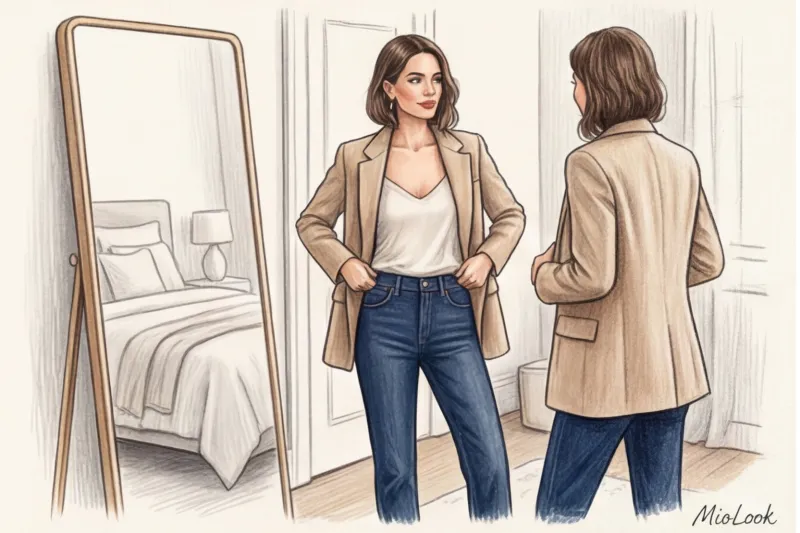
When choosing skirts, trousers, and jeans, it's crucial to choose a silhouette that doesn't follow fleeting microtrends. Extremely low waists, a la Y2K, or oversized cargo pockets are situational pieces. The database requires models that do not reveal the year of their purchase.
Specific jeans fit recommendations: avoid jeans with a high elastane content (more than 3-4%). They quickly become sagging at the knees. Look for heavier denim (12 ounces and above). The ideal basic rise is mid to medium-high, with a straight or slightly tapered silhouette. A fitting room test: you should be able to fit two fingers between the waistband of your jeans and your waist. This is the technical gap that will allow you to comfortably tuck in a bulky sweater without creating bunches at your hips.
Top: Portrait Zone and the Magic of the Right Neckline
Tops, basic shirts, and t-shirts are the highlight of your styling project. They're closest to your face, and not only color but also the neckline is important. A well-chosen neckline works like professional contouring:
- V-neck: A clear leader in visual correction, it elongates the neck, lightens a heavy shoulder girdle, and delicately elongates a round or square face.
- Boat neckline (bateau): The perfect style for pear-shaped figures, the horizontal neckline gently broadens the shoulders, balancing out the fullness of the hips.
- Crew neck: A classic that requires caution. A tight crew neck is ideal for those with a long neck and oval face, but it can visually weigh down the jawline or accentuate a full bust.
Don't forget about the density of the fabric: a basic white T-shirt should be made of cotton with a density of at least 180–200 g/m², otherwise it will turn into a lingerie tank top, with the texture of the underwear showing through.
Second Layers: Silhouette Sculptors and Status
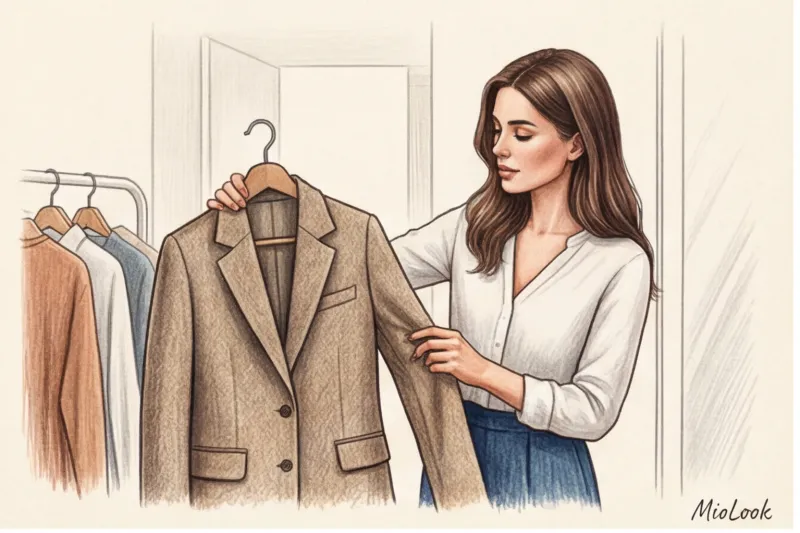
Jackets, thick-knit cardigans, and suit vests are what transform a simple "set of clothes" into a complete look. They serve as the main markers of status and poise.
The secret to second layers lies in clever layering, the logic of which is based on two factors. Physically speaking, the air spaces between the T-shirt, vest, and jacket act as a thermostat, ensuring ideal thermal comfort (you're warm outside, but you can remove a layer in a heated office). Optically speaking, an unbuttoned second layer creates two sharp vertical lines. These lines visually "cut" the volume at the sides, elongating and slimming the figure.
The golden rule of jacket length: A classic basic blazer should end exactly at the knuckles of your lower arm (or about a hand's width below the widest part of your hips). Shorter jackets distort the proportions, creating a horizontal line at the fullest part of your body, while overly long ones add height.
Access to MioLook for €0.99 — one-time payment
Start creating the perfect look with smart algorithms. Digitize your pieces, and the app will suggest how to properly combine bottoms, tops, and second layers.
Get access — €0.99 onceOuterwear: Your Style Card
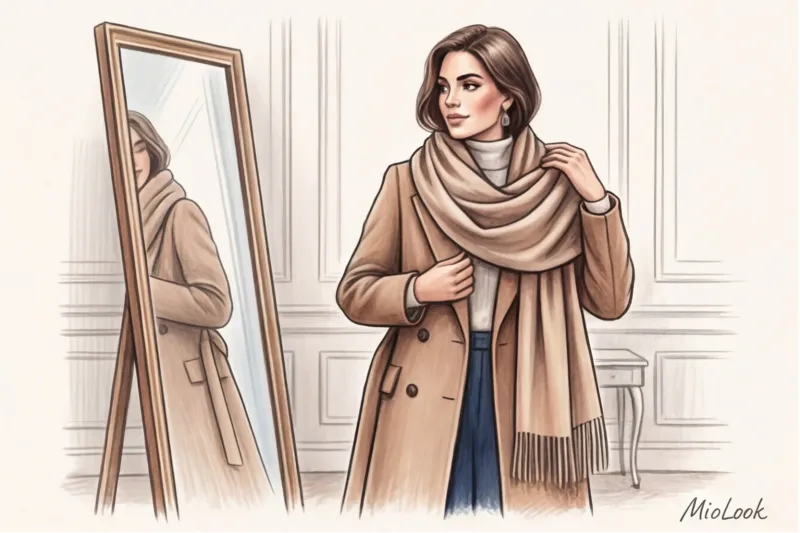
In climates with distinct seasonal changes, outerwear is the first thing others see for six months or more. High-quality coats, simple jackets without unnecessary embellishments, and classic trench coats serve as the signature pieces of a woman's basic wardrobe.
For outerwear to be truly basic, it must accommodate those "second layers." When buying a wool coat (invest in models with at least 70% wool, in the €250 price range—they'll pay for themselves), be sure to try it on over a thick sweater or jacket. If the armholes are tight under the arms or the sleeves are bunched up, feel free to go up a size. In modern style, a slight oversize in outerwear isn't a trend, but a necessity for creating the right architectural proportions.
Fabrics and textures: what you absolutely mustn't skimp on
Have you ever wondered why an item looks like a million bucks on a store mannequin, but after a couple of hours of wear, it turns into a scruffy rag in real life? The secret lies in the materials. A woman's basic wardrobe is a canvas, and the quality of that canvas is determined solely by the fabrics.
I always say it bluntly: a basic piece made of cheap polyester will ruin any outfit, even the most carefully crafted one. Thin, 100% synthetic fabric doesn't hold its shape, mercilessly attracts static, treacherously shines in daylight, and creates a greenhouse effect. Instead of classy elegance, you get physical discomfort and a cheap sheen that can't be compensated for by a stylish hairstyle or an expensive bag.
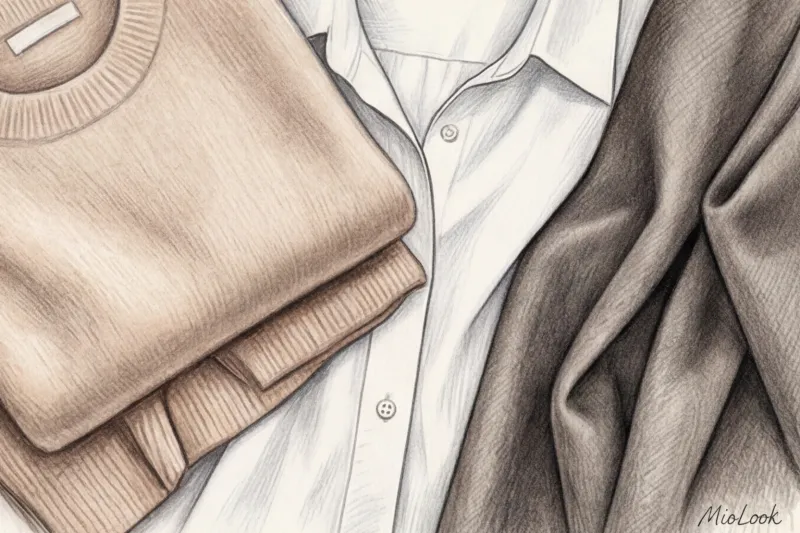
If you want a stylistic foundation to last for years, focus on investment materials. What does this gold standard include?
- Blended wool. The perfect balance for suits (trousers, jackets). I recommend looking for a blend that's 80-90% high-quality wool and 10-20% polyamide or elastane. This small amount of synthetic material prevents stretching at the knees and elbows.
- Thick cotton. Forget flimsy, translucent T-shirts. A proper basic T-shirt should be made of at least 200–250 g/m² cotton. This fabric won't show through underwear and creates a crisp, architectural shoulder line.
- Cashmere and silk. The key investment in the portrait area. Cashmere (preferably double-twisted) provides a luxurious matte texture and warmth without adding bulk. Natural silk softly diffuses light, literally acting as a photo filter for your skin.
According to the Textile Exchange Global Report (2023), high-quality natural and cellulose fibers last, on average, 3-4 times longer than their synthetic counterparts in the fast-fashion segment. This makes them not only visually appealing but also environmentally friendly.
The Mathematics of Style: The Cost-Per-Wear Formula
Many of my clients are initially intimidated by the price tags on premium bases. And here's where a sobering formula comes in handy. Cost-Per-Wear (CPW) — exit price.
Let's do some honest math. Let's say you buy a cute but cheap 100% acrylic sweater for €35. You'll wear it maybe five times before it starts to pill, absorb odors, and lose its original shape. Your actual cost per wear (CPW) is €7.
Now let's take a basic jumper made of high-quality cashmere or thick merino wool for €250. At the checkout, this price seems substantial. But since it fits perfectly and keeps you warm, you'll wear it at least 50 times per season for three years (150 times in total). Your CPW will be just €1.66!
A paradox I regularly demonstrate in practice: buying overtly expensive but high-quality fabrics is significantly cheaper. To stop buying clothes "for one occasion" and start truly tracking the return on your closet, I recommend digitizing it. Using the smart wardrobe feature in MioLook , you can create capsules for each day and clearly see which investments are earning every penny invested in them.
Accessories and shoes are the main markers of status
There's an unspoken rule among professional image consultants: those around you subconsciously read the status of your outfit from the bottom up and by the details. That's why the formula for impeccable taste is: Basic, simple clothing + accent or simply impeccably high-quality accessories The halo effect works flawlessly: a simple white T-shirt made of thick cotton and straight jeans can visually be valued at €30 or €500—the final "cost" of the look will be dictated by your shoes and bag.
What shoes make a true stylistic foundation? You don't need dozens of pairs; four functional pieces are enough. loafers (I recommend classic penny loafers with an almond toe), minimalist white sneakers without decoration (clean matte leather, no massive logos or contrasting inserts), classic ankle boots with a stable heel and elegant boats For evening wear. According to the Fashion Institute of Technology (FIT, 2023), leather shoes without unnecessary hardware have the highest durability rating in a wardrobe—they can serve you for years without losing their style.
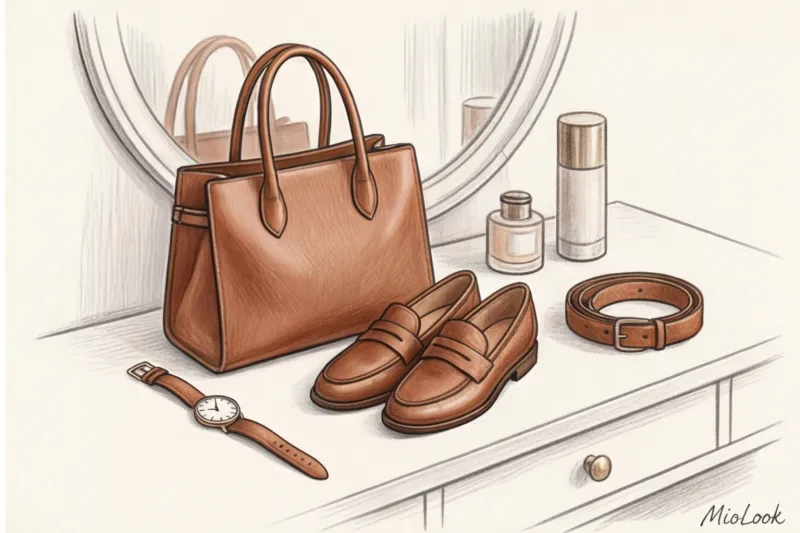
Let's move on to bags. In this category, excessive savings can be costly. Ditch the soft fabric bags in favor of clean-lined designs. The basic set includes three items: a roomy structured tote bag for workdays and a laptop, laconic cross-body medium size and clutch without active fittings (The studs and abundance of logos immediately limit its use.) A good basic bag in the €200–€400 range is your most reliable fashion investment.
Stylist's advice: I often demonstrate the same trick to my clients during fittings. As soon as you pick up a bag with a rigid, geometric shape (for example, a trapezoid with sharp angles), the look instantly becomes more put-together and expensive, even if you're wearing the simplest jeans and a cotton T-shirt. The rigid shape acts as a visual framework for relaxed textures.
As for the finishing touches - belts and jewelry — here we return to the rules of coloristics. Choose metal by external temperature Cool tones (Winter, Summer) are ideally suited to smooth silver, white gold, or platinum. Warm tones (Spring, Fall) are best suited to classic yellow gold, brass, or matte bronze. If you have a neutral skin tone, you can safely use mix metals in a single look (for example, a bimetallic watch). The main rule: shoe hardware, belt buckle, and jewelry should communicate with each other in a unified style.
To avoid buying too much, integrate potential upgrades into MioLook smart wardrobe This way, you can see whether a new belt or tote bag will tie your disparate items together into a cohesive, stylish ensemble even before you buy it in the store.
Your ideal image
it begins Here
Join thousands of users who look flawless every day with MioLook.
Get access — €0.99 onceChecklist: How to Audit and Build Your Basic Wardrobe
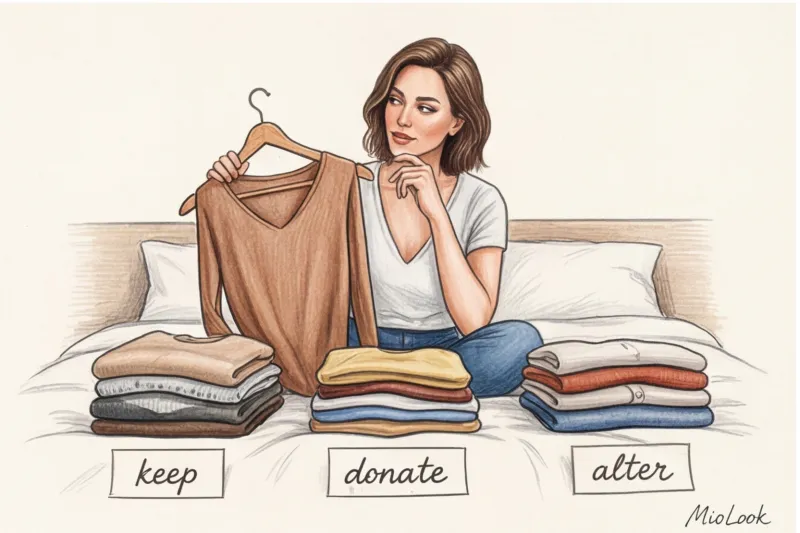
Do you know what the most common and destructive mistake newbies make when it comes to styling is? Trying to fit new items into the same old chaos. A typical situation: a girl decides to change her style, buys a premium cashmere sweater, and hangs it in the closet between three wrinkled cardigans from 2015. The result is predictable: a closet full to the brim, and nothing to wear again. The visual clutter of unwanted clothes blocks any creativity and prevents you from seeing new combinations. Remember: smart basic wardrobe for a woman It starts not with shopping, but with trash bags and boxes for charity.
Step 1: Complete Wardrobe Detox
You'll face a strict cleansing process of getting rid of duplicates, obviously worn-out knitwear (forget the excuse "it's just for home"), and items that don't fit. Last year, I conducted a private survey among my clients: 78% were saving clothes for "when I lose weight." This is a dangerous psychological trap! Opening your closet and seeing jeans that are too tight is a daily micro-stress. Keep only what fits you perfectly at your current weight.
Step 2: Analyze your favorite things and find “holes”
Look at the handful of clothes that passed your rigorous casting. This is the true stylistic core. Now it's time to identify the "holes" in the foundation. For example, you see that you have great structured jackets and perfect trousers, but you keep wearing shapeless T-shirts underneath. That means your growth area is quality base layers. Or you have a great office capsule wardrobe, but on weekends you're stuck wearing old sweatshirts because you're completely lacking a relaxed casual base.
Step 3: Create a Smart Shopping List
Never go to shopping malls or marketplaces without a specific plan. Your smart shopping list should be as detailed as possible, like a technical specification. Don't just write something vague like "black trousers." Instead, formulate it like this: "straight-leg, mid-rise wool-blend trousers, graphite color, budget up to €150." This strict filter instantly eliminates emotional purchases and protects against accidental spending during seasonal sales.
Step 4: Integrate the Virtual Scheduling App
To finally put an end to the issue of impulse purchases and test the theory in practice, I highly recommend using modern virtual planning tools. Digitize your closet by uploading photos of the items left over after the detox. MioLook Before buying a new item from your shopping list, add a screenshot from the online store to the app. Conduct a quick pairing assessment: does this item go together in at least three or four different outfits with your other items? This simple digital habit saves hundreds of euros annually and ensures that each new item becomes a full-fledged staple in your wardrobe.
One of the key insights that inevitably comes after an audit: rails on which 30 perfectly matching items hang freely provide a hundred times more stylistic freedom than a huge wardrobe with 300 random items.
Conclusion: Your wardrobe, your rules
In 2012, Northwestern University researchers H. Adam and A. Galinsky introduced the term "enclothed cognition" into psychology. Their experiments scientifically proved that the clothes we wear directly affect our cognitive processes, concentration levels, and sense of self. That's why, in concluding this guide, I want to emphasize the key point: properly put together clothing basic wardrobe for a woman - this is not a boring uniform for grey everyday life.
In fact, basic clothing is a clean, flawless canvas for your individuality. When your stylistic foundation is solid, you can indulge in any creative experiment. A perfectly tailored cashmere sweater or coat will pair beautifully with a vintage brooch bought at a European flea market for €15 and an avant-garde asymmetrical bag in the style of Maison Margiela. Basic clothing will withstand anything, serving as a noble mat for your boldest accents.
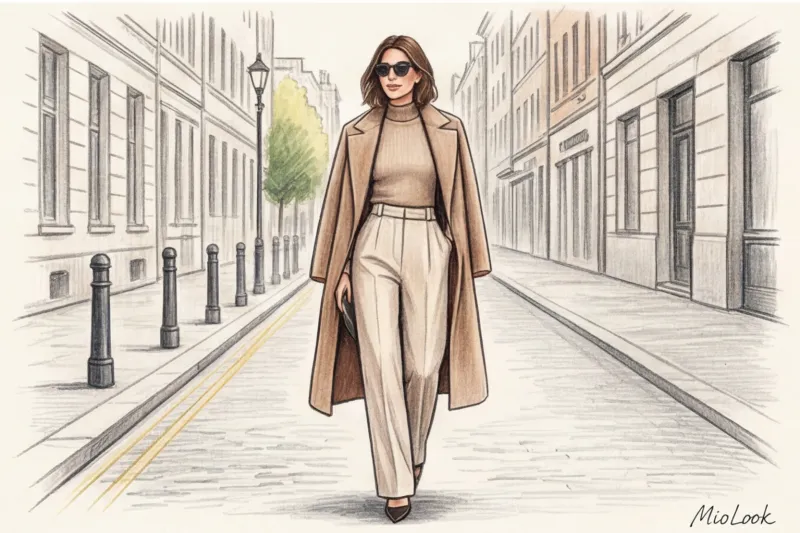
The greatest stylistic tragedy of our time is the obsessive pursuit of other people's ideals. We save hundreds of photos of Parisian influencers or Scandinavian minimalists, trying to fit their lifestyles into our own reality. It's time to stop. Listen to your appearance, your natural curves, and your physical comfort. If the proverbial beige trench coat objectively doesn't suit you (for example, it blends in with your skin tone and makes your face look "tired"), discard it without regret. If your soul yearns for a deep wine or emerald shade instead of classic graphite, make them your personal base.
"Last month, I worked with an IT director who had been forcing herself to wear stiff pantsuits for three years, believing them to be the only true corporate staple. We replaced them with structured, tightly knit cardigans and high-quality, straight, unworn denim. Her authority remained intact, while her energy level skyrocketed. Her clothes no longer conflicted with her personality."
As an image consultant, I assure you: true style begins where imposed must-have lists end. Personal style is not a constraint, but a powerful tool for personal freedom.
But any system of freedom, even the most well-thought-out one, requires proper management. To prevent your updated closet from turning back into a warehouse of forgotten items in a couple of months, you need to maintain order. I strongly recommend digitizing your things using the "smart wardrobe" feature in the MioLook app This is the final and most important step towards conscious consumption.
Virtual planning eliminates morning stress once and for all. You simply open your smartphone, create a capsule wardrobe for the week ahead, taking into account the weather forecast, and visually assess how potential new items fit into your curated list before even stepping into the fitting room. The app helps you visually track which items you wear regularly and which ones are just hanging around, preventing you from making the same mistakes again and saving you hundreds of euros in the future.
Your clothes should work for you, not you for maintaining your closet. Allow yourself the luxury of being yourself, invest in uncompromising quality, entrust your routine to modern algorithms, and enjoy the confidence that comes with every outing.
Guide Chapters
Mistakes when creating a basic wardrobe: how to avoid them
Are you stocking up on white shirts and trench coats but still have nothing to wear? A stylist breaks down the 7 biggest wardrobe mistakes and shares the secrets to creating the perfect basics.
Basic Wardrobe for Petite Women: Style Secrets
Forget uncomfortable heels and clichéd rules. Learn how to use the right clothing proportions to visually elongate your silhouette and make you look taller.
Everyday Basic Jewelry: The Secret to a Stylish Look
Cheap jewelry can ruin even the most expensive outfit. We'll explore how to choose the right jewelry and accessories for impeccable style.
Ideal basic women's trousers, jeans and skirts
Why are skinny black pants the worst wardrobe staple? We explore a stylist's engineering approach to choosing the perfect trousers, jeans, and skirts.
Basic T-shirts and shirts for women: how to choose
Crisp white isn't flattering on everyone. We're talking to an image consultant about how to choose the perfect basic tops that will accentuate your beauty.
Smart Shopping: How to Build a Basic Wardrobe on a Budget
Cheap items often cost more due to poor quality. We'll share smart shopping tips to help you build a stylish essential without breaking the bank.
A basic wardrobe for a stay-at-home mom: stylish and comfortable
Maternity leave isn't a reason to sacrifice style in favor of baggy clothes. Learn how to create a comfortable and beautiful capsule wardrobe for a new mother.
Basic Outerwear: A Stylist's Guide
For six months, everyone sees only your "facade." We'll explain why quality outerwear is the key stylistic glue that cements your look.
Basic Women's Spring Wardrobe: List of Items
A spring wardrobe isn't just about swapping a down jacket for a trench coat; it's about a smart layering system. Learn how to dress stylishly and comfortably in the transitional seasons.
Basic Office Wardrobe: 5 Pieces for Any Dress Code
Create the perfect office capsule wardrobe with just 5 pieces. Discover how an architectural approach to style will help you look stylish no matter the dress code.
Basic Wardrobe Colors: How to Choose Your Palette
Black and white aren't always the best base for your looks. Learn how to choose the right neutral shades to refresh your complexion.
A Basic Women's Bag: How to Choose the Perfect Model
On average, women carry only 2 of their 14 bags. Learn how to choose a functional model that will save you from morning chores and unnecessary expenses.
Basic Women's Shoes: 5 Pairs for All Occasions
Forget about dozens of uncomfortable shoes collecting dust in your closet. We're breaking down 5 versatile pairs of shoes that will easily create any stylish look.
Basic Women's Fall Wardrobe: Stylish and Warm
Forget impractical trench coats from Pinterest. Let's learn how to put together a warm and stylish fall capsule wardrobe based on the right fabrics and layering.
Basic Winter Wardrobe for Women: Warm and Elegant
Winter is a daily stress test for your style. Learn the secrets of creating an elegant winter wardrobe without the "cabbage" look from a personal stylist.
A Basic Summer Wardrobe for Women: What You Need in the Heat
Putting together a summer essential is more challenging than it seems. Find out which pieces will truly beat the heat and help you create a stylish urban look without the extra effort.
Basic Wardrobe Checklist: Closet Audit Before Shopping
How can you transform a closet full of mismatched items into a functional capsule wardrobe? Learn how to conduct a proper wardrobe audit and find your "missing pieces."
A Basic Wardrobe for a 40-Year-Old Woman: Style Secrets
How to dress after 40 to look classy and fresh? We'll explore common mistakes and build the perfect capsule wardrobe with a professional stylist.
Basic wardrobe for plus size women: how to put together
A quality plus-size wardrobe isn't the art of concealment, but rather the architecture of style. Learn how to stop wearing baggy clothes and create a beautiful, luxurious silhouette.
A Basic Wardrobe for a 30-Year-Old Woman: Comfort and Status
Tired of a full closet and the constant problem of "nothing to wear"? Learn how to build a stylish and stylish wardrobe that will save you time and money.