I still remember the visual dissonance. A woman came to me for a consultation wearing an immaculate cashmere coat that looked like it cost at least €2,000. It had a superb cut, expensive fabric, and a perfect fit. But the aristocratic look was mercilessly shattered by a tiny detail: heavily tarnished hoop earrings from a mass-market store, their oxidized metal revealing their true cost of €5. That's when we started working on her jewelry box.
We talked in more detail about the foundation of style and the proper distribution of the budget in our The complete guide to the perfect basic wardrobe for a woman But today we'll discuss "hardware." Basic everyday jewelry and quality accessories are those finishing touches that bring disparate pieces together into a cohesive, luxurious look. And skimping on them is the most common style mistake.
Jewelry Wardrobe: Why Everyday Basics Are Your Ultimate Investment
Imagine a luxurious, minimalist interior with expensive parquet flooring and designer furniture, but then cheap plastic door handles are installed. The impression is instantly ruined. The same rules apply to your wardrobe. High-quality accessories are the building blocks of your style. They can visually elevate even the simplest outfit of a white T-shirt and straight jeans.
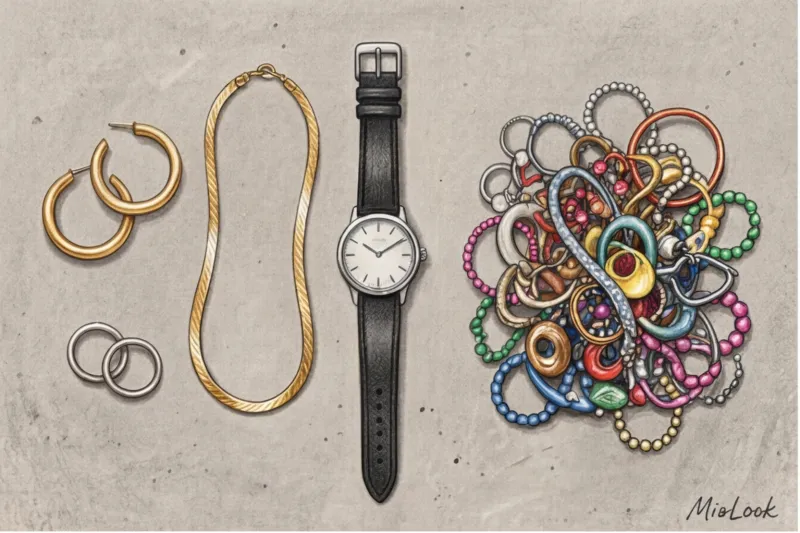
This is where the harsh mathematics of wardrobe and cost-per-wear (cost per wear) come into play. According to global analytics agency WGSN (2024), modern consumers wear only 20% of the contents of their jewelry box 80% of the time. This means that everyday essentials are being mercilessly exploited.
Let's do the math. Basic 14-karat gold hoops costing €500 and worn 300 days a year will only cost you €1.66 per outing. But trendy jewelry costing €30, which will oxidize or lose its rhinestones after two parties, is €15 per outing. Skimping on a metal that touches your skin almost year-round is neither stylish nor financially viable.
Anatomy of a Basic Jewelry Capsule: 5 Key Elements
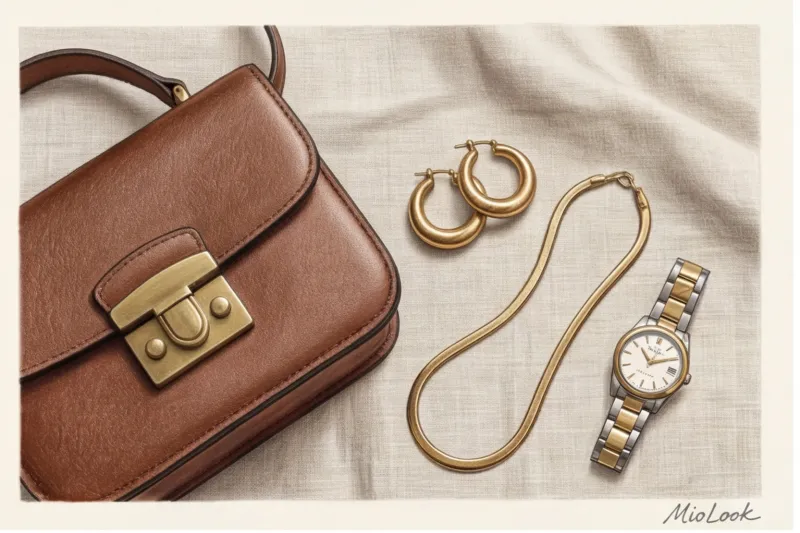
A basic jewelry wardrobe is built on the capsule principle: a closed ecosystem where every element is 100% compatible. You don't have to worry every morning about whether this ring matches that pendant. They're made for each other.
Earrings: From micro-studs to tangible shapes
It's time to dispel the "invisible thread myth." Over 12 years of practice, I've noticed that many women sincerely believe that basic jewelry should be practically invisible. Tiny studs or microscopic cubic zirconia on a string. But in reality, such pieces don't enhance your status—they're simply invisible.
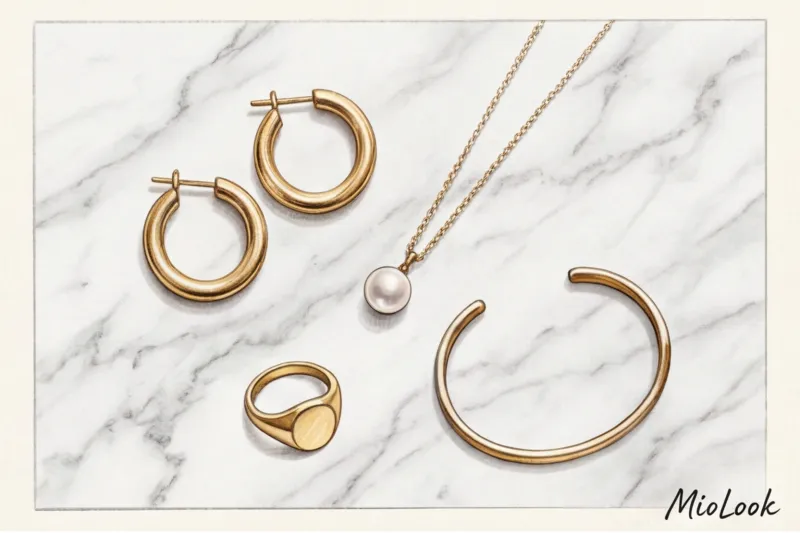
Your jewelry base should have architectural weight. Ideal choices include medium-sized, smooth hoops (rings) with a diameter of 15–25 mm in a tube-like shape, simple teardrop earrings, or graphic knots. They act as a kind of reflector, highlighting the face. Be sure to check the quality of the clasp: for everyday wear, nothing is more reliable than an English clasp or a congo clasp.
Access to MioLook for €0.99 — one-time payment
A smart AI stylist will select the perfect everyday look and help you incorporate basic accessories into your outfits.
Get access — €0.99 onceNeck Jewelry: Chains, Pendants, and Layering
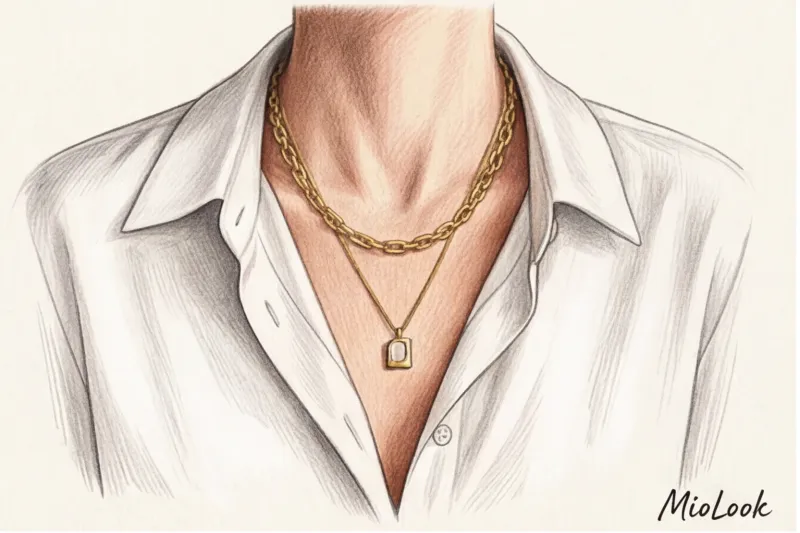
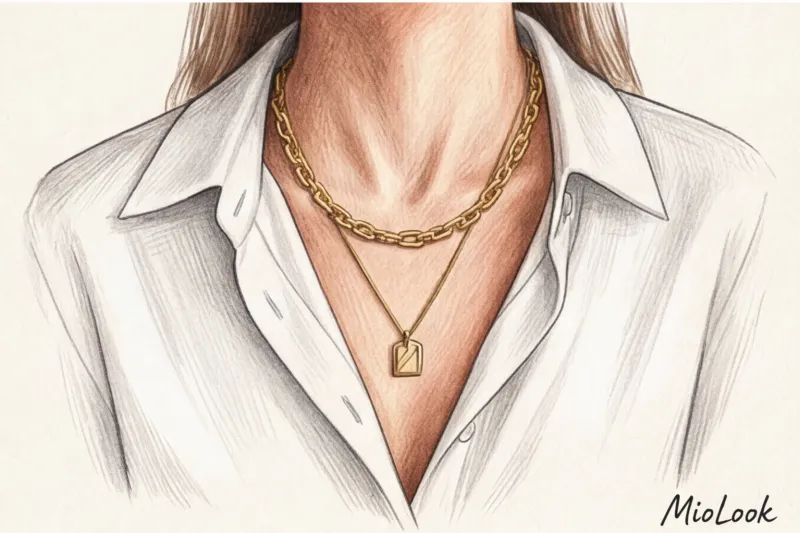
The neck and décolleté require a delicate frame. When choosing a base chain, the weave is key. I recommend curb, cable, or dense snake. They look more expensive, reflect light beautifully, and—critically for a base chain—they don't fold over while you sleep.
Did you know that the length of your necklace should match your typical neckline? A basic standard is 45 cm, the ideal length, falling just below your collarbone. If you're adding a pendant, avoid excessive symbolism (hearts, zodiac signs with rhinestones). Opt for smooth geometric shapes or irregular baroque pearls.
Rings and bracelets: the architecture of your hands
Your hands are always on display: whether you're holding a cup of coffee, typing on a keyboard, or gesturing in a meeting. Instead of a scattering of thin, flexible rings, choose a single, smooth, statement signet ring. This classic, masculine design looks incredibly elegant on a woman's hand.
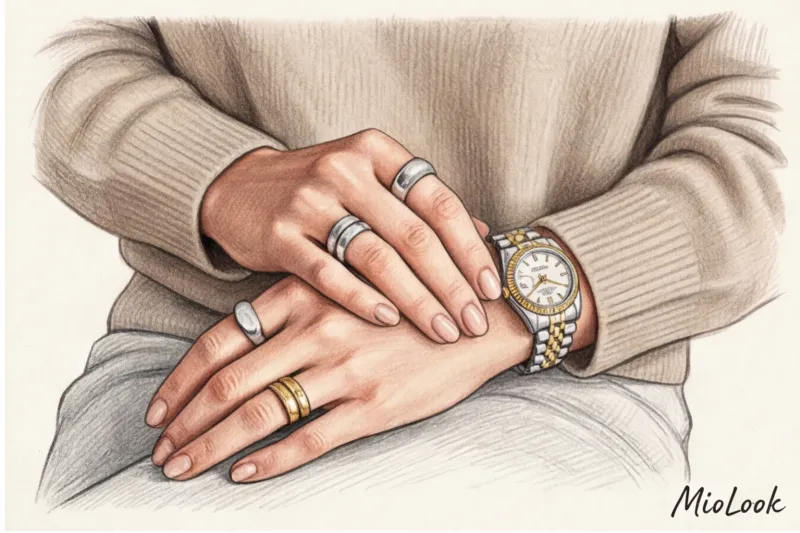
When it comes to bracelets, soft chains often break under everyday wear. Opt for a stiff, smooth cuff or tennis bracelet for smart-casual looks. The key to balance is leaving some breathing room. Don't overload your wrists; jewelry should breathe.
Gold, silver, or a mix: busting the biggest jewelry myths
"You can't wear gold and silver together!" is an outdated rule that's long overdue. Modern styling encourages mixing metals. To avoid this looking random, use a unifying element—for example, a dual-alloy ring—that will formalize both textures in a single look.
Now about the material. When I help clients with shopping, I always carefully examine the alloy's composition. If you're buying gold, 14k gold (585 fineness) is a much better base than the more prestigious 18k gold (750 fineness). Why? 14k gold has more impurities (alloys), which makes the alloy hard and resistant to scratches from keys or doorknobs.
If you choose gold plated, look for the word on the tag Vermeil (vermeil). According to the US Federal Trade Commission (FTC) standards, vermeil is a layer of gold at least 2.5 microns thick over sterling silver. Regular gold plated jewelry is often only 0.5 microns thick and wears off within a month of wear.
"High-quality vermeil is a great investment, but it has one serious limitation: chlorine. If you don't remove your jewelry in the pool, the chemicals will destroy the silver base beneath the gold layer. For 24/7 wear, you'll have to save up for solid metal."
Basic accessories: belts, bags, and glasses as the foundation of style
The base isn't just metal. It's leather and acetate, too. A 3-4 cm wide belt made of smooth leather with a minimalist buckle without flashy logos is a must-have. For €100-€150, you can find magnificent handcrafted belts that will last for decades.
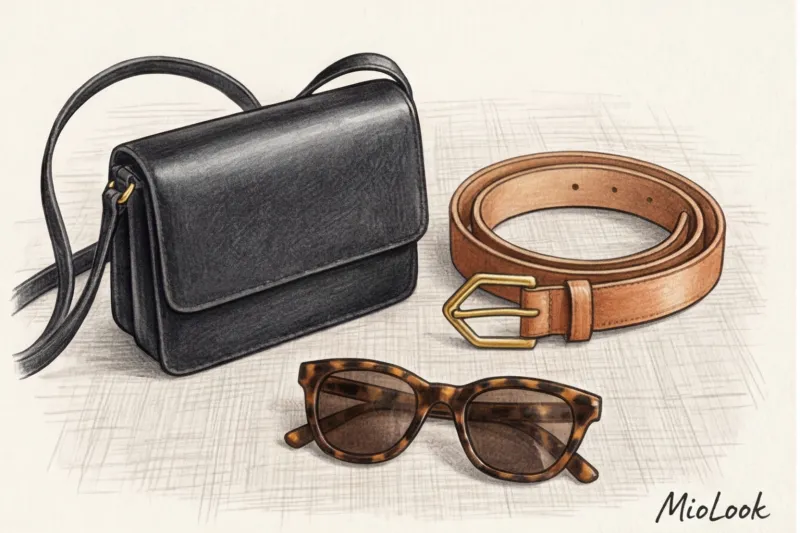
When choosing an everyday bag, opt for a structured bag with a rigid, architectural shape. Soft hobo bags and tote bags are too forgiving and can create a relaxed, almost sloppy look. A bag with a crisp, geometric design, on the other hand, will pull together even a voluminous tracksuit.
Sunglasses are another status symbol. Tortoiseshell frames and thick black acetate never go out of style. Wayfarer and soft cat-eye shapes flatter the vast majority of face types.
Your perfect look starts here
Join thousands of users who look flawless every day. Digitize your accessories with MioLook.
Get access — €0.99 onceWatchmaking: The Place of Classic Watches in a Modern Wardrobe Essential
I'll be honest: as a stylist, I don't like smartwatches. A sporty silicone strap from a fitness tracker or Apple Watch peeking out from under the cuff of a silk blouse or cashmere jacket is a style crime. The utilitarian nature of gadgets kills elegance.
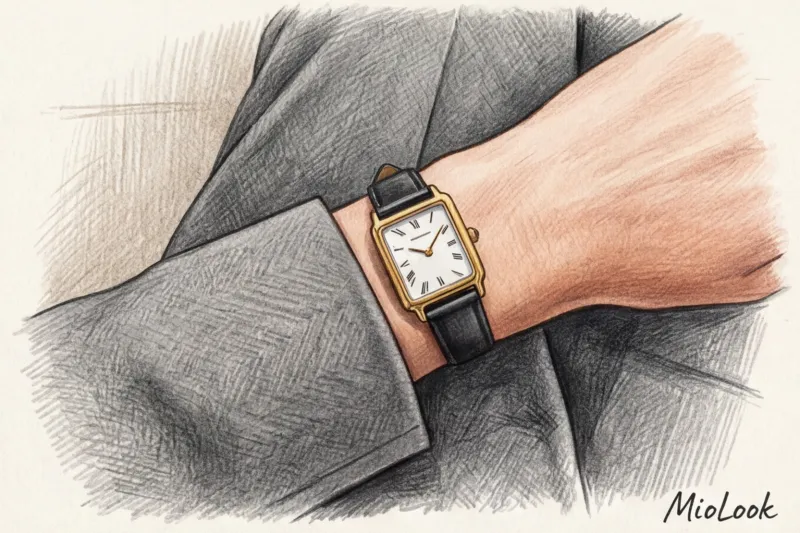
A classic analog watch isn't just a timepiece (your smartphone has that), it's a statement of your taste. A basic, everyday model offers a steel bracelet or a high-quality leather strap, Roman numerals or a simple, minimalist dial. Bicolor models (steel and gold) are the secret ingredient that will tie your entire jewelry collection together.
A stylist's checklist: how to audit your accessories
I begin my work with every new client's wardrobe by cleaning out their jewelry boxes. Try this audit yourself today:
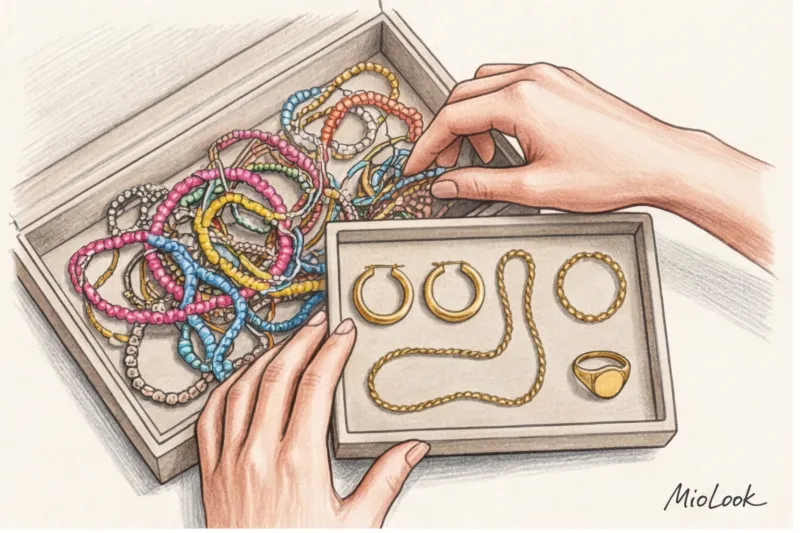
- Get rid of visual noise. Ruthlessly discard any jewelry with worn coating, fallen rhinestones, stretched links, or a greenish tint. You won't wear it again.
- Test for "basicness". Pick up some earrings or a chain and ask yourself: could I wear this to a meeting with a strict dress code in the morning and then to a cocktail party in the evening, simply swapping the jacket for a top? If so, it's the perfect base.
- Create a shopping plan. Don't buy everything at once. Start with one perfect pair of gold or silver earrings. Once you get used to their weight and quality, invest in a chain.
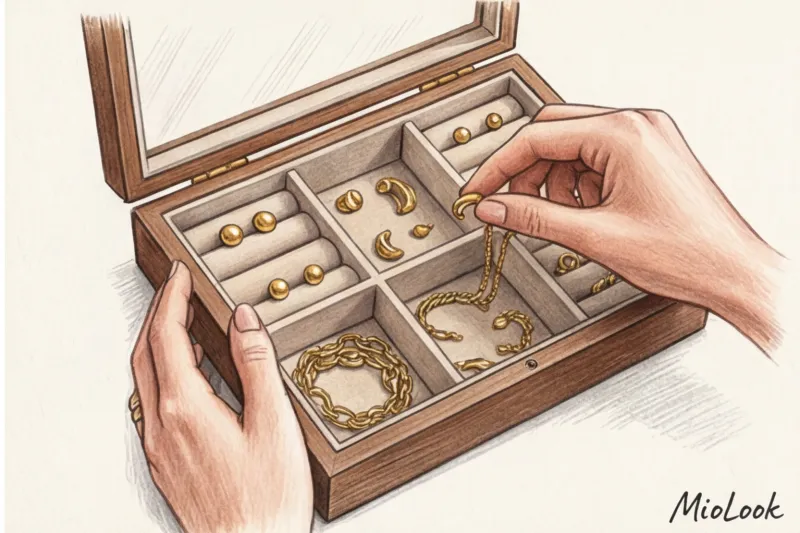
To always know what elements you're missing, I highly recommend digitizing your collection. Upload photos of your bags, belts, and jewelry to MioLook — when all your accessories are right in front of you on your phone screen, you start to utilize their full potential, creating unexpected outfits.
Finishing Touches: How Basics Bring Your Entire Wardrobe Together
Let's remember the 80/20 wardrobe rule: 80% of your items should be neutral basics, and only 20% should be complex trends. Essential everyday jewelry allows you to wear extravagant pieces while grounding them appropriately. An avant-garde sequin jacket can look bold on its own, but when paired with simple, sleek hoops and a minimalist watch, it becomes a thoughtful fashion statement.
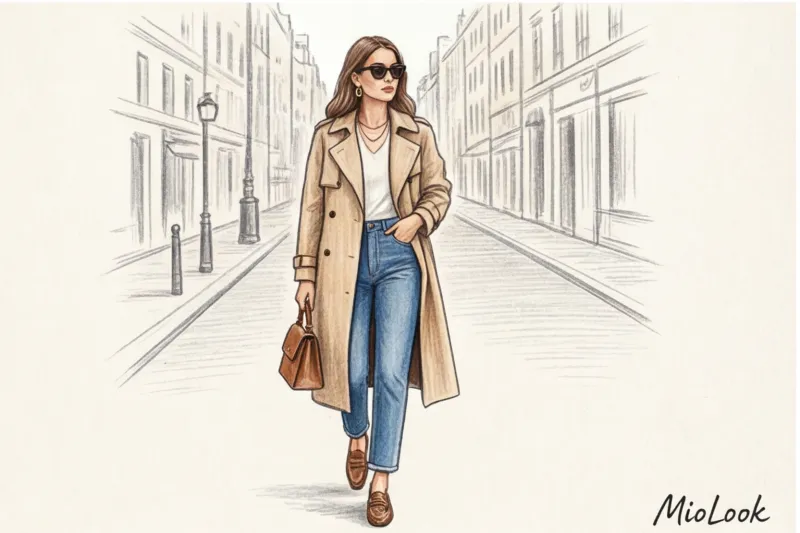
Remember the most important thing: when it comes to accessories, quality always beats quantity. It's better to have a single pair of flawless earrings with a secure clasp and the right design than an overflowing jewelry box of disposable jewelry you're embarrassed to take out. Choose pieces that speak volumes about your taste before you even utter a word.