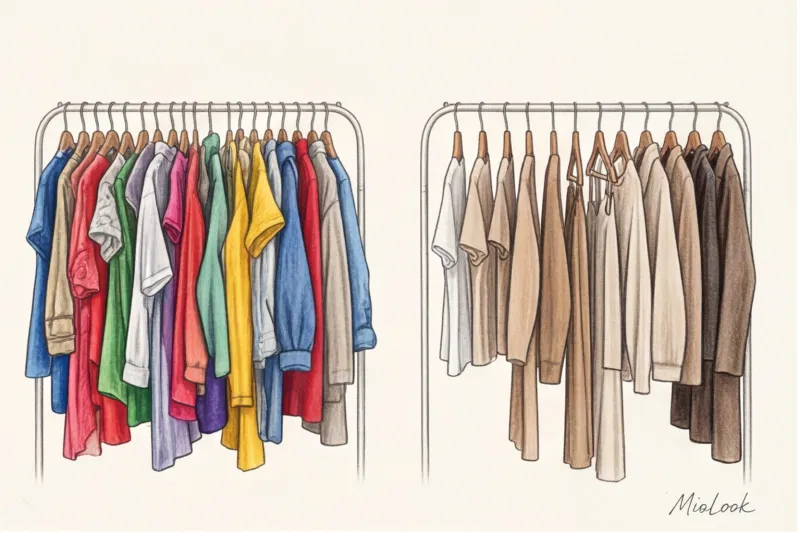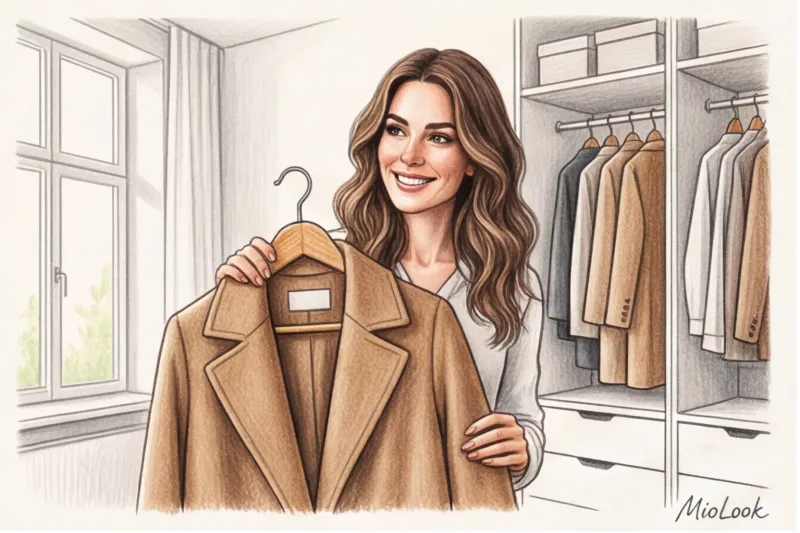
Imagine building a house, but instead of pouring a concrete foundation, you buy a crystal chandelier and velvet curtains. Sound absurd? Yet, that's exactly how most women approach their style. Over eight years of working as an image consultant and colorist, I've noticed a pattern: by the time my clients reach thirty, their closets are bursting with "beautiful curtains" (accent pieces for a single outing), but they're desperately short on "walls."
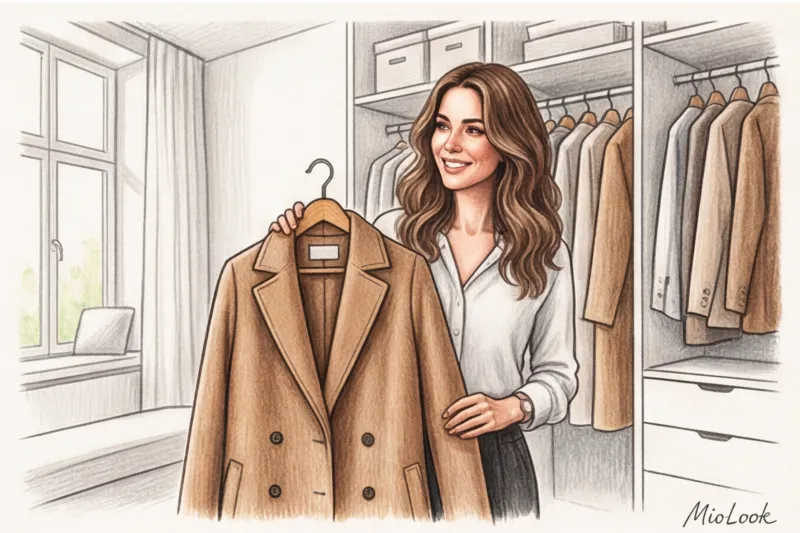
Recently, 32-year-old Anna contacted me with the classic case of overstocked closet syndrome. While sorting through her closet, we found 15 thin, flimsy T-shirts from the mass market that had stretched out after the first wash. We ruthlessly replaced them with three perfectly cut, thick cotton ones. The result? The morning panic disappeared, and her outfits looked three times more expensive. That architectural, precise look. Basic wardrobe for a 30-year-old woman becomes the very "stylistic cement" that holds the entire image together. We discussed the architecture of style in more detail in our The complete guide to the perfect basic wardrobe for a woman , and today we'll talk about the specifics of the age when quality finally triumphs over quantity.
Thirty years is a stylistic equator: why don't old patterns work anymore?
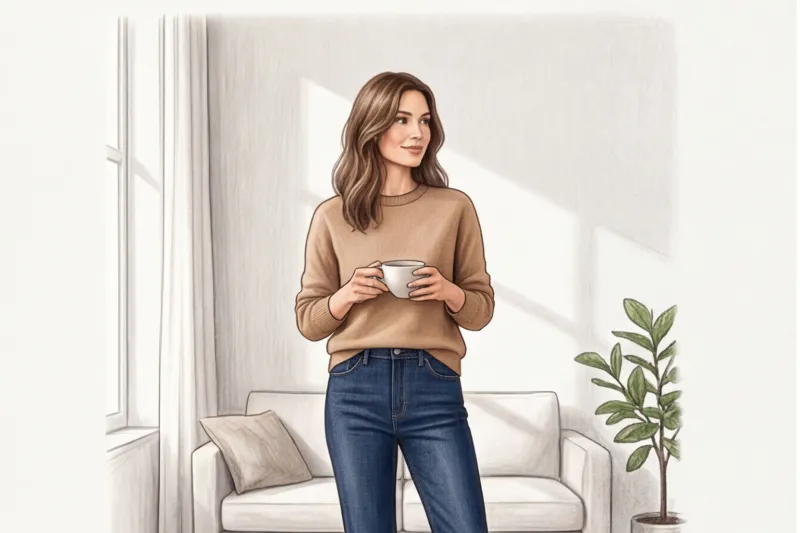
The transition to a new decade isn't just a number on your passport; it's a fundamental shift in your life's priorities. Trying to keep up with micro-trends at any cost gives way to a desire to feel confident, free, and to spend no more than 15 minutes getting ready.
You've probably noticed that the patterns of youth mass-market clothing don't fit as perfectly anymore. And it's not just a matter of body shape. Cheap brands sew using generic "flat" patterns, skimping on darts and anatomical cuts. At 20, we're willing to tolerate a tight waistband for the sake of a fashionable silhouette, but at 30, uncompromising comfort becomes the main indicator of status.
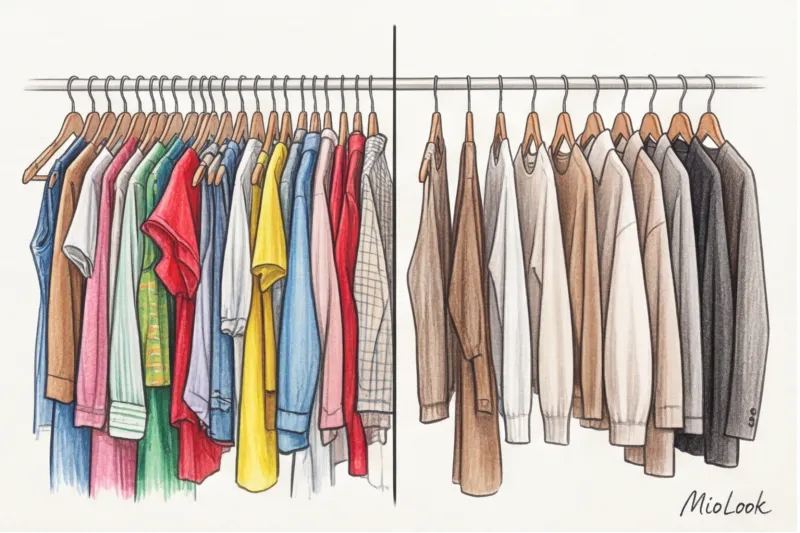
According to a large-scale study by London agency WGSN (2023), the average city dweller regularly wears only 20% of her closet's contents. The remaining 80% consists of impulse buys, pre-weight-loss items, and fantasy lifestyle clothing.
Our goal is to ensure that these working 20% consist of perfect basic pieces that go together seamlessly.
Access to MioLook for €0.99 — one-time payment
A smart AI stylist will create the perfect look based on your basic items.
Get access — €0.99 onceThe "One-Stop List" Myth: Why You Don't Need a White Shirt
Open any glossy magazine from ten years ago, and you'll see the same template: "10 things every Parisian woman must have." A classic crisp white shirt, a black pencil skirt, a beige trench coat. As a colorist, I can officially say: this list ruins the looks of 70% of women.
Let's look at the physics of color. A pure white shade (snowy, with a blue undertone) only suits women with a bright, high-contrast complexion (the so-called "Winter" type). If you have a soft, muted Slavic complexion—light brown hair, gray-blue, or hazel eyes—a stark white will look like a bad ring light. It will reflect cold light onto your skin, highlighting under-eye circles and nasolabial folds, and will visually add 5-7 years of fatigue to your appearance.
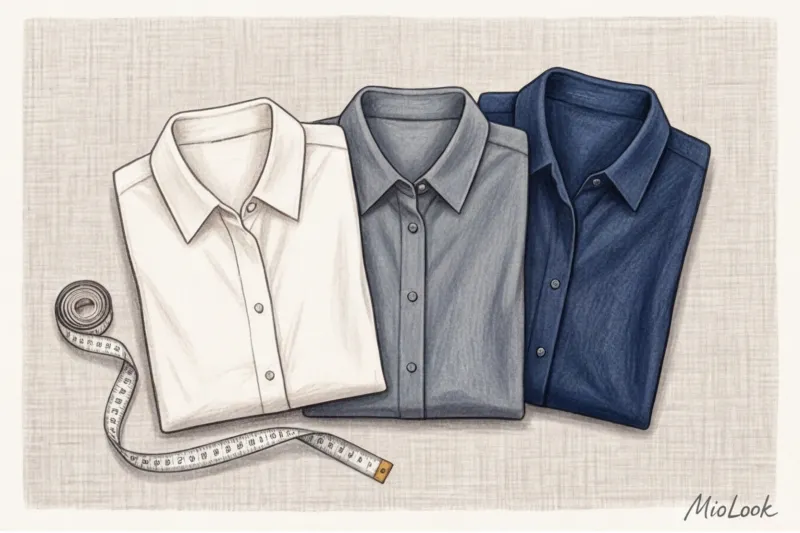
What can replace the "magazine base"?
- Instead of pure white, choose ecru, ivory or baked milk color They illuminate the face with a soft, warm light.
- Instead of a hard black face - complex graphite, deep blue (navy) or dark chocolate These shades look more refined and don't create harsh shadows on the neck and chin.
Status formula: fabric, cut and image architecture
My architectural background taught me the most important rule: decor won't save crooked walls. In clothing, "crooked walls" are like flimsy fabric. 80% of the visual "expensiveness" of an outfit depends on the density of the material and the absence of cheap shine.
Even if a garment is perfectly tailored, thin viscose jersey that shows through underwear and bunches up at the back will ruin the look. A stylish basic should feel substantial. A T-shirt shouldn't hang like a rag—look for cotton with a weight of at least 180 g/m², with sleeves that maintain a slight A-line shape.
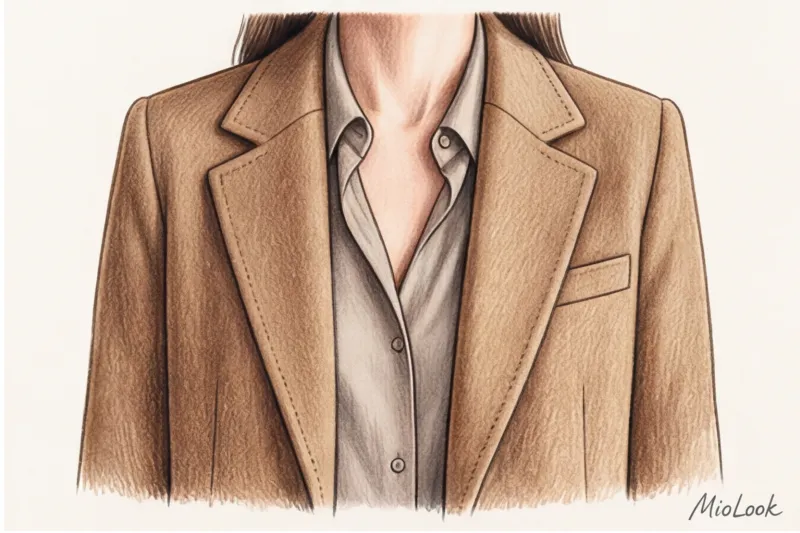
A perfect fit is more important than a big brand
It's a terrible misconception to think that comfort equals shapeless oversize clothing. Oversized garments hide not only flaws but also advantages, creating a bulky silhouette. The secret to the "old money" aesthetic lies not in logos, but in the tailoring.
Buy high-quality wool-blend trousers from a mid-upscale mass-market retailer (for example, Massimo Dutti or COS, priced at €100-€150) and have them tailored for €20. Adjust the length to perfectly match your favorite shoes and tailor the waist to your figure. The result will look like a custom-made pair costing €800.
Your perfect look starts here
Join thousands of users who look flawless every day with MioLook. Digitize your wardrobe in just a few clicks.
Get access — €0.99 onceThe Perfect Basic Wardrobe for a 30-Year-Old Woman: Building the Foundation
We refuse rigid lists. Correct Basic wardrobe for a 30-year-old woman It's built on categories. If you don't wear skirts, you don't need a basic skirt. Invest that money in a second pair of perfect trousers.
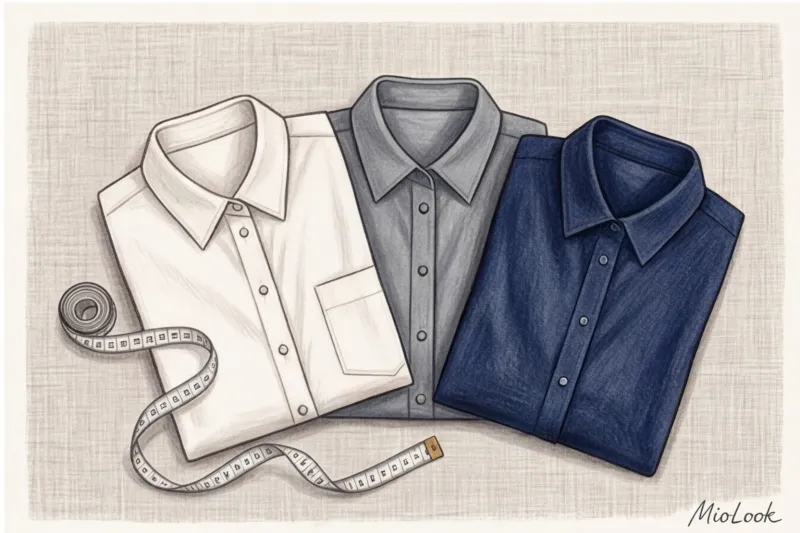
Here's a sample designer that covers 90% of everyday tasks for a smart-casual style:
- Bottom (Base): Palazzo pants, straight or slightly flared from the hip. Look for viscose with 5% elastane (to prevent the knees from stretching) or fine suiting wool. A second choice is straight-leg jeans without any fraying, rips, or rhinestones. A solid, deep indigo or graphite blue.
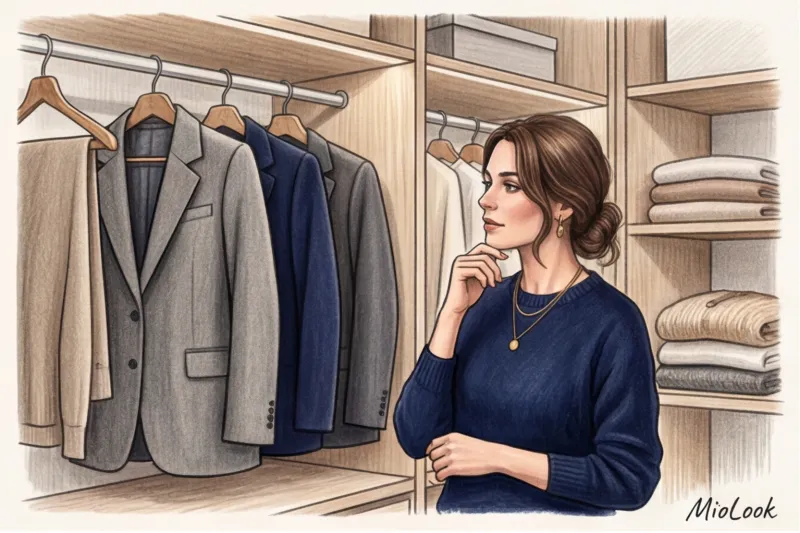
- Tops (Body): 2-3 T-shirts in thick, matte cotton. A cashmere or merino wool jumper with a V-neck or crew neck (a quality one usually starts at €120). And, of course, a structured jacket with defined shoulders.
- Outerwear: A midi (below the knee) wool blend robe coat or double-breasted structured coat in your perfect neutral shade.
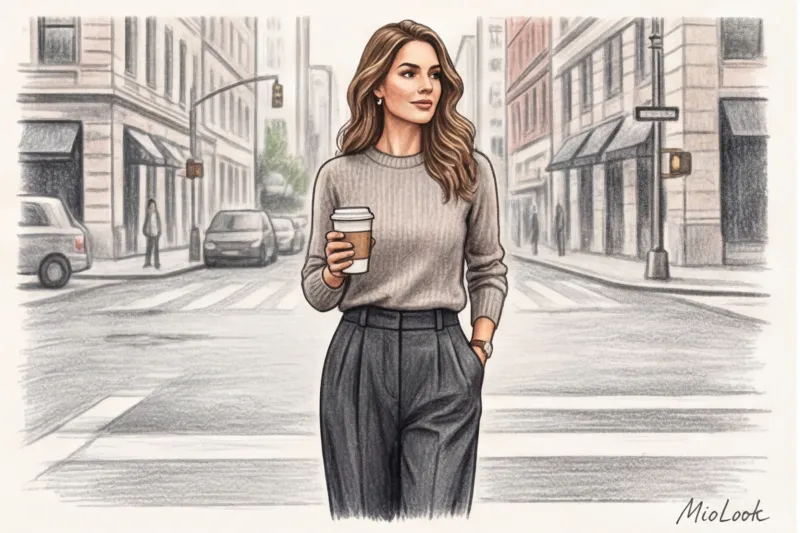
Fair Limit: This list won't work at all if you're a stay-at-home mom who spends 90% of her time at playgrounds, or if you have a strict corporate dress code with a "Business Best" protocol. Your basics should reflect your real life, not the one you dream of.
Shoes and bags: where status meets uncompromising comfort
While at 20, you can run around all day in stiff, thin-soled, faux-leather ballet flats, at 30, foot health dictates its own rules. Skimping on lasts is no longer an option—it will affect not only your gait but also your posture.
Let's apply the cost-per-wear rule. Leather loafers costing €200 and worn 150 times per season will cost you €1.33 per outing. Trendy polyurethane ankle boots costing €50 and that start to burn your feet within an hour will only be worn five times (€10 per outing). Expensive basics always save you money in the long run.
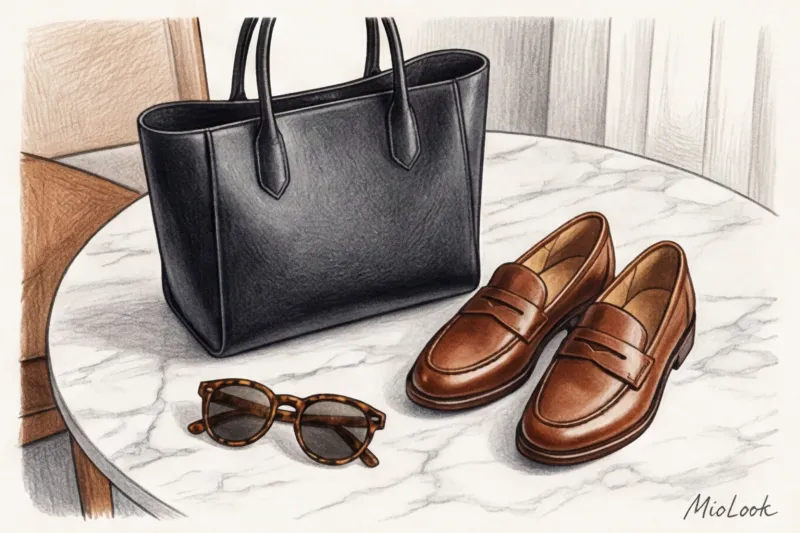
The minimum footwear includes: structured loafers with a thick sole, ankle boots with a stable block heel (up to 5-6 cm) and minimalist leather sneakers without logos.
When it comes to bags, pay attention to their architecture. Shapeless, soft hobo bags will simplify the look. Status is always conveyed through structure. A rigid tote bag for a laptop and documents, as well as a shapely crossbody with crisp geometry, instantly elevate the style of the entire outfit.
Checklist: How to Check Your Database for Relevance
How do you know if your current wardrobe is working or if it's time for a change? Take stock right now using three simple tests I give my clients:
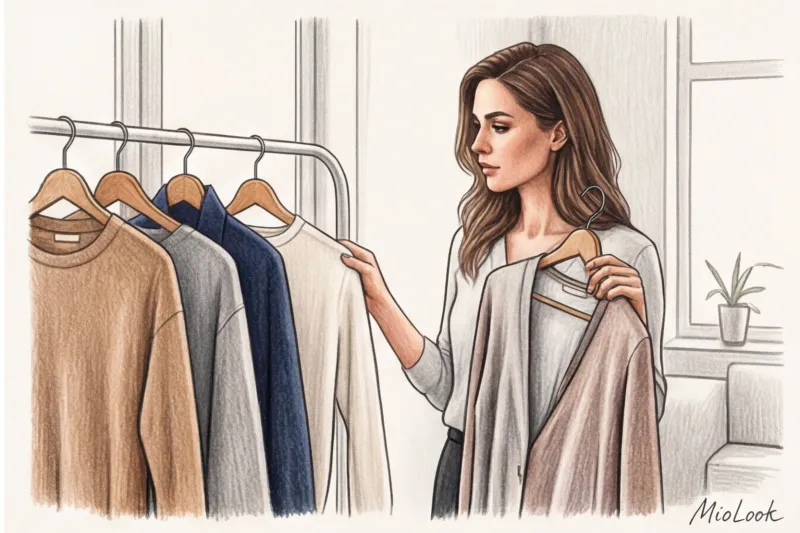
- The rule of three images: Take any basic item from your shelf. Can you, without thinking, create three completely different outfits with it using the items hanging nearby? If not, it's not a basic item; it's a stand-alone piece that requires additional purchases.
- Test of "independence": Does your basic turtleneck or T-shirt look stylish on its own, paired with simple jeans, without layers, scarves, or chunky necklaces? A quality basic is beautiful in its texture; it doesn't need the help of a plethora of accessories.
- Lifestyle compatibility: Divide your clothes into two piles: "for real life" and "for who I want to appear." If you work from home and have five formal three-piece suits hanging in your closet, you're sabotaging your comfort.
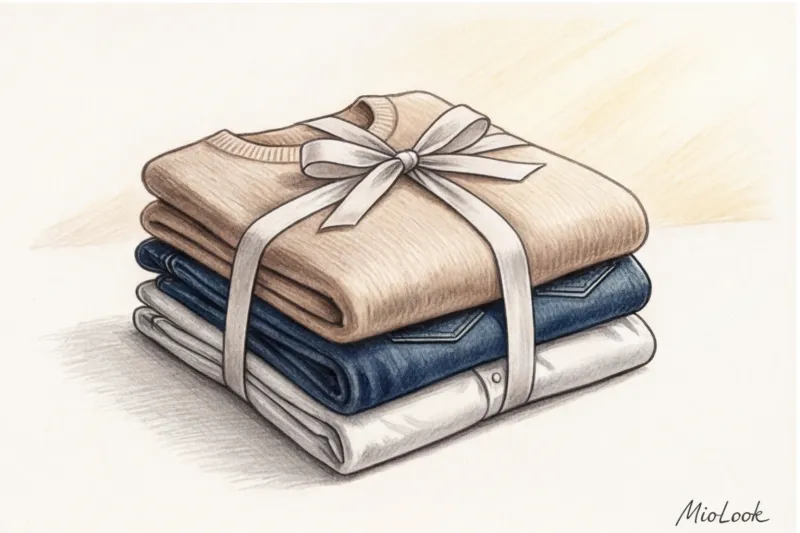
Conclusion: A wardrobe that works for you, not the other way around
A basic wardrobe isn't boring. It's freedom. Freedom from morning panic, from wondering "how do I look" at an important meeting, from an overstuffed suitcase on a business trip. It's your right to look like you just stepped out of a magazine any day of the week, with minimal effort.
Ready to get started?
Try the free plan—no commitments required. Upload your essentials to the app and let the algorithms create your perfect everyday looks.
Get access — €0.99 onceToday, digitizing and managing this foundation has become easier than ever. If you want to visualize how your basic items fit together, try Smart wardrobe in the MioLook app Artificial intelligence will help you find new combinations from the 20% of your favorite items you already own and suggest what exactly is missing from your stylistic foundation. Invest in quality, choose the right shades, and remember: the perfect wardrobe should feel like a second skin, only better.