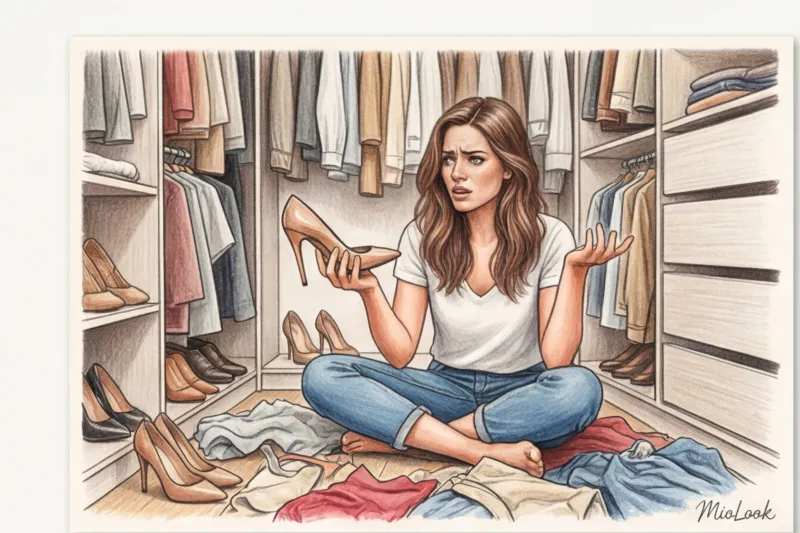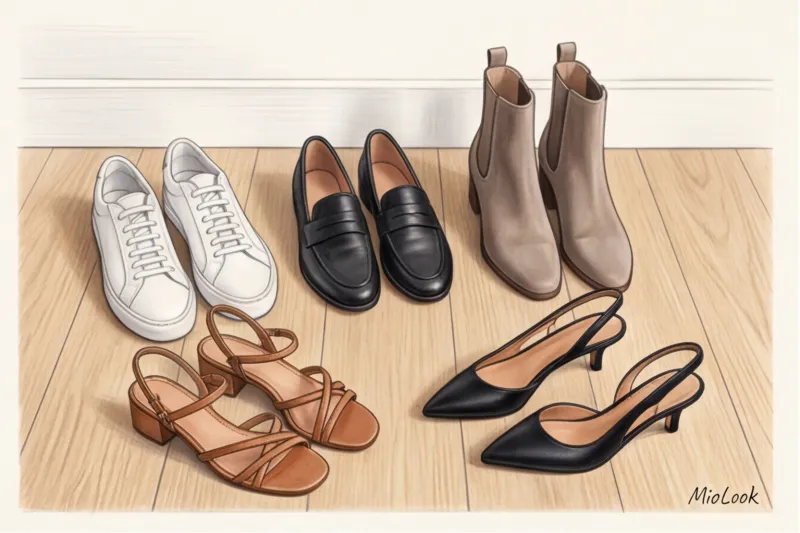
A couple of years ago, I was sorting through a client's wardrobe in Warsaw. Her shelves were crammed with 40 pairs of shoes, from dizzying rhinestone-studded stilettos to acid-colored sneakers. But when we started putting together everyday outfits, it turned out she was wearing exactly three pairs. The remaining 37 were either mercilessly rubbing her heels, didn't go with any pants, or were waiting for a "special occasion" that never arrived. It's a classic example of how a lack of system can ruin a budget.
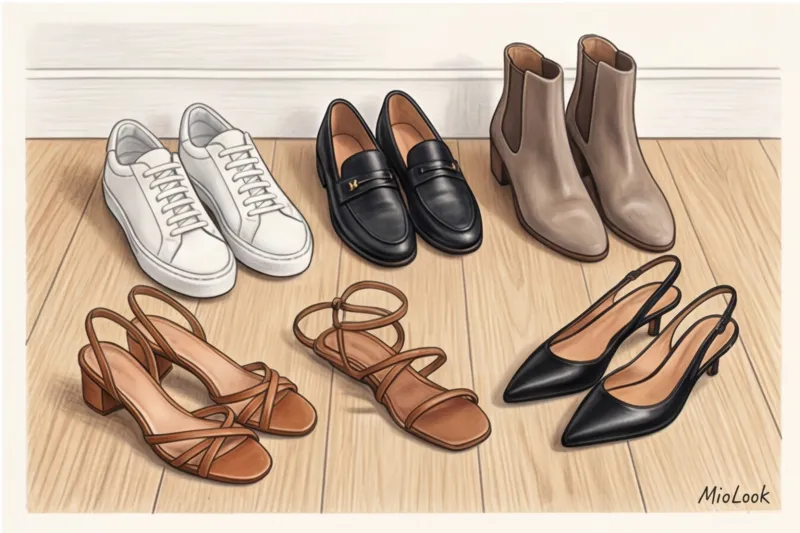
As a stylist with many years of experience, I categorically disagree with glossy "must-have" lists, where black pumps with a ten-centimeter heel always top the list. A properly chosen pair women's basic shoes It's not about suffering in the name of beauty. It's a mathematically precise design that's built on a rigorous Cost-Per-Wear calculation and attention to your posture. I wrote more about how to build this foundation in our The complete guide to the perfect basic wardrobe for a woman.
In this article, we'll look at just five pairs of shoes. No more, no less. This number is enough to cover 100% of the needs of a modern city woman in any climate and dress code.
The Anatomy of a Shoe Wardrobe: Why Are 5 Pairs of Basic Women's Shoes a Stylistic Foundation?
Have you ever noticed your shelves are overflowing, yet you have nothing to wear before leaving the house? The classic Pareto principle (80/20) applies here: we wear 20% of our shoes 80% of the time. The goal of a smart wardrobe is to ensure that those 20% are of perfect quality and go with everything.
I always teach my clients the Cost-Per-Wear (CPW) formula. Let's do the math. You buy trendy sandals with intricate lacing at a high-street store for €40. You wear them twice a summer to parties. Result: each outing costs you €20. Alternatively, you buy structured loafers made of excellent leather at COS for €150. You wear them to the office, on walks, at a café—about 100 times a season. Result: each outing costs only €1.50.
Cheap but unsuitable shoes will always cost you more than quality essentials. Essentials work for you, not you for them.
Moreover, the world has changed. According to a large-scale consumer habits study by WGSN (2024), there has been an irreversible shift toward hybrid and comfort footwear. The European approach to shopping today dictates a focus on the architecture of the last and the quality of the leather, rather than decorative elements such as chains, rhinestones, or logos.
Pair #1: Structured Loafers (Your Answer to Outdated Ballet Flats)
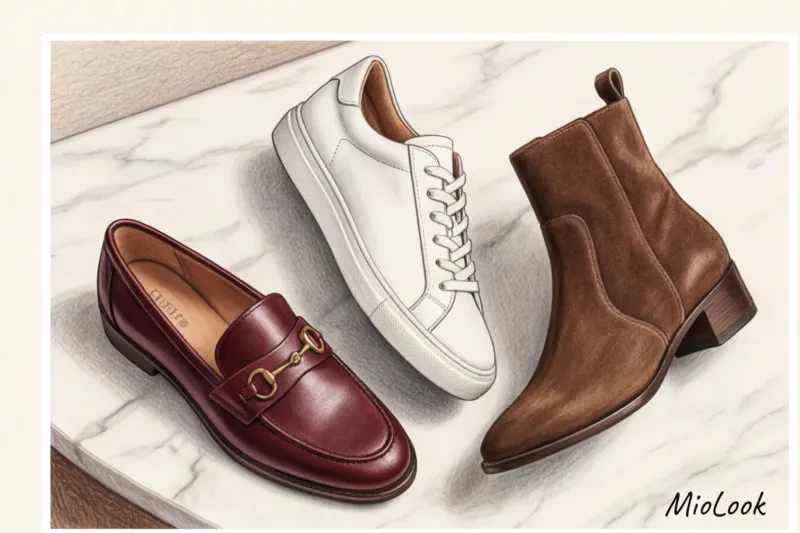
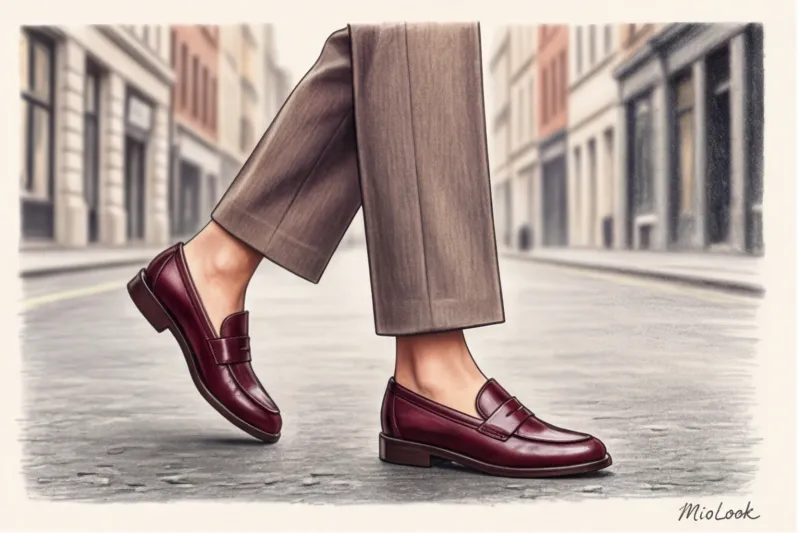
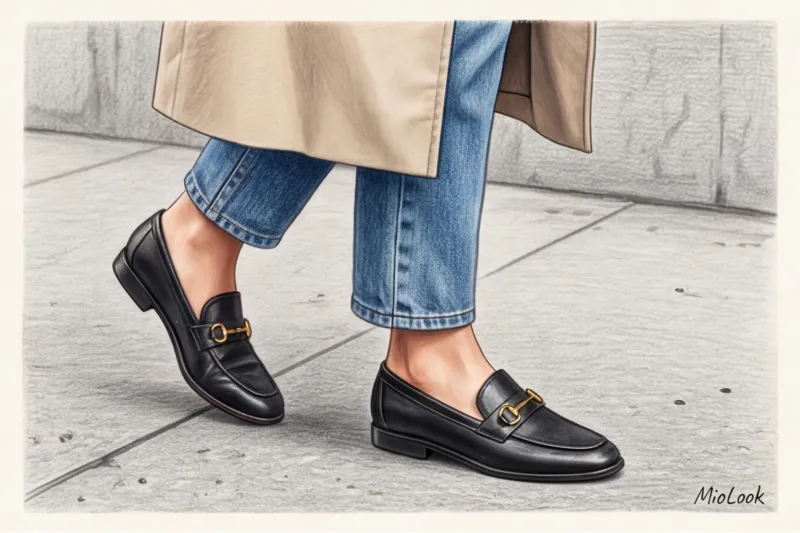
Many people still consider round, soft ballet flats (like the 2000s) an absolute staple. But let's be honest: soft, shapeless shoes with flat, thin soles make a look childish and "loose." If you need status classic style , structured, rigid loafers are your best friend.
The rugged shape of loafers visually "pushes" even the most casual outfit together. You can wear straight jeans, a simple white T-shirt, or a trench coat, and thanks to loafers, it will look like thoughtful smart-casual, not like something you're just going to the grocery store for.
What to look for when choosing:
- Sole: Avoid soles that are too thin (the "Czech shoe" effect)—they wear out quickly and don't absorb shock when walking. I also recommend avoiding exaggerated soles—this is a microtrend that's already fading. Choose the happy medium: a sole 1.5–2 cm thick with a small, stacked heel.
- Fittings: A strict rule: no logos or cheap, shiny metal. A matte buckle or classic leather strap (like a penny loafer) looks much more expensive.
- Where to look: In the mass-market segment, it's better to go for loafers at Massimo Dutti, & Other Stories, or COS (€100-€150 range). They use thick leather that holds its shape. Cheaper faux leather versions from H&M for €30 will lose their shape after two weeks of daily wear.
Your perfect look starts here
Join thousands of users who look flawless every day with MioLook. A smart AI stylist will help you find the perfect look.
Get access — €0.99 oncePair #2: Basic White Sneakers (Pure minimalism without compromise)
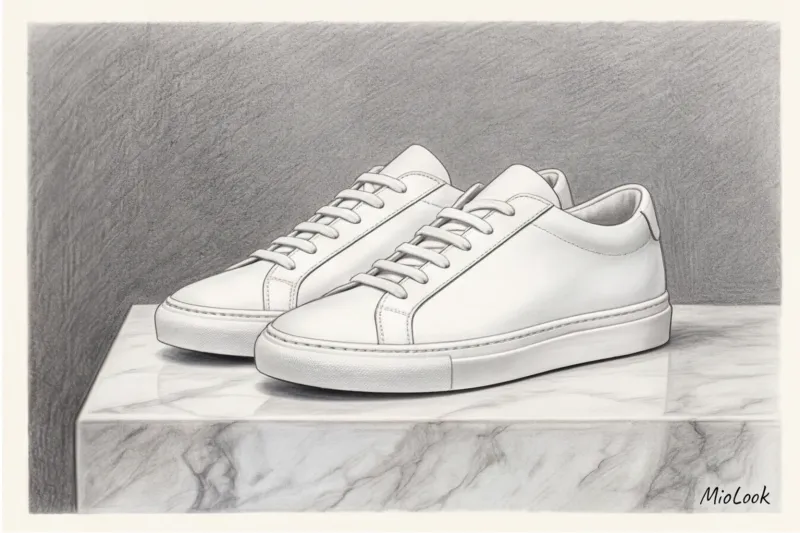
White sneakers have long ceased to be considered sports shoes. Today, they're a fully-fledged staple of any urban wardrobe, saving formal office suits from becoming too formal and feminine silk dresses from becoming too pretentious.
But herein lies the biggest mistake I see on the streets every day: women confuse basic street sneakers with running shoes. Chunky mesh sneakers (like popular running styles) look great in the gym, but they ruin the proportions of a basic wardrobe.
Criteria for your ideal match:
- Absolutely smooth matte skin.
- No colored inserts, perforations, or contrasting backs.
- Moderate sole without a massive platform.
An important nuance: Basic women's sports-style footwear should be made of genuine leather. Unlike sandals, sneakers cover the foot completely. Faux leather creates a greenhouse effect: feet sweat, shoes become misshapen, and odor develops. If your budget is limited, it's better to save money on summer flip-flops, but sneakers should be leather.
Stylist's secret: The biggest problem with white sneakers is the yellowing sole. Buy a regular melamine sponge at a hardware store (costs about €2). Lightly dampen it and wipe the edge of the sole—it'll be a sparkling white in 10 seconds, no chemicals required.
Pair #3: Ankle boots with a stable 5 cm heel
We're moving on to the cold season. And here we turn not only to fashion but also to medicine. According to orthopedic doctors, completely flat soles (like those on Ugg boots) are just as harmful to the spine as high heels. The optimal height for daily pelvic alignment and back health is between 2 and 4-5 centimeters.
That's why ankle boots with a stable block heel of about 5 cm are your smartest investment for the autumn-winter period.
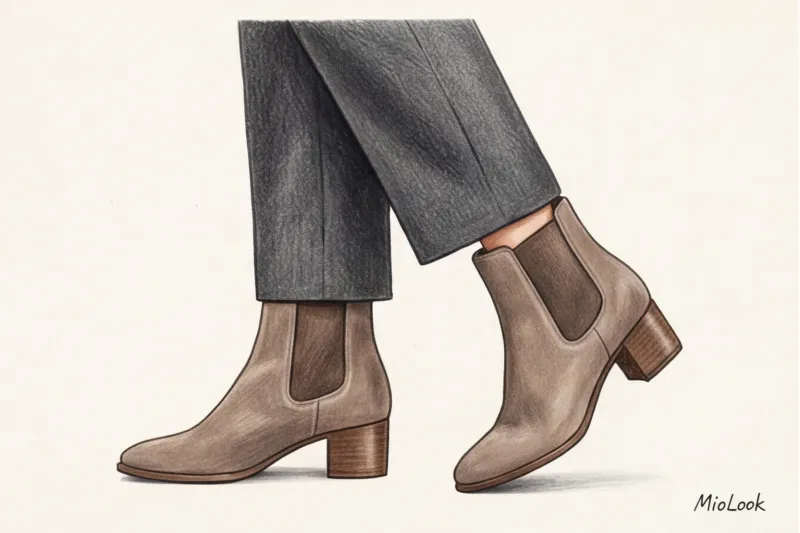
The shape of the toe is crucial. A pointed toe is too aggressive for a basic shoe, while a round one will overpower the look. Opt for a soft square or almond toe—these are shapes that will survive any fashion cataclysm.
A client once came to me with the question: "I look like a mushroom when I wear jeans with ankle boots." The problem lay in the shaft design. She'd bought wide-top ankle boots, and her straight-leg jeans were constantly catching on them, bunching up into an unsightly accordion at her ankle. Remember the golden rule: the shaft of basic ankle boots should fit snugly around the leg, allowing any style of pant (except skinny) to fall freely over the boots. In this regard, stocking-style ankle boots or zippered styles are much more effective than classic Chelsea boots with elastic bands.
Access to MioLook for €0.99 — one-time payment
Start creating your perfect looks with the help of artificial intelligence. Upload your items, and the app will create ready-made outfits.
Get access — €0.99 oncePair #4: Sleek sandals or leather mules
Basic women's summer shoes follow this rule: the fewer details, the more elegant the look. Save those plentiful thin straps and intricate knee-length gladiator lacing for the beach. In the city, such shoes look out of place and, more importantly, are harmful to your feet.
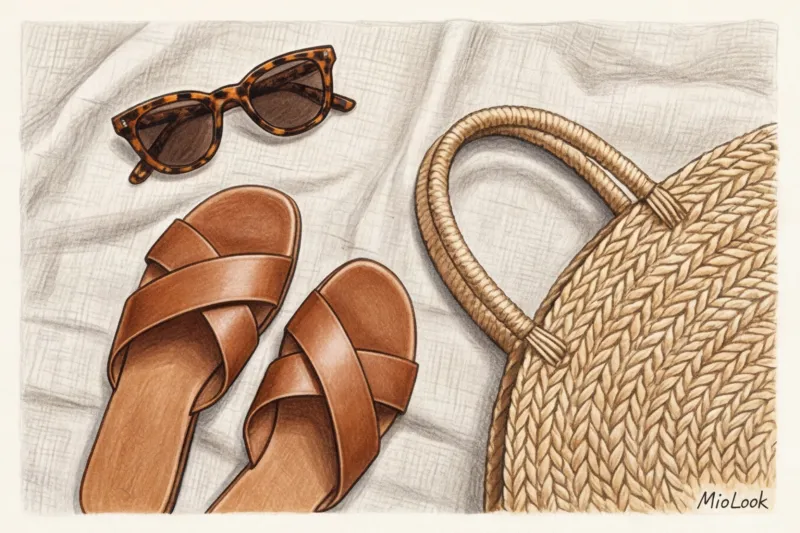
From an orthopedic perspective, shoes with thin straps often put pressure on the hallux valgus (the big toe bone), causing inflammation and fatigue. A proper summer shoe consists of one or two wide leather straps. They securely support the foot, don't dig into the skin when it swells in the heat, and visually look much more expensive.
Many people instinctively buy black sandals. This is a mistake. In the summer, when we wear light fabrics and show lots of skin, the solid black color looks like heavy weights on our feet. Choose nude, caramel, olive, or dark chocolate. If your office dress code is relaxed, closed leather mules are the perfect summer staple—the heel breathes, but the toes are covered, which is in line with business etiquette.
Pair #5: Micro-Heeled Slingbacks (Debunking the Black Pumps Myth)
It's time to tell the truth: classic black 10cm stilettos are a dead weight in 90% of wardrobes. We buy them "just in case," which happens once a year (a friend's wedding or a corporate event), we endure the pain for two hours, and then change into sneakers.
A modern, truly functional alternative to pumps are slingbacks (closed-toe, open-heeled shoes with a strap) with a kitten heel (2-4 cm) or even a flat sole.
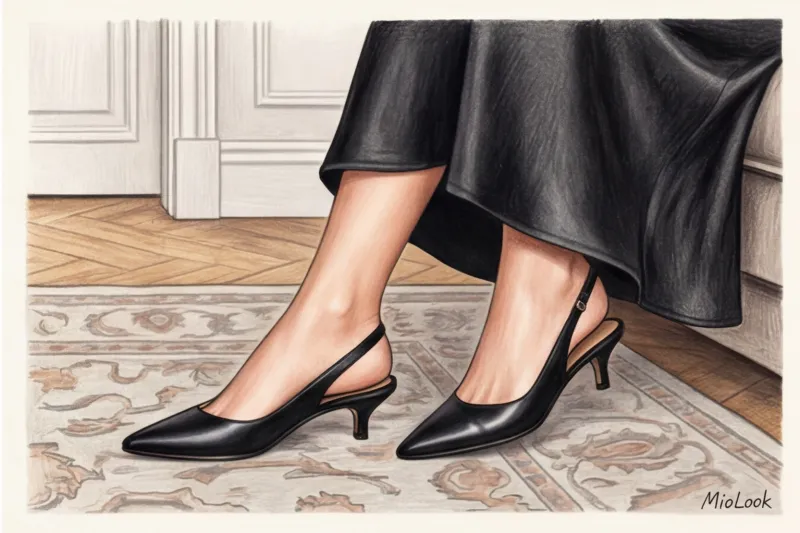
Slingbacks are a brilliant hybrid. From the front, they look like formal shoes, making them appropriate for a business meeting or in the office , and the open heel adds a light, French flair to the look. The kitten heel height provides just the right amount of elegance we look for in stilettos, but without the calf pain.
It's with this fifth pair that I allow clients to play with texture. While the first four pairs are as smooth and neutral as possible, the slingbacks can be suede, patent leather, or crocodile-embossed. This will create the necessary accent in a minimalist outfit.
Ready to get started?
Try the MioLook plan for free—no strings attached. Organize your closet and forget about the "nothing to wear" problem.
Get access — €0.99 onceStylist's Checklist: How to Test Shoes in the Fitting Room
Even the most beautiful shoes will end up in the trash if they're too heavy to walk in. Here's the checklist I use when shopping:
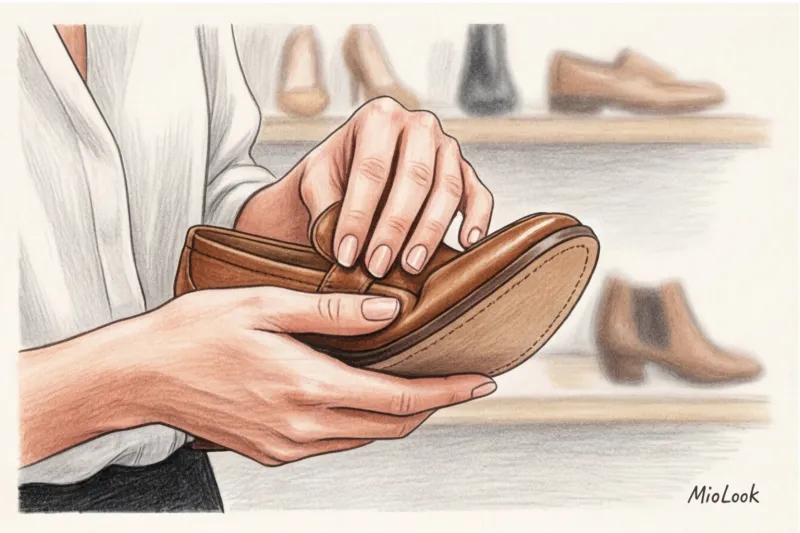
- Sole flexibility test: Take a shoe and try to bend it at the toe. If the sole is stiff and doesn't budge, put it back on the shelf. Your feet will be forced to fight against this last with every step, which will kill your feet in an hour.
- Back check: The heel counter should be stiff to support the heel, but the top edge (which sits next to the Achilles tendon) should be soft.
- Fitting time: Basic footwear should only be purchased after 4:00 PM. By evening, feet naturally swell and increase by half a size. Shoes bought at 10 AM will look like Spanish boots by evening.
- The one-finger rule: When trying on closed-toe shoes (sneakers, ankle boots, loafers), push your foot forward as far as possible. Your index finger should fit between the heel and the back of the shoe. This is the amount of room your foot needs to move when walking.
Care Guide: How to Make Mass-Market Look Luxury
Basic women's shoes can last for years, even if they weren't purchased at a luxury boutique. The secret lies not in the price, but in proper care.
First, follow the 24-hour rule: no pair of leather shoes should be worn two days in a row. Genuine leather absorbs moisture from your feet (up to 20 ml per day) and becomes deformed. It needs exactly 24 hours to dry at room temperature and regain its shape.
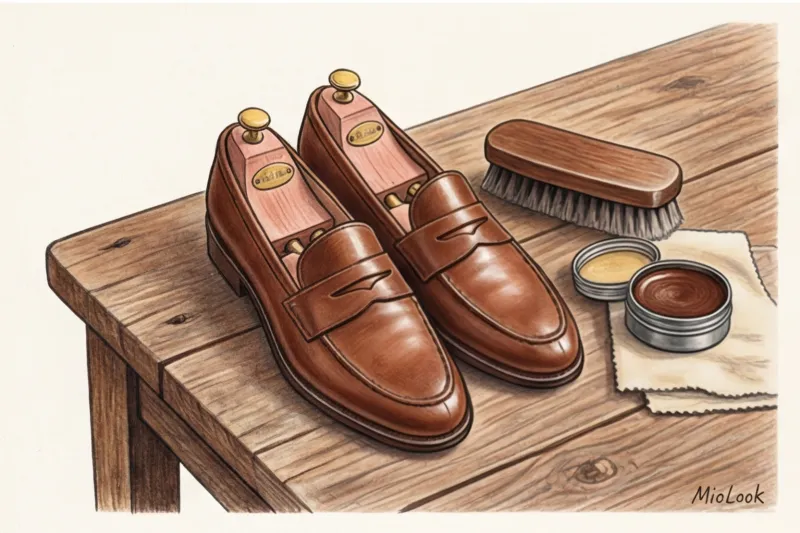
This is where the ultimate budget investment comes in: wooden shoe trees made of unvarnished cedar. They cost around €15-€20 on any marketplace. You insert them into your shoes immediately after taking them off. The cedar draws out moisture, neutralizes odors (cedar has natural antibacterial properties), and smooths out creases in the leather. Trust us, a €15 shoe tree will extend the life of your €150 loafers by several years.
And forget about those silicone sponges and polishes from the supermarket! They coat the leather with a film that causes it to dry out and crack. Your arsenal: a stiff horsehair brush, a good nourishing cream (with wax), and a water-repellent suede treatment. And any shoes with thin leather soles should be taken to a shoemaker to have rubber soles installed before you take them out on the pavement for the first time.
When putting together your shoe capsule collection, remember the most important thing: the right base is always about architecture, not decoration. A high-quality shape, a perfect fit, and a lack of unnecessary details make shoes timeless. By investing in these 5 pairs once, you'll eliminate the issue of choosing shoes in the morning forever and be able to redirect your energy to more important things.