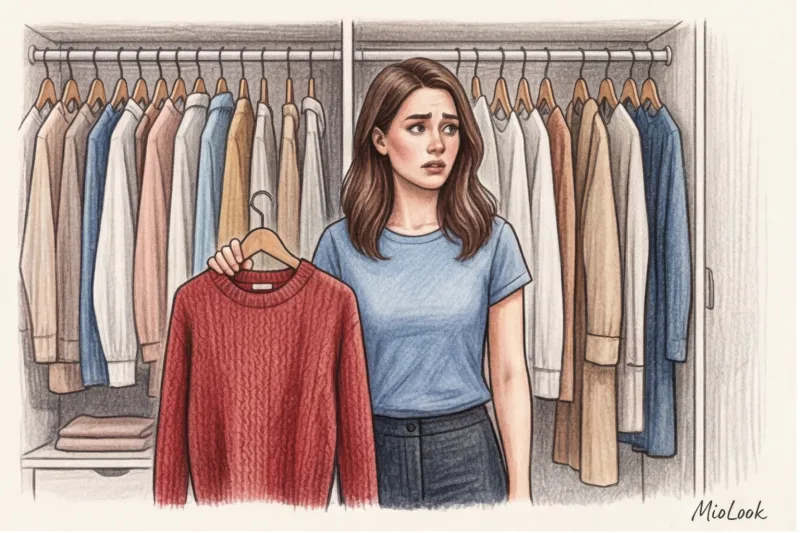
Over my 12 years as a stylist, I've seen hundreds of women's closets, but one incident stands out in my memory. My client invited me to a wardrobe review, complaining of the classic "absolutely nothing to wear." Opening the doors of her impressive closet, I discovered exactly 40 gorgeous silk blouses—from vintage Yves Saint Laurent to simple COS pieces. And not a single pair of perfectly fitting basic trousers. It was paralyzing: a closet full of luxurious pieces that couldn't be put together into an outfit.
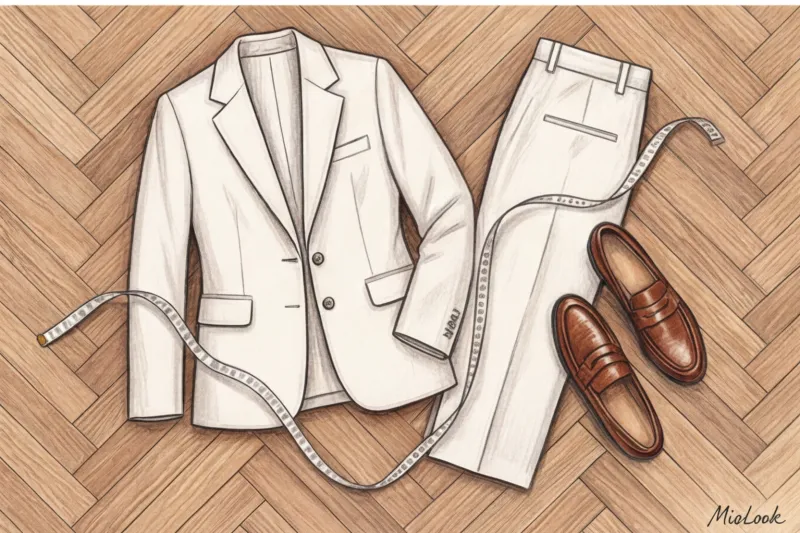
It was then that I was finally convinced: literate Basic wardrobe checklist This isn't a boring, formulaic shopping list ("white shirt, black trousers, beige trench coat"), but a complex, architectural diagnostic system. We should view a wardrobe audit not as mindless decluttering and throwing out the old, but as a search for "missing links"—the stylistic cement that will make those 80% of clothes that have been hanging in the closet for years work. We discussed the architecture of such a base in more detail in our The Complete Guide to the Perfect Basic Wardrobe for Women: The Essentials of Style.
Access to MioLook for €0.99 — one-time payment
A smart AI stylist will select the perfect look based on your real wardrobe.
Get access — €0.99 onceA Basic Wardrobe Checklist: Why Glossy Magazine Lists Don't Exist
For decades, glossy magazines have been selling us the myth of the "one-size-fits-all list of 10 things every woman should own." But let's be honest: that crisp, oversized white shirt that looks so incredible on a tall Scandinavian model can turn a petite, curvy woman into a rectangular cube. There's no such thing as a one-size-fits-all item, only a one-size-fits-all. principle their selection.
When Donna Karan introduced her revolutionary "7 Easy Pieces" collection in 1985, she changed the way we approach wardrobe design. She offered women a system: a bodysuit, a wrap skirt, wide-leg pants, a jacket, a cashmere sweater, a leather coat, and an evening top. In 1985, it was a breakthrough. But today, in the era of remote work and hybrid schedules, this concept demands strict personalization.
I prefer to apply the architectural principle of American architect Louis Sullivan—"form follows function"—to fashion. Think of basics like the smooth walls and high-quality oak parquet flooring in your apartment. And accent pieces like paintings, bright pillows, and decor. If you have crooked walls (ill-fitting basic jeans) and sagging floors (worn-out shoes), no gold-framed painting (or trendy sequin jacket) will save the interior.
Preparing for an Audit: Diagnostics, Not Blind Decluttering
A 2023 study by the analytical agency WGSN confirms a disappointing fact: on average, women only use 20% of their wardrobe regularly. The remaining 80% is a waste of impulse purchases, "slimming" items, and clothes that simply don't go with anything. The Pareto principle in style works mercilessly.
Here I'd like to take issue with Marie Kondo's popular method. Blindly following her advice to "keep only what sparks joy" is a stylistic mistake. Basic straight-leg black wool-blend trousers rarely inspire euphoria. But they are the workhorses of your wardrobe. Getting rid of them in a fit of decluttering will deprive your wardrobe of its foundation.
"Most often, an item isn't worn not because it's bad, but because it wasn't properly grounded. Before throwing it away, find the reason for its insulation."

The "reverse hanger" method and assessment of actual wear
Before embarking on a major wardrobe review, I recommend my clients keep a "look journal" or use the famous hanger method. At the beginning of the season, hang all the hangers in your closet with the hooks facing you (inverted). When you wear an item, wash it, and return it to the closet, hang the hangers correctly, away from you.
In a month, you'll clearly see your "blind spots." Those 20% of active items will be hanging correctly, and the rest will remain untouched. Important clarification: This method does NOT work for seasonal outerwear, evening capsule collections, or specific sports gear. We evaluate those items differently.
Your perfect look starts here
Join thousands of users who look flawless every day with the MioLook intelligent wardrobe management system.
Get access — €0.99 once4 Steps to a Deep Audit Before Creating a Basic Wardrobe Checklist
To create a working personal Basic wardrobe checklist , you'll have to endure a little visual stress. It's necessary.
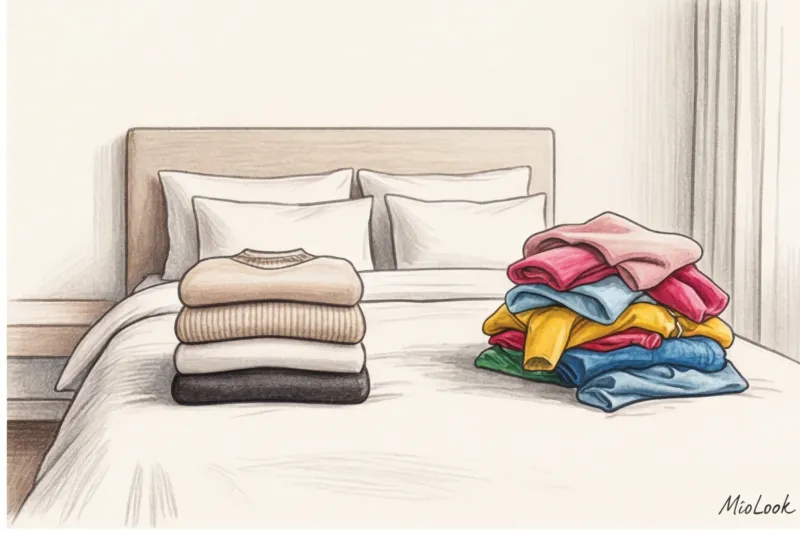
- Unloading. Place all of the current season's clothes, shoes, and bags on the bed. The empty closet should be cleaned and aired.
- Sorted into three categories. "Active" is what you wear constantly (return it immediately to the closet). "Archive" is items with stains, pilling, hopelessly outdated, or that don't fit (throw it away, recycle it, or donate it). And the most interesting is "Passive."
- Working with "Passive". These are things you like, they're your size, but you don't wear them. This is where real analysis begins.
- Fitting and fixation. Put on every passive item and honestly answer the question: why is it sitting idle? Is it pulling at your shoulders? Is it staticky? Is there nothing to wear it with?
Identifying "orphans" and missing links
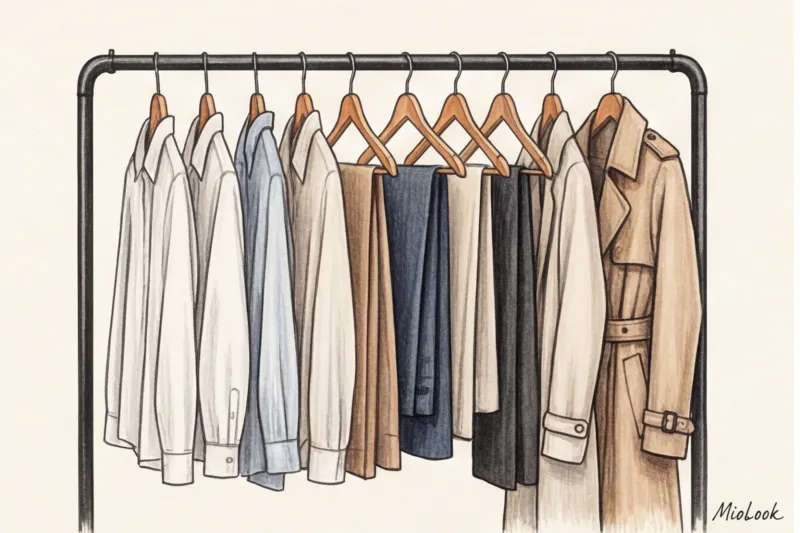
In my experience, 90% of items in the "Passive" category are so-called "orphans." This could be a stunning statement fuchsia jacquard skirt or a complex asymmetrical top. They hang unused because a lack of basic wardrobe essentials paralyzes them. A complex skirt requires a completely understated, perfectly fitting top made of heavy cotton (at least 180 g/m²) or cashmere to "calm down" the look.
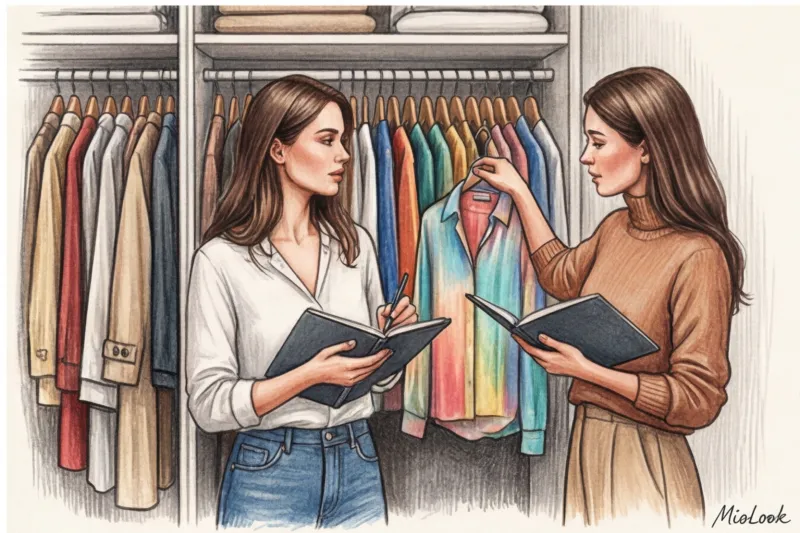
Write in your notebook: "I need a simple graphite long-sleeve T-shirt to go with my fuchsia skirt." Congratulations, you've just started creating your own real-life shopping list, not one made up by glossy magazines.
Personal Basic Wardrobe Checklist: Creating a Custom Matrix
Now let's move on to creating your personal matrix. The first thing you need to do is draw a diagram of your lifestyle. If you work from home 80% of the time (as an IT specialist or freelancer), you don't need a classic three-piece suit as your base, even if all the online articles scream otherwise. Your base will be premium joggers, thick fleece hoodies, and cozy cashmere cardigans.
Second, choose a neutral palette. The base doesn't have to be black, white, and beige. For women with a contrasting complexion, base colors can be deep navy, rich burgundy, cool olive, or dark chocolate.
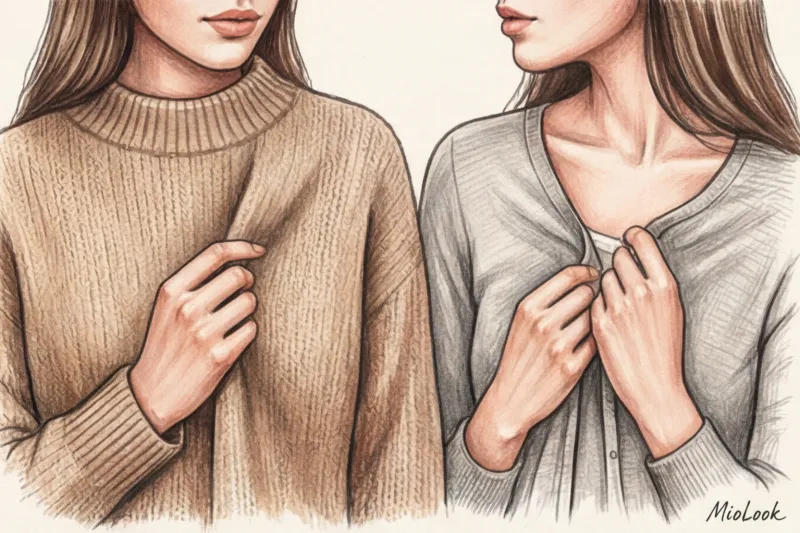
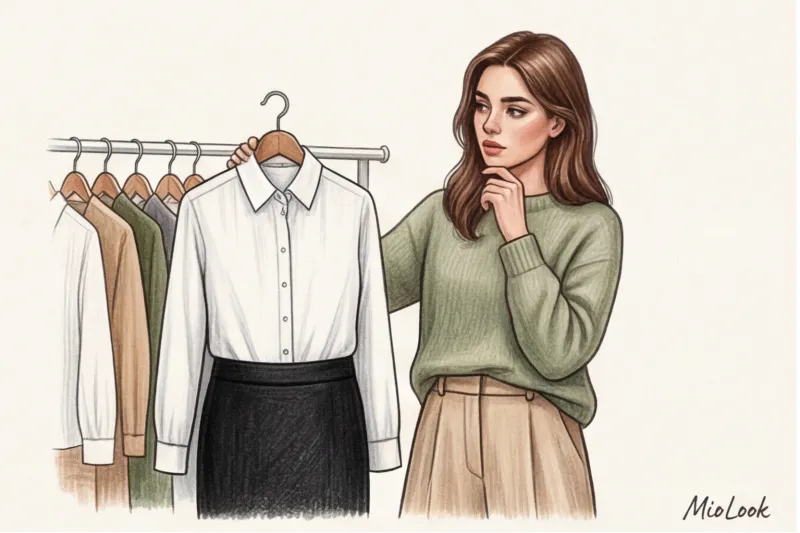
Thirdly, and most importantly, the golden rule of proportions for stylists For every "bottom" (pants, jeans, skirt), there should be 3-4 "tops" (shirt, tank top, sweater, jacket). People remember us by our profile. One of my clients constantly complained about her boring wardrobe, even though she had 20 great skirts. The problem was that she only had 3 tops to go with them. People around her thought she was wearing the same thing. By adjusting the ratio to 1:4, we solved the problem forever.
Shoes and Bags: The Investment Foundation of the Matrix
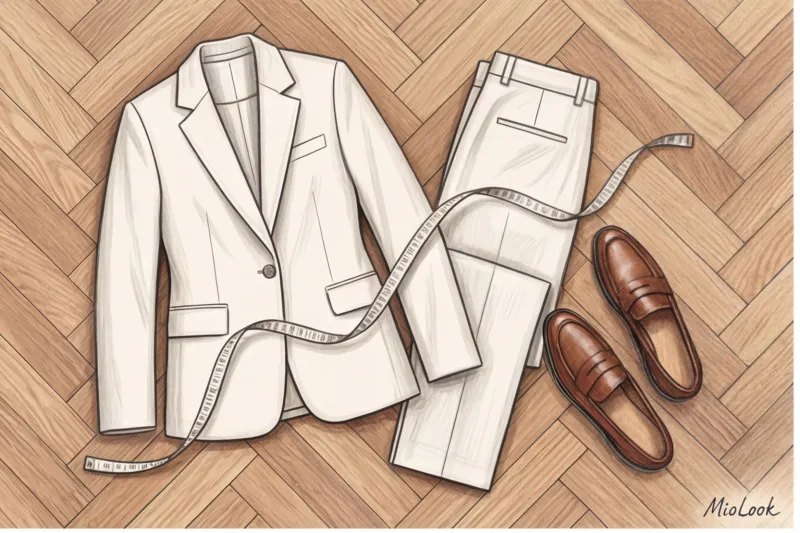
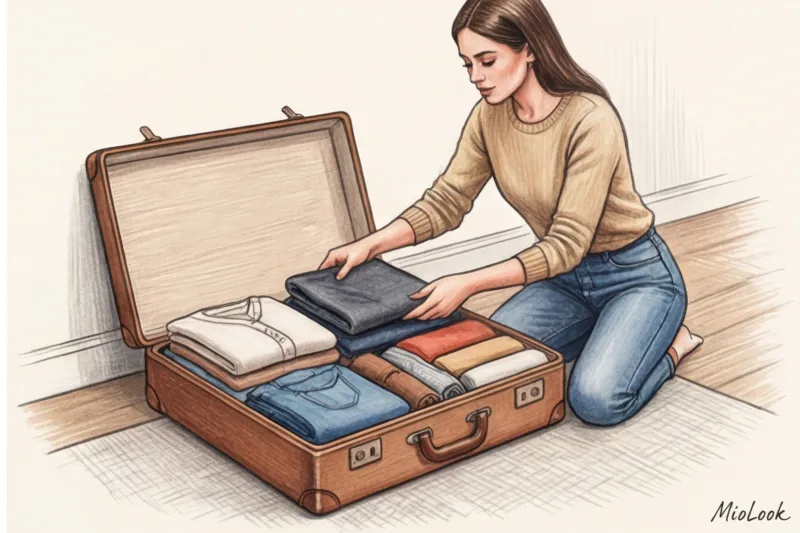
When auditing and building a foundation, you should always start from the bottom up—with your shoes. A single pair of luxurious, structured smooth leather loafers can elevate a look with the most basic jeans from a mass-market store (like Zara or Uniqlo) to a premium level. Remember: soft, shapeless bags and worn-out shoes will ruin even the most expensive cashmere.
Ready to digitize your wardrobe?
Try MioLook's free plan—upload your items and let the AI find new combinations you never thought of.
Get access — €0.99 onceCost-Per-Wear Calculator: How to Evaluate Items on Your Basic Wardrobe Checklist Before You Buy
Once you've compiled a list of essentials, it's time to talk budget. This is where the Cost-Per-Wear formula comes into play. It's simple: divide the cost of an item by the expected number of wears.
Let's do the math. You buy a perfect basic white T-shirt made of thick cotton for €80. You'll wear it with jackets, jeans, and skirts at least twice a week for a year (about 100 times). The cost per outing is €0.80. Now let's take a trendy leopard-print top made of thin synthetic fabric for €25. You'll wear it to a party, take a photo, and then hide it in the closet because it's too recognizable. You'll wear it twice. The cost per outing is €12.50.
"Basic pieces are investments (they pay for themselves with frequent wear), while statement microtrends are expenses. Allocate 70% of your budget to investments."
That's why a quality wool blazer for €250 ends up costing you less than a stack of cheap sweaters.

Automating the Process: How to Save Audit Results
Paper shopping lists and photos of successful combinations in your phone's gallery no longer work—they get lost in the information clutter. Digitizing your wardrobe is a necessary next step after an audit for any modern woman.
I highly recommend transferring your new wardrobe asset to a digital environment. Using the "smart wardrobe" feature in MioLook You can take a photo of your items, and the app will automatically suggest what to pair with that statement skirt or point out that you're missing a basic white top. The app takes care of the routine, allowing you to manage your "orphaned" outfits and create virtual capsule collections right on your phone while standing in the store's fitting room.
Action Plan: Your Smart Shopping Algorithm for the Next Month
So, your audit is complete, and you're left with a list of "missing stylistic cement." What's next?
- 24-hour rule: Never buy an item from your new checklist on the same day. Add it to your cart (if shopping online) or set it aside at the checkout. If you're still mentally planning it the next morning, go ahead and buy it.
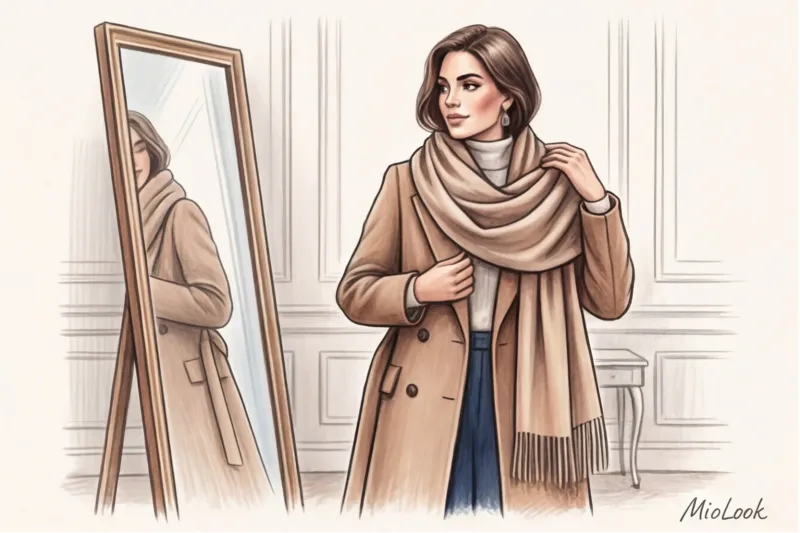
- Shopping route: First, buy the "foundations" (pants, quality shoes, thick knitwear, structured bags), and only then the "decor" (scarves, trendy tops, accent jewelry).
- Focus on fabric: Check the composition. Look for viscose, wool blends, and heavy cotton. Avoid 100% polyester in close-fitting items.
Remember the main thing: yours Basic wardrobe checklist A wardrobe isn't a monument carved in stone. It's a living, breathing organism that will evolve with your lifestyle, job changes, or a move to a different climate. Don't try to assemble it in one weekend. Build your foundation step by step, and one day, when you open your closet, you'll realize you always have something to wear.