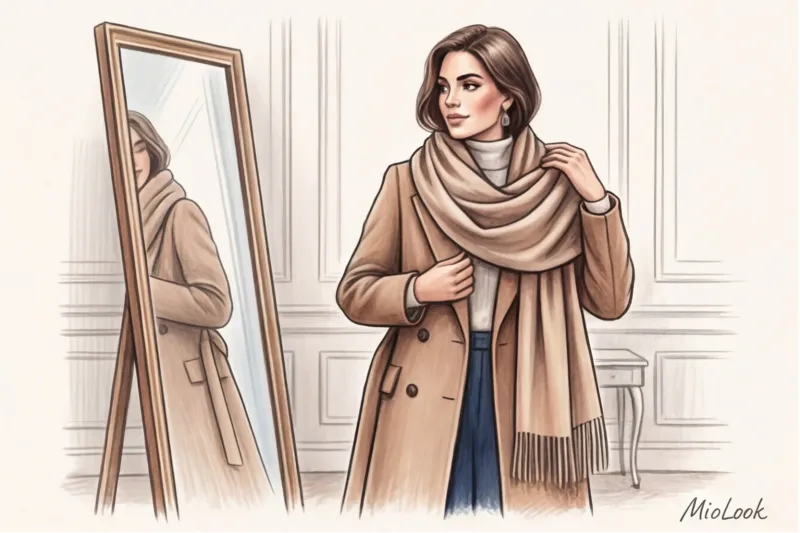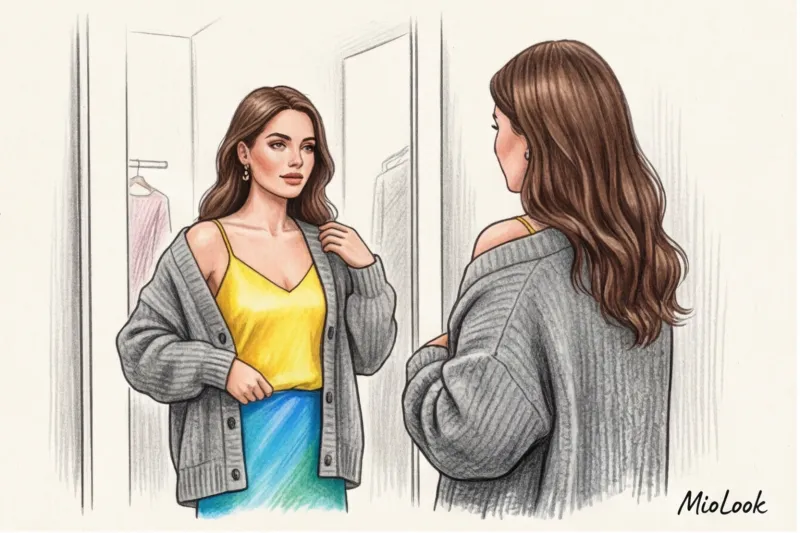
How many times have you bought that perfect beige cotton trench coat, only to wear it exactly twice this fall? If you're like most of my clients, the answer is: way too often. We open Pinterest, see a Parisian woman with a croissant, walking around in an open coat, and think, "This is what a woman's fall wardrobe essentials look like." Then November arrives, the icy wind chills us to the bone, and the trench coat is consigned to the closet until spring (where it will suffer the same fate).
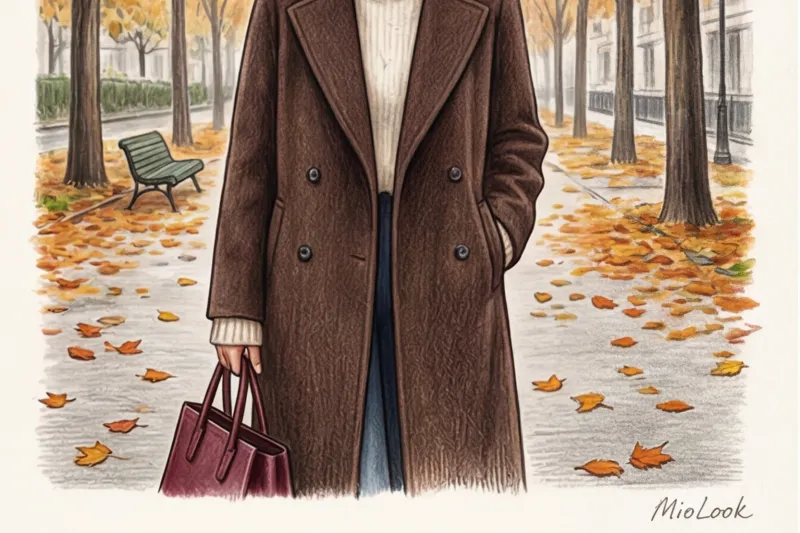
I'm Sophie Müller, and over the years of working with wardrobes and textiles, I've developed one strict rule: fall essentials shouldn't be built on cliched visual templates, but on layering and textile thermoregulation. We've discussed the fundamental principles of capsule wardrobes in more detail in the full guide: The Perfect Basic Wardrobe for a Woman: The Foundation of Style In this article, we'll go further—I'll teach you how to evaluate knitting density, read compositions like a professional technologist, and check the armhole width of a coat before trying it on.
A Basic Women's Fall Wardrobe: Why Online Lists Don't Work
There are no universal checklists. What works for a mild autumn in Barcelona will fail miserably in a windy November in Helsinki or Moscow. Your basic autumn wardrobe for women should depend 100% on three factors: your microclimate, your mode of transportation (car or public transport), and your personal style.
Let's dispel the biggest myth of glossy magazines: "Everyone needs a beige trench coat." It's counterintuitive, but for most continental European regions, a classic lightweight gabardine trench coat is a completely impractical investment. Its season lasts two or three weeks at most. A true fall essential is a lightweight wool shirtcoat or a windproof, insulated midi-length mac.
A 2023 study by the analytical agency WGSN revealed a startling figure: women regularly wear only 19% of their closet contents. The rest are impulse buys or items from those "universal lists" that simply don't fit into real life.
This is where the Pareto principle comes into play. In the concept of the perfect wardrobe, 20% of the right, well-thought-out pieces cover 80% of your fall outfits. You don't need ten sweaters. You need three, but ones you'll want to wear all the time.
Ready to get started?
Try a free plan—no commitment—and start building your perfect capsule.
Get access — €0.99 onceThe Anatomy of Heat: How to Read Fall Clothing Ingredients
The main rule of autumn basics, which I never tire of repeating: a garment should warm, not create the appearance of warmth. It sounds trite, but in practice, I constantly encounter the paradox of "sweating but freezing."
One day, a client came to me with a wardrobe review request. She complained that she always felt cold in her "very thick and warm" oversized sweater. I picked it up and glanced at the tag—100% acrylic. Acrylic is plastic. Cheap polyester and acrylic in knitwear create a greenhouse effect: microplastic fibers don't allow air to pass through, causing your body to sweat at the slightest temperature change (like when you step into the subway from the street), and then your damp skin instantly cools in the wind. The result: you're frozen.
Wool, Cashmere, and Blended Fabrics: A Guide to Choosing
For your basic fall wardrobe, you need natural insulation. According to Textile Exchange, natural sheep's wool retains heat 80% more effectively than polyester-rich blends.
- Merino: Ideal for basic turtlenecks and thin cardigans. It's non-itchy and wicks moisture well.
- Alpaca: Seven times warmer than sheep's wool and lanolin-free (hypoallergenic). An excellent choice for fluffy, oversized sweaters.
- Cashmere: Premium thermoregulation with minimal weight. It's more expensive (a good basic jumper from brands like COS or Massimo Dutti will cost €150–200), but it lasts for years with proper care.
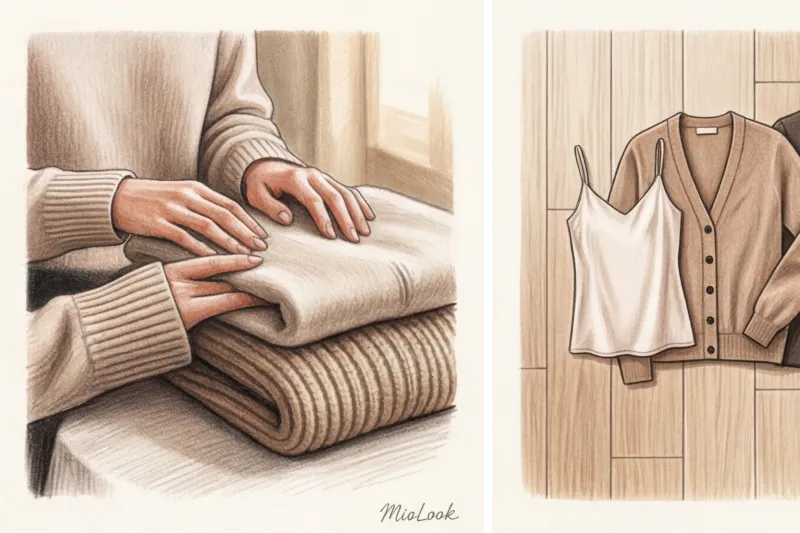
Does this mean synthetics are completely banned? No. The acceptable percentage of elastane, nylon, or polyamide is between 5% and 20%. This additive acts as a kind of "skeleton" for the yarn, helping the sweater maintain its shape at the elbows and prevent stretching.
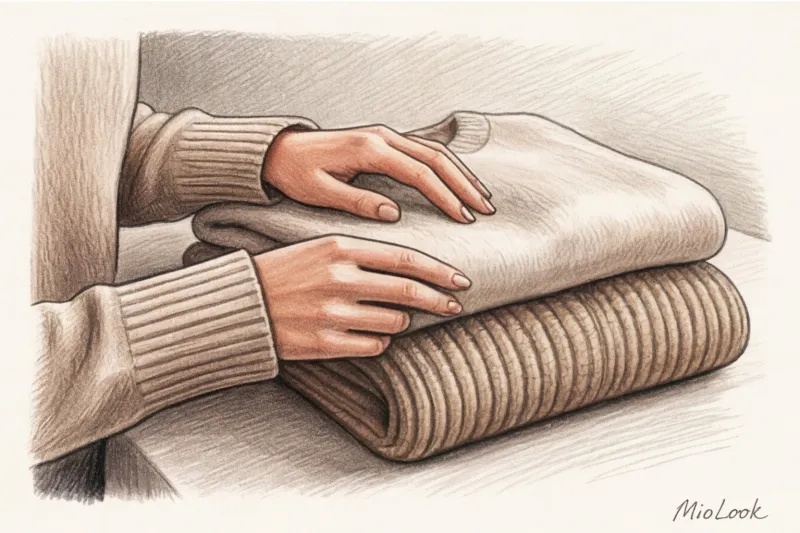
My professional test in the store: Pinch a small section of the sweater's fabric between your thumb and index finger and gently rub them together in a circular motion for 10-15 seconds. If the fabric immediately begins to puff up and bunch up, return it to the hanger. It will pill (pilling) within the first day under the arms or where your bag rubs.
Layering Formula: The Architecture of an Autumn Look
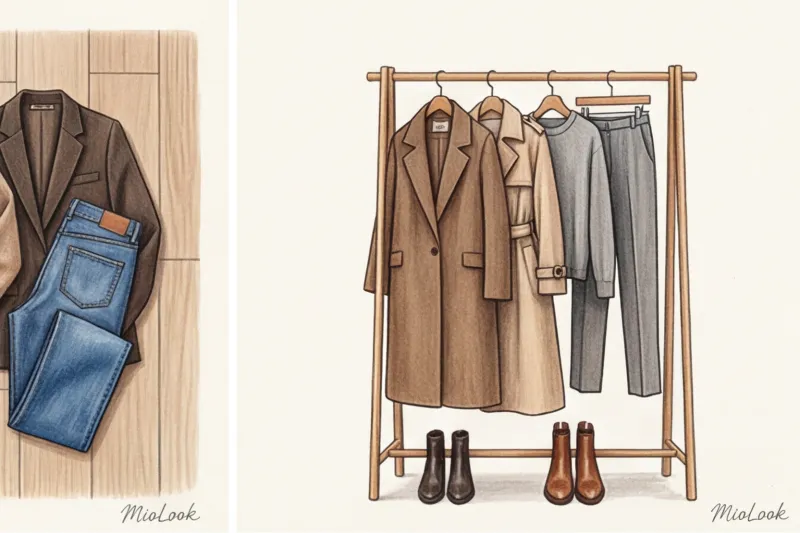
Autumn is the season for layering. But layering should be done wisely, using the "sandwich" principle: a base (contact) layer, an insulating layer, and a protective layer.
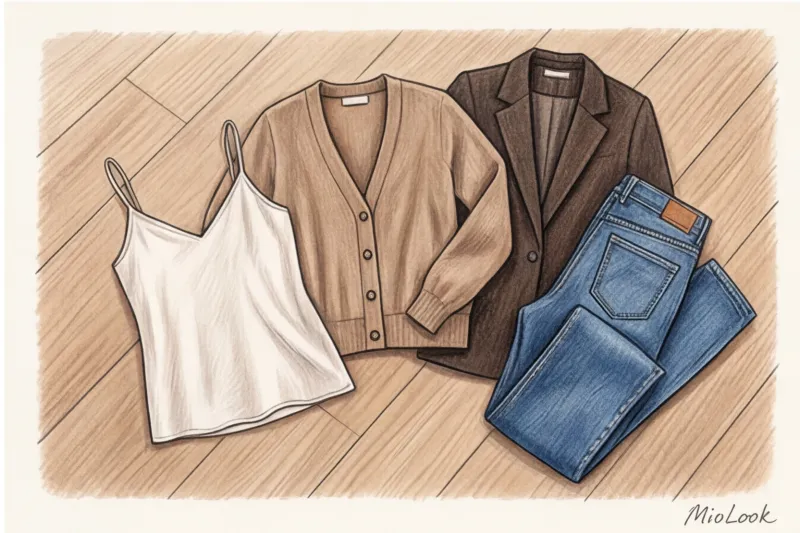
To avoid a flat look, combine different textures. Smooth with fluffy, matte with glossy. Imagine a combination: a smooth silk top (base), a fluffy alpaca cardigan (insulation), and a structured leather jacket (protection). It looks expensive precisely because of the play of textures.
Airflow is crucial. It's not the fabric itself that retains heat, but the air heated by your body between the fibers and layers of clothing. Therefore, basic fall clothing should never be too tight.
A fair limitation: layering with voluminous knitwear can visually widen the figure. This doesn't work for petite women unless you create visual vertical lines. To elongate the silhouette, wear cardigans and jackets unbuttoned—the two vertical flaps of the top layer will visually "cut" the volume at the sides.
Your ideal image begins Here
Join thousands of users who look flawless every day with MioLook. Smart digitization and look planning in one click.
Get access — €0.99 onceChecklist: 7 Functional Elements of an Autumn Base
Forget long lists of 30 items. Here's a foundation whose elements are 100% compatible:
- Structured coat Straight or slightly loose fit. Shades: camel, dark chocolate, graphite, or deep navy.
- Insulated shirt jacket or a quilted liner for casual days.
- Thick turtleneck sweater (wool/cashmere).
- Loose-fitting cardigan (can be worn solo or over t-shirts).
- Straight jeans made of dense non-stretch denim (100% cotton, 12-14 oz.).
- Full length suit trousers with pinches (containing 40% wool).
- Ankle boots with a stable heel or classic Chelsea boots with a slightly chunky sole to protect against puddles.

Details that reveal quality
A garment's value is hidden in the details. Pay attention to the coat's hardware. Shiny plastic buttons can make even the finest wool look cheap. Replace them at a tailor's with horn, metal, or leather-covered ones—the item will instantly appear to be in a higher price range.
Check the lining. Even if a 100% wool coat has a 100% polyester lining, you'll still sweat. Look for a lining made of viscose, cupro, or acetate—these are breathable materials that will maintain proper temperature regulation.
Organizing your fall wardrobe with a smart approach
Buying the right items is only half the battle. The other half is proper storage and management. Never hang heavy wool sweaters and cardigans on hangers. The weight will stretch the yarn, creating unsightly "hanger bags" on the shoulders. Knitwear should only be stored folded on shelves.
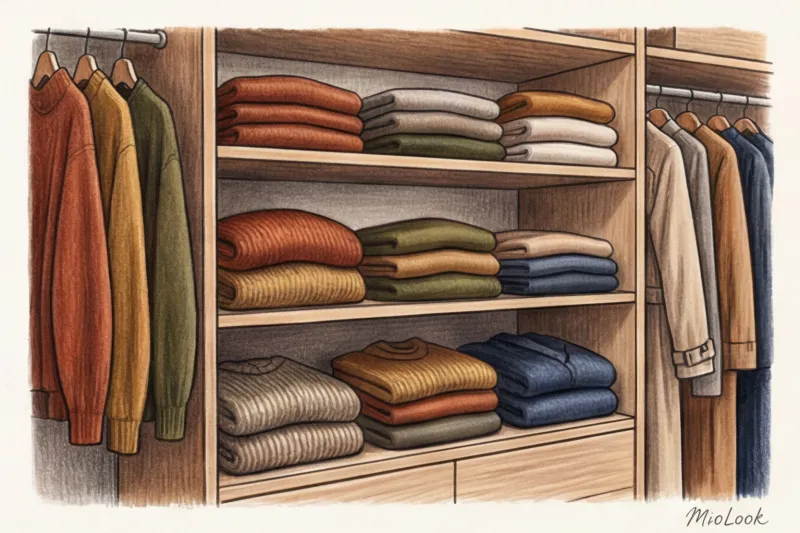
The McKinsey State of Fashion (2024) report clearly demonstrates a shift in consumer focus from fast fashion to conscious consumption. Customers no longer want to buy five cheap sweaters per season. The trending metric is CPW (cost-per-wear). A €300 coat that you'll wear 100 times over two seasons (CPW = €3) is much more cost-effective than a €60 plastic jacket that you'll wear five times before its zipper breaks (CPW = €12).
To manage such investments wisely, I recommend digitizing your database. By uploading your items to the app MioLook You can visually create lookbooks, check what a new item will pair with before buying it, and the system will help you calculate the actual utility of your wardrobe. This saves you from duplicating items ("oops, I bought a third pair of black pants") and saves time in the mornings.
Access to MioLook for €0.99 — one-time payment
A smart AI stylist will analyze your clothes and select the perfect autumn looks for every day.
Get access — €0.99 onceCommon mistakes when creating autumn capsule collections: a stylist's perspective
In my experience, girls often make several technical mistakes that ruin the entire comfort of the autumn season.
Narrow armhole of outerwear. This is disaster number one. You buy a coat, trying it on in the store over a thin T-shirt or silk blouse. The coat fits perfectly. Then in November, you try to wear that oversized sweater underneath, and... your arms won't bend, and your shoulders look like an American football player. Always measure your armholes or come to the coat fitting wearing the heaviest sweater in your closet.
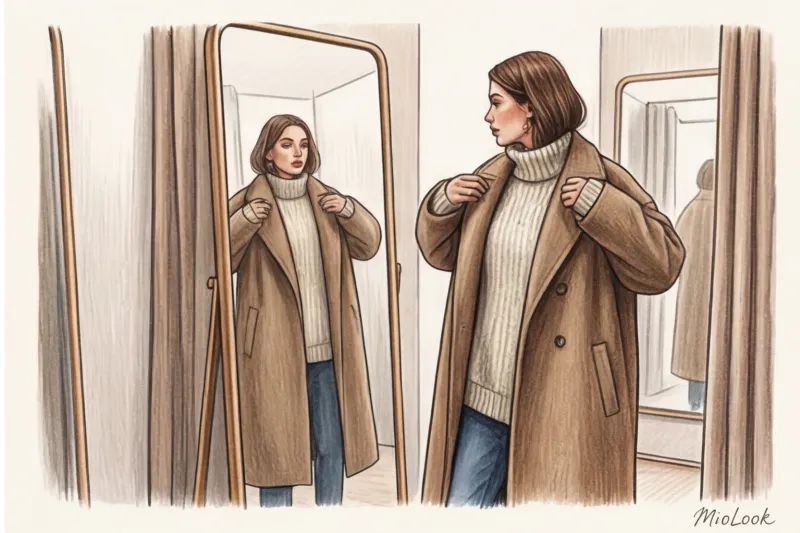
Length mismatch. An annoying visual clash is when the hem of a summer dress or midi skirt sticks out 10-15 centimeters from under a cropped (knee-length) coat. According to the rules of proportion, outerwear should either completely cover the skirt or be significantly shorter (a jacket that reaches the waist or mid-thigh). A maxi coat solves this problem once and for all.
Boring color palette. Who said "basic" means "black, gray, and beige"? Black on the face in autumn often highlights signs of fatigue and lack of sun exposure. The Pantone Color Institute regularly includes deep, earthy tones in its basic autumn palettes. Swap your black sweater for a rich burgundy, dark emerald, or dark chocolate shade. They pair just as well with denim and grey wool suiting, but add a touch of sophistication and refinement to the look.
Your fall wardrobe doesn't have to be huge to be stylish. Start by inspecting the composition of the items already hanging in your closet, ditch the "greenhouse" acrylic, and invest in the right basics that will keep you warm, not just hang on a hanger.