What Ethical Clothing Brands Really Are: A Behind-the-Scenes Look
I remember a few years ago, backstage at Paris Fashion Week, the PR director of a very famous global brand proudly handed me a press release. The text was full of buzzwords like "eco-friendly," "conscious," and "future-focused." But right behind him, assistants were frantically unpacking hundreds of polyester dresses, each wrapped in an individual disposable plastic bag. It was then that I realized with absolute clarity: the fashion industry has masterfully mastered the art of selling us the illusion of green. ethical clothing brands — this is not just a pretty marketing tag on a storefront, but a complex system of coordinates in which we must be able to navigate rigorously and pragmatically.
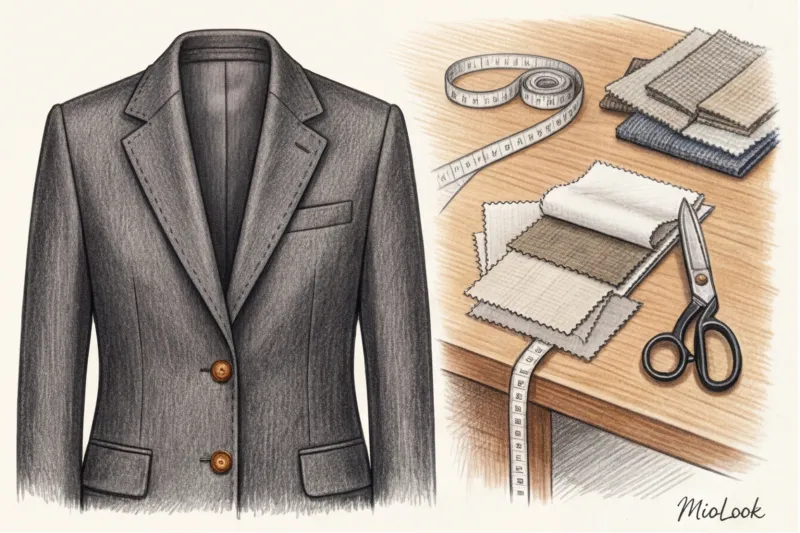
In my ten years as a fashion journalist and stylist, I've constantly encountered the same deeply ingrained stereotype. When I suggest a client consider conscious fashion, she often sighs heavily: "Camilla, I work in the corporate sector. I physically can't attend a board meeting in a shapeless oatmeal-colored linen robe!" Let's dispel this myth once and for all. Contemporary ethical fashion has long since outgrown the "hippie-chic" aesthetic. Today, it can be impeccably tailored business suits made of certified merino wool, architectural blouses made of flowing Tencel, and minimalist sheath dresses whose intricate patterns rival those of Phoebe Philo's golden era at Celine.
But to find such gems, you need to stop confusing terminology. Brands love to mix these concepts in advertising campaigns, creating semantic chaos. Consider this your basic vocabulary for the conscious shopper:
- Ethical (Ethical fashion) — is a focus on people and animals. This is a rock-solid guarantee that seamstresses at the factory receive a decent wage (living wage, not minimum wage), work in safe conditions, and that production does not use slave or child labor. This also includes a refusal to treat animals cruelly (cruelty-free).
- Sustainable (Sustainable Fashion) — is about global processes and responsibility for the future. Sustainable production is structured to avoid depleting the planet's resources: closed water cycles, minimizing carbon footprints, and switching to renewable energy sources.
- Eco-friendly (Eco-friendly fashion) — this is a characteristic of the materials themselves. Fabrics grown without the use of toxic pesticides (for example, organic cotton) or innovative fibers created from recycled materials.
Do you understand the difference? A product may be made from 100% organic cotton (Eco-friendly), but if it was made by a woman in an illegal factory, working 14 hours a day for €2 per shift, the brand has no right to call itself Ethical.
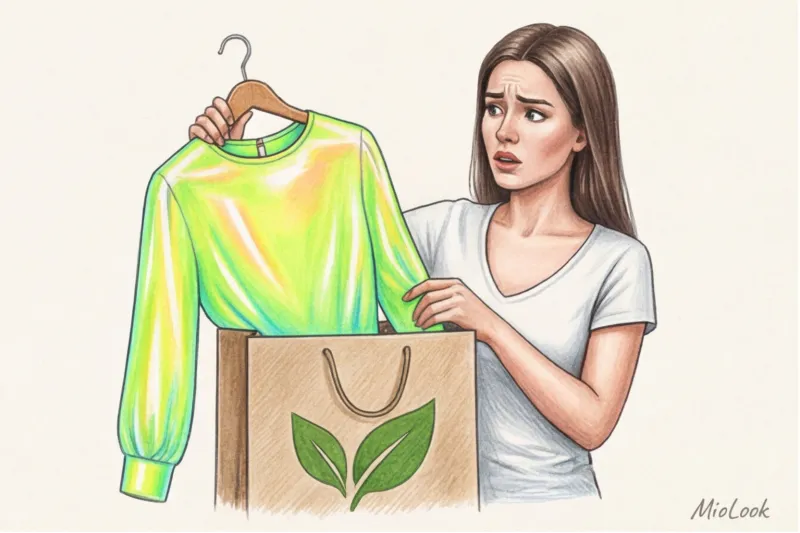
And here we come to the most toxic phenomenon of modern shopping: greenwashing. How does the mass market masterfully sell us the illusion of caring for the environment? You've probably seen capsules in shopping malls with names like Conscious , Join Life or Care for Water.
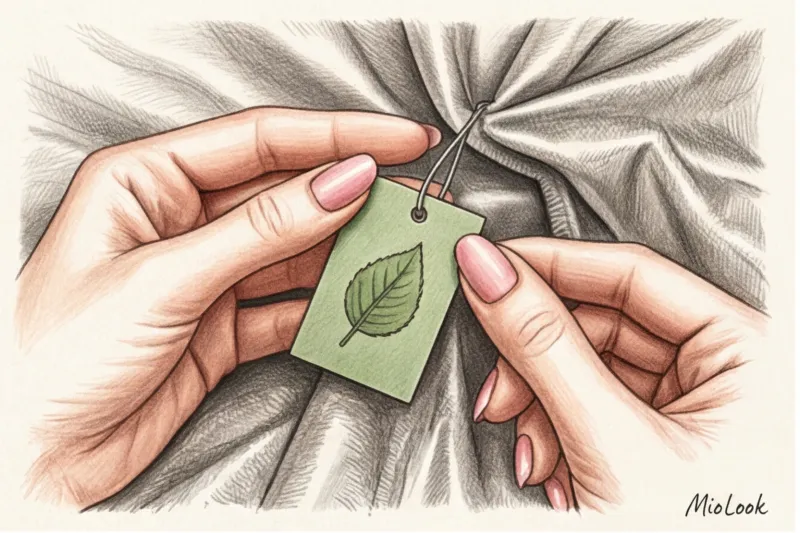
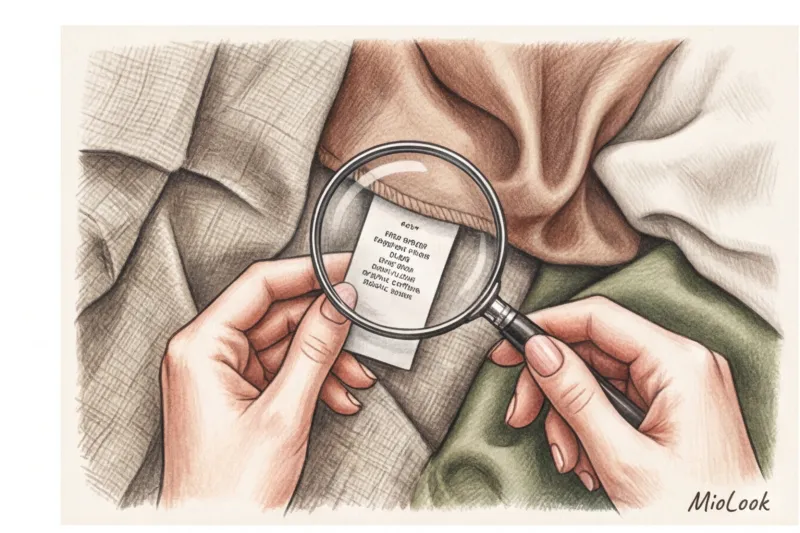
These items usually have pretty green tags, carefully printed on kraft paper. But if you flip the label over and read the fine print, there's a 90% chance you'll discover that the material is only 15% recycled polyester, with the remaining 85% being completely virgin, cheap plastic. Analyzing hundreds of brands, I've learned to instantly recognize this trick. If a brand claims to be eco-friendly but continues to churn out 52 micro-collections a year, encouraging aggressive hyperconsumption, that's pure greenwashing. To avoid being fooled, I always advise my readers to check the product information. Fashion Transparency Index (Fashion Transparency Index). The figures are sobering: more than half of the world's largest fashion giants still conceal information about their actual supply chains.
"True luxury today isn't a gold logo on a bag, but the absolute certainty that no one has sacrificed their health or the cleanliness of the rivers for the sake of your impeccable appearance" – this is the idea I try to convey in every lecture on style.
This approach brings us to the most important rule of the modern wardrobe—the "transparent chain." Why does knowing which farm the linen for your trousers was grown on and the name of the artisan who hand-sewed the buttons make all the difference? When a brand openly reveals a garment's entire journey—from seed to hanger in a boutique—it takes full responsibility for quality at every stage. Such a garment automatically acquires a different value: you're buying not just a piece of fabric, but a story of respect for craftsmanship.
It's this curatorial approach to things that helps solve the "nothing to wear" problem once and for all. If this philosophy resonates with you, I recommend checking out our article on How to stop buying unnecessary clothes: 5 steps. And to systematically manage existing high-quality items and easily assemble looks from them, I recommend using MioLook is an app for mindful shopping and wardrobe management. It allows you to digitize your belongings and clearly see what you're really missing and which purchases are best avoided, preserving both your budget and the planet's resources.
Fabrics of the Future and Present: A Stylists' Guide to Eco-Friendly Materials
Have you ever noticed the paradox: why do you sometimes want to take off a premium cashmere sweater for €500 because of a slight tingling sensation, while a heavy viscose shirt feels like a second skin? The secret lies not in the price, but in the physics of the fiber itself. To understand which ethical clothing brands To be truly worth the investment, you need to learn to read ingredients as professionally as you read food labels.
Let's start with the basics—natural leaders. Historically, flax and hemp have been the "greenest" materials. They grow quickly, are undemanding to soil, and require virtually no artificial irrigation. But with cotton, the situation is radically different. Conventional cotton is one of the greatest environmental disasters of our time.
According to a 2023 analytical report by Textile Exchange, producing just one traditional cotton T-shirt requires approximately 2,700 liters of fresh water. Add to this the harsh pesticides that deplete the soil.
That's why the prefix organic cotton This isn't a marketing ploy to drive up prices, but a critical necessity. Organic cotton is grown using rainwater irrigation (saving up to 91% water) and without the use of toxic chemicals. If a brand claims to be eco-friendly, its basic knitwear must be organic.
But my personal stylistic love is innovative cellulose fibers: Tencel (lyocell), Modal, and Cupro. Stylists adore them for their impeccable, heavy drape and that prestigious, muted shine that instantly makes a look look "expensive."
I recently assembled a business capsule collection for a top manager at a large European IT company. The client, for ethical reasons, completely rejected natural silk. I offered her an alternative: suit blouses made of Cupro (a material made from the finest cotton fluff). I remember her surprise during the fitting: Cupro felt phenomenal. It flows, gently cools the skin in stressful situations, is completely static-free, and feels like dense, matte silk. Moreover, it is manufactured using a closed-loop technology, where water and a non-toxic solvent are reused up to 99 times.
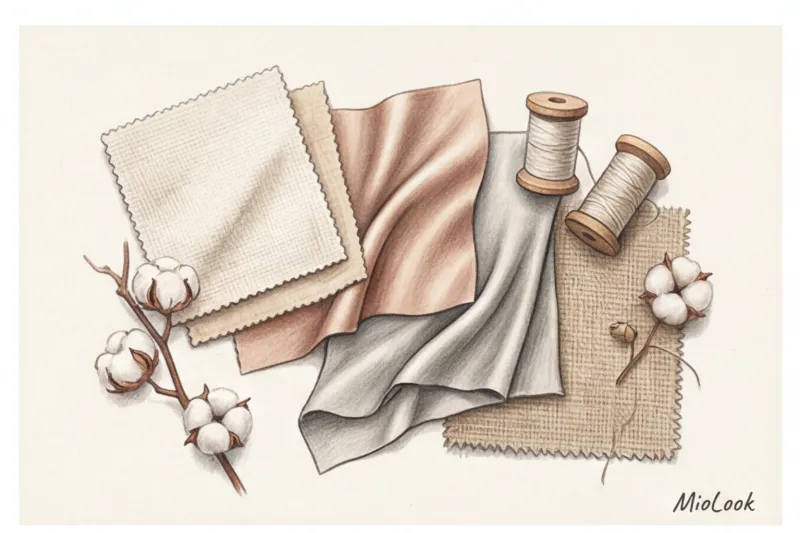
To avoid confusion in the compositions and to correctly build your capsule wardrobe with the right fabrics, I always advise clients to digitize their purchases. Upload items to MioLook and note the fabric composition in the description—this way, a smart wardrobe will help you clearly see what percentage of your clothes are actually safe for you and comfortable to wear.
And now the bitter, but necessary, counterintuitive truth that the mass market fails to mention. You've probably seen jackets and bags made of "vegan leather." It sounds noble and ethical. In fact, 95% of such leather on the market is polyurethane, a pure plastic of petrochemical origin. It doesn't decompose for centuries, doesn't allow the body to breathe, and is killing the planet faster than traditional, but strictly regulated, leather production.
The same goes for cozy fleece made from recycled plastic bottles (recycled polyester). Yes, we're saving land from waste in the first place. But with every machine wash, this fleece releases hundreds of thousands of microfibers into the water. These microplastics are so small that they aren't filtered by municipal wastewater treatment plants and end up in the oceans, where they enter the food chain. Ethics shouldn't be blind.
So what should you wear if you're looking for leather texture? The industry is constantly evolving, and at closed trade shows (like Première Vision in Paris), we're already working hard on innovations that aren't yet available to the masses on an industrial scale.
- Mylo (mycelium): A dense, textured fabric made from the root system of mushrooms. Luxury houses are already actively experimenting with it.
- Orange Fiber: a delicate, silky fiber created from the tons of orange peels that remain after juice production in Sicily.
- Piñatex: A durable, biodegradable material made from tough pineapple leaves. It's already becoming a viable alternative to toxic polyurethane in footwear production.
While the price of such things is still high (from €300 to €800 per accessory), in another five to seven years these technologies will scale up, becoming the new norm for conscious consumption.
Access to MioLook for €0.99 — one-time payment
A smart AI stylist will select the perfect looks based on your wardrobe, textures, fabrics, and style preferences.
Get access — €0.99 onceLabels You Can Trust: A Quick Cheat Sheet
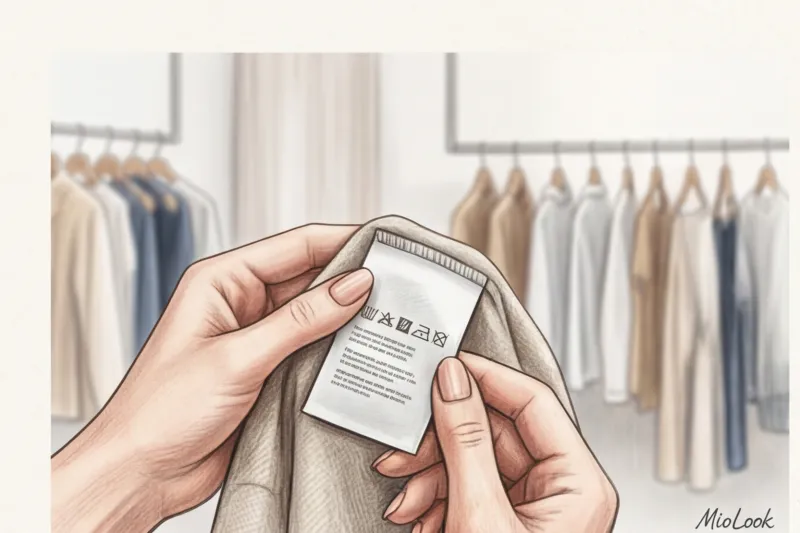
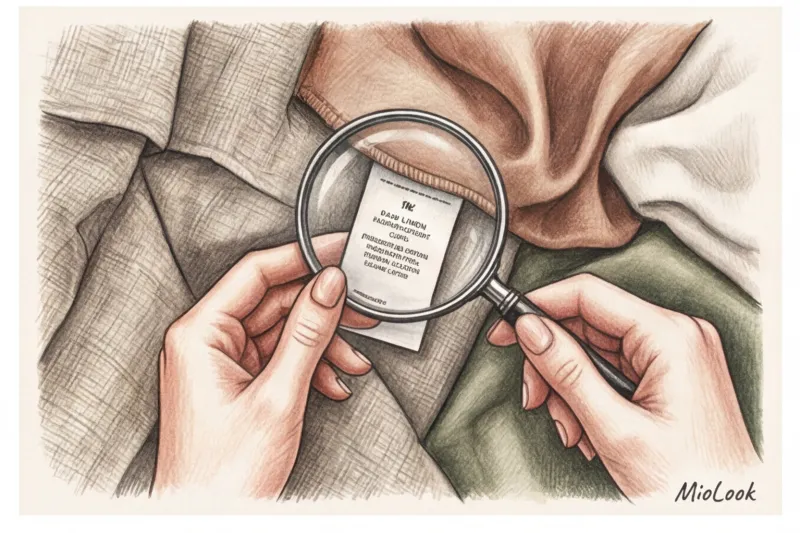
So how can a customer distinguish genuine environmental awareness from blatant greenwashing right in the fitting room? Study the internal tags sewn into the side seam of the garment. If you see the correct abbreviations there, the brand can be trusted.
If you're looking for organic cotton or wool, your gold standard is GOTS (Global Organic Textile Standard) This label means that a product is made from at least 70% organic fibers. Furthermore, the certification guarantees that the strictest environmental and social standards were observed at every stage of the supply chain—from harvesting to final dyeing. A brand can't simply buy fabric and slap a GOTS label on it; the production itself must be certified.
For basic items that fit directly to the body (underwear, T-shirts, shirts, turtlenecks), the icon is critically important. Oeko-Tex Standard 100 This is an independent international guarantee that the fabric (including threads, buttons, and zippers) is free of toxic dyes, formaldehyde, and heavy metals. If you have sensitive skin or are prone to dermatitis, look for this certificate.
Finally, ethics isn't just about caring for flora and fauna; it's also about treating people first and foremost. Truly ethical clothing brands back up their values with certificates. B-Corp (comprehensive assessment of social and environmental responsibility of business) or Fair Trade The latter guarantees fair wages for farmers and seamstresses, a strict ban on child labor, and safe factory conditions. If you're offered an "ethical" cotton dress for €15, it can't be Fair Trade certified—that retail price is physically insufficient to cover even the seamstress's minimum wage.
Stylist Checklist: How to Check a Brand Before Buying in 5 Minutes
Forget about beautiful advertising campaigns set against pristine natural backdrops and smiling farmers. A brand's true identity is hidden not in an emotional lookbook, but in boring technical sections of its website and the back of its seams. According to a large-scale investigation by the Changing Markets Foundation (2022), almost 60% of eco-friendly claims by European and British fashion brands are false. Marketers have mastered the art of juggling green labels, so it's time for us to become pragmatic and demanding.
To protect my clients from this global deception, I have developed a strict verification algorithm. It is by this four-step filter that I select ethical clothing brands before integrating them into the smart wardrobe feature's recommendation base MioLook This checklist takes exactly five minutes of your time, but it instantly reveals the manufacturers' secrets.
Step 1. Audit the website and the Sustainability section
Visit the brand's official website and look for the sustainability tab. If you're met with nothing but poetic rhetoric like "we love the planet" and "we're inspired by the power of nature" but not a single verified figure, it's pure greenwashing. True ethics rely solely on hard facts. Look for specifics: precise percentage reductions in water consumption during dyeing, carbon footprint reduction reports, transparent lists of contract factories, and scans of international certificates (such as B-Corp or GOTS).
Step 2. Analyze the frequency of product range updates
Sustainable production physically cannot tolerate conveyor-belt haste. A brand that releases 52 micro-collections a year (i.e., one capsule collection every week, like the ultra-fast fashion giants) cannot be sustainable by definition. High-quality tailoring and sustainable fabric production cycles require a colossal amount of time. Truly ethical brands operate at a slow fashion pace: they release two to four well-thought-out seasonal collections a year and maintain a strong, consistent core line.
Step 3: Tough Pricing Assessment
Let's face it: a new basic T-shirt can't cost €5. If the price tag or online store displays such a minuscule amount, there are no miracles—the real price of the item was paid by someone else. And that "someone" is garment workers in developing countries, deprived of basic rights and receiving poverty wages, as well as the local ecosystem, poisoned by the toxic runoff of the cheapest dyes without filtration systems. The cost of organic raw materials and fair wages dictate their own strict rules. In my experience, a reasonable price for an ethically produced basic T-shirt made of heavy cotton starts at around €35–50.
Step 4. Checking the fittings and cut
Ethics always starts from the inside out. Cheap mass-market production primarily skimps on invisible details. Conversely, ethical clothing brands invest in durability because their philosophy is that a garment should last for years.
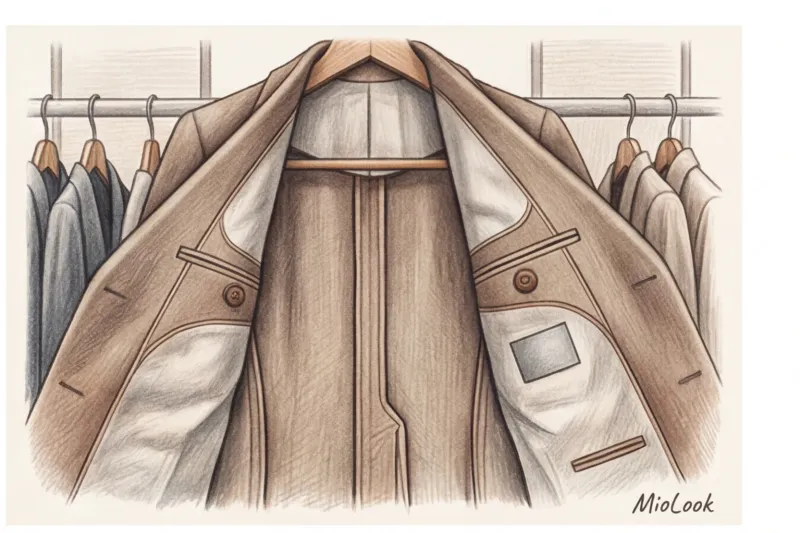
When shopping, turn your jacket, trousers, or dress inside out. You should see neat, closed seams (such as French or folded seams) where the edges of the fabric are securely hidden and will not fray after the third wash. Pay attention to small details: responsible brands use durable metal zippers, high-quality reinforced threads, and rigorously replace cheap plastic hardware with coconut, wooden, or mother-of-pearl buttons.
Make it a rule: before you take an item to the checkout or hit the online payment button, mentally run the brand through this algorithm. If the manufacturer fails even two of the four points, it's a compelling reason to avoid the purchase. Ultimately, your wallet is your primary voting tool for how you want the modern fashion world to look.
How to integrate ethical clothing brands into your business and high-status wardrobe
The biggest fear of most of my corporate clients is looking like they've just returned from a retreat at a boardroom. A treacherously wrinkled linen skirt or a shapeless, earth-colored cardigan instantly ruins the entire architecture of a business look, no matter how eco-friendly they are. This problem of "looking too relaxed" has long been the main barrier between conscious consumption and strict business codes.
Six months ago, a female manager of a large investment fund approached me with an ambitious task: to assemble a high-status working capsule, which would include exclusively ethical clothing brands , but without the slightest damage to her tough professional image.
"In a corporate environment, your suit should convey reliability and competence even before you utter your first word"—that's the principle we began developing her new wardrobe with. The key rule of our experiment was an uncompromising rejection of subtle textures in favor of architectural cuts and deep, natural shades.

To avoid the "wrinkled linen" effect during important, hours-long meetings, we opted for innovative and certified textures. For office shirts and blouses, I chose heavyweight Tencel. Unlike thin summer options, heavyweight lyocell perfectly holds the shape of a stiff collar, doesn't bunch up under a jacket, and has a refined, almost silky matte finish. For suiting, our favorite was certified RWS (Responsible Wool Standard) wool. This certification guarantees not only the humane treatment of animals but also strict control over pasture restoration. This dense wool makes perfect jackets with a crisp, defined shoulder line. A high-quality RWS suit will cost approximately €400–€650, but its impeccable fit fully justifies the investment.
The next step was working with color. If you place a jacket from a mass-market brand next to one from a sustainable brand, you'll immediately notice the difference in depth of tone. Fast-fashion brands often use cheap synthetic dyes, which produce a flat, sometimes slightly acidic, color. Ethical manufacturers use natural pigments or safe, closed-loop dyes. This gives fabrics complex, multifaceted undertones that refract light differently. A deep emerald, a rich terracotta, or a complex dark chocolate shade, produced sustainably, always looks more expensive and prestigious.
Access to MioLook for €0.99 — one-time payment
Start creating the perfect business looks with AI. Digitize your wardrobe and plan your capsule wardrobe in advance.
Get access — €0.99 onceThe final, but perhaps most important, touch of a business look is status accessories. Strict dress codes don't tolerate cheap hardware or peeling material on bag handles. Here, we always face a dilemma: choose classic leather or seek innovative alternatives?
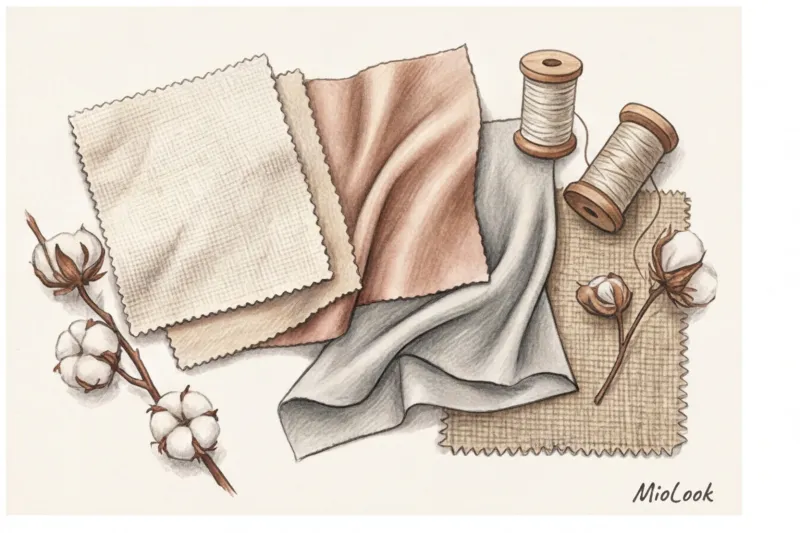
If you prefer natural materials, look for brands that work with vegetable-tanned leather. Unlike the standard chrome tanning method, which is toxic to the environment, this method uses natural tree bark extracts. This leather is dense, holds the shape of the briefcase perfectly, and develops a beautiful vintage patina over time.
If you're looking for vegan options for the office, forget about mass-market polyurethane, which will inevitably crack within the first season. Today, the industry offers premium alternatives, such as AppleSkin. This stunning material is created from recycled apple juice waste applied to an organic cotton base. A tote bag made from AppleSkin offers the necessary architectural rigidity, is scratch-resistant, and easily passes security at even the most conservative financial institutions.
Caring for eco-friendly materials: how to extend the life of your items and save the planet
According to the Fashion Revolution analytical report (2023), up to 25% of the carbon footprint of any item is created after you bring it home. ethical clothing brands That's only half the battle. True sustainability and mindfulness are demonstrated in how we manage our wardrobe day after day, because even the most sustainable material won't save the planet if the item wears out in a couple of months.
The biggest sin of the modern consumer is the obsessive habit of throwing clothes in the laundry basket after a single trip to the office. We literally "wash" premium fabrics until their fundamental properties are lost. The ideal temperature for most eco-friendly materials is a strict 30 degrees Celsius. This temperature is perfectly sufficient to dissolve sebum and street dust, but it doesn't shock the fibers. Be sure to switch from powdered laundry detergents to liquid eco-friendly ones: dry enzyme granules act as micro-abrasives on organic cotton and delicate modal, mercilessly washing out pigment and weakening the fibers.
If your everyday laundry contains blended fabrics or items made from recycled polyester (like high-tech sports fleece), they need to be washed with a special, strategic approach. With each cycle, the machine's drum releases thousands of invisible microscopic plastic particles due to friction. To prevent these from ending up in the oceans, I highly recommend using special filter laundry bags—for example, Guppyfriend They reliably trap microplastics and provide additional protection for the item itself from harsh mechanical wear.
With business attire, the situation is even more complex. Traditional dry cleaning most often uses perchloroethylene, an aggressive and highly toxic solvent. Not only does it pollute groundwater during disposal, but it also inevitably settles on the fabric, causing micro-inflammation and allergic skin reactions. If your suit requires deep cleaning, look for specialized services that use professional wet cleaning technology or liquid biodegradable silicone.
Now I'll share my main professional secret, which I instill in all my clients. Forget about ironing and regular trips to the dry cleaner! To refresh an expensive wool suit after hours of difficult negotiations, use a good handheld or stationary steamer. Hot steam instantly kills bacteria, removes odors (from perfume to restaurant food), and restores the natural elasticity of certified wool fibers without stripping the natural lanolin.
Proper storage is the final step in extending the life of your wardrobe investments. Heavy fabrics, such as dense lyocell (Tencel) or architectural knits, immediately stretch and distort at the shoulder seam under their own weight when hung on thin metal hangers from the dry cleaner. A one-time purchase of a set of wide wooden hangers with anatomically rounded edges for approximately €40–50 will ensure the perfect fit of your jackets and dresses for years to come.
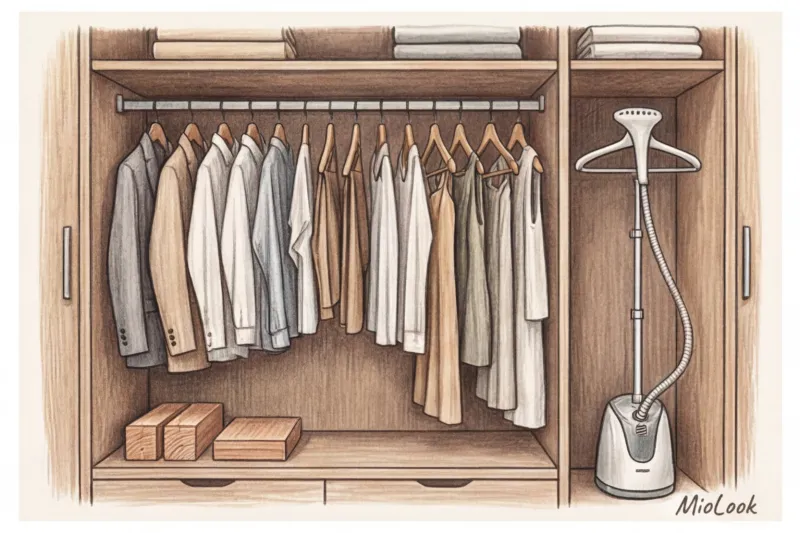
I strictly forbid the use of chemical mothballs to protect against moths. Instead, place natural cedar blocks on your shelves—they not only repel insects but also act as a natural absorbent, absorbing excess moisture in the closet. To restore the wood's pungent aroma, simply lightly sand the blocks with fine-grain sandpaper every six months.
To avoid having to remember dozens of nuances about caring for different eco-friendly ingredients, I recommend systematically digitizing your purchase data. After adding an item to MioLook app , you can record precise care instructions directly in the item's virtual card. This saves a huge amount of time sorting items before washing and ensures that your favorite silk top isn't accidentally sent to a harsh spin cycle.
Cost Per Wear: The New Math of Mindful Shopping
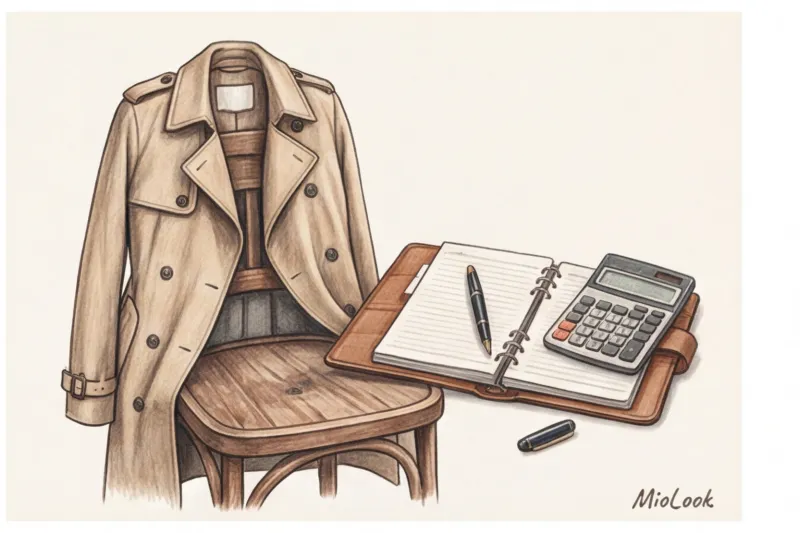
I often hear genuine outrage from new clients: "Camilla, ethical clothing brands are too expensive! A basic jacket can't cost €350." In such cases, I don't give long lectures about saving the planet; I simply ask them to get out their calculator. For decades, the fast fashion industry has conditioned us to the illusion of savings, hiding the true cost of cheap items.
There is a mathematical formula at the heart of effective wardrobe management. CPW (Cost Per Wear) It looks extremely simple: (Price of the item + care costs) / number of wears.
Let's look at a real-life case from my styling practice. Let's compare two seemingly similar purchases:
- Mass market (polyester): You buy a trendy jacket for €60. Due to its poor quality, you'll wear it maybe 15 times per season. Then the fabric will pill, the adhesive will bubble, and the lining will come apart at the seams. Add one dry cleaning (€15). Total cost: €75. CPW = 5 € per exit.
- Ethical brand (certified wool): You're investing €350 in a classic RWS wool jacket. Thanks to its precise cut and durable fabric, you'll wear it at least twice a week for five years (approximately 240 times). Add in 10 dry cleaners during that time (€150). Total cost: €500. CPW = €2.08 per outing.
The math is relentless: a high-quality, ethical item will cost you more than half as much in the long run.
To reinforce this habit, remember the famous "30 Wears" campaign, launched back in 2015 by eco-activist Livia Firth. Its essence boils down to one strict rule. The only question you need to ask yourself honestly before checking out or entering your card details online: "Will I wear this at least 30 times?" If there is even the slightest doubt, the item should remain on the hanger.
At this stage, a complete transformation in purchasing psychology occurs. You make a fundamental shift from quantity to uncompromising quality. Instead of impulsively buying five cheap polyester blouses that don't let your skin breathe and leave your hair static-prone, you purposefully search for one perfect organic silk blouse. It fits like a second skin, drapes gracefully, lasts for years, and instantly elevates any look.
To avoid having to keep complex calculations in your head, I always advise clients to digitize their closets. After uploading your items to MioLook , you can clearly track your wear statistics. The app will automatically show you which wardrobe items are truly worth every penny invested in them, and which have fallen victim to impulse shopping.
Your ideal image
it begins Here
Join thousands of users who look flawless every day with MioLook.
Get access — €0.99 onceBut what about heavy luxury, where ethical production is often questionable? In the world of high fashion, vintage and resale represent the highest form of ethical consideration for premium bags and watches. Purchasing an iconic watch on the secondary market or searching for an archive bag with a refined patina means zero carbon production and a guarantee that a rare accessory will retain its value. It's no longer just shopping, but elegant asset management in the style of "quiet luxury."
Getting Started: A Step-by-Step Plan to Transition to an Ethical Wardrobe
Do you know what mistake nine out of ten girls make after delving deep into sustainability? They open their closets, throw all their mass-market items into a huge bag, and ceremoniously toss it to the trash, hoping to buy the "right" eco-friendly essentials tomorrow. As a stylist, I can officially say: this is the worst thing you can do for the planet.
My approach is gentle evolution, not revolution. To begin integrating ethical clothing brands To transform your life, you don't need to suddenly spend thousands of euros on a total overhaul. Transformation should be comfortable and consist of carefully considered strategic steps.
Step 1: Audit your current wardrobe (the most ethical item is what's already hanging in your closet)
Orsola de Castro, founder of the global Fashion Revolution movement, once said a phrase that has become my professional mantra: "The most eco-friendly clothes are the ones you already have in your wardrobe." Even if your favorite blouse is 100% polyester, the smartest decision now is to wear it for as long as possible, taking good care of it.
The first step to mindfulness is a complete inventory. Take out absolutely everything. You'll be surprised to find three identical gray sweaters or pants with tags, bought in a shopping frenzy two years ago. To avoid buying duplicates again, I strongly recommend digitizing your things. After uploading your database to MioLook app , you'll get a visual catalog on your smartphone screen and start creating new looks from what you already own without spending a cent.
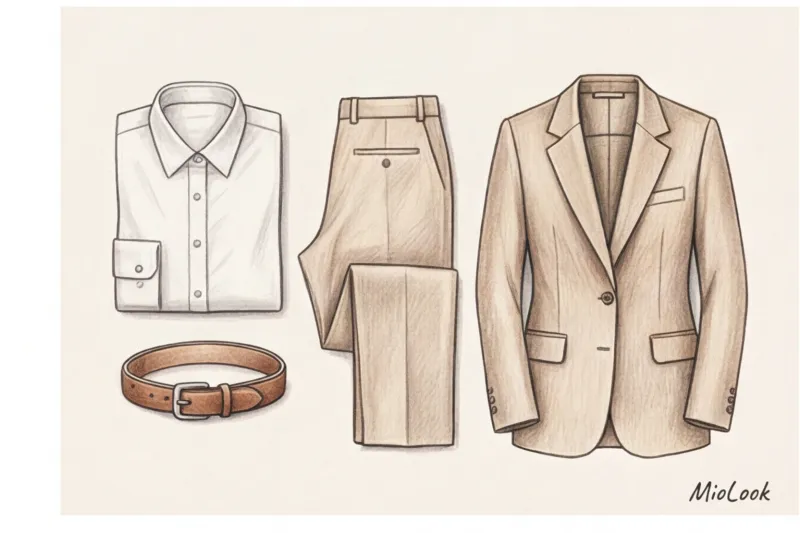
Step 2: The "One in, One out" Rule
I picked up this harsh but brilliantly effective rule from buyers at independent concept stores. The gist is simple: to buy something new, you have to say goodbye to something old. Want to add a trendy cardigan to your collection? Great, but which of your old sweaters are you willing to recycle or donate to charity?
One of my London clients used this principle to pare down her outerwear collection from a chaotic twenty items to six perfect coats and trench coats. The "One in, One out" method automatically engages critical thinking: you stop buying things that are just one day old because you simply don't want to give up good, tried-and-true essentials.
Step 3: Find local brands and limited capsules
Giant corporations, with their 52 micro-seasons per year, simply cannot be 100% sustainable. True ethical design is born in small studios today. Give up the habit of stopping by mass-market stores on the way home from work. Look for local brands that operate on a pre-order basis or release capsule collections in strictly limited editions—no deadstock or overproduction.
Yes, it can take two to three weeks to be tailored. But a garment crafted specifically for you by a well-paid artisan has a completely different energy and fit than something rolled off the assembly line.
Step 4: Form a base of eco-materials, add trends through accessories
Don't try to keep up with fast-paced fashion by buying expensive eco-friendly items with ultra-fashionable cuts that will be out of style in six months. Your investment strategy should look like this: build your wardrobe foundation (T-shirts, shirts, and tailored suits) from high-quality organic fabrics. A high-quality white shirt made of dense, certified Tencel for €120–€150 will last you for years.
Micro-trends—leopard print, a sophisticated seasonal color, or avant-garde shapes—are best implemented through accessories. A vintage silk scarf, a statement belt found at a resale boutique, or a large recycled metal brooch instantly update any basic silhouette without compromising the environment or your wallet.
Instead of a conclusion: a curatorial approach to one's style
Ultimately, ethical fashion isn't about strict restrictions, giving up beautiful dresses, or living in an ascetic linen cocoon. It's a shift from mindless consumerism to the role of thoughtful curator of your own life. You're like a gallery owner who carefully selects each piece for their collection, knowing the history of its creation, the composition of its fibers, and its true value.
Start today. Check the tags on your favorite jackets, ask yourself honestly whether you really need your next purchase, and give small, independent designers a chance. Transforming your wardrobe is a marathon, and every conscious choice you make today is changing the global industry for the better.
Guide Chapters
Clothing upcycling: what it is and how it transforms your wardrobe
Discover how reimagining vintage can help break the cycle of fast fashion. We'll dispel myths about upcycling and learn how to create a stylish wardrobe consciously.
The Harm of Fast Fashion: How Fast Fashion is Destroying the Planet
Full closet, but nothing to wear? We explore how the fast fashion industry is quietly draining your wallet and destroying the planet.
Recycled Clothing: A Hidden Threat?
Do items made from recycled plastic really help save the ocean? We examine brands' marketing ploys and the true quality of eco-friendly collections.
Organic cotton: what's the difference? Is it worth buying?
We'll explore the true differences between organic cotton and conventional cotton, and why mass-market eco-labels often lie.
Why are ethical brands so expensive? Calculating Cost Per Wear
Mass-market clothing is more expensive than it seems at first glance. We'll break down the financial math behind a smart wardrobe using the Cost Per Wear formula.
How to care for eco-friendly clothing: secrets to longevity
Sustainable fashion isn't just about choosing ethical brands; it's also about treating fabrics with care. We'll explain how to wash and store your clothes properly.
Vegan Clothing: Materials to Replace Leather
Vegan fashion doesn't always mean eco-friendly. We'll explain how to avoid greenwashing and choose ethical alternatives to genuine leather, fur, and silk.
Eco-labeling of clothing: a guide to GOTS, Oeko-Tex, and Fair Trade
True eco-friendliness is hidden on the inside labels. We explore the meaning of GOTS, Oeko-Tex, and Fair Trade certificates and how they guarantee quality.
Eco-friendly fabrics for clothing: Tencel, Cupro, hemp
We explore the key innovative materials—Tencel, Cupro, and hemp. Find out how they perform in real life, whether they'll survive washing, and whether they're worth the money.
How to recognize and avoid greenwashing in clothing
Brands often sell cheap plastic at premium prices, blaming environmental concerns. Learn how to avoid greenwashing when choosing your wardrobe.
An eco-friendly basic wardrobe: how to build one without breaking the bank
True sustainability doesn't start with buying expensive eco-brands, but with combing through your closets. We'll show you how to create a functional capsule wardrobe.