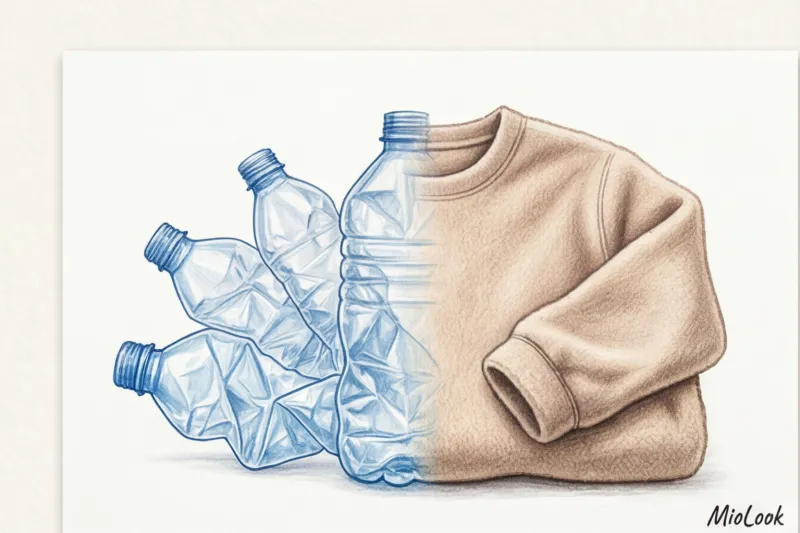
Clothing made from recycled plastic: saving the ocean or a hidden threat?
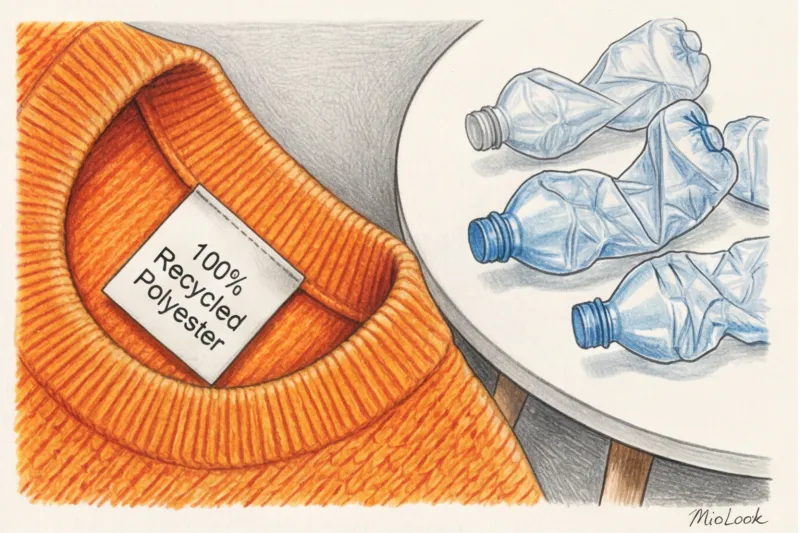
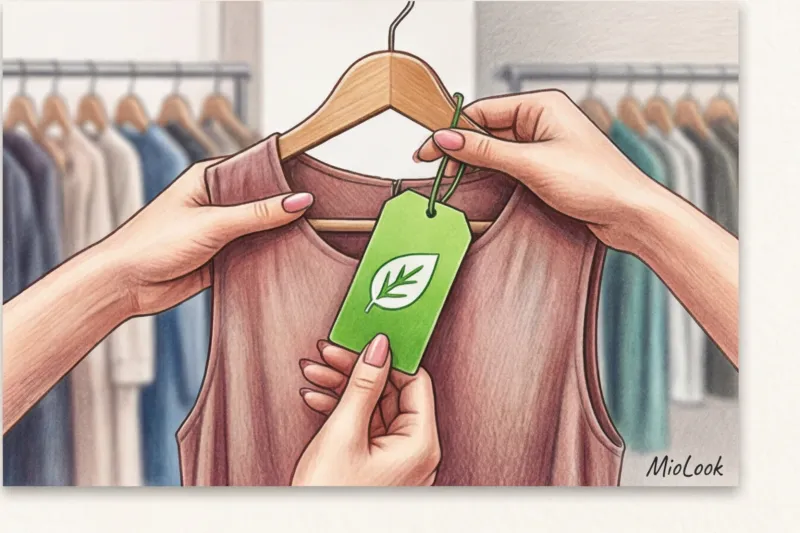
I remember that day very well. A client and I were going through her spring capsule collection, and she was proudly showing me her new acquisitions. "Look, Emily, I've decided to become more conscious. These are all eco-friendly collections!" she said, pointing to a rack of dresses and blouses in basic shades. I picked up the first item I saw. It had a bright green tag with a leaf on it, and the composition stated: 100% recycled polyester. The problem was, after the third wash, this "eco-friendly" clothing made from recycled materials It became covered in hard pellets, lost its shape and became suitable only for washing floors.
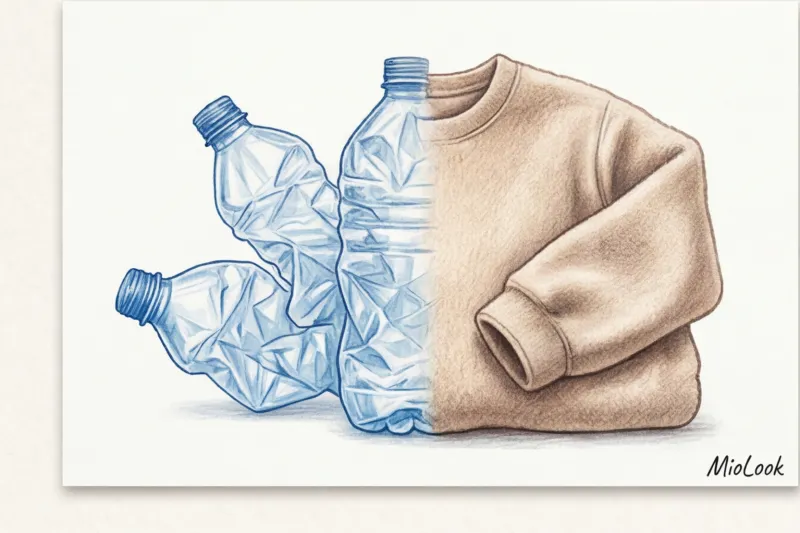
We've been conditioned to believe that by buying a T-shirt made from old plastic bottles, we're automatically saving the ocean and sea turtles. Mass-market brands have invested millions of euros in marketing so we can feel proud at the checkout. But as a stylist and a smart wardrobe enthusiast, I have to take off those rose-colored glasses. We've already covered how brands manipulate our trust in more detail in our complete guide to how to choose ethical clothing brands without greenwashing Today, let's explore rPET (recycled PET) technology: why it's not a permanent solution to the environmental crisis, but rather a transitional phase that often exacerbates the problem.
How a plastic bottle ends up in your closet
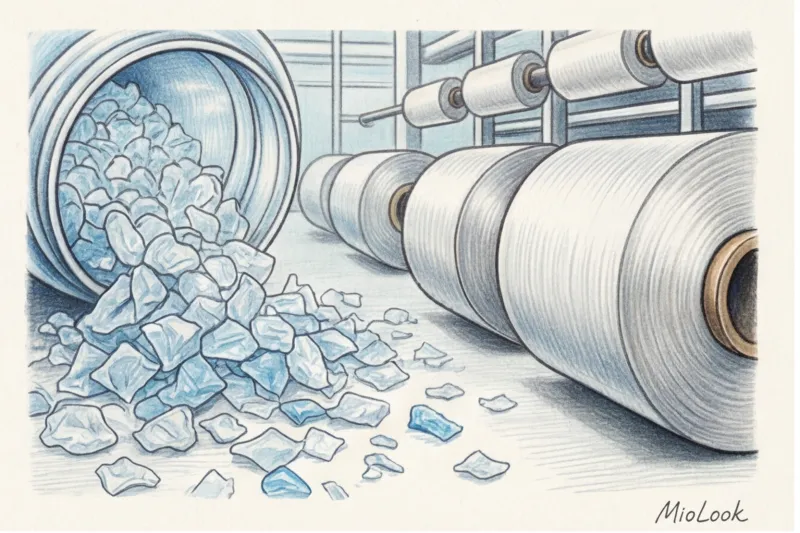
The process of turning plastic waste into fabric sounds like the magic of technological progress. First, the collected bottles are carefully cleaned of labels and caps. Then they are sent to a shredder, where they are crushed into small plastic flakes (flakes). These flakes are melted at high temperatures, and the finest threads are extracted from the resulting mass through special filters. These threads are then woven into fabric—the aforementioned rPET.
Sounds great, right? Producing this material requires 59% less energy than creating virgin polyester from petroleum products. Brands are switching en masse to rPET for two reasons. First, it allows them to boast about their reduced carbon footprint in their annual ESG reports. Second, it's cheap. The production cost of a synthetic blouse rarely exceeds €3-5, while it can be sold for €40-60 under the auspices of "saving the planet."
But there's a catch. According to a 2023 report by the respected organization Textile Exchange, the share of recycled polyester on the market is indeed growing. However, 99% of this volume comes from recycled PET bottles, not old clothing. The fashion industry takes in other people's waste, but is completely inept at recycling its own. Only 1% of all clothing produced globally is recycled into new clothing.
The Bitter Truth About rPET: Why Recycling Isn't Saving the Ocean
And now for the main counterintuitive insight that marketers prefer to keep quiet about: Recycling a plastic bottle into a T-shirt isn't pure recycling. downcycling (downcycling) - reduction in the quality of a material.
Research by the Ellen MacArthur Foundation reveals a paradoxical picture: the beverage industry is sounding the alarm because they are facing a catastrophic shortage of PET bottles. Why? Because the fashion industry is buying them up! If you recycle a bottle in the right container, in an ideal world, it will be recycled into a new, transparent bottle. This closed-loop, bottle-to-bottle cycle can be repeated up to 10 times without any loss of plastic quality.

But as soon as that bottle is turned into fiber for your new mass-market dress, the perfect cycle is broken. This is especially true if the brand decides to blend rPET with cotton or elastane to improve tactile properties. Current recycling infrastructure is practically incapable of separating blended fabrics. Your "eco-friendly" t-shirt made of 50% cotton and 50% recycled polyester is a one-way ticket to the landfill. We've simply delayed the plastic's arrival in the landfill for a couple of years.

Microplastics: The Invisible Threat in Your Washing Machine
The physics of recycled synthetics is such that rPET threads are often more brittle and shorter than those of virgin polyester. This makes them much more susceptible to breakage under mechanical friction.
A renowned study by Plymouth University (2016) revealed shocking figures: a single wash of a standard fleece jacket releases up to 700,000 microfibers into the water. These particles are so small (less than 5 mm) that washing machine filters and municipal wastewater treatment plants simply don't capture them. Microplastics easily end up in rivers and seas, enter the fish food chain, and ultimately end up in our blood and tissues.
Your perfect wardrobe without harming the planet
Digitize your items in the MioLook app. A smart AI stylist will help you create dozens of new looks from what you already own, reducing the need to buy new clothes.
Get access — €0.99 onceGreenwashing: How Brands Sell Us a "Green" Conscience
Over 12 years as a stylist, I've seen the evolution of greenwashing up close. A 2021 report by the Changing Markets Foundation, "Synthetic Anonymity," demonstrated the direct connection between the fast fashion industry and oil corporations. Brands launch capsule collections with catchy names like "Conscious" or "Join Life," but often these are little more than window dressing.
I came up with a simple solution for my clients The 15% Rule Go to any major chain store and carefully read the ingredients on the green card. You'll often see: 15% recycled polyester, 85% virgin polyester. This isn't ethical fashion; it's cynical marketing. You're paying full price for an item that doesn't breathe, creates a greenhouse effect on your skin, and makes you sweat more than usual.
Instead of supporting the illusion of eco-friendliness of the mass market, I recommend paying attention to the real thing upcycling brands , who work with vintage fabrics, or invest in natural materials.

When is clothing made from recycled plastic really worth it?
Does all of this mean that synthetics should be burned in a ritual bonfire (please don't, they're toxic when burned)? No. rPET isn't an absolute evil if you use it consciously and in the right clothing categories.
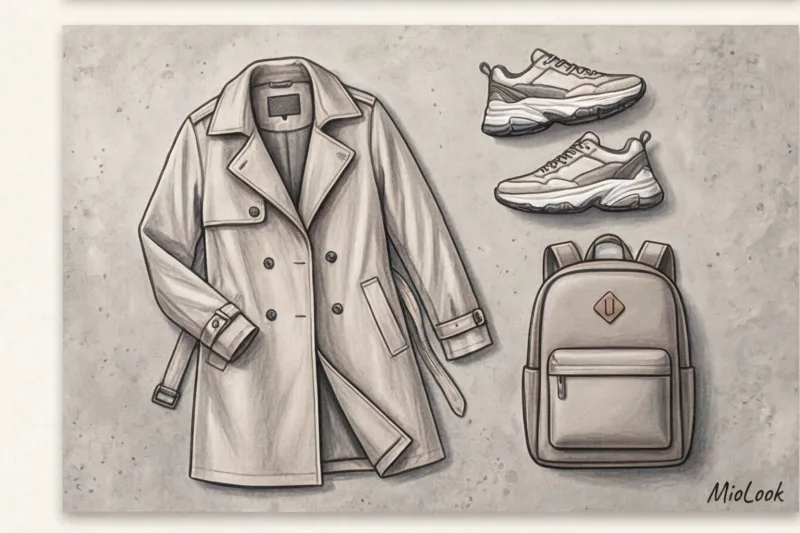
Synthetics are indispensable where their key physical properties are required: waterproofness, windproofness, lightweightness, and durability. Recycled plastic is an excellent choice for the following categories:
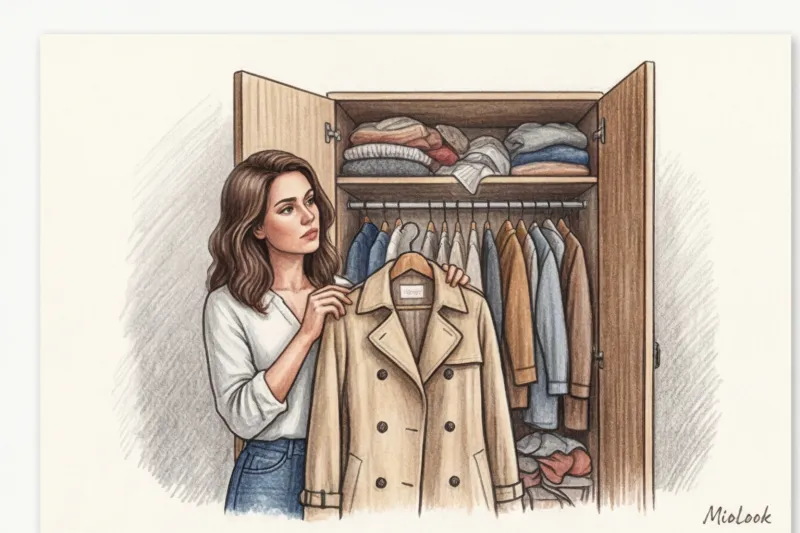
- Outerwear: Raincoats, technical parkas, down jackets. A high-quality waterproof trench coat will cost you €150–250, but it will last for decades.
- Bags and backpacks: Accessories do not require frequent washing, which means the risk of microplastic release is minimal.
- Shoes: Sneakers with uppers made from recycled ocean plastic (like adidas's Parley collaboration) are a great example of sustainable material use.
- Sports and tourist equipment: Membranes and thermal underwear for high loads do not yet have 100% natural analogues with the same moisture-wicking properties.
Where synthetics are absolutely forbidden not a place In a basic everyday capsule collection. Underwear, T-shirts, office shirts, summer dresses, and especially children's clothing should be made from natural, breathable fabrics (cotton, linen, wool) or naturally occurring synthetic fibers (viscose, lyocell, tencel).
Create your perfect capsule
Try MioLook for free: our algorithm will analyze your parameters and help you find high-quality items that complement each other perfectly.
Get access — €0.99 onceA Practical Guide: How to Wear and Wash Synthetics Without Damage
If you already have polyester or fleece clothing in your closet, throwing it away is another environmental crime. The item has already been produced, leaving a carbon footprint. Your goal is to extend its life and minimize the impact of care.
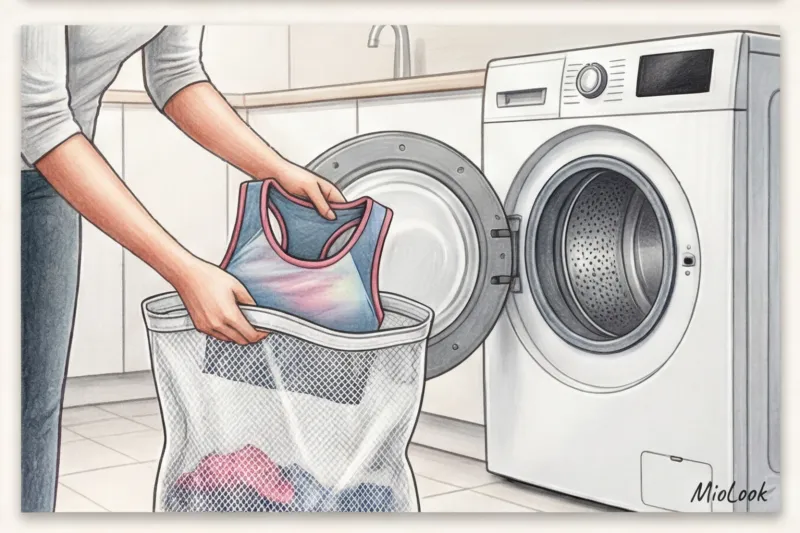
I personally tested special laundry bags for synthetics (for example, the popular Guppyfriend, which costs around €30) for three months. I'll be honest about their limitations: they don't capture 100% of the microfibers. Fine dust still passes through the membrane. However, after each wash, I found visible clumps of lint in the bag's seams that would otherwise have gone straight down the drain. This is a viable waste reduction tool.
Here are 4 stylist rules for caring for synthetic hair:
- Reduce the frequency of washing. Synthetics quickly absorb odors, but often it's easy enough to freshen the item. Use a handheld steamer—hot steam kills bacteria and removes sweat odor without the mechanical friction of a washing machine drum.
- Cold wash and low speed. Wash at 30 degrees Celsius and spin at no more than 600 rpm. The higher the temperature and the more friction, the more plastic breaks down.
- Replace powder with gel. Dry laundry detergent granules act like sandpaper (abrasive) on fabric, significantly increasing the fragility of the threads. Liquid detergents are gentler.
- Load the drum completely. When the machine is loaded tightly, items are less likely to hit each other and the drum walls, which reduces the release of microfibers by 30%.
Technology Instead of Recycling: A Smart Wardrobe as a Key Eco-Habit
You might think that an eco-friendly wardrobe is complicated, expensive, and requires a PhD in chemistry. But in reality, a global paradigm shift is taking place: the most eco-friendly item is the one already hanging in your closet.
Instead of buying your fifth recycled bottle t-shirt, start working with metrics. Cost-Per-Wear (CPW) A 100% merino wool sweater for €150 that you'll wear 100 times (CPW = €1.50) is much more eco-friendly and easier on your wallet than a €30 acrylic jumper that will pill after 5 wears (CPW = €6).
When I started digitizing my clients' wardrobes in MioLook app , we made a stunning discovery. It turns out that most women only wear 20% of their clothes 80% of the time. The rest just hangs there, dead weight, because we forget about them or don't know how to style them.
Using AI to plan your bows solves the problem of overconsumption more effectively than any eco-marketing. You can see your entire arsenal on your smartphone screen. You plan summer capsule clothing No impulse buys on sales. You know exactly what you need: one high-quality pair of thick viscose or wool trousers, not three pairs of polyester pants that are just a day old.

Clothing made from recycled plastic is a complex compromise in the modern world, not a panacea. The next time you reach for something with an attractive green label, ask yourself: "Do I really need this item to protect me from rain or wind, or is the brand simply selling me cheap plastic under the guise of caring for the environment?" Invest in quality, analyze your style using technology, and remember: mindfulness starts not in the store, but in your own closet.
" }