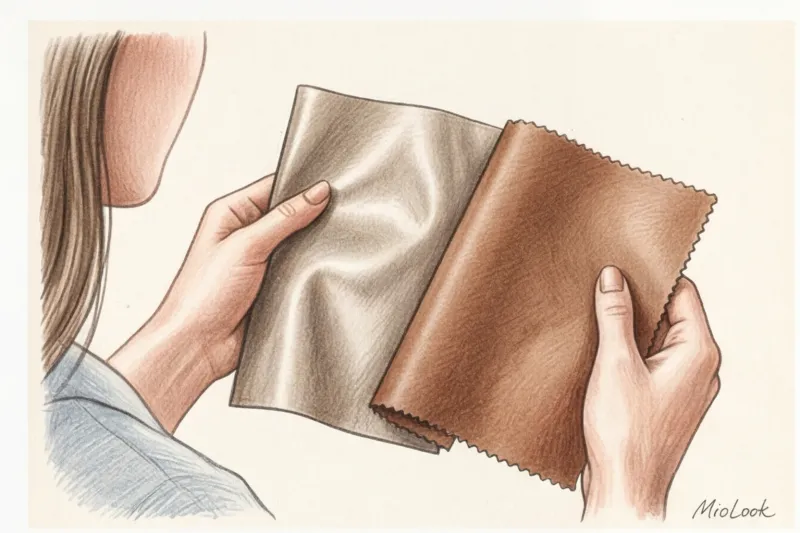
The Greenwashing Trap: Why Vegan Clothing and Materials Are Not Always Synonymous with Eco-Friendliness
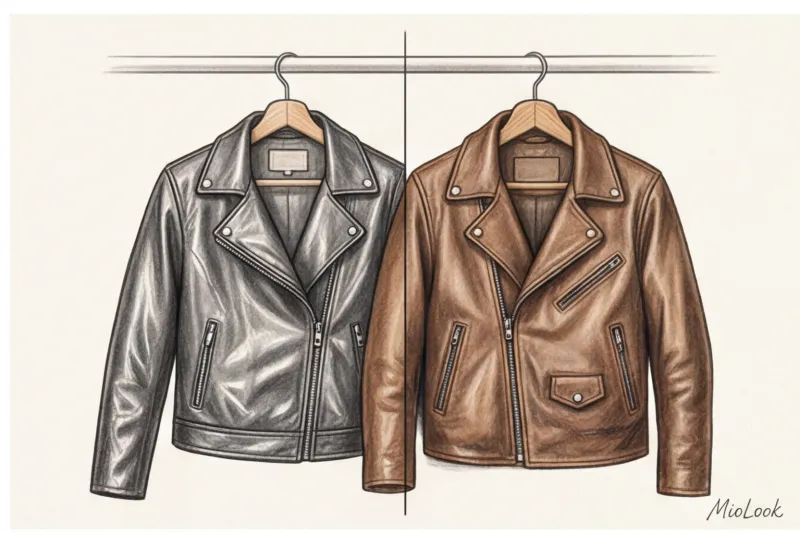
I vividly remember the disappointed look on my client's face as we examined the composition of her new jacket. The tag proudly proclaimed "100% Vegan" in large print, and the garment itself cost around €180. But upon closer inspection, it turned out to be just a piece of plastic. When we're choosing the ingredients for our vegan clothing, the materials often turn out to be a brilliant marketing ploy rather than a genuine commitment to environmental sustainability.
The mass market is a master at confusing concepts. Ethics (no animal exploitation) and eco-friendliness (safety for the planet) are two completely different metrics. A brand can proudly declare that not a single cow was harmed in the creation of a collection, but fail to mention that the production of their faux leather has poisoned a river with toxic waste. We discussed this paradox in more detail in our The complete guide to choosing ethical brands without greenwashing.
According to a 2023 report from the Material Innovation Initiative, up to 90% of so-called “vegan leather” on the mass market is made entirely of polyurethane (PU) or polyvinyl chloride (PVC), which are based on fossil fuels.
Leatherette of our time: the hidden threat of polyurethane
Why do budget PU leather jackets and bags lose their appearance so quickly? The problem lies in its chemical structure. Polyurethane is naturally inelastic—plasticizers are used to make it soft, but these quickly evaporate. As a result, after just one or two seasons of heavy wear (especially with fluctuating temperatures), the material becomes covered in microcracks and begins to peel unsightly.
Worse, the problem of disposing of such an item is a dead weight on the environment. A PVC jacket will take hundreds of years to decompose in a landfill, gradually releasing phthalates and microplastics into the soil. By buying cheap faux leather, we save a cow today, but poison the ecosystem in which it lives for decades to come.
Access to MioLook for €0.99 — one-time payment
A smart AI stylist will select the perfect look based on your wardrobe and preferences.
Get access — €0.99 onceInnovative Vegan Leather: From Pineapples to Mushrooms
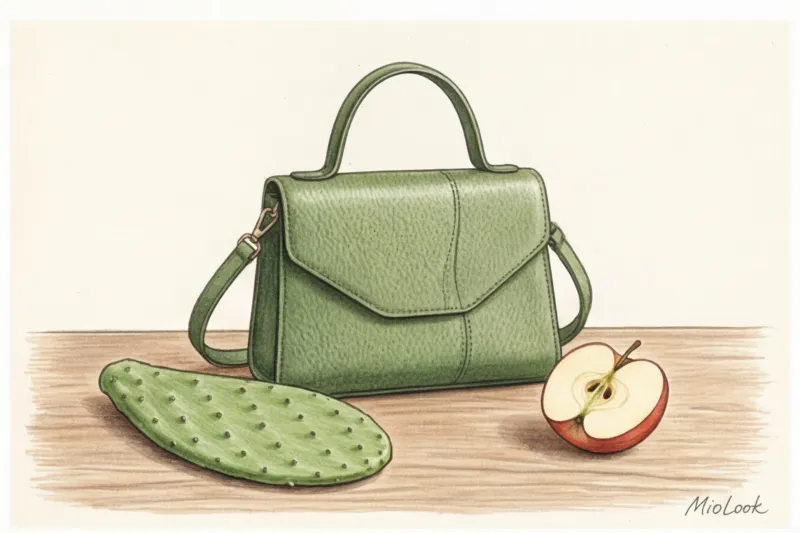
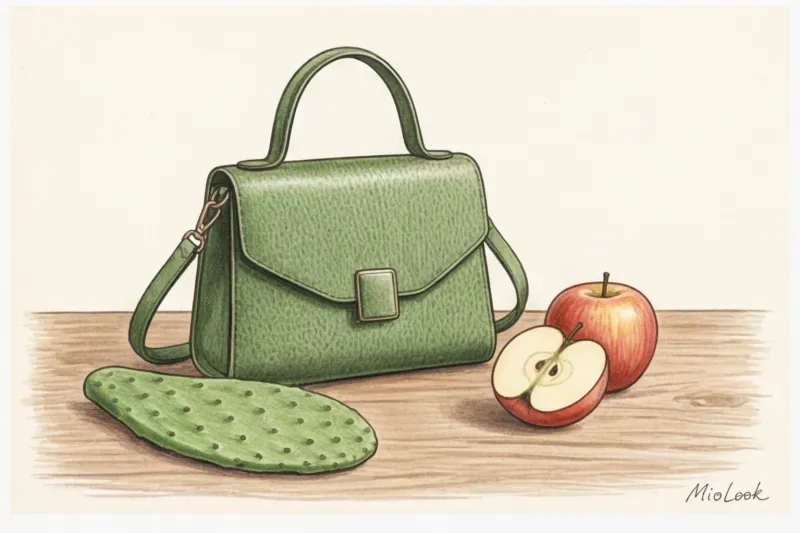
Fortunately, the industry is advancing, and today, worthy plant-based alternatives to plastic have emerged. The most common premium options include Piñatex (made from pineapple leaf fiber), Desserto (leather from the Mexican nopal cactus), and AppleSkin (a material made from apple pomace, the residue left over from juice production).
Mylo, a material grown from fungal mycelium, has become a real breakthrough for luxury brands. It has a stunning porous structure, almost indistinguishable from genuine calfskin. However, this technology is currently incredibly expensive: Stella McCartney's mycelium bags start at €1,500.
But I have to add a fly in the ointment here. Over the course of two years, I personally tested a Desserto bag made from cactus leather and Piñatex boots. It's important to understand: 100% biodegradable plant-based leather doesn't yet exist in the mass market. To ensure that apple pomace or pineapple leaves retain their shape and don't fall apart in the rain, they are still mixed with polyurethane (usually 10% to 30%). Yes, this is a huge improvement over 100% plastic, but it's still a composite material.
Stylist's Workshop: How to Check the Quality of Eco-Leather
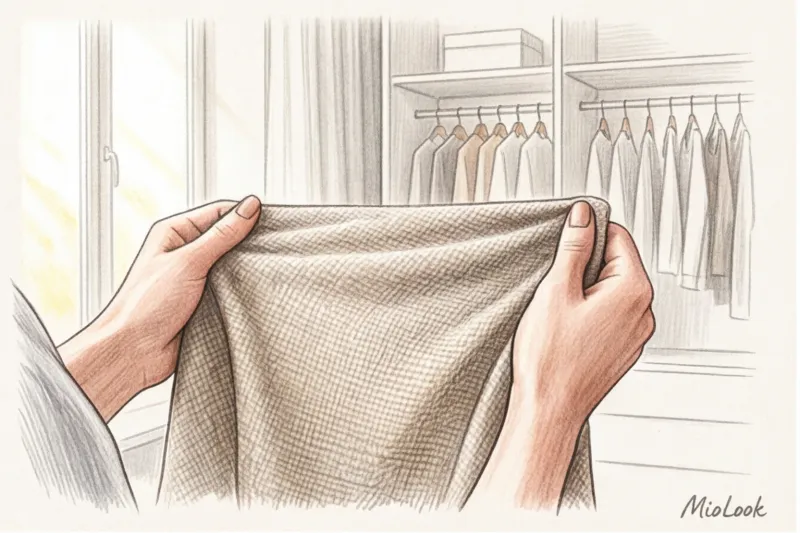
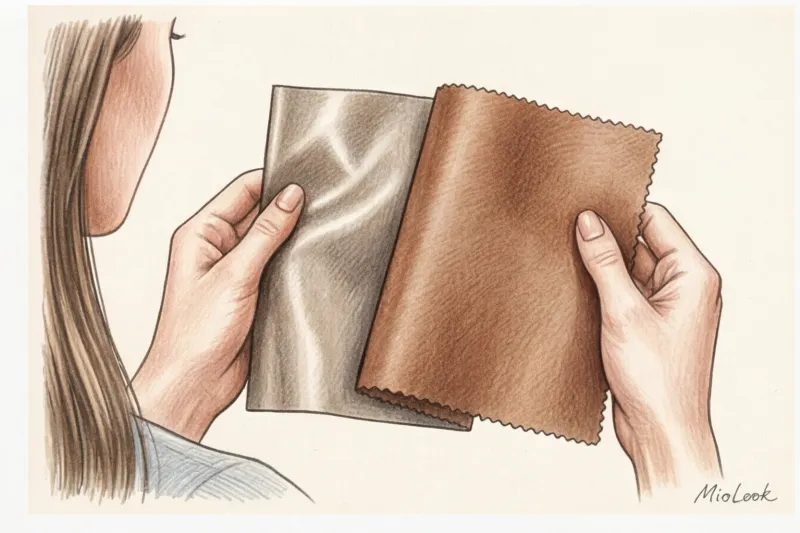
I often teach my clients to determine the quality of a material with their eyes closed. In my studio, we conduct a blind temperature test. If you place your palm on a 100% polyurethane product, it will feel cool and "glassy" to the touch. High-quality organically blended plant-based leather (like AppleSkin) will absorb the warmth of your hand in just a few seconds.
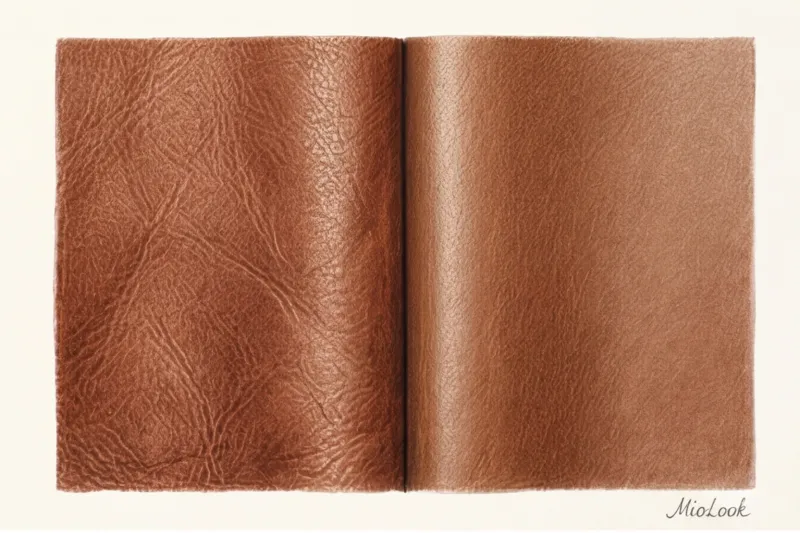
The second method is the crease test. Gently squeeze the edge of a bag or the sleeve of a jacket. Cheap leatherette springs unnaturally hard and leaves a sharp, angular crease. Vegetable-based alternatives crease gently, creating a natural wrinkle pattern similar to natural grain.
Ethical Silk: How to Look Classy Without Sweating
Traditional silk doesn't fit into a vegan wardrobe for one simple reason: to produce a single, continuous thread, silkworm cocoons are boiled along with the caterpillars inside. Animal rights activists offer alternatives, but mass-market brands exploit this once again, selling 100% polyester as "vegan silk."
A client, a top manager at an IT company, once approached me with a wardrobe request for public speaking. She bought a striking emerald eco-silk blouse from a popular high-street store for a presentation to her board of directors. The result was predictable: under the spotlights, the polyester created a greenhouse effect. After 15 minutes of speaking, noticeable sweat stains appeared on the fabric, and the client felt like she was wearing a plastic bag.
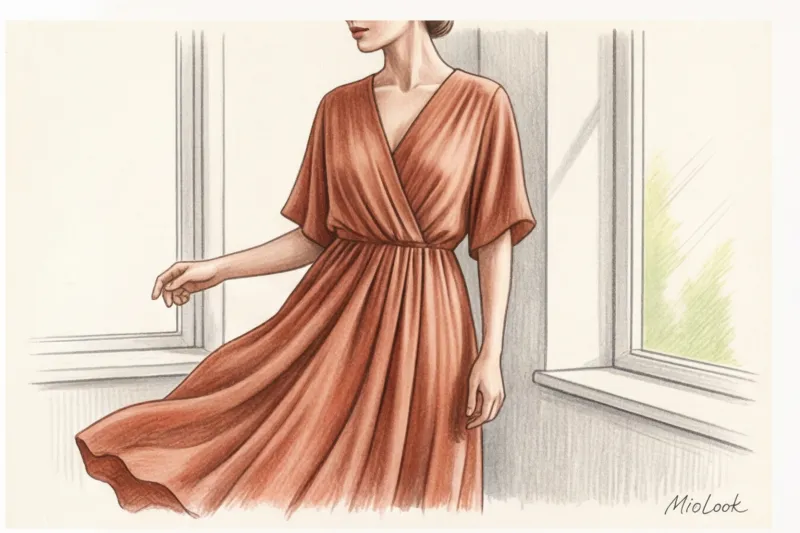
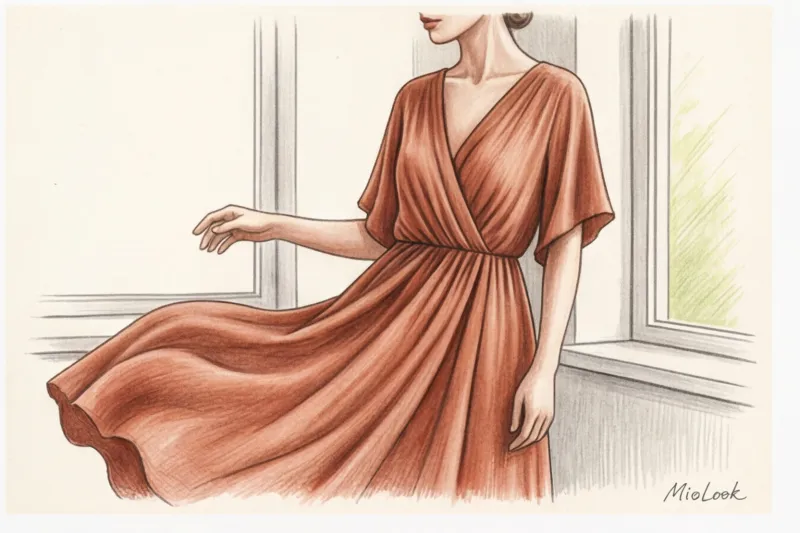
A truly ethical alternative to silk is cellulose fibers. We replaced that disappointing blouse with a model made of Cupro (a fabric made from cotton linters). Cupro flows smoothly, has a refined matte sheen, and, most importantly, is breathable. Tencel (Tencel™ made from eucalyptus wood) or the innovative Orange Fiber (made from citrus pomace) are also excellent options. According to the Higg Materials Sustainability Index, Tencel production uses 50% less water than traditional silk and utilizes a closed-loop processing system.
Your perfect look starts here
Join thousands of users who look flawless every day with MioLook.
Get access — €0.99 onceThe Bitter Truth About Eco-Fur (And What Can Actually Replace It)
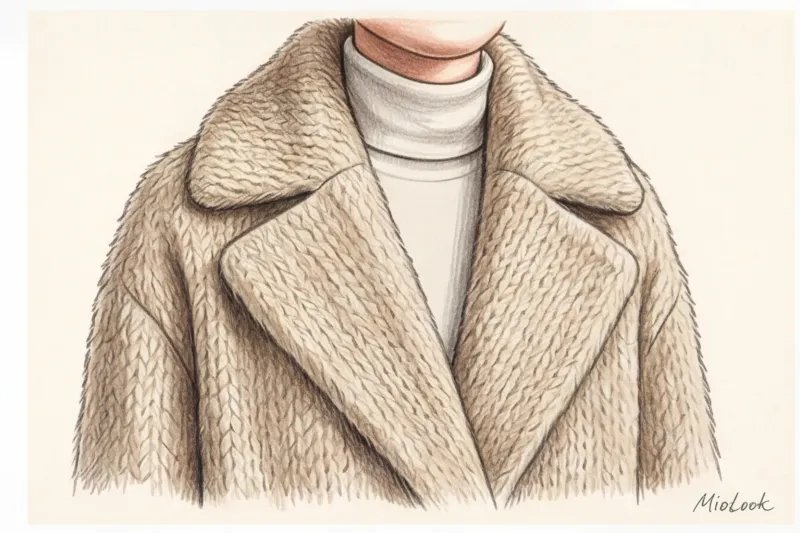
In winter, city streets fill with girls in brightly colored Cheburashka hats. Brands actively market acrylic fur coats as an act of humanitarianism. But a 2023 study by Textile Exchange puts an end to this illusion: with every wash, or even just from friction during wear, acrylic fur sheds thousands of microplastic particles, which are not filtered by wastewater treatment plants and end up in the world's oceans.
Herein lies the most counterintuitive insight of sustainable fashion: wearing an old vintage fur coat handed down from your mother is much more environmentally friendly than buying a new acrylic one. A fur coat has already been produced, its carbon footprint is a thing of the past, and it won't decompose into toxic particles for centuries.
If you're adamant about not wearing animal-based materials, look for truly innovative options. For example, Koba fur, which is made from 37% corn-based plant materials. Or consider hemp fur, which is increasingly popular. It has a slightly rustic look, but it's incredibly warm, has antibacterial properties, and costs between €300 and €500 for a quality coat.
Checklist: How to Read the Ingredients of Ethical Clothing Before Buying
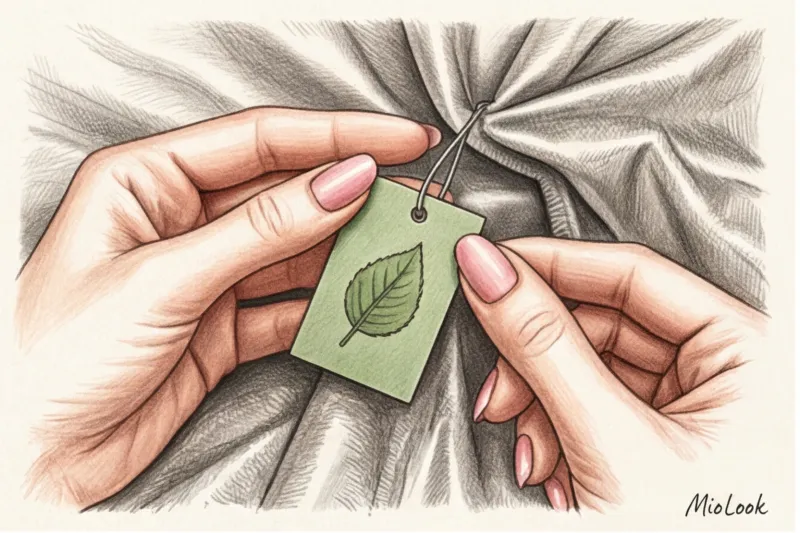
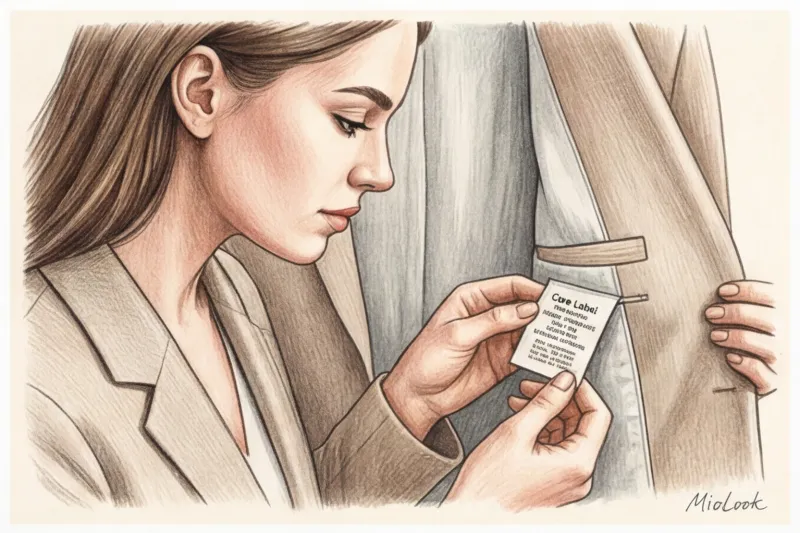
To avoid falling for marketers' tricks, learn to scan sewn-in labels. No green leaflets on a cardboard tag mean anything if the ingredients are pure petrochemicals. Save this checklist for your next shopping trip.
- Red flags (leave in the store): 100% Polyurethane (PU), 100% Acrylic, Virgin Polyester, PVC. If a brand simply writes "Vegan Leather" without specifying the composition, it's almost guaranteed to be cheap plastic.
- Green flags (you can take them): Tencel™ Lyocell, EcoVero™, Cupro, GOTS-certified organic cotton, Piñatex, Vegea (grape pomace leather).
- How to check brands: Don't be shy about asking customer support questions. Ask, "What percentage of polyurethane is in your apple leather?" Reputable, sustainable brands (like Nanushka or Stella McCartney) will bluntly say 15-20%. Greenwashers will evade the question with general statements about their love of nature.
A Mindful Wardrobe: Should You Throw Out Your Old Leather Shoes?
The most common mistake I see women make when they decide to switch to ethical fashion is an immediate "cleansing" of their wardrobe. They throw all their leather shoes, silk dresses, and wool sweaters into bags and throw them in the trash, only to stock up on vegan items the next day. It's an environmental crime.
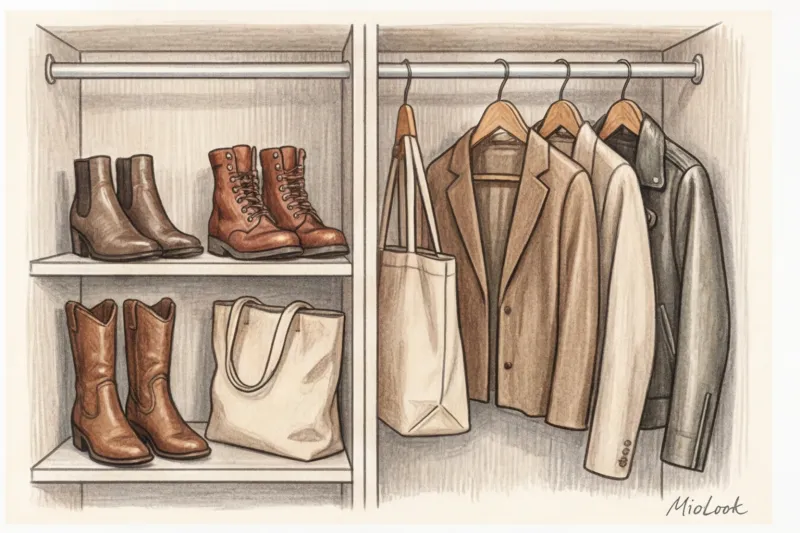
The most eco-friendly and sustainable item in the world is the one already hanging in your closet. Even if it's leather shoes made from animal sources. By throwing away a good item, you devalue the resources (water, energy, labor) that were already expended on it. Wear your shoes out, have them repaired, and care for them. And when they're completely worn out, replace them with high-quality plant-based alternatives.
To properly integrate new vegan materials into your existing wardrobe, I recommend digitizing your items. MioLook You can create a virtual capsule collection: mix your favorite vintage leather loafers with new Tencel trousers and see how they work together. Artificial intelligence will help you create dozens of new looks without having to buy anything extra.
Vegan fashion is no longer just a pretty hashtag. It's a complex industry at the intersection of chemistry, botany, and design. And the key takeaway is: read ingredients as carefully as you read food labels. Your skin and our planet will thank you.