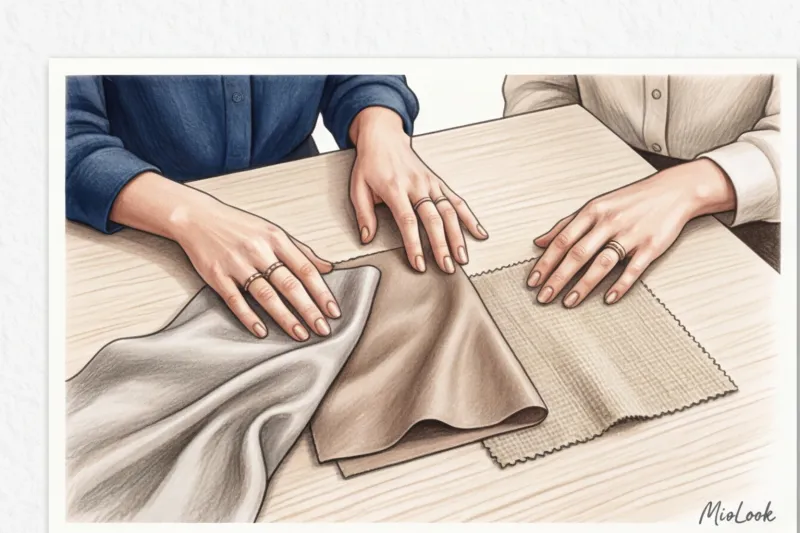
How many times have you bought an item with a proud green "Conscious" or "Eco" tag, only to find it a shapeless, pilled mess after the first wash? As a practicing personal stylist, I see this all the time. My clients spend substantial budgets on a "conscious wardrobe," guided by marketing slogans, but they have absolutely no understanding of the physics of materials.
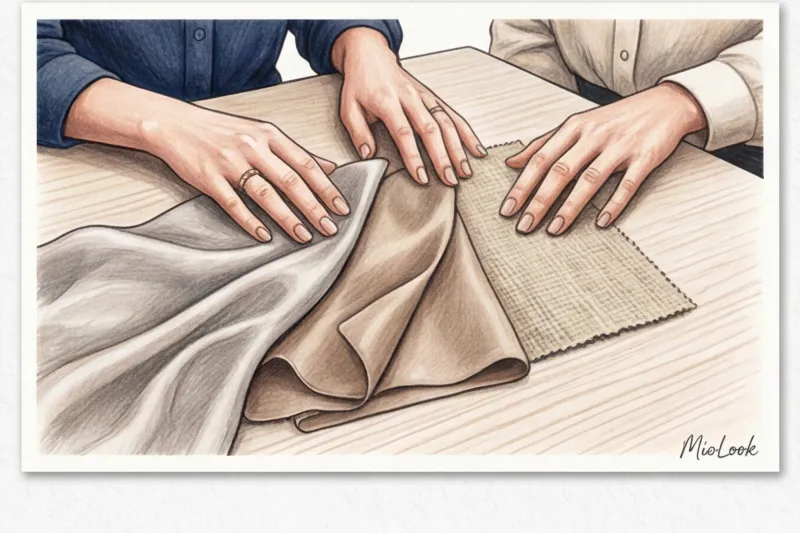
Let's be clear: eco-friendly clothing fabrics aren't a slap on the wrist for shopping addiction. They're specific, physical materials with their own pros, cons, and, most importantly, usage guidelines. We've explored how brands manipulate our sense of planetary guilt in more detail in our article. The complete guide to ethical clothing brands without greenwashing.
Today, we won't be talking about saving whales. We'll be taking a pragmatic look at three key innovative materials: Tencel, Cupro, and hemp. You'll learn how they perform in real life, whether they wrinkle in the office, whether they'll survive a washing machine, and whether they're worth the price tags COS or Massimo Dutti are asking for them.
Why "eco-friendly clothing fabrics" are no longer just coarse linen
Ten years ago, the phrase "eco-fashion" conjured up images of shapeless burlap robes in earthy tones. It was believed that if you wanted to be eco-friendly, you had to sacrifice elegance. Fortunately, technology has come a long way.
The problem with traditional materials has become all too obvious. According to the McKinsey Sustainability Report (2023), producing a single cotton T-shirt requires approximately 2,700 liters of water—that's what the average person drinks in three years. And classic 100% linen, despite its naturalness, wrinkles too much to withstand strict corporate dress codes: you drive to work, and your pants already look like you slept in them.
That's why mid-market brands (&Other Stories, COS, Massimo Dutti) are switching en masse to innovative fibers. This is the new luxury: fabrics that look like silk or premium wool, but are produced using closed-loop principles with minimal resource consumption.
Tencel (Lyocell): Silky Armor for the Modern Office
Let's start with the basics. Lyocell is a fiber derived from eucalyptus wood. But herein lies the first pitfall. There's cheap, no-name lyocell (often made in China), and then there's Tencel™ — a patented material from the Austrian company Lenzing Group. Original Tencel is produced in a closed-loop process, where 99% of the water and solvents are recycled.
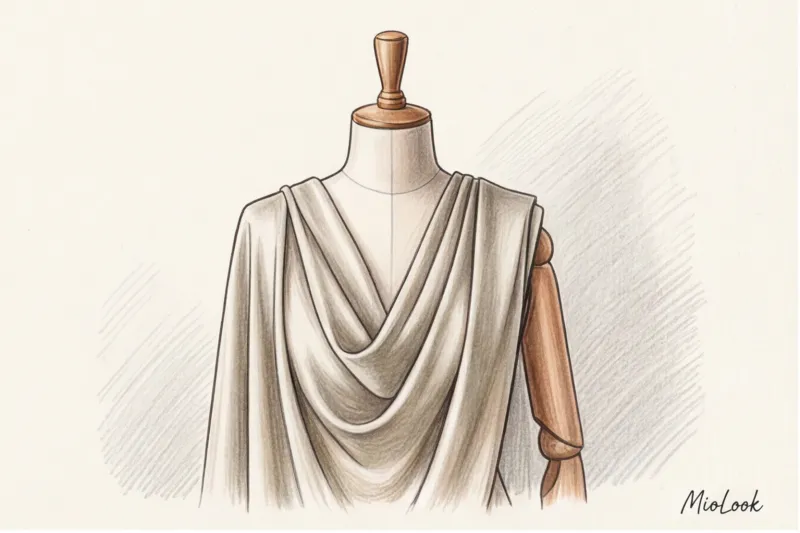
How does this fabric wear? Amazing. Over 12 years as a stylist, I've developed a golden rule: if a client over 30 wants the perfect palazzo pants or a flowy blouse for a basic capsule collection, we look for Tencel. It has a unique "heavy water" effect—the fabric flows softly yet weightily across the figure, smoothing out rather than emphasizing unevenness. It feels like thick, slightly cool silk.

What we pay for: a pragmatic calculation
Why does a viscose blouse at Zara cost €25, while a similar one made from 100% Tencel costs €50–60? The difference lies in durability. Regular viscose loses up to 50% of its strength when wet—that's why it tears and deforms so easily after washing.
Tencel is more durable. It pills significantly less when rubbed against a bag or outerwear. Eucalyptus fibers also hold pigment phenomenally well. If you're looking for a deep, luxurious navy or a jet-black color that won't fade after five washes, choose Tencel. In hot weather, it feels cooler on the skin than cotton, making it an absolute must-have for summer business attire.
Access to MioLook for €0.99 — one-time payment
A smart AI stylist will select the perfect look based on your wardrobe and suggest how to pair items made from innovative fabrics.
Get access — €0.99 onceCupro: Vegan silk with a very complex character
Cupro is often hailed as a triumph of the circular economy. It's made from cotton linters (lint)—short fibers that envelop the cotton seeds, which were previously simply discarded as waste. In terms of tactile feel and its elegant matte sheen, cupro is almost 100% identical to boiled silk.
It's perfect for slip dresses, evening capsule collections, and relaxed summer suits. Cupro is breathable, hypoallergenic, and drapes luxuriously. But it has a catch that boutique consultants don't tell you.
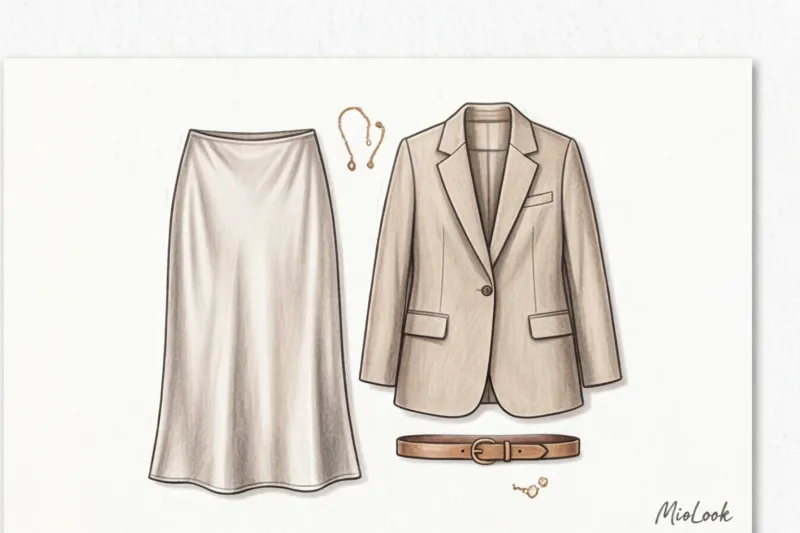
One of my clients, a top manager at an IT company, bought a stunning 100% cupro dress from a well-known premium brand (costing around €250) for a conference presentation. Five minutes before going on stage, she decided to lightly refresh the hem with a steamer. The result? Huge dark stains appeared all over the dress, just from drops of clean water. Cupro is an indicator fabric. It instantly shows the slightest traces of moisture, including sweat stains.

Stylist's advice: If you're prone to sweating or planning a public speaking event (where stress is inevitable), cupro is your worst enemy. Save this material for cool evenings or choose a loose fit that doesn't cling to your armpits. I discussed these nuances in more detail in the guide. What fabric doesn't show sweat stains?.
Hemp: The New Linen for Those Who Hate Ironing
Forget about rough ropes. Modern, high-tech hemp has undergone incredible evolution. Today, the fiber is processed to become soft and pliable, in no way inferior to premium flax, and in some respects, superior.
The facts speak for themselves: hemp is four times stronger than cotton. It has natural antibacterial properties and naturally blocks up to 95% of UV rays. Hemp has a remarkable property: with each wash (at the right temperature), the garment doesn't become thinner, but rather becomes softer, adapting to your body shape.

Last year, we were putting together a capsule suit for a speaker at the Summer Tech Forum in Lisbon. The temperature was 32°C. Linen was out of the question—it looks sloppy after two hours in a chair. We opted for a hemp blend suit. And this is my main life hack: always look for lens hoods.
The ideal working ratio is 55% hemp/45% organic cotton or Tencel. You get the beautiful, luxurious texture of linen, but the garment maintains the architectural shape of a jacket or Bermuda shorts and is virtually wrinkle-free throughout the workday.
Your perfect look starts here
Join thousands of users who look flawless every day with MioLook. Digitize your wardrobe in minutes.
Get access — €0.99 onceThe Dark Side: When Sustainable Clothing Fabrics Become a Problem
Now let's take off our rose-colored glasses. The mass market knows full well that the word "eco" sells. And this is where the blatant greenwashing begins.
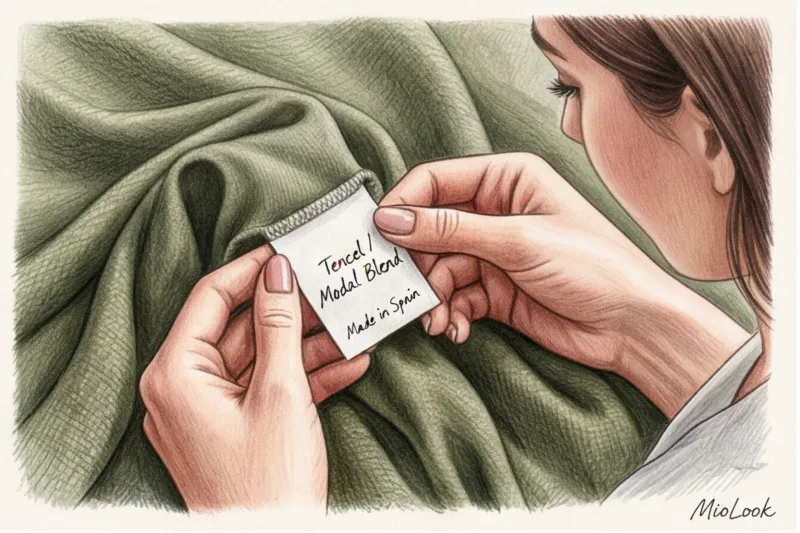
You see a pretty green tag in the H&M store. It says: "Made with innovative Tencel™ fiber" You buy an item, and when you get home, you look closely at the inside label and see: 95% polyester, 5% tencel. This is consumer deception. These 5% won't provide breathability or proper drape. They're added solely for the sake of a green tag.
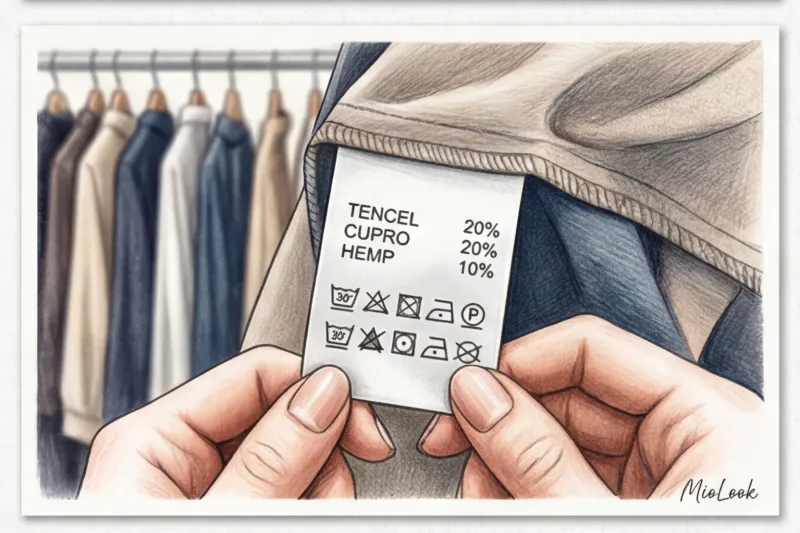
The main paradox of eco-friendly fashion: if your "eco-blouse" made of cupro requires regular dry cleaning with perchloroethylene (a dangerous, toxic solvent), the entire eco-friendliness of the purchase is nullified. Sustainability must be assessed throughout the entire life cycle of the garment, including care.
Then there's the issue of recycling. A polyester, cotton, and Tencel blend is practically impossible to recycle industrially today. Fibers of different origins cannot be separated. Therefore, the greenest item is one that's 100% mono-material, or one you'll wear for years rather than throwing away after a season.
Stylist Checklist: How to Read Labels at Zara, COS, and Massimo Dutti
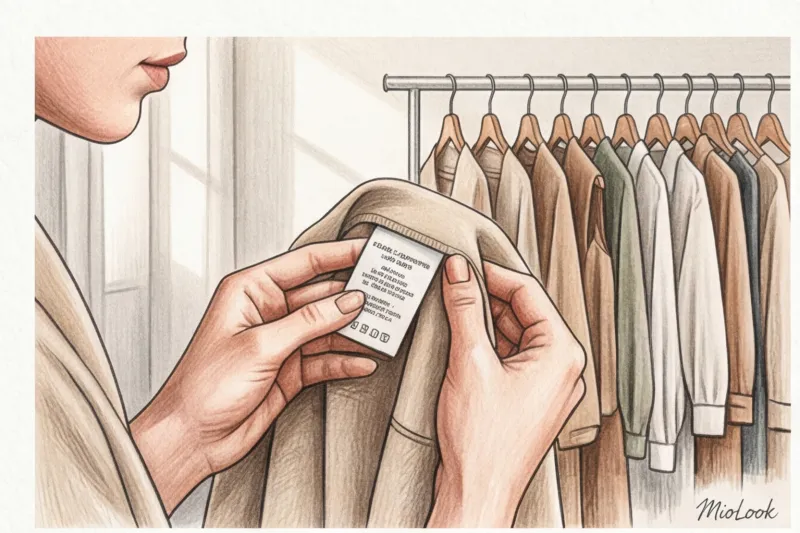
So, you're standing in the fitting room. How do you know if something is worth the money? I use a rigorous three-step filter that helps my clients save hundreds of euros.
- The 30 percent rule. For an innovative fiber to truly transform the properties of a fabric (making it breathable, flowing, and durable), its proportion in the composition must be at least 30%. Anything less is just marketing hype. The ideal percentage is between 50% and 100%.
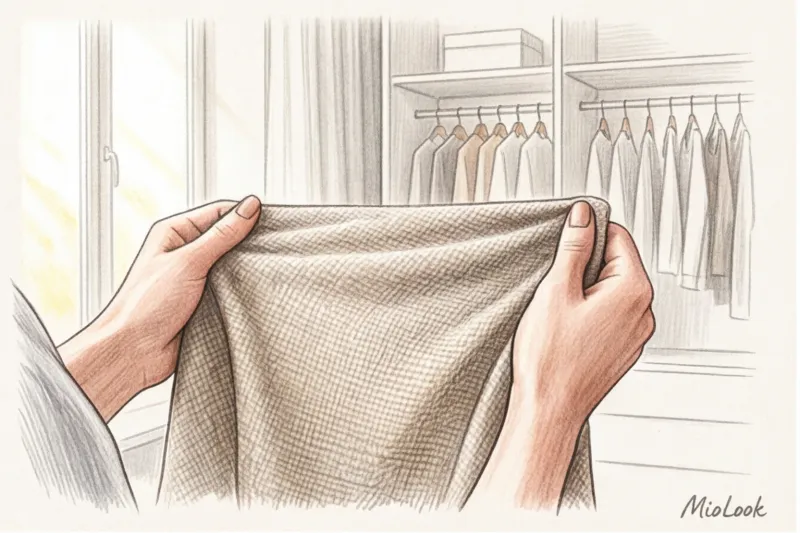
- Tactile and visual test. High-quality, dense lyocell (like COS or Arket) should be elastic. Squeeze the edge of the item in your fist for 10 seconds. If the fabric straightens out and only soft creases remain, buy it. If the creases are sharp, like on paper, it's a cheap substitute that will become snagged within a week. Be sure to look for Oeko-Tex Standard 100 certification on the tag—it guarantees the absence of harmful dyes.
- Realistic assessment of care. Look at the washing symbols. If a cupro or viscose item is machine-washable, are you willing to spend €15–20 on dry cleaning every month? If not, leave it at the store. For Tencel and hemp, the rule is simple: wash at 30°C, use a liquid detergent (powder clogs the micropores of the fiber), and do not tumble dry.
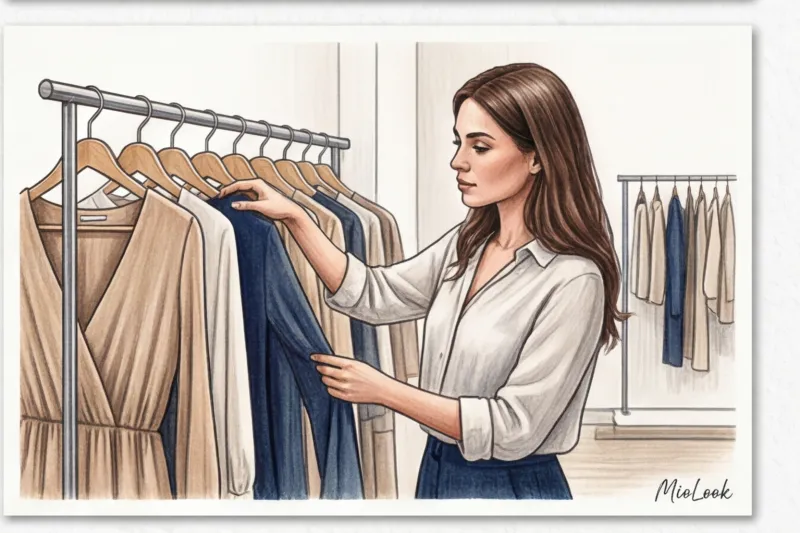
Summary: Building a smart capsule from innovative materials
A quality wardrobe isn't about the quantity of items, but rather the proper distribution of tasks between materials. Don't buy everything just because of the pretty tags. Approach shopping like an investor, assessing your Cost Per Wear.
- Tencel It takes over the daily office routine: basic tops, flowing trousers, shirtdresses. This is your comfort from Monday to Friday.
- Cupro Save for the evening wear: slip dresses for evenings, elegant blouses with a soft sheen. Wear carefully, away from water.
- Hemp — a savior for summer business looks: structured jackets, Bermuda shorts, three-piece suits that need to hold their shape in the heat.
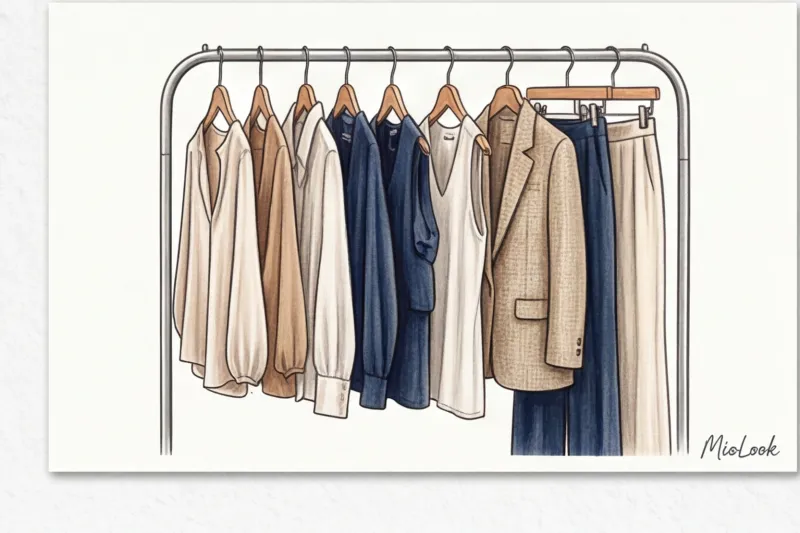
Instead of buying three dubious polyester blouses with 5% "eco-additives" for €30 each, buy one impeccable 100% Tencel shirt for €90. It will last five times longer, retain its color, and look classy at any business meeting. Sustainability doesn't start in the Lenzing factory; it starts in your fitting room.
Ready to get started?
Try the MioLook free plan—no commitments required. Upload your eco-friendly items and let AI create the perfect everyday capsule wardrobe for you.
Get access — €0.99 once